5 min read

The Boy Who Liked the Demons Best of All

A king raises a child without ever showing him a woman, then calls women demons. The boy surveys the world and chooses the demons first.

Curated by Arthur · Told by Maggid ·
Table of Contents
  1. A Laboratory of One Boy
  2. The Verdict of First Sight
  3. A Vow Under Public Fire
  4. When the Sages Refuse a Shortcut
  5. What Walls Cannot Teach
The Boy Who Liked the Demons Best of All Click for full size

A Laboratory of One Boy

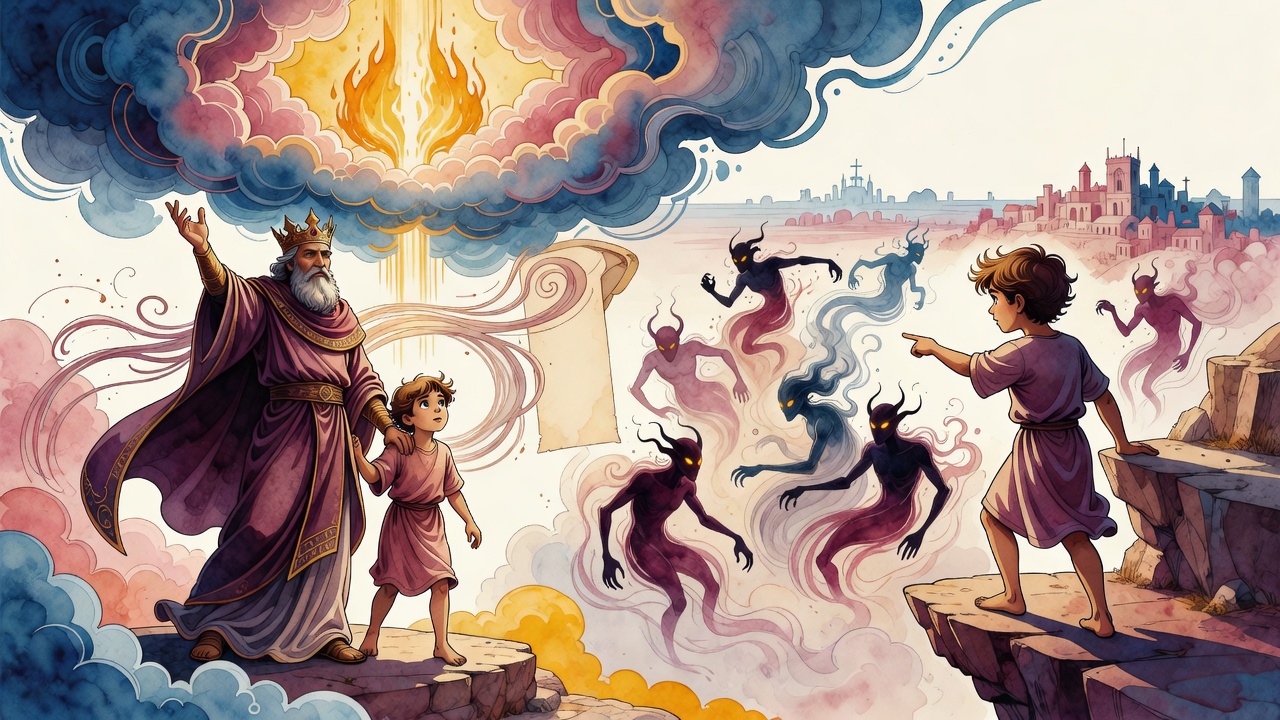
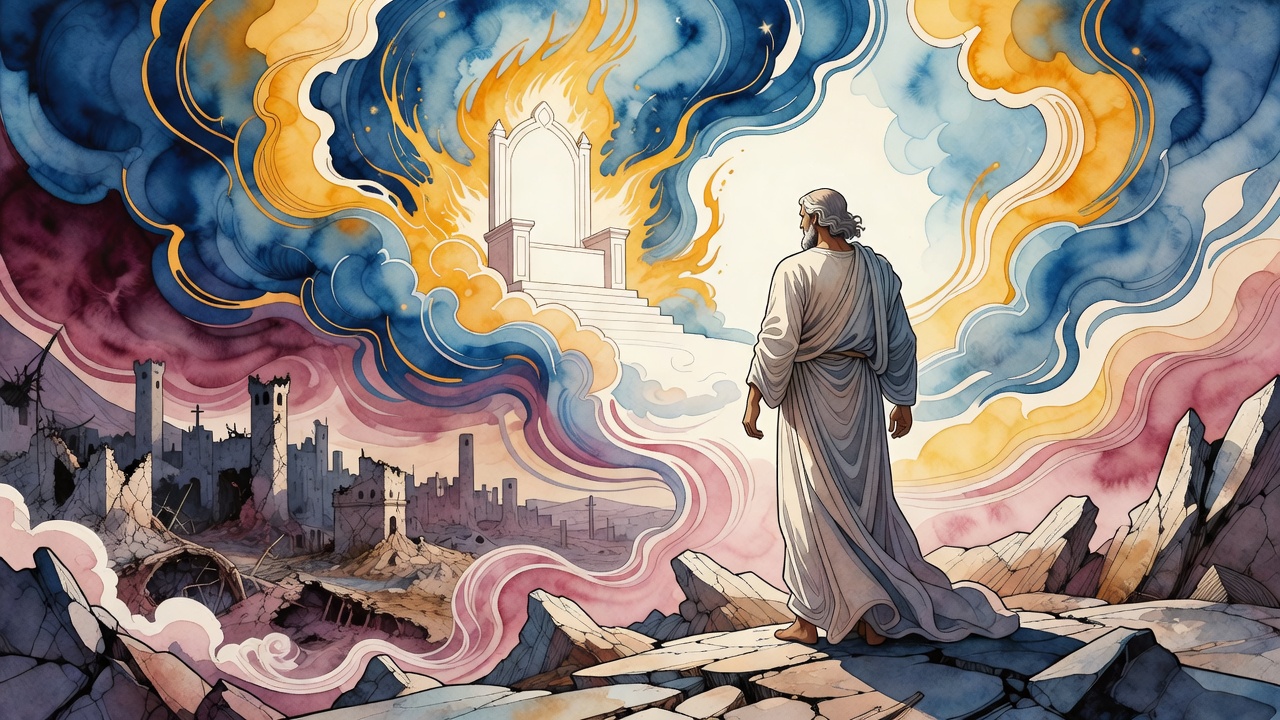
A king decided he could defeat human nature with walls. He raised a boy from birth in total isolation, no woman ever admitted, only male tutors and guards. Languages, sciences, philosophy filled the sealed rooms. Books stood in for streets. The king believed that if desire never saw a face, desire would never wake, and the boy's mind would stay pure for higher work.

When the youth reached maturity, the king brought him out. Animals, buildings, markets: each thing earned a question. Then women appeared in the open air. "What are those?" the boy asked. On the king's orders the advisors answered, "Those are demons. They are dangerous. Stay away."

The Verdict of First Sight

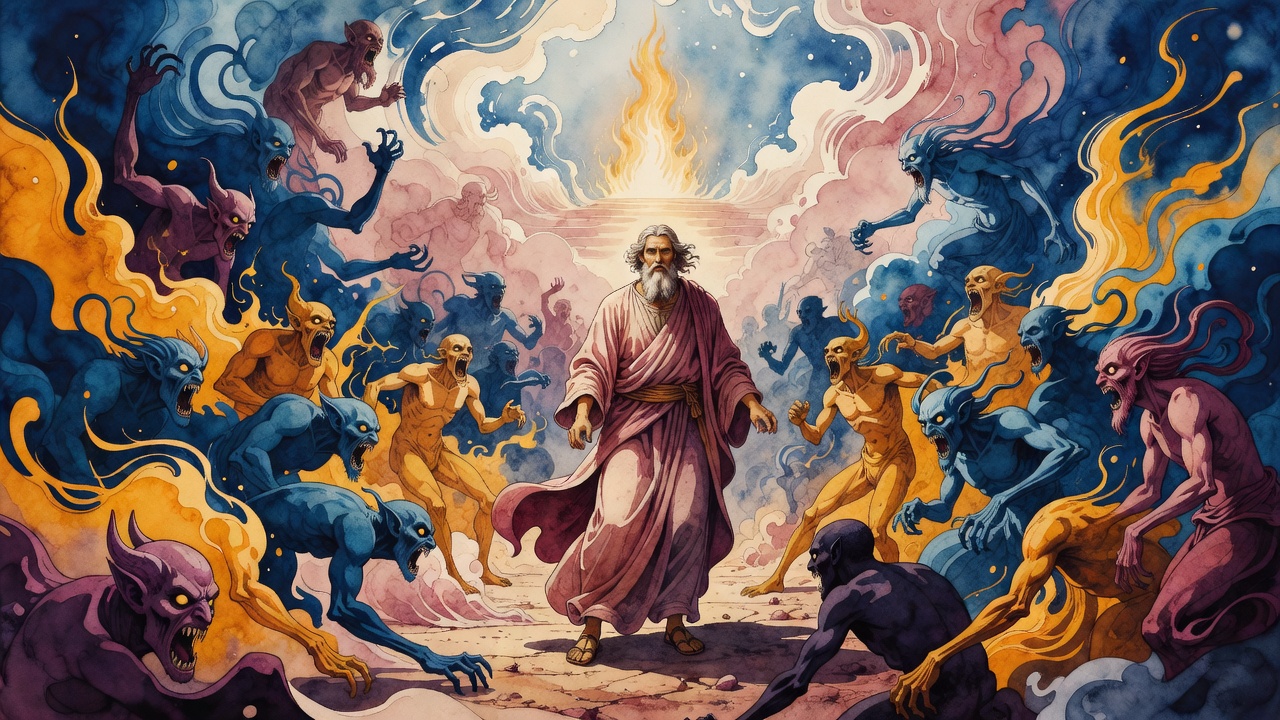
The boy weighed the whole dazzling day. Then he turned to the king and said, "Of all the things I have seen today, I like the demons best." The experiment collapsed in one sentence. You cannot educate the inclination away. You cannot quarantine a human being from his own fabric. The yetzer hara (the evil inclination inside every person) is not a habit learned from bad company. It is woven in. The only viable strategy, the sages taught, is not elimination but channeling through Torah and mitzvot (commandments), structure rather than fantasy of a sealed tower.

The king had built a school against nature. Nature graduated first.

A Vow Under Public Fire

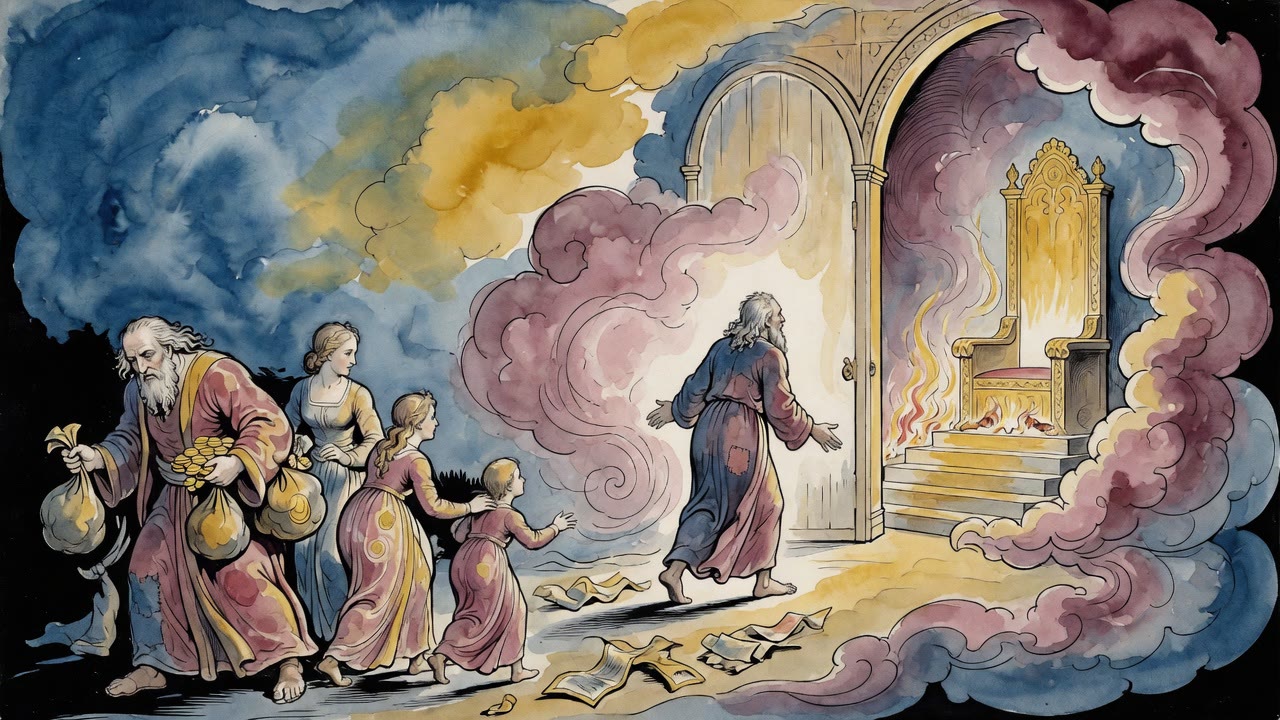
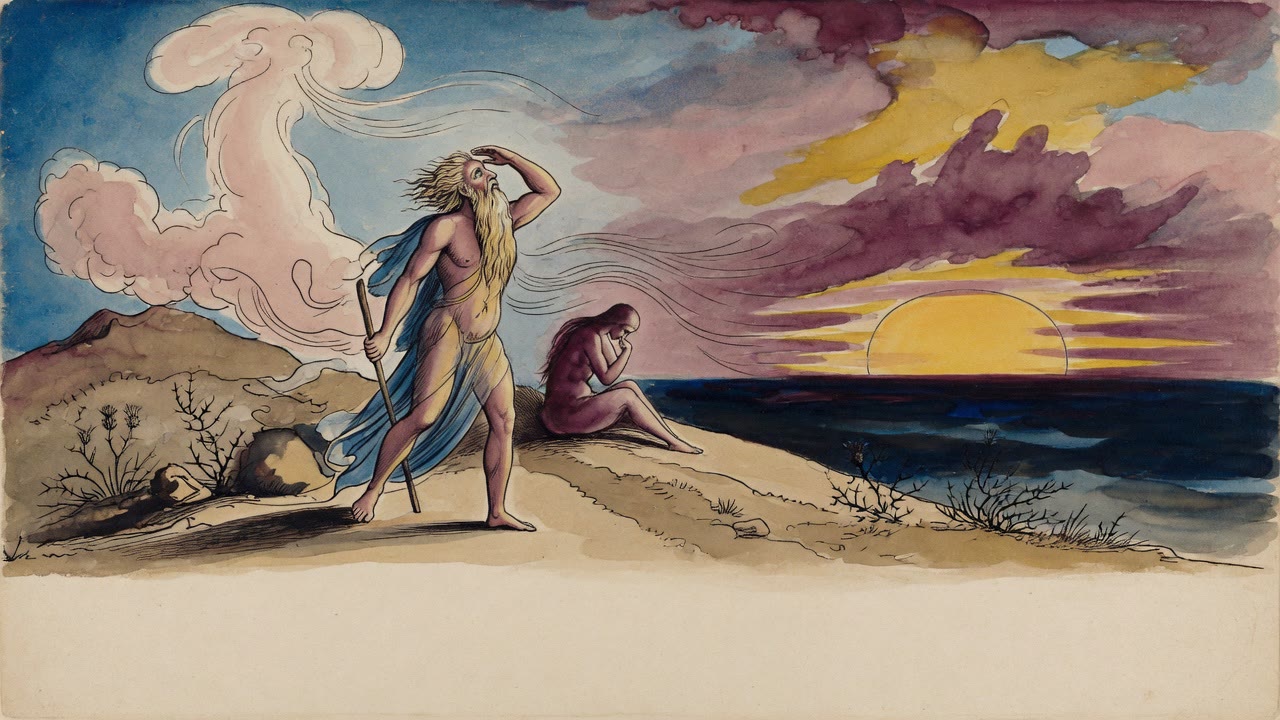
Another man tried mastery from the other direction. He vowed never to lose his temper no matter what his wife did. She chose the night he hosted distinguished guests. Dishes smashed, or food hit the floor; versions differ on the method, not the humiliation. Guests froze. Every eye waited for the explosion. The husband sat still. No shout. No blow. No change of face. He absorbed the ruin and let the moment pass. The room was more astonished by restraint than by wreckage.

Pirkei Avot asks who is mighty and answers: the one who conquers his inclination. The vow-keeper proved the line under maximum pressure. Strength was not overpowering the guests with excuses. It was overpowering himself while they watched.

When the Sages Refuse a Shortcut

Desire also arrives as lovesickness that demands a body as medicine. The sages refused to let a girl expose herself to cure a man's illness. Licentiousness, they held, is not therapy even when framed as mercy. The boy in the tower, the husband at the ruined table, and the lovesick petitioner form one map: the inclination will speak; the question is whether law and self-rule answer, or whether clever schemes pretend the inclination can be deleted or indulged without cost.

Call women demons and the heart still runs toward them. Smash a feast and a vowed man can still keep his mouth shut. Ask for a body as treatment and a court can still say no. Three refusals of easy lies.

What Walls Cannot Teach

Every generation builds a new tower against the yetzer and watches the tower fail. Some hide children from the world. Some drown the world in permission and call it honesty. The Exempla rejects both fantasies. The boy likes the "demons" because desire is not an accident of bad schooling. It is a force that recognizes its object even when adults paste false labels on it. Call the beautiful dangerous and the heart may only want it more.

The vow-keeper at the ruined feast shows the other pole: not suppression by isolation, but rule under pressure. He does not pretend he feels nothing. He refuses to let feeling write the next action while guests wait for a show. Might is self-conquest when spectacle would forgive the opposite. His wife tested the vow in public because private virtue is easy to fake. Public silence under humiliation is harder to counterfeit.

The lovesick petition tries a third cheat: turn another person's body into medicine and dress the demand as compassion. The sages block it. Mercy that requires a girl's exposure is not mercy. It is appetite with a legal brief. Between the tower, the feast, and the refused cure, the map is clear. Meet the inclination. Do not deny it. Do not enthrone it. Bind it to law, vow, and the dignity of other bodies.

The king wanted a philosopher without a pulse. He received a young man who told the truth at first sight. That truth is older than his experiment and longer than his reign.

Teachers who retell the boy's verdict do not do so to praise impulse. They do so to stop naive engineering of the soul. Build schools. Build vows. Build courts that protect the vulnerable from being drafted as medicine. Do not build a sealed room and call the silence purity. The yetzer will speak at the first open door, and it will speak in the plain language of preference.

The husband who kept his vow and the sages who refused the lovesick demand complete the boy's sentence. Preference is real. Rule is also real. Between them a human life becomes either a theater of excuses or a practice of strength. The Exempla prefers strength, even when it looks like a quiet man at a ruined table or a court that says no.


← All myths
From the tradition

Sources

3 sources

The texts behind this telling. Some cards carry a translation of the source; others are our own retelling of it, and each card says which. Every card links out to the original.

Exempla of the Rabbis, No. 372Exempla of the Rabbis (Gaster, 1924)

Retold in our words. Read the original at the link below.The Exempla of the Rabbis, Moses Gaster (1924) · Public Domain

A king once raised a boy in total isolation, keeping him locked away from birth so that he would never see a woman. According to a tale preserved in the Exempla of the Rabbis (compiled by Moses Gaster in 1924 from medieval Jewish sources) and widely paralleled in world folklore, the king believed he could defeat human nature through pure environmental control.

The boy grew up seeing only his tutors and guards, all male. He learned languages, sciences, and philosophy. He studied the ways of the world through books alone. The king was convinced that if the boy never encountered a woman, he would never develop desire, and his mind would remain entirely devoted to higher pursuits.

When the boy reached maturity, the king finally brought him out into the world. The young man saw animals and asked what they were. He saw buildings and asked their purpose. Then he saw women. "What are those?" he asked.

The king's advisors, following their master's instructions, told the boy: "Those are demons. They are dangerous. Stay away from them."

The boy considered everything he had seen that day, the animals, the buildings, the markets, the entire dazzling spectacle of civilization. Then he turned to the king and said: "Of all the things I have seen today, I like the demons best."

The tale became a classic proof-text for the rabbinic concept of the yetzer hara (יצר הרע), the innate human inclination. You cannot educate it away. You cannot hide from it. You cannot quarantine a human being from their own nature. The inclination is not learned behavior, it is woven into the fabric of being human. The only viable strategy, the rabbis taught, is not to eliminate desire but to channel it through the structure of Torah and mitzvot (commandments).

Full source
Exempla of the Rabbis, No. 367Exempla of the Rabbis (Gaster, 1924)

Retold in our words. Read the original at the link below.The Exempla of the Rabbis, Moses Gaster (1924) · Public Domain

A man once made a vow that he would never lose his temper, no matter what his wife did to provoke him. According to a tale preserved in the Exempla of the Rabbis (compiled by Moses Gaster in 1924 from medieval Jewish sources) and referenced in Sefer Hasidim (paragraph 656), his wife decided to test this vow in the most public and humiliating way possible.

She waited for a night when her husband had invited distinguished guests for dinner. The table was set, the food was prepared, and the guests arrived expecting a fine meal. At the last moment, the wife deliberately ruined the entire dinner. Some versions say she smashed the dishes. Others say she threw the food on the floor. The guests sat in stunned silence, watching the destruction.

Every eye turned to the husband. His wife had just humiliated him in front of the most important people in his social world. The provocation was calculated and extreme. Any reasonable person would have exploded in fury.

The man said nothing. He did not raise his voice. He did not strike the table. He did not even change his expression. He simply sat in silence, absorbed the humiliation, and let the moment pass.

The guests were more astonished by his restraint than by his wife's behavior. They had witnessed something rarer than generosity, rarer than scholarship, rarer than courage: complete mastery over the self. The man had made a vow and kept it under the most extreme conditions imaginable.

The tale circulated through Jewish communities as an illustration of the teaching from Pirkei Avot (4:1): "Who is mighty? One who conquers his inclination." True strength, the rabbis insisted, is not the ability to overpower others. It is the ability to overpower yourself, especially when everyone watching would forgive you for failing.

Full source
Exempla of the Rabbis, No. 241Exempla of the Rabbis (Gaster, 1924)

Retold in our words. Read the original at the link below.The Exempla of the Rabbis, Moses Gaster (1924) · Public Domain

The sages would not allow a girl to do as she wanted or to expose herself before the man, who had become lovesick and very ill in consequence. Licentiousness was not to be encouraged even in the most guarded form.

242 f. 165a. Story of Pharaoh who dreamt of a lamb on one side of a pair of scales’ outweighing all the might and riches of Egypt. His sorcerers explained the dream to mean that a child would be born who would destroy the power of Egypt (Moses). They advised the drowning of the new-born males of Israel, saying they foresaw that his death would come through water.

They knew not that the “water" refered to the “Waters of Strife."

243 f. 165b. Story of Moses’ and Aaron’s delivering to Pharaoh the message from God and of their explaning who the Sender was. rTwo versions.]

244 f. 165b. The tale of the ass who was appointed toll-gatherer.' A lion and fox passed by and the lion killed the ass for asking him to pay toll. The fox ate the heart of the ass. The lion asked for it but the fox replied that the ass could not have had any as he was such a fool as to ask toll of a lion.

Full source