6 min read

Abraham Stood Alone Where Sodom Feared Nothing

Sodom rotted until no one did good, not even one. Abraham refused their table, walked away, and remained the rock heaven would not bury.

Curated by Arthur · Told by Maggid ·
Table of Contents
  1. The City With No Fear
  2. One Against the Whole
  3. Raise Your Voice, Daughter of Waves
  4. What Is Sweet
  5. Smoke on the Horizon

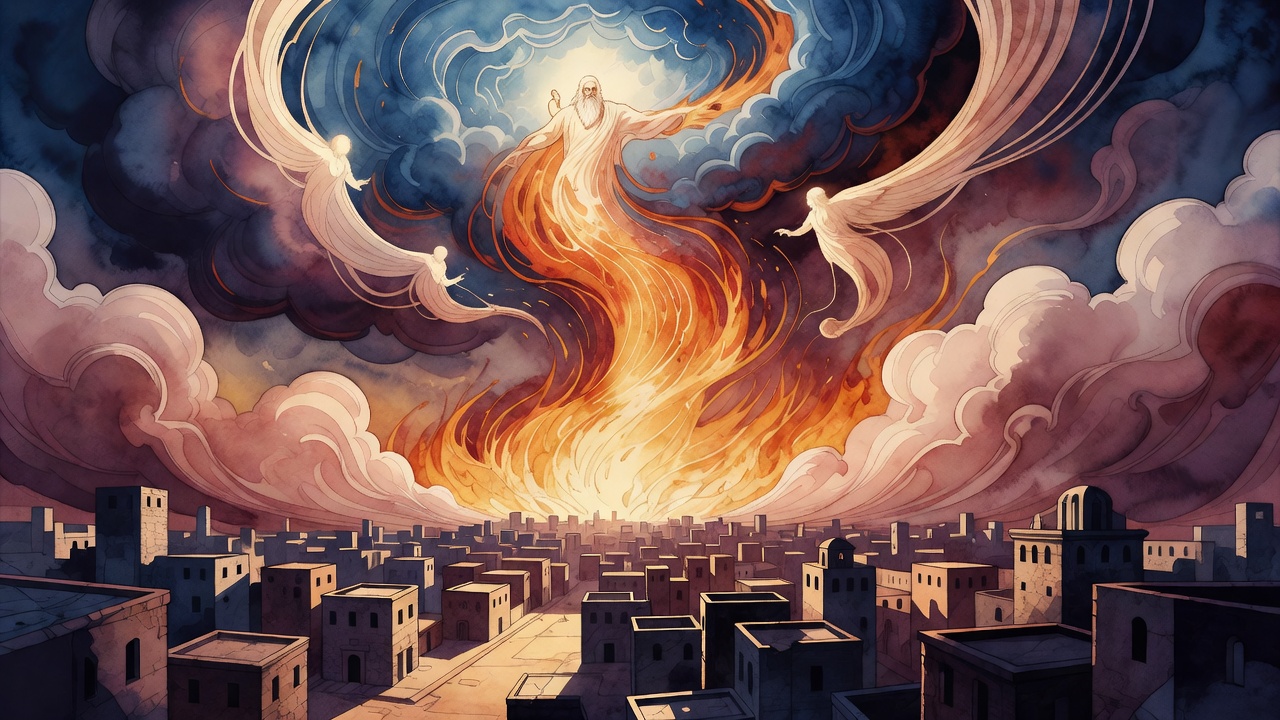
The gates of Sodom opened like a mouth that had forgotten how to bless. Inside, kin twisted against kin until the city ran on a single law: take what you can, mock what you cannot. The midrash names the condition without soft cloth. All together they became corrupt. No one does good, not even one.

Abraham Stood Alone Where Sodom Feared Nothing Click for full size

Abraham stood outside that arithmetic and refused to be counted in it.

The City With No Fear

Fear of God had left the streets the way water leaves a cracked jar. Merchants smiled with empty eyes. Judges sold outcomes before the case was heard. A traveler who arrived with dust on his feet could measure his welcome by how useful his purse looked. The corruption was not a single crime. It was a climate. People breathed it and called it normal.

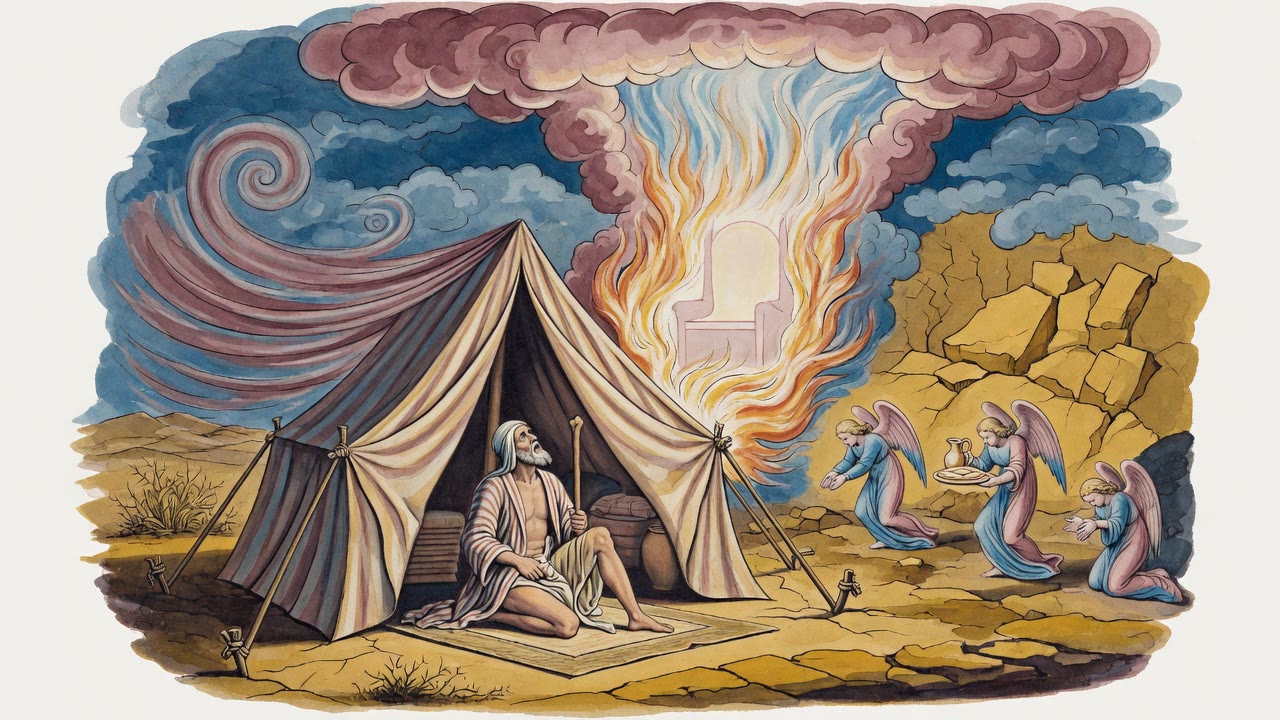
Abraham heard the reports and felt the pull of distance. "I did not sit with deceitful people, nor associate with hypocrites," he declared in the voice the psalm later remembers (Psalm 26:4). Hate, in his mouth, was not theater. It was a travel plan. "And Abraham journeyed from there" (Genesis 20:1). He put road between his household and the assembly of evildoers until the dust of Sodom no longer stuck to the tent pegs.

One Against the Whole

"Abraham was one," the tradition insists, leaning on Ezekiel's line about the singular man (Ezekiel 33:24). One is a lonely number when a valley full of cities has chosen rot. One is also the only number that can still turn. Abraham did not need a faction to remain himself. He needed a direction that did not run downhill with the crowd.

Job's image of a falling mountain and a rock removed from its place found new names. The falling mountain was Sodom and her sisters, already leaning toward ash. The rock was Abraham. "Look to the rock from which you were hewn" (Isaiah 51:1). Heaven would move the rock before the mountain finished its collapse, not because Abraham was stone-hearted, but because he was load-bearing. A people would be cut from him later. First he had to stay unabsorbed.

Raise Your Voice, Daughter of Waves

Isaiah's strange geography, Bat-Galim, the daughter of waves, becomes in the homiletic ear a call that reaches back to Abraham's courage. Raise your voice. Do not swallow the warning. The legacy of the first father is not only hospitality and tents. It is the refusal to let silence become complicity when a city has stopped fearing the Judge of all the earth.

Abraham had already argued for Sodom when the messengers turned their faces toward its smoke. He bargained numbers down like a merchant who hated the merchandise and still could not walk away without trying. That argument and this distance are not contradictions. He left the table of the wicked and still pleaded for the street. Separation without prayer is contempt. Prayer without separation is theater.

What Is Sweet

When the psalm says, "Hear this, all you peoples," the midrash asks what sweetness is worth hearing. Light is sweet, says Ecclesiastes, and a pleasant thing it is for the eyes to behold the sun (Ecclesiastes 11:7). One reading tastes the light of the world to come, earned by deeds thick enough to stand daylight. Another tastes Torah itself, lamp and teaching, white as snow in the mind that keeps it (Proverbs 6:23).

Abraham's loneliness becomes, in that frame, a bet on a different sweetness. Sodom's pleasures were immediate and sour by morning. Abraham's portion was slower: a name, a land promise, a household that would one day tell the nations, we acquired our share by occupying ourselves with what endures. The nations who skipped that labor would stare at empty hands when the accounts opened.

Smoke on the Horizon

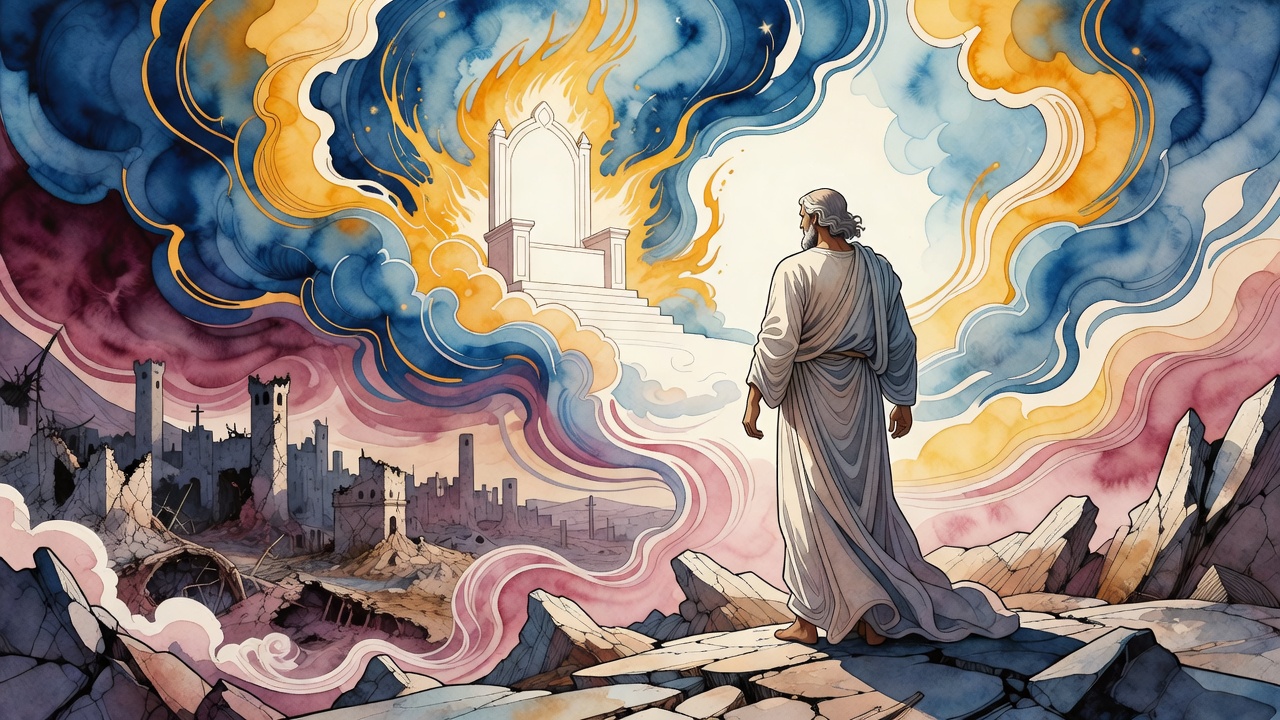
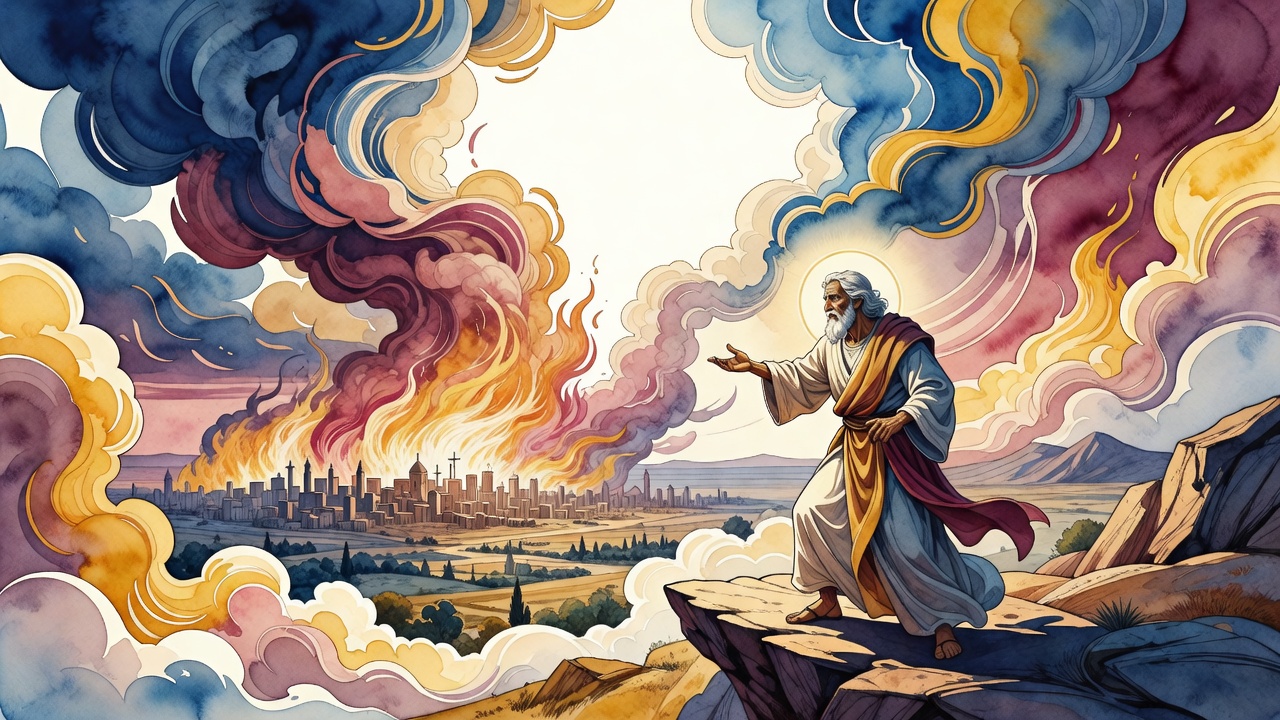
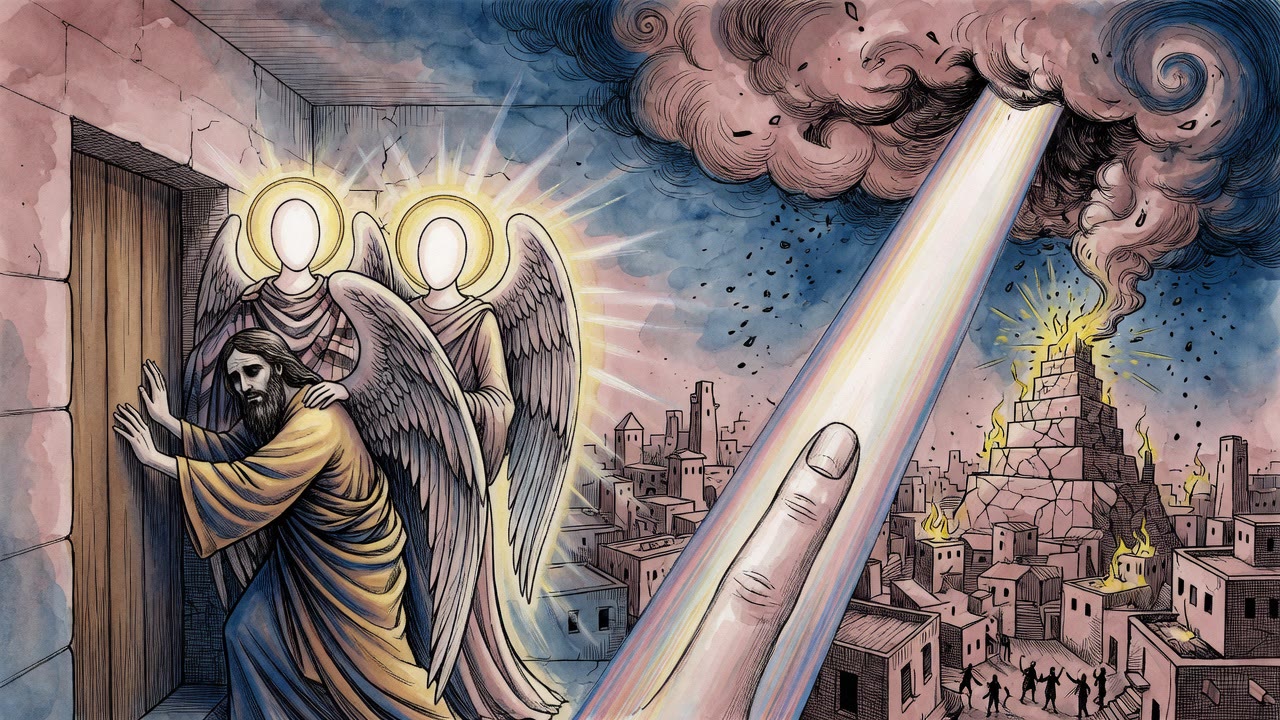
When the cities finally burned, Abraham saw the smoke rise like a black tree. He did not clap. He stood in the place where he had stood before God and felt the weight of being the rock that remained. The midrash's hard line, no one does good, not even one, still needed its exception to prove the rule. Abraham was the exception with feet. He had walked. He had argued. He had refused the assembly.

Later generations looking for a father did not find a man who blended. They found a man who could love strangers and still hate a culture of predation, who could leave a city without leaving the hope that five righteous might have saved it.

Before the fire, messengers turned toward the plain and Abraham still stood in the place where he had stood before the Lord. He did not pretend the cities were misunderstood. He asked whether the Judge of all the earth would sweep the righteous away with the wicked. The numbers fell in his bargaining like weights on a scale he refused to abandon until the scale itself would no longer move.

Lot chose the green valley when the brothers' herds grew too large for one range. Abraham took the harder ground and kept the open tent. That old choice now showed its teeth. Soft land had grown a hard people. Abraham's distance was not coldness. It was the only way to remain available as intercessor without becoming a citizen of the crime.

When morning came and the plain smoked, Abraham returned to the overlook like a man checking a wound he already knew was fatal. The rock remained. The mountain was gone. From that remaining rock a nation would be hewn, taught to hear all peoples and still refuse the sweetness of a city that no longer feared God.


← All myths

From the tradition

Sources

3 sources

The texts behind this telling. Some cards carry a translation of the source; others are our own retelling of it, and each card says which. Every card links out to the original.

Midrash Tehillim 53:2Midrash Tehillim

Retold in our words. Read the original at the link below.Rabbi Mike Feuer, Jerusalem Anthology · CC-BY

Midrash Tehillim, a collection of rabbinic commentaries on the Book of Psalms, grapples with that very feeling, using the story of Sodom and Abraham to explore themes of corruption, isolation, and the importance of individual righteousness.

The Midrash (rabbinic interpretive commentary) opens with a stark statement: "Another thing, all together they became corrupt." Who are "they?" The text identifies them as the people of Sodom. The idea, it seems, is that their relationships were twisted, unnatural, a perversion of familial bonds, and indicative of a deeper moral rot.

The Midrash doesn't pull any punches: "No one does good, not even one." A bleak assessment. But then comes a glimmer of hope, or rather, a person: Abraham. "Abraham is not counted among them and there is no one but Abraham, as it says, 'Abraham was one.'" (Ezekiel 33:24) emphasizes Abraham's unique position. He stood alone. He was the exception to the rule.

Abraham himself, according to the Midrash, echoes this sentiment. Quoting (Psalm 26:4), he declares, "I did not sit with deceitful people, nor associate with hypocrites. I hate the assembly of evildoers." He actively distanced himself from the corrupt society around him. As (Genesis 20:1) tells us, "And Abraham journeyed from there." He physically removed himself from the toxic environment.

The Midrash then uses a powerful metaphor, drawing on (Job 14:18): "But a falling mountain will wear away, and a rock will be removed from its place." The "falling mountain" is interpreted as Sodom and its surrounding areas, destined for destruction. But "the rock that will be removed from its place" is Abraham. And, the Midrash emphasizes, "there is no rock but Abraham," citing (Isaiah 51:1), "Look to the rock from which you were hewn." Abraham represents steadfastness, righteousness, a foundation of morality in a world crumbling around him.

The Holy One, blessed be He, recognizes Abraham's unique position. "You have nothing to do with them," God says, echoing (Job 34:21), "For God watches over man's ways." It's a powerful statement about divine discernment and the importance of individual choices.

The Midrash then broadens its scope, moving beyond Sodom to address a more universal corruption. "Another thing, they became brothers to other gods." This refers to idolatry, the worship of false idols. God sends angels to observe humanity, but they return with a disheartening report: "No one is doing good."

However, there's a subtle but significant distinction made. The angels say, "They eat bread with my people." Who are "my people?" The Midrash clarifies: "This is Israel, who blesses the Holy One, blessed be He, for the bread and for what they eat." This refers to the practice of saying brachot, blessings, before and after meals – a ritual acknowledging God's provision and presence in our daily lives.

In contrast, the Midrash states, "They did not call upon the Lord." This describes the nations of the world who fail to acknowledge God's goodness. They see beauty, but they don't attribute it to its source. "Woe, they did not call upon the Lord," the Midrash laments.

So, what does all of this mean for us today? The story of Abraham and Sodom, as interpreted by Midrash Tehillim, serves as a potent reminder. And it reminds us of the power of gratitude, of acknowledging the divine in the everyday, through acts as simple as saying a blessing before a meal. Perhaps, in a world that often feels overwhelming, those small acts of faith and integrity are precisely what's needed.

Full source
Midrash Tehillim 49:1Midrash Tehillim

Retold in our words. Read the original at the link below.Rabbi Mike Feuer, Jerusalem Anthology · CC-BY

Midrash Tehillim, a beautiful collection of interpretations on the Book of Psalms, offers us some clues, specifically in Midrash Tehillim 49. It begins with the verse, "Hear this, all you peoples," and then dives straight into pondering what is truly "sweet." As Ecclesiastes (11:7) puts it, "Truly the light is sweet, and a pleasant thing it is for the eyes to behold the sun."

Rabbi Yitzchak and Rabbi Abba bar Kahana, two wise voices from our tradition, offer their takes on this idea of sweetness. Rabbi Yitzchak sees it connected to the future, saying, "The light of the world to come is sweet." What makes that future light so appealing? He suggests it's tied to our actions in this world. "Happy is he who has good deeds to his credit, so that he may behold the light." He even quotes Judges (5:31), "And they that love Him shall be as the sun when he goeth forth in his might," painting a picture of radiant reward.

Rabbi Abba sees sweetness in something more immediate: Torah. "How sweet are the words of Torah, which are compared to light," he says, referencing Proverbs (6:23): "For the commandment is a lamp and the Torah is light." It's like he's saying that the very act of engaging with our sacred texts is a source of joy and illumination right now. He adds, "Happy is he who sees the Torah as white as snow, since its reward is limitless." Imagine the Torah as pure, pristine, full of potential.

The Midrash (rabbinic interpretive commentary) then takes a fascinating turn, imagining the time when God rewards Israel for their devotion to Torah. In that time, the text suggests, they will turn to the other nations and proclaim, “We have acquired our share through occupying ourselves with the Torah!” And what would the others say, those who didn't dedicate themselves to it? "Behold the reward of our toil!" This is the meaning, the Midrash suggests, of "Hear this, all you peoples," tying it directly to the Torah, as Deuteronomy (4:44) says, "This is the Torah."

Then comes a rather… sobering note. The text shifts its focus to the wicked and their fate. We are told to "Listen, all you inhabitants of Haled." Now, Haled isn't just a place name here. The Midrash cleverly connects it to the Hebrew word meaning "weak" or "feeble." Why is it called Haled? "Because the countenances of the wicked become haled in Gehenna in the future." Gehenna, often translated as Hell, is a place of purification or punishment in Jewish thought.

And who are these wicked people destined for such a fate? The text identifies them as "both sons of man and sons of Ish." The sons of man, the Midrash explains, refers to Abraham himself, who, surprisingly, is referred to as "the great man among the giants" (Joshua 14:15). And the sons of Ish? These are the sons of Ishmael and Keturah, Abraham's other descendants. But the interpretation doesn't stop there. It broadens the scope to include the sons of Noah, who was called "a righteous man" (Genesis 6:9). Another interpretation, the Midrash adds, points to the idolaters who descend to Gehenna.

What does this all mean? It's a stark reminder that our choices have consequences, not just for ourselves but for generations to come. It's an invitation to consider what we truly value, what light we are drawn to, and what we are building towards, both in this world and the next. It's a reminder that the sweetness of Torah and good deeds isn't just a reward in the afterlife, but a light that guides us even now.

Full source
Pesikta DeRav Kahana 13:1Pesikta de-Rav Kahana

Translation of the source text.Sefaria-hosted English translation · CC-BY

"The words of Jeremiah." Rabbi Abba bar Kahana opened: "Cry aloud with your voice, O daughter of Gallim; hearken, O Laish; O poor Anathoth" (Isaiah 10:30). "Cry aloud with your voice": be glad with your voice. "O daughter of Gallim" (bat gallim): just as these waves (gallim) are distinguished in the sea, so your fathers are distinguished in the world. Another interpretation: "daughter of Gallim" (bat gallim), daughter of exiles (bat golim), the daughters of those who descend from idolaters (gilulim). The house of Abraham, what is written of it? "And the LORD said to Abram, Get you out of your country," etc. (Genesis 12:1). The house of Isaac, what is written of it? "And Isaac went to Abimelech king of the Philistines, to Gerar" (ibid. 26:1). The house of Jacob, what is written of it? "And Jacob obeyed his father and his mother" (ibid. 28:7). "Hearken" (Isaiah ibid.): hearken to My commandments, hearken to the words of Torah, hearken to the words of prophecy; and if not, "O Laish" (laisha), behold, a lion (aryeh) comes up against you, this is the wicked Nebuchadnezzar, of whom it is written, "A lion is gone up from his thicket" (Jeremiah 4:7). "O poor" (aniyah) (Isaiah ibid.): poor of the righteous, poor of the words of Torah, poor of the commandments and of good deeds; and if not, "Anathoth" (Isaiah ibid.), behold, the man of Anathoth comes and prophesies against you words of rebuke. Therefore Scripture needed to say, "The words of Jeremiah son of Hilkiah" (Jeremiah 1:1).

Full source