Lot Offers His Daughters to the Men of Sodom
Lot leaves Abraham for Sodom's plain, then opens his door to a mob and offers his own daughters rather than surrender his guests.
Table of Contents
 Click for full size
The Choice of the Plain
Lot looked at the Jordan plain the way a thirsty man looks at a full cup. Green. Watered. Easy. He separated from Abraham and took the road toward Sodom (Genesis 13:11), even though he had already seen how the men of that city lived. He chose the place of dissolution because part of him wanted its weather.
Abraham stayed in the high country of promise. Lot went down toward markets and nights that did not ask hard questions. The flocks fattened. The soul thinned. Pitch smoke and market spice mixed in the air until Lot's nose forgot what Abraham's camp had smelled like.
When the visitors came years later, the city had already taught Lot its grammar of use. He still baked bread for strangers. He also knew the street's appetite by name.
The Mob at the Door
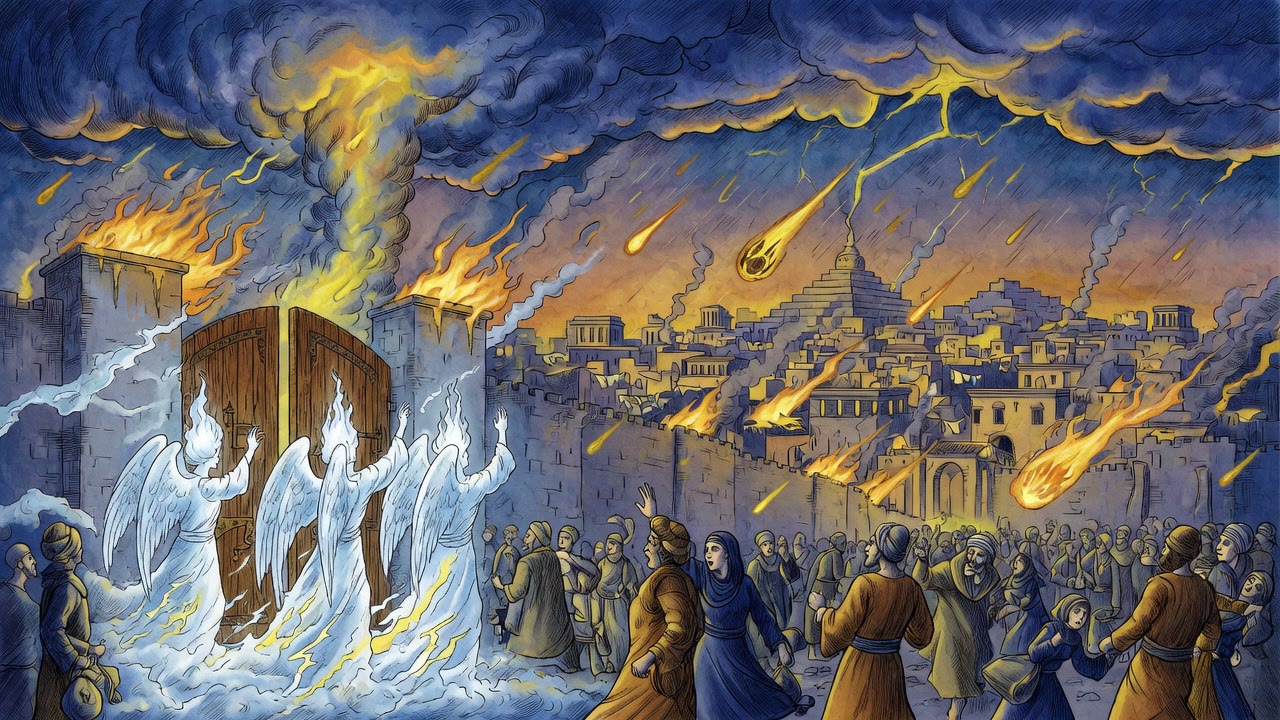
Before the household slept, the men of Sodom ringed the house. "Where are the men who came to you tonight?" (Genesis 19:5). The demand was not hospitality. It was appetite with a street's worth of voices behind it. Fists hit wood. Laughs cut the dark.
Lot stepped outside and shut the door behind him, a small courage. Then he made an offer that will not be excused. "I have two daughters who have not known man. Let me bring them out to you" (Genesis 19:8). A father who should have died for his daughters offered them instead to protect guests.
Schoolchildren later laugh in bitter shock when they read that both daughters became pregnant by their father after the city burned. Heaven answers Lot's earlier offer with a grim mirror. Keep them for yourself, since you were so ready to hand them over. The laugh in the study hall is not mirth. It is the sound of a story that refuses to look away.
What a Man Usually Does
Normally a man would rather be killed than surrender wife or daughter to abuse. He would kill or be killed for their sake. Lot inverted the law written in ordinary blood. Guests first. Daughters as currency. The angels inside the house were safer than his own children on his own tongue.
Hospitality is a virtue until it eats the household. Sodom had already rewritten virtue into predation. Lot, living among them, spoke their language with a thin accent of Abraham still left on it. The accent was not enough to save the offer from being monstrous.
The door that protected strangers did not protect the girls. Words did that damage before any hand did. Inside, the visitors heard their host invent a price and did not accept the coin.
Abraham's Covenant in the Background
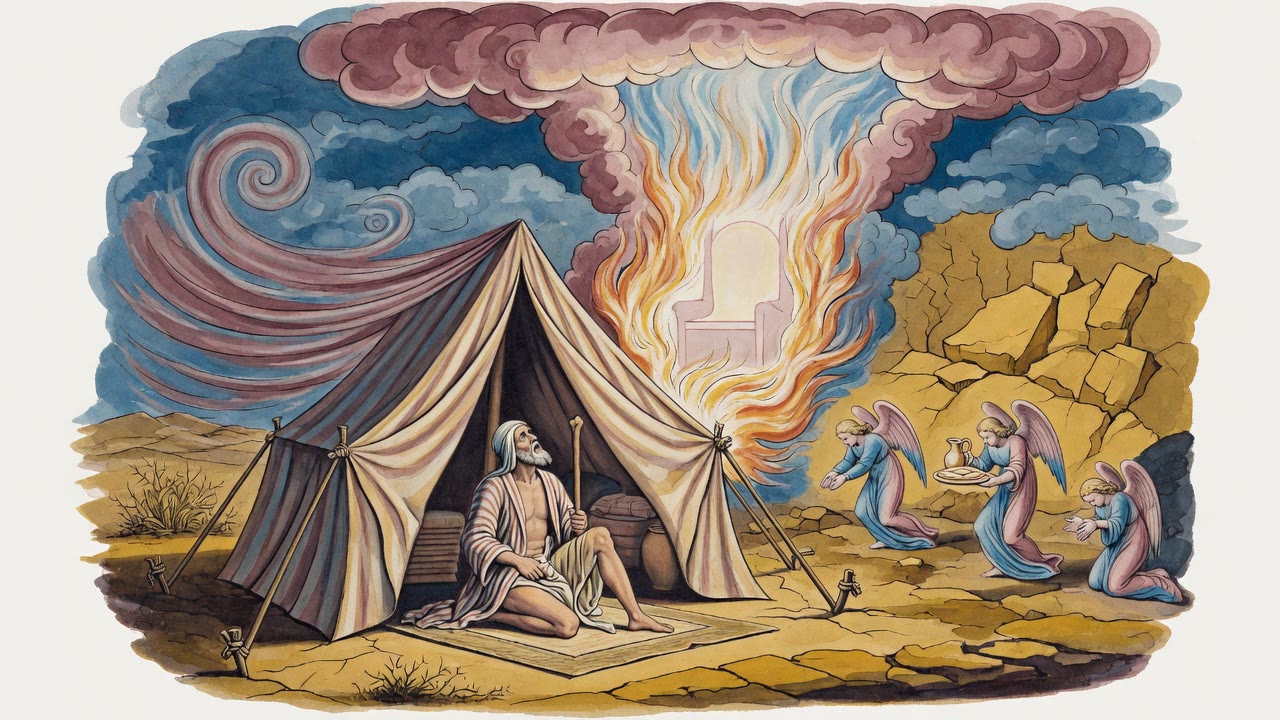
While Lot bargained with a mob, the larger story still ran through Abraham. God cut a covenant to give the land to Abram's seed (Genesis 15:18), and Abram asked how he could know when he still had no child. Doubt and promise sat at the same table. Lot had once traveled in that promise's shadow and traded it for a well-watered plain.
The contrast is brutal on purpose. One man argues with God about a future he cannot yet see. The other man argues with Sodom about a night he thinks he can manage. One conversation builds a people. The other ends in fire and a cave.
Abraham will later plead for the city if ten righteous can be found. Lot could not even keep righteousness intact inside his own doorway. The nephew of the covenant became the host of a crisis he had chosen years earlier with his eyes open.
Smoke on the Plain
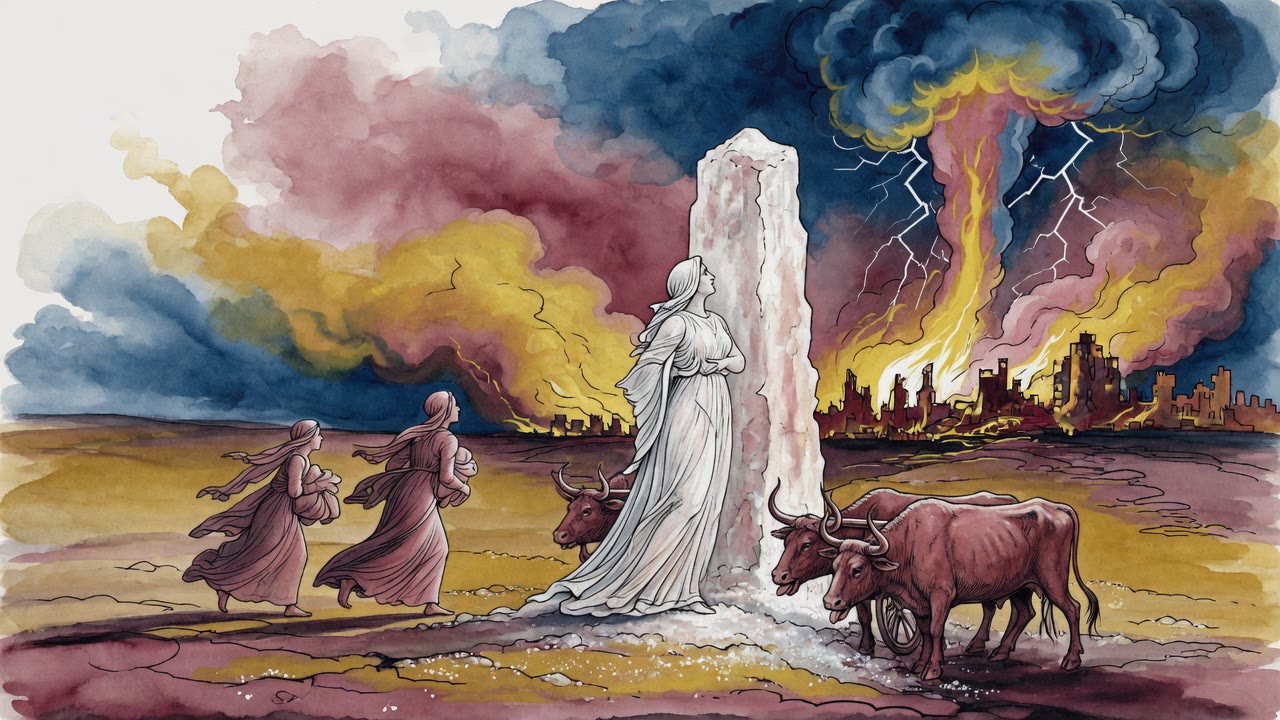
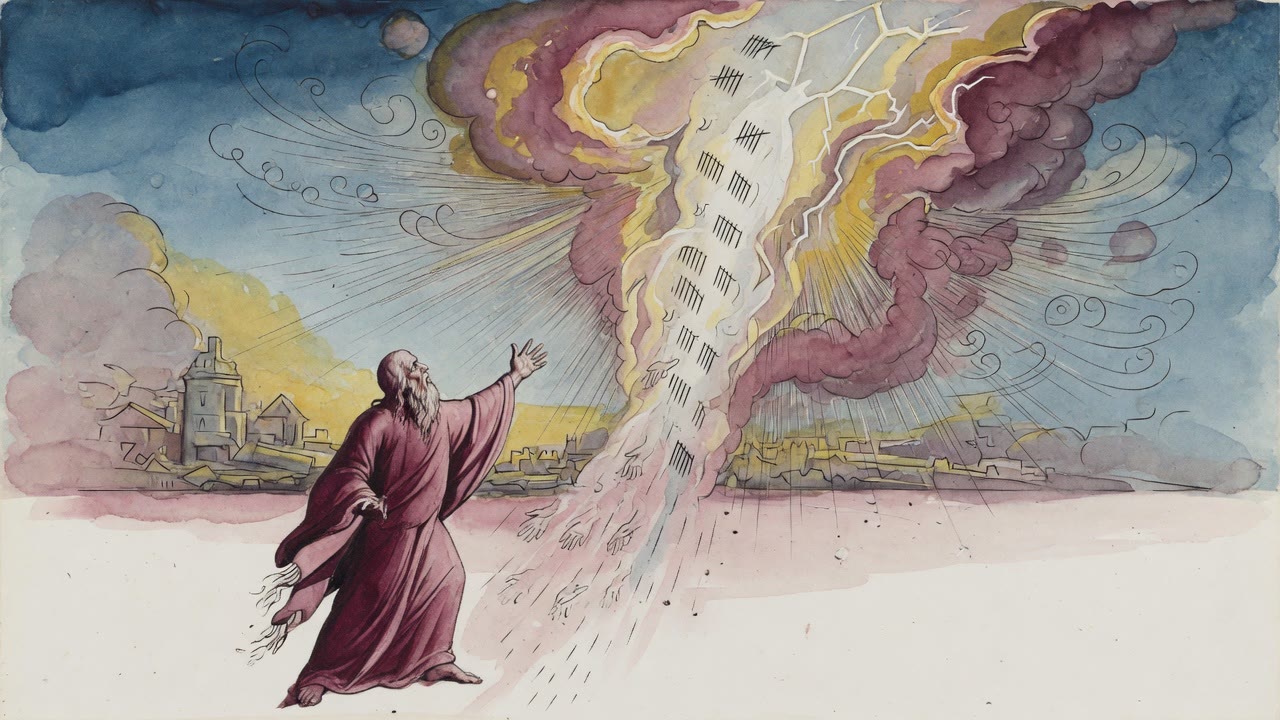
The visitors struck the mob with blindness. Hands that had pounded the door now scraped for a latch they could not find. The family fled. Behind them Sodom became a column of smoke. Lot's wife turned and became salt, a monument to looking backward at the wrong time.
The daughters, taught by their father's offer and by a world that had ended, chose a desperate continuation of the line in a cave. What he offered in the street returned to him in the dark after the fire, and the Torah does not look away.
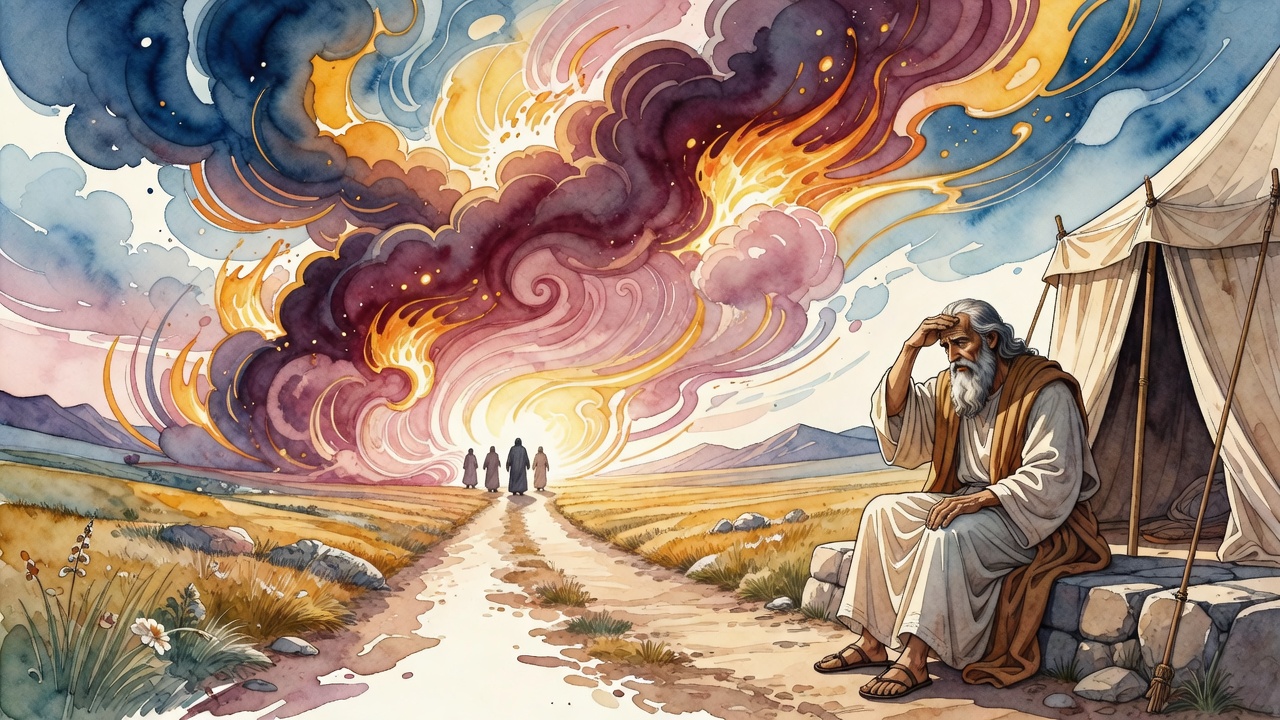
Abraham watched the smoke from a distance that was moral as much as geographic. The nephew who took the easy land left a story the people of Israel would tell whenever hospitality and kinship pull in opposite directions until one of them snaps. Ash drifted on the wind toward the high country. Abraham did not go down to collect it.
In the morning after the fire the plain no longer looked like a cup of green water. It looked like a kiln that had finished its work. Lot's steps were the steps of a man who had bargained badly with a city and with his own household. The cave ahead was not refuge so much as the last small room left when a chosen plain has burned. His daughters walked behind him carrying the memory of being offered, and that memory would write the next chapter without needing Sodom's street to finish the lesson.
← All myths