Lot's Wife Looked Back and Turned to Salt
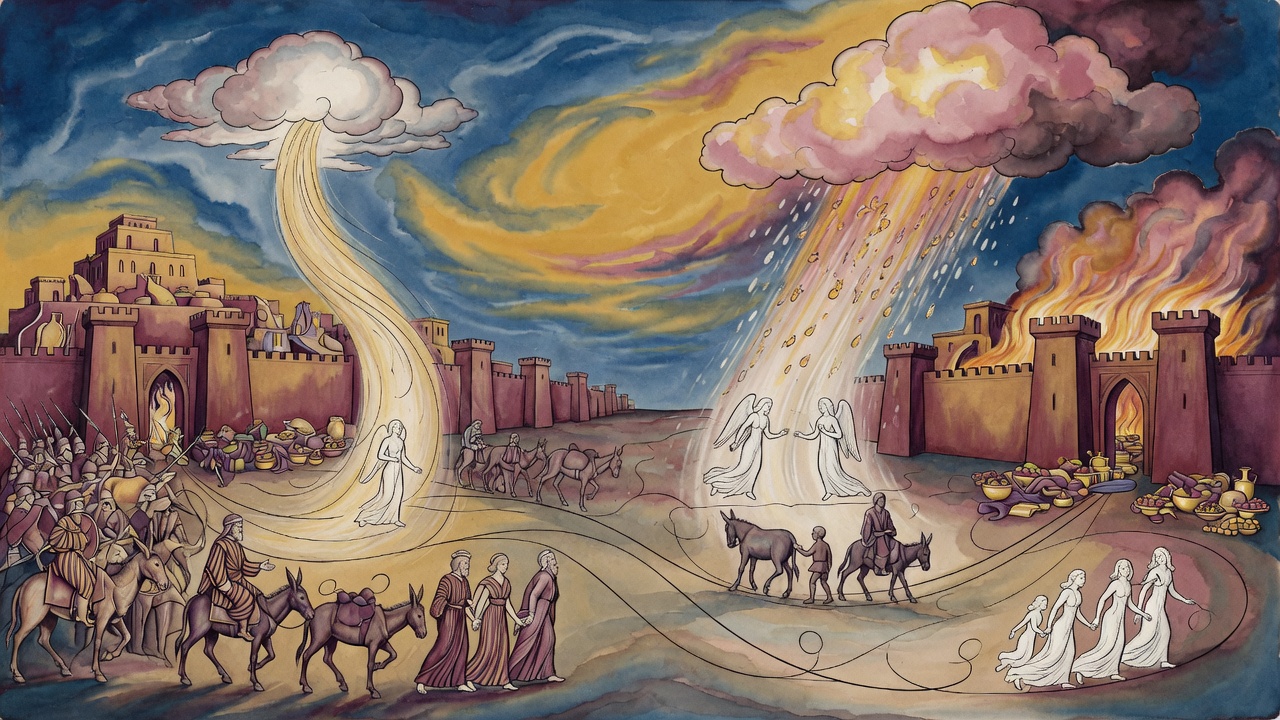
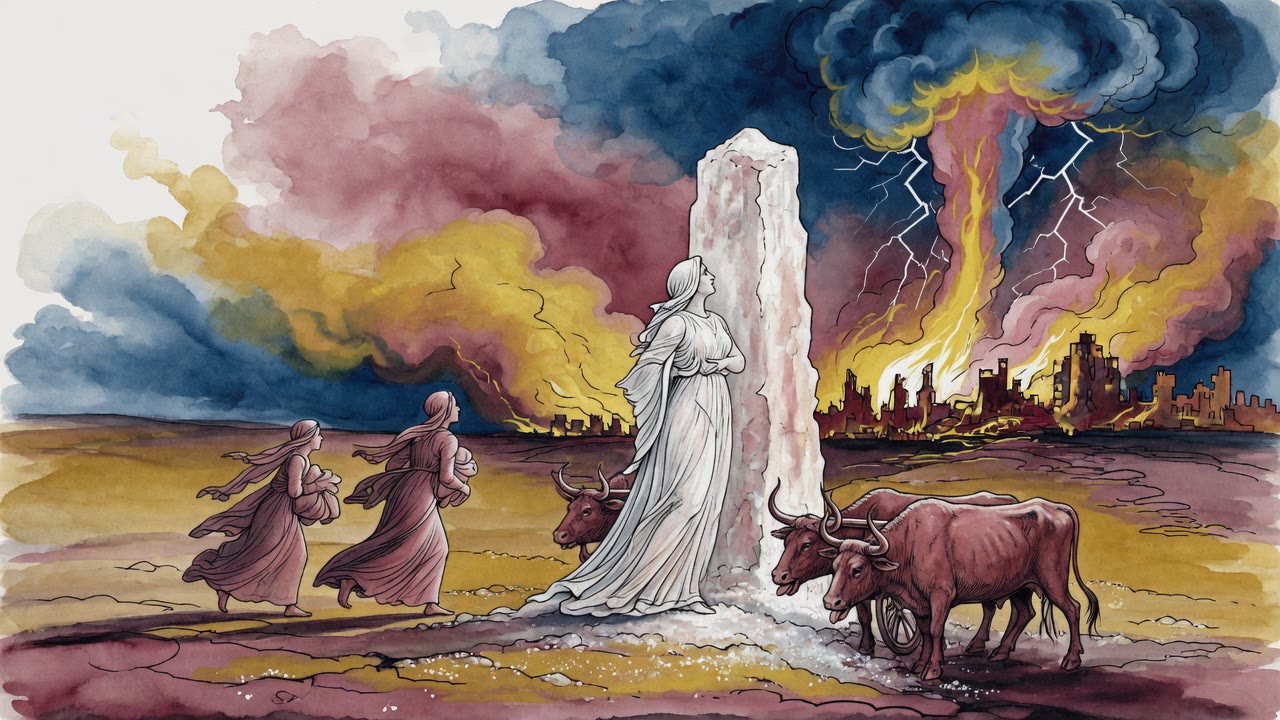
Fleeing Sodom under orders not to look behind, Lot's wife turned once toward the fire and stiffened into a pillar of salt the oxen still lick by day.
Table of Contents
 Click for full size
The Cry That Kept Growing
The outcry of Sodom did not sit still like a finished complaint. Rabbi Hanina heard it as a sound that swelled and went on swelling, wickedness feeding on itself until heaven could no longer pretend not to hear. Five cities sat on a single rock, linked by roads and by habits. Guests learned that hospitality there was a trap with a smile. The poor learned that mercy was a crime with witnesses willing to testify.
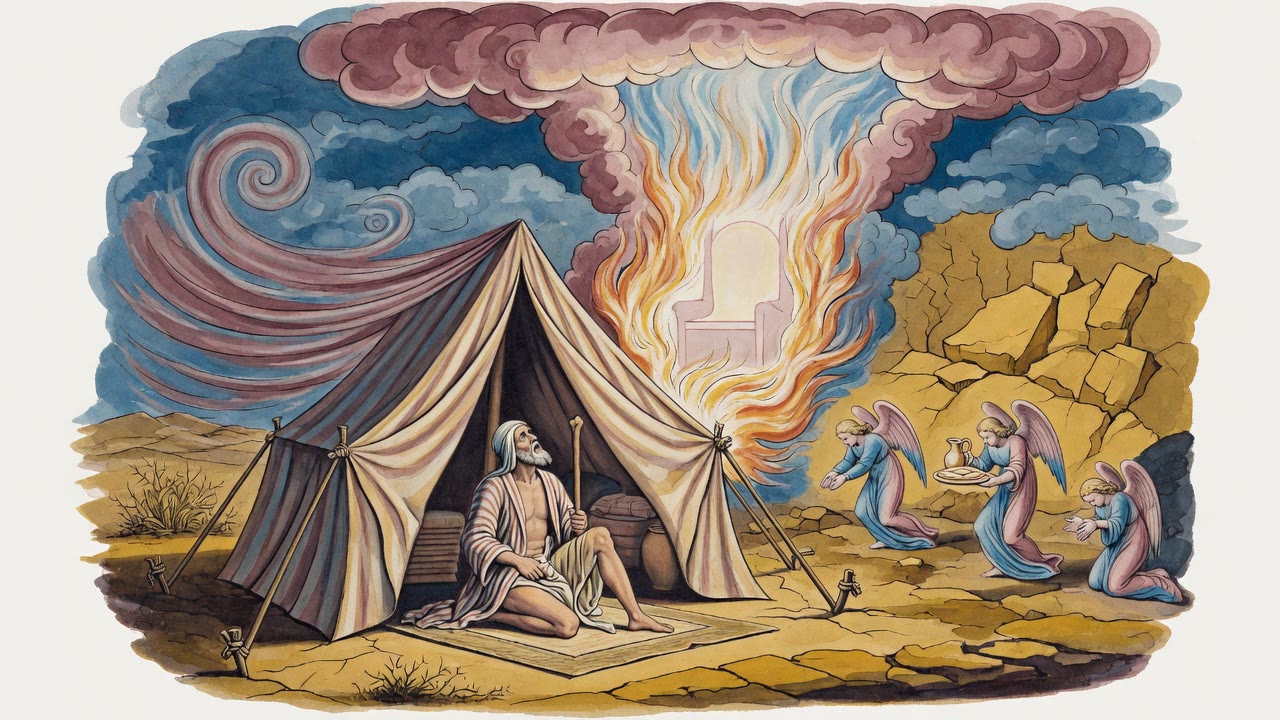
God said, "I will go down now and see" (Genesis 18:21). Rabbi Abba bar Kahana heard in that descent no eagerness to burn but a door of repentance flung open, a pause built into judgment. Come down. Look. Wait. Measure. Even then the cry kept growing, as if the city were racing the door.
Salt at the Neighbors' Doors
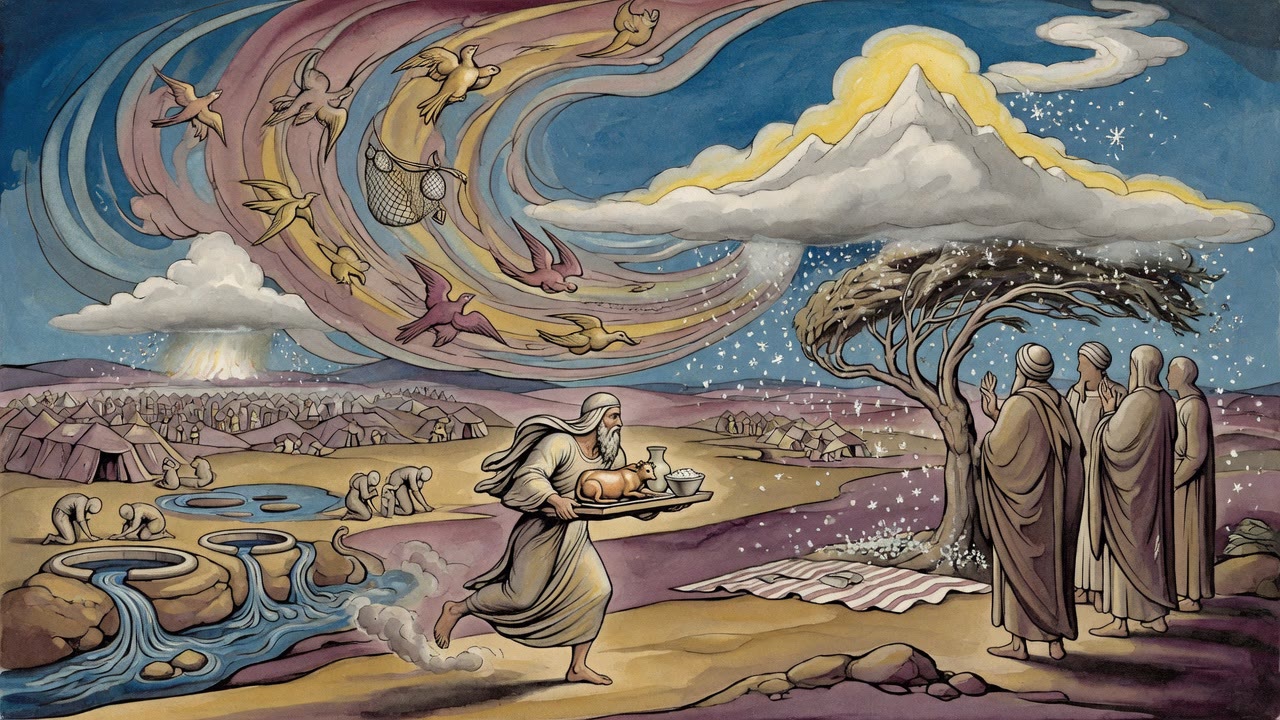
Two strangers came to Lot's house at evening, and he tried to practice the welcome he had learned in Abraham's tents. Bread, rest, the protection of a door. He asked his wife for salt. She balked. "Do you want to introduce that evil custom of giving strangers salt?" Then she went from door to door through the city asking the neighbors for a pinch, and every question was an alarm. Guests are in Lot's house. Unusual guests. She turned a kitchen errand into a fuse and carried it from house to house like a woman borrowing seasoning for a meal that was never about food.
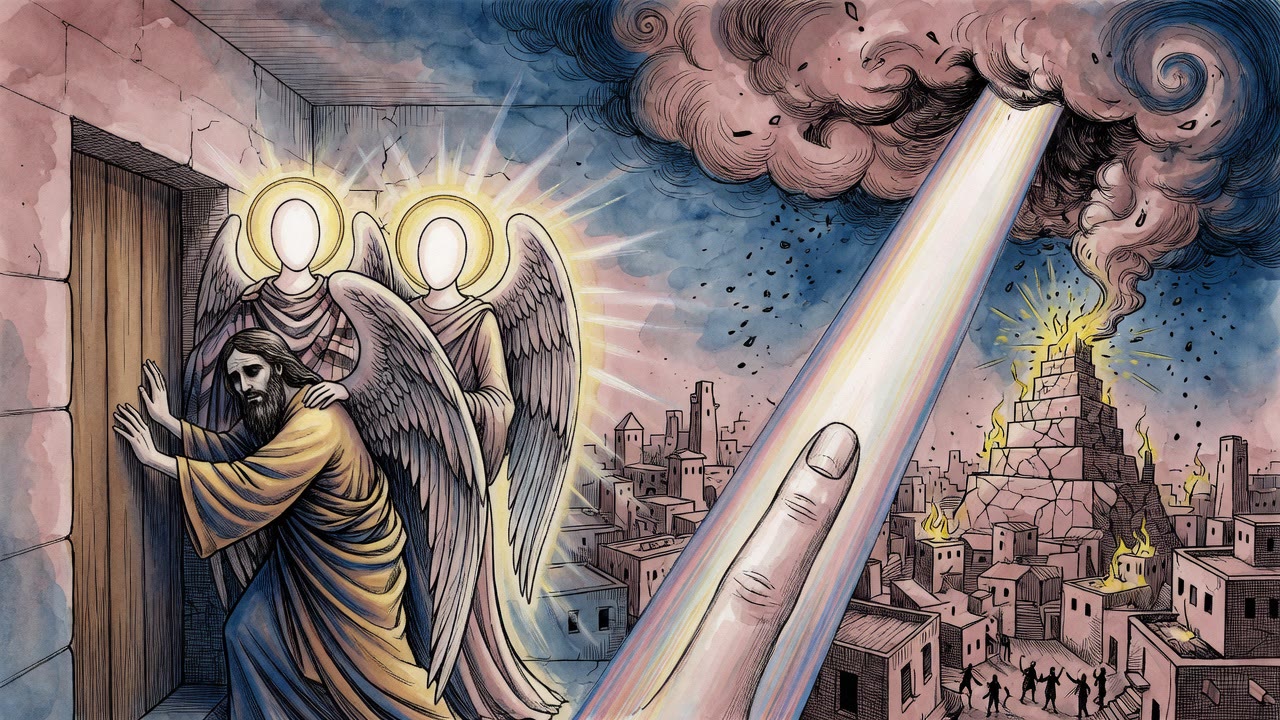
The mob her errand fed came to the door and pressed until the wood complained. The guests pulled Lot inside and struck the men of the city with blindness, and hands went on groping for a latch they could no longer find. Lot argued, bargained, delayed, a host in a city that had made hosting illegal. His wife had already cast her vote with the street.
The Overthrow
The angels did not argue theology with Lot. They seized his hand, his wife's hand, his daughters' hands, and pulled them out of a city already marked for fire. "Escape for your life. Do not look behind you, and do not stay in all the plain" (Genesis 19:17). Ahead lay the mountain, and little Zoar as a bargained mercy. Behind lay everything that had made them comfortable in a cruel place.
Brimstone fell with a smell the soul recoils from, the sages say, because it senses it may one day be judged by that same fire. Rabbi Chanina insisted that no evil thing comes down from heaven directly; even fire and hail are a stormy wind carrying out God's word, a servant doing ugly work under orders. Others spoke of treasuries, chambers in the divine storehouse for more than blessing. Either way, the cities went over. An angel reached out and flipped the five of them like a slab of meat on a board. The land never recovered its face. Rabbi Yehoshua ben Levi taught that even rain gathered from the air of Sodom, poured on a garden bed elsewhere, will make nothing grow.
The Glance That Hardened
On the road, Lot's wife, whom some call Edith, stopped running with her eyes. Some say she turned to look for her married daughters, still inside the walls. Some say she looked for her father's house. In that longing she saw what no eye is permitted to hold: the Presence descending to rain fire on the plain. Her body locked mid-step. A pillar of salt stood where a woman had been, white against the smoke (Genesis 19:26).
The sages tied the sentence to the crime. She had sinned with salt, so she was punished with salt, the mineral she begrudged to guests becoming the mineral of her body. Lot did not turn. The daughters did not turn. The pillar kept the posture of a last look, face toward a city that no longer deserved names.
The Pillar That Grows Back
Travelers near the Dead Sea told of the salt shape for generations. Oxen licked it all day until only the feet remained, and each morning the pillar grew back whole. Those who saw it blessed the true Judge, because the sentence was not a secret tucked into a scroll. It stood in the landscape, a white argument that cruelty to guests does not stay hidden indoors.
Why had Lot been pulled out at all? For Abraham's sake, the sages answer: even in the hour of anger, God remembered the righteous. And Lot carried one buried credit of his own. Years before, in Egypt, he had known that Sarah was Abraham's wife and said nothing, holding a secret that could have bought him a king's favor. That silence was drawn like a deposit at the last possible moment.
The teachers set another measure beside her story. A man must not grieve his neighbor with a cheap question or a cruel reminder of old sins; God hid even the name of the tree Adam ate from, so that no permanent label of shame would hang on his children. Sarah took grief onto herself instead of laying it on another, saying the Lord had restrained her from bearing, and heaven answered her own words with a son. Lot's wife laid grief on the strangers at her own table, and she paid in the coin she had withheld.
Seed From Another Place
In the cave above Zoar, Lot's daughters believed the whole world had ended as it had in the flood, that the human future had narrowed to three bodies and a store of fear. They acted to preserve their father's line. The rabbis hear in their words "seed from another place" a hidden thread that runs through Moab and Ruth toward the King Messiah. The road out of Sodom does not end only in salt. It ends, strangely, in a genealogy that refuses to die with the cities.
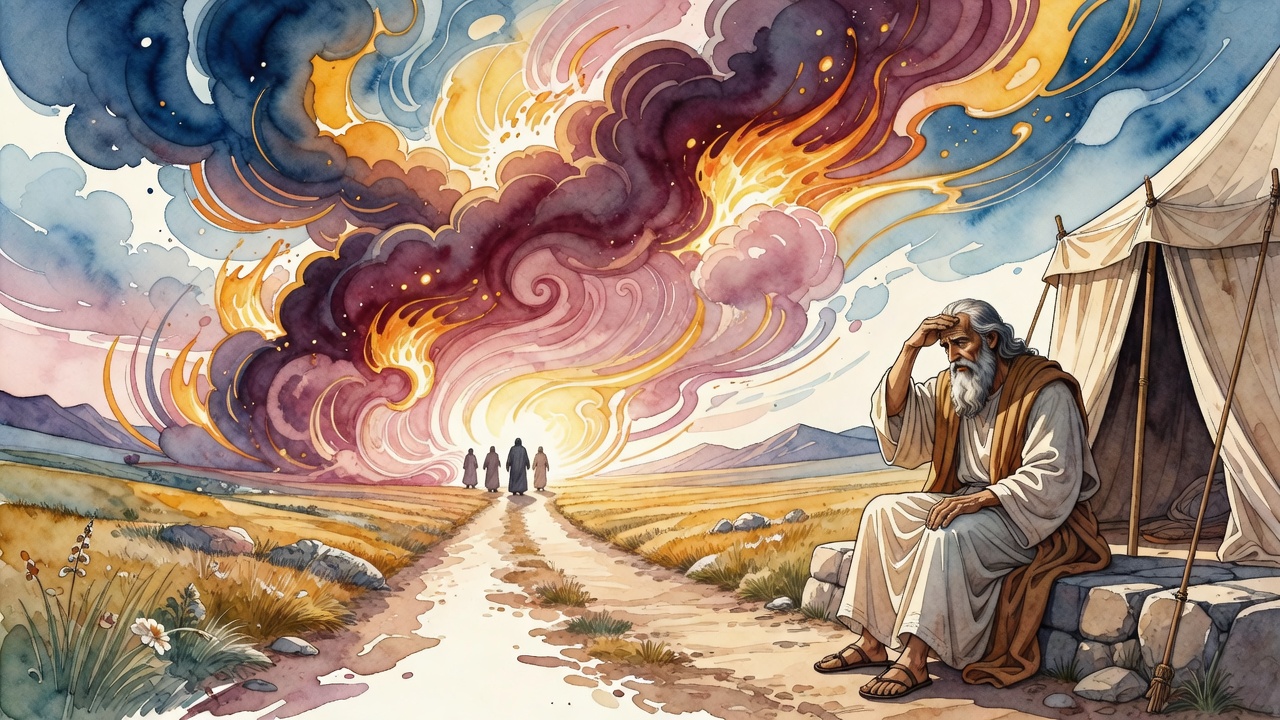
Abraham rose early that morning and looked toward Sodom, and saw the smoke of the land going up like the smoke of a furnace. He did not need a landmark to teach him what hard hearts cost. For everyone else the pillar stands at the roadside, licked to its feet by evening, whole again by dawn, a white vertical silence where a woman used to change her mind.
← All myths