5 min read

Abraham Watched Sodom Burn for the Heart It Hid

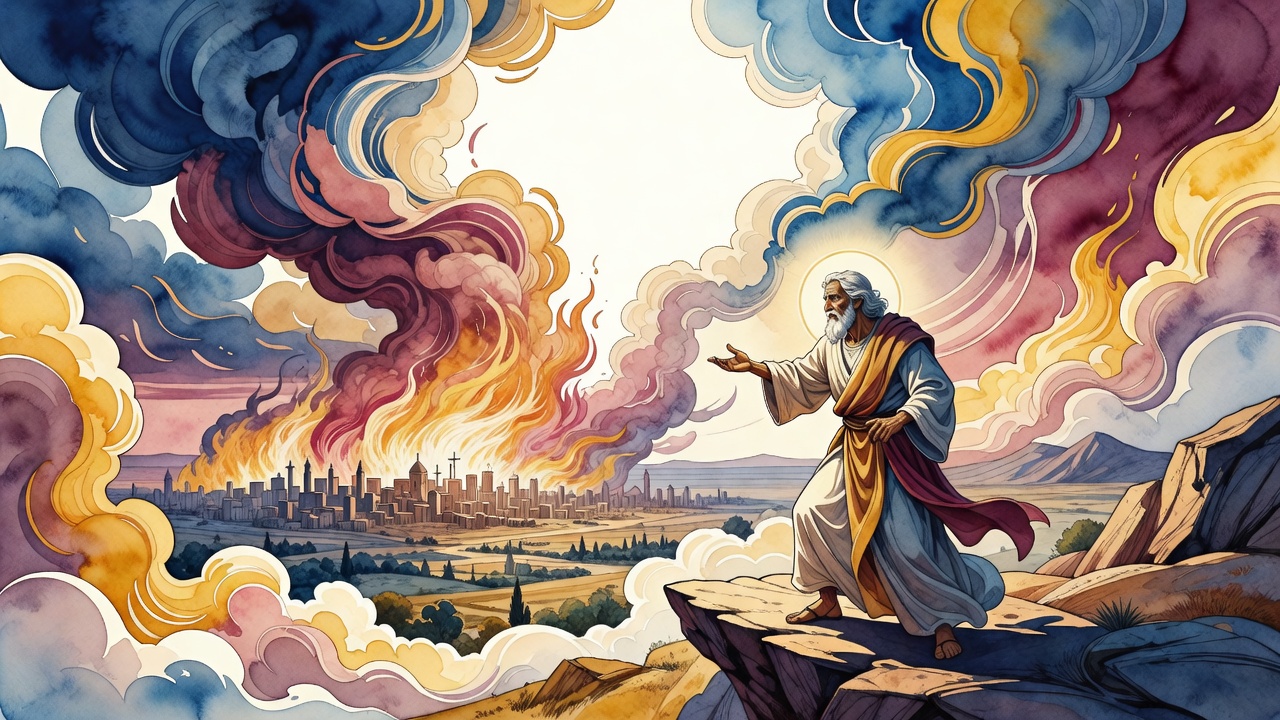
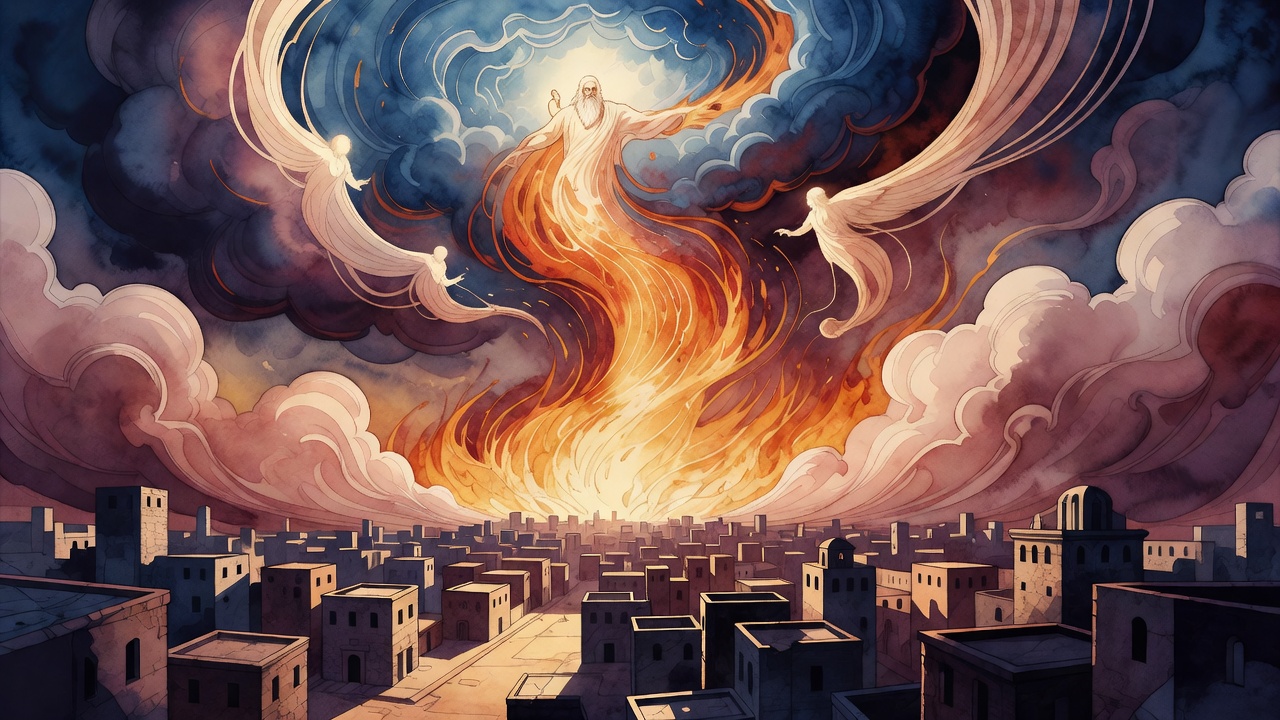
In Sodom the markets opened that morning. Men priced grain, children chased dogs. Fire fell, and salt stood on the plain where Lot's wife had looked back.

Curated by Arthur · Told by Maggid ·
Table of Contents
  1. The Morning the Markets Opened
  2. The One Organ That Does Not Obey
  3. Fire on the Deed and on What Chose It
  4. Ask Your Father and He Will Tell You

Ten was the last number Abraham had.

Abraham Watched Sodom Burn for the Heart It Hid Click for full size

He had opened at fifty and worked his way down in front of God the way a man counts the beams of a house he is trying to keep standing. Forty-five. Forty. Thirty. Twenty. Each time he lowered it the answer came back that the place would be spared for that many, so the arithmetic was never what stopped him. At ten he opened his mouth for nine and nothing came out of it. He stood on the road with the number still in his teeth. Then he went back toward the oaks at Mamre, because after ten there was only the morning (Genesis 18:23-32).

The Morning the Markets Opened

Down on the plain nothing about that day looked like a last one. The market opened at the usual hour. Men priced grain and argued the price until they settled it, children ran the dogs up the street, and somebody swept a doorway. Whatever had been decided in that city had been decided long before, and the hands went on working, because hands do not know what the heart has already agreed to.

The One Organ That Does Not Obey

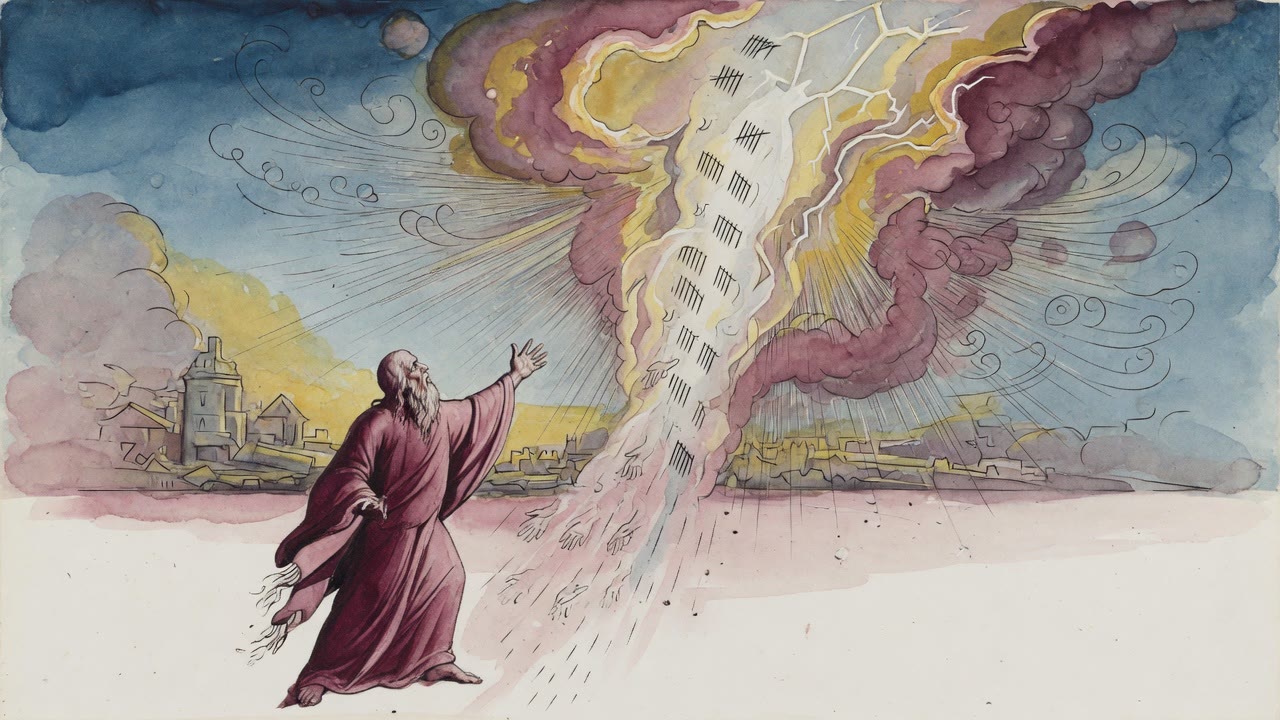
"I made two hundred and forty-eight organs in a man," the Holy One said, "and every one of them does the work I made it for. The eye sees. The ear hears. The hand takes hold. The heart alone changes from hour to hour and twists itself, and it is crooked above all things, and who can know it?"

He was speaking to Gog, who was still generations away from sitting down in a quiet room to draw up his plans, and who would take those plans for his own private business. "Do not tell yourself that I do not know what you are thinking. Before I made you, I knew what you would think."

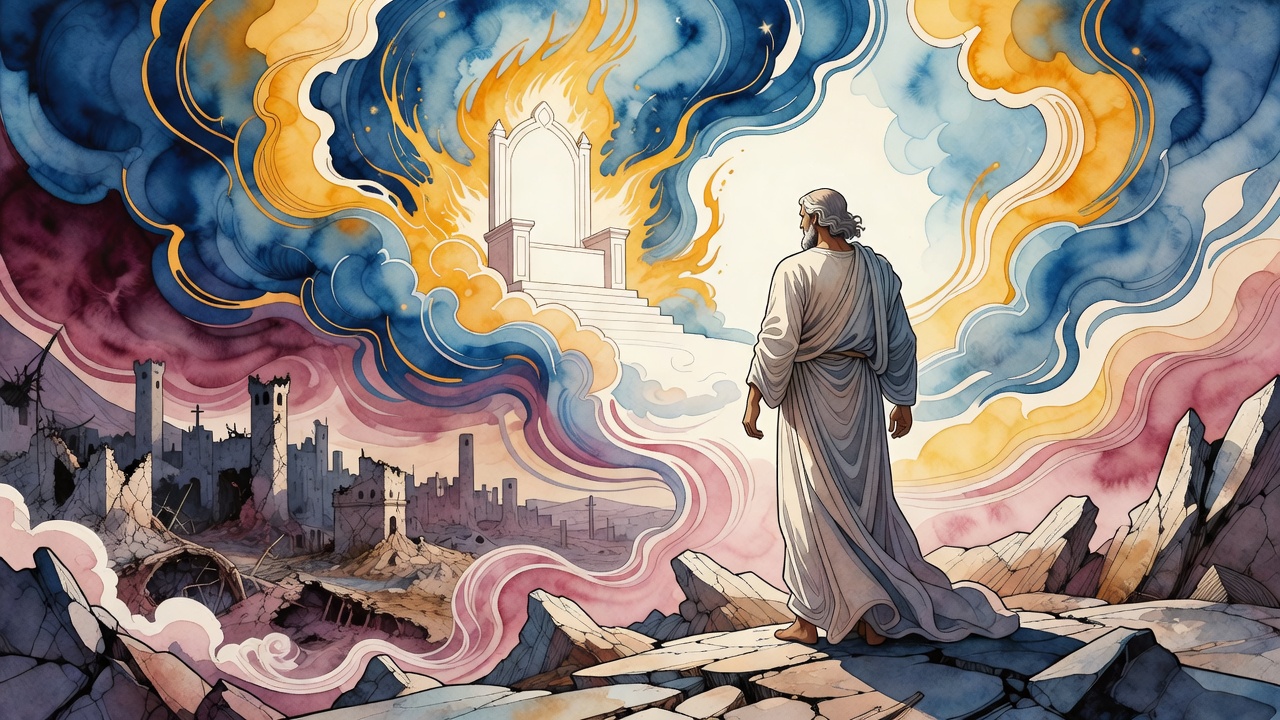
The kingdom of Sodom had done it first. That is what Abraham had been arguing against on the road, though nobody said so while he was doing it. He had come with a count, and a count only reaches as far as what people do. What was being weighed on the other side took in what they had settled on doing and never said out loud. Fifty men would have held the roof up, or forty, or ten, but there was no way to walk down into that market and find out why there were not ten.

Fire on the Deed and on What Chose It

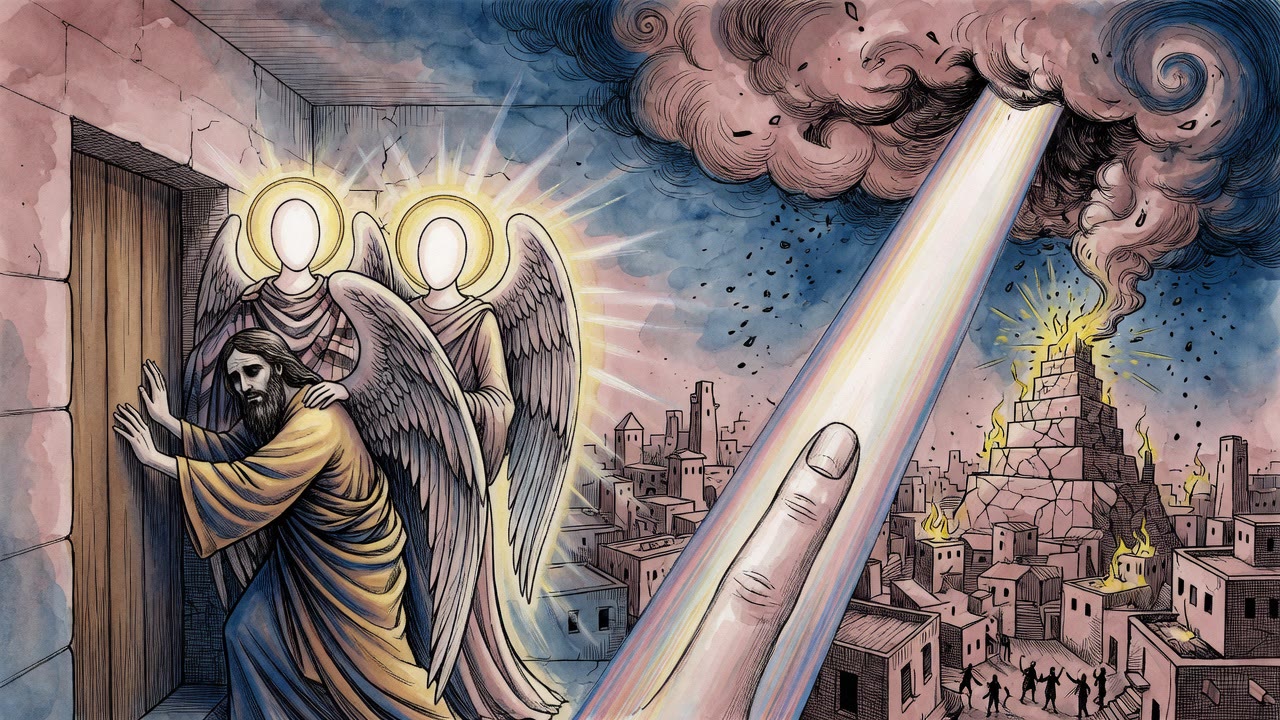
In the morning the fire came down, and it fell on the deeds and on the intention that had picked those deeds and made them the policy of a town. Lot got out with his household while the smoke was still low, because two visitors took him by the hand and hauled him through the gate. His wife turned around on the road to look at what was behind her, and she stopped there.

Abraham stood where the ground looked down over the whole plain and watched with his own eyes. The heat came up the slope in waves and reached his face. He had already said his piece, all of it, and there was nothing left in his mouth but the words he had used at the start: far be it from You to do such a thing.

Ask Your Father and He Will Tell You

Sodom did not take the type with it when it went. There is no generation without men like the generation of the flood, and none without men like the generation of the tower, and none without men like Sodom, though each one of them is judged for what he actually did with his own hands.

The mouth is no help in telling them apart, either. Esau would meet Jacob on the road with his arms open and say, "My brother, let there be yours what is yours." Chiram of Tyre would send word to Solomon about the towns he had been given and call him brother in the same breath. Whichever way the wind was blowing for Israel, the greeting arrived first, but the intention stayed indoors.

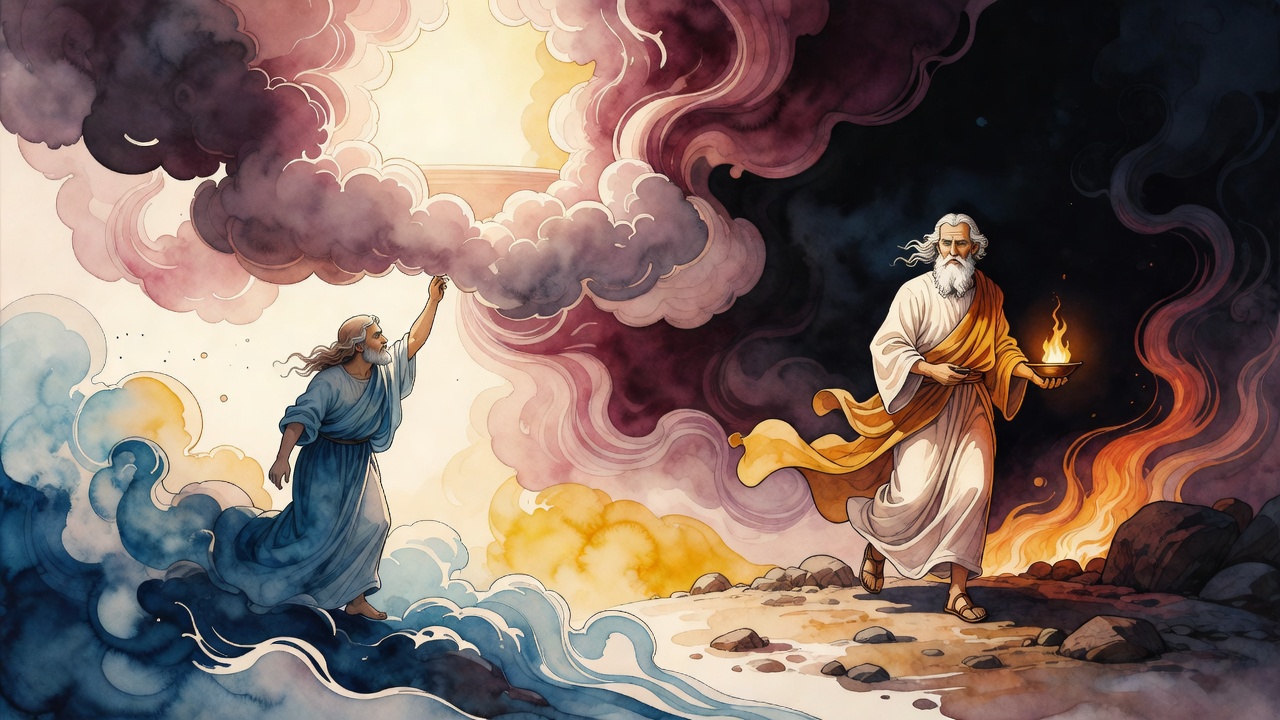
Ask your father and he will tell you. The fathers meant there are the prophets, and Abraham walked back to the oaks that evening as one of them, carrying an answer he had not been able to argue down. Behind him the smoke thinned out enough to see the plain again, and the only thing standing on it was salt.


← All myths
From the tradition

Sources

3 sources

The texts behind this telling. Some cards carry a translation of the source; others are our own retelling of it, and each card says which. Every card links out to the original.

Aggadat Bereshit 2Aggadat Bereshit

Retold in our words. Read the original at the link below.Sefaria Community Translation · CC0

Gog makes his plans in secret. He thinks his strategies are hidden, the alliance-building, the schemes against Israel, the invasions planned in quiet rooms. "On that day, thoughts will arise in your heart," the prophet Ezekiel warned him, "and you will devise an evil plan" (Ezekiel 38:10). But the Holy One cuts him off before he finishes the thought: I know what you're planning.

The rabbis of Aggadat Bereshit return to an old puzzle: if God created 248 organs in the human body, why does the heart alone disobey? Every organ acts according to its nature, the eye sees, the ear hears, the hand grasps. But the heart twists. Jeremiah said it plainly: "The heart is deceitful above all things and desperately wicked; who can know it?" (Jeremiah 17:9). Even the person carrying the heart cannot predict it.

This is the context for Sodom's destruction, which Abraham watched with his own eyes (Genesis 18-19). God didn't destroy Sodom because of what they did only. He destroyed it because of what they intended. Sodom's heart had already gone somewhere no community could return from. Abraham bargained for the righteous, "Far be it from You to do such a thing!". And God listened, long enough to confirm that not even ten could be found. The destruction wasn't punishment. It was diagnosis. And Abraham, standing at the edge of the smoke and ruin, had to learn the hardest lesson any patriarch learns: some things cannot be interceded away.

Full source
Sifrei Devarim 310:4Sifrei Devarim

Retold in our words. Read the original at the link below.Sifrei by Rabbi Shraga Silverstein · CC-BY

Sifrei Devarim 310, a passage from the ancient commentary on Deuteronomy, really digs into this idea. It starts with a powerful line: "Reflect upon the years of generation upon generation." What does that really mean?

It suggests that no generation is ever truly unique in its capacity for… well, let's just say, less-than-ideal behavior. The text doesn't mince words. "There is no generation where there are no men like those of the generations of the men of the flood," it states bluntly. Think about the sheer scale of destruction in the story of Noah and the flood! The Sifrei is saying that potential for such moral decay always exists.

It doesn’t stop there. The passage continues: "where there are no men like those of the generation of hapalagah and the men of Sodom." Hapalagah refers to the generation of the Tower of Babel, remember? The ones who tried to build a tower to reach the heavens, a symbol of human arrogance. And Sodom… well, Sodom is practically synonymous with utter depravity.

So, is that it? Are we doomed to repeat the sins of the past? Not exactly. The Sifrei adds a crucial caveat: "but each is judged according to his acts." This isn’t about fatalism; it’s about accountability. We might be prone to certain failings, but we are still responsible for our choices. We can’t just shrug and say, "Oh well, humans will be humans."

But how do we learn from these past mistakes? How do we avoid falling into the same traps? The text offers a path forward.

"Ask your father and he will tell you." Now, this isn't necessarily about your literal, biological father (though, no disrespect to dads!). Here, "father" refers to the prophets. As the text illustrates, "And Elisha saw (Eliyahu the prophet) and cried 'My father! My father!'" (II (Kings 2:1)2). The prophets, like Elijah, were seen as spiritual fathers, guides who could offer wisdom and perspective. They possessed insight into the divine will and the consequences of our actions.

And then, "your elders and they will tell you." This refers to the wisdom of the community, the accumulated experience of those who have come before us. The Sifrei points to (Numbers 11:16), where God tells Moses to "Gather unto Me seventy men from the elders of Israel." These elders, steeped in tradition and history, served as a collective memory, reminding the people of their past and guiding them toward a better future.

So, what’s the takeaway here? We are all part of a long chain of generations, carrying within us the potential for both great good and terrible evil. It’s up to us to learn from the past, to seek guidance from the prophets and elders (both literal and metaphorical), and to make conscious choices that lead us toward righteousness. It’s a daunting task, to be sure. But it’s also an incredibly important one. Because the future, after all, is not yet written.

Full source
Sifrei Devarim 322:9Sifrei Devarim

Retold in our words. Read the original at the link below.Sifrei by Rabbi Shraga Silverstein · CC-BY

The ancient sages noticed this human tendency, too, and they saw it reflected in the relationship between Israel and the other nations.

Sifrei Devarim, a legal midrash on the Book of Deuteronomy, points out a fascinating pattern. When Israel prospers, the nations often try to cozy up, presenting themselves as "brothers." But is it genuine? Esau, after years of animosity, greets Jacob with the seemingly generous words, "My brother, let there be yours what is yours" (Genesis 33:9). And Chiram, King of Tyre, says to Solomon, "What are these cities that you have given me, my brother?" (1 (Kings 9:1)3).

Are these genuine expressions of brotherhood, or something else entirely? Sifrei Devarim suggests a more cynical interpretation. It warns "Lest they say: 'Our hand is exalted, etc.'" echoing the words of the prophet Amos (6:13): "Behold, with our strength we have taken power for ourselves." In other words, the nations might be trying to take credit for Israel's success, or even worse, lay claim to it.

It's a cautionary tale about being aware of the motivations of others, especially when things are going well. Are they truly celebrating your success, or do they have ulterior motives?

But the text doesn't stop there. It explores the meaning of the phrase "For it is a nation devoid of counsel" (Deuteronomy 32:28). Now, this is where it gets interesting, because we have two different interpretations from Rabbi Yehoshua and Rabbi Nechemiah.

Rabbi Yehoshua interprets this verse as referring to Israel. He argues that Israel has lost the goodly counsel that was given to them. And what is this "counsel"? None other than the Torah itself! As (Proverbs 8:14) tells us, "With me (Torah) is counsel and wisdom." So, according to Rabbi Yehoshua, the verse is a lament for Israel's straying from the wisdom of the Torah.

Rabbi Nechemiah, on the other hand, sees the verse as referring to the nations. He believes that they are the ones devoid of counsel.

So, which is it? Does the verse refer to Israel or the nations? Perhaps it's both. Maybe the nations lack true wisdom, and Israel, at times, forgets the wisdom it possesses.

This passage from Sifrei Devarim offers us a complex and nuanced view of the relationship between Israel and the world. It reminds us to be discerning, to be wary of false friends, and above all, to hold fast to the wisdom of the Torah. It's a reminder that true prosperity isn't just about material success, but about staying true to our values and our path, even when the world is trying to pull us in different directions.

Full source