Parshat Lech Lecha5 min read

Abraham Walked Ahead While Noah Clung to God

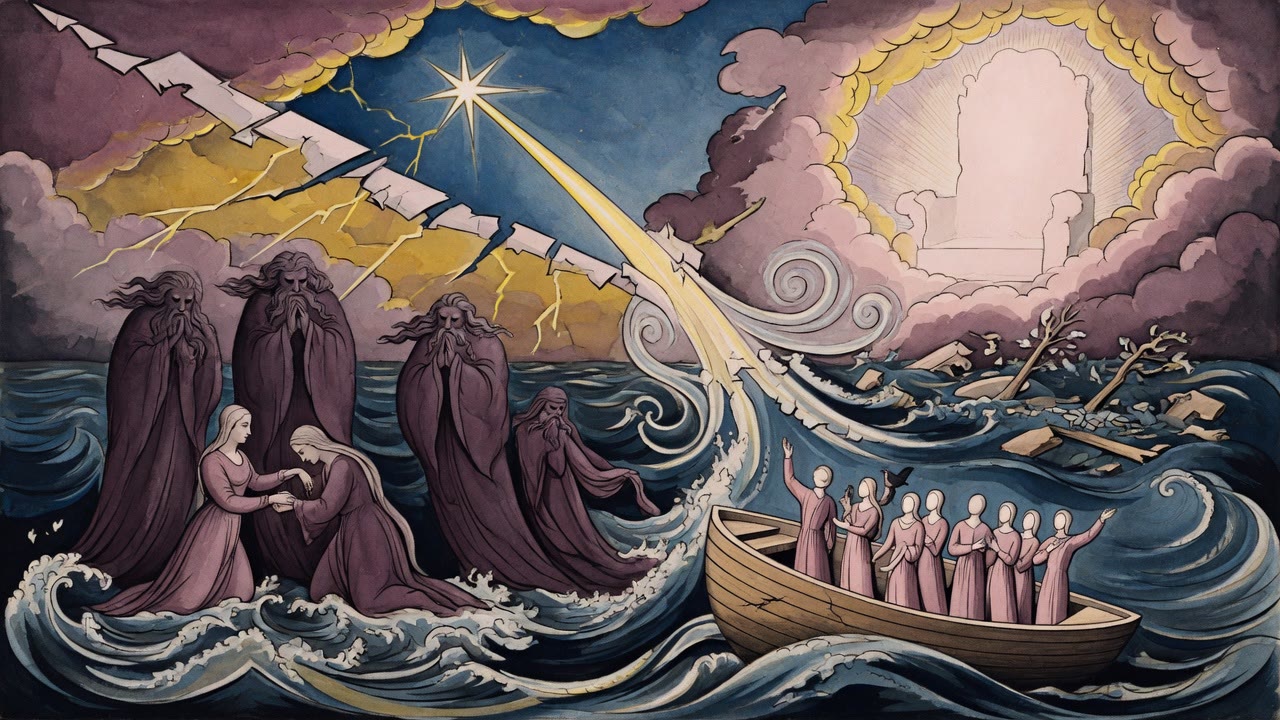
Noah walked with God like a child holding a father's hand. Abraham was told to walk before God, a lamp bearer sent ahead into darkness.

Curated by Arthur · Told by Maggid ·
Table of Contents
  1. The Child and the Grown Son
  2. Mud and Lamp
  3. Ten Generations of Missed Calls
  4. The Road That Starts Ahead
  5. Two Walks, One God

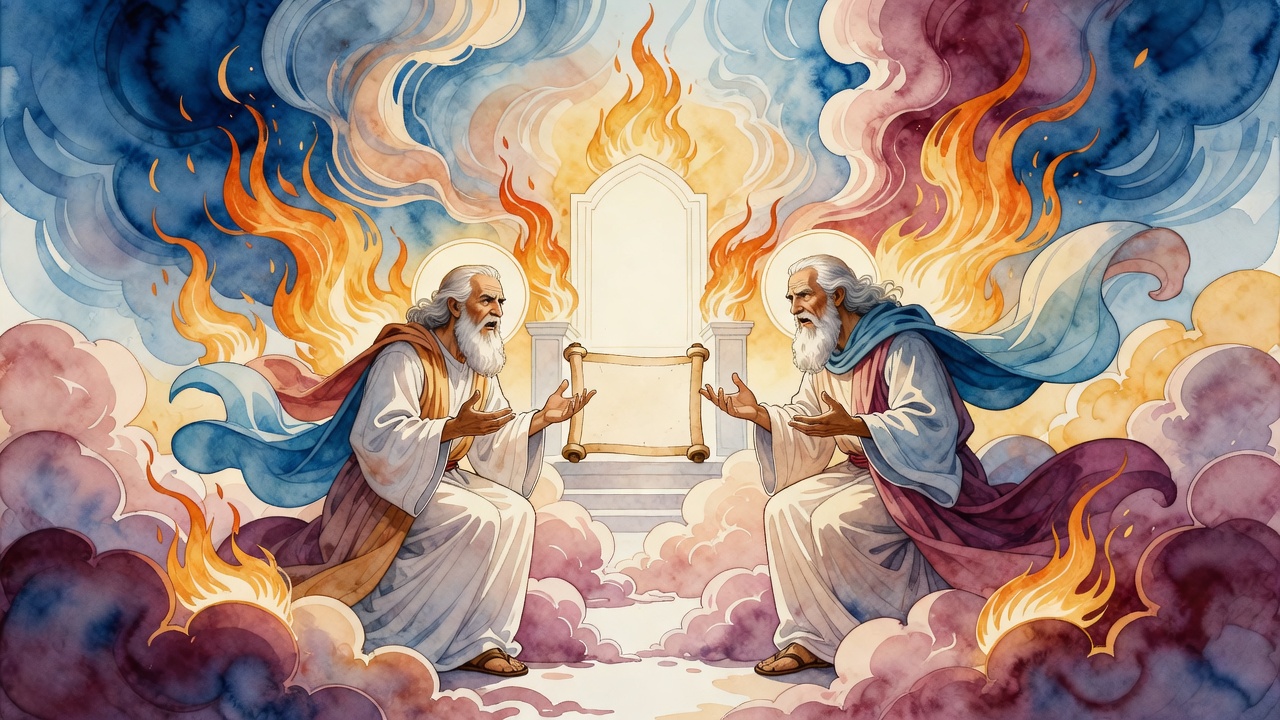
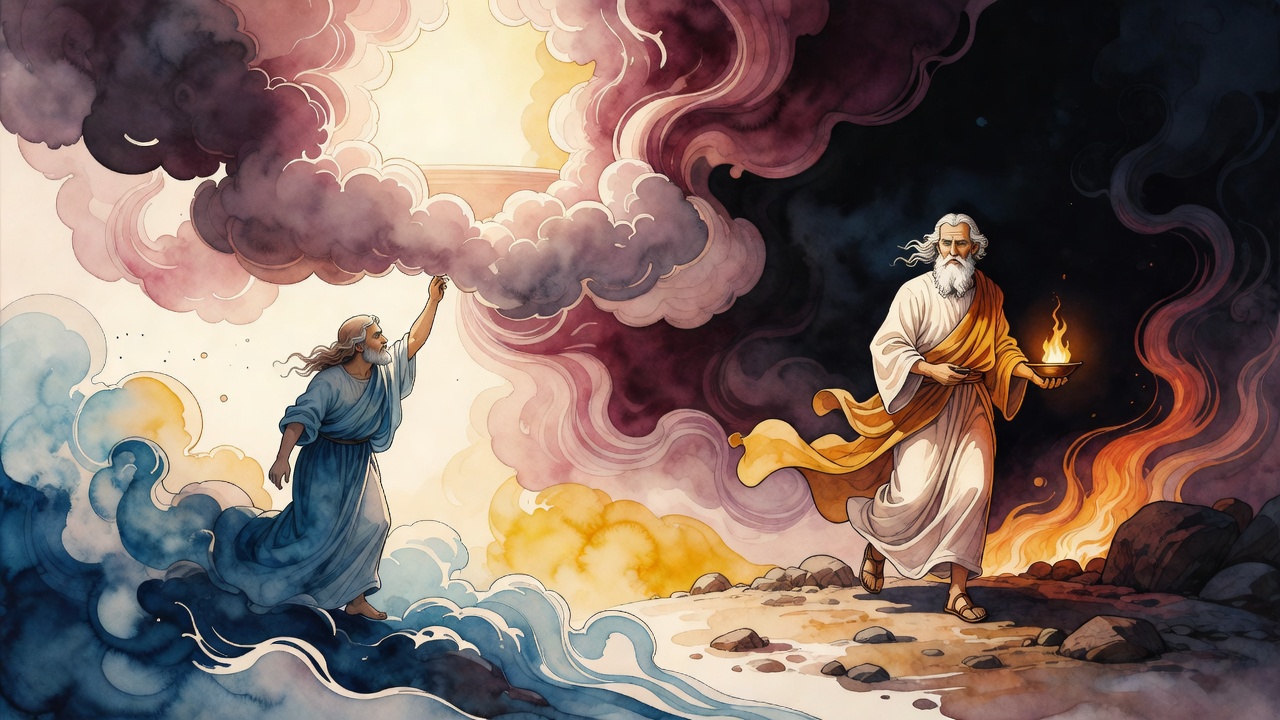
Noah held on. The verse says he walked with God, and the picture is a smaller hand inside a larger one, a man who would have gone under if the grip slipped. Abraham received a different order. "Walk before Me, and be perfect" (Genesis 17:1). The preposition changed, and with it the whole posture of righteousness on the road.
Abraham Walked Ahead While Noah Clung to God Click for full size

Careless reading crowns Noah the greater man because nearness sounds like favor. The sages reverse the crown. Nearness can mean need. Distance ahead can mean trust.

The Child and the Grown Son

Rabbi Yochanan drew a king with two sons. The little one clings to his father's hand lest he stumble. The grown son strides ahead, sure of his footing. Noah walked with God because he had to be held, otherwise the floodwaters of his wicked generation would have swept him under too. Abraham, alone and righteous in a crooked age, was told to go on ahead.

The difference is not love. Both sons are loved. The difference is capacity. One generation's righteous man survives by gripping. Another generation's righteous man is asked to clear a path.

Mud and Lamp

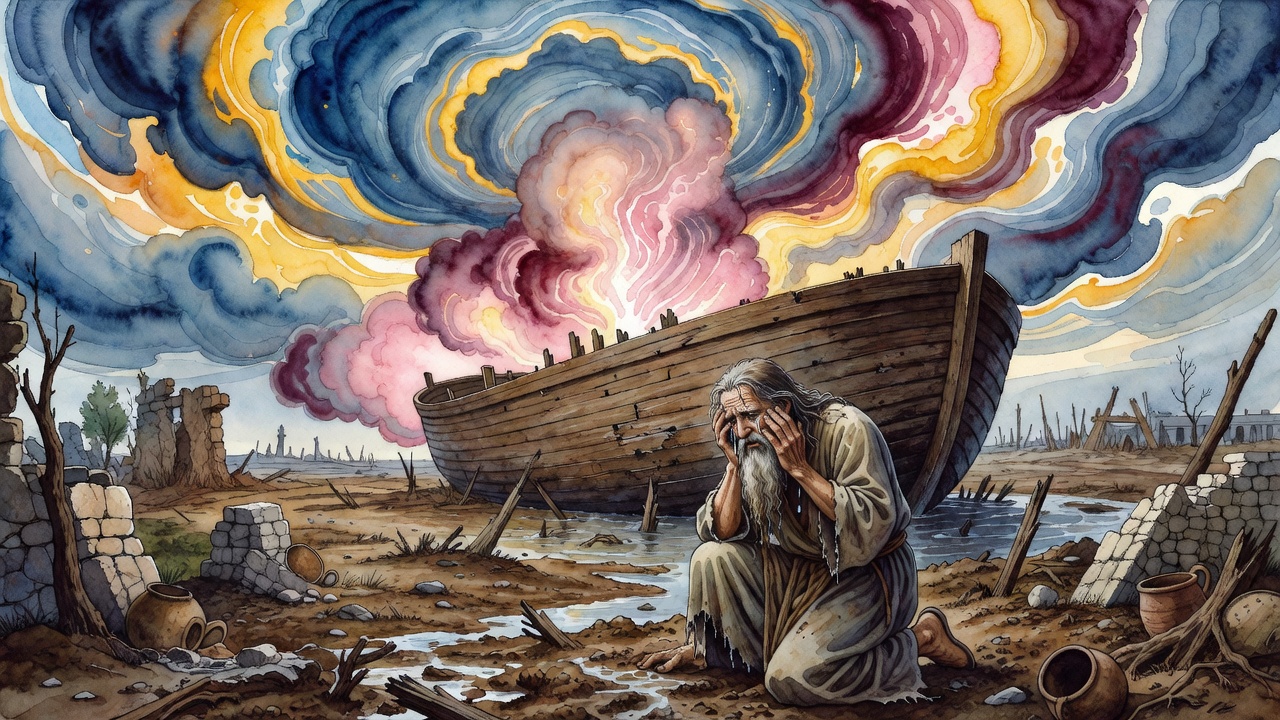
Resh Lakish sharpened the contrast with darker tools. A king's friend is drowning in mud. The king reaches down, seizes his hand, and hauls him out. That was Noah, sunk in the mire of his time until God's hand lifted him clear. Abraham was something else. Picture a king groping through the dark, and a friend who arrives carrying a lamp. "As long as you light my way," says the king, "walk before me."

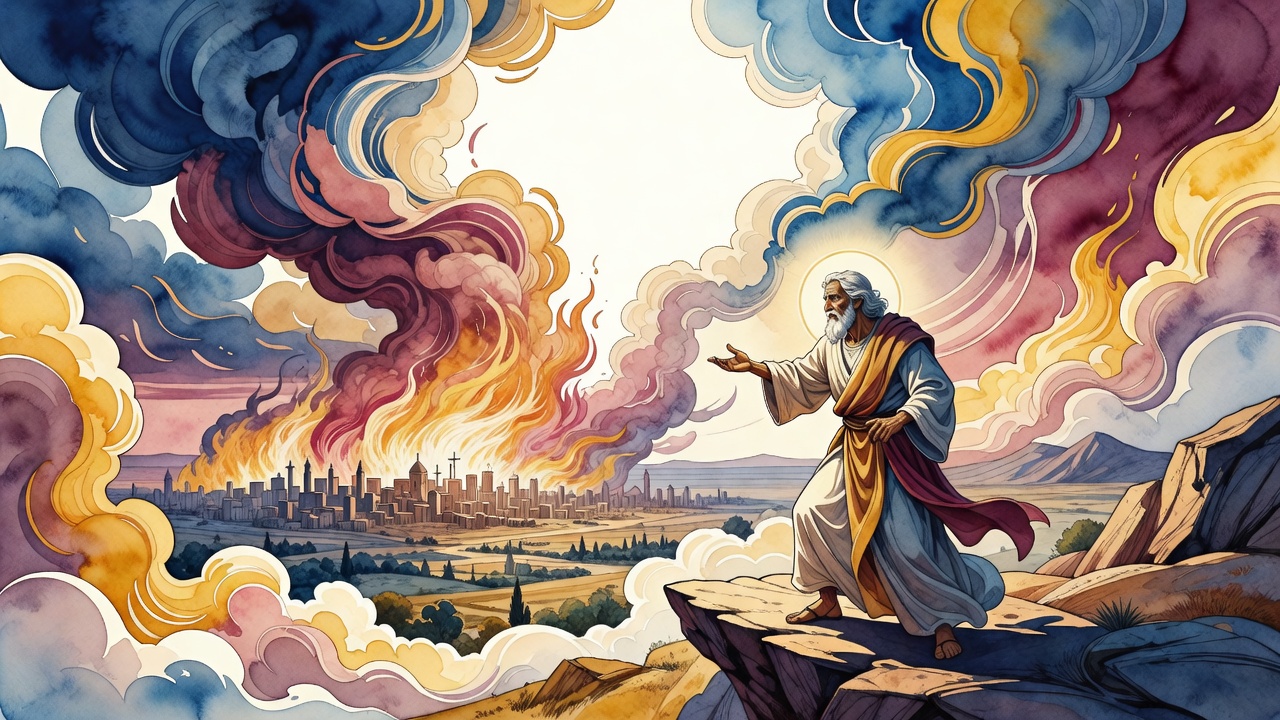
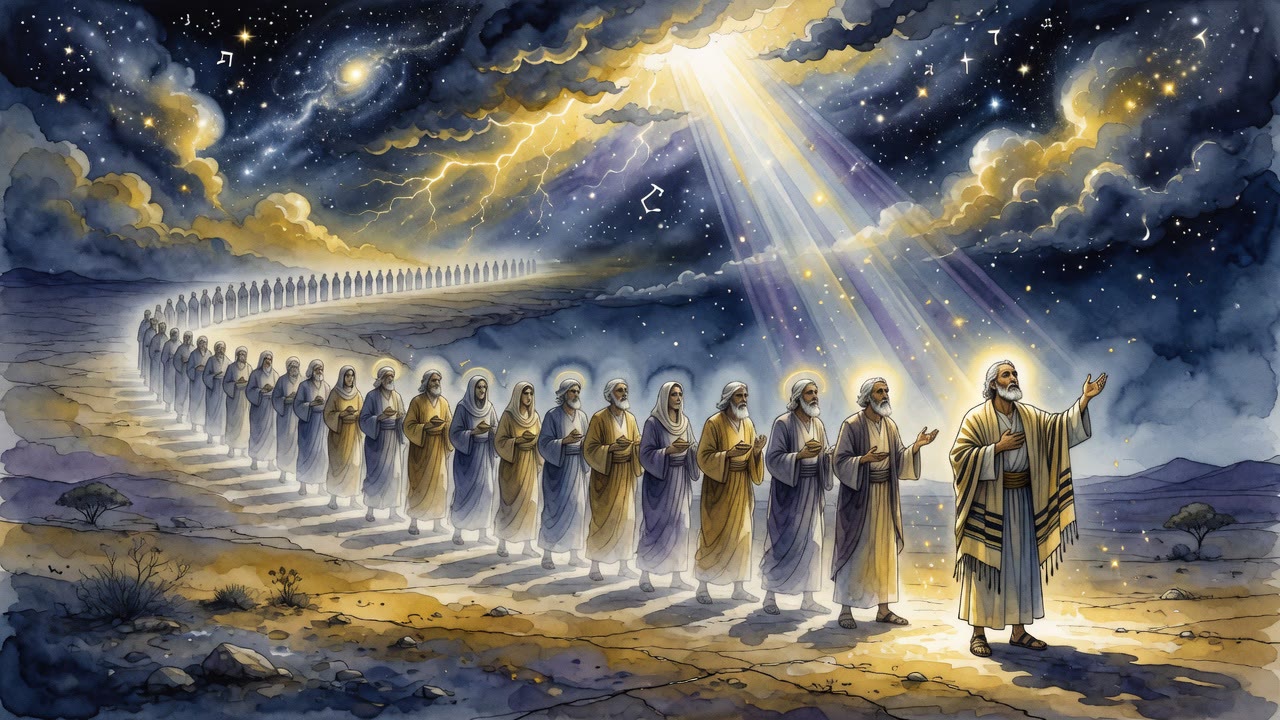
While the whole world lay in wickedness, Abraham burned like a lamp in the east, and God let him lead. The patriarchs walked before God not as a herded flock but as elders announcing a prince, heralds whose lives proclaimed that a great One approached. A flock that walks ahead of a shepherd is only being driven. Elders who walk ahead of a nasi honor him by making room for his glory in public sight.

Ten Generations of Missed Calls

Why Abraham? Why this man, this hour? From Noah to Abraham ten generations passed. Wisdom fortifies the wise more than ten rulers in a city, and the midrash heard in that verse the ten who could have been addressed and were not. God could have spoken to any of them. He spoke only with Abraham. Readiness matters more than slot in a genealogy.

Rabbi Azarya traced the failures: the generation of Enosh began to profane the Name; the flood generation could not be healed; the Dispersion at Babel tried to make a name for itself with bricks toward heaven. "We sought to heal Babylon, but it was not healed; forsake it, and let us go, each to his land." Then the Lord said to Abram, "Go you, from your land" (Genesis 12:1). Lekh lekha was not a random adventure. It was the exit after a chain of worlds that would not mend.

Abraham left a landscape of missed repairs. Walking before God meant carrying the lamp into streets that had preferred towers and violence.

The Road That Starts Ahead

Noah's walk saved a remnant through water. Abraham's walk opened a people through land and promise. One clung and lived. One went first and lit. The tradition does not despise the clinging. It refuses to call clinging the highest form of service when a generation needs a lamp.

On the day the command came, Abraham took the first step without a map that would satisfy a cautious man. The grown son does not ask the father to hold both hands. He asks only for the road and the charge to be perfect on it.

Somewhere behind him in the story's deep past, Noah's grip on the divine hand still steadies the memory of a world that almost ended. Somewhere ahead, the elders of Abraham's line keep walking before the King, announcing glory with the simple fact of their steps.

Two Walks, One God

The flood hero and the pilgrim father do not compete for a single medal of holiness. They answer different emergencies. When the world is water, the need is a grip that does not slip. When the world is moral night, the need is a flame that moves first into the street.

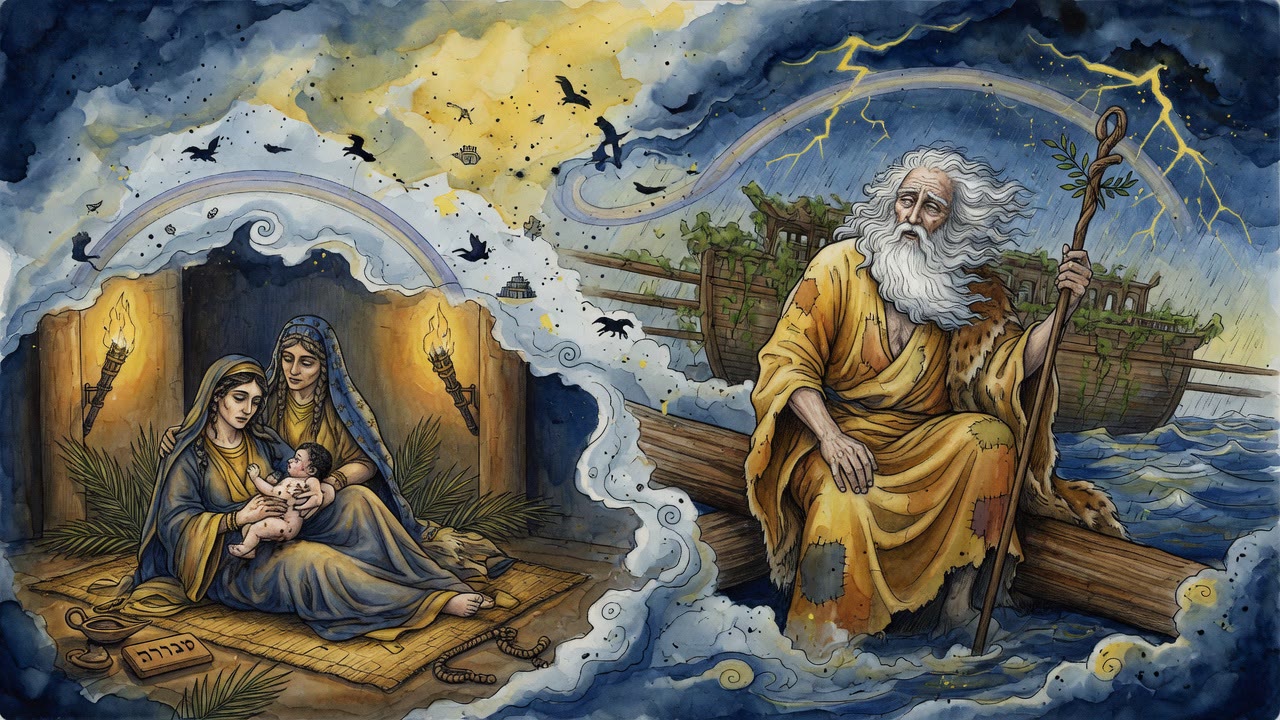
Abraham's "go" gathers force from Noah's "only." Between them stretch generations that would not heal, towers that would not humble themselves, and names that tried to climb without commandment. The lamp does not mock the hand that once held on in the mud. The lamp borrows courage from the fact that someone was held and lived to father the line that would one day leave Ur.

Walk with. Walk before. The verbs remain on the page so that later walkers can ask which posture the hour demands, and then move without waiting for a crowd to approve the step.


← All myths
From the tradition

Sources

3 sources

The texts behind this telling. Some cards carry a translation of the source; others are our own retelling of it, and each card says which. Every card links out to the original.

Midrash Tanchuma Buber, Lech Lecha 26:1Midrash Tanchuma Buber, Lech Lecha

Translation of the source text.Midrash Tanchuma (Buber), Public Domain, on Sefaria · CC-BY-SA

It is written concerning Noah (Genesis 6:9), "Noah walked with God," and it is written concerning Abraham, "Walk before Me." One who reads this might suppose that Noah was greater than Abraham, but it is not so. Rabbi Yochanan and Resh Lakish differed.

Rabbi Yochanan said: A parable. To what is the matter comparable? To a king who had two sons, one grown and one small. The small one would hold onto him so that he would not fall, but the grown one would walk before him. So it is written concerning Noah, "Noah walked with God," so that he would not be sunk away with the generation of the flood. But Abraham, who was the only one of his kind in the world and was righteous, to him the Holy One, blessed be He, said, "Walk before Me and be perfect."

Resh Lakish said: A parable. To what is the matter comparable? To a king who had a beloved friend who was sunk in the mire, and he took hold of his hand and raised him up out of the mire. So Noah was sunk in the mire; the Holy One, blessed be He, saw him, gave him a hand, and raised him up out of the mire. And to what was Abraham comparable? To a king who was walking in the darkness. His beloved friend came and saw him and gave him light. The king said to him, "Since you are giving light to me, come and walk before me." So [in the days of] Abraham the whole world was wicked, and he was righteous. The Holy One, blessed be He, said to him, "Since you are giving light in the east, walk before Me."

Full source
Midrash Tanchuma Buber, Lech Lecha 26:2Midrash Tanchuma Buber, Lech Lecha

Translation of the source text.Midrash Tanchuma (Buber), Public Domain, on Sefaria · CC-BY-SA

Of Noah it is written (Genesis 6:9): "Noah walked with God." And it is written concerning the fathers of the world (Genesis 48:15): "The God before whom my fathers walked."

Rabbi Yochanan said: To what were the fathers comparable before the Holy One, blessed be He? To a shepherd who walks along while his flock walks before him.

Resh Laqish said to him: Until now the flock has had need of the shepherd. Rather, to what were the fathers comparable before the Holy One, blessed be He? To a prince who walks along while his elders walk before him, and the elders make known the honor of the prince. So did the fathers of the world walk before Him, as it is stated (Genesis 48:15): "before whom my fathers walked." Hence (Genesis 17:1): "Walk before Me and be perfect."

Full source
Bereshit Rabbah 39:5Bereshit Rabbah

Retold in our words. Read the original at the link below.The Sefaria Midrash Rabbah, 2022 · CC-BY

Our ancestors certainly did. And in the story of Abraham, we find the ultimate tale of answering that call. God speaks to Abraham, then still Abram, and says, "Lekh lekha" – "Go you, from your land." (Genesis 12:1). But why him? Why this particular man, living in that particular time?

The sages of the Bereshit Rabbah, that incredible collection of rabbinic interpretations of Genesis, saw this moment as the culmination of generations. They asked: What made Abraham so special that God chose him?

They find a clue in Ecclesiastes (7:19): "Wisdom will fortify the wise more than ten rulers who were in a city." What's that got to do with Abraham? Well, the rabbis connect it to the ten generations from Noah to Abraham. God could have spoken to any of them, but it was Abraham, with his unique wisdom and understanding, who was ready to listen. "From among all of them, I spoke only with you," God says.

Rabbi Azarya takes it even deeper, drawing a parallel to Jeremiah (51:9): "We sought to heal Babylon, but it was not healed; forsake it, and let us go, each to his land." He sees a pattern of brokenness and missed opportunities throughout early history.

"We sought to heal Babylon" – Rabbi Azarya says this refers to the generation of Enosh. We're talking about a time when, according to some traditions, humanity started to go astray, to profane God's name (Genesis 4:26). But "it was not healed" – that is, the generation of the Flood. A cataclysmic event, a reset button pressed on creation because humanity had become too corrupt. And then, "forsake it" – the generation of the Dispersion, the story of the Tower of Babel. They tried to build a tower to the heavens, to make a name for themselves, defying God's will.

Each generation failed to heal the world, to live up to its potential. So, what's the answer? "Let us go, each to his land" – and that brings us back to Abraham. "The Lord said to Abram: Go you, from your land." Abraham's journey wasn't just a physical one; it was a spiritual departure from a world that had repeatedly failed to heal itself.

The choice of Abraham, then, wasn't arbitrary. It was the result of a long chain of events, a series of missed opportunities. He was the one who finally said "yes" to the call, who was willing to leave behind the familiar and embrace the unknown, all for the sake of a higher purpose.

And isn't that the challenge for all of us? To recognize the brokenness around us, to resist the urge to repeat the mistakes of the past, and to answer the call to something greater? Maybe, like Abraham, we each have a "lekh lekha" moment waiting for us. A moment to leave behind what is, and journey towards what could be. What is your "lekh lekha" moment? What land are you being called from?

Full source