5 min read

A Star Fell and Taught the Flood to Begin

A heavenly boundary breaks when a star falls and Watchers take wives, until the waters answer the violation and eight souls cannot hold the world.

Curated by Arthur · Told by Maggid ·
Table of Contents
  1. When Heaven Dropped a Light
  2. Corruption with a Human Face
  3. Eight Souls and a Closed Sky
  4. Remember the Days of Yore
  5. After the Reset
A Star Fell and Taught the Flood to Begin Click for full size

When Heaven Dropped a Light

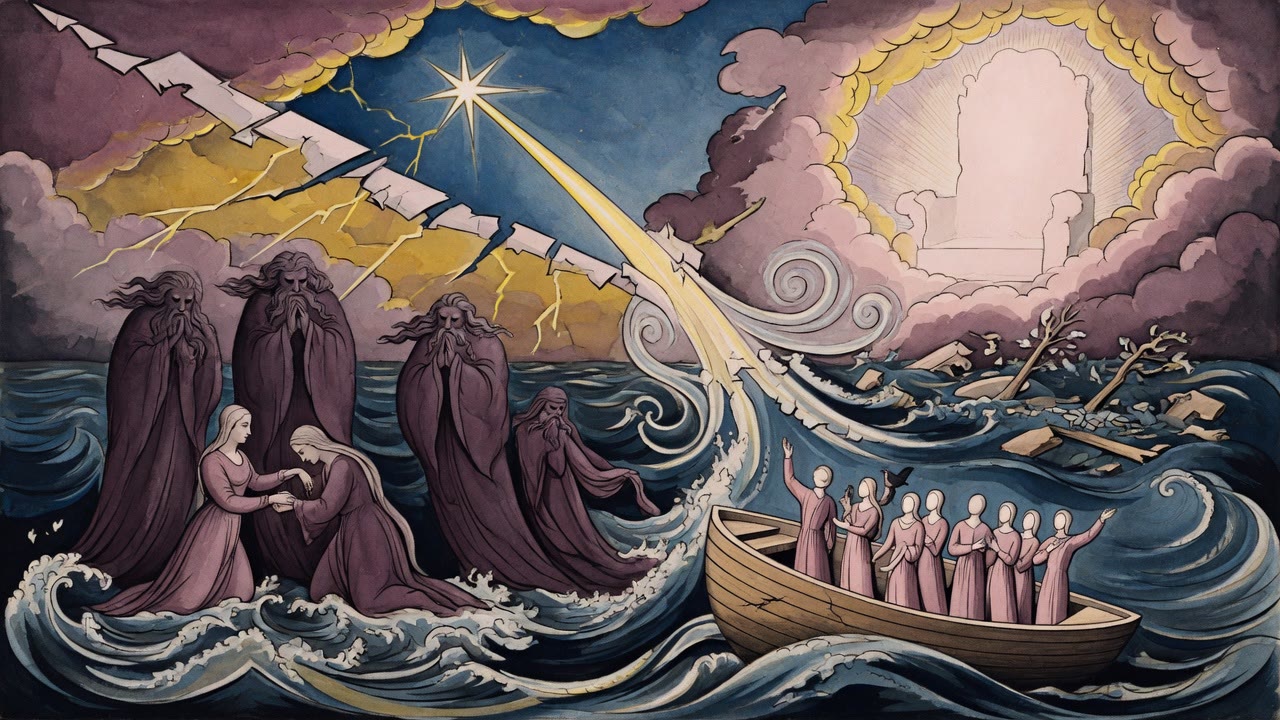
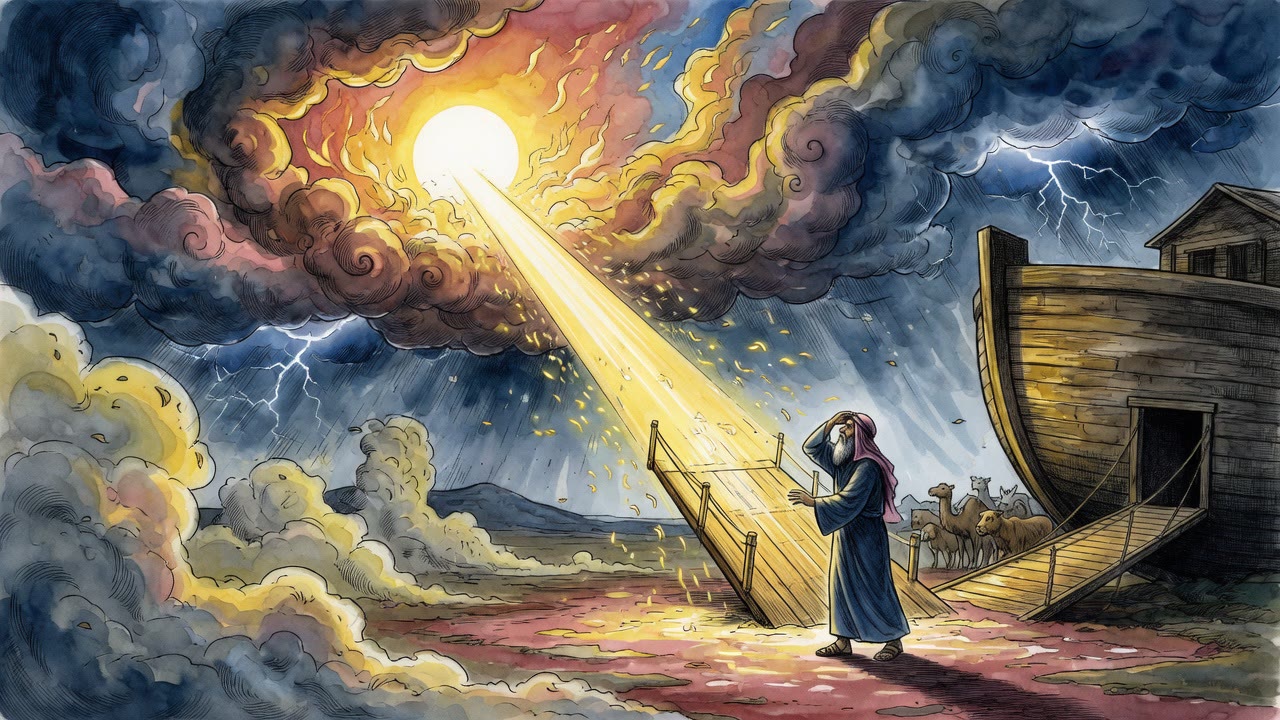
A star fell. Not as a pretty wish, but as a breach. Night tore and a light that should have stayed fixed came down hard enough to teach the generation of the Flood its first lesson: borders are not decorations. The midrash ties that fall to the days when the line between above and below failed, and desire walked through the tear wearing an angel's face.

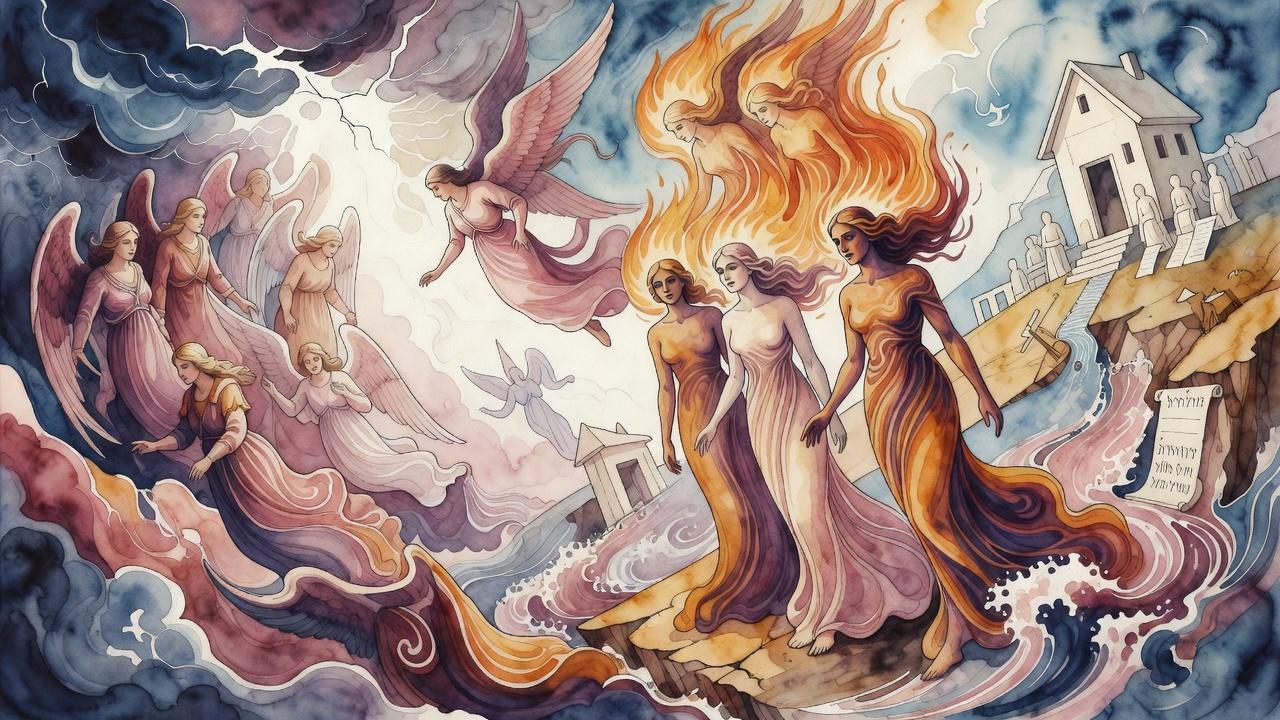
The Watchers left their station. They saw the daughters of men and came down. Giants filled the earth, the Nephilim, and violence learned new heights (Genesis 6:1-4). Heaven belongs above. Earth belongs below. When the order flips, the world begins to unmake itself from the inside, like a house whose beams have been stolen for firewood.

Children pointed at the sky and asked where the light went. Their parents had worse questions.

Corruption with a Human Face

Some sages read the fallen star as a meteor timed to moral collapse. Others read it as a parable of a high soul that chose the low road and dragged a generation with it. Either reading ends in the same weather: chaos returning through the crack desire opened. People took what was not theirs. Strength became the only law. The earth filled with the sound of the strong eating the weak, and the weak learning to hide in ways that still did not save them.

God looked and did not find a city worth bargaining for, only a noise that had forgotten the Name. The star's fall was not the whole story. It was the signal flare over a world already drowning in its own choices. Boundaries, once broken, do not apologize. They collapse.

Eight Souls and a Closed Sky

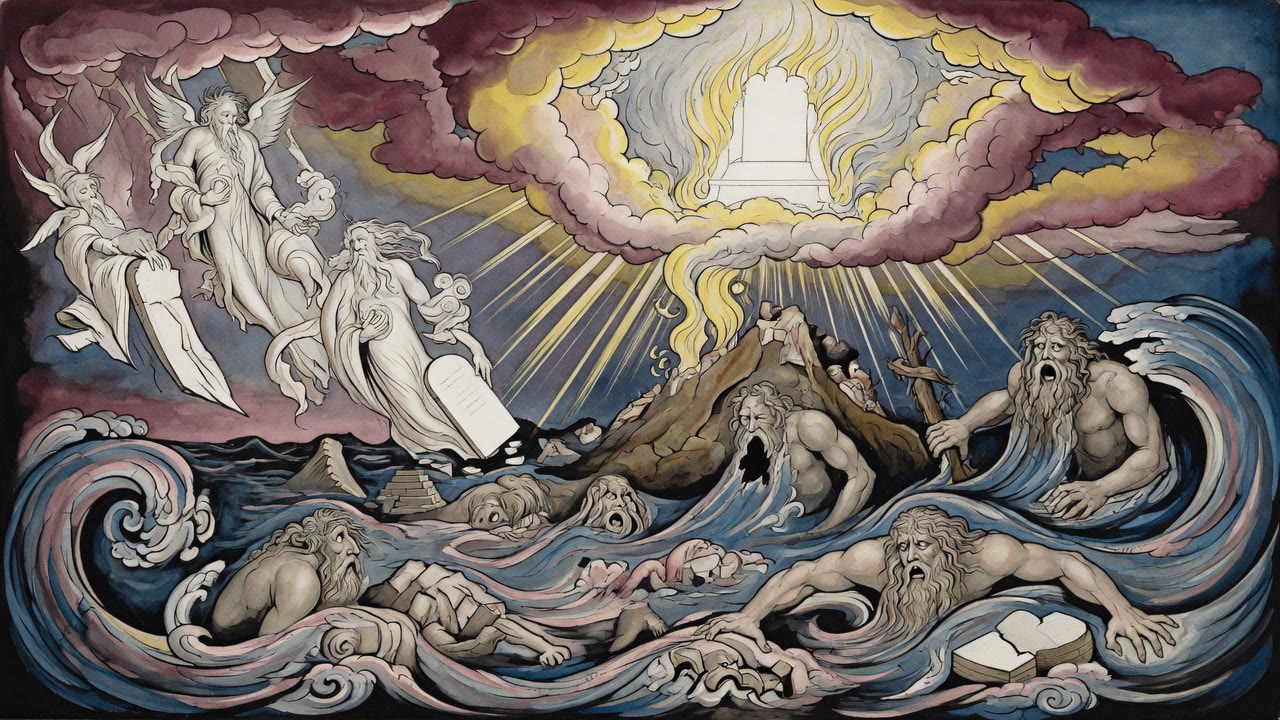
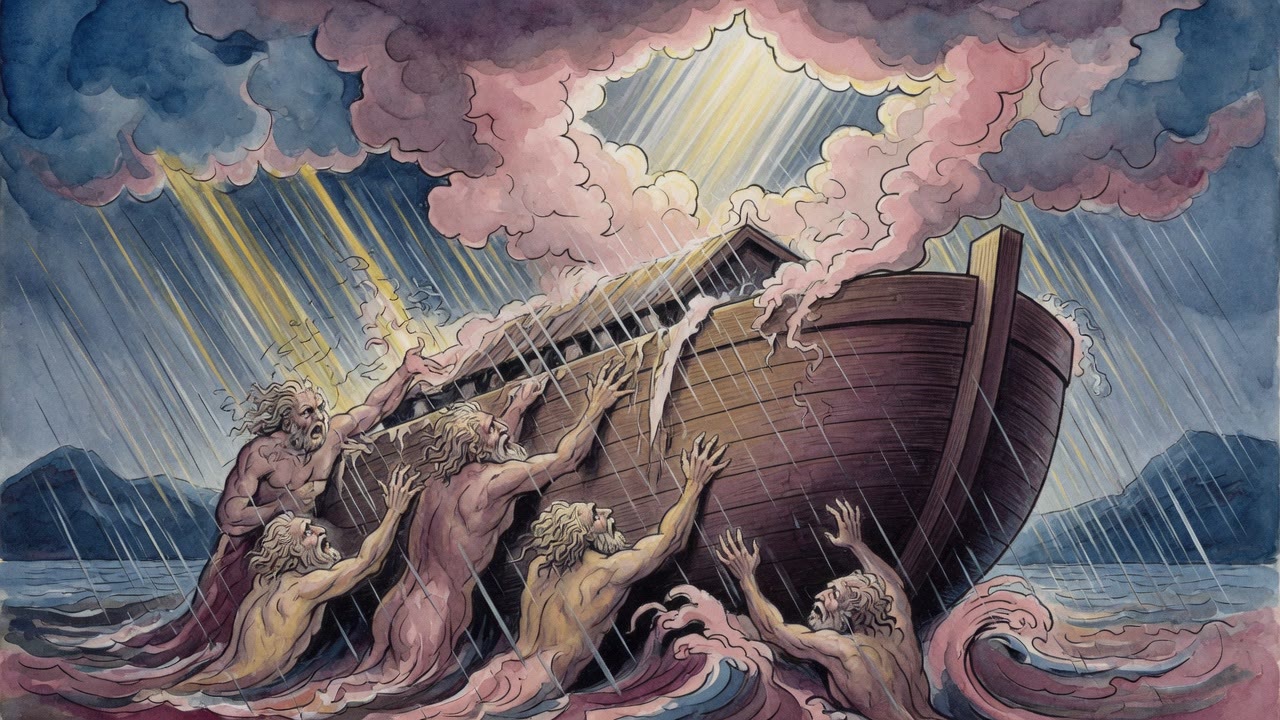
Noah built. Pitch and cubits and animals in pairs. Neighbors laughed until the first sheet of water made laughter taste like iron. Eight human beings sealed inside wood while the windows of heaven opened. The waters did not ask who meant well. Outside the ark, everything that breathed on dry land ended. Mills, gardens, arguments, songs: all of it went under.

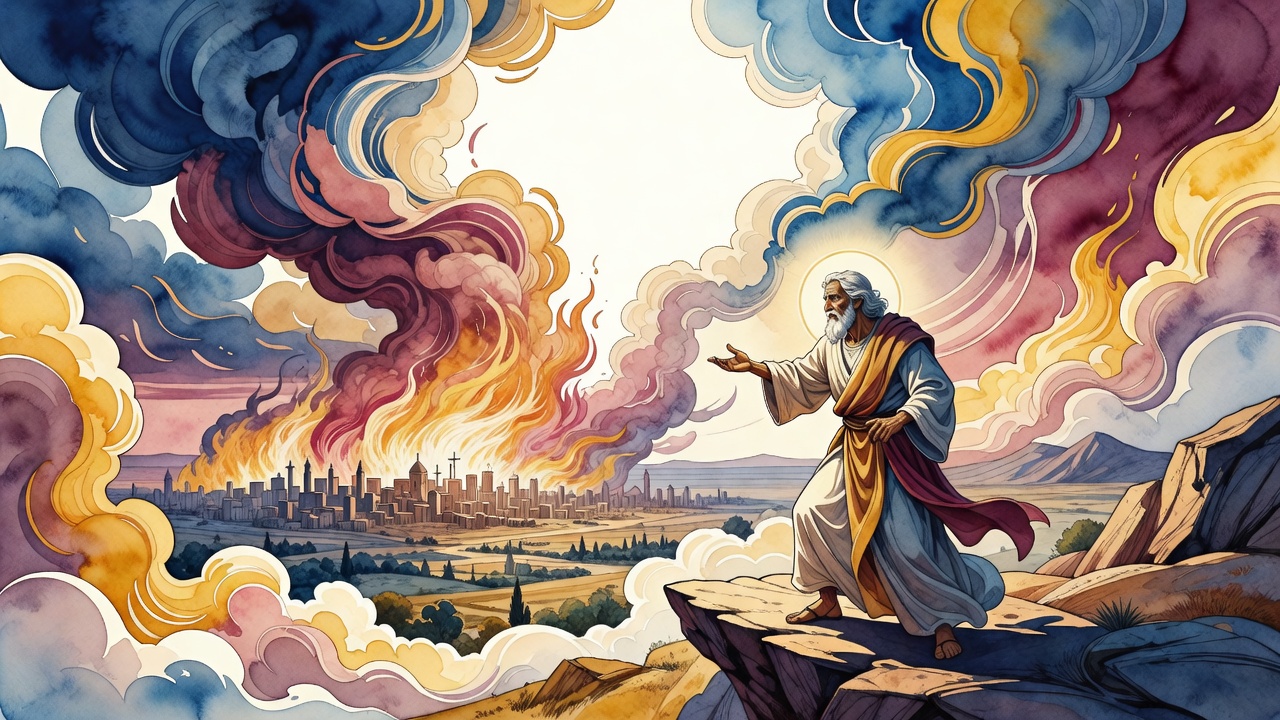
Later, when Abraham bargained for Sodom, he stopped at ten. Why not eight? Because he remembered. Eight righteous in the ark had not held back a world-flood. Mercy has a weight, and eight had not been enough to tip the scale for an entire earth. Abraham counted with clear eyes, not soft ones. He loved strangers enough to argue, and he loved truth enough to know the floor under which argument fails.

Noah walked out onto washed mud and a quieter sky. Survival is not the same as a world spared for the sake of a few.

Remember the Days of Yore

Deuteronomy commands memory of the days of old (Deuteronomy 32:7). The Sifrei turns that memory toward the Flood generation and the generation of the Dispersion at the tower, not as museum pieces but as open warnings. Remember what was done to them. Remember why the waters rose and why the languages shattered when humans tried another shortcut upward.

A star falls again whenever a boundary is treated as a suggestion. The Flood was not a mood. It was a reset after heaven and earth forgot their places. The tower would stack bricks toward the same mistake with different tools. Memory is the rope that keeps the next generation from climbing the same wrong ladder.

Stand on dried ground after rain and look up. If the sky holds, it is not because borders never mattered. It is because, once, the waters answered when they did.

After the Reset

When the waters finally quit their work, the world looked scoured. Noah opened a window and sent birds until one did not return. Olive and mud and silence. The star that had fallen was gone, but the meaning of the fall remained: when the upper world abandons its post for the lower world's appetites, creation answers with uncreation.

Abraham would stand years later and refuse to bargain below ten, carrying the arithmetic of the ark in his bones. Eight had been holy and insufficient for a planet. Sodom would get a different number and a different fire. Memory is not only mourning. It is the tool that keeps the next negotiator from begging for a floor that history already tested and found too thin.

Remember the Flood. Remember the tower. The Sifrei does not ask for nostalgia. It asks for a spine. Stars still fall in smaller ways whenever a boundary is sold cheap. The waters sleep. They are not forgetful.

Some nights after the Flood, Noah dreamed of lights falling and woke to the sound of rain that was only rain. He put his hand on the ark's timber, now useless and sacred, and whispered thanks that the reset had left him a world at all. Eight souls had been a boat, not a shield for everyone outside. That difference is the whole theology of the later ten.


← All myths
From the tradition

Sources

3 sources

The texts behind this telling. Some cards carry a translation of the source; others are our own retelling of it, and each card says which. Every card links out to the original.

Exempla of the Rabbis, No. 448Exempla of the Rabbis (Gaster, 1924)

Retold in our words. Read the original at the link below.The Exempla of the Rabbis, Moses Gaster (1924) · Public Domain

A star fell from heaven. And its fall marked the beginning of a corruption that would lead to the great Flood. The Midrash (Genesis Rabbah of Rabbi Moses HaDarshan, Midrash Abkhir) connects the fallen star to the generation of the Flood, when the boundary between heaven and earth was violated.

The fallen star, in some versions, represents one of the Watchers, the angels who descended from heaven in the days before the Flood, attracted by the beauty of human women. They left their celestial station, took mortal wives, and produced the Nephilim, the giants who filled the earth with violence (Genesis 6:1-4).

The fall of the star was not merely physical but spiritual. When a heavenly being descends to earth out of desire, the natural order is disrupted. Heaven and earth have their appointed places. Angels belong above. Humans belong below. When the boundary is crossed, corruption follows.

The sages debated whether the fallen star was literal or metaphorical. Some read it as an actual celestial event, a meteor or comet whose appearance coincided with the moral decline of the generation. Others read it as a parable: the "star" was a righteous soul that fell from its spiritual height, dragging others down with it.

Either way, the message was clear: the Flood was not an arbitrary punishment. It was the consequence of a violation so fundamental that it destabilized creation itself. When stars fall and angels descend and the boundaries between heaven and earth dissolve, the world returns to the chaos from which it was made. The Flood was not destruction. It was a reset, God restoring the boundaries that had been broken.

Full source
Yalkut Shimoni on Torah 83:11Yalkut Shimoni on Torah

Translation of the source text.Torat Emet (Yalkut Shimoni) · CC-BY-NC

Another interpretation. Why ten [as the number of righteous Abraham bargained for to spare Sodom]? Because in the generation of the flood eight already remained [Noah, his three sons, and their four wives], and yet the world was not spared on their merit. [Therefore Abraham did not press below ten, for fewer than ten could not stand for a whole city.]

Full source
Sifrei Devarim 310:1Sifrei Devarim

Retold in our words. Read the original at the link below.Sifrei by Rabbi Shraga Silverstein · CC-BY

(Deuteronomy 32:7) tells us, "Remember the days of yore" (Devarim 32:7). That little word, yore, it's packed with meaning. It's not just about remembering the past; it's about learning from it. The Sifrei Devarim, an early rabbinic commentary on Deuteronomy, dives deep into this verse, and what it unearths is What exactly should we be remembering? Well, the Sifrei Devarim isn’t shy about pointing out some, shall we say, significant historical events.

First up: the generation of the Flood. You know, the one with Noah and the ark? The Sifrei asks us to remember what HaShem, the Name (a term used to refer to God), did with them. It wasn't exactly a happy ending, was it? A whole world, wiped clean. Why? Because of rampant corruption and violence. It's a stark reminder of the consequences of our actions.

Then there's the generation of hapalagah (הַפַּלָגָה), the dispersion. You might know them better as the builders of the Tower of BavelBabylon. They got a little too big for their britches, didn't they? They thought they could build a tower that reached the heavens, challenging God himself. And what happened? God confused their languages, scattering them across the earth. A lesson in humility, perhaps? A reminder that there are limits to human ambition.

Finally, we have the men of Sodom and Amorah. Need I say more? Their story is synonymous with wickedness and depravity. Their fate? Utter destruction. A cautionary tale about the dangers of moral decay.

So, what's the point of remembering all this? Are we just supposed to dwell on the negative? I don't think so. The Sifrei Devarim isn't just giving us a history lesson; it's giving us a moral compass.

By remembering the mistakes of the past – the arrogance, the violence, the moral corruption – we can hopefully avoid repeating them in the present. It's about understanding the consequences of our choices, both individually and collectively. It's about striving to create a better world, one that is based on justice, compassion, and humility.

It's about learning from the generations of yore, so that future generations will have better stories to tell. And isn’t that what it’s all about, in the end?

Full source