Parshat Noach5 min read

Giants Stormed the Ark While the Rain Came Down Boiling

Heaven had sentenced the world to erasure, and when the scalding rain fell the giants of Noah's generation charged the ark and clawed for a seam.

Curated by Arthur · Told by Maggid ·
Table of Contents
  1. The Sentence Spoken Before the Rain
  2. The First Drops Came Down Boiling
  3. The Giants Rushed the Timbers
  4. The Beasts Set at the Door
  5. The Pounding Heard From Inside
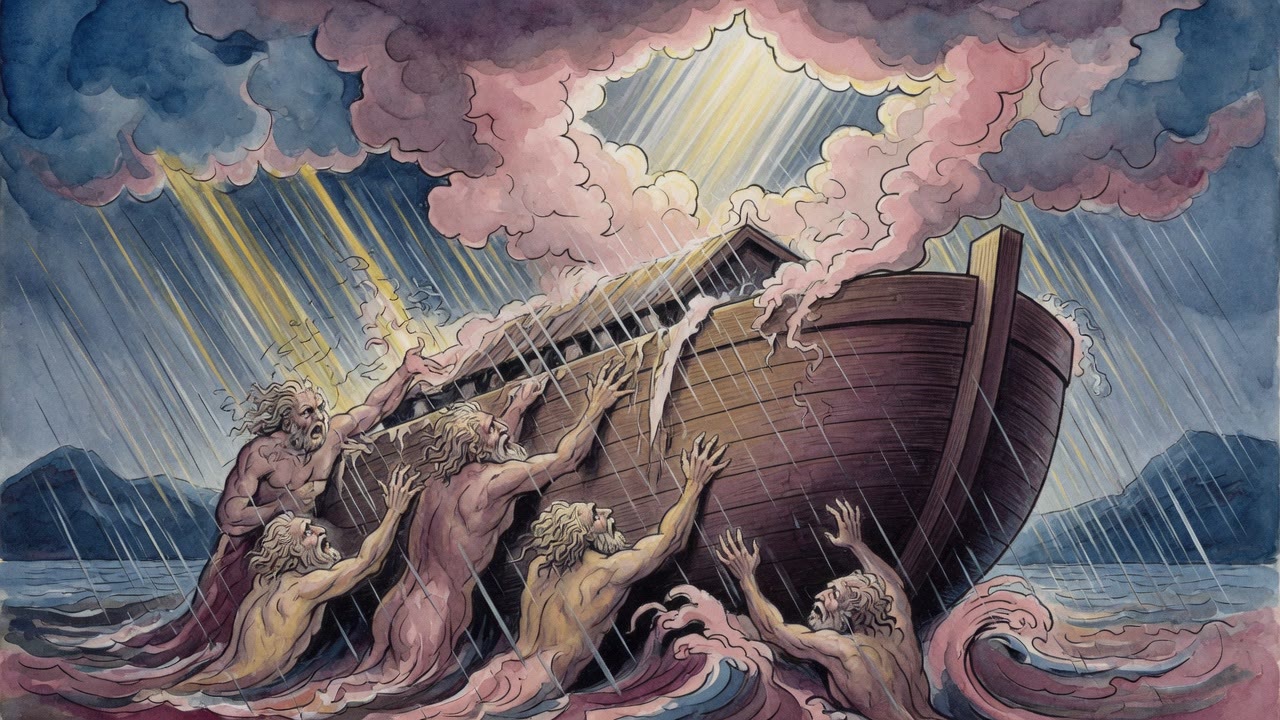
Giants Stormed the Ark While the Rain Came Down Boiling Click for full size

The Sentence Spoken Before the Rain

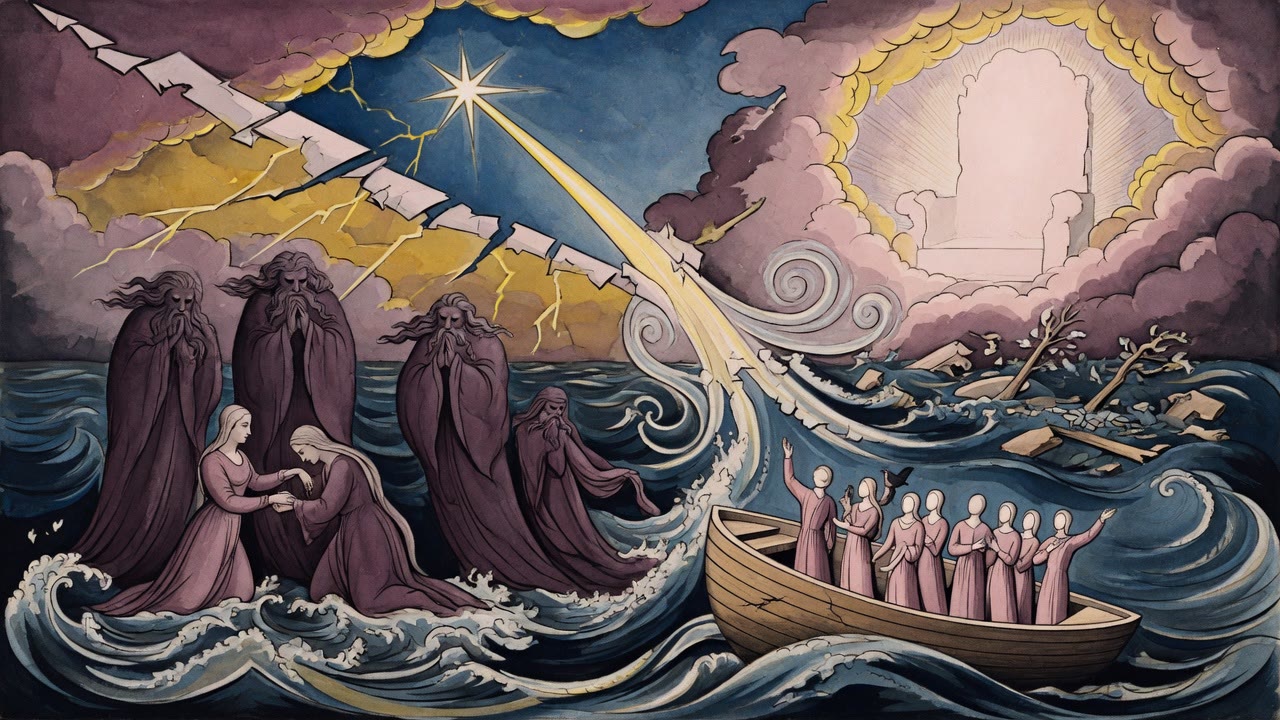
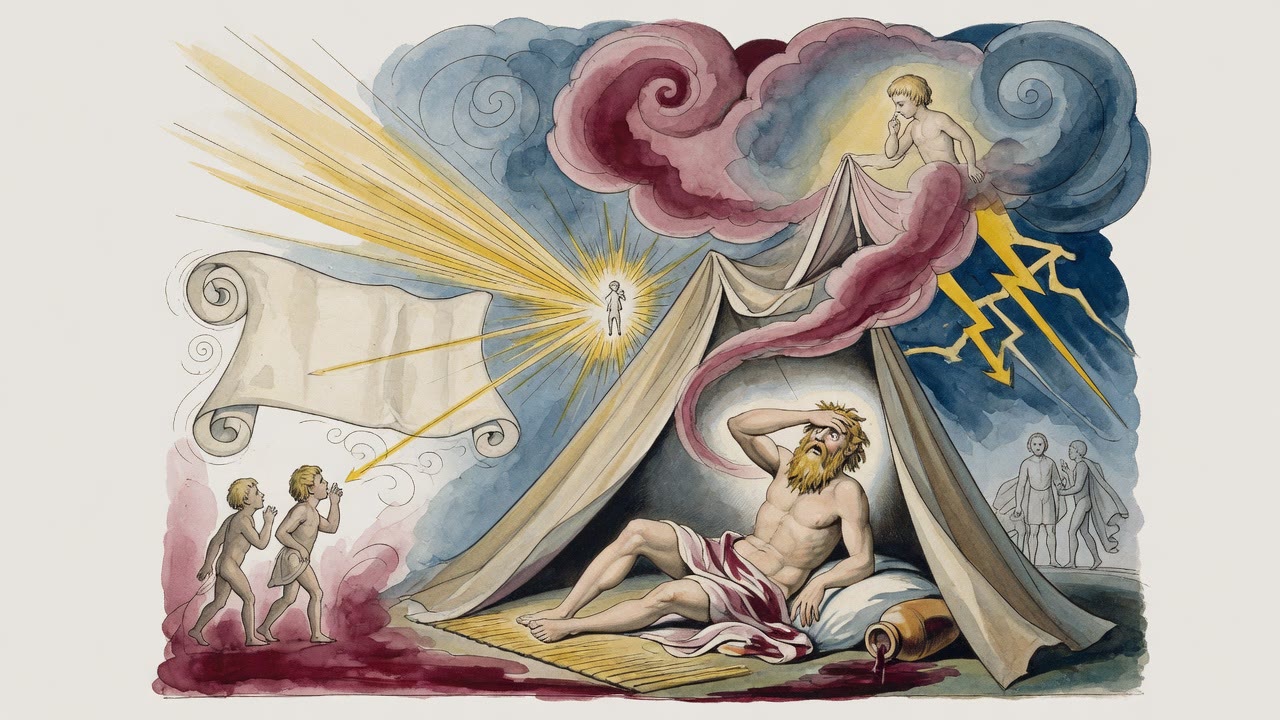
The word came down from before God's face, and it left no room for repair. Every living thing had bent its own kind off its path, and the ruling was plain. This generation would be smitten and swept out from under heaven, and their sons, born into the same rot, were counted with them. "My spirit will not always abide in man," the sentence ran, "for they also are flesh, and their days shall be a hundred and twenty years." The count had run out. The breath that held a man upright began to lift away from the whole world at once.

They were beyond warning by then. Down in the cities the sword had already gone into their own midst, brother cutting down brother until the strong learned to be afraid of the strong, and the fathers stood by and watched the children they had shaped fall in the streets. Heaven had waited a long time on them. Now the sky itself leaned down to finish what their own hands had begun.

The First Drops Came Down Boiling

Then the rain started, and it was wrong from the first drop.

Each drop had been sent through Gehenna (the realm of judgment after death) before it was let fall, driven through the place of burning until it came down not as water but as something nearer to liquid fire. The first man it caught did not have time to run. It raised a welt on his shoulder, then a blister, then it opened him to the bone, and he went down screaming into mud that was already steaming. All across the plain the drops found skin and stripped it.

There was an exactness to it. These were people whose whole sin had been heat, wanting without a wall around it, bodies that reached for whatever they set eyes on and burned through every restraint. So the punishment arrived as heat. As their own fever had inflamed them to every excess, they were scalded now by water made to boil, measure answering measure, the fire they had carried inside them handed back through the clouds.

The Giants Rushed the Timbers

Noah had stood among them for a hundred and twenty years while he cut and pitched the timber, and they had answered every warning with laughter. They were giants, men of enormous stature and strength, and they had done the arithmetic of their own bodies against his flood. If the water rose from above, one of them had told him to his face, it would not climb past their necks. If it broke from below, they would plant their vast feet over the mouths of the springs and dam the deep shut with their heels. His boat was a carpenter's fever dream. They had laughed him back to his workbench.

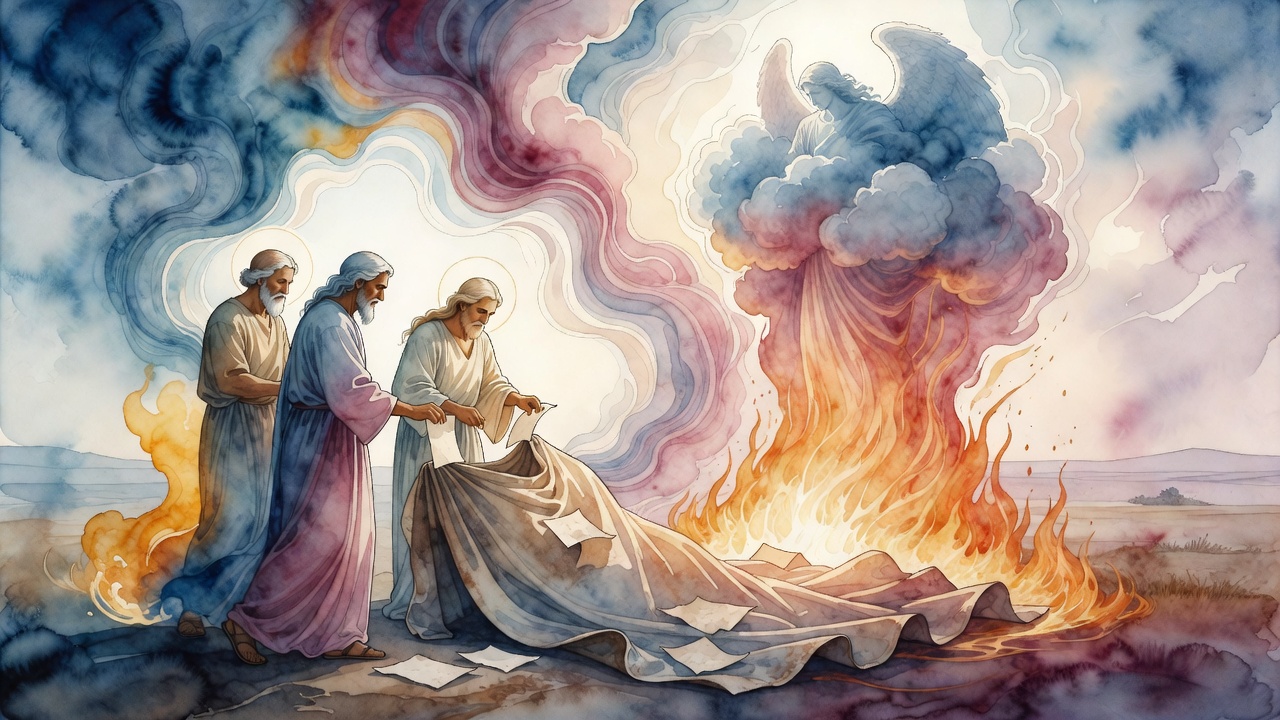
Now the springs were boiling their heels and the sky was flaying their backs, and the fever dream rode the water in front of them, sealed and dry and full of breathing things. So they went for it. A mob of them threw their whole weight at the hull, clawing along the pitch for a seam, driving their shoulders into the boards to heave the vessel over and spill the eight souls inside it out into the water with everyone else. If they could not float, nothing sealed against the flood would float either.

The Beasts Set at the Door

They had forgotten who else was aboard. Every kind of wild beast had gone up the gangplank ahead of them, two by two, and God had set the fiercest of them at the entrance like a living lock. When the first giants reached the door and hauled at it, the beasts came out of the dark of the doorway and fell on them. Lions took them at the throat. Others were flung back off the hull broken, down into the churn where the hot rain waited. The mob that had scoffed at a foolish old shipwright broke against his door, and those the beasts did not kill were driven back into the rising water to drown with the rest.

The Pounding Heard From Inside

Inside the ark, the family heard all of it through the wood. First the drumming of the boiling rain on the roof, steady and enormous. Then fists on the hull, and shoulders, and voices that had mocked their father now howling against the pitch to be let in. Noah did not open the door. He could not have opened it if he had wanted to, and he did not want to. The pounding went ragged, then thin, then it was only the rain again and the slow tilt of the boat as the water lifted it clear of the ground.

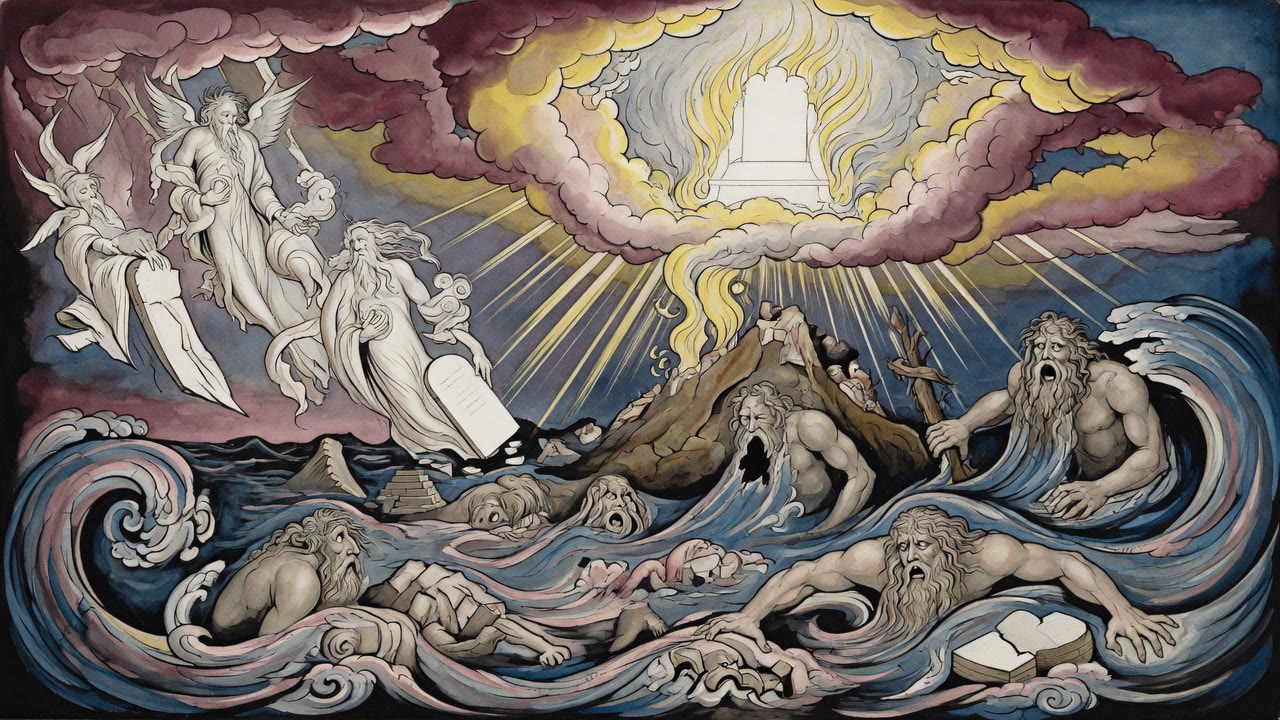
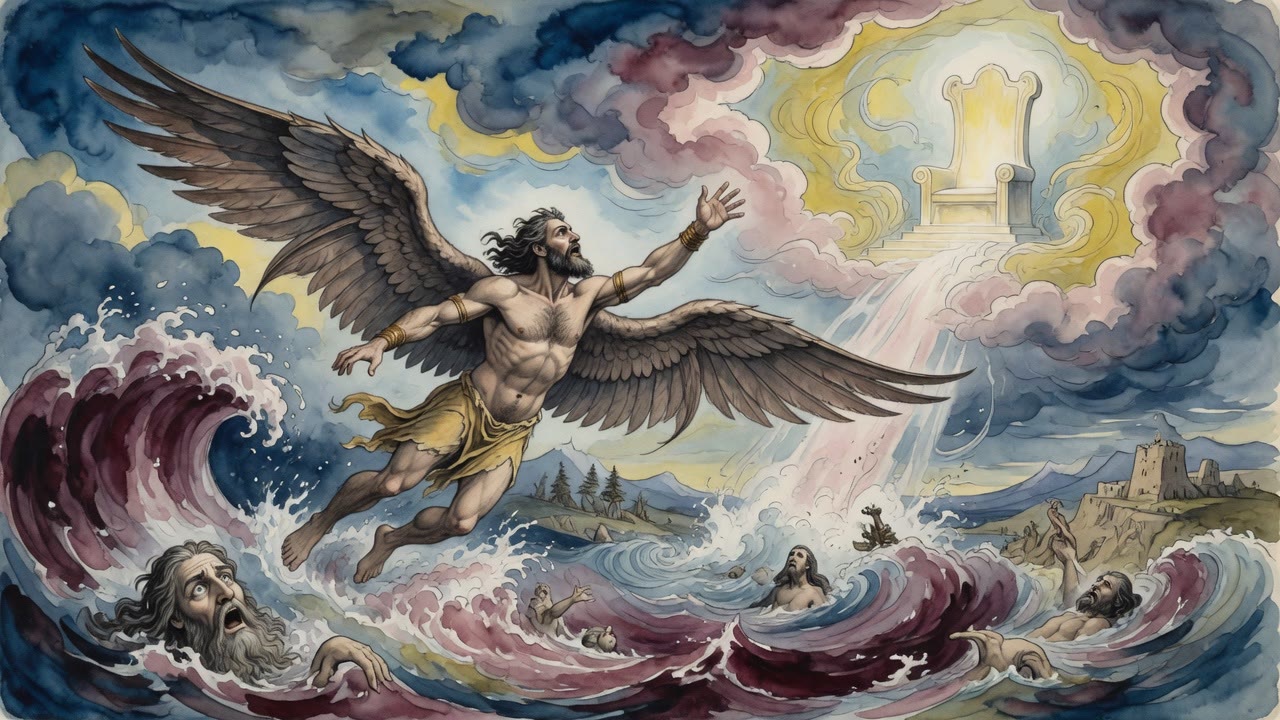
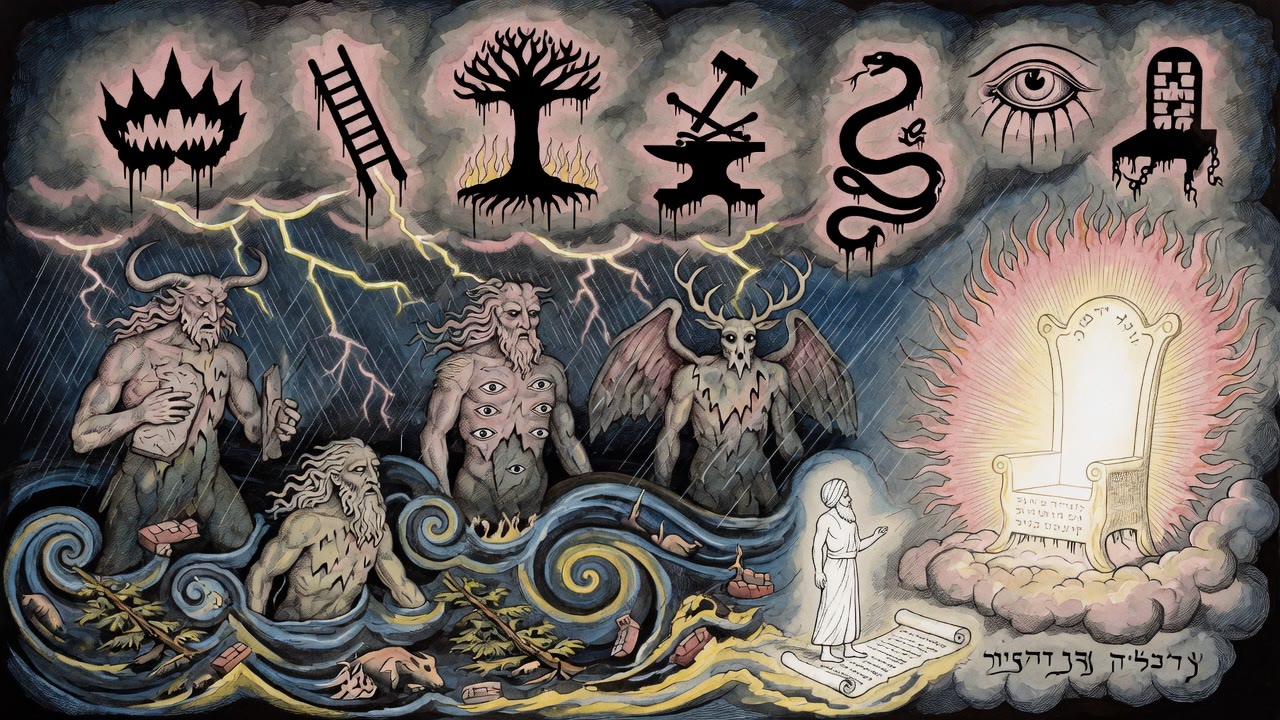
Outside, the giants who had promised to dam the deep with their feet were carried down into the deep instead. The water closed over the last of them and pressed them into the depths of the earth, where they were bound to wait for the day of the great condemnation, when judgment would be executed on everyone who had corrupted his way before the Lord. The plain went smooth and gray and silent. The ark turned slowly on the flood, alone, with the whole of the living world sealed inside it and everything else scalded, drowned, and gone.


← All myths
From the tradition

Sources

2 sources

The texts behind this telling. Some cards carry a translation of the source; others are our own retelling of it, and each card says which. Every card links out to the original.

Legends of the Jews 4:39Legends of the Jews

Retold in our words. Read the original at the link below.The Legends of the Jews by Louis Ginzberg (1909) · Public Domain

What Happened to the Sinners Left Behind in the Flood is the question behind this passage from Legends of the Jews.

The Legends of the Jews says retold by Louis Ginzberg, these weren't just ordinary folks who missed the boat, so to speak. They actively tried to storm the Ark. A desperate, panicked mob, clawing at the sides of this giant vessel.

The Ark wasn't just floating there, defenseless. Ginzberg tells us that wild beasts guarded the entrance. And when the sinners tried to force their way in, these creatures attacked, killing many and driving the rest back into the path of the oncoming deluge.

It first appears drowning would be the end of it. But no, that's not quite the whole story. These weren't your average-sized people. We're talking giants. Ginzberg explains that they were beings of incredible stature and strength. They scoffed at Noah’s warnings, boasting that the waters wouldn't even reach their necks if they fell from above, and if they came from below, their huge feet could simply dam up the springs.

Arrogant. So, what did God do? He didn’t just send rain. As Ginzberg describes, God commanded that each drop of water pass through Gehenna, the place of spiritual purification, before it fell to earth. Each drop, superheated, searing. The rain wasn't just water; it was liquid fire.

The effect? The hot rain scalded the skin of the sinners.

And there’s a poetic justice here, a fitting punishment. As Ginzberg points out, their sin was one of lust, of unrestrained sensual desire. They were consumed by heat, by passion. So, they were punished by heat. "As their sensual desires had made them hot, and inflamed them to immoral excesses, so they were chastised by means of heated water." A classic example of measure for measure, or middah k'neged middah, a principle we see throughout Jewish tradition.

But it's also a powerful one. It speaks to the consequences of unchecked desire, of arrogance in the face of divine warning. What "waters of Gehenna" might we be inviting into our own lives?

Full source
Book of Jubilees 5:14Book of Jubilees

Retold in our words. Read the original at the link below.Sefaria Community Translation · CC-BY

The Book of Jubilees, an ancient Jewish text that expands on the stories in Genesis, paints a stark picture of what unfolds when humanity's wickedness reaches a breaking point. It's a sobering tale, a warning whispered across millennia.

Specifically, It’s not a pretty picture.

The passage begins with a decree, a command "from before His face." What's the command? Utter destruction. The sons of these corrupt individuals, the next generation inheriting this tainted world, are to be "smitten with the sword, and be removed from under heaven." It's a harsh sentence, highlighting the severity of the situation. According to Jubilees, the corruption had become so deeply ingrained that even the next generation was deemed beyond redemption.

Then comes a powerful, almost mournful declaration: "My spirit will not always abide on man; for they also are flesh and their days shall be one hundred and twenty years." This is often interpreted as a limitation placed on human lifespan, a direct consequence of their wickedness. But it also speaks to the idea of divine withdrawal. God's presence, the ruach, the spirit that animates and sustains, will not indefinitely endure in the face of such pervasive evil.

What follows is a chilling scene of internecine violence. "He sent His sword into their midst that each should slay his neighbour, and they began to slay each other till they all fell by the sword and were destroyed from the earth." It’s a horrifying image, a world consumed by its own depravity. This isn't just natural disaster; it's a self-inflicted annihilation, fueled by hatred and violence.

And what of the fathers, the ones who presumably initiated this downward spiral? the verse says: "And their fathers were witnesses (of their destruction).." Imagine the horror, the utter despair, of watching your own children destroy themselves, knowing that you played a part in their fate.

But the grim accounting doesn't end there. "…and after this they were bound in the depths of the earth for ever, until the day of the great condemnation when judgment is executed on all those who have corrupted their ways and their works before the Lord." This speaks of a final reckoning, a day of judgment when all those who have perverted their path will face the ultimate consequences.

The Book of Jubilees presents a stark warning about the dangers of unchecked corruption and the limits of divine patience. It invites us to reflect on our own choices, our own contributions to the world, and the legacy we leave behind. Are we building a world worthy of the divine spirit, or are we paving the way for our own destruction?

Full source