5 min read

Noah Builds the Ark Exactly as Commanded

Neighbors watched a box rise where a house should be. The Book of Jubilees dates the work to an exact year and week, down to the new moon.

Curated by Arthur · Told by Maggid ·
Table of Contents
  1. A Heart That Did Not Wander
  2. One Name for a Whole Household
  3. Shem, Ham, and Japhet Under One Roof
  4. Water Without Negotiation
  5. What Left the Ark
Noah Builds the Ark Exactly as Commanded Click for full size

A Heart That Did Not Wander

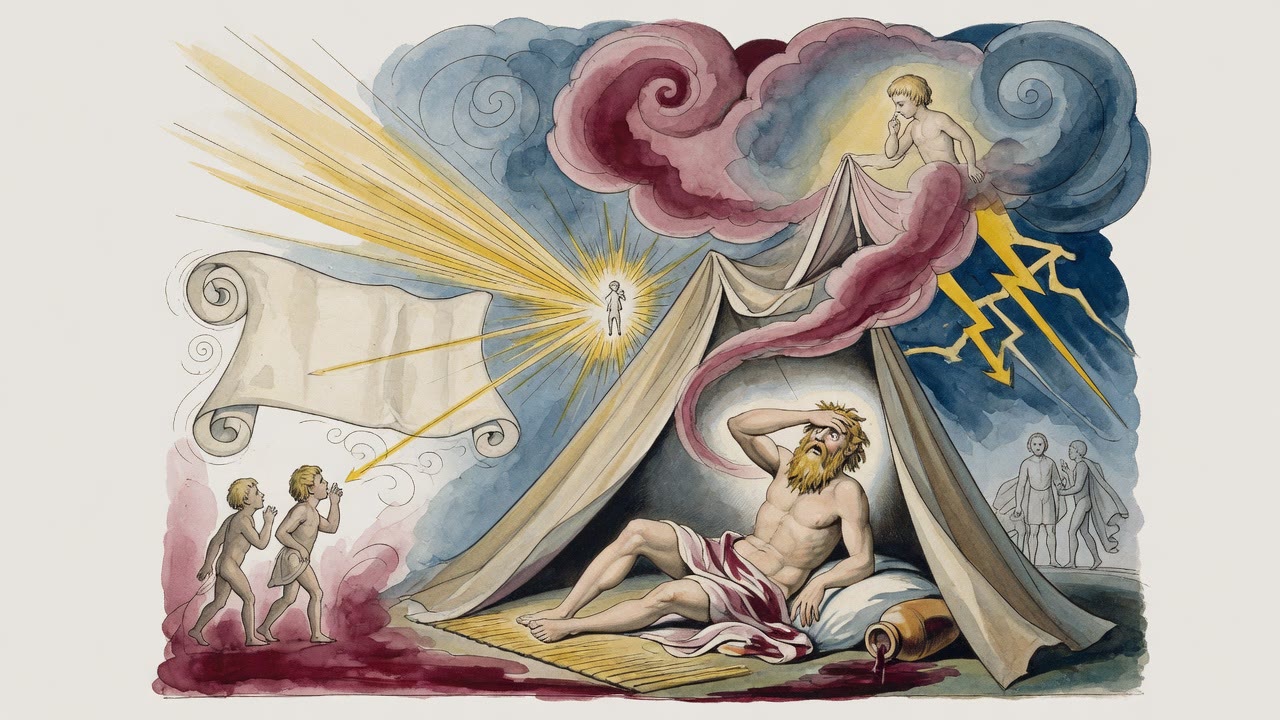
Noah set his hand to the wood while the world still laughed at dry land. The Book of Jubilees does not praise him for a single flash of piety. It says his heart was righteous in all his ways, that he had not departed from anything ordained for him. Righteousness here is a straight spine under a darkening sky, not a holiday mood.

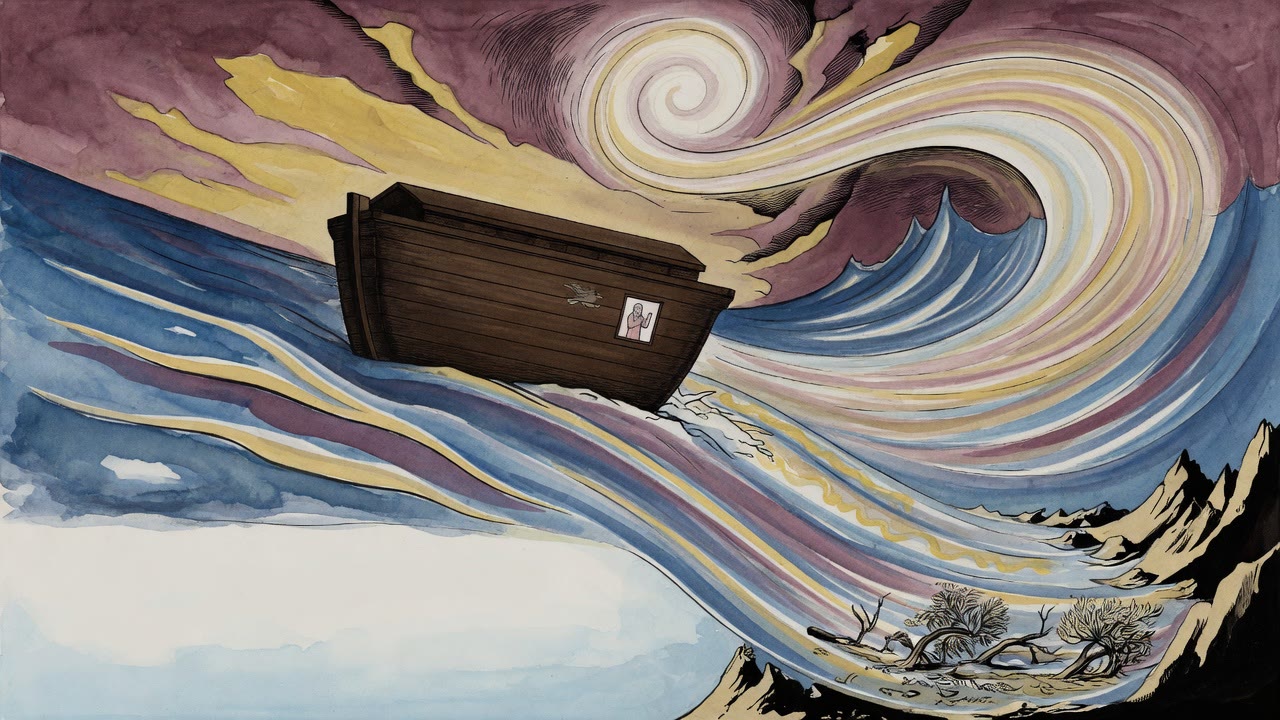
The Lord said He would destroy everything on the earth. The sentence fell like weather. Against that sentence stood one man ordered to build an ark in all respects as commanded, measurements not suggestions. Jubilees even stamps the hour of the work in the twenty-seventh jubilee, fifth week, fifth year, new moon of the first month. Precision was part of the mercy.

Neighbors saw a box rising where a house should be. Noah heard a schedule written above their jokes. Every peg that matched the command was a refusal to improvise with salvation.

One Name for a Whole Household

When the door finally closed, Scripture could speak of Noah and mean more than one body. In Philo's reading, husband equal to wife, father equal to sons in harmony, so one first name can carry the family. Concord makes a single life out of many limbs. Discord shatters the title "family" into a crowd of private hungers.

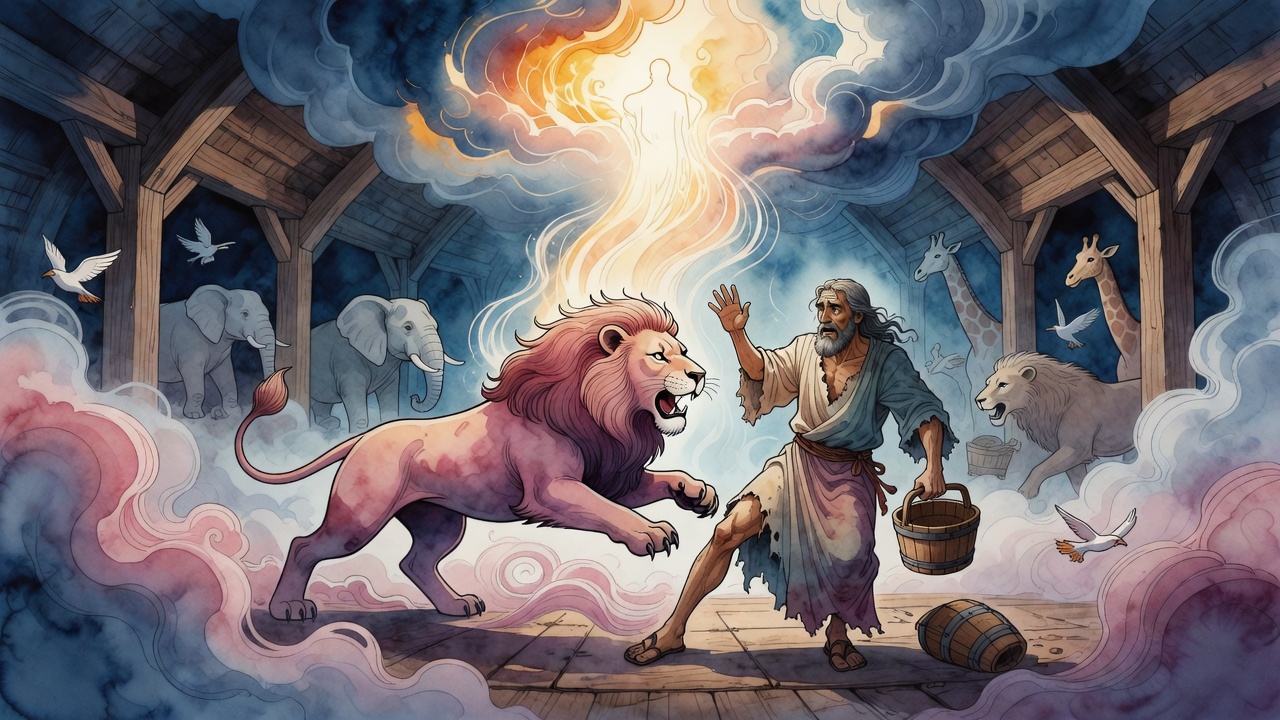
Inside the ark, that teaching became oxygen. Pitch sealed wood. Agreement had to seal tempers. A household that splintered in the dark would not be one remnant. It would be several frightened animals who happened to share a roof with lions and cattle.

Philo likens a united house to a tree, branches and fruit depending on one trunk. On the water, Noah was that trunk only if the others still chose to hold. The flood outside was loud. The worse flood would have been mutual contempt inside.

Shem, Ham, and Japhet Under One Roof

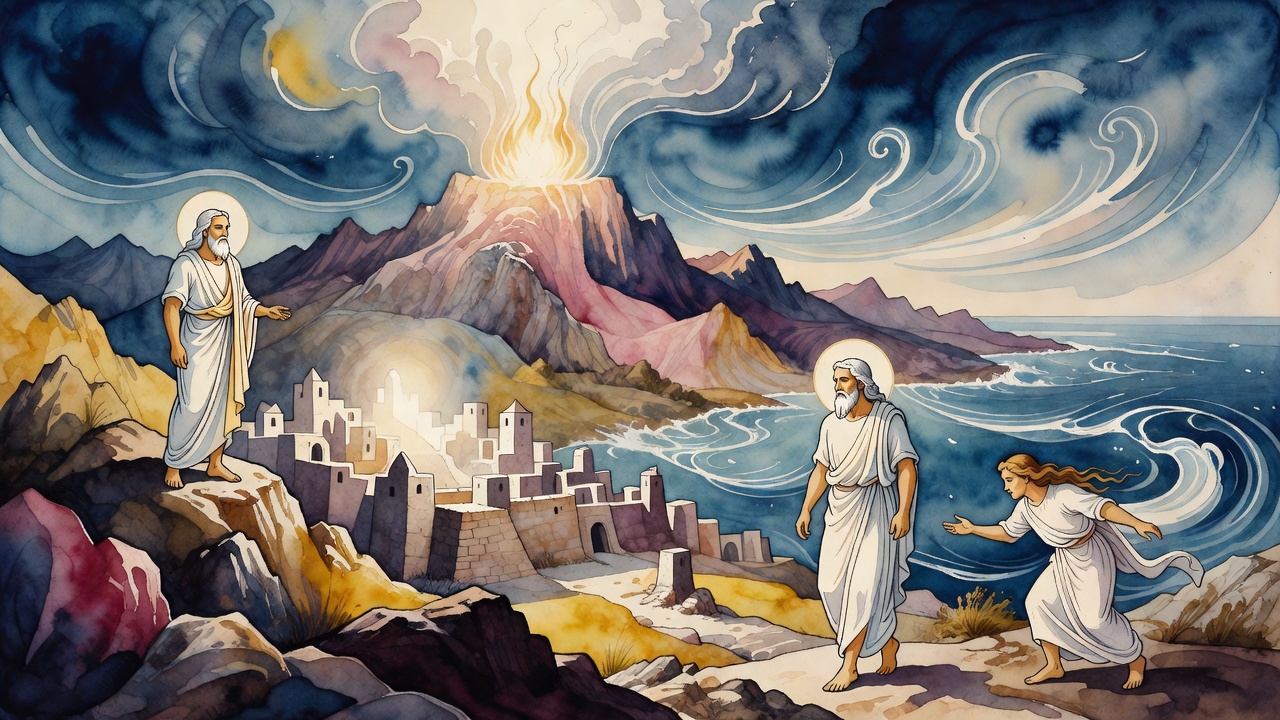
The three sons were not only future nations. Philo reads them as three powers in a human being. Shem as the good, renown turned toward virtue. Ham as the bad, the pull toward corruption. Japhet as the indifferent, the wide middle that is neither holy nor foul until aimed. On the ark those three shared bread and chores while the world under them unmade itself.

Before the rain, humanity had swelled into a multitude. Philo asks why the race increased so sharply as the deluge drew near. Crisis amplifies both righteousness and rot. Numbers climbed while hearts hollowed. Noah's house was the counter-image, few in count, thick in obedience.

Later midrash would claim some later tribes out-sinned the flood generation by plotting evil even on their beds, yet survived because of righteous descendants still unborn. The flood age received no such delay. Merit in the future could not rewrite a sky already opened. Only an ark built on time could.

Water Without Negotiation

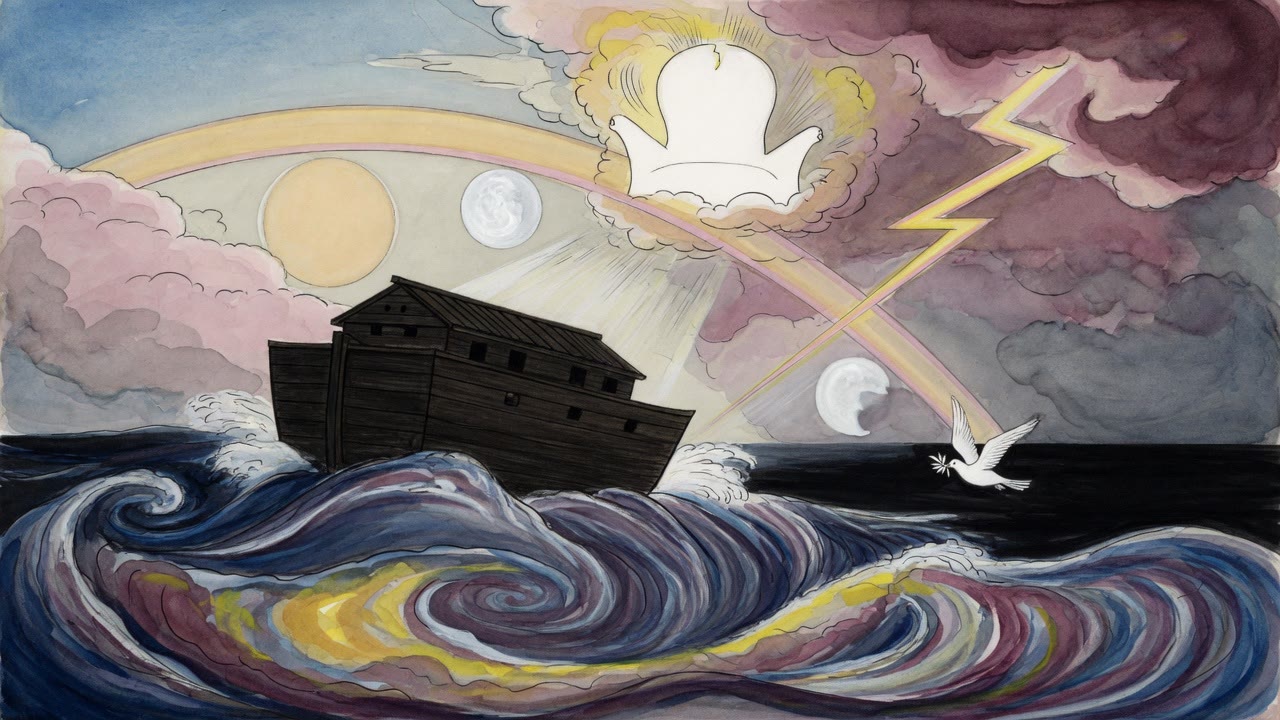
When the deeps broke, argument ended. No committee revised the cubits. No king sold a ticket. The righteous heart and the exact plank were the whole politics left. Animals entered in their pairs. The door that God shut made a silence more honest than the markets of the doomed.

Noah did not steer by stars he could not see. He endured. Endurance was the last form of the command. Building had been obedience with tools. Floating was obedience with breath.

Somewhere a midrashic comparison would weigh flood sinners against later rebels. In the moment itself there was only water and wood and a family trying to remain one name.

What Left the Ark

When the earth dried, the three powers in the sons would scatter into histories, vineyards, and shames still ahead. For a measured time they had been branches of one trunk under judgment. The world that began again would need Shem's good, would suffer Ham's bad, would fill itself with Japhet's indifferent bulk. Noah's heart could not choose their centuries for them. It had only kept them alive long enough to choose.

A rainbow would later speak covenant. First the man had to step onto mud that had been graves. He had measured every board. He had not departed from what was ordained. That was the whole genius. Not invention. Fidelity under a sky that stopped being a sky and became a weapon.

Anyone who thinks righteousness is a feeling should watch Noah count cubits while the horizon darkens. The heart stayed straight. The wood stayed true. The family, for as long as harmony held, stayed singular enough to be called by one name when the waves rose.


← All myths

From the tradition

Sources

4 sources

The texts behind this telling. Some cards carry a translation of the source; others are our own retelling of it, and each card says which. Every card links out to the original.

Book of Jubilees 5:30Book of Jubilees

Retold in our words. Read the original at the link below.Sefaria Community Translation · CC-BY

The Book of Jubilees, an ancient Jewish text that expands on the stories in Genesis, gives us a compelling glimpse through the example of Noah.

That Noah's "heart was righteous in all his ways." It wasn't just that he performed specific acts of piety, but that his entire being was aligned with what was commanded. It was a constant, unwavering commitment. "He had not departed from aught that was ordained for him." How often do we stray from what we know is. How often do we compromise, even in small ways?

What was the result of Noah’s steadfast righteousness? Well, as you know, the world was about to be washed clean. "The Lord said that He would destroy everything which was upon the earth.". A pretty significant event, wouldn't you agree?

Amidst this impending destruction, there was hope. And that hope was Noah. "And He commanded Noah to make him an ark, that he might save himself from the waters of the flood." It’s a familiar story, of course. But Jubilees adds a layer of detail that’s worth noting.

It wasn’t just a vague instruction. Noah had to build the ark "in all respects as He commanded him." Every measurement, every material, every detail mattered. The text places this momentous event precisely: "in the twenty-seventh jubilee of years, in the fifth week in the fifth year (on the new moon of the first month)." That's incredibly specific! It emphasizes the divine precision and planning involved in the whole process.

This level of detail might seem almost excessive, but it highlights something important. Righteousness isn't just about intention; it's about action, about meticulous obedience to a higher calling. And that obedience, that commitment to doing things exactly as instructed, was what allowed Noah, his family, and a remnant of the world to survive.

Perhaps it's a reminder that true righteousness isn't a passive state, but an active, conscious choice. It's about striving to align our hearts and actions with what we believe is right, even when it's difficult. It's about paying attention to the details, knowing that even the smallest acts of obedience can have profound consequences. Just as they did for Noah and the entire world.

Full source
The Midrash of Philo 1:2The Midrash of Philo

Retold in our words. Read the original at the link below.The Works of Philo Judaeus, trans. C. D. Yonge, London, H. G. Bohn, 1854-1890 · Public Domain

A microcosm of humanity, bobbing on a turbulent sea. The sheer claustrophobia? The text known as the Midrash of Philo tackles this very idea, and in a surprisingly insightful way. It suggests that when we see Noah mentioned, We’re seeing his entire family unit.

Why? Because, as the text beautifully puts it, "as the husband agrees with and is equal to his wife, and as the father is equal to his sons, there is no need of mentioning more names than one, but one, the first, is sufficient. That the leader embodies the whole.

The key here is harmony. When there's agreement, when everyone is on the same page, then mentioning the head of the family is enough. The conductor represents the whole ensemble.

What happens when that harmony breaks down? "When husband, and wife, and children, and relations are all agitated by discord, then it is no longer possible for such to be called one family, but instead of being one they are many." Ouch. Disagreement shatters the unity. Suddenly, it’s not about the "we," but the "me."

The Midrash (rabbinic interpretive commentary) uses powerful imagery here, comparing a harmonious family to a tree. "When harmony exists then one family is exhibited by one superior of the house, and all are seen to depend upon that one, like the branches of a tree which shoot out from it, or the fruit upon a vine branch which does not fall off from it." The head of the household, the patriarch, becomes the trunk, and the family members are its life-giving branches and fruit. A vital, interconnected part of the whole.

This idea of familial unity isn’t unique to this passage. The Midrash points us to another example, referencing the prophet's words: "Have a regard to Abraham your father, and to Sarah who brought you forth." Here, because it was, "in fact...one family, he displays the agreement by mentioning the woman." Even when the woman's role in the family is more traditionally in the background, her presence is still essential to the family's identity.

So, what’s the takeaway here? It's not just about blood ties. It’s about the bond that holds a family together: agreement, harmony, shared purpose. It’s about recognizing that when one member shines, the whole family benefits. And when discord enters, the entire structure is weakened.

Next time you think about the great figures of the Bible, maybe Noah, maybe Abraham, remember the families that surrounded them. Their stories, their struggles, their unity, or lack thereof. Because ultimately, their families shaped who they were, and their legacies. Maybe even more than we give them credit for.

Full source
The Midrash of Philo 1:1The Midrash of Philo

Retold in our words. Read the original at the link below.The Works of Philo Judaeus, trans. C. D. Yonge, London, H. G. Bohn, 1854-1890 · Public Domain

Philo, the great Jewish philosopher of Alexandria, certainly did. And in the Midrash of Philo, we get a fascinating glimpse into his allegorical interpretations. He reads the Torah, not just as history, but as a profound commentary on the human condition.

Take Noah's sons: Shem, Ham, and Japhet. We know them as the patriarchs of different nations after the flood. But Philo sees something more. He suggests these names are symbols of three fundamental aspects of human nature.

In Philo, Shem, whose name suggests "name" or "renown," symbolizes what is good. He represents righteousness, virtue, and all that elevates humanity. Ham, on the other hand – and this might sting a little – represents what is bad. Think of him as symbolizing vice, corruption, and the darker impulses within us. And Japhet? Well, he embodies what is indifferent. He stands for neutrality, the things that are neither inherently good nor bad, but simply are.

Three brothers, each embodying a core aspect of who we are as humans. We contain within us the potential for goodness, the capacity for evil, and a whole lot of…well, just stuff.

Then there's this intriguing question raised in the Midrash of Philo: Why does the Torah say that humanity increased so dramatically right before the flood? "Why from the time that the deluge drew near, the human race is said to have increased so as to become a multitude?" (Genesis 6:1). The world is about to be destroyed because of humanity's wickedness. Yet, precisely at this moment, the population explodes. Is this simply a matter of numbers? Or is Philo suggesting something deeper? Could it be that this rapid increase in population mirrors a surge in both good and bad? That the closer we get to a crisis, the more intensely these opposing forces manifest?

Perhaps the "multitude" isn't just about quantity, but about the amplified potential for both righteousness and corruption that exists within humanity. As we face our own challenges, are we also seeing a similar intensification of both the best and worst of human nature?

Philo's Midrash (rabbinic interpretive commentary) invites us to look beyond the surface, to see the Torah as a mirror reflecting the complexities of ourselves. It's a reminder that the stories of the past continue to resonate, offering wisdom and insight into the human condition today.

Full source
Bereshit Rabbah 28:5Bereshit Rabbah

Retold in our words. Read the original at the link below.The Sefaria Midrash Rabbah, 2022 · CC-BY

Bereshit Rabbah turns to Noah and Creation of Flood.

Rabbi Abba bar Kahana makes a pretty stark claim: that the ten tribes of Israel were even worse than the generation wiped out by the Flood. The Flood narrative in Genesis is pretty devastating! He bases this on comparing verses. About the generation of the Flood, (Genesis 6:5) tells us "every inclination of the thoughts of his heart was only evil all the day." But (Micah 2:1) says of the ten tribes, "Woe, the devisers of iniquity and the evildoers on their beds" – meaning they were plotting evil even at night! And where do we learn that they acted on these evil plans during the day? The verse continues, "They perform it at the morning light."

So, the generation of the Flood only sinned all day, whereas these tribes sinned both day and night! Yet, here’s the really perplexing part: no one survived the Flood, but a remnant of the ten tribes remained. Why?

The answer, according to Rabbi Abba bar Kahana, lies in the future. He says it's because of the merit of righteous men and women who were destined to arise from them. This is supported by (Ezekiel 14:22): "But behold, a remnant has remained in it who are being taken out, sons and daughters.” Notice that the verse doesn't say "they are taking out [motziim] sons and daughters," but rather “who are being taken out [mutza’im], sons and daughters.” Rabbi Abba bar Kahana cleverly interprets mutza’im to also mean: "those who will emerge," implying that it's due to the merit of the righteous individuals who would descend from them in later generations.

Rabbi Berekhya takes a similar tack, arguing that the tribe of Judah and Benjamin were, in some ways, worse than the people of Sodom. Think about Sodom's reputation! (Genesis 18:20) says "their sin because it is very grave." But (Ezekiel 9:9) says of the house of Israel and Judah, "The iniquity.. is very, very great!" Again, Sodom was completely destroyed, but Judah and Benjamin survived as tribes.

Why? Bereshit Rabbah suggests that Sodom was "overthrown in a moment" (Lamentations 4:6) because they didn’t extend their hands to do charitable deeds. As Rabbi Tanhum explains, citing the same verse, "Hand did not reach out [halat] to hand" to assist one another. Judah and Benjamin, on the other hand, did extend their hands to do charitable deeds, even in the most horrific circumstances. (Lamentations 4:10) says, “The hands of merciful women cooked their children.” This isn’t meant to be taken literally. Instead, Rabbi Hanin interprets it to mean that these women kept food from their own children to provide first meals [havraa] for their mourning friends. What an intense picture of community solidarity!

Finally, Rabbi Hanin draws a distinction between the generation of the Flood and certain coastal cities. He points to (Zephaniah 2:5), "Woe to the inhabitants of the seacoast, nation [goy] of the Keretites," interpreting goy to mean "a nation that was worthy of total annihilation [karet]." The difference? The generation of the Flood had Noah, who survived. So, by what merit did these coastal cities endure? Rabbi Levi offers a fascinating suggestion. He suggests it's by the merit of one God-fearing man, whom they would produce each year. Alternatively, he interprets it favorably, suggesting that they endured because they were "a nation that established [karat] a covenant," just as (Nehemiah 9:8) says, "And established [vekharot] a covenant with him."

What are we to make of these comparisons? They paint a complex picture of sin, judgment, and redemption in Jewish thought. It seems that even when communities reach shocking depths of depravity, the potential for future righteousness, acts of selfless charity, and covenantal relationships can offer a path, if not to complete salvation, then at least to survival and the possibility of renewal. What are the seeds of destruction? And what are the seeds of hope and renewal that we can nurture, even in the darkest of times?

Full source