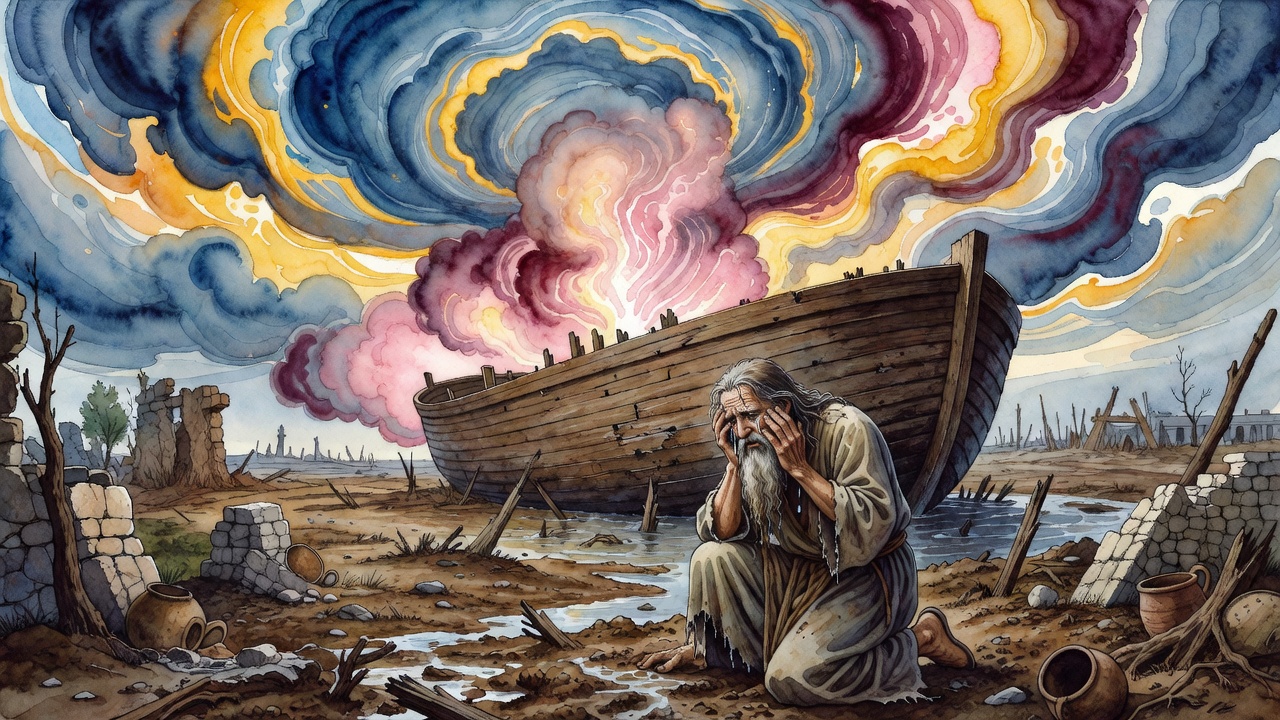
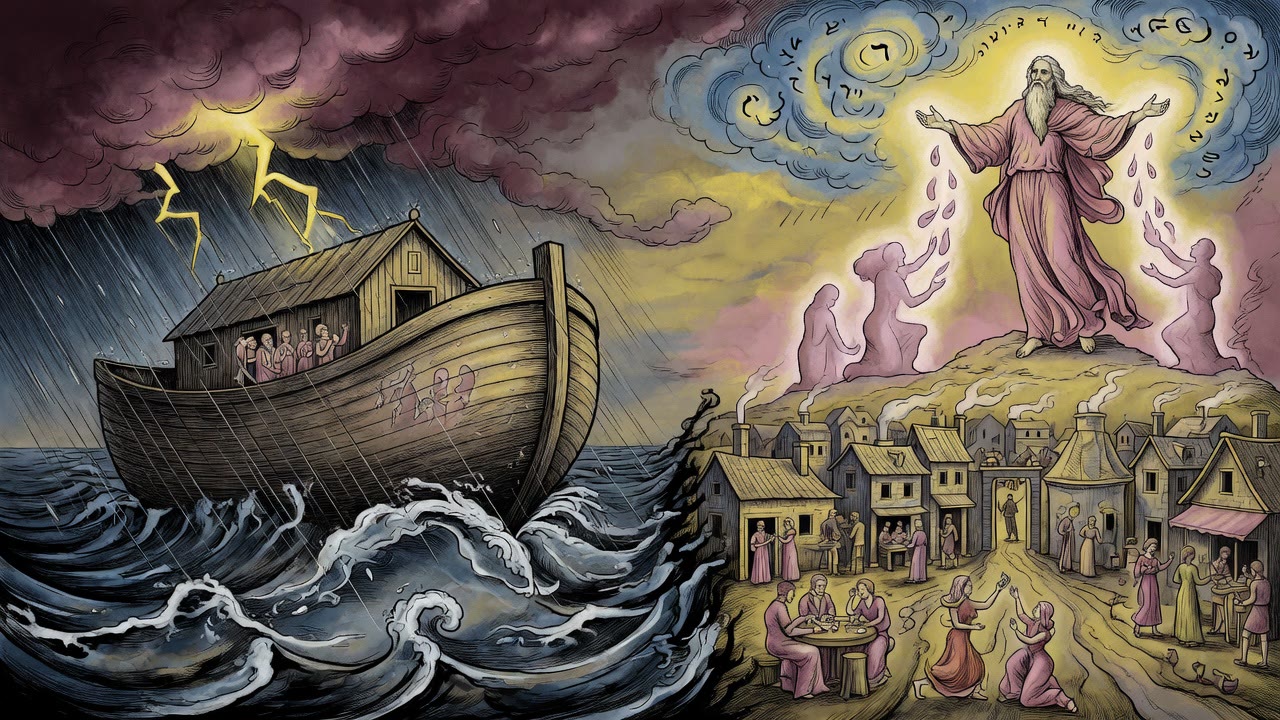
Noah Stood Alone Righteous as His Generation Swelled
New stalls, grain heaped past the awnings, children underfoot. Nobody in that square was hungry, and nobody could remember a year that had gone badly.
Table of Contents
Noah came back through a market that had gained a whole street since the last dry season.
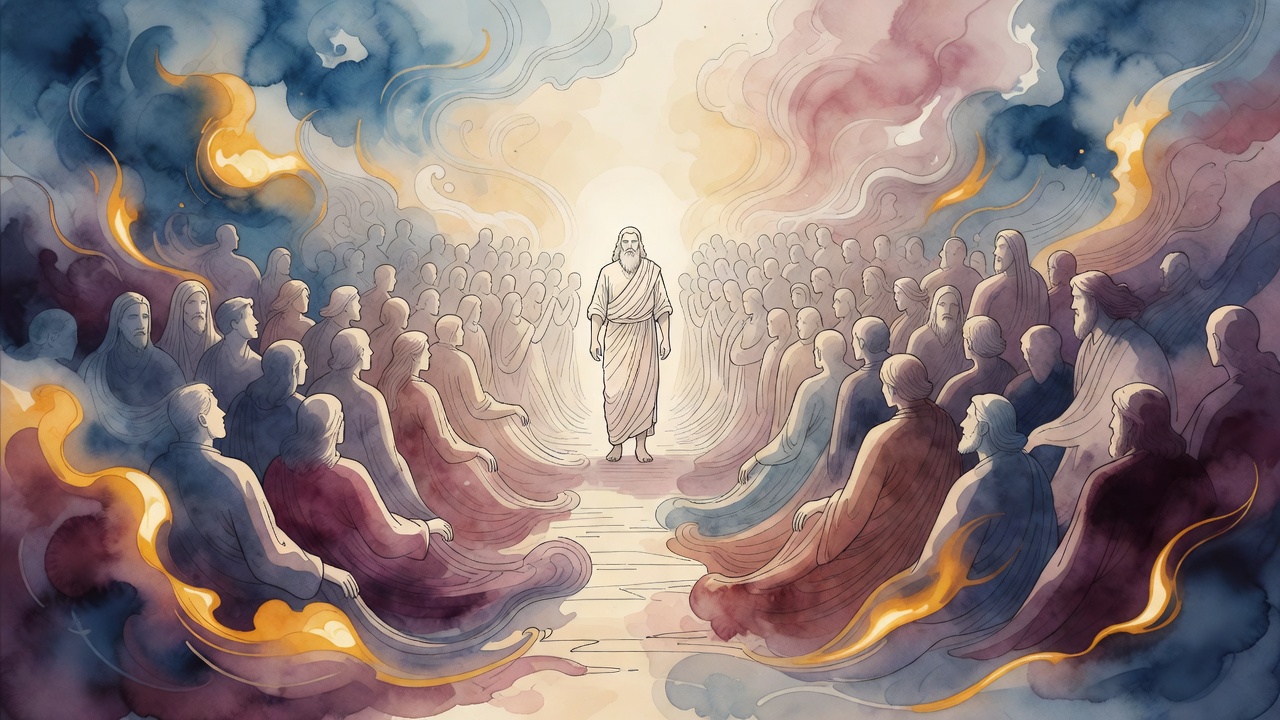 Click for full size
New stalls. New sellers he did not know. Grain heaped in the open because there was no room left under the awnings. Oil jars stacked three high. Children underfoot everywhere. More children in that one square than there had been in the whole town when he was a boy. Nobody in the crowd was hungry. Nobody could remember a year that had gone badly.
The Market That Would Not Stop Growing
None of that was an accident, and none of it was a reward.
Mercy runs ahead of judgment, in that order and never the other way. Doing good is the first work. The tearing down comes afterward and comes second. When something terrible is close, the usual sign is not scarcity. It is abundance, laid on thick and early, poured over people who have not earned any of it.
Later Egypt would be handed seven years so fat that granaries had to be raised to hold the overflow, and the seven that followed would strip the country to the bone. The fat ones came first, and the counts matched exactly. Joseph would stand in front of a king and read that arrangement out of a dream about cattle. Noah already stood inside the same order, and the generation swelling around him could not see it.
The multiplying, the trade, the noise, the sheer number of people alive at one time. All of it was the good years. None of it meant heaven approved. Blessings are handed out partly so that a man has something to lose and stops, and so that when he does not stop he can never say afterward that heaven pushed him. Wickedness gets no help from that quarter. Blessing is the only thing that comes out of it.
Righteous Before Me
Noah kept an honest measure in a town where honesty had turned into a joke about slowness. He did not take what was not offered him. His household ate what his household had earned.
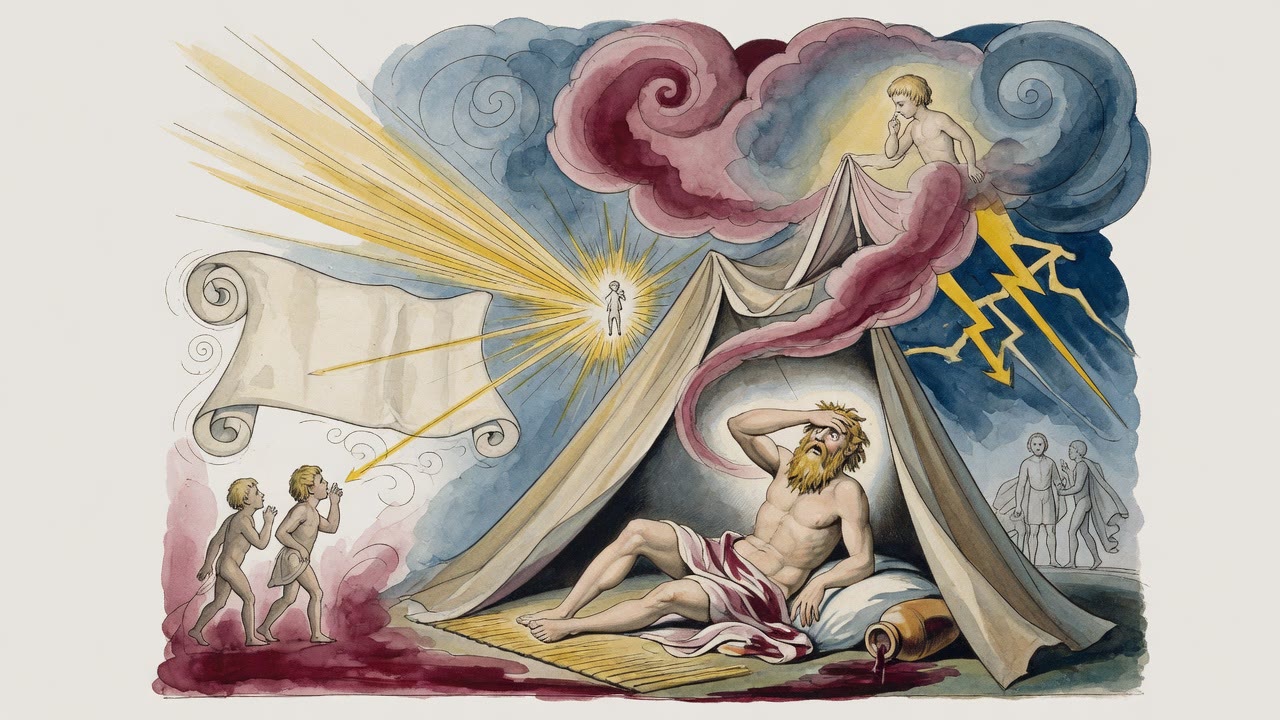
The men in the market scored him off the outside of a life. Small trade. Few friends. A wooden thing going up on a slope past the edge of town that got funnier every year it stayed unfinished. They laughed with their mouths full.
The word found him on that slope, not in the square. It did not say he was just. It said something narrower. "Thee have I seen righteous before me" (Genesis 7:1). Before me. He stood with pitch on his hands and heard the difference. Men had run their eyes over whatever showed. The test that counted had been run on the part of him that never came out into the market at all.
In That Generation
The voice added three more words. In that generation.
Noah waited for a second sentence. None came. The boundary sat there. Not all the years behind him. Not all the years ahead. His own stretch of years, this crowd, this market, this unfinished hull.
If the voice had called him just with no fence around it, every man who had lived before him would have stood accused by the silence, and every man not yet born would have had nothing left to reach for. The three words left the dead uncondemned and the unborn unshut. He was not being graded on a curve. He was being set down without knocking anyone else out of the count.
Eight People and One Name
"Come thou and all thy house into the ark," the voice said (Genesis 7:1).
All thy house. Not one man. Eight people walked up that ramp and only one of them had been named.
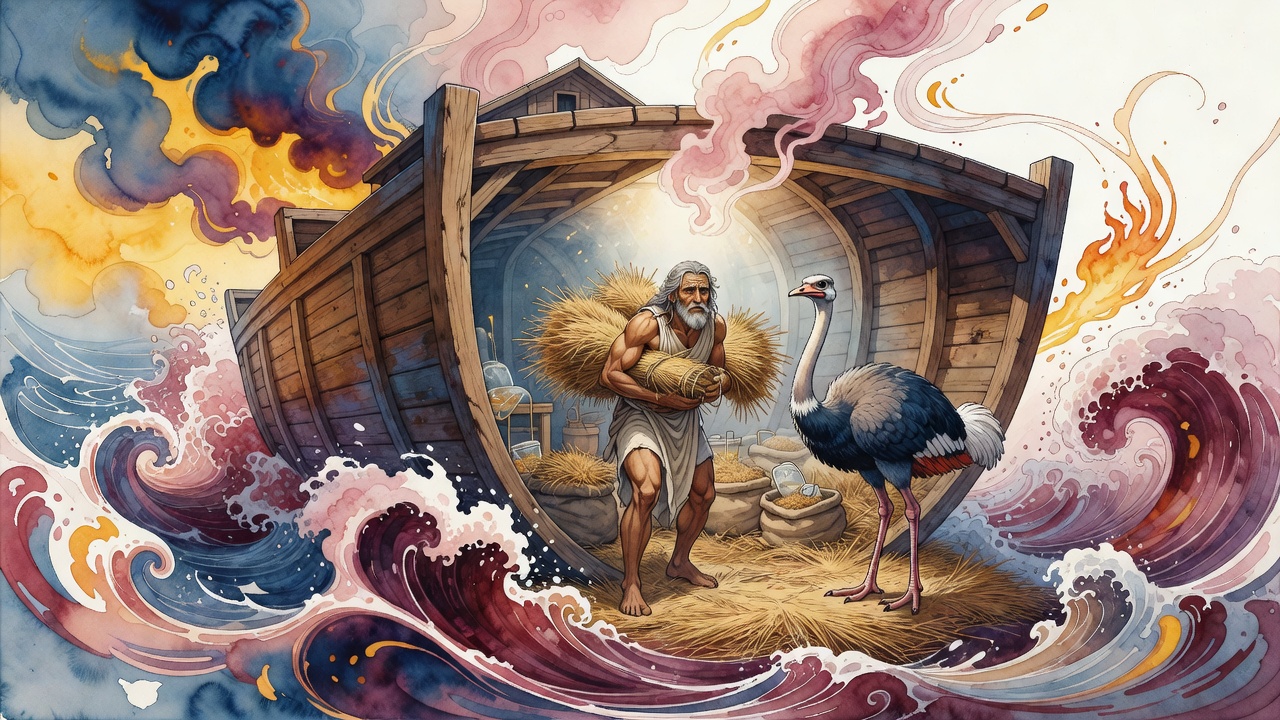
Noah climbed first. The boards flexed. His wife came after him. Then the sons. A ship does not need every sailor to be a navigator. It needs one who can find the port. An army does not need every man to be a general. It needs one who knows the ground. The household stood on his weighing, and the weighing covered them.
Shem came first of the three, then Ham, then Japhet. The good one, the bad one, and the one who was neither. Not one of them had been weighed. Their father had been weighed. They walked in on that, and the ramp took their weight without asking their names.
The Door Shut From Outside
He stopped once at the opening and looked back down the slope at the town.
Smoke over the market. The good years still running. The granaries still full. The noise carrying up the hill exactly as it had on every other evening of his life. Everyone down there was eating well tonight.
Then the door shut behind him from the outside, and the mercy that had gone first was finished.
← All myths