Noah Fed Every Mouth While the Flood Hammered
Pitch still stuck to Noah's palms. Below decks a lion coughed in the dark. The first bin was already empty, and the rain had only begun.
Table of Contents
 Click for full size
The First Hungry Cry
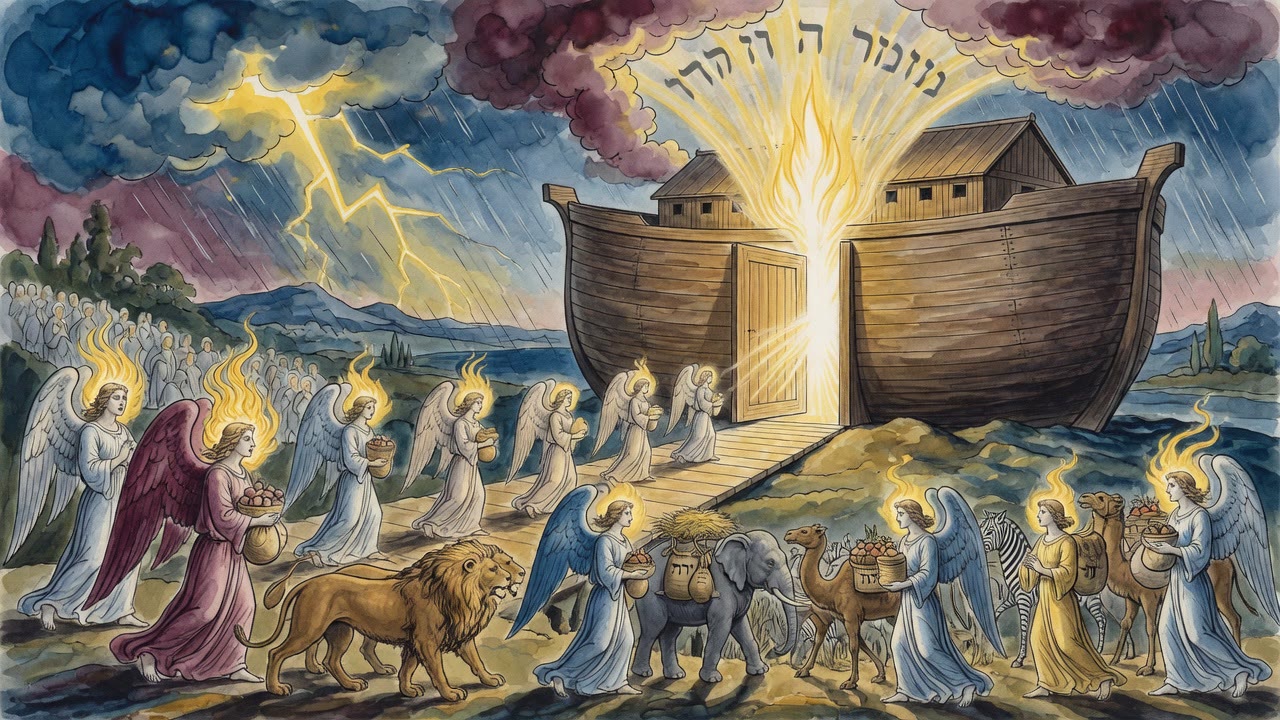
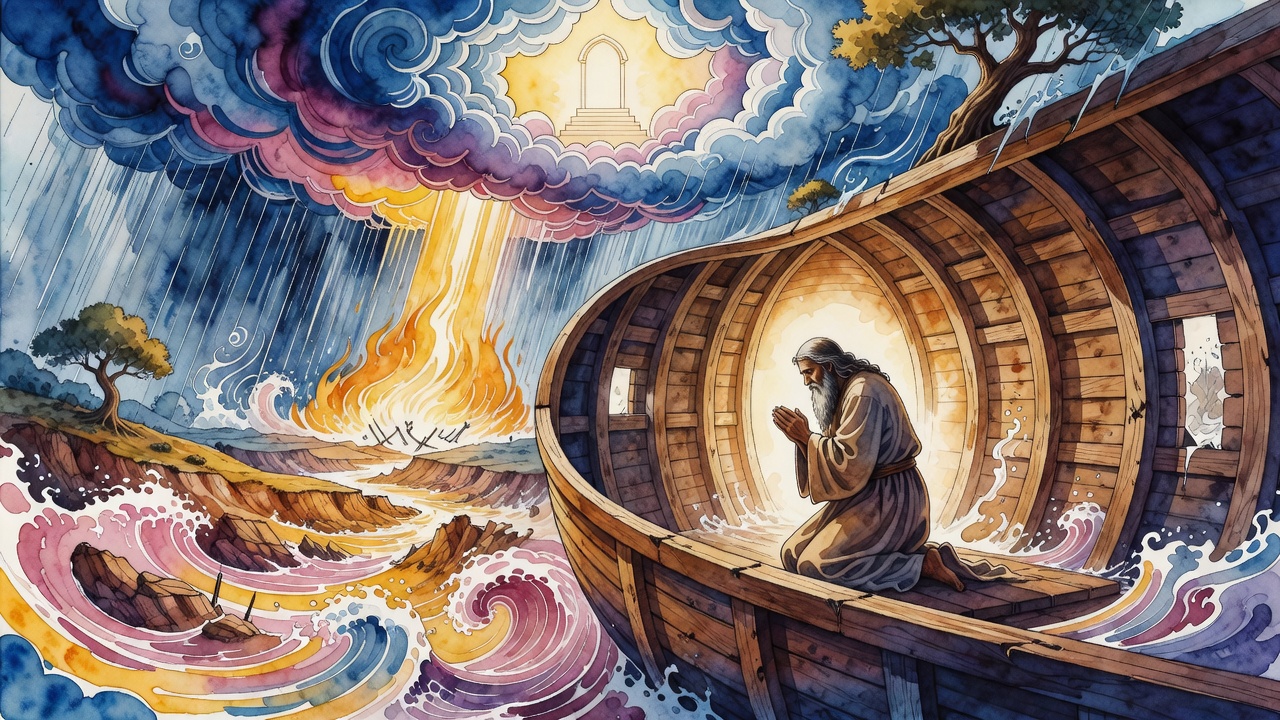
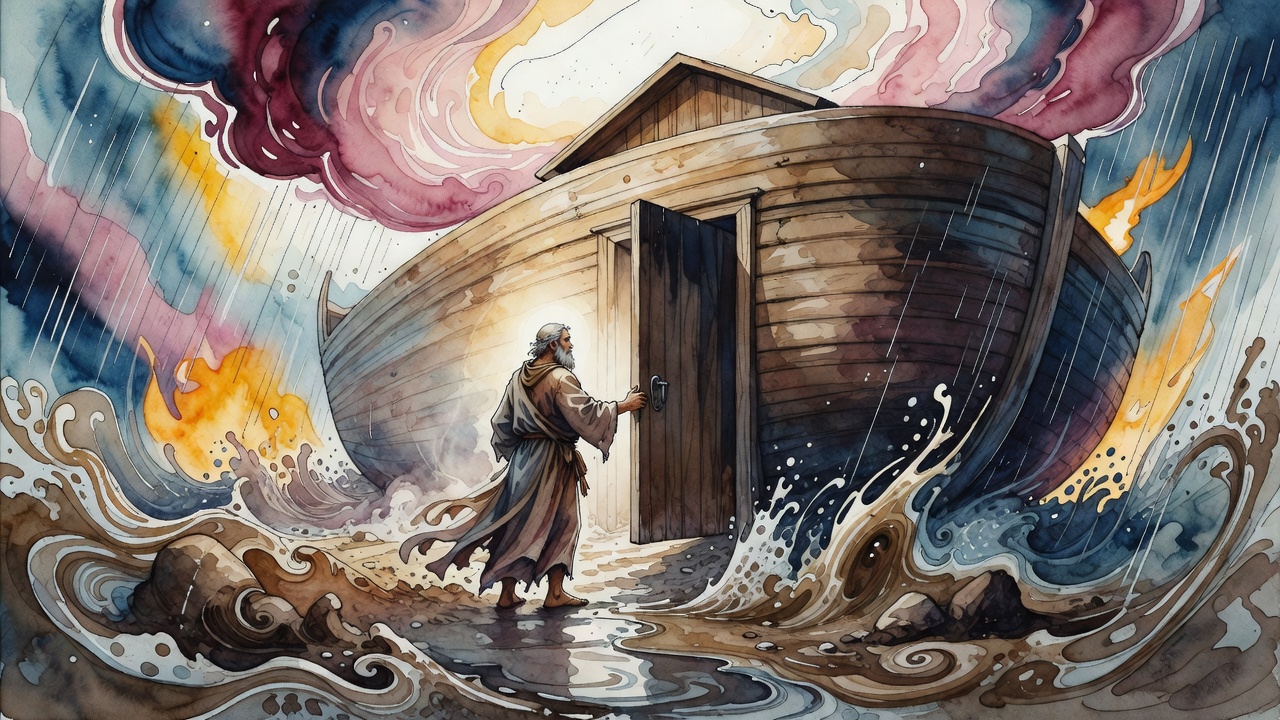
Pitch still stuck to Noah's palms when the first roar hit the hull. Rain drummed the roof like fists. The flood hammered the seams. Below decks a camel stamped, a lion coughed, and something small scratched at a feed bin that was already empty. The world outside was ending. Inside, hunger had already begun.
He did not sleep that first night as a passenger. He slept as a cook on his feet. The ark was a floating house of pens, and every pen had a clock. Some animals ate at dawn. Some ate when the dark was thickest. Noah learned the clocks by failing them once and hearing the noise that failure made. He walked with a lamp that smoked and a back that already knew the shape of every beam.
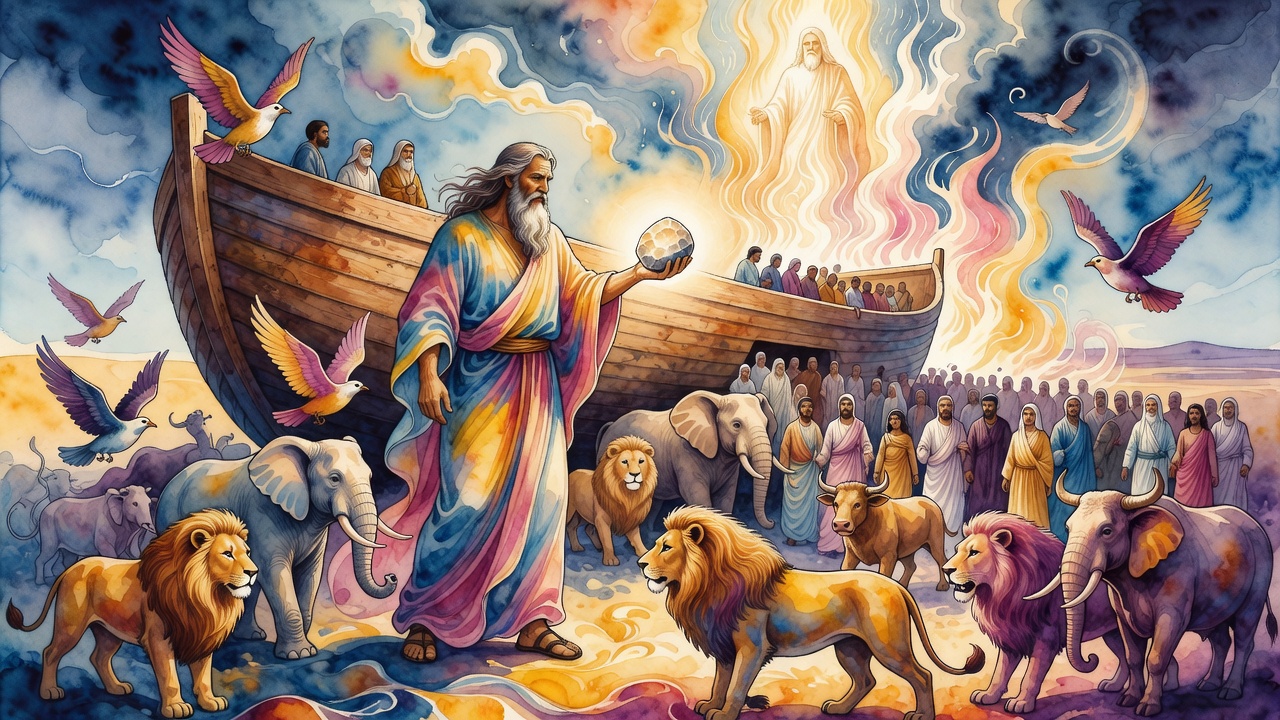
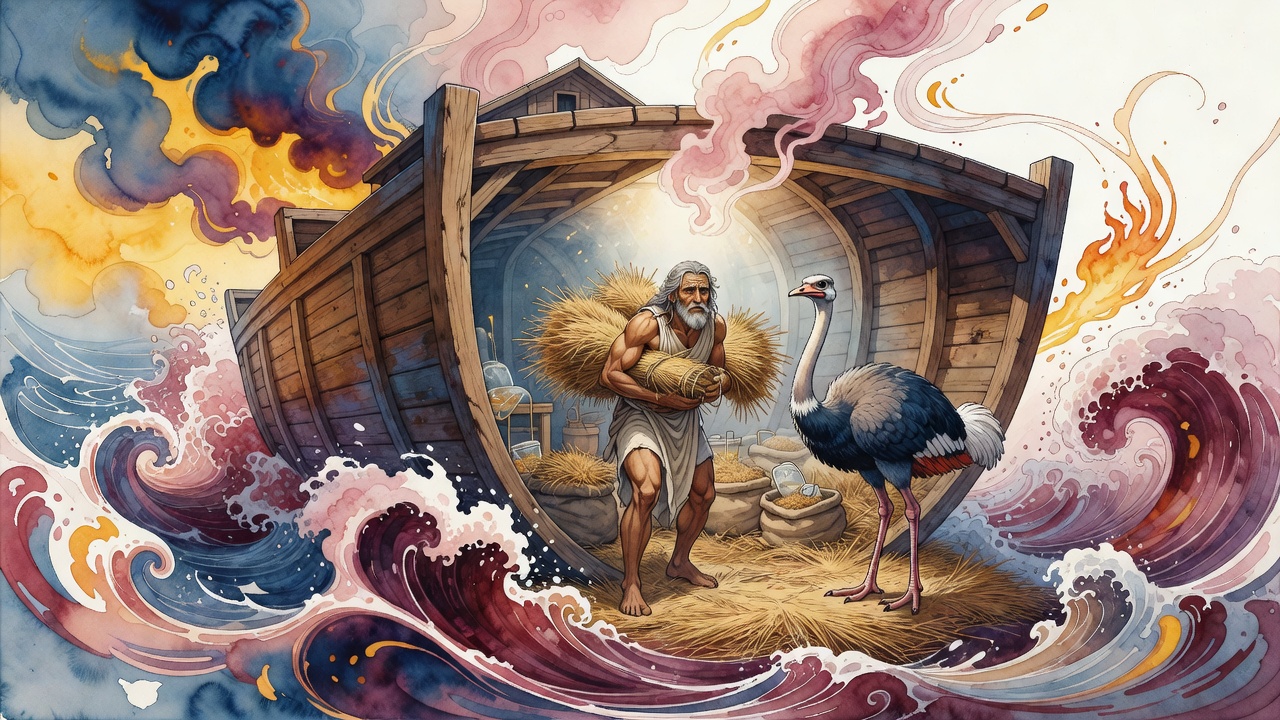
Straw for the camel. Barley for the donkey. Vine-wood for the elephant. Glass for the ostrich, because that bird will swallow what a man would never put near his teeth. When the lion refused, he waited. When the bird would not settle, he changed the perch. He carried feed in both hands and had no dry place to set it down.
Glass for the Ostrich
Days stacked into weeks. The flood did not hurry for anyone. Noah hauled buckets through the dark, counting pens by memory, speaking soft to beasts that had never shared a roof. He wiped dung from the boards. He split straw. He poured water. He tore vine-wood into lengths an elephant would take.
Rabbi Akiva later said Noah gave every creature the same fig-cake, one food that human, cattle, beast, and fowl would all accept. Other teachers refused the neat answer. Each mouth had its own habit. Noah learned them all while the boards groaned and the deep pressed the seams with cold fingers.
He fed every mouth. That is why the name tzaddik (צדיק), a righteous man, stuck. Not a cloud of vague virtue. A man with straw in his hair and glass in his fist, moving from pen to pen while the water tried the pitch he had smeared with his own hands.
Beasts Thrown Overboard
Outside, men threw animals overboard when ships heaved. Human life first, they said. Pity for the beast came second, if it came at all. The Holy One would not play that game. When judgment fell, man and beast were named together: from man unto beast. When mercy returned, the verse did not say only that God remembered Noah. It said He remembered Noah and every living thing with him in the ark (Genesis 8:1).
Equal scale in the sentence. Equal scale in the pardon. Noah already lived that equality in his muscles before the dove ever left his hand. He wiped dung from the boards as if the work itself were a kind of prayer that needed no words.
A sailor on a lesser boat would have chosen. Noah did not get to choose. Every mouth on that ship was his charge, and Heaven was keeping the same count.
Joseph Opens the Storehouses
Generations later another man earned the same crown for the same work. Joseph sat on Egypt's grain while famine scraped the land white. He opened the storehouses. He fed creatures for seven years. Brothers had sold him for silver, and still the verse names him the righteous one they sold. The insult could not strip the title. Heaven had already stamped it on the road of spices and in the years of careful measure.
Noah fed a world afloat. Joseph fed a world starving. Both kept mouths alive when the road back to comfort was sealed, by water or by drought.
In Egypt the line never ended. Carts. Mothers at the door. Names called. Joseph measured and poured and did not grow bored of the bowl. He gave grain with the same patience Noah had given straw. Heaven watches the hand that serves. It watches whether the hand turns cruel when the line does not end.
The Door Opened on a Washed World
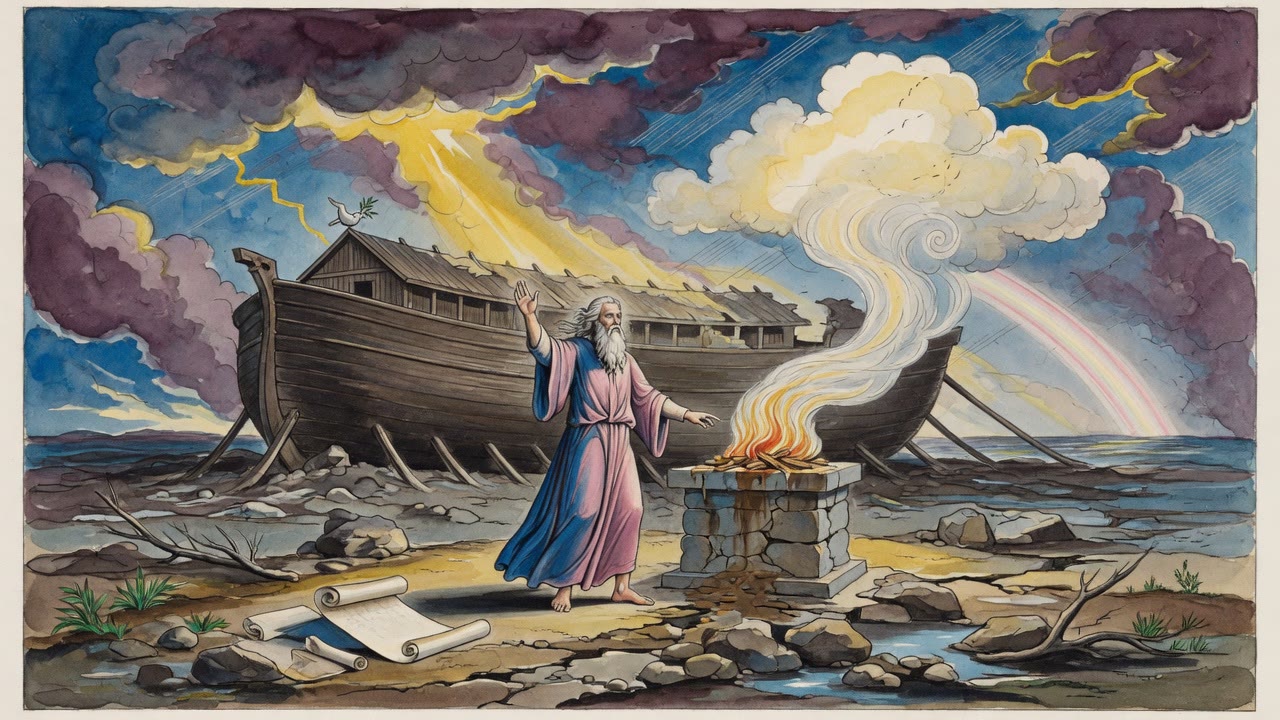
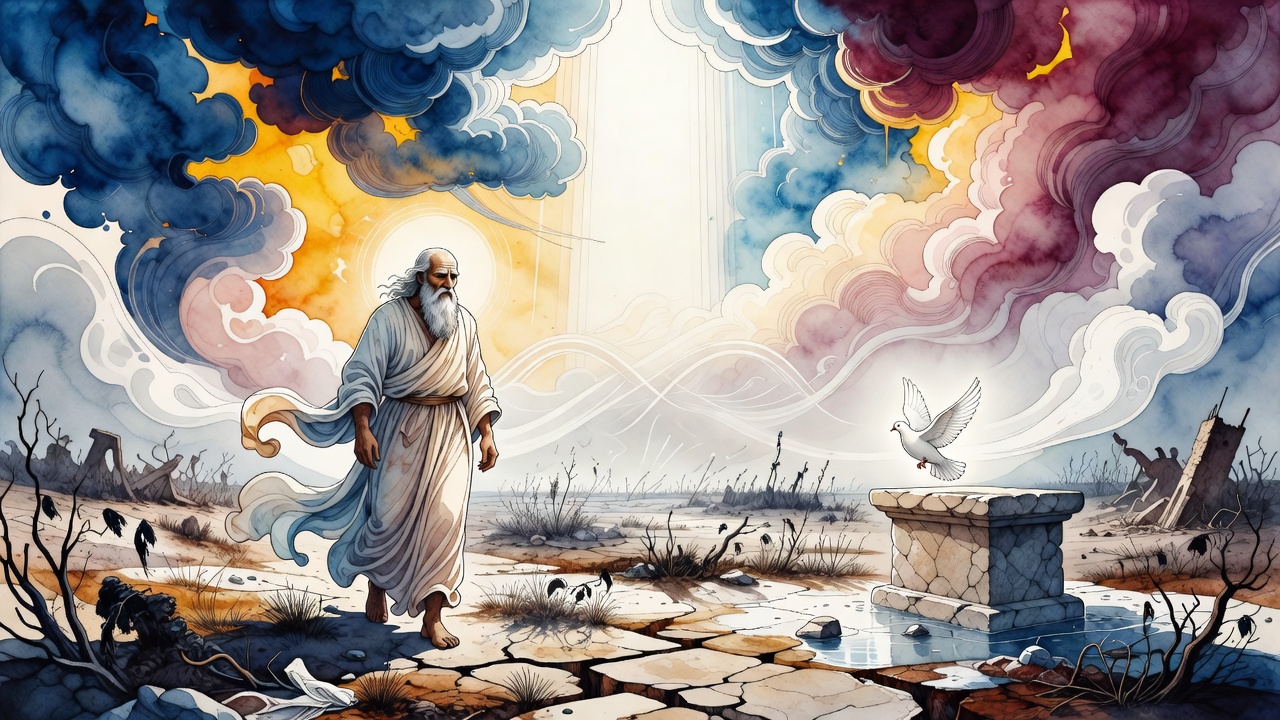
At last the hammering slowed. Noah pressed his ear to the wood and heard less rage in the water. He sent the dove. The dove came back. The ground began to mean something again. God remembered the beasts with the man, not after the man, not as an afterthought.
Noah stepped into a world washed empty and still carried the smell of every pen he had cleaned. He had seen the whole world begin to resettle, even the fortress of Sepphoris in the long vision of his days, seventy nations branching from his loins. Of all that lineage, Scripture wrote righteousness against his name first. Not Shem. Not Ham. Not Japheth.
The fruit of the righteous is a tree of life, and his fruit was living mouths that did not drown. A wise one captures souls, the verse ends, and Noah captured them with straw and barley and the patience to know which creature needed glass. When the door finally opened, the man who had fed them walked out thinner, older, and still called by the name he earned in the dark between the roar of water and the smaller roar of hunger.
← All myths