Angels Gathered the Animals and God Sealed the Door
Noah had built the ark. God had the animals covered. Each species arrived with its own angel and a year of food already loaded.
Table of Contents
 Click for full size
A Finished Ark With Nothing in It
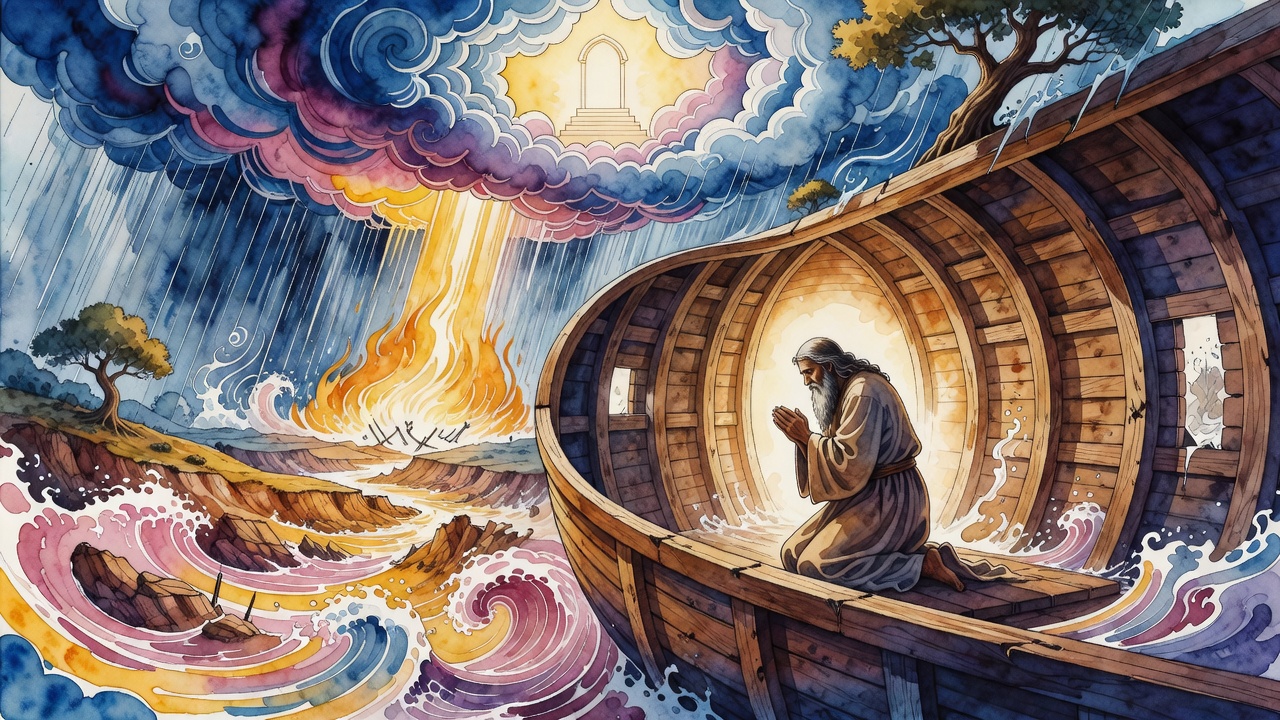
Noah walked the length of the hull one more time looking for something still to do, and there was nothing. The gopher wood was pitched inside and out. Three decks, one window, one door, and every measurement the length God had named, checked twice because he had been checking things twice for more than a hundred years.
So the work was done, and the work was empty. Somewhere out past the hills were the animals, all of them, the burrowing ones and the ones that only come out at night and the ones nobody in his family had ever seen, scattered across the whole face of the earth and going about their business. He was to bring them in. He was one old man with three sons and a rope.
He did the arithmetic on the first afternoon and gave it up before evening, because there was no version of it where he got past the near valleys before the water came.
The Question He Finally Asked
"Sovereign of all the world," he said. "Have I the strength to collect them all unto me?"
It was not a complaint and he did not dress it up as one. He had built the vessel to the cubit and he could not fill it, and a man who says so out loud has at least stopped pretending. He waited for the rebuke, since he had waited for a rebuke every time he had opened his mouth about this project in front of neighbors who thought he was mad.
No rebuke came. He had never been given that half of the work. He had only assumed it, the way a man who has done everything alone for a century assumes the next thing is his too.
The Keepers Were Already Coming
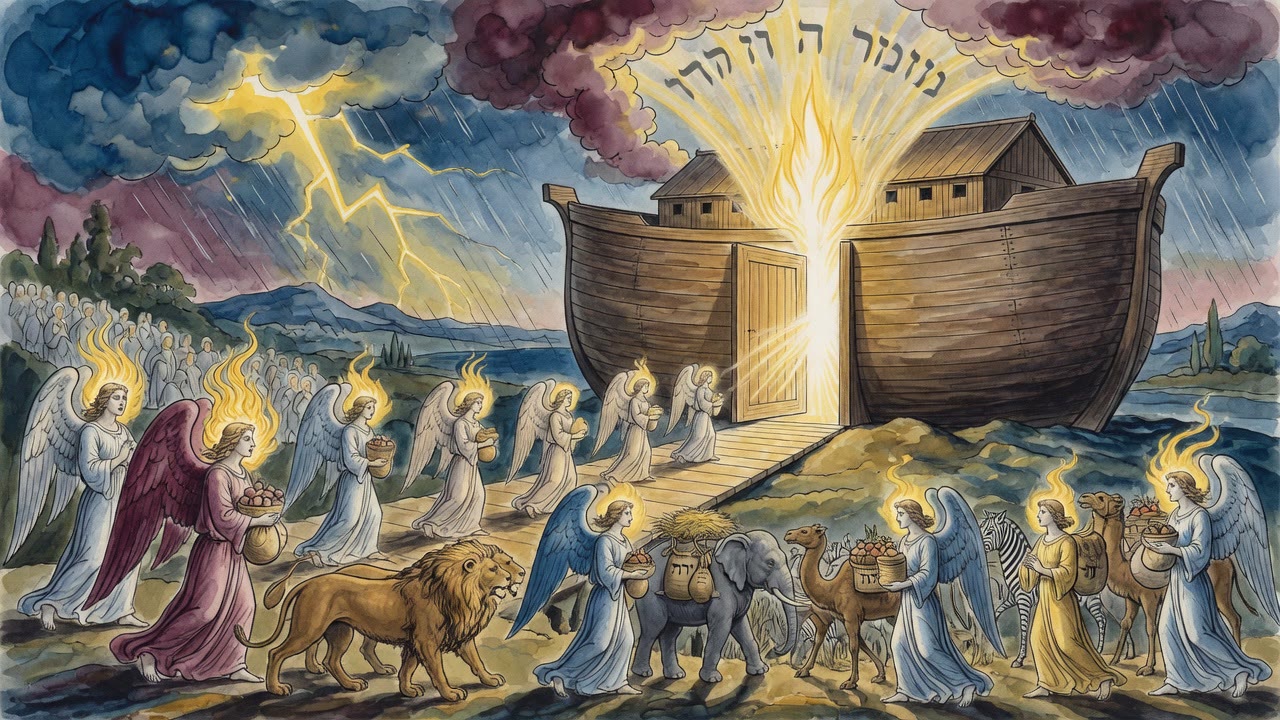
From the week the world was finished, every kind had a keeper. When each creature was set in its own species an angel was appointed over it, and that angel knew its animals the way a shepherd knows which of his sheep is coughing at the back of the flock.
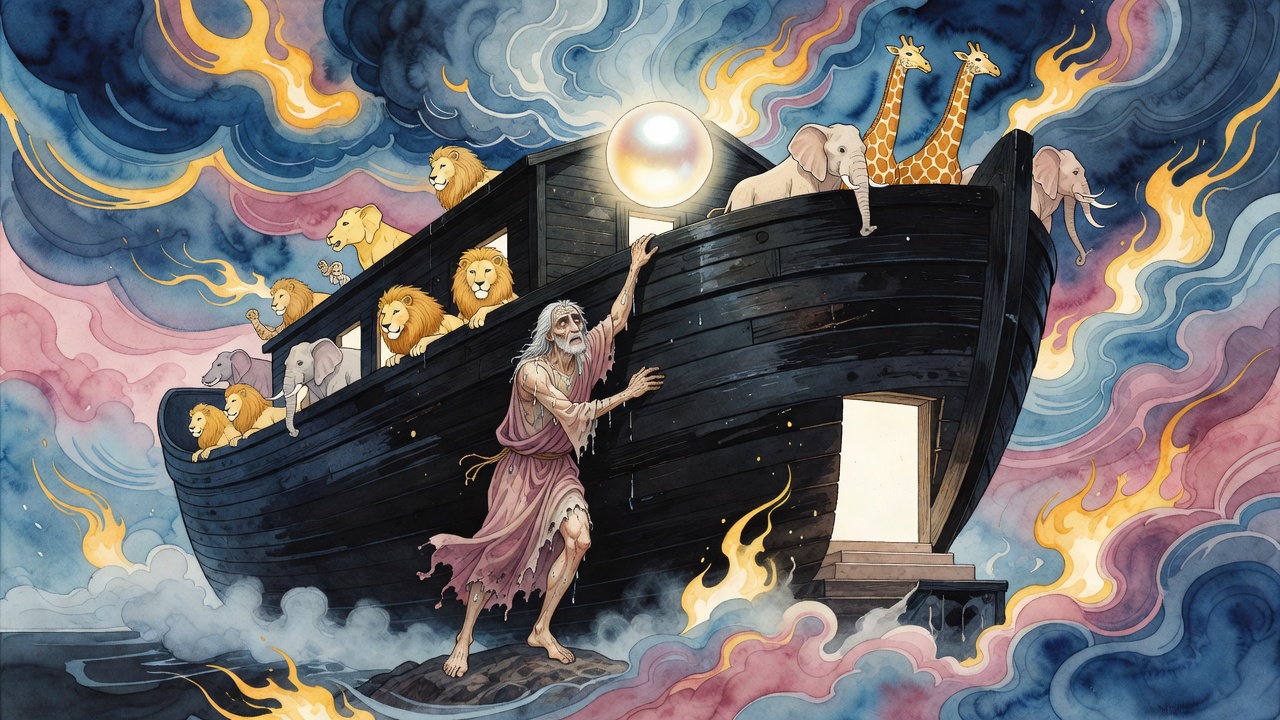
They were already on the roads when Noah asked. Each one came down and gathered its own and walked them in, over hills, along the dry beds, in through the gap between the last two ridges where Noah's sons stood and stopped counting. And they did not come empty. Each keeper brought the food its creatures would need for the length of the voyage, a year of it, hauled in behind the animals themselves, so that the fodder went aboard in the same hour as the mouths that would eat it.
Noah had not arranged one wagon of it. Nobody asked him where anything went.
Nobody Brought Them, They Came
He stood at the door and did not touch a single animal.
He did not drive anything, or rope anything, or send a son out with a net and a sack. They came unto Noah into the ark, two of every sort, past his hands and up the ramp and into the dark of the lower deck, in an order none of them had been taught. Nobody brought them. They came.
The noise of it went on longer than he expected. Birds first, then the hoofed ones knocking the ramp, then the low continuous scraping of the things that had to be carried in by an angel's hand because they had no legs to walk in on.
The Door He Did Not Get to Close
The last creature went through and the doorway was suddenly just a doorway, a rectangle of grey afternoon with rain starting to spot the ground outside it.
Noah put his hand on the frame to pull it shut, because that was the one piece of the work still left to him, the last thing on the vessel he had built that he could do with his own arms. The door moved before he did. It came around against his palm from the outside, slow and even and heavier than a door that size should be, and there was nobody on the step and nobody on the ground below it. The gap narrowed to a line of light and then to nothing, and the pitch along the seam pressed flat, and the Lord shut him in (Genesis 7:16).
Inside it was dark and extremely loud. Somewhere below him a year of grain sat stacked by hands he had not hired, and every kind of breathing thing under heaven was arranged in the space he had measured out, and there was no latch anywhere on his side of the wood.
Then the first water came up against the pitch on the outside, and the door did not move.
← All myths