Noah Fetched a Glowing Stone and Fed the Ark a Year
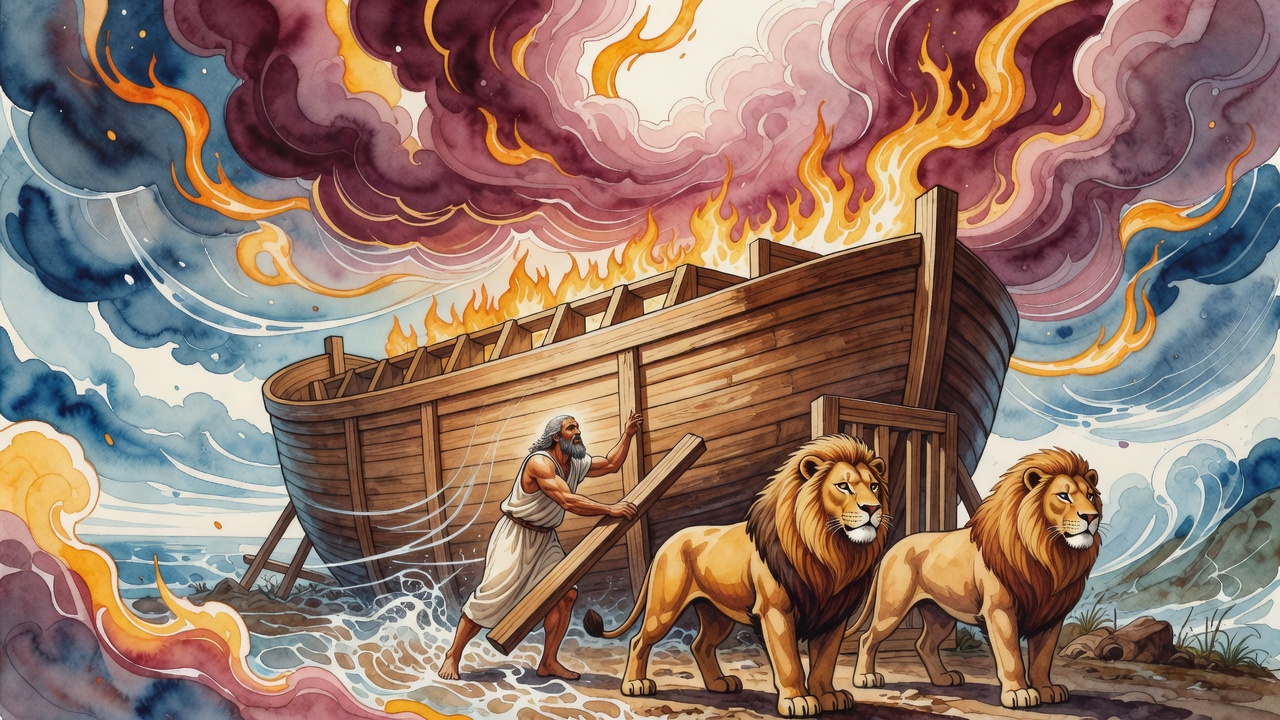
The hull stood half-built in the yard. Noah walked to a river out of Eden for a stone that would have to serve as the sun.
Table of Contents
The building orders were specific about the wood and the pitch, and then they stopped being about carpentry.
 Click for full size
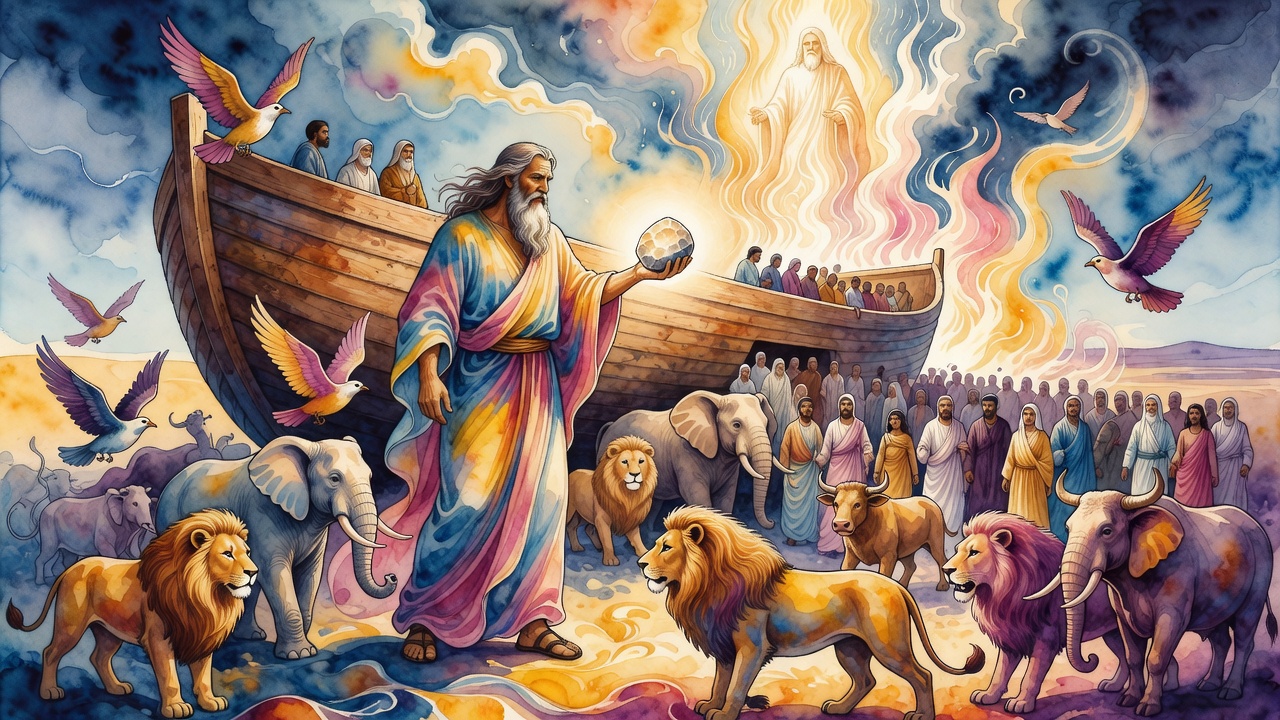
Go to the Pishon, Noah was told, and take a precious stone from there, and fix it in the ark to give you light. Finish it to a cubit at the top. Put the door in the side. Three levels, lower, second, and third.
The Pishon is one of the four rivers that came out of Eden, and it is the one that runs around the land where the gold is. He had to go there and come back before the rain, an old man on a long errand for a lamp, while the neighbors watched him leave the half-built hull standing in the yard.
The Stone in the Wall
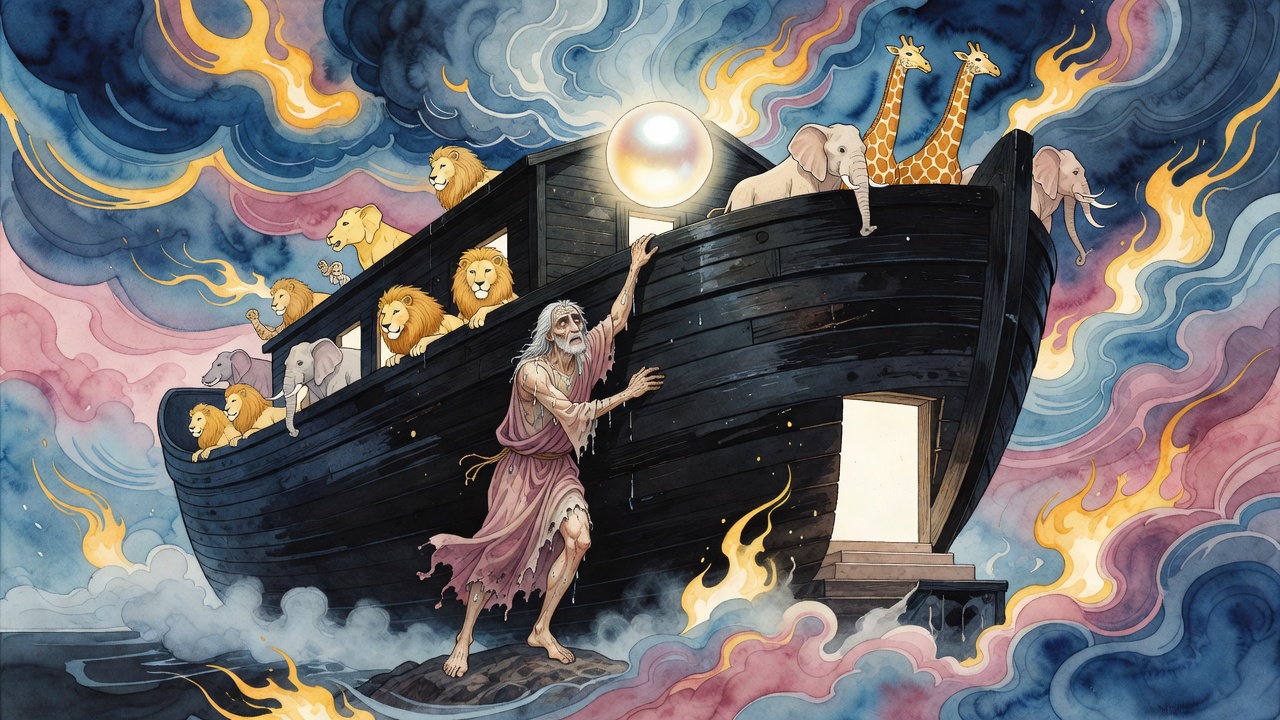
He fetched it. He carried it home in both hands, because a thing that is supposed to replace the sun is not a pebble you pocket. He pressed it into the wall. It sat there like a trapped piece of day. That was the thing the Torah calls a tzohar (צהר), usually taken for a window, and in the Aramaic a rock out of the river at the edge of the garden.
Then the sky closed over and there was no sun anywhere in the world, and the stone he had fetched went on glowing in the wall. A stone does not know it is night. The decks did not darken. The animals woke and slept by a light that never changed.
A Year of Troughs
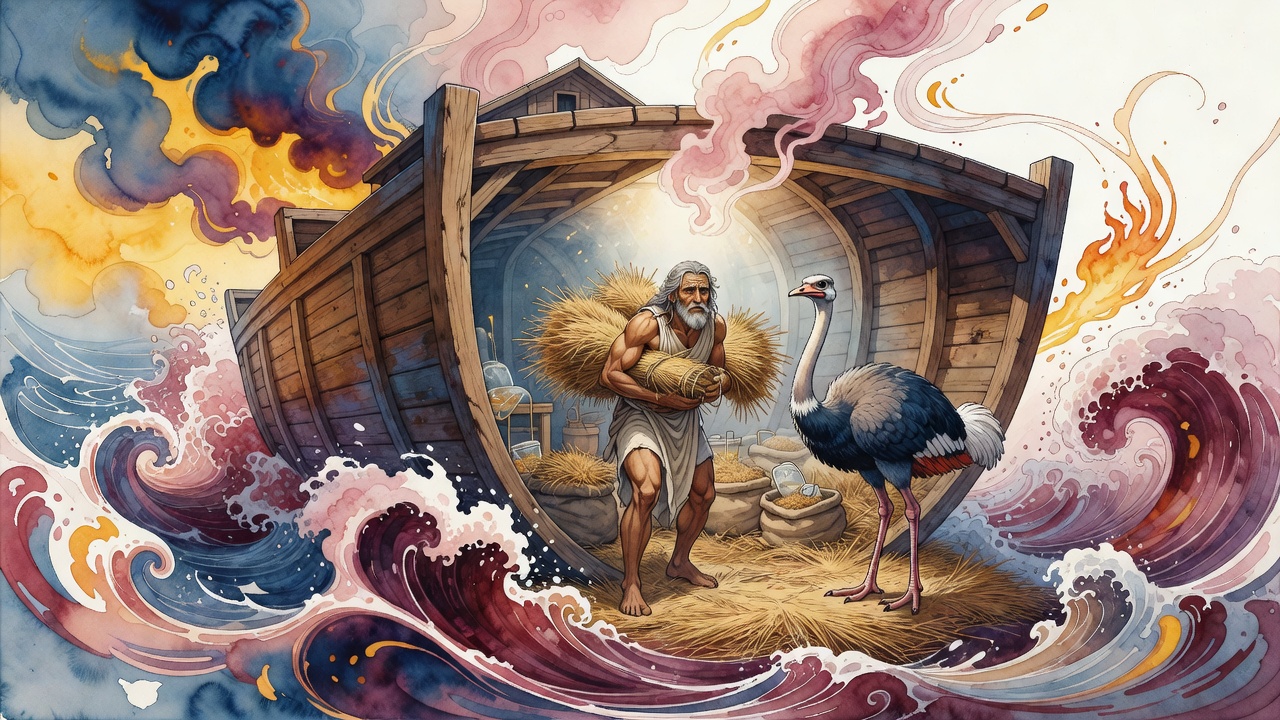
The word the Torah uses for him is tzaddik, righteous, and there is a plain reason for it that has nothing to do with what he believed. He did right by the creatures. He fed them the entire time they were on that boat, and the entire time was a year.
That is one man, with a wife, three sons, and three daughters-in-law, on three decks, in the dark, on water. Something on the lowest level wanted feeding while something on the top level was asleep. Something would only eat what he had to carry up from a store two levels down. The floor moved constantly. He did not get a day off in twelve months.
He filled the troughs. He hauled sacks until his shoulders burned. He climbed. He descended. He shoveled. He kept filling them anyway. That is the whole argument. He fed them, so he is called righteous.
The Hand Under His Elbow
The next word is tamim, whole or perfect, and one reading says he came out of his mother already circumcised, complete in the body before anyone touched him with a knife. Then comes the phrase that started the fight. He was righteous in his generations.
Put him next to monsters and he shines. Put him next to Abraham and nobody would pick him out of a crowd. That is one side. The other turns it over. He stood in the middle of that generation and did not pick up a single one of their habits. Nobody around him was doing anything but violence, and he did not learn it. Set a man like that among the righteous and there is no telling how far he would have gone.
Then somebody looked hard at the preposition and found the sting in it. Noah walked with God. Abraham's line did not walk with. Jacob blessed his grandsons by the God in whose ways his fathers had walked, in front of Him, on their own feet. They did not need to be steadied.
Noah walked with God, and the reading is exactly as unflattering as it sounds. If the Holy One had not been holding him up, Noah would not have been able to stand. Twelve months of hauling feed through three decks with the hull groaning, no horizon, no news, nobody left alive outside the walls, and the man doing it could not have stayed upright for a week on his own strength. He was being held the whole time. A hand under the elbow. He kept filling the troughs anyway, which is the part he gets the name for.
Eight People on the Mud
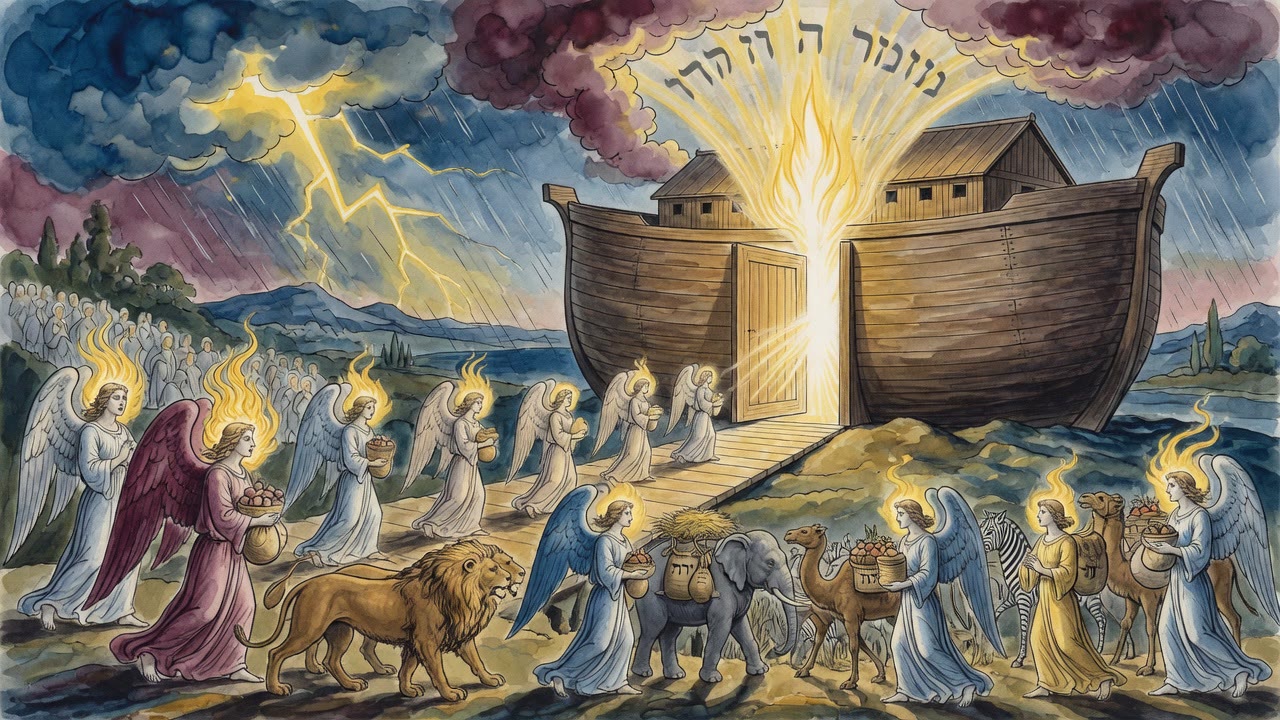
The water went down. The door that had been set into the side of the hull opened onto mud. Eight people came out of it, and the animals came out behind them, and that was the entire population of the world.
These are the houses of the sons of Noah, by their households, in their nations, and from these the nations of the earth were separated out after the flood. Every people on every map traces its line back through that doorway. The ones who would build towers and the ones who would knock them down, the ones with armies and the ones the armies came for, all of them out of three households that had spent a year in the dark listening to each other breathe.
The stone from the Pishon is not mentioned again. It had held one year of daylight against the end of the world, which is more than any lamp is asked for. Noah stepped onto the mud with the same elbow that had needed holding, and the world that walked out behind him was already every nation that would ever argue over a map.
← All myths