Noah's Ark Rested on Mercy High as Mountains
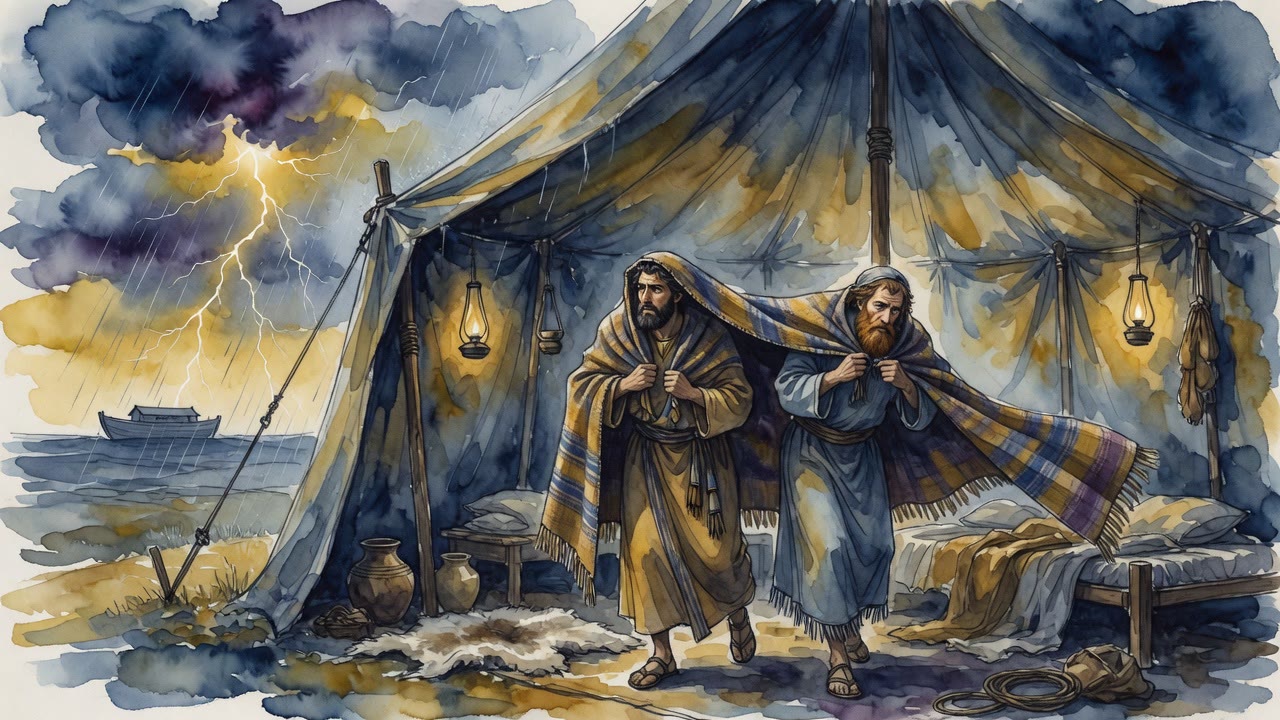
Rain hit the ark's roof without pause. Noah moved among stalls that stank of wet fur. Mercy had not shown its height.
Table of Contents
 Click for full size
Pitch, Breath, and Rain
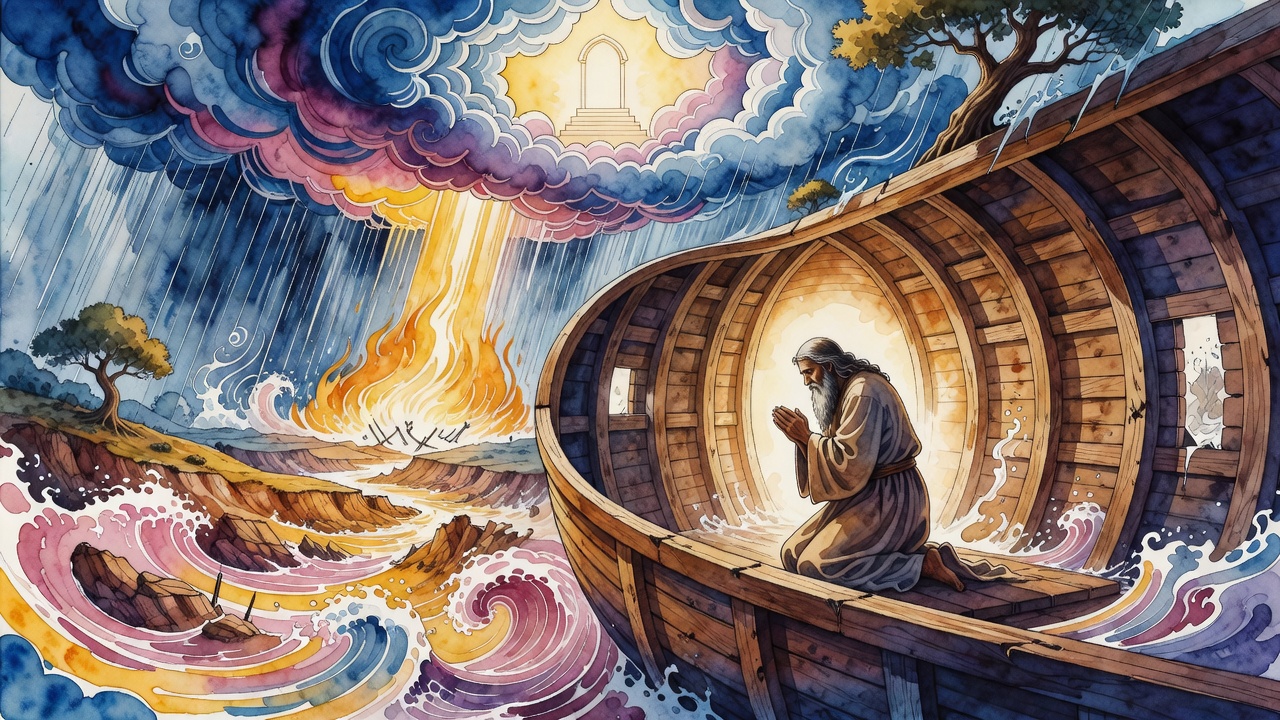
Pitch sealed every seam. Rain hit the roof without pause. Inside, animals breathed in the dark, and Noah moved among stalls that stank of fear and wet fur.
He fed creatures he had not chosen and could not abandon. A lamb pressed against a wall and waited. Birds shifted on their perches. The boards groaned. Noah put his palm flat to the timber and felt the water testing it.
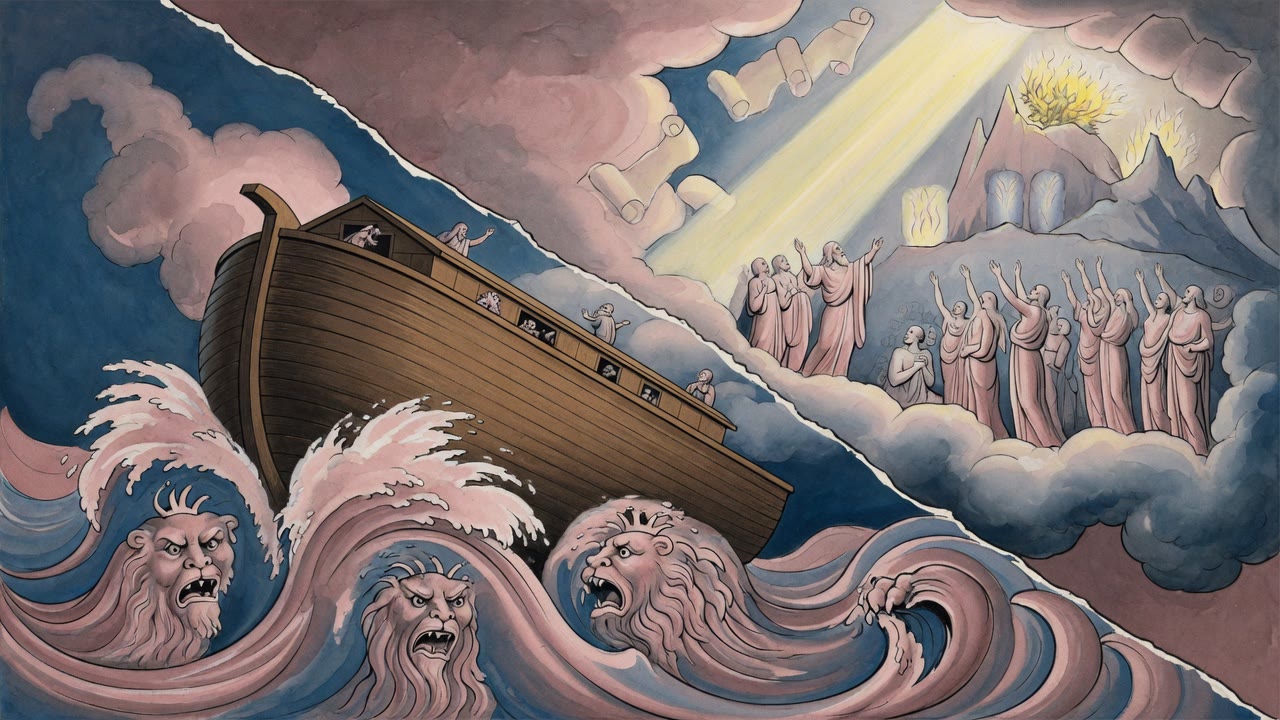
Outside, the fountains of the great deep burst open (Genesis 7:11). A world went under. The vessel rode the same rain that drowned it.
The Deep Did Its Work
Judgment ran as far as the abyss. The generation under the water received the full account. Springs split. Windows of the sky opened. There was no rival power fighting over the weather. One God held the deep and the boat at once.
Noah did not step out to argue the sentence. He shoveled. He counted breaths. He listened for a change in the drum on the roof and did not get one. Mercy, if it was coming, had not yet shown its height. The ark kept rocking.
A world can drown while a single vessel rides the same rain. That fact sat in the dark with the animals. It did not make the stalls cleaner. It did not make the deep kinder. It only kept the seams from opening.
Remembered With Every Beast
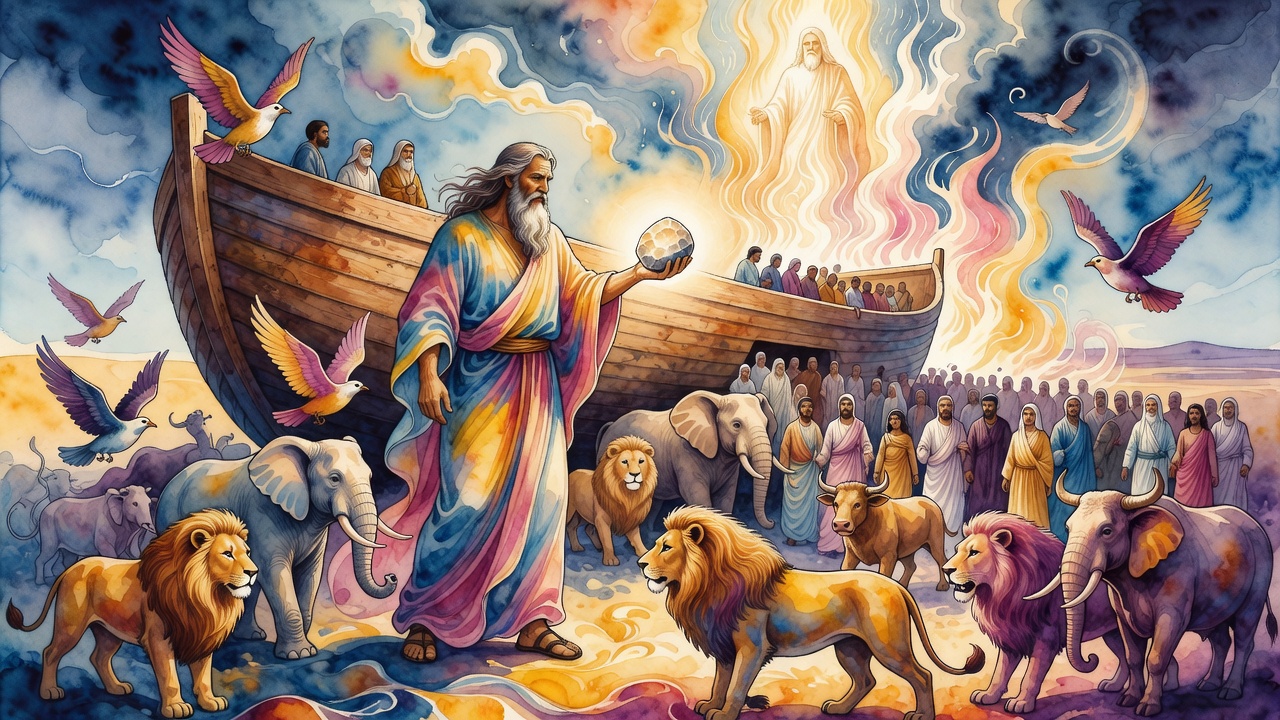
When God remembered Noah, He did not remember the righteous man alone. "And God remembered Noah, and every living thing, and every beast" (Genesis 8:1). Cattle. Birds. Creeping things. The kindness that would stand as tall as mountains reached the lowest berth.
Noah had heard the loading list twice before the rain. Seven pairs of the pure. Two of the others. The voice did not call those others unclean. It called them animals that are not pure (Genesis 7:2). Extra words, on purpose, while the sky was already choosing a flood. In a later inventory the camel would be named first by the cud it brings up, and only then by the split hoof it lacks (Leviticus 11:4). Even the harsh list began with what the creature had.
Judgment could be strict to the deep. Speech could still refuse a harsher word than the work required. Noah carried both facts in the same hull, pitch on the seams and care in the names.
The Keel Caught Ararat
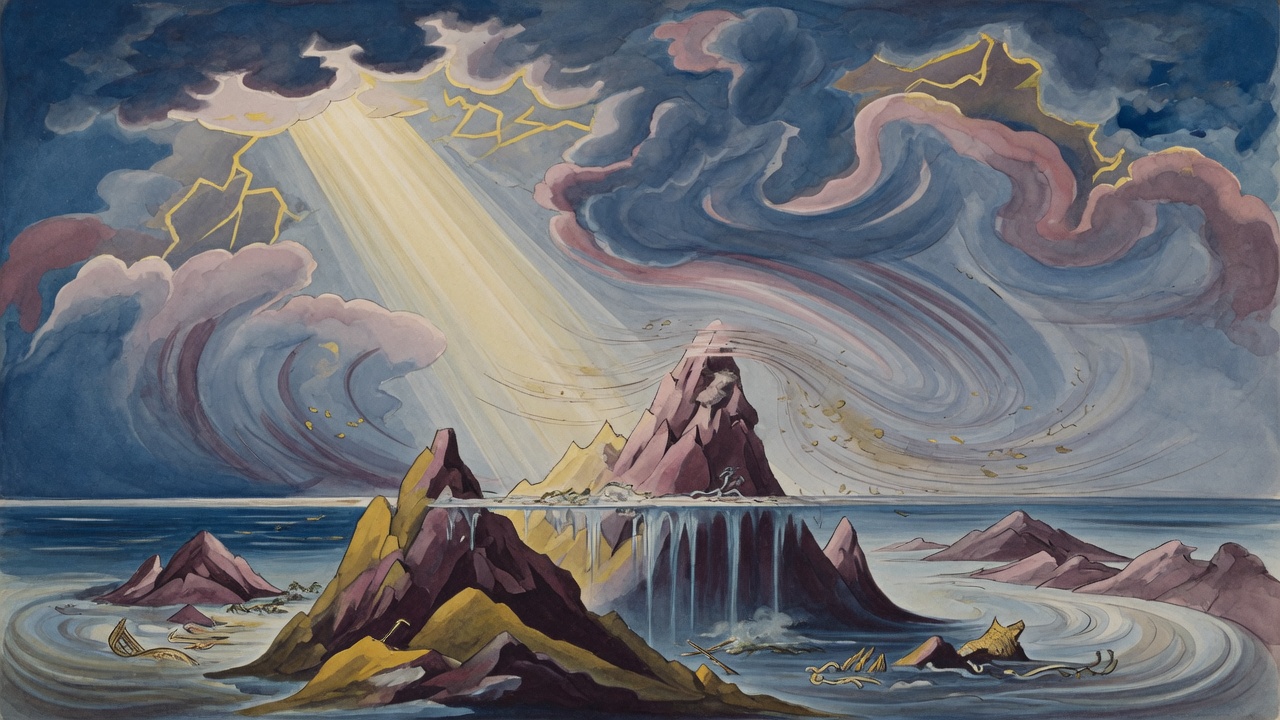
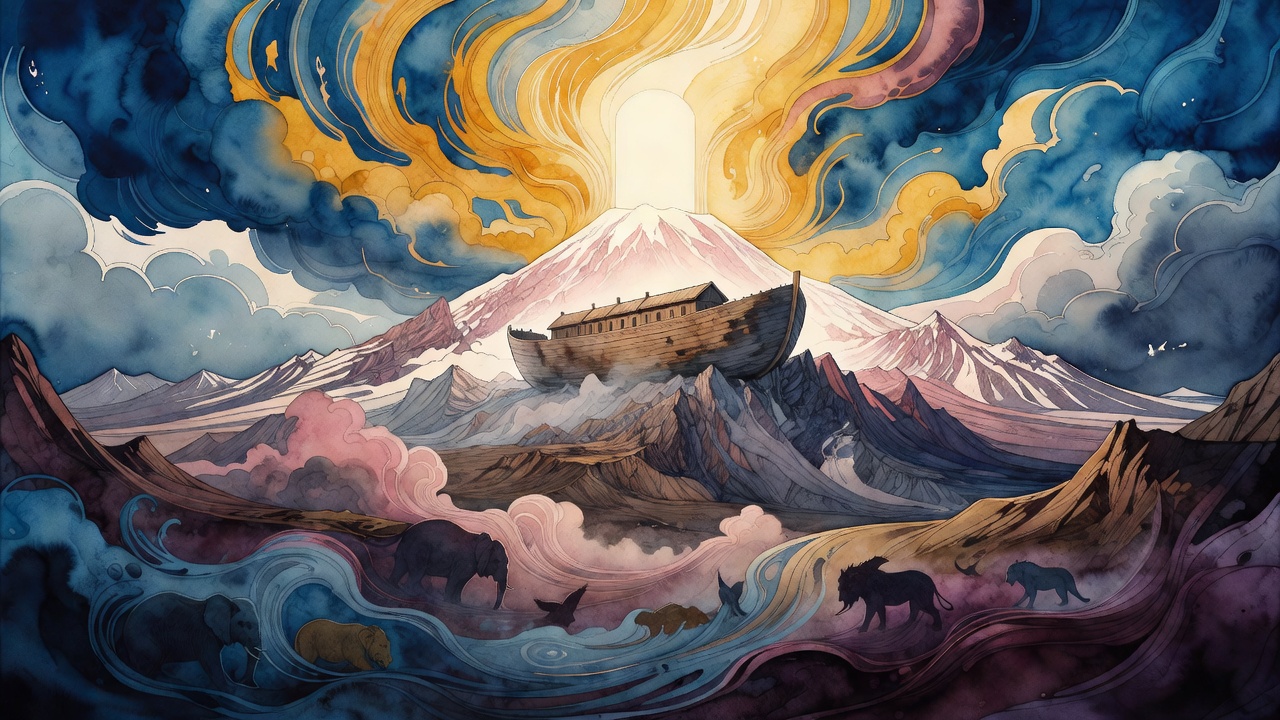
On the seventeenth day of the seventh month the keel struck stone. The ark rested upon the mountains of Ararat (Genesis 8:4). The deep had not finished its work everywhere. For one vessel the mountain had answered.
Mercy had a geography. It had ridges and snow and a hull that finally stopped rocking. Noah did not open the door. He waited for bird and branch. Height had arrived. Patience still had days, and the latch stayed shut until the world outside could hold feet again.
The household above the water had received ridges high enough to hold a world in miniature. The generation under the water had received the abyss. Charity like mountains. Judgment like the deep. When the birds finally brought green back, the mountains had already told the truth. Rescue can be as tall as rock, and still leave the deep remembered under every new field.
Marble and a Reed Mat
Long after the flood, Rabbi Joshua ben Levi walked in Rome and stopped in a street. Two marble columns stood wrapped in bedding so heat would not crack them and cold would not split them. A few paces on, a pauper lay with a reed mat under him and a reed mat over him.
Over the columns Joshua read, "Your righteousness is like the mighty mountains" (Psalms 36:7). When You give, You give with height. Over the pauper he read the rest of the verse. "Your judgments are like the great deep." When You strike, You strike to the bottom.
He did not need another flood to understand the measure. He needed one walk through a city that padded stone and left skin thin. The psalm that had held Noah's ark and the bursting deep was still readable in marble and reed. Joshua walked on. The pauper stayed. The columns stayed wrapped.
Man and beast You save, the same verse says. In the ark that had meant the lowest berth. In Rome it meant a street that had not yet learned the height of mercy.
← All myths