The Flood Lasts Twelve Months of Judgment
Noah smeared pitch while neighbors laughed at a ship on dry land. Then the deep broke, and the door stayed shut for a counted year.
Table of Contents
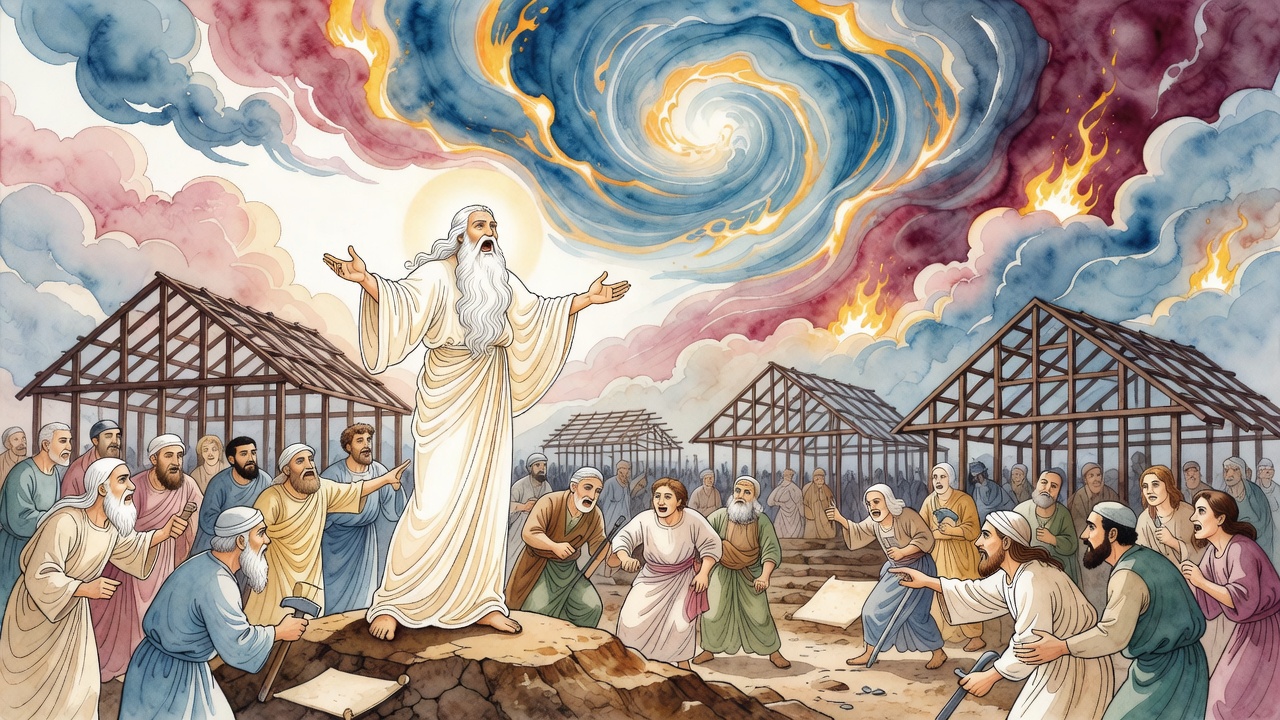
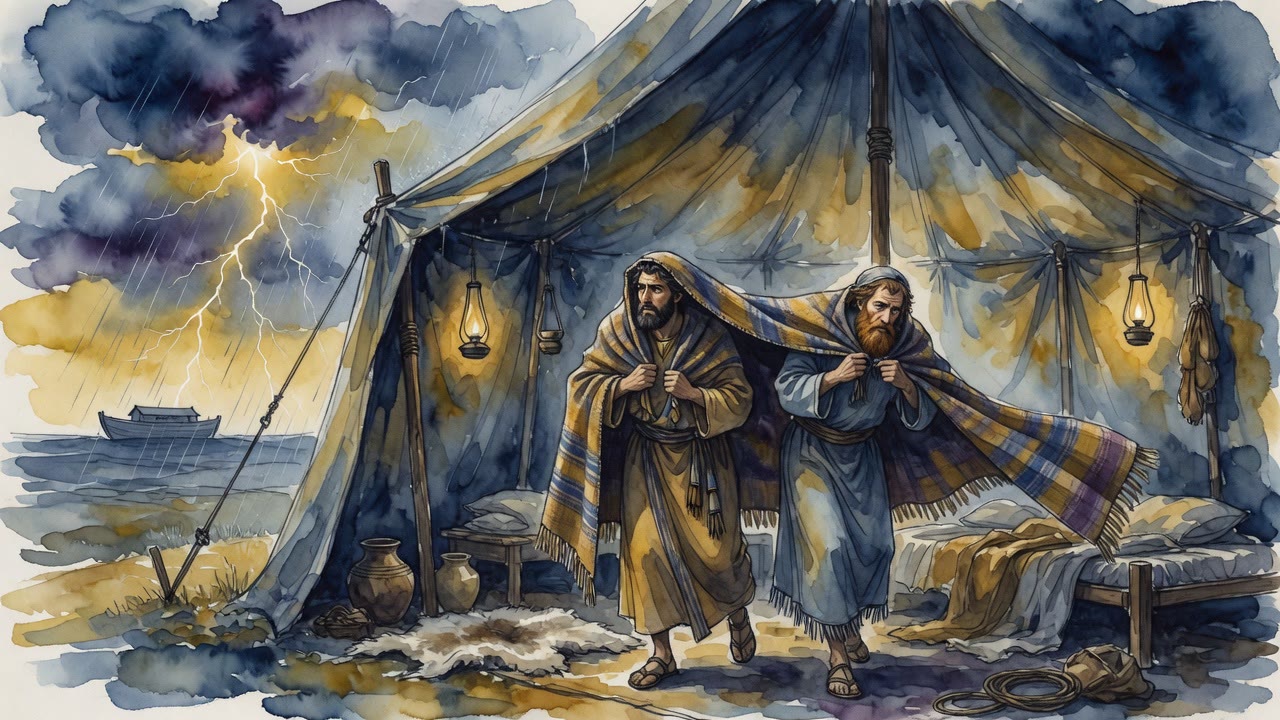
Noah pressed his palm flat to the pitch and felt it take the wood. Neighbors stood in the road and laughed. A ship on dry land is a kind of public joke. He did not answer them. The ground under their feet had already changed character, and they were the ones who had taught it how.
 Click for full size
The Ground Took the Theft
The earth was not ruined by weather first. It was corrupted through its inhabitants, who turned from righteousness until rapine filled every road (Genesis 6:11). Markets lied. Houses seized. The weak learned that strength wrote the only law that mattered. The land registered what hands did to one another, and the soil grew heavy with human choice.
Heaven did not treat the world as an accident that went bad on its own. Someone had to answer for the way people taught the ground to love violence. The Hebrew can sound as if ruin simply arrived. The Aramaic reading refuses that comfort. The earth was corrupted by its people.
Noah heard the verdict in the way neighbors laughed and in the way travelers stopped trusting doors. He gathered cubits. He gathered food for mouths that could not thank him. He built while the joke was still funny.
A Ship on Dry Land
Righteousness here did not mean speeches. It meant obeying a command while people he knew by name treated timber as a waste. He looked, on the first day of hammering, like a man wasting good wood. He kept hammering.
He gathered pairs. He entered. The door would close against faces he had eaten with. That was the work. Ugly. Practical. A hinge on which survival could turn, narrow as one man who still stood upright when the age bent toward force.
When the rain finally came, the joke ended. The hinge held. Without that upright body the ark is only timber. With it, timber becomes a world small enough to save.
Twelve Months Behind the Door
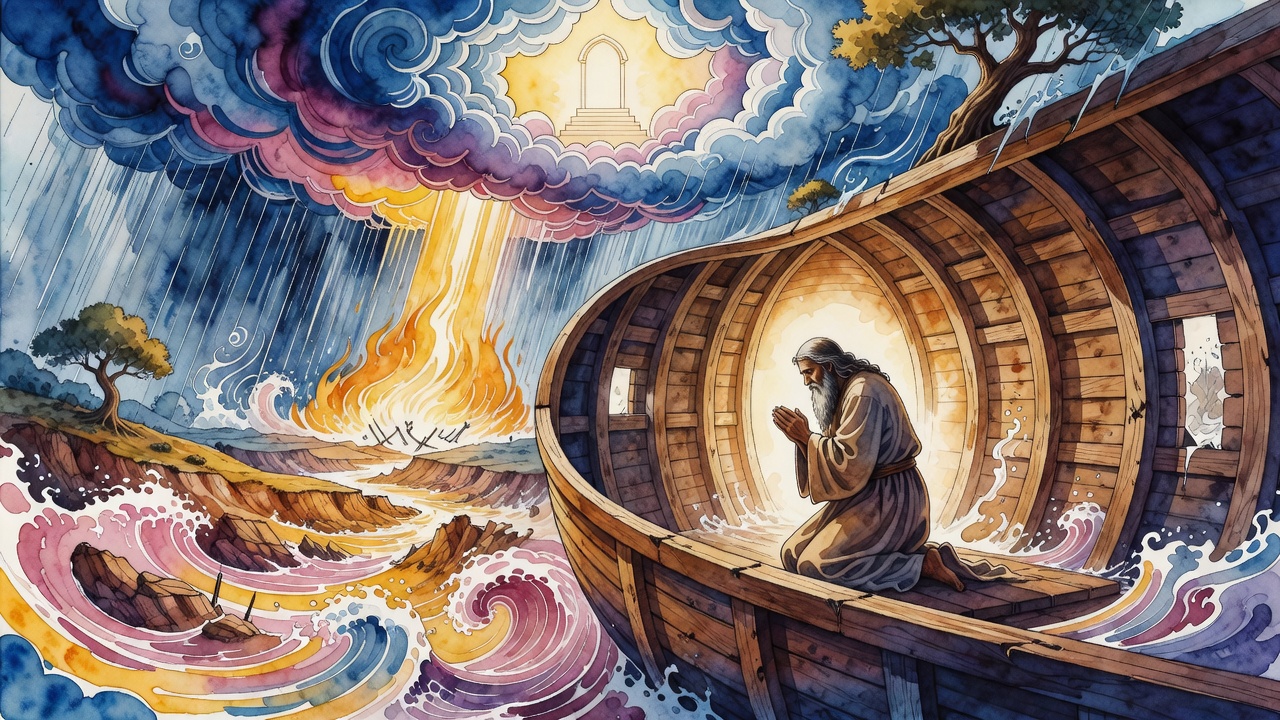
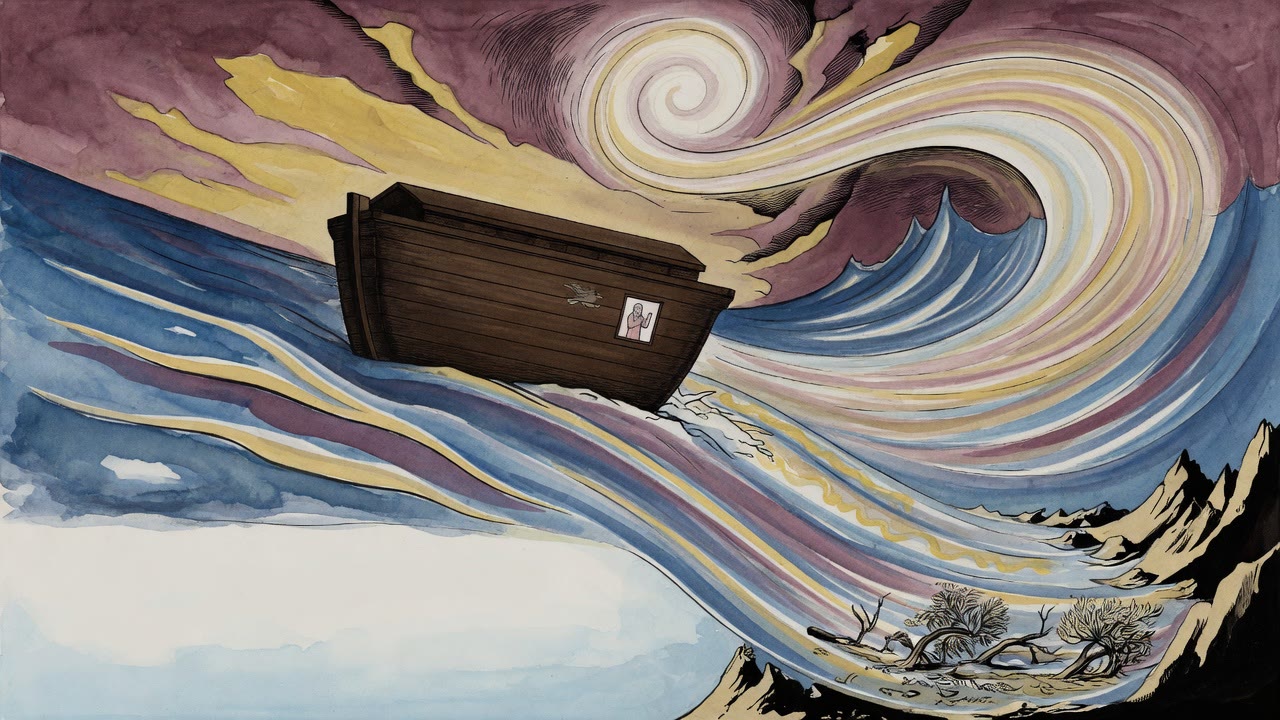
When the deep broke and the windows of heaven opened, the count began with a calendar, not a blur (Genesis 7:11). Noah's six hundredth year marked the start. In the second month, on the seventeenth day, the fountains of the great deep broke up. Month after month the ark rode water that boiled as judgment, not as rain for crops.
A year about which no details are given is still a real year of real days. Twelve months. The generation that filled the world with force would not drown and be forgotten. They met the measure they had poured into the ground.
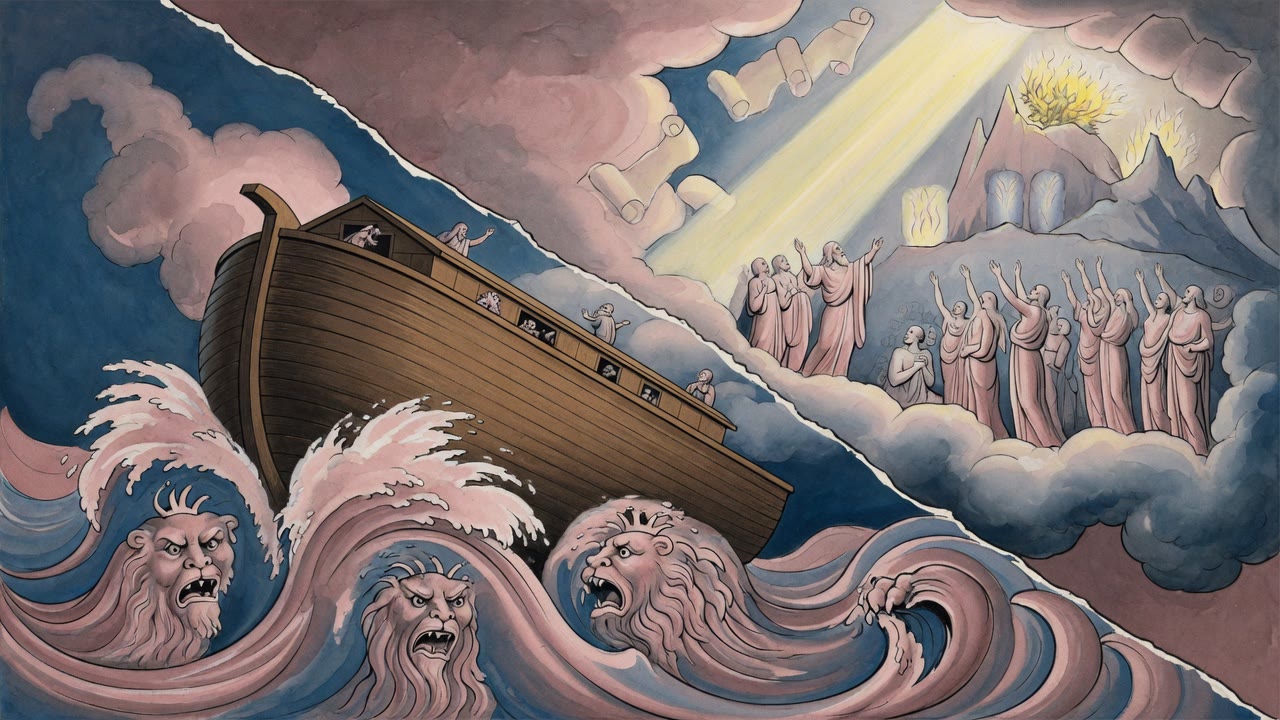
Inside the sealed wood, animals pressed against one another in heat and stench and fear. Outside, cities sank without courts and without eulogies. The year turned through seasons that no longer meant harvest. The doors stayed shut until the sentence finished its length. Noah's hands knew pitch better than they knew comfort. Every day of the twelve months was a day the world outside was still being answered.
The Ramp onto Mud
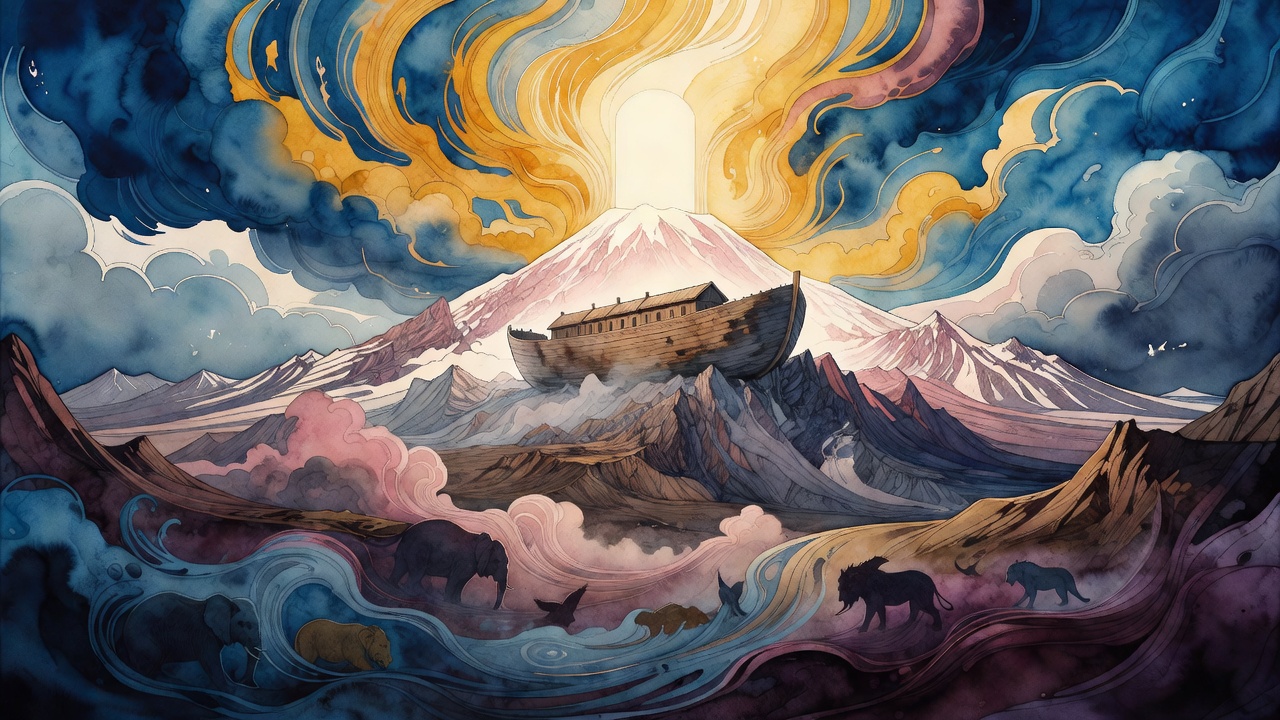
After the year, the door opened onto a washed world that still smelled of mud and ending. A dove had failed and tried again. Noah stepped onto ground that still remembered violence. He built an altar. The soil that had absorbed crime now received sacrifice.
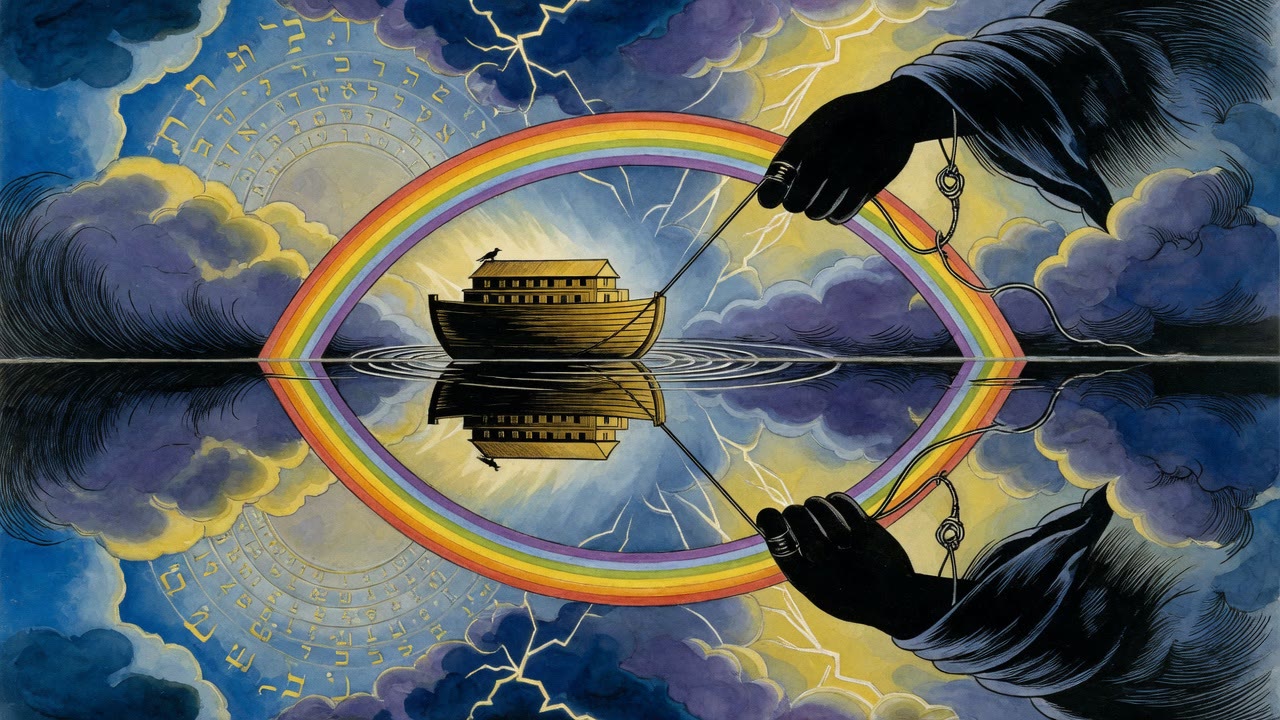
Above him a bow was set as a sign against another total water. Below him animals scattered into a morning where the old jokes were dead and the new work of planting had not yet begun. He did not look like a hero then either. He looked like a man whose hands still smelled of pitch, walking into a silence too large for speech.
Every Creature in the Promise
The covenant that followed did not stop at Noah's family. Birds, cattle, and every beast that walked off the ark stood inside the promise (Genesis 9:10). Heaven bound itself to the entire breathing population of the earth. The sparrow and the ox were not scenery for a human drama. They were parties to a treaty after catastrophe.
Human blood would still require accounting. Animal blood spilled against a human would also answer. The new world began under a law that refused to leave life outside the circle. Later courts would argue goring oxen and damages. The first treaty already included the creatures that survived the boil.
Twelve months is long enough for a man to stop expecting rescue from the people who mocked him. It is long enough to learn that judgment can have a start date and an end date, and that mercy after judgment still names every creature that climbed down the ramp.
← All myths