Noah Warned of the Flood While the Crowd Planned an Iron Roof
For one hundred twenty years Noah warned of water. The crowds mocked and boasted they would roof the earth with iron if fountains burst from below.
Table of Contents
 Click for full size
The Sea That Learned Manners
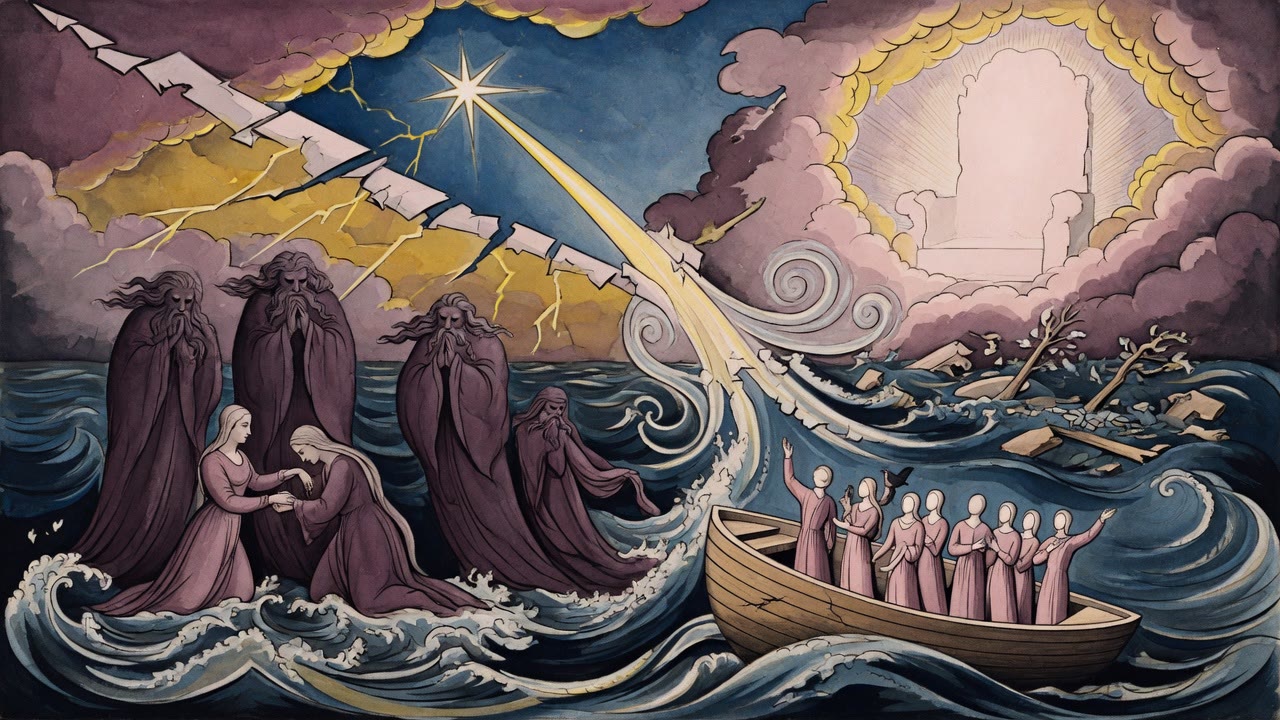
Before Noah was born, the legends say, the sea flooded the land twice a day and licked at graves as if the dead were a shoreline. At his birth the water drew back into its borders and stayed. A famine from the days of Lamech, counted among the great famines destined for the world, eased when the child arrived like a hinge in weather. As he grew he walked the path of Methuselah, righteous against the grain. The rest of humankind walked the other way, and the blood of the giants born from the Watchers cried upward until the archangels themselves filed accusation before God in a court that needed no human witnesses.
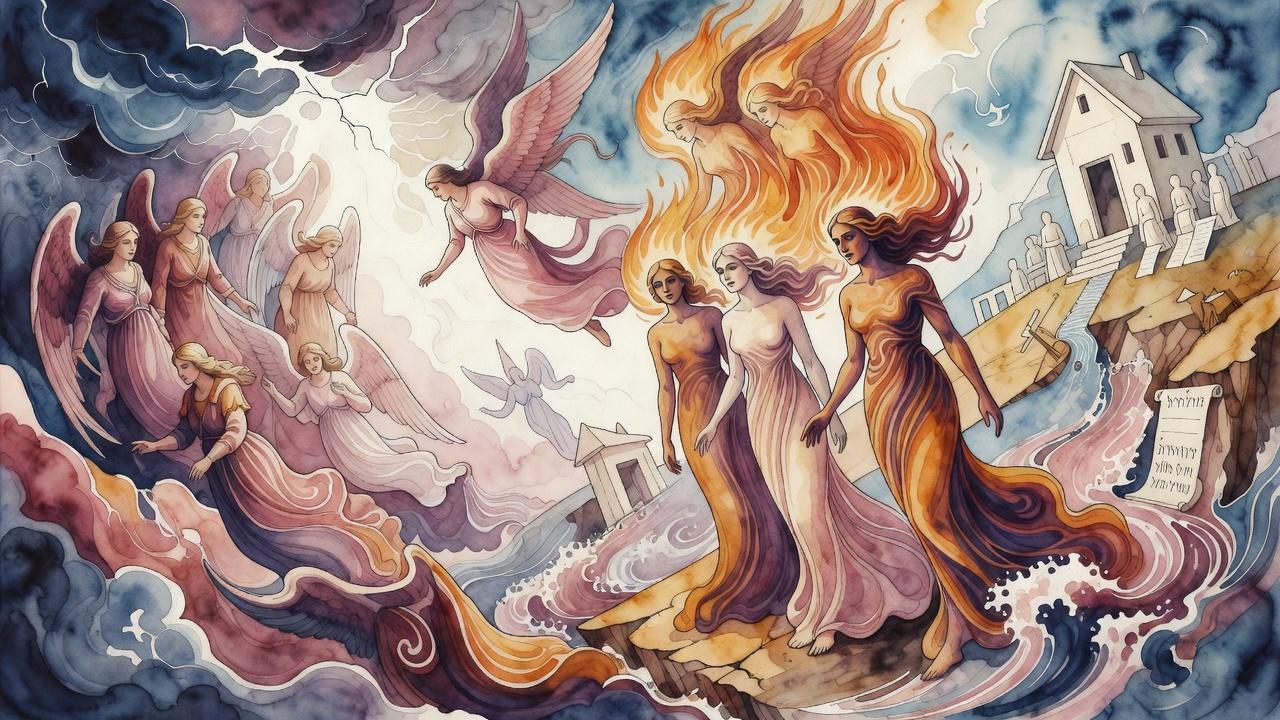
Uriel was sent to Noah with warning and craft, how to build and how to live when the world would not listen. Raphael bound Azazel under sharp stones in the desert of Dudael, darkness until judgment. Gabriel drove the bastard offspring of angels and women into mutual slaughter, a brutal end for a brutal birth. Michael pinned Shemhazai's line under hills for seventy generations, forced to watch their children die before the binding. The flood would not be only rain on roofs. It would be the closing of a case already argued in heaven while men below still planned banquets.
One Hundred Twenty Years of Mockery
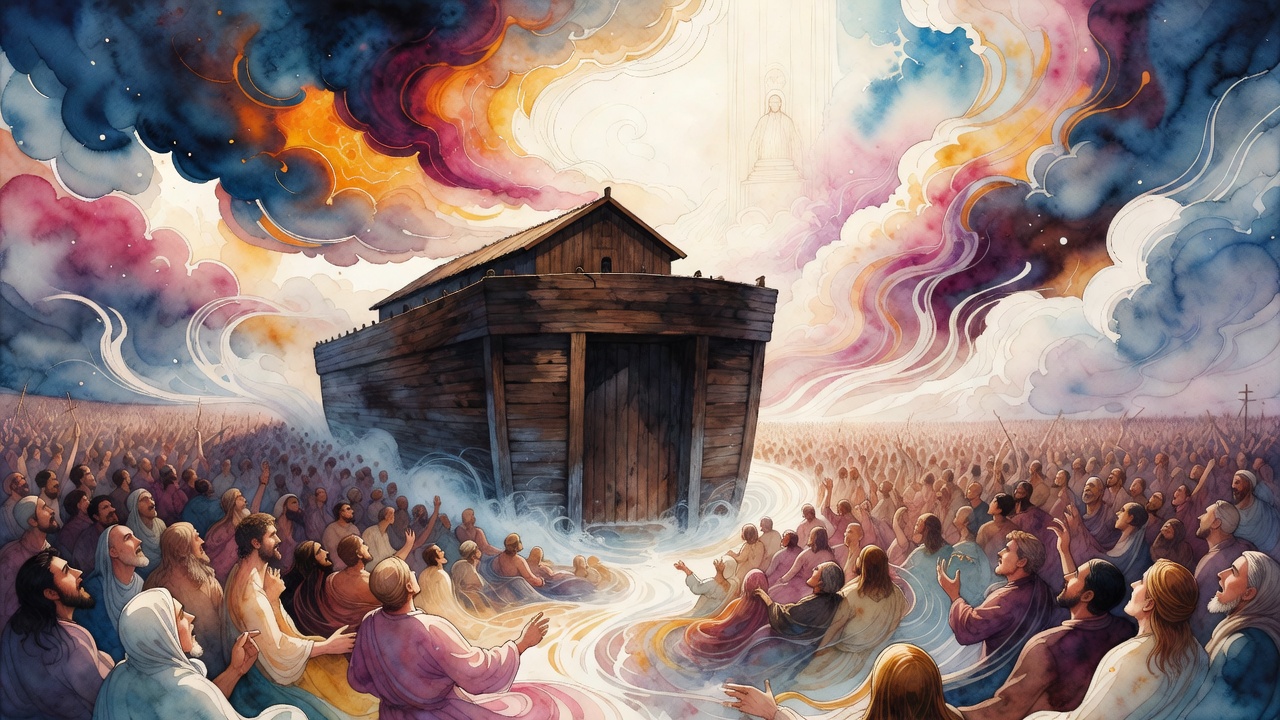
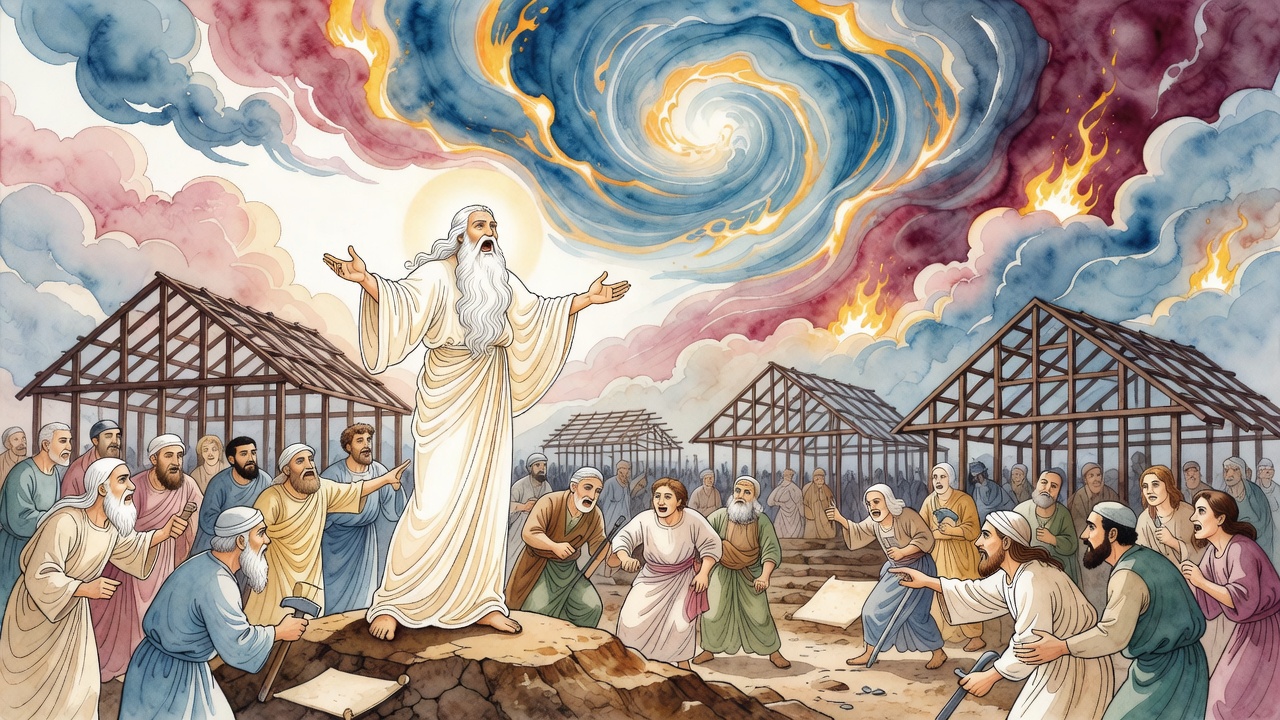
Even after the decree that the world had become too corrupt to continue, mercy spoke last. Noah preached for one hundred twenty years while he built, a walking billboard of warning. He held the coming water over their heads like a bell and pleaded for turning. They laughed with the confidence of people who have never seen a map fail. "What sort of flood are you expecting, old man? If fire comes, we know how to protect ourselves. If water bubbles from the earth, we will cover the fountains with iron rods. If water falls from above, we have a remedy for that too." They had answers for every direction except the direction of repentance.
The ark rose in public, a ridiculous mountain of wood and pitch, and still no one boarded who was not commanded by name. Arrogance treated carpentry as theater and prophecy as entertainment between meals. Noah hammered. They joked. Children learned mockery as a local sport. The door stayed open long enough for a generation's worth of teshuvah (repentance, the turn back to God) that never arrived, while iron rods were discussed as if heaven could be roofed like a cistern.
Only at His Bidding
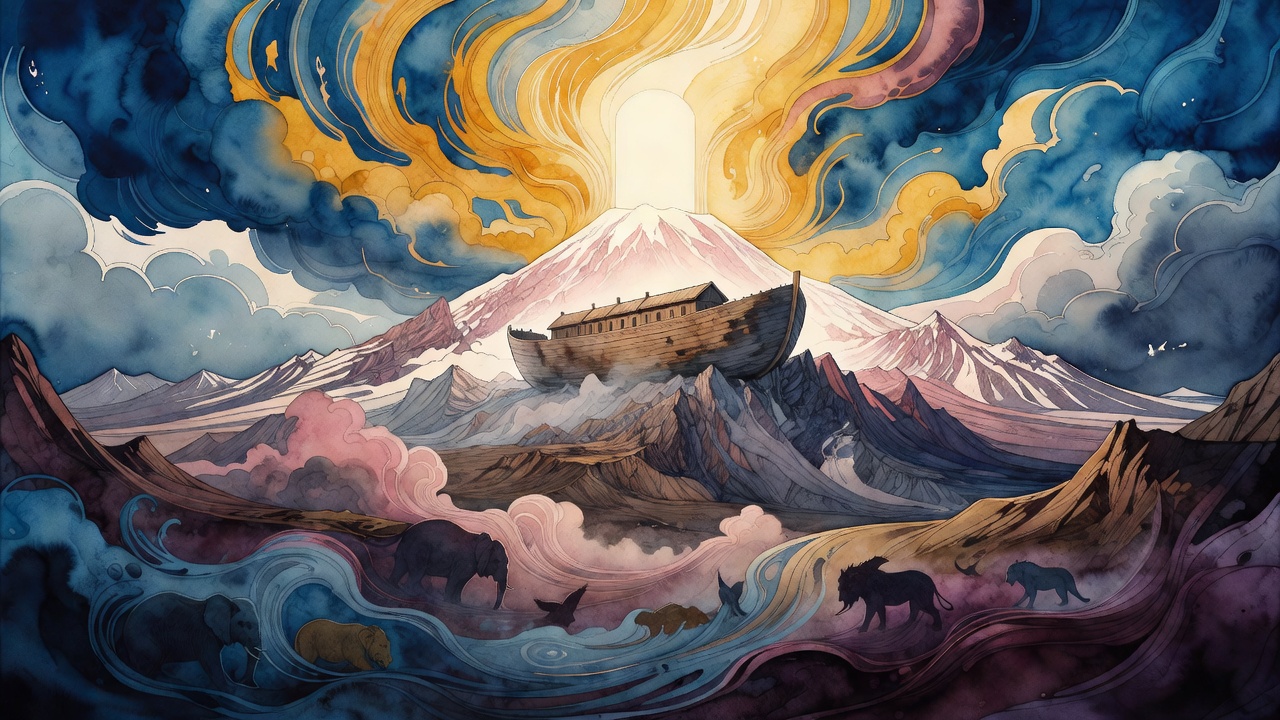
When the waters finally ceased and the mountains remembered air, when the raven and the dove had done their work and the world smelled of wet stone, Noah refused to leave on his own schedule. Midrash Tanchuma remembers his stubborn obedience with clarity. He had entered at the bidding of the Holy One when the word was "Come, you and your household, into the ark." He would not depart except at the same quality of bidding. God had to speak again into the quiet. Go forth from the ark. The man who had endured a century of mockery would not take one unauthorized step onto a washed world, as if free will had learned a new caution.
Outside lay silence where markets had been, and bones where boasts had been. The generation that planned iron roofs against heaven was gone, and their rods had not held back a single cubit. Noah stepped onto mud that had been a courtroom and a grave, wife and sons and animals breathing the first unpunished air in months.
What Could Have Abrogated the Decree
Tanchuma places beside the flood a teaching that three things abrogate a harsh decree, repentance, prayer, and charity, and some add a changed name and the performance of good deeds. The Holy One had hoped the flood generation would repent while the ark's ribs still showed. They did not. Extermination followed, not because heaven lacked patience, but because patience had been answered with engineering jokes. The ark was not a prize for cleverness or for bloodline alone. It was what remained when a world refused every softer door and every louder warning.
Noah's birth had calmed a rude sea. His preaching could not calm rude hearts that preferred iron fantasies to bowed heads. Between those two facts the rain began, the fountains of the deep broke, and the only roof that mattered was the one they had mocked while it was still under construction, drop by drop, year by year, until the jokes ran out of air.
← All myths