Parshat Noach6 min read

Shem and Japheth Backed Into Noah's Tent With a Cloak

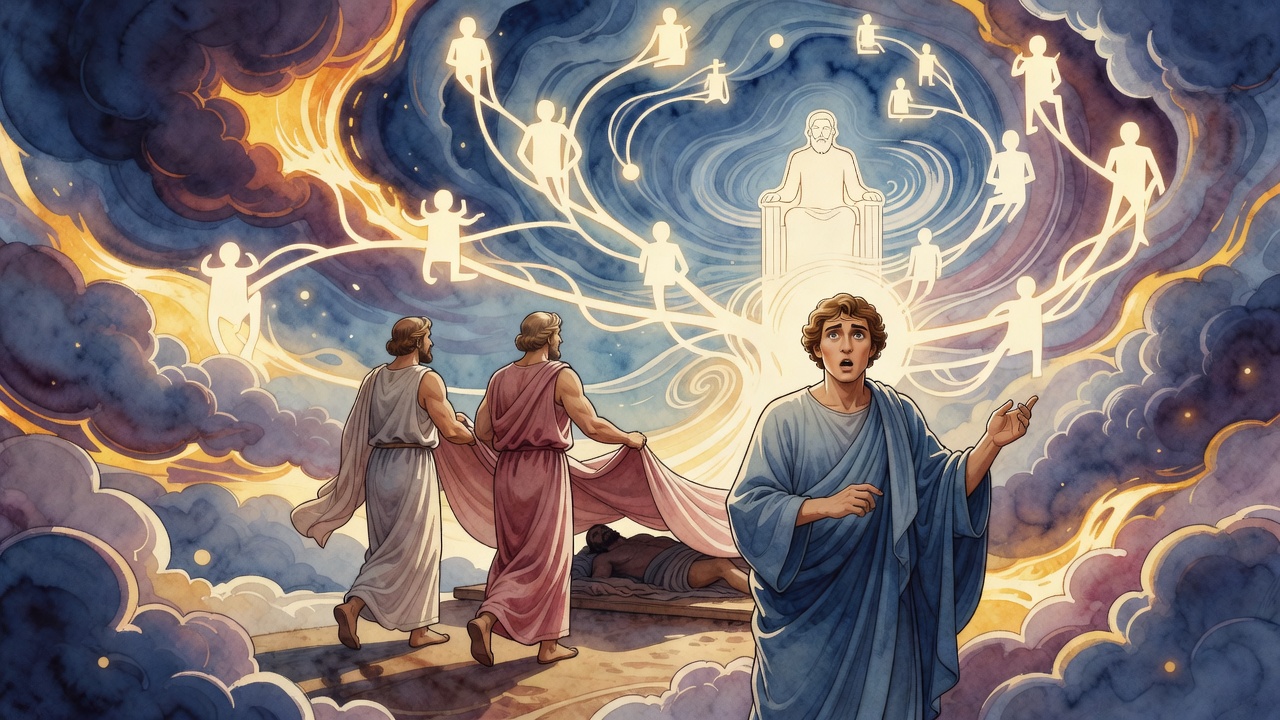
Noah lay uncovered in his tent. Ham laughed and called his brothers. Shem lifted a cloak and walked in backward, his face turned away.

Curated by Arthur · Told by Maggid ·
Table of Contents
  1. Ham Stands in the Doorway and Laughs
  2. Shem Reaches for the Cloak First
  3. Two Sons Walk Backward Into the Tent
  4. Noah Wakes and Speaks Over Three Sons
  5. The Fringe and the Burial Ground

The vineyard had come from seeds. Noah had carried them through the flood in his fist, grape pits saved from a drowned world, and now they had grown into vines heavy with fruit, and he had pressed the fruit, and he had drunk. The wine did to him what wine does. He lay inside his tent on the bare ground, his robe fallen open, his old body uncovered in the heat of the afternoon, and he did not know it.
Ham Stands in the Doorway and Laughs

Ham came to the tent flap and looked in. He saw his father stretched out, slack-mouthed, exposed. A son might have stepped back. A son might have reached for the nearest garment and dropped it over the old man without a word and walked away and told no one, ever.

Ham did none of that. He stood in the doorway and he let his eyes rest on his father, and something in his face curled into a grin. Then he turned and went out to find the others, and his voice carried across the camp, bright and amused. Come and see. Come and look at him. He wanted an audience. He wanted the old man's shame to be a thing the family would carry, a story to be told, a picture nobody could unsee. He had looked, and looking was not enough; he needed others to look with him.

Shem Reaches for the Cloak First

His brothers heard him. They did not come the way he wanted them to come.

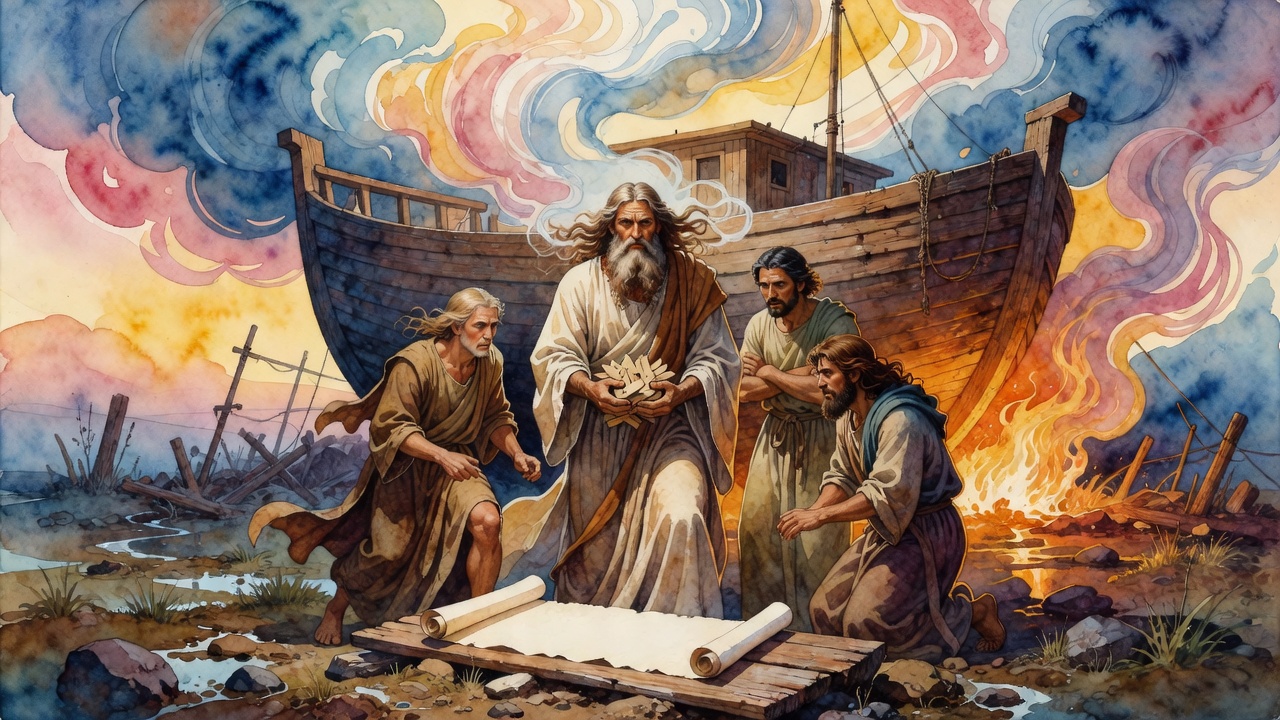
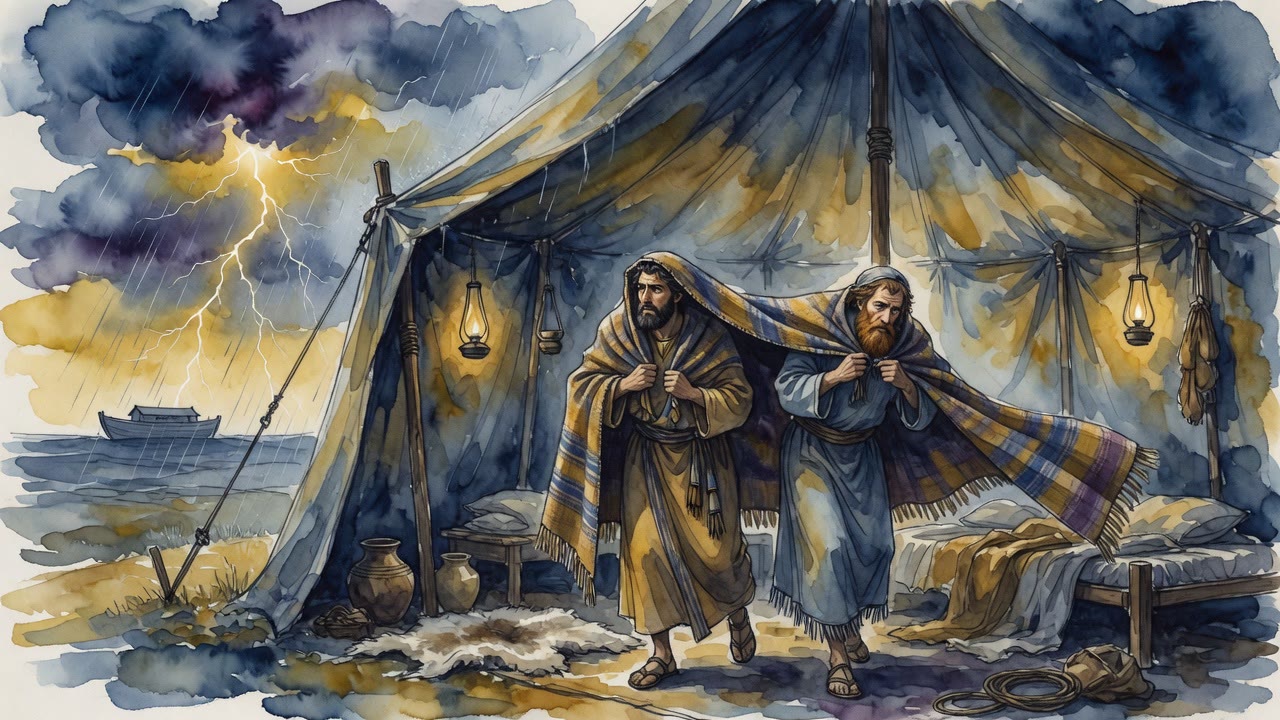
Shem moved first. The account that fixes this moment notes that the verse says he took, one hand, one man, before the other joined him (Genesis 9:23). He took up a cloak, a wide woven garment with fringes at its corners, and he turned the cloth so it hung between his arms like a curtain. Japheth took the other edge. They understood without speaking what the cloak was for and what their eyes were for, and they made a decision about both.

They would cover him. They would not see him while they did it. Those two things together were harder than either one alone.

Two Sons Walk Backward Into the Tent

So they turned around. They put their backs to the doorway and their faces to the open camp behind them, and they stepped over the threshold blind, feeling for the ground with their heels.

It was slow. A man covers a sleeping body in three steps when he can see. Backward, with a sheet of cloth stretched between two pairs of hands and neither pair of eyes allowed to drop, it took much longer. They could not check their aim. They could not glance down to be sure the cloak had landed where it needed to land. They shuffled deeper into the dim tent, one behind the other, holding the fringed garment level, trusting their feet, until they felt by the change in the air and the give of the ground that they had reached him. Then they let the cloth down over their father, smoothing it by touch alone, their heads turned away the whole time toward the bright doorway and the world outside.

They never saw what Ham had seen. That was the choice, and it cost them every easy second the choice was made of.

Noah Wakes and Speaks Over Three Sons

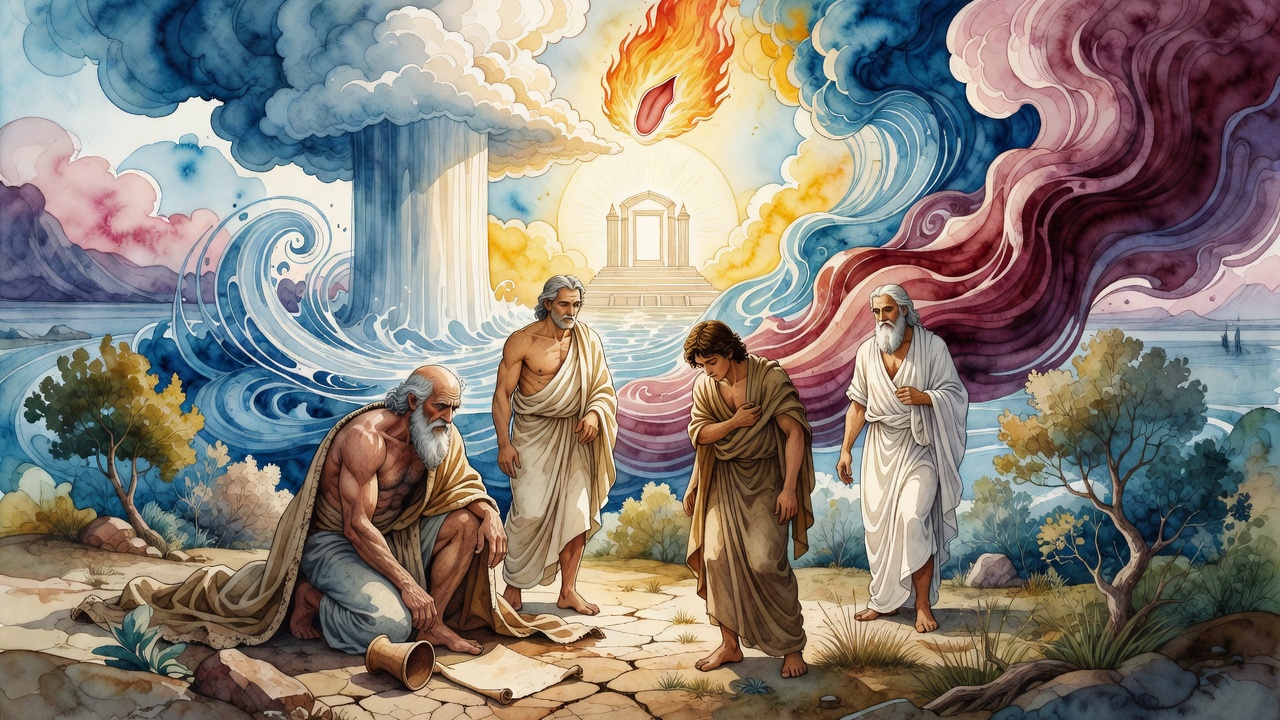
Noah woke under the cloak and knew what had been done to him and for him. He knew who had stood in the doorway and who had walked in backward. And he opened his mouth, and the words that came out reached past his sons and fastened onto their children and their children's children.

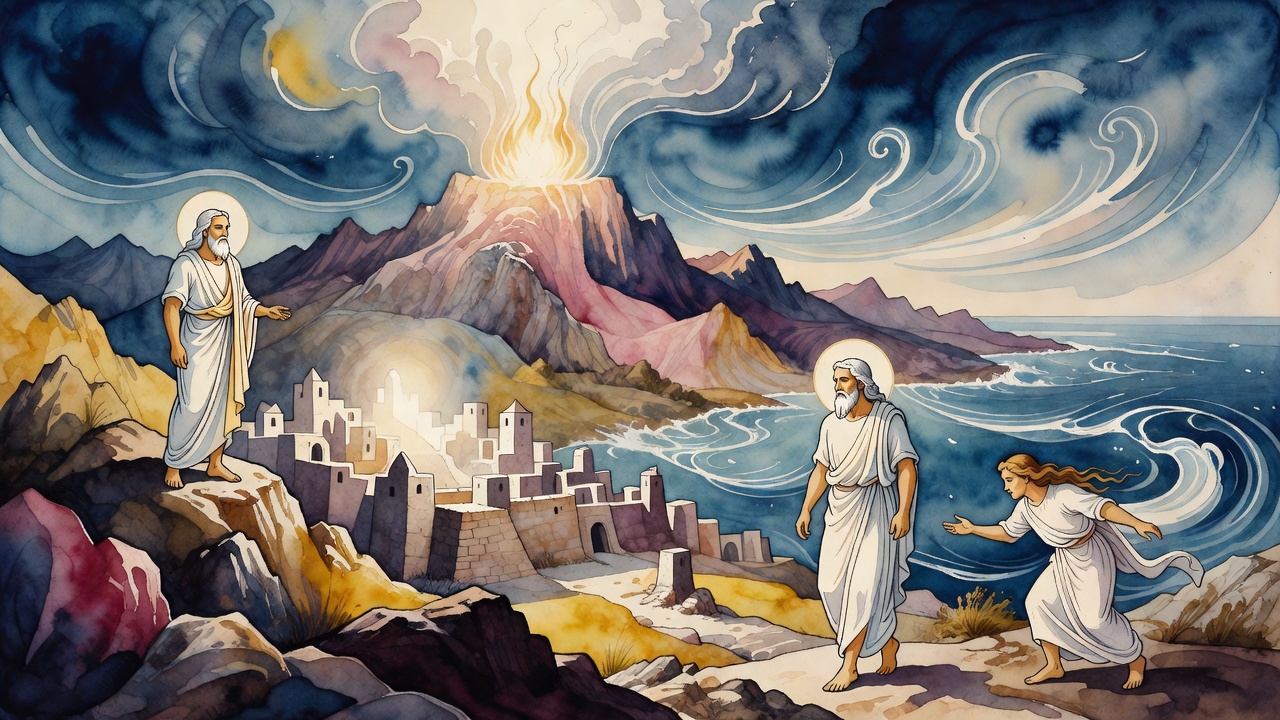
To Ham the words went hard. Cursed, he said, naming not Ham himself but Ham's line through his son Canaan (Genesis 9:25). The one who had stripped his father bare with his eyes would father peoples who would one day be stripped bare themselves. Generations down the road his descendants would be led away from their own land in long columns, exposed and shamed, marched naked into exile the way he had wanted his father left naked on the floor. What a man does to the body of his father comes back to find the bodies of his sons.

The Fringe and the Burial Ground

For the two who had covered him, the reward grew straight out of what they had held in their hands and where they had pointed their feet.

Because Shem had covered his father with a fringed cloak, his children received the commandment of the fringe itself, the twisted threads at the corner of the garment, including the cord of blue, the tzitzit a man wraps around himself and looks at and remembers. The cloak he had used to spare his father became a cloak his descendants would wear as a sign forever. The covering became a commandment.

Because Japheth had walked that slow blind walk across his father's floor, his children were granted ground to be buried in, a resting place in the land that matters most. The feet that had felt their careful way backward toward Noah earned, far down the years, a place for the body to lie down at the end.

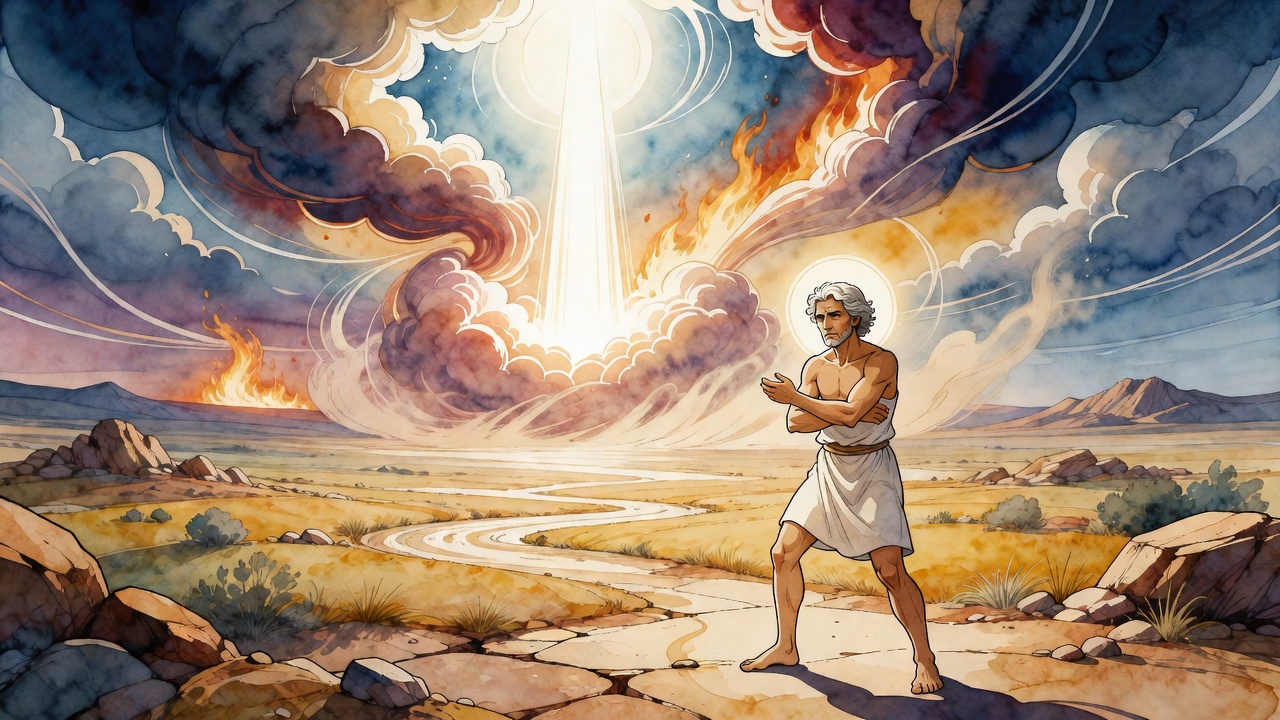
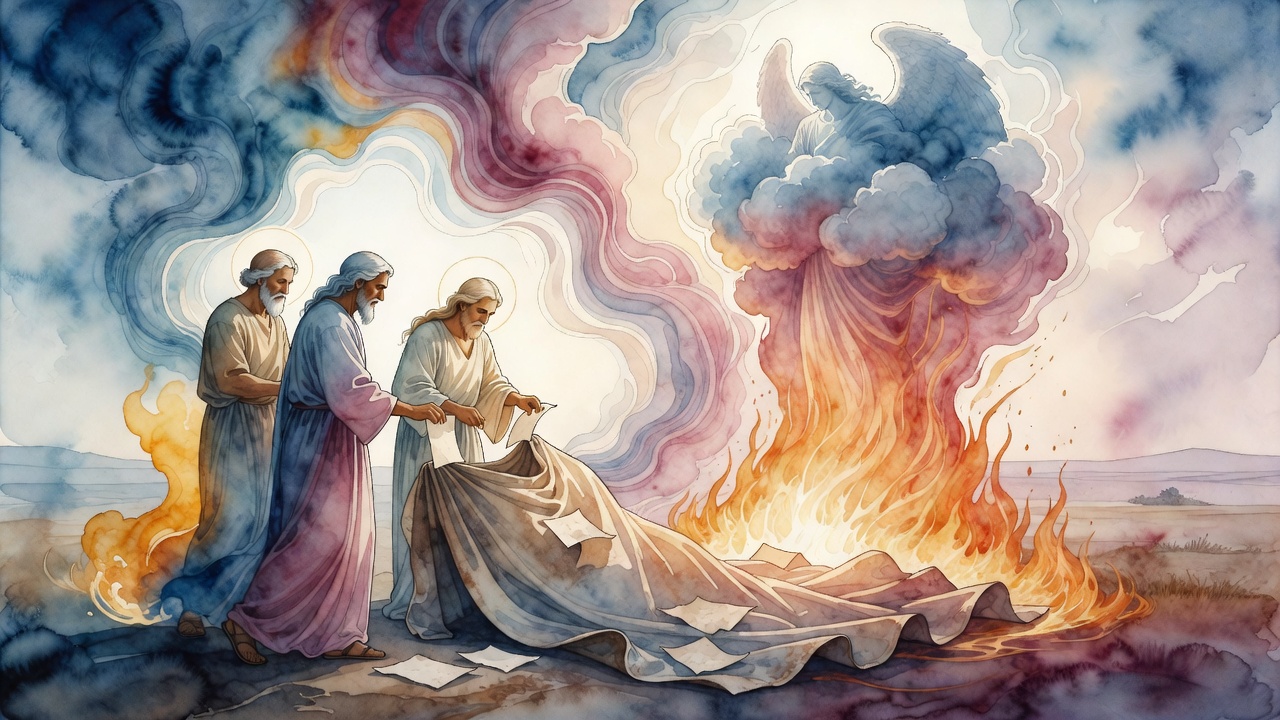
And Shem's line carried the protection further. When his descendants stood in their camp and an angel passed through with fire and burned the men where they stood, the garments on their bodies came through untouched, not so much as scorched, not a thread singed. The sons who had refused to leave their father uncovered fathered sons whom even fire would not strip. The cloak held, generation after generation, against shame and against flame.

One brother had looked and laughed. Two had turned their faces to the wall of daylight and walked in backward holding a sheet of cloth they could not see to aim. From that single afternoon in a tent stinking of new wine, three lines of nations took their shapes, and the world is still walking in the directions those brothers chose.


← All myths
From the tradition

Sources

3 sources

The texts this telling draws on, in full. Open a card to read inline, or expand it for a wider, quieter read.

Legends of the Jews 4:77Legends of the Jews

The familiar story is this: Noah gets a little too happy with the grape juice after the flood, and..well, let's just say he wasn't dressed for the occasion. His son Ham sees him this way, and instead of helping, he makes fun of his father.

His other two sons, Shem and Japheth? They react completely differently. They grab a garment, and, walking backward so as not to gaze upon their father's nakedness, they respectfully cover him.

So, what happens next? According to Legends of the Jews, as retold by Rabbi Louis Ginzberg, Ham pays a price for his disrespect. His descendants, the Egyptians and Ethiopians, are led away captive and into exile, naked and exposed. Ouch.

Shem and Japheth? They get rewarded. The descendants of Shem, the Assyrians, receive divine protection. Even when an angel of the Lord burns them in their camp, their garments remain unsinged. It’s a pretty vivid image, isn’t it?

And the blessings don't stop there. The story doesn’t end with just the immediate aftermath of Noah's... unfortunate episode. It stretches out into the future, even into the messianic age.

We're told that when Gog – a figure often associated with the end times and a great battle – suffers his defeat, God Himself will provide shrouds and burial places for him and his multitude, who are considered the posterity of Japheth. for a second. Even in defeat, even for the "bad guys," there's a measure of divine compassion and respect offered because of an ancestor’s act of kindness.

It's a powerful reminder that our actions, even the seemingly small ones, have ripples. They affect not only ourselves but also our descendants. And while punishment might seem harsh, the reward for respect and kindness can be incredibly far-reaching.

So, the next time you're faced with a choice – to mock or to help, to disrespect or to honor – remember the story of Noah and his sons. Remember the nakedness, the averted faces, and the unsinged garments. It might just give you the nudge you need to do the right thing. What do you think?

Full source
Midrash Tanchuma, Noach 15Midrash Tanchuma

And he planted a vineyard (Gen. 9:20). Where did he obtain the shoots for the vineyard? He obtained them from the grape seeds he had brought into the ark. And Shem and Japheth took a garment (Gen. 9:23). Since the singular, “he took,” is written in this verse and not the plural, “they took,” we may deduce that Shem was the first to perform the righteous deed (covering his father). They went backward (ibid.) implies that they walked backwards as they approached Noah. And they covered the nakedness of their father (ibid.) indicates that they went toward him with their faces turned away. How did the Holy One, blessed be He, reward them? He rewarded Shem with the commandment to wear the purple strings upon the tallit since he had covered him with a tallit, and He granted Japheth the privilege of burial in the land of Israel.

He said: Cursed be Canaan. Though Ham observed his father’s nakedness, Canaan was cursed. R. Judah said: Inasmuch as a curse cannot prevail where a blessing has already been pronounced, and the Holy One, blessed He, had already blessed Noah and his sons, as it is said: And God blessed Noah and his sons (Gen. 9:1), Canaan must have been born while they were in the ark. R. Nehemiah held: Canaan had actually discovered Noah’s nakedness and had informed his father, Ham, concerning it. Therefore, this curse was directed against the one who was responsible for the sin (that was committed). Hence, it is written: Cursed be Canaan.

Our sages stated: While Noah was in the ark, he said to himself: Would that my sons possessed slaves so that they might remain seated while being served. When I depart from this place, I shall produce a descendant who will be their slave. Following this incident, he said to Ham: You prevented me from begetting a fourth son who would serve you, therefore your fourth son shall become a slave. Hence, he said: Cursed be Canaan. This is the opinion of those who contend that Ham castrated his father.

R. Simeon the son of Lakish maintained: Shem’s descendants also became slaves, as it is said: And if thy brother, a Hebrew man or a Hebrew woman, be sold unto thee (Deut. 15:12). Shem’s descendants, however, are freed at the expiration of six years, of servitude, as it is written: Then in the seventh year thou shalt let him go free (ibid.), while the descendants of Ham are never freed, as is said: You may hold them to service forever (Lev. 25:46). Therefore, he remains a lifelong slave and does not go forth into the world a free man. Why was this curse imposed upon him? Because he was responsible for his father’s degradation. Thus, the Holy One, blessed be He, brought retribution upon the descendants of Ham by humiliating them by means of the king of Asshur, as it is said: So shall the king of Assyria lead away the captives of Egypt and the exiles of Ethiopia, young and old, naked and barefoot (Isa. 20:4).

Since Japheth honored his father, how will the Holy One, blessed be He, reward him? When Gog and Magog attack Israel, they will be defeated, as it is said: And in that day I will give unto Gog a place fit for burial in Israel (Ezek. 39:11).

How was Shem rewarded? When Aaron’s two sons entered the tent of meeting to offer a strange fire, There came forth fire from before the Lord and consumed them (Lev. 10:2). Their souls were consumed but not their clothing or their bodies, as it is said: them (ibid.). This happened because they were descended from Shem. This concerns the righteous. Whence do we know about what happens to wicked men? When Sennacherib departed from Jerusalem, the bodies of his forces were consumed but not their clothing. Why did this happen to them? Because they too were the descendants of Shem the son of Noah, as it is said: The sons of Shem: Elam, and Asshur, and Arpachshad (Gen. 10:22). And it is written: God enlargeth Japheth (ibid. 9:27); yet even so: And he shall dwell in the tents of Shem (ibid., v. 26).

Full source
Targum Pseudo-Jonathan on Genesis 9:23Targum Pseudo-Jonathan on Genesis

Targum Pseudo-Jonathan on (Genesis 9:23) captures one of the quiet, careful acts of love in Torah. After Noah has fallen asleep in the shame of the wine, Shem and Japhet took a mantle, and bare it upon the shoulders of each, and went backward, and covered the nakedness of their father; and their faces were turned back, and the nakedness of their father they did not behold.

Picture it. Two brothers, each carrying one corner of the same garment on his shoulder. Walking backwards into their father's tent together. They refuse even to see him exposed. They cover him without looking. This is not a single-handed act of mercy, it is a shared act, carried on two shoulders, performed with downcast eyes.

Jewish ethics has always pointed to this verse as the model for kibud av, the honoring of a parent. When a parent is in a moment of weakness, sickness, grief, the decline of age, the child's job is not to photograph it. It is to cover it. To protect the dignity of the one who once protected you.

The Targum keeps the detail of their turned-back faces because the face is where shame lives. Not to look is itself a sacred act.

The takeaway the Maggid carries from this verse: love, at its finest, often walks backward. It does not need to see everything to do the right thing.

Full source