Parshat Noach5 min read

Why God Sent Noah Up the Gangplank at the Noon Hour

Noah could have boarded the ark in the dark. God set him on the gangplank at the noon hour instead, daring the crowd to swing their axes.

Curated by Arthur · Told by Maggid ·
Table of Contents
  1. The crowd sharpens its axes at dawn
  2. God names the noon hour on purpose
  3. Noah climbs while the valley watches
  4. Centuries later, a second crowd at noon
  5. Why the exits of denial were sealed

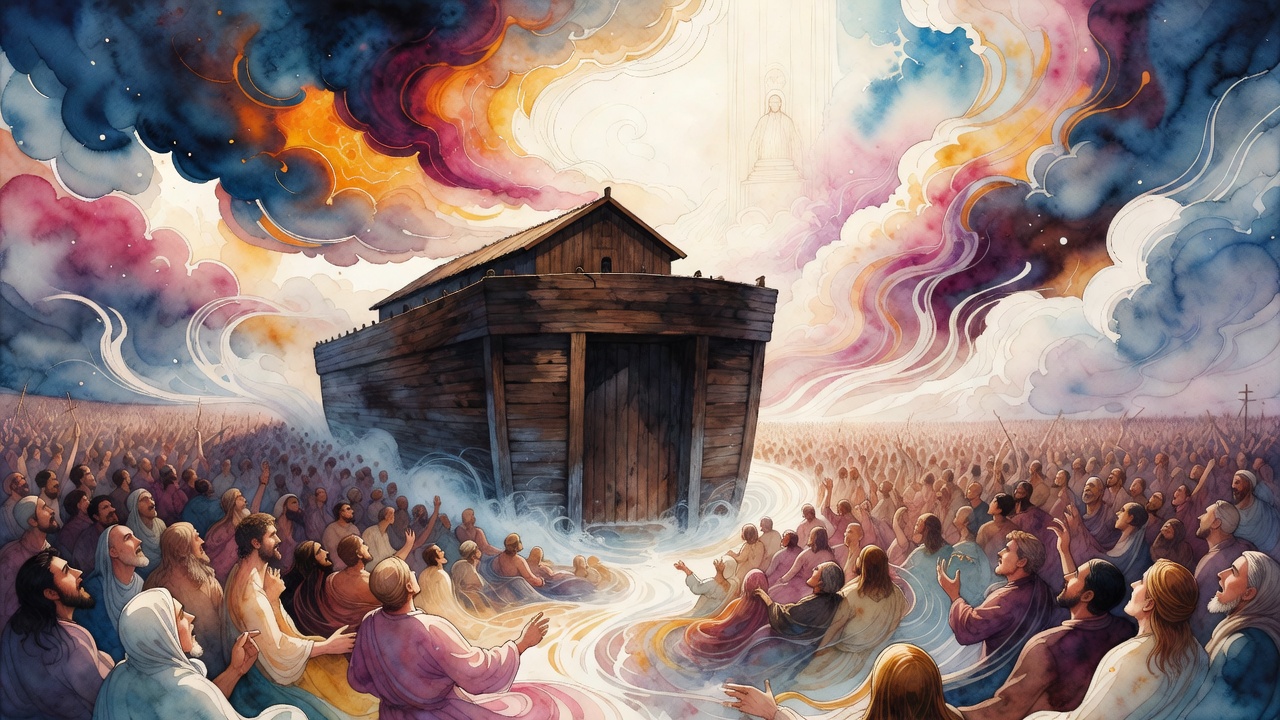
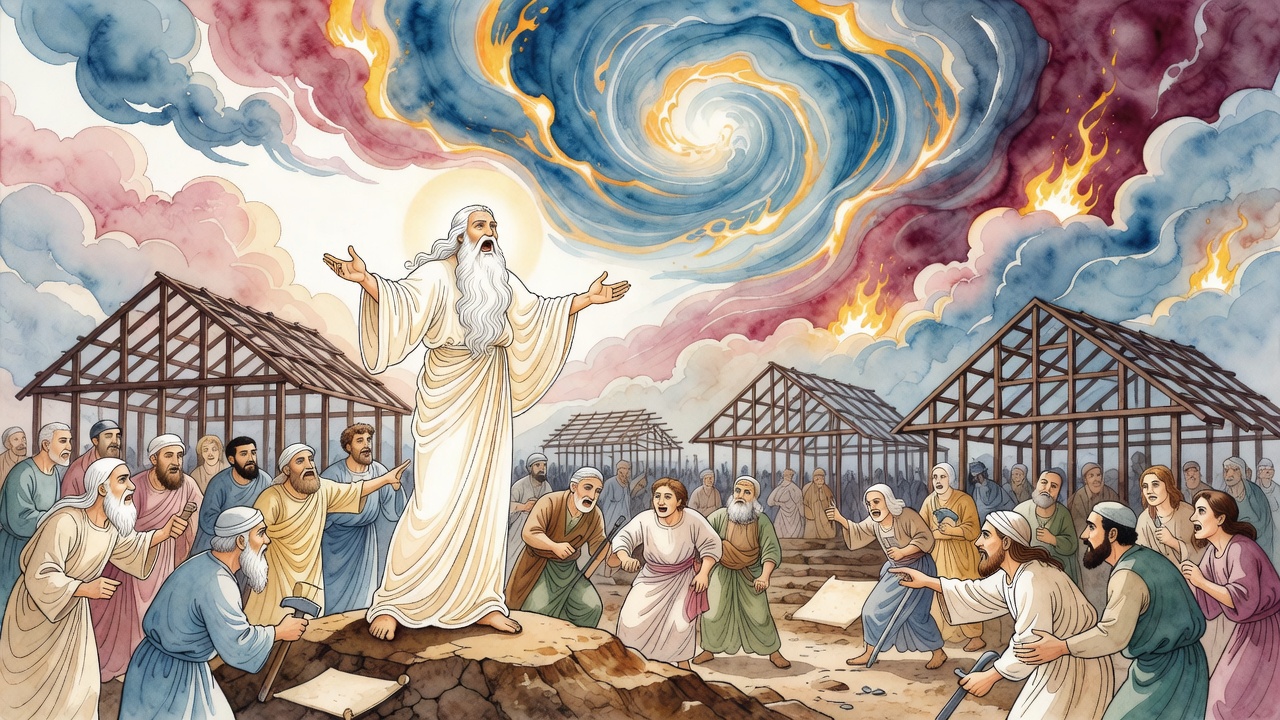
The crowd gathered before the sun was even halfway up, axes balanced on their shoulders, hatchets hanging from their belts. They had watched the thing rise board by board for too long, a hulking wooden hull where no water was, and they had made their decision. The moment the old man tried to climb inside, they would chop the whole structure down around him.
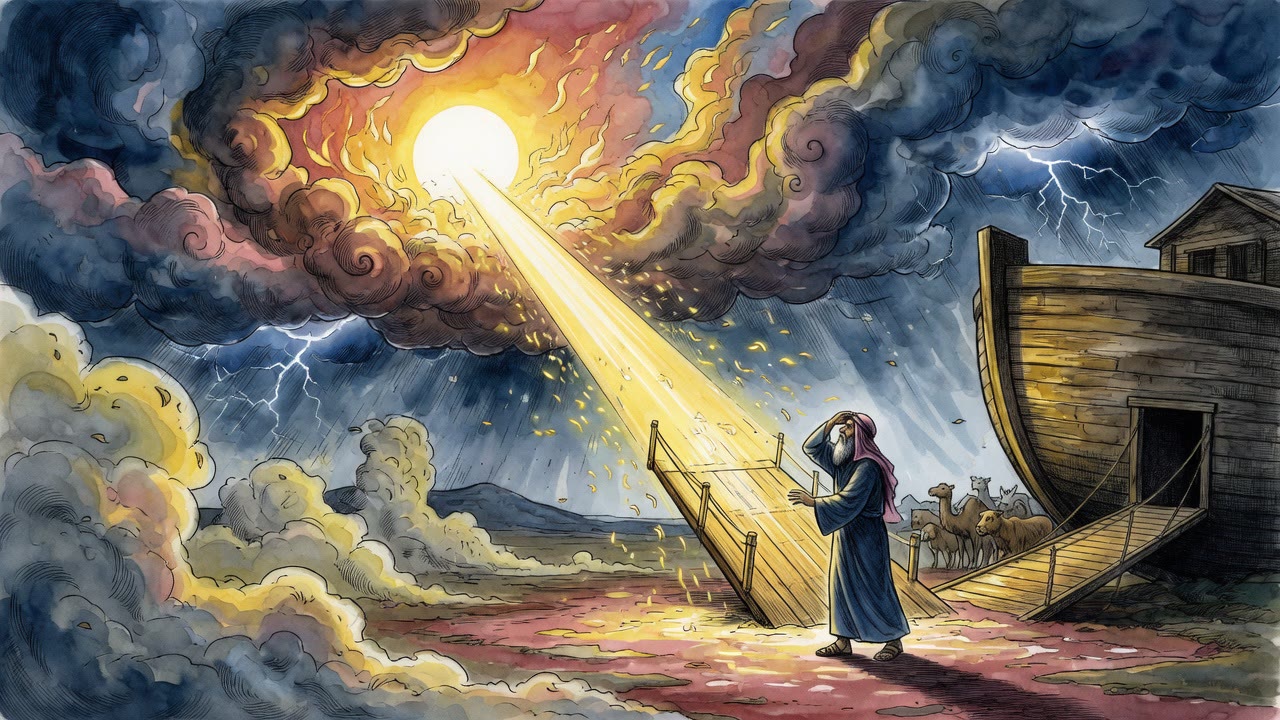
Noah stood at the foot of the gangplank. The animals were already aboard, packed two by two into the dark, their breath fogging the timbers. His wife and sons waited inside. The sky was clear. Nothing about the hour suggested water. And the men with the axes shifted their weight and watched him, waiting to see if he would dare.

The crowd sharpens its axes at dawn

Noah could have come at night. The animals would still have been loaded. The rain would have fallen at its appointed time whether he boarded under stars or under noon glare. A quiet departure in the dark would have spared him the spectacle, the jeering, the men who wanted to break his work to splinters. He could have slipped up the plank while the whole generation slept.

That option was never given to him. The instruction came down plain and specific. Not at dusk. Not before the others woke. The noon hour, the loudest moment the sun makes, when shadows shrink to nothing and a man on a gangplank can be seen from every doorway in the valley.

God names the noon hour on purpose

The reason was sharp as the blades waiting below. If Noah crept away in darkness, the men with the axes would carry one sentence in their mouths for the rest of their short lives and into whatever came after. We never saw him. Had we seen him climbing aboard, they would say, we would have taken our axes and our hatchets and smashed that ark to pieces, and there would have been no flood and no judgment and no end.

The grievance would have outlasted them. It would have been an answer no drowning could refute, because the moment that proved them wrong would already be gone, swallowed by the dark they hid in. A complaint with no witness can never be settled.

So the word went out. Let him enter at the noon hour. And with it came a line that was not an explanation but a dare. Let anyone who has the power to stop this come now and try. (Genesis 7:13) records it without flinching: on that very day, in the open eye of noon, Noah entered the ark.

Noah climbs while the valley watches

He climbed. The men gripped their axe handles. Not one of them moved. The blades stayed on their shoulders, the hatchets stayed in their belts, and the old man walked the plank in full view of every hand that had sworn to stop him. The challenge had been laid down, and the answer was their stillness.

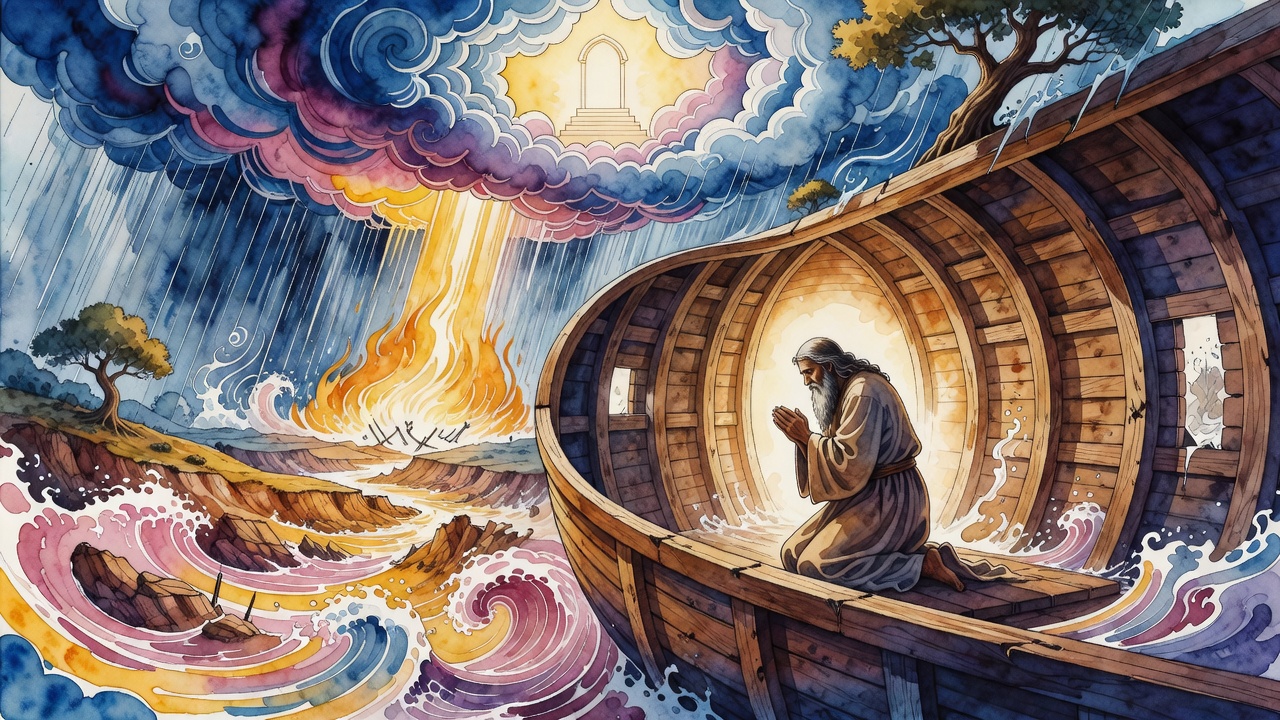
The door of the ark closed behind him. Then the windows of the sky opened, and the rain came down on a valley full of people who had seen everything and prevented nothing, who could never again say they had not been given the chance.

Centuries later, a second crowd at noon

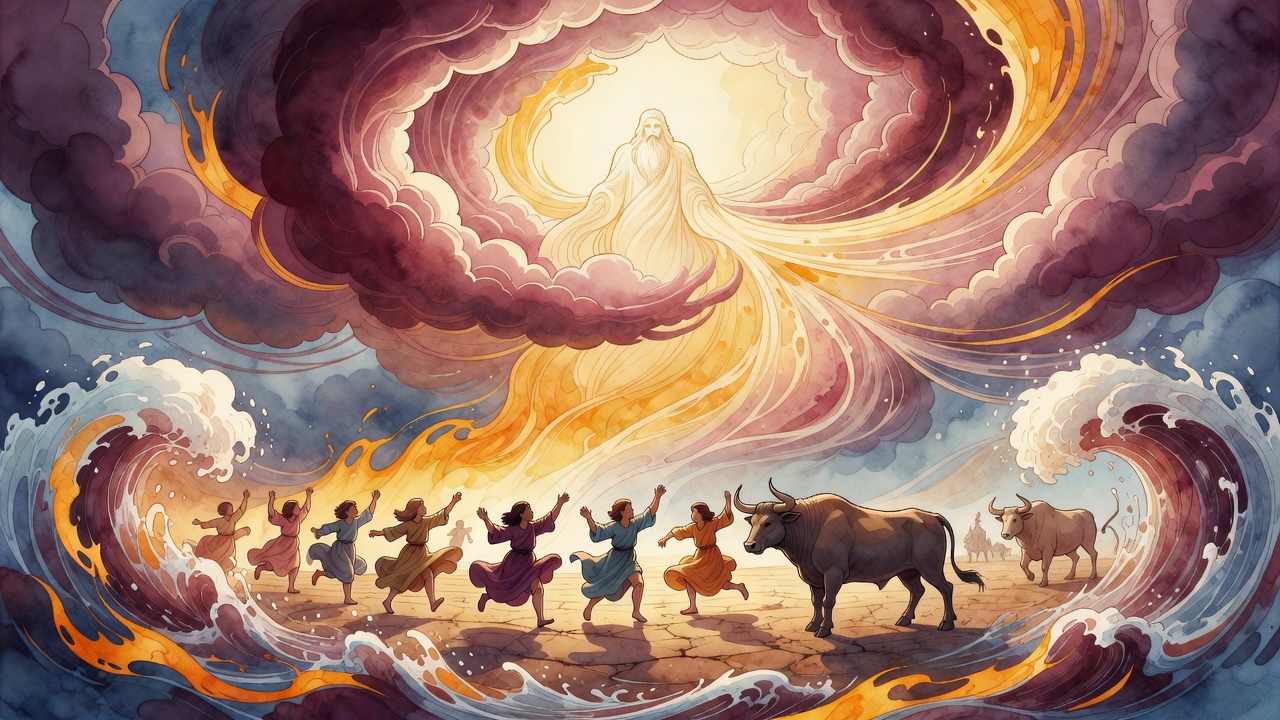
The same pattern returned in a far hotter country. A nation of slaves walked out of Egypt, and they too could have gone by night, when the streets were empty and the masters slept off the last of the plagues. Slipping out in the dark would have been the safe way, the quiet way, the way no one could chase.

It was refused for the same reason. If the slaves vanished while the Egyptians were not looking, the masters would tell themselves the easy story forever. They ran when our backs were turned. Had we known, we would have stopped them at the gate. The denial would have curdled into a permanent grievance, the same poison the flood generation had been denied.

So the declaration came again, almost word for word. Israel would be led out at noon, in the full glare of the sun, every freed slave visible to every armed Egyptian. I shall bring them out at noon. Let anyone who wishes to prevent it try to do so. The whole nation marched into daylight, and not a hand was raised that could hold them.

Why the exits of denial were sealed

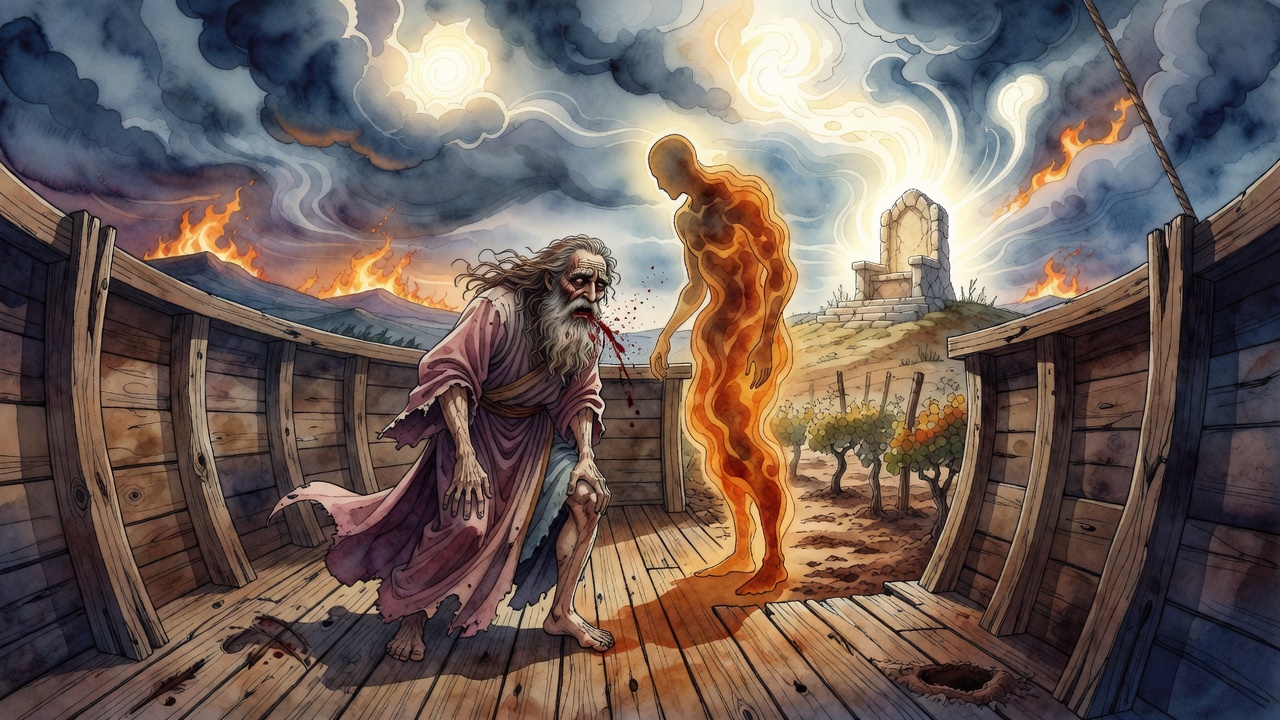
Two crowds, two ultimatums, the same hour. the heart of it was never display for its own sake. A god who acted only in the dark would leave the door of denial standing open behind every act, an exit through which the condemned and the outwitted could always escape into we would have stopped you if we had seen. Noon nailed that door shut. The witnesses watched the ark fill and the slaves walk free, axes and armies useless in their hands, and the only thing left for them to say was nothing at all.


← All myths
From the tradition

Sources

3 sources

The texts this telling draws on, in full. Open a card to read inline, or expand it for a wider, quieter read.

Sifrei Devarim 337:1Sifrei Devarim

The verse Now, the Rabbis of old weren't ones to let a phrase like "on this very day" slide by without a good look. Why the emphasis? What's so special about this particular "day"? Sifrei Devarim (337) points out that this phrase appears in three critical moments in our history.

First, we have Noah and the ark. Remember the story? A righteous man, a devastating flood, and an ark filled with animals. (Genesis 7:13) tells us, "On this very day, Noah… entered the ark." But the Rabbis imagine the scene a little differently than we might. They suggest that Noah's generation wasn't exactly thrilled about his ark-building project. In fact, they were ready to stop him, by force if necessary! "If we see him trying to leave on the ark," they supposedly said, "we won't let him. We'll take axes and hatchets and break the ark!" So, what did God do? God brought Noah into the ark in the middle of the day, declaring, "Anyone who has the power to stop Me, let him come and do so!"

Next, there's the Exodus from Egypt. (Exodus 12:17) states, "For on this very day, I have taken your hosts out of the land of Egypt." Again, the Rabbis paint a vivid picture. The Egyptians, not wanting to lose their Israelite slaves, were ready to prevent their departure. “If we see them trying to leave,” they supposedly threatened, "we won't let them; we will take knives and swords and kill them.” And again, God intervened, leading the Israelites out in broad daylight, daring anyone to challenge His will.

We arrive at our verse, the one about Moses. Here, the context is Moses' impending death. The Israelites, understandably, didn't want to let him go. This was Moses! The man who led them out of Egypt, split the sea, brought down the Torah, gave them manna, even "flew in" the quail, and performed countless miracles! "We will not allow him to go!" they cried, according to the Rabbis. So, God says, in effect, "I will bring him into the cave in the middle of the day, and anyone who has the power to stop Me, let him come and do so!"

What's the common thread here? In each case, "on this very day" signifies a moment where humanity tries to resist God's plan. Whether it’s out of malice, like the Egyptians and Noah's generation, or out of love and desperation, like the Israelites with Moses, the message is clear: there are forces beyond our control.

The Rabbis in Sifrei Devarim aren’t just telling us historical anecdotes. They're teaching us a fundamental truth about faith, about destiny, and about the limits of human power. We might struggle, we might resist, we might even try to rewrite the ending. But sometimes, the "day" has already been written.

So, what do we take away from this? Perhaps it's a reminder to accept what we cannot change, to find strength in faith, and to appreciate the moments we have, knowing that everything, even the most beloved figures in our lives, are ultimately in God's hands. Can we truly accept that? That is the question this passage leaves us to ponder.

Full source
Legends of the Jews 7:11Legends of the Jews

Sometimes, it's about making a statement, about proving a point. And in Jewish tradition, the idea of doing things in broad daylight, for all to see, carries a special weight.

Think about the Exodus from Egypt. The familiar story is this: the plagues, the parting of the Red Sea. But did you ever consider when it all happened? The Zohar, that mystical text, tells us the Israelites left Egypt at noon, in the full glare of the sun. Why?

Well, imagine if they'd slipped away under the cover of darkness. The Egyptians could have easily dismissed it. "Oh, they ran away when we weren't looking," they might have said. "Had we known, we would have stopped them!"

God wasn't having that. "I shall lead out Israel at noon," He declared, according to Ginzberg's retelling in Legends of the Jews. "Let him who wishes to prevent it try to do so." It wasn't just about freedom; it was about demonstrating power, about showing that nothing could stand in the way of divine will. It was a challenge to the entire Egyptian nation.

And it’s not just the Exodus. There's another story where timing plays a similar role: Noah and the ark.

According to Midrash Rabbah, God instructed Noah to enter the ark at midday. Now, you might be thinking, "What difference does it make? A flood's a flood. " But hold on.

God knew human nature. He knew that if Noah snuck into the ark at night, his generation – the ones who were about to be swept away by the flood – would have claimed foul. "He did it in secret!" they would have cried. "We didn't even see him! If we had, we would have smashed that ark to pieces!"

So, God said, "I wish him to enter the ark at the noon hour. Let him who wishes to prevent it try to do so." Again, it’s a defiant act, a public declaration that the divine plan will proceed, regardless of opposition. Imagine the scene: Noah, building that massive ark, and then entering it under the noonday sun.

Both of these stories, the Exodus and Noah’s Ark, use the same language. The idea of daring anyone to try and prevent the unfolding of a divine plan. It suggests that true faith isn’t just about believing in something, but about acting boldly, openly, and without fear.

So, what does this all mean for us? Perhaps it’s a reminder to be bold in our own lives. To stand up for what we believe in, even when it's difficult, even when others might try to stop us. And maybe, just maybe, to do it all in the light of day.

Full source
Legends of the Jews 7:9Legends of the Jews

Here's a curious detail: this single mountain, according to some accounts, bore not one, but four names: Nebo, Abarim, Hor, and Pisgah. Why so many names for one place?

Well, the Legends of the Jews (Ginzberg) offers a fascinating explanation. The different names, it suggests, arose from the intense desire of various kingdoms to claim a piece of the Holy Land. Owning even a small part of this sacred territory was considered a great honor. So, this particular mountain, or perhaps different parts of it, was divided among four kingdoms, each bestowing their own name upon their respective portion.

Of all the names, Nebo seems particularly fitting. As the text notes, the name Nebo seems especially appropriate "for upon it died three sinless nebi'im, 'prophets,' Moses, Aaron and Miriam." It became the final resting place for not one, but three pivotal figures in Jewish history.

Moses, nearing the end of his life, ascending this mountain at God's command. It happened, we're told, at noon on the very day of his death. It’s a powerful image, but why specifically at midday?

The tradition, drawing from sources like the Midrash (rabbinic interpretive commentary), teaches us that God deliberately commanded Moses to ascend the mountain at noon to demonstrate His sovereignty. The message? No earthly power could prevent the divine will from being carried out. If Moses had gone to Mount Nebo under the cover of darkness, the Israelites might have argued, "We didn't know! Had we realized he was going to his death, we would have stopped him! We wouldn't have allowed the man who freed us from slavery, who parted the Red Sea, who brought us manna from heaven, and water from the rock, to simply die!"

God, therefore, chose the full light of day. “Let him who wishes to prevent it try to do so,” God essentially declared. The midday ascent became a evidence of God's power and a challenge to anyone who dared defy His decree.

So, Moses climbed Mount Nebo, a mountain of many names, a mountain of profound significance. His journey wasn't just a physical one; it was a powerful statement about faith, divine will, and the acceptance of mortality. It leaves us pondering: how do we face our own inevitable ascents, those moments when we must confront our own destinies in the full light of day?

Full source