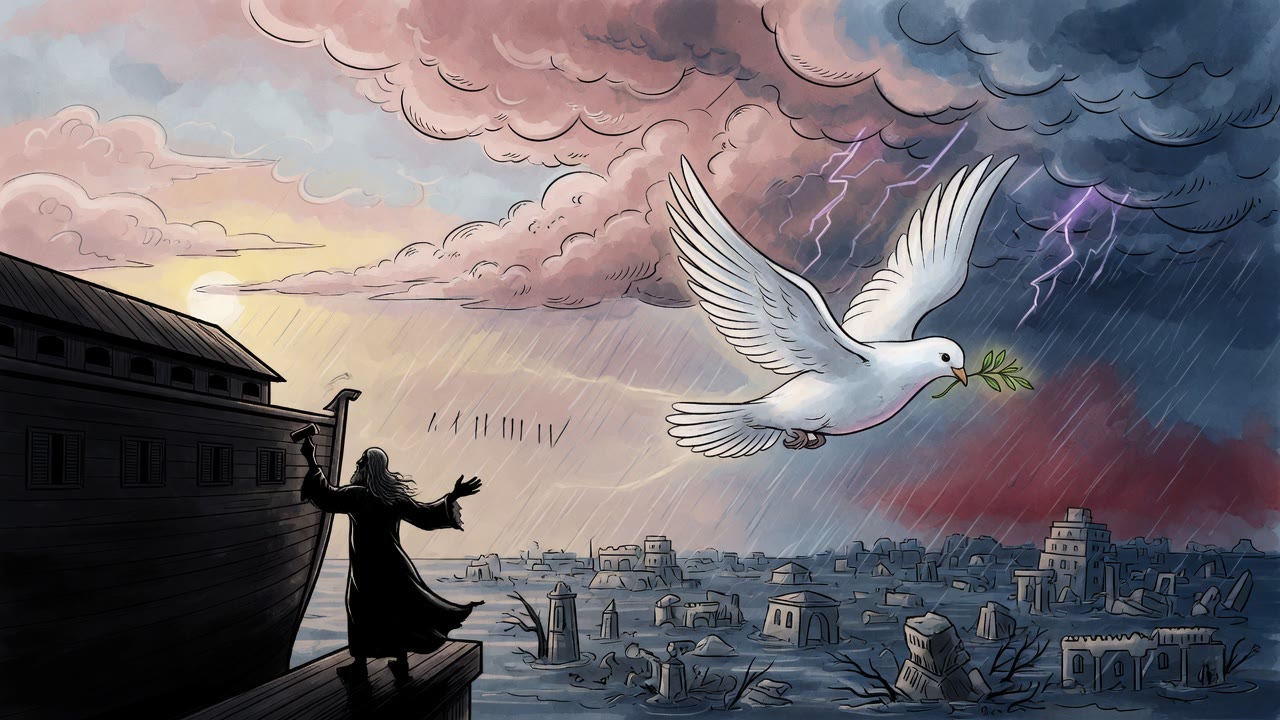
Noah Rode the Flood While the Sun and Moon Went Dark
The sun and moon went dark for a year as the deep burst, and Noah rode a splinter of cedar across a drowned world toward Lubar.
Table of Contents
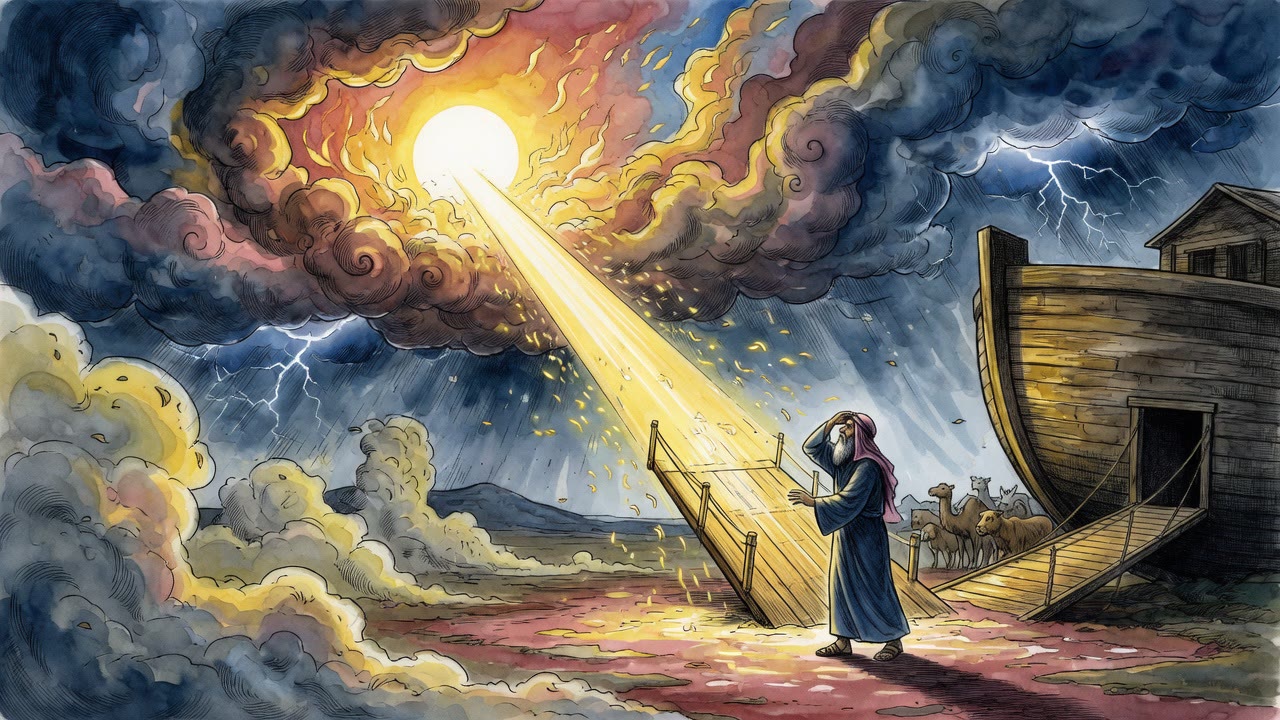
The seventeenth day of Heshwan came with no dawn. Noah stood at the small window of the ark and watched for the sun the way a man watches for a face he loves, and the sun did not come. The sky did not lighten gray, then pink, then gold. It stayed the color of a closed eye. He waited. Behind him the beasts shifted in their stalls, restless, as if they too had counted the hours and found the morning missing.
 Click for full size
Then the deep broke.
It did not begin as rain. It began as a sound from underneath, a long tearing groan as the fountains of the great deep split open and threw the buried oceans upward. The floodgates of heaven answered, and the two waters met in the middle of the world. The ark lurched and rose. Noah was thrown against the wet timber. Somewhere below him a wall of beasts screamed at once.
The Sun and the Moon Hid Their Faces
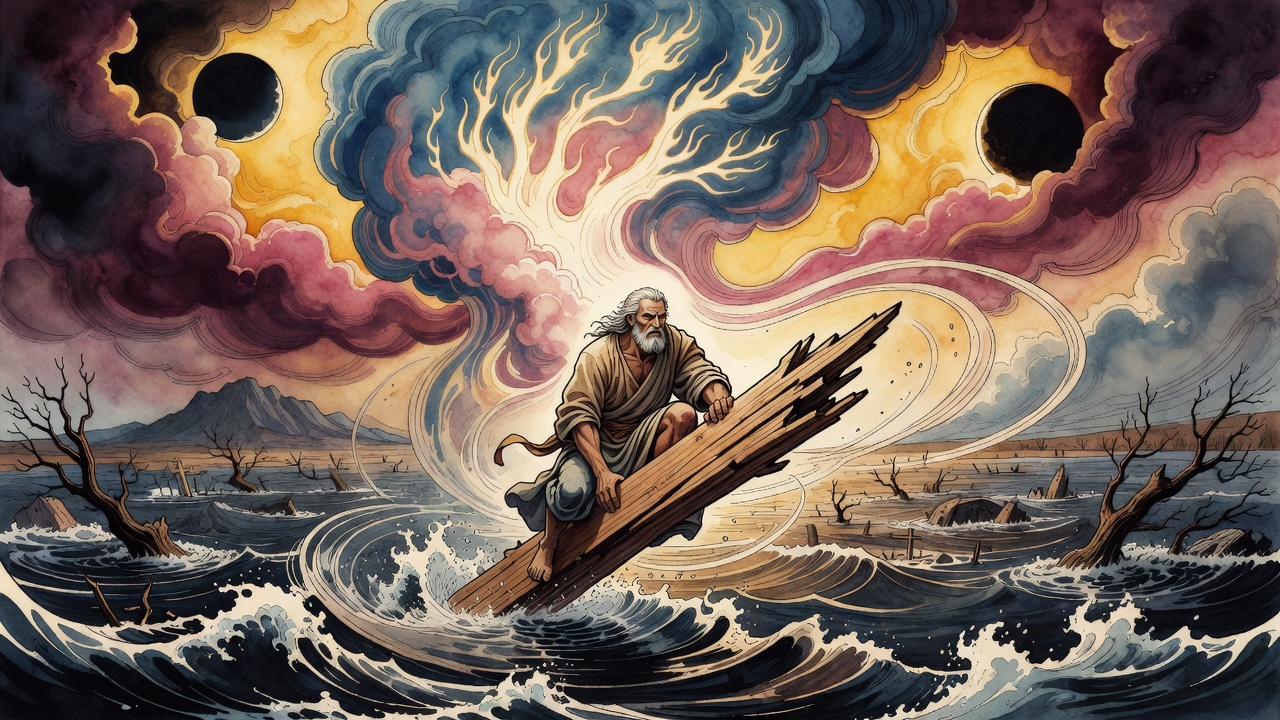
There was no light to drown by. The sun and the moon refused to shine, and they would refuse for a full year, giving the world neither day nor noon nor dusk. The heavens above the ark were not dark with cloud. They were dark with absence, as though the lamps of creation had been carried out of the room and the door shut behind them.
Inside, a single stone did the work of the sky. It hung in the ark and gave off a light that was strangest of all in that it burned brighter at night than by day, so that Noah learned to read the hour backward. When the stone blazed he knew the unseen sun had set somewhere beyond the water. When it dimmed he knew that, far off and useless, a morning was passing that no eye would ever see. By that small dishonest brightness he and his sons measured out the days they could not otherwise tell apart.
The Ark Was a Chip on a Black Sea
The waters did not lift the ark so much as hurl it. Fifteen cubits they stood above the highest mountains, and on that height the vessel rode like a splinter on an ocean with no shore and no floor a man could imagine. It pitched. It dropped. It heaved sideways until the water shrieked along the hull and the seams wept.
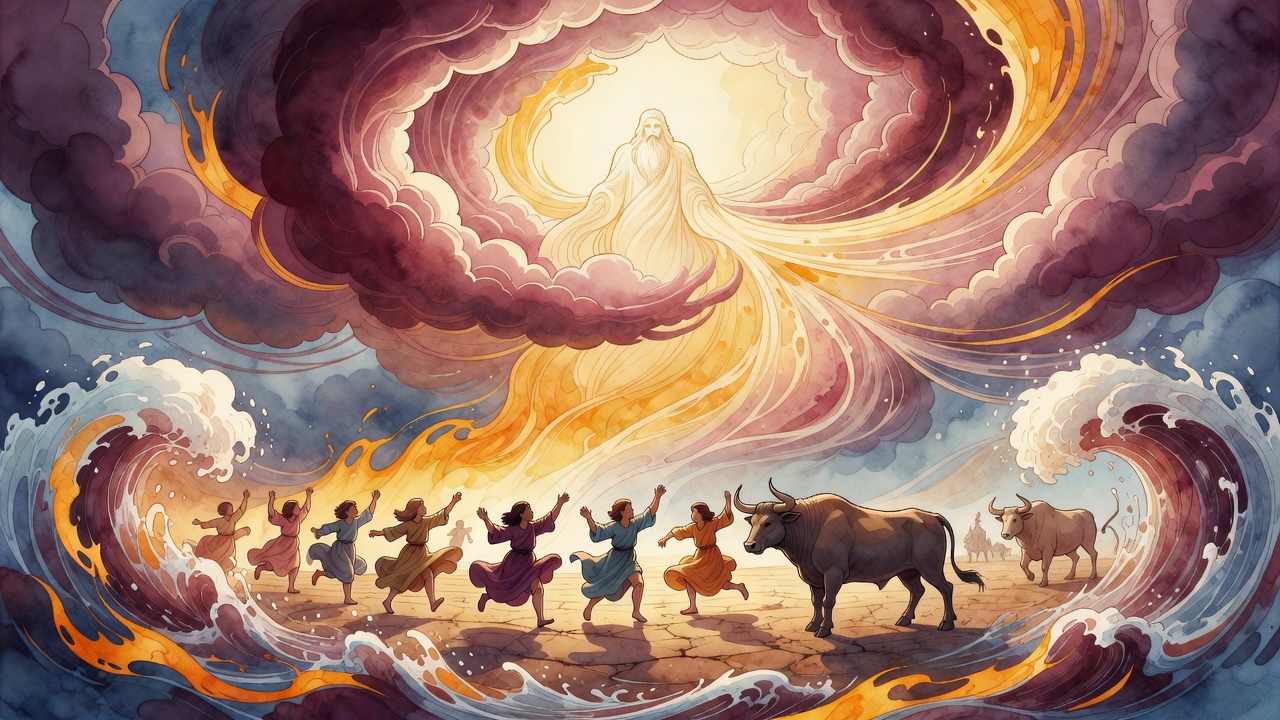
Below decks the animals went mad with terror. The lions roared into the dark and the oxen bellowed back, the wolves threw their voices up against the timber, every creature crying out its fear in the only tongue it had been given. And the beasts were not the worst of it. Noah and his sons, who had been spared, found that being spared was its own kind of dying. They could not bear the weight of it. The righteous man wept like the rest.
The Prayer of a Drowning House
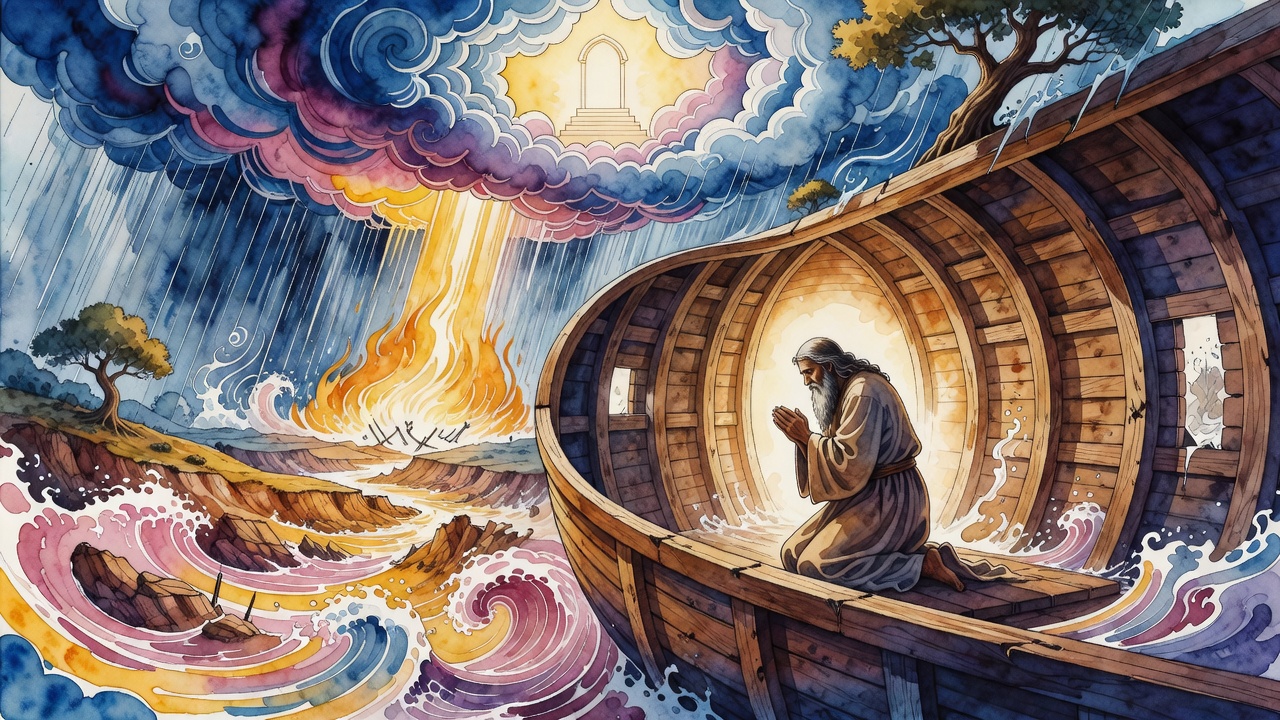
He did not pray as a builder of arks or a herald of decrees. He prayed as a father who could feel the floor trying to throw his children into the sea.
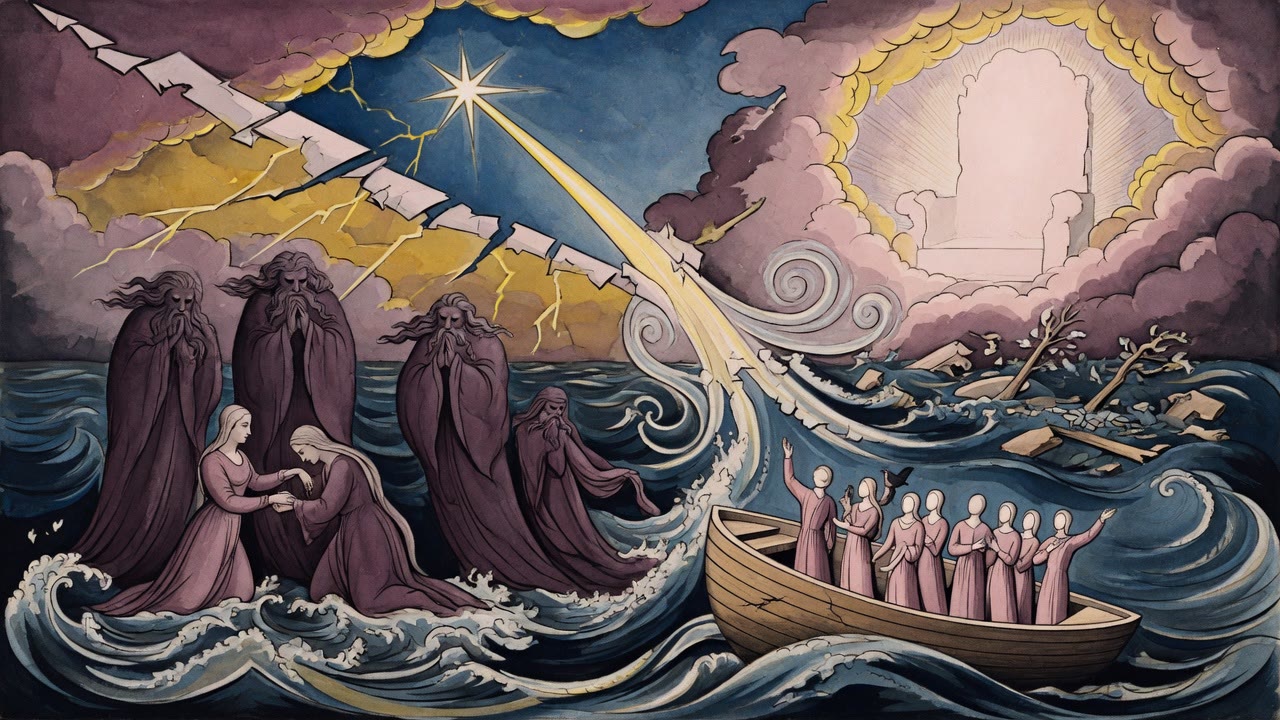
"O Lord, help us, for we are not able to bear the evil that encompasses us," he cried, and the timbers groaned under the words. "The billows surge about us. The streams of destruction make us afraid, and death stares us in the face." He pressed his hands to the heaving wall as if he could hold the world together with his palms. "O hear our prayer. Deliver us. Incline Thyself unto us, and be gracious unto us. Redeem us and save us."
No voice answered him out of the lightless sky. The stone burned on. The water screamed. And Noah understood, alone in a way no man had ever been alone, that the same hand cradling his splinter of cedar was the hand that had pulled the plug from the deep and snuffed the sun.
Even the Grave Was Not Spared
Outside the hull the world was being unmade in order. The wicked of that generation perished one by one, each receiving the measure he had earned, and none escaped into any cave or onto any peak. Forty days the rain had fallen, one day for every day an embryo takes to form, a wage paid back exactly for the bastard children that generation had bred. Cain, who had murdered Abel and walked the earth marked and unpunished, was finally caught by water and drowned, and the blood under the ground was at last avenged. The flood was so total that it reached into the grave of Adam himself and would not leave even the first man's bones at rest. Nothing buried stayed buried. Nothing alive stayed alive, except the splinter and the stone and the screaming cargo it carried.
For a hundred and fifty days the water held its height and did not fall a hand's breadth. The world was a single drowned thing, and the ark crossed it like a question no one would answer.
The Mountain Beneath the Firmament
Then the deep was sealed. On the new moon the fountains of the abyss were closed and the floodgates of heaven restrained, and the waters that had risen out of the earth began, at last, to be swallowed back down into the earth. The ocean did not merely stop. It was drawn into the ground from which half of it had come, mouth by mouth, abyss by abyss, until the dead sea over the world began to sink.
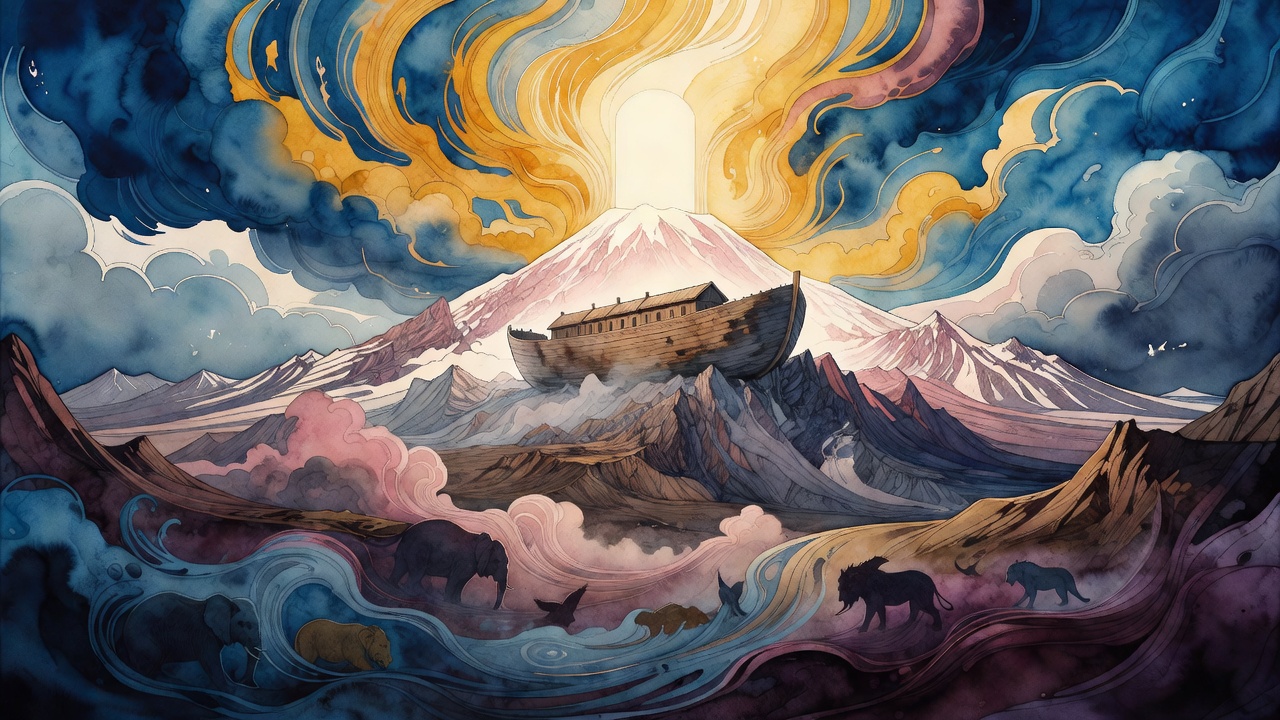
The ark went, and the ark rested. It came down upon the top of Lubar, one of the mountains of Ararat, and stopped, and the stopping was the loudest thing Noah had heard in a year. The timber stilled. The screaming below trailed into silence. He stood at the small window again, on the same threshold where he had waited a year before for a sun that never rose, and he looked out.
The sky was beginning to remember its lamps. Far down the flank of the mountain, where the water peeled back from the stone, the first wet earth lay bare and steaming. Noah looked at it a long time before he understood what the silence was telling him. The God who had saved him and the God who had drowned the world were not two. He was alone now with the one who was both, and he would have to learn how to live with that.
← All myths