The Flood Gave Back One Cubit Every Four Days
Fifteen cubits above the peaks, then a slow refund. Sixty days, one cubit every four. In Av the drowned world shows its mountains again.
Table of Contents
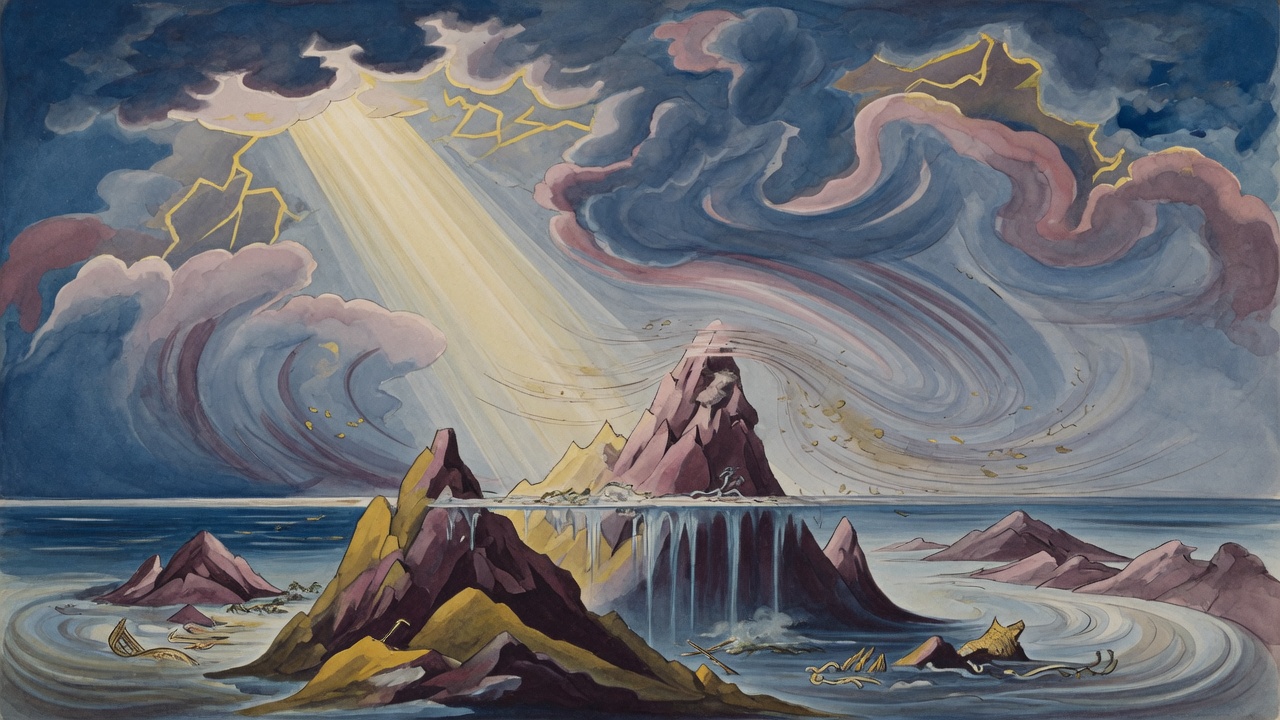 Click for full size
Fifteen Cubits Above Everything
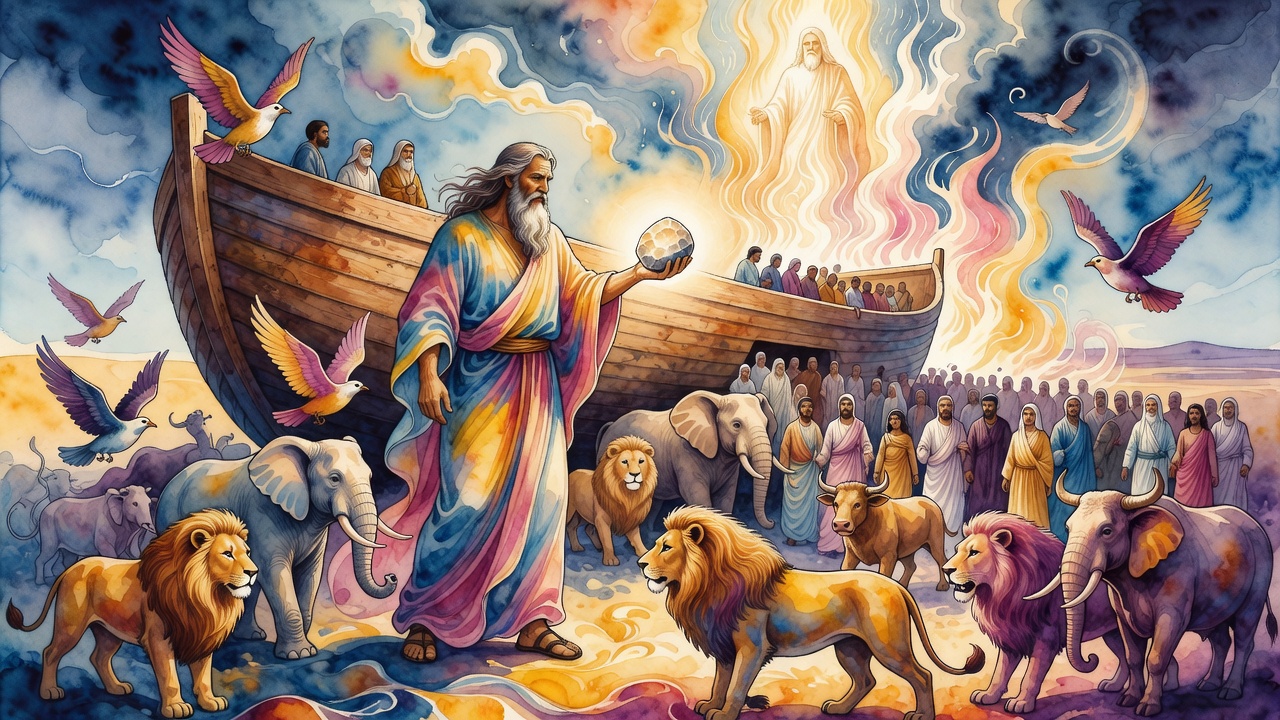
Noah watched the first dry ridge the way a debtor watches the last coins of a long debt. The waters had climbed fifteen cubits above the loftiest summits so that no high ground remained as an argument. Hills that once held kings and shepherds went under the same sheet. There was no clever cave, no royal tower, no mountain shrine that could claim exemption.
Then the waters began to go and diminish. Not in a theatrical rush. In a paced retreat, as if Heaven were counting backward through the same care it had used to undo the earth. The ark creaked. Animals stamped. The family waited for a sign that was not yet olive leaf, only geometry: less water, more stone.
Tenth Month, Month of Av
Scripture says the tops of the mountains appeared in the tenth month. The sages refuse the lazy calendar. Tenth from when? Not from Tishrei's civil head, but from the day the rains first fell. Reckon from that downpour and the tenth month lands on Av. The month later famous for mourning here turns toward mercy. In Noah's year, Av is when drowned peaks break the surface again.
Sixty days pass from the first diminishing to the first mountain-tips. Fifteen cubits across sixty days. The midrash's arithmetic arrives clean: one cubit every four days. The world is not snatched back. It is metered back. Noah could have wanted speed. Heaven gave rate.
Generations That Never Stood
Nine hundred and eighty generations were worthy of standing, yet they were wiped out with the generation of the Flood. Thought-generations, potential lives, a ledger of almost-humans erased before the covenant could find a keeper. Ten generations from Adam to Noah, ten more toward Abraham, and the long promise of a thousand generations waits for a people who can hold a commandment without turning it into violence.
So the slow retreat of water is not only hydrology. It is the first reappearance of a world judged too full of robbery and blood to keep its shape. When mountains return in Av, they return into a story that already knows how many possible histories did not survive the reset.
What the Peaks Mean
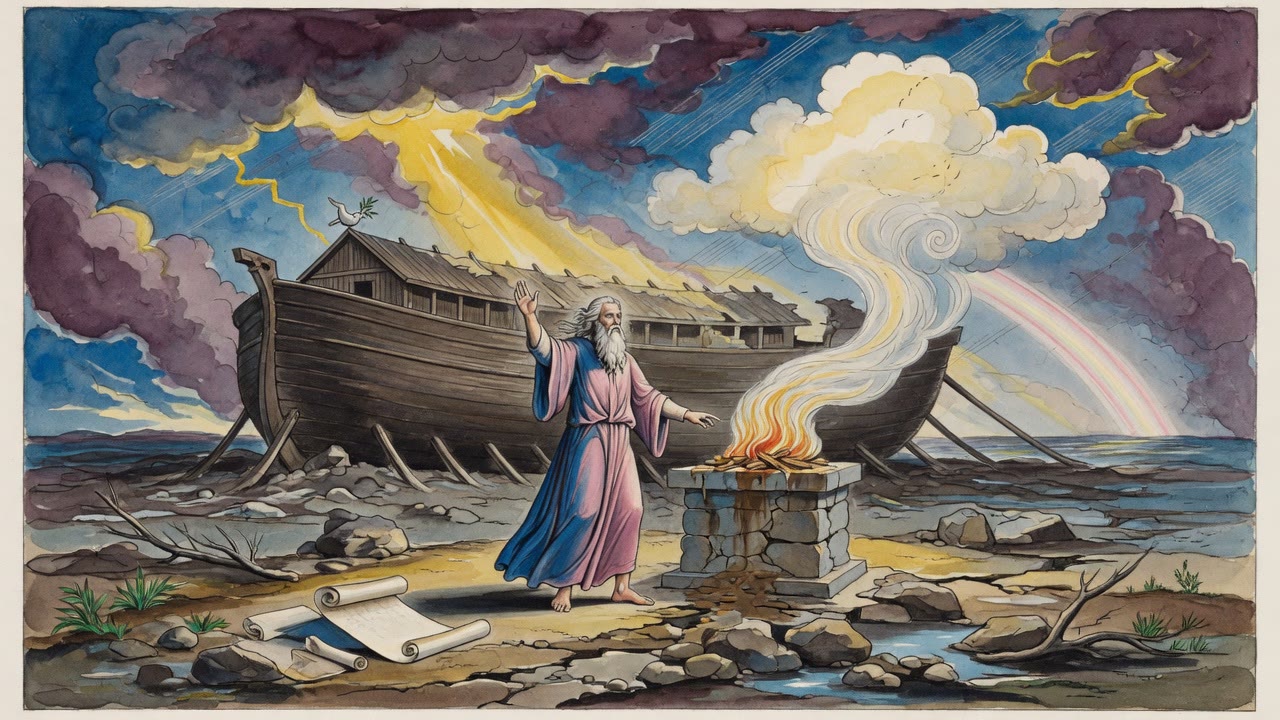
Noah will send birds later. The olive leaf will come. The ground will dry enough for an altar. But the midrash lingers on this quieter miracle: the first dark lines of mountain against a lowering sea. No trumpet. No speech from the hatch. Only arithmetic and mercy sharing a calendar square usually reserved for grief.
The same Av that will one day hold burned Temples held, in the first remade world, the first sight of dry hills. Heaven can house opposite meanings in one month without apology. Mourning and mercy are not always different rooms.
Debt Paid Slowly
Destruction had height: fifteen cubits over the highest pride. Restoration has rate: one cubit every four days. The Holy One who covered every summit also knows how to uncover them without making the survivors dizzy with relief.
When the family steps onto mud that used to be unknown, they step onto land refunded on a schedule. The mountains did not rush to flatter them. They rose because the water learned to leave, cubit by cubit, through Av's hard light. Inside the ark the smell of wet wood never left. Waiting is also labor. Each new dark line of mountain is a receipt.
Inside the ark wet wood never leaves the nose. Noah's hands had spent a year on pitch and now wait. Counting four days per cubit keeps sanity while peaks return as receipts.
Children learn that soon is a schedule. Generations that never stood remain silence under new ridges. The Flood was weather and a closed door on almost-histories.
Noah receives the rate without negotiating. Av holds grief and first dry hope. One cubit every four days is ordinary after drowning, and that ordinary pace is the mercy.
Noah receives the rate without negotiating. Av holds grief and first dry hope. One cubit every four days is ordinary after drowning, and that ordinary pace is the mercy.
← All myths