Fifteen Cubits Buried the Mountains and the Senses
Water rose fifteen cubits over every peak while Noah fed lions and worms, until the first of a new year cracked the silence.
Table of Contents
 Click for full size
Peaks That Drowned Like Skulls
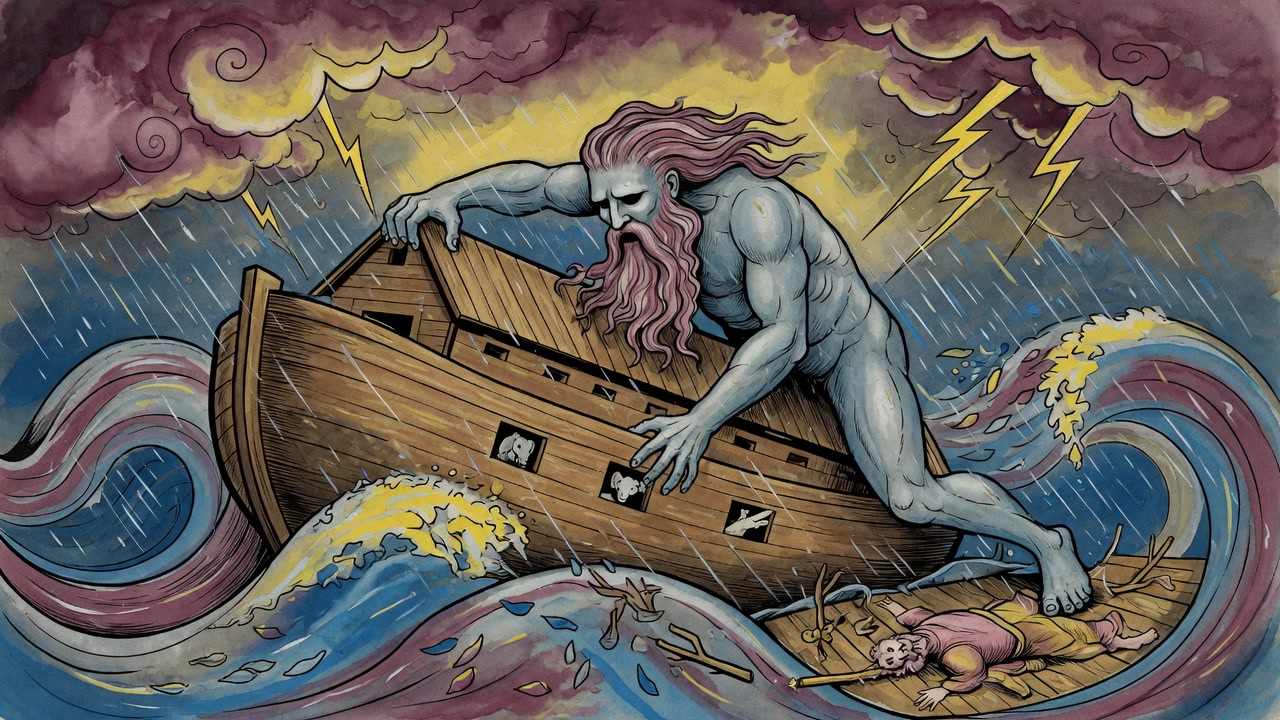
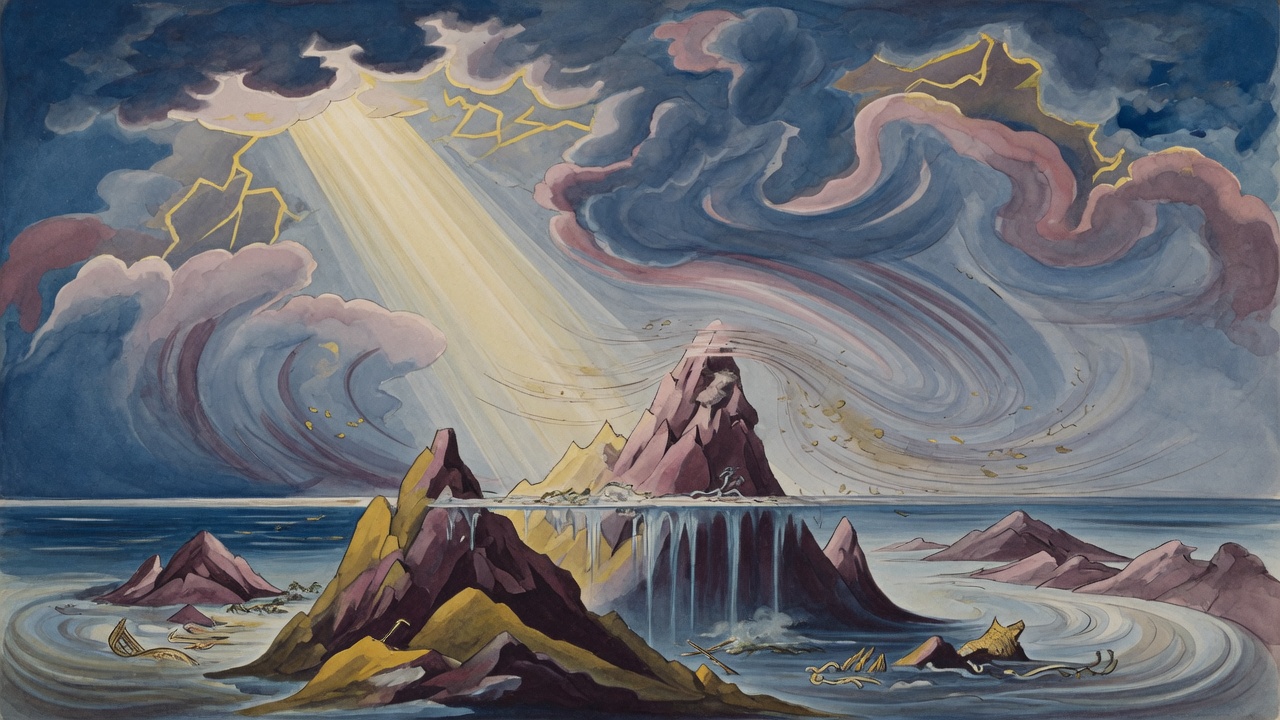
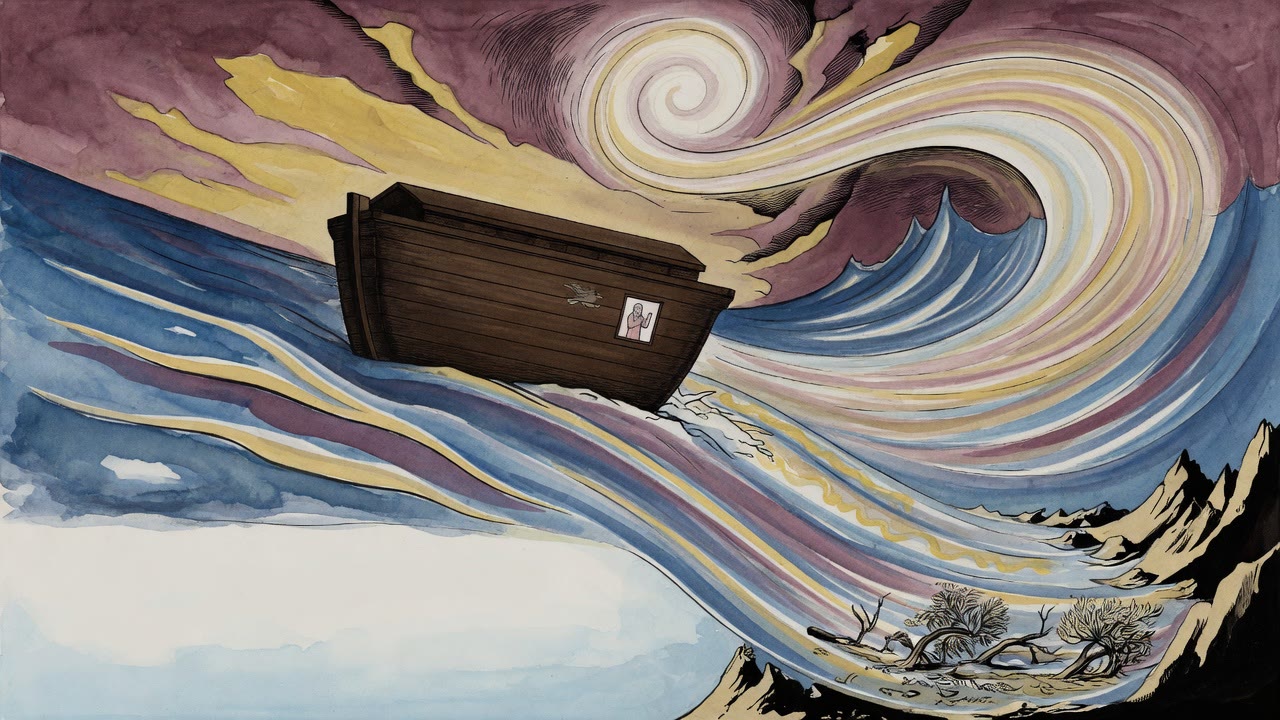
The water did not stop at the ridgelines. It climbed fifteen cubits above the highest mountains (Genesis 7:19). Peaks that had ruled horizons vanished under a lid of gray. In the ark, Noah felt the hull knock like a lentil in a boiling pot. Lions roared. Oxen lowed. Wolves howled. He and his sons cried out that death stood at the seams.
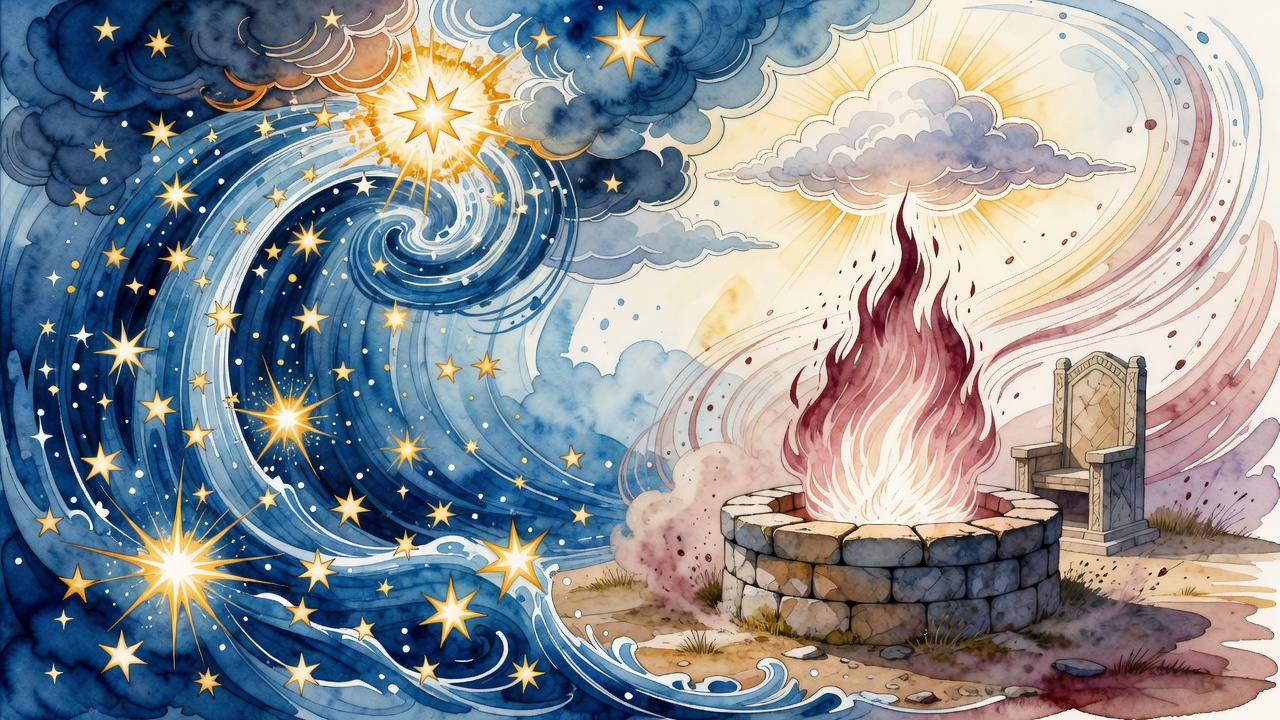
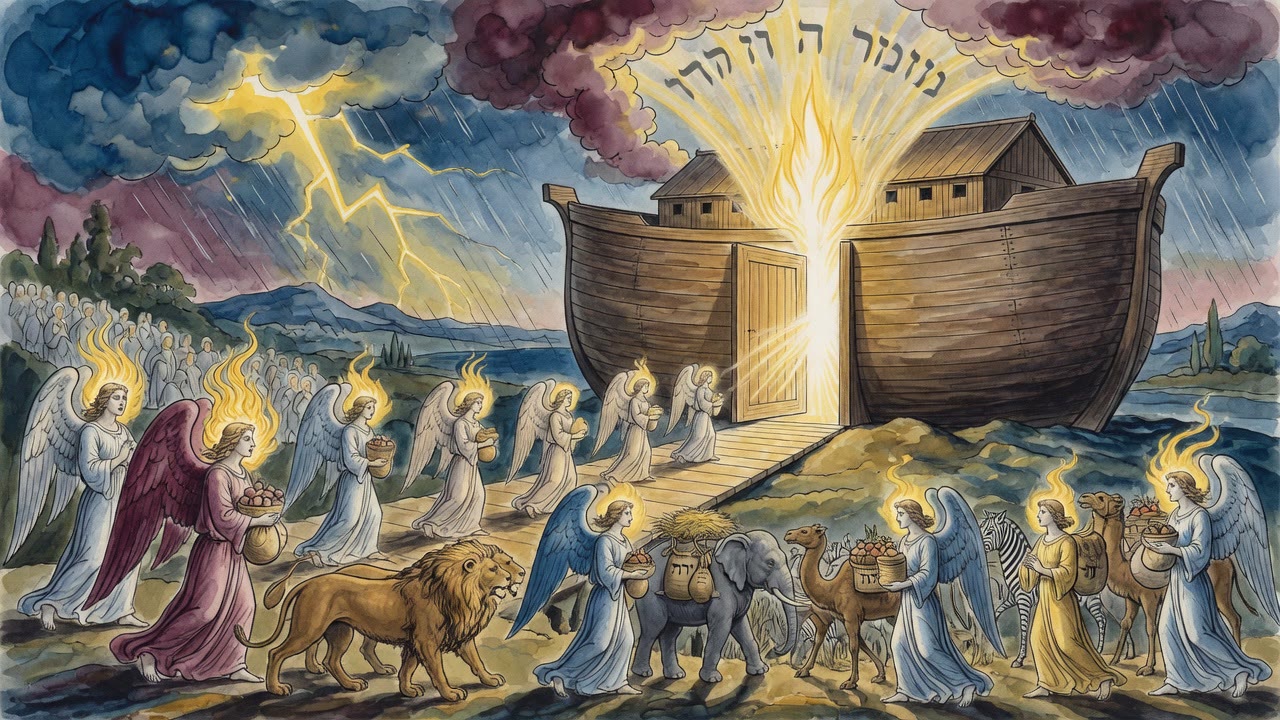
Male waters from above met female waters from below. Two stars torn from the Pleiades opened the upper flood; later two stars from the Bear would be set to chase what was lost. For a year the sun and moon hid their faces. A precious stone lit the ark brighter at night than by day so Noah could still tell time by light alone.
Outside, height meant nothing. Inside, the stone's pulse was the only reliable sky. Noah pressed his palm to timber and felt the river testing every pitch-smear he had laid in obedience long before the first drop.
Five Senses Times Three
The same fifteen cubits that buried rock also buried the lofty mountains of the body. Sight, smell, taste, touch, hearing sit in the high country of the head. Five senses, each pressed past its height three times over, make fifteen. The flood was not only a map of drowned land. It was a total covering of the world's appetite for surface.
When every sensory peak goes under, the old way of knowing has no shore. That is why the beasts went down with the people. Irrational creatures had not plotted violence, still they shared the reset because human corruption had already stained the whole web of breath (Genesis 6:7). The water washed a ruined house without a fine brush for guilt.
A generation that filled the earth with violence had already taught animals fear and blood. Creeping things and birds died as tenants of a building condemned from roof to cellar.
Worms for a Tiny Mouth, Fever for a Lion
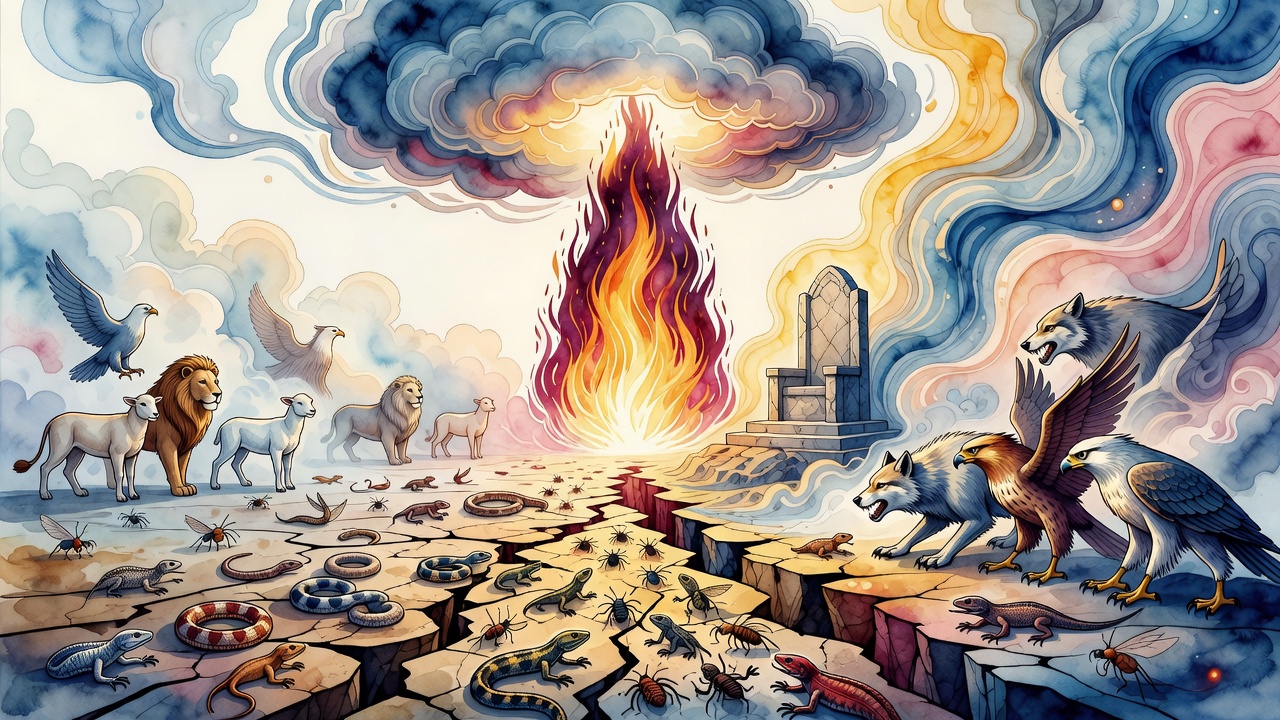
Shem later told Eliezer what the year cost. Day animals ate by day. Night animals demanded midnight. Noah sliced a pomegranate and watched a worm crawl free; a small creature snapped it up, and from then on he farmed bran until wriggling food appeared. The lion burned with fever and lost its appetite. The polite urshana slept and refused to add a burden, so Noah blessed it toward long life.
Upper and lower waters did not care about logistics. Noah did. His hands smelled of bran and fruit rind while heaven rewrote the map of peaks.
When the ship heeled, cages slid and someone cursed softly so the children would not hear. Then the stone brightened and night was declared, though no moon agreed.
Raven, Dove, and the First of a New Year
The rain began on the seventeenth of Heshvan and ran forty days. One hundred fifty days the water held its height while the wicked finished their sentences and even Cain's long account closed. On the first of Sivan the recession began. A raven flew to a floating corpse and stayed to eat. A dove returned with an olive leaf from the Mount of Olives and prayed that bitter food from God's hand beat sweet food from human power.
Why did the waters yield on the first day of the first month in Noah's six hundred first year? The Torah marks the hour with the precision of a census. A new year of the man who carried the world begins when the world is allowed to breathe again.
Noah counted the day and did not rush the door. Mud still had opinions. The olive leaf was a letter from a spared ridge, not a full pardon for the soles of men.
Dry Mud That Still Grabbed the Heel
By the first of Tishri the water was gone, still mud held them until the twenty-seventh of Heshvan, a full solar year after they entered. Fifteen cubits had taught them that height is not safety. Senses taught them that appetite without restraint becomes a second flood.
Noah stepped toward a quieter sky with the fevered lion, the worm-fed mouth, and the dove's bitter leaf still sorted in memory. The peaks were clean. The head's mountains would have to learn a different measure.
He breathed air that did not taste of bilge. The ark behind him stank of saved life. Ahead, the first footprints in soft earth looked too light for the weight of what they had carried.
On a night when the stone burned white, Noah dreamed of mountains wearing hats of water. He woke and counted the animals by ear: cough of the lion, click of small claws, the dove's soft complaint. Fifteen cubits lived in his mind as both a measure of outside doom and a warning about the head's own high country.
When the dove came back the second time with nothing, the silence in the hatchway was worse than the first failure of the raven. Hope is a bird that sometimes returns empty. Noah closed the wood gently so the emptiness would not teach the children despair.
← All myths