Noah Heard Every Living Thing Given as Food
Once a lion did not see a man as prey. Then Noah stood on drying mud and heard that even the creeping things were food for him now.
Table of Contents
 Click for full size
Dry Earth and a Strange Menu
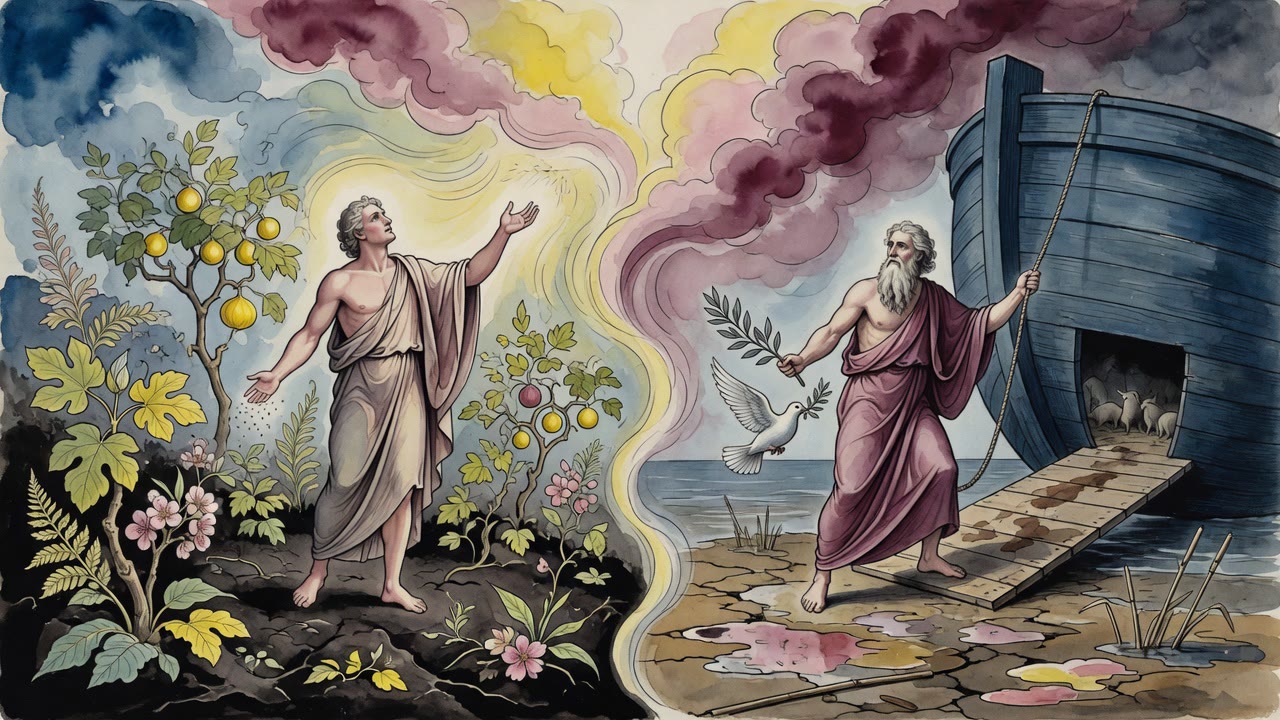
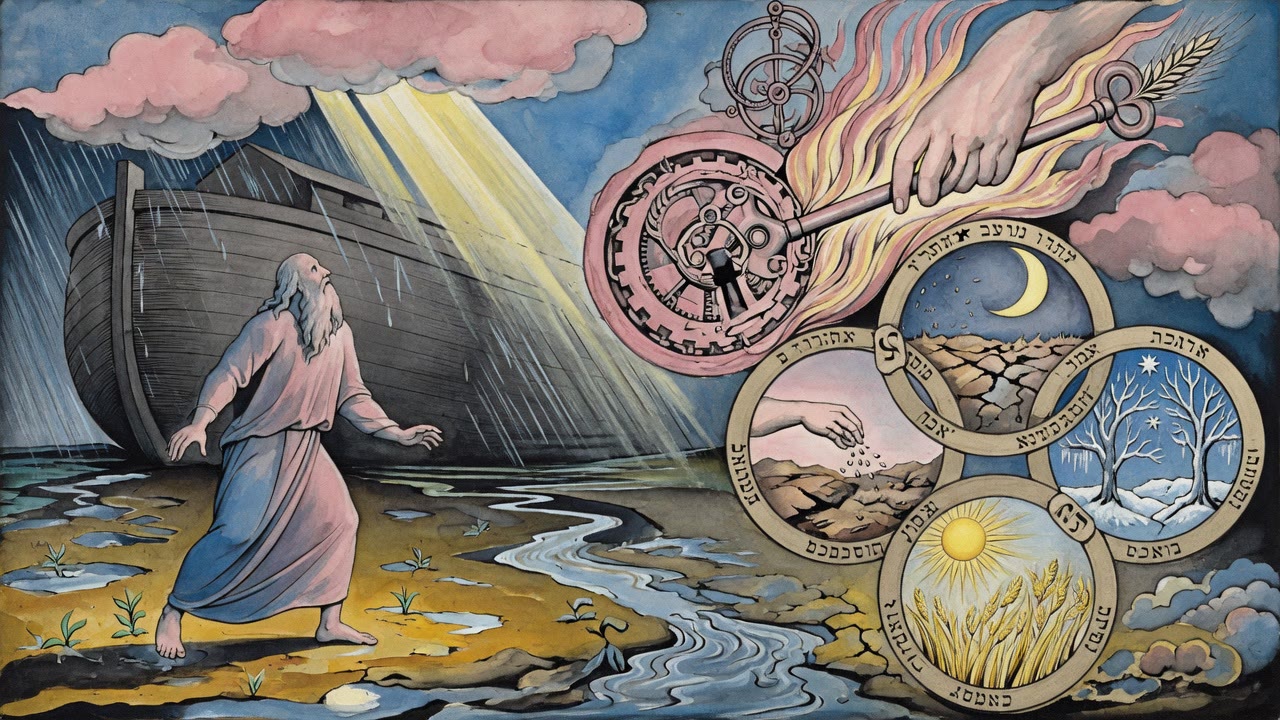
Noah stood on ground that still smelled of mud. The flood was behind him. Ahead lay a thinner world and a thicker permission. God spoke a new covenant into the clean air: every creeping thing that lives shall be food for you (Genesis 9:3). The words sounded like a rearranged contract between blood and bread.
Why name the low things that crawl? To pin dominion to the smallest life, so rule cannot pretend it only touches lions and bulls. What can be eaten can also be misused. The sentence opens a table and a courtroom at once.
Noah looked at tracks in the soft soil and felt the weight of a kitchen that now included almost everything that moved. The ark had taught him their faces. The covenant taught him their place under human need and human limit.
When Animals Were Allies
Before the first man's fall from virtue, animals were not meat. They were allies, reinforcements in struggle, familiar friends tame by nature, servants who could dwell with their lord. The first human, adorned with every virtue, walked among beasts that did not answer with fang and flight.
Gluttons would later say meat exists only to stuff the belly. The older picture refuses that reduction. Creatures were made for partnership before they were made for pot. The flood answered a world that had already sold partnership for blood.
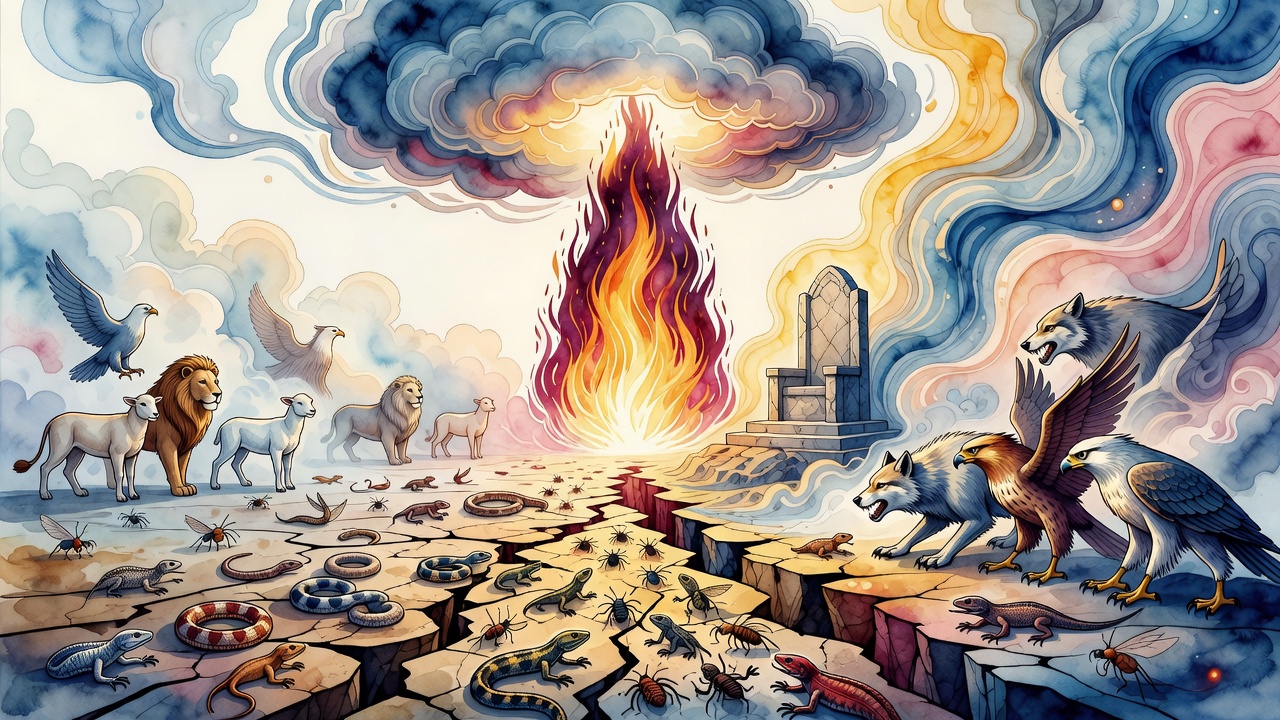
Imagine a lion that did not measure a man as prey. That first arrangement was a moral climate. When virtue cracked, animals learned hostility the way fields learn drought.
Why the Beasts Went Under
When God said He would blot out man and beast, creeping thing and bird (Genesis 6:7), the question rose: what sin can an irrational animal commit? The answer charged the human world with a corruption so total that habitats could not stay unstained.
Violence travels. A generation that sold itself to iniquity also sinned against beasts and birds. Including animals in the flood was the end of a shared ruin, not a second trial of the ox.
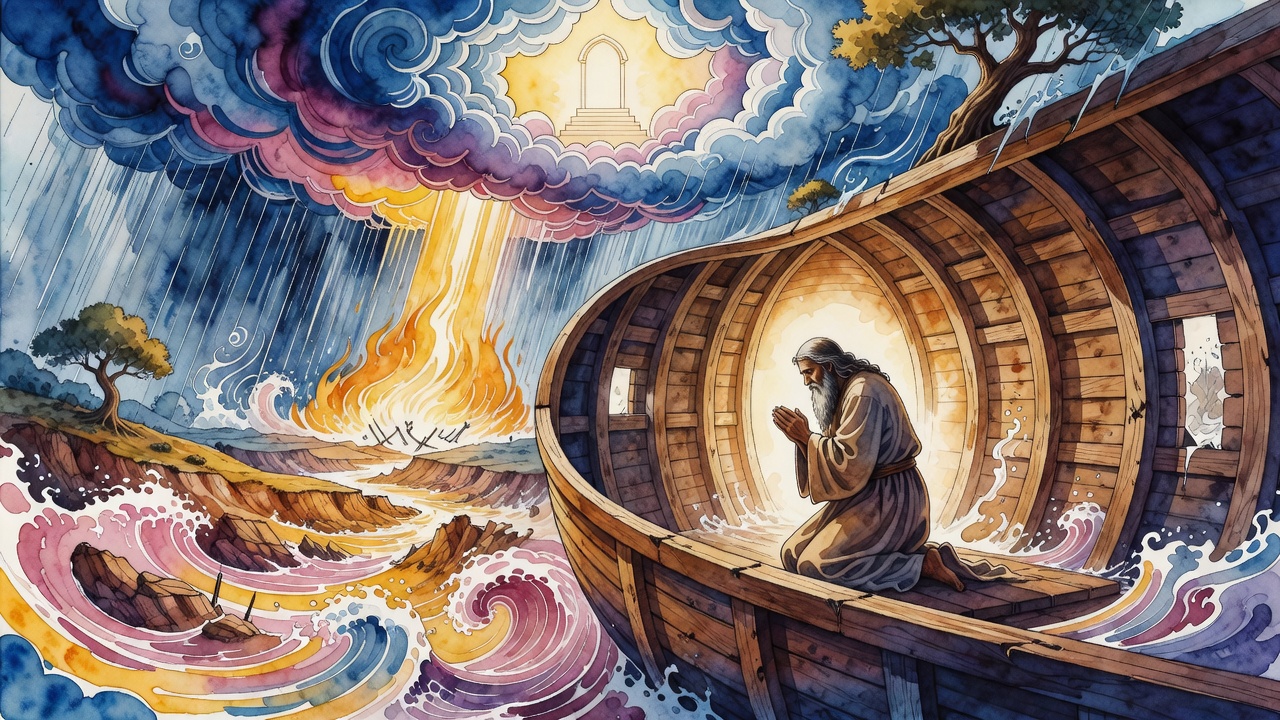
Noah had watched pairs climb ramps while cousins drowned beyond the pitch. Permission to eat arrives only after that memory has been written into the bone.
Creeping Things and Stewardship
After the waters, the menu widened and the responsibility sharpened. Naming creeping things forces the eye downward, to life that cannot roar back. If the least is food, the least is also under care.
Noah had fed worms to tiny mouths in the ark. Now even such lives stand inside the human economy. What he once preserved pair by pair he might receive as sustenance, but never as trash.
He would still plant and tend. The new permission relocated hunger inside words that also protect blood and season the year with restraint.
A Table Built on a Washed Floor
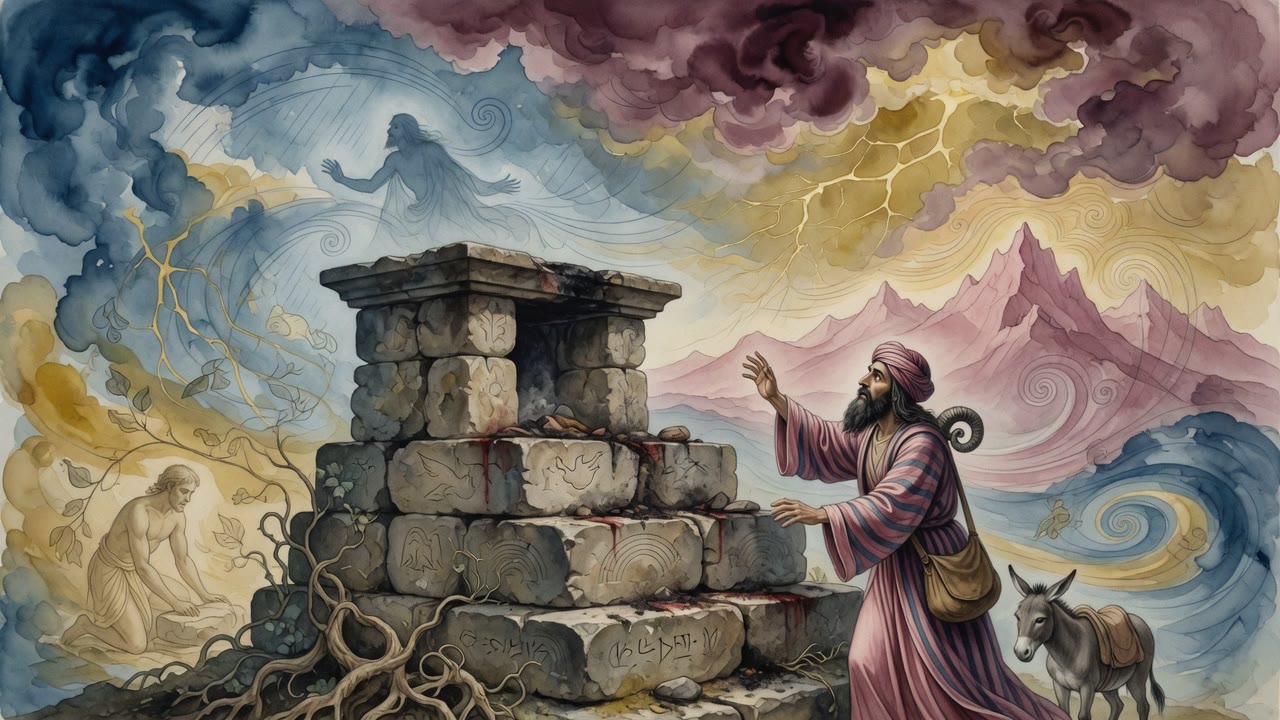
The first sacrifice on dry land would smell of fat and thanks. The first meal under the new permission would taste of a world that remembered drowning. Between ally and food stands the thin bridge of covenant.
Noah left the ark with animals sorting into wild and near. The sentence about creeping things followed him like a second shadow. Eat, and remember how easily a ruined generation made the whole living field pay for human hunger.
At evening he broke bread while a small creature crossed the edge of firelight. God had not asked Noah to love death. God had asked him to live without pretending the old harmony still held unchanged.
He set a small fire that evening and watched smoke climb into a sky that no longer hid behind rain. A bird landed on a wet stump and tilted its head as if waiting for the old treaty to return. It did not. Noah broke bread and left crumbs at a careful distance, neither fully host nor hunter.
When his sons asked what the creeping things meant, he pointed to mud tracks near the tent rope. "Everything that lives is under the word now," he said. "Take what you need. Do not take as the generation took, until the earth itself choked." They listened with the hunger of men who had spent a year measuring rations by stone-light.
At the first shared meal of meat after the permission, no one joked. Fat hissed. Someone said a blessing that stumbled. The animals outside the circle of firelight were no longer only cargo. They were neighbors under a rewritten treaty, and the treaty still smelled of rain.
He set a small fire that evening and watched smoke climb into a sky that no longer hid behind rain. A bird landed on a wet stump and tilted its head as if waiting for the old treaty to return. It did not. Noah broke bread and left crumbs at a careful distance, neither fully host nor hunter.
← All myths