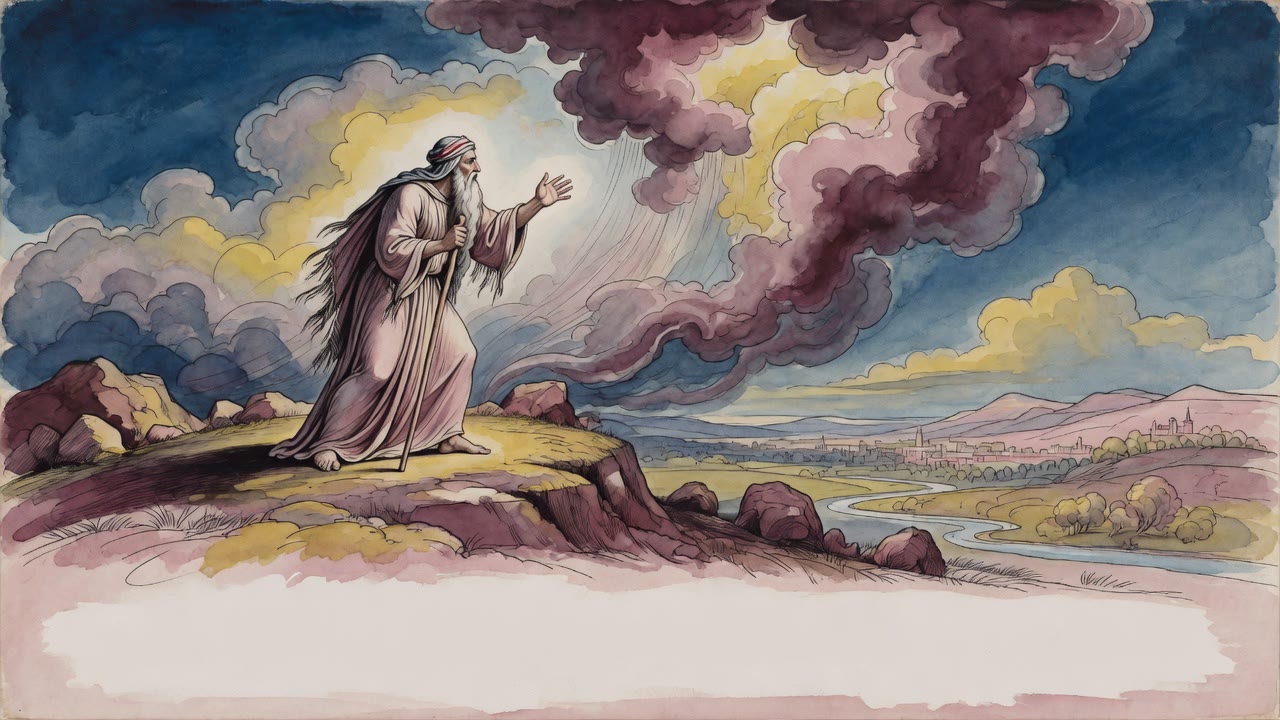
Rabbi Hanina's Three Belts Could Not Reach Around One Carob Trunk
Rabbi Hanina set a knife to one dark pod and split it lengthwise. Honey filled the cup of his hand and spilled into the dust. No one tended that field.
Table of Contents
 Click for full size
Three Belts Around One Trunk
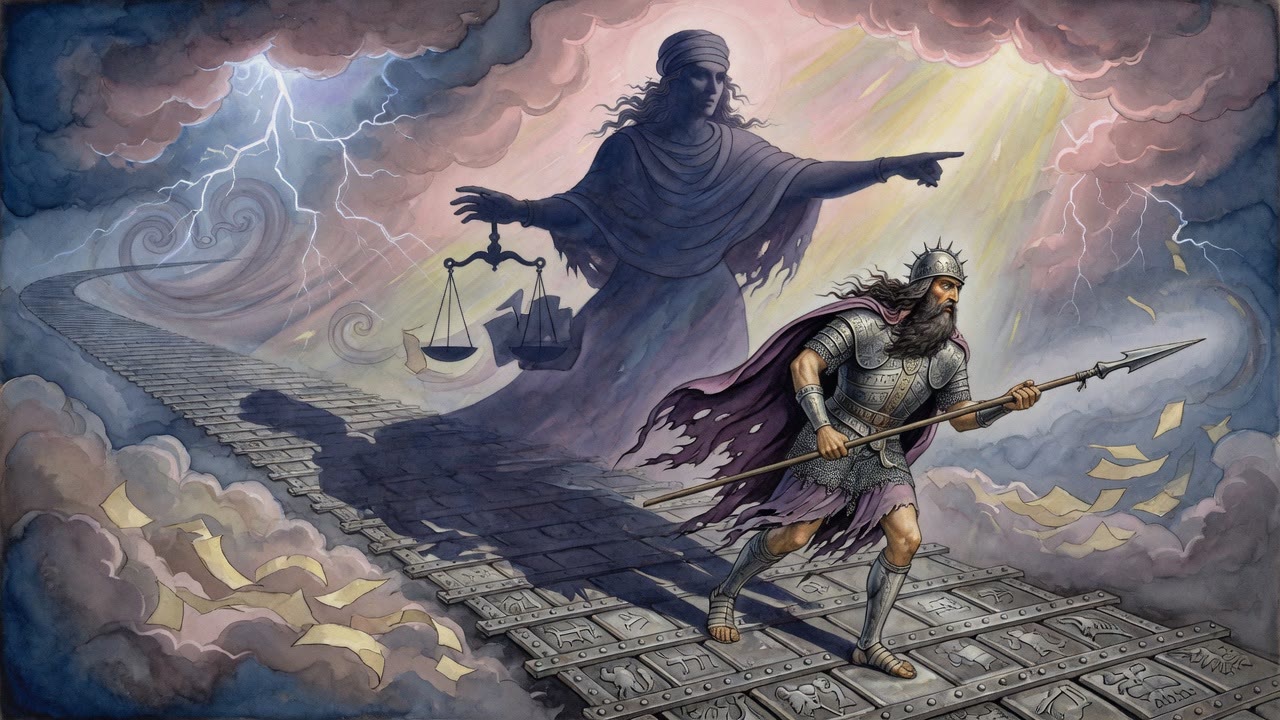
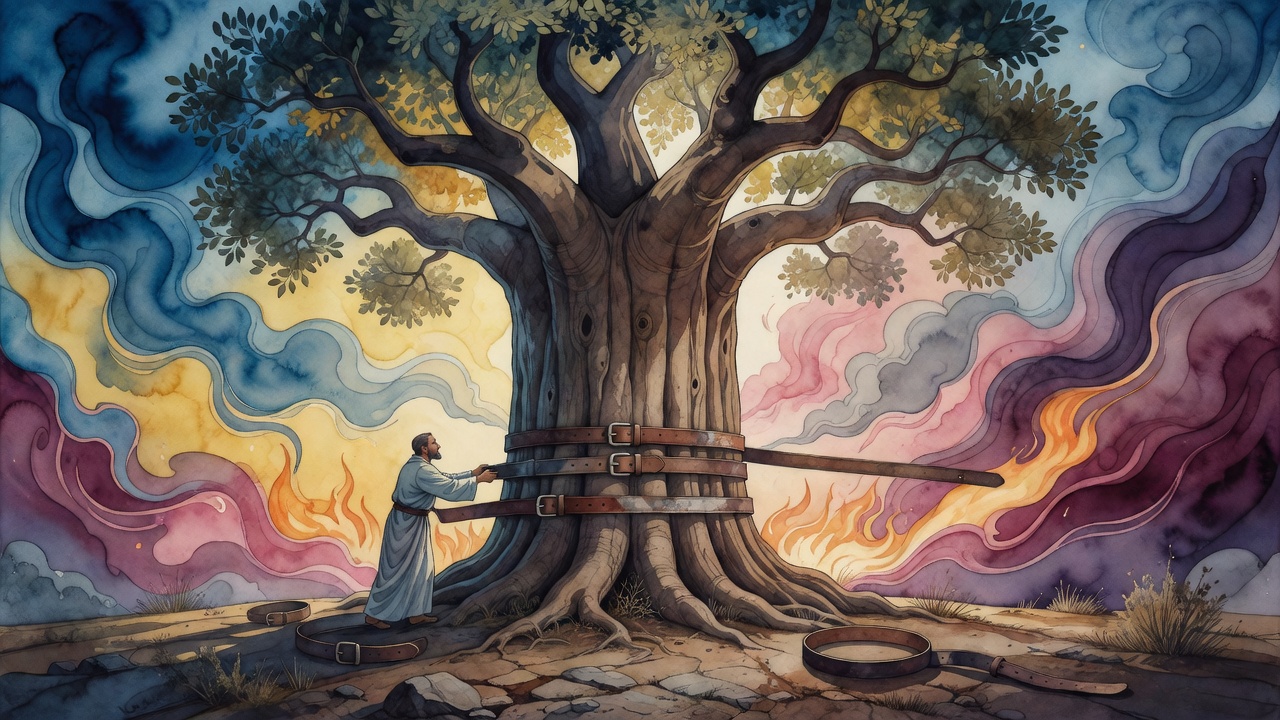
The dust of Babylon was still on his sandals when Rabbi Hanina stopped at the edge of a field and stared at a carob tree. It was not a tall tree. It had no crown to speak of, no reach of branches that would make a traveler crane his neck. It was only the trunk. The trunk was wider than a doorway, wide as the mouth of a cistern a whole village drinks from.
He unbuckled his own belt. He unwound the strap from the belly of his beast, which was still breathing hard from the road. He called to his brother, the son of his own father, and took his belt too. He knotted the three lengths of leather end to end and carried them around the base of the tree, one arm reaching for the other.
The ends did not meet. He pulled until the leather bit into his palms. They did not meet.
A Palm Full of Honey
He let the belts drop and drew his knife instead. He set the blade against a single carob pod, one of the dark curved pods that hung within reach, and split it down its length.
Honey ran out. Not a bead of it, not a smear. It filled the cup of his hand and spilled over the sides and dropped into the dust, a full palm of honey out of one pod off one tree in a field that no one tended.
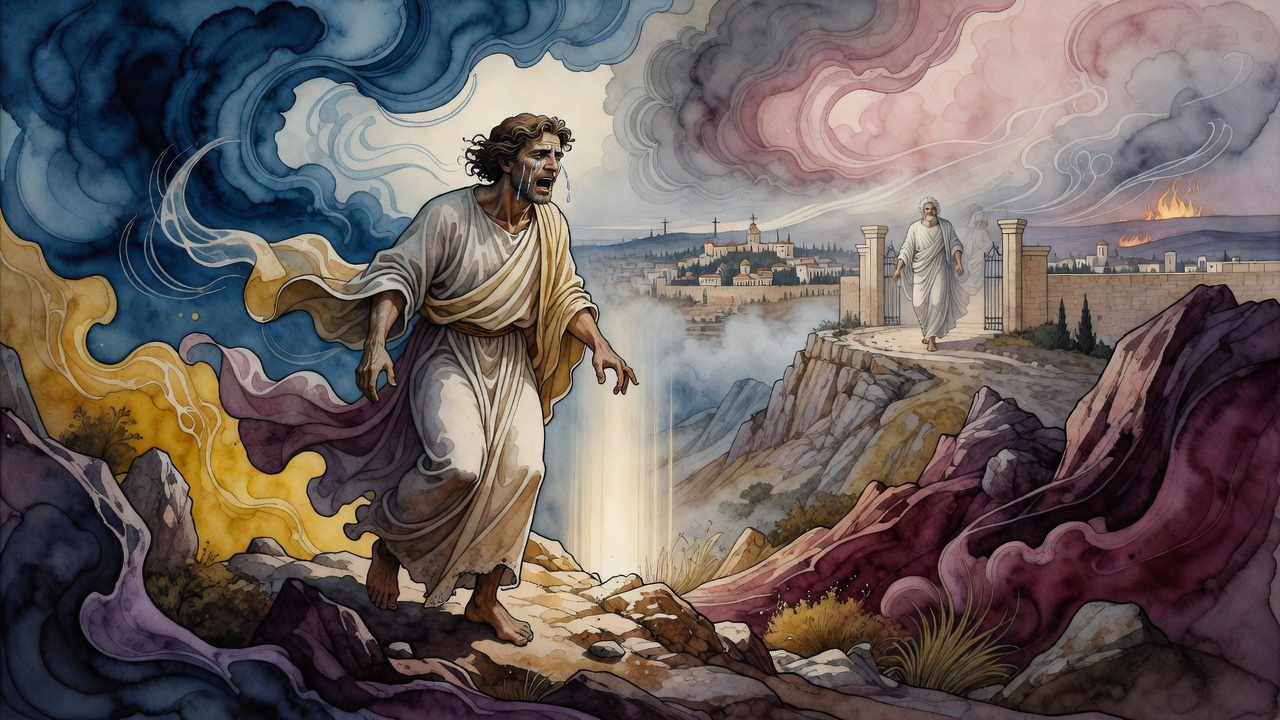
Later, when the students pressed him about the tree, he did not reach for a parable. "When I came up from the exile," he told them, "I loosened my belt, and the belt of my beast, and the belt of my father's son, to reach around the trunk of one carob, and I could not." He held up the hand that still smelled of the honey. "I split a carob, and a full palm of honey flowed out." Then he said the thing they would carry away with them. "In their days the world was different."
The Man the Verse Called Great
Their days. He meant the ages before his own, when the earth still grew what it would never grow again. Scripture kept one strange line for those ages, a line about the city in the hill country that the sons of Anak had held. It called a certain man the greatest man among the Anakim, and the sages would not let the words rest as a footnote about a dead chieftain.
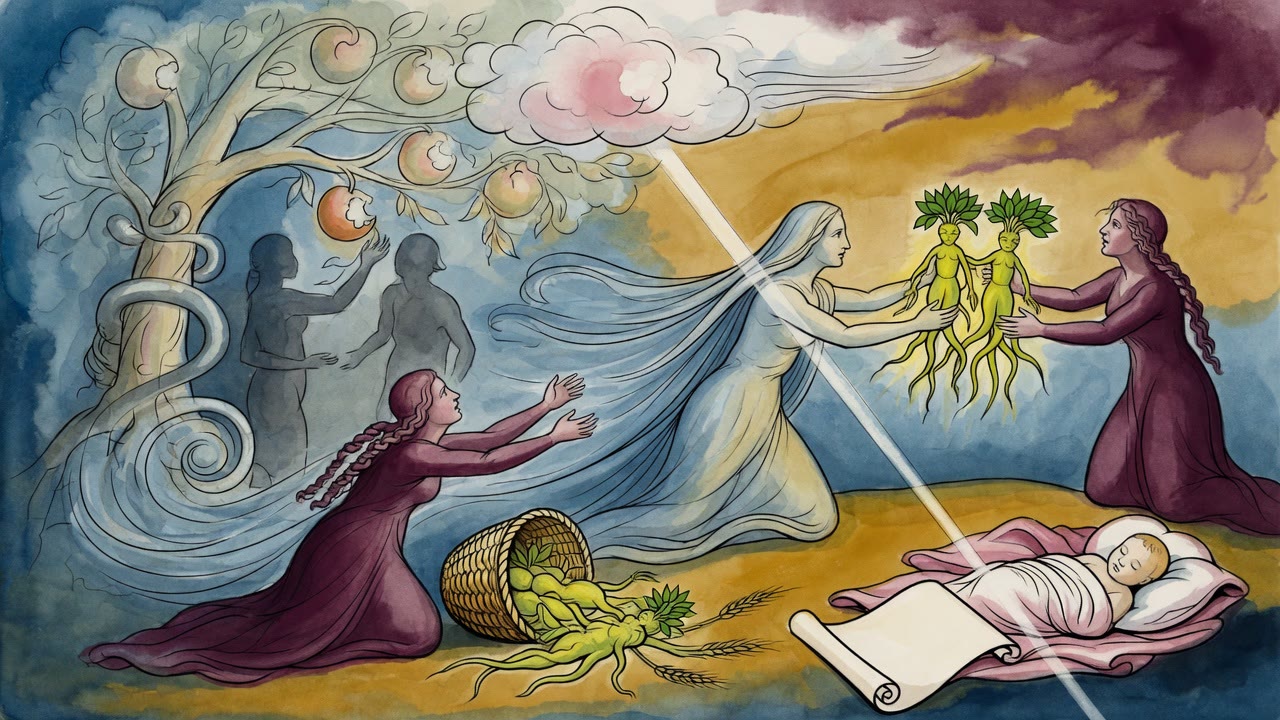
"The man," they said, is Adam, the first of all, who stood in a stature the ground has not raised out of itself since. "The great" is not one man but three. Of Abraham it is written that the Lord blessed him until he became great. Of Isaac it is written that the man grew, and grew more, and became very great. And Jacob, of whom Scripture says only that the boys grew, was counted into the same greatness with them.
A fourth brother stood in that company and walked out of it. Esau was born to the same height and threw it into the dirt. He despised the birthright and sold a far-off inheritance for a bowl he could eat that same hour, and the greatness ran out of him like honey out of a split pod. "Behold," the word came against him, "I have made you small among the nations." His brothers grew toward heaven. He alone shrank on purpose.
A King a Head Above the People
The shrinking did not stop with Esau. It went on down the generations like water finding the lowest ground, and by the time Israel demanded a king the giants were nearly spent. When Samuel's men found Saul, the last thing left in him of the old stature was his height. Scripture would not call him the best of Israel in every way, only this: from his shoulders and upward he was taller than all the people. A head out of a vanished race, set on the body of the present one.
Then there was Absalom, more beautiful than any man in Israel, and the mark of the old blood in him was his hair. He cut it once a year because it grew too heavy to carry, and when he weighed the cutting it came to two hundred shekels by the king's stone. Rabbi Hanina, who had failed to close three belts around a carob, knew what a weight like that meant. He said the strands hung thick as a carob branch. Someone answered that it must have been more like a spear. He said no. A spear is worked rod by rod under a smith's hammer. This grew.
It grew, and it killed him. The same hair that marked Absalom a son of the old giants caught him in the boughs of a great tree and held him in the air between heaven and earth while his mule walked out from under him.
Shorter Than Their Fathers
Rabbi Hanina came home from exile into a smaller world. The carob in the untended field was older than the kingdom, older than the judges, a survivor out of the days when a single pod carried a palm of honey and three men's belts could not close around a trunk. He had reached around it with everything he had, his own leather and his beast's and his brother's, and come up short by the length of his failure. The children of the giants were shorter than their fathers. Their trees stood taller than their kings.
← All myths