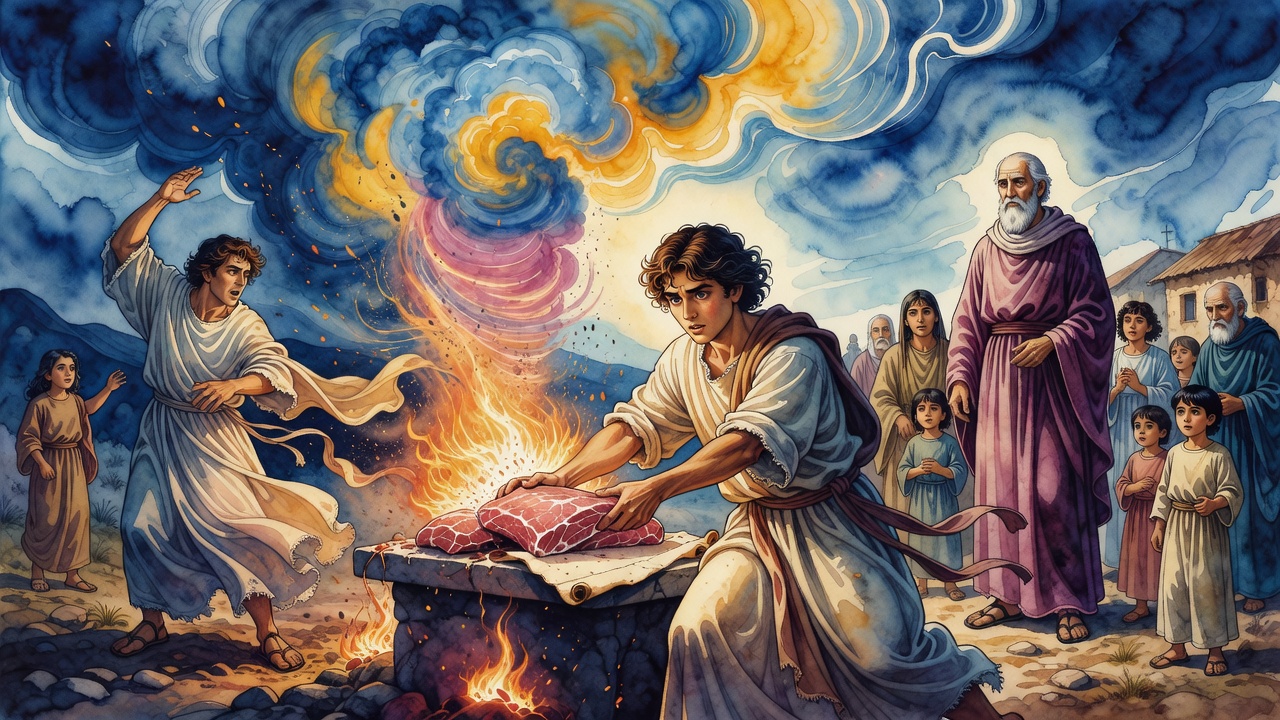
The Day the Glory Left Shiloh and the House of Eli Fell
A man of God brings old Eli a curse shaped like a memory, and a sign so exact that one day takes both his sons and exiles the glory.
Table of Contents
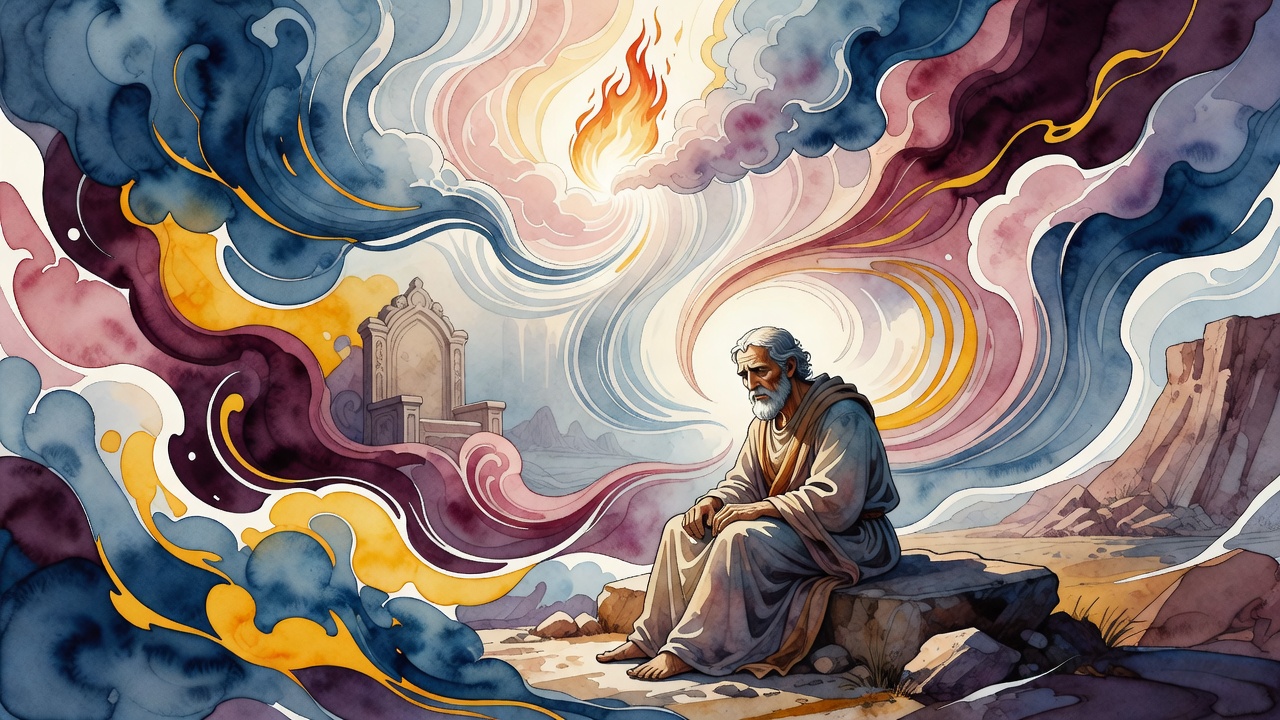
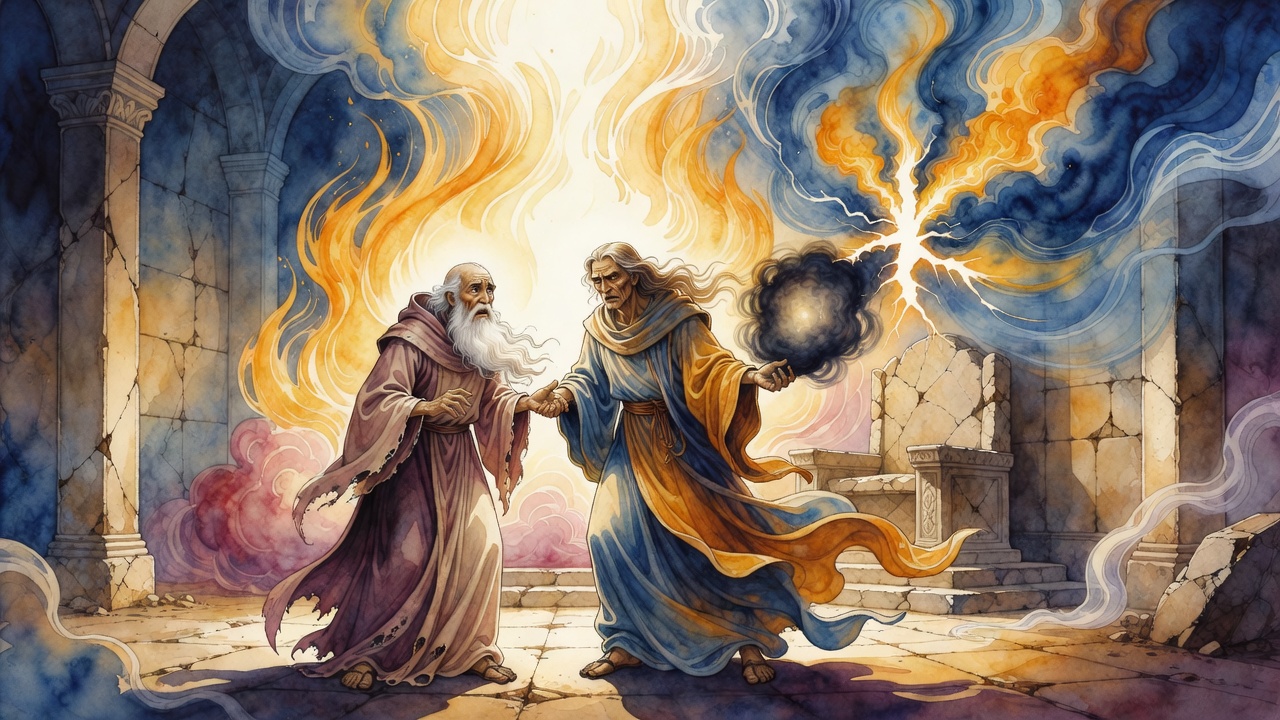
The old priest heard the footsteps before he could make out the face. Eli sat where he always sat at Shiloh, close to the doorpost of the Lord's house, and the world had begun to thin at its edges, light smearing where a man's shoulders should be. A stranger stood over him. Some tellers name the visitor Elkanah, husband of Hannah, father of the boy who would one day inherit everything Eli's sons were about to throw away. That day he came only as a man of God, and his message opened like an old wound.
 Click for full size
"Did I not plainly reveal Myself to the house of your father," he said, and the voice carried something older than the man. "Twice I showed Myself for your line. Once to bring your children up out of Egypt. Once to lay the priesthood across their shoulders. And still you rebel against Me."
The God who spoke had reached into stranger rooms than this one. He had shown Himself inside Pharaoh's own palace to call Moses out of Egypt, and inside the hollow of a pillar in Midian, because no place is too low for Him to enter. A single thorn works its way into one limb and the whole body feels it. So it is with a God who fills heaven and earth. He had felt every theft at Shiloh, the fat of the offerings snatched from the fire, the threats at the tent door, and He had come to collect.
The Sign of the Single Day
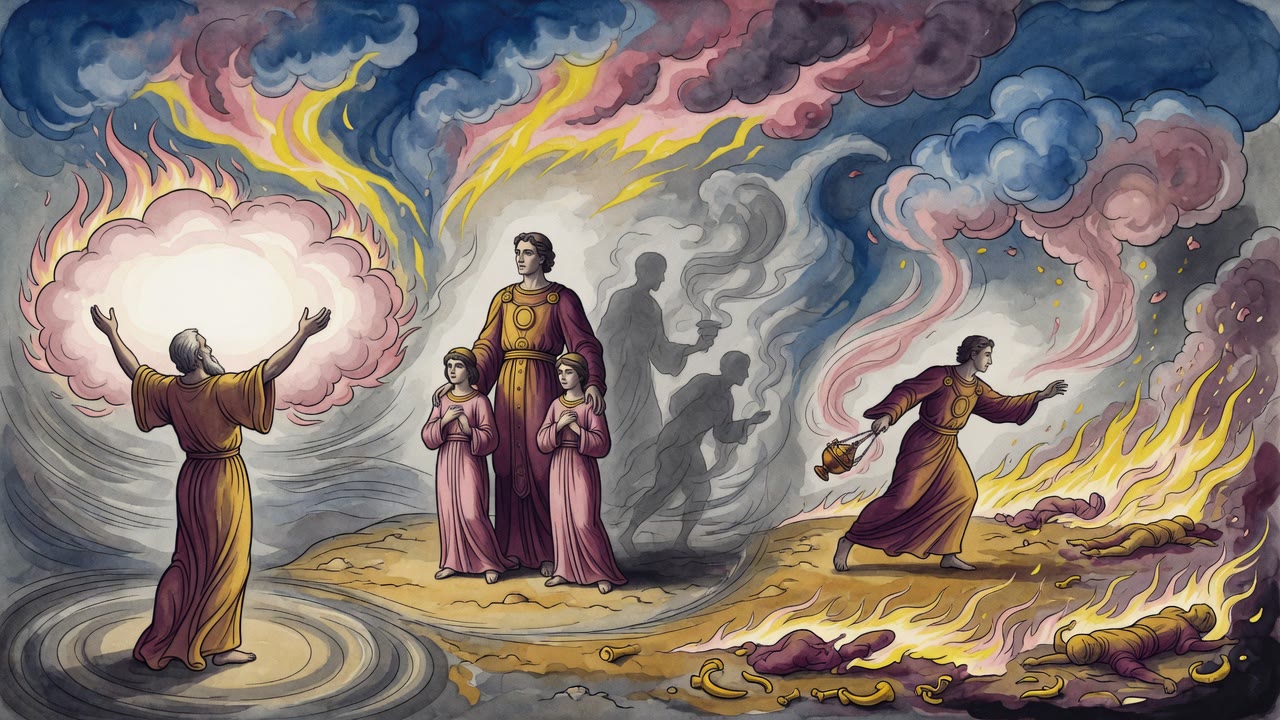
Then the man of God gave Eli a sign, the way a sign had once been laid on Moses at the burning bush as a sure and settled thing. "This will be the sign to you," he said. "It will come upon your two sons, upon Hophni and Phinehas. In one day, both of them will die."
Not one, then years later the other. Not one in battle and one in old age. A single day would take them both, so exact that no one could argue it away as accident. And those of Eli's house who lived would not live well. They would come bowing for a sliver of silver and a loaf of bread, begging a place among the priests only to eat a morsel, the proud line of Aaron reduced to asking for crusts.
Eli said nothing that the tellers kept. The blind man sat with the sentence laid across his lap and waited for the day it named.
Why the Old Man's Eyes Went Dark
The blindness itself was a verdict. The Sages watched how it fell and found a pattern older than Eli. A man who raises a wicked son, or a wicked student, goes dim at the end, as though the eyes refuse to keep looking at what he made.
Isaac had gone blind in his tent, too weak of sight to tell one son from another, because he had raised Esau and loved him. Ahijah the Shilonite, generations later, would sit unable to see the woman at his own door, his eyes set fast by age, because his student had been Jeroboam, who split a kingdom and built golden calves. And Eli had raised Hophni and Phinehas, who treated the offerings of the Lord with contempt. The dimming was no accident of years. It was the body admitting what the man had grown.
The Runner from the Battle Line
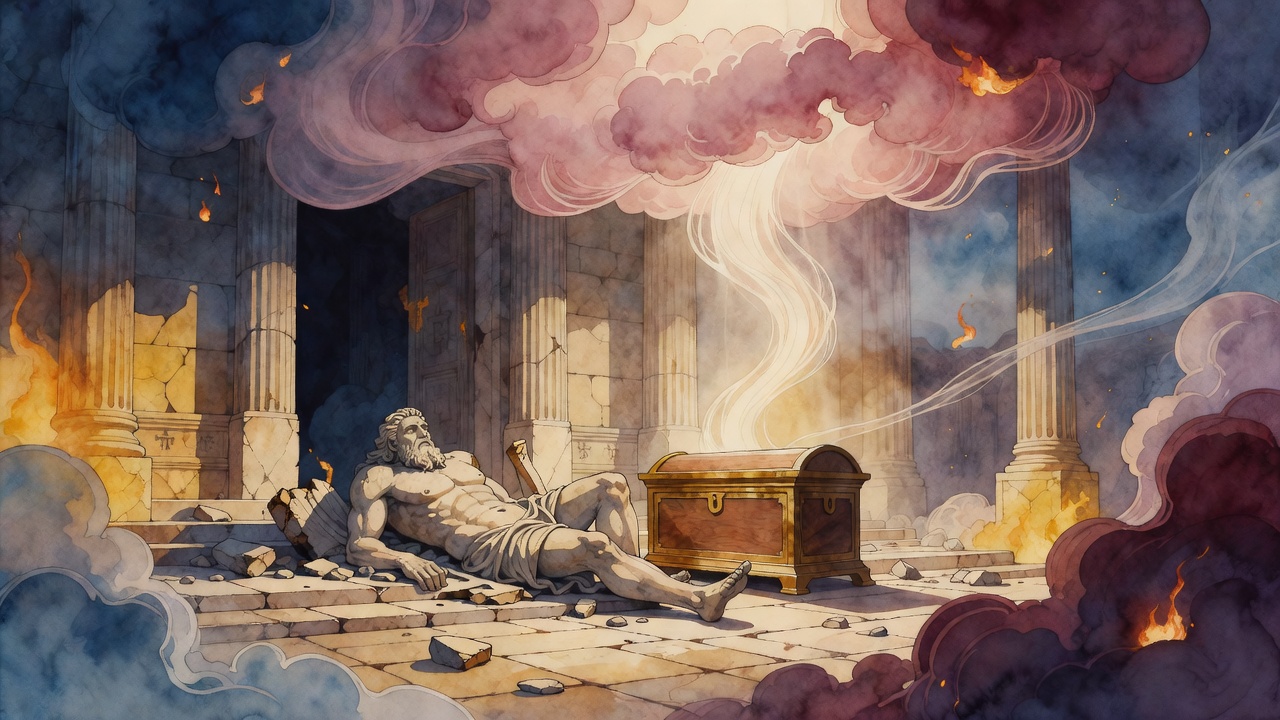
The day came at Aphek, where Israel drew up against the Philistines and broke. When the front line gave way, hands carried the Ark of the covenant down into the camp, the gold box with the tablets inside, certain it would turn the fight. It did not. The Philistines closed over the field, and the tablets that had gone before Israel through the wilderness passed into the grip of the enemy.
A man of Benjamin ran from the shattered line that day, his clothes torn, earth thrown over his head. Later they said his name was Saul, and that he crossed sixty mil between one morning and that same evening, a distance no ordinary grief could carry a man. He had heard the unbearable thing, that the tablets were taken, and he would not leave them in Philistine hands unchallenged. Some tell it that he wrenched the tablets from the very grip of Goliath before he turned for Shiloh, then ran the whole road with the news no one wanted and torn earth in his hair.
The Woman Who Named the Loss
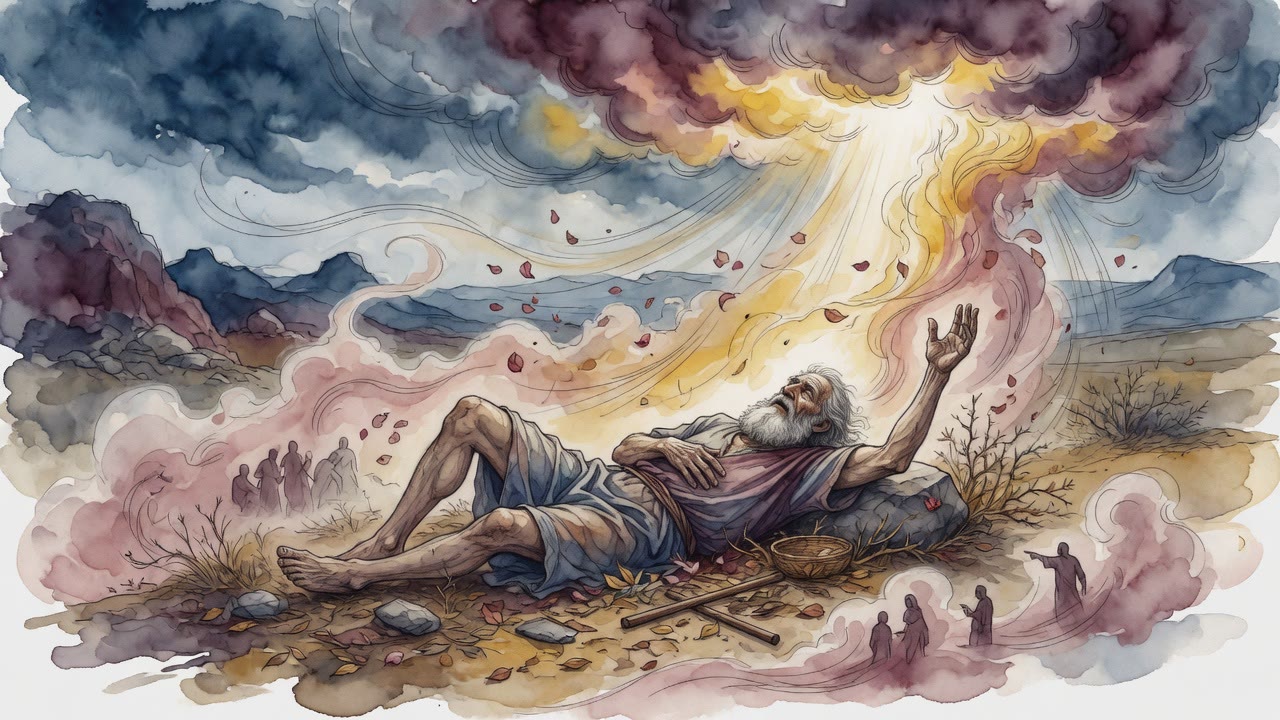
The runner reached Shiloh and cried out what he had seen, and the town wailed. Eli, ninety-eight years old and long since gone blind, sat by the gate and heard the sound climb toward him. He asked what it meant. When the man told him the Ark of God was taken, the old priest fell backward off his seat beside the gate, and his neck broke, and he died. His dim eyes went dark for the last time on the day the sign had promised, both sons already dead in the field.
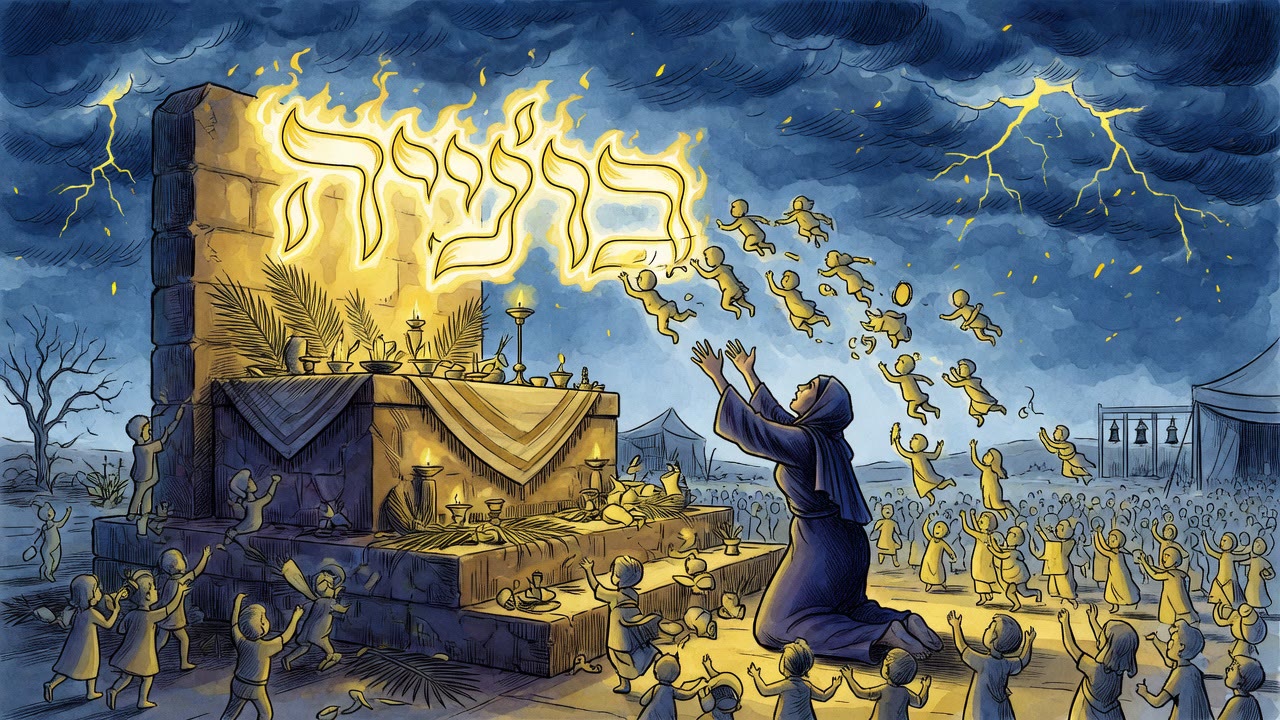
In the house, the wife of Phinehas was near her time. The word reached her all at once, that the Ark was taken, that her husband was dead, that Eli was dead. Her pains turned upon her, and she bowed down where she stood and gave birth. The women around her told her she had borne a son. She did not answer them, and she did not look. She gave the child a name and spent her last breath on it. Ichabod, she said. No glory. The glory has gone into exile from Israel, for the Ark of God is taken. Then she died.
The tellers set her among a small and terrible company, three women who died in the act of giving life. Rachel, who named her son with her soul already leaving her, who died and did not die because her voice outlasted her. Michal, daughter of Saul, childless every day of her life until the single day it took her, lowing like a calf as she went. And this one, the daughter-in-law of Eli, who used the last strength in her body not to bless the boy but to name the empty place where the glory had stood.
The child lived. The name went with him wherever he walked, a boy called No-Glory, born the hour the box fell silent and the old house came down. At Shiloh the doorpost still stood where Eli had sat, and no one sat there anymore.
← All myths