Parshat Bereshit6 min read

The First Adam Filled the World and Stood Alone in It

Before the man of clay there was an Adam the size of the world, two faces stamped with God's image, king of all that served him and alone in it.

Curated by Arthur · Told by Maggid ·
Table of Contents
  1. The Body That Lay From One Edge of the World to the Other
  2. Stamped With a Likeness No Angel Carried
  3. Two Faces, and a World That Bent to Serve Him
  4. The King of Everything Who Had No One
  5. God Set the Blade to the One Body
The First Adam Filled the World and Stood Alone in It Click for full size

The Body That Lay From One Edge of the World to the Other

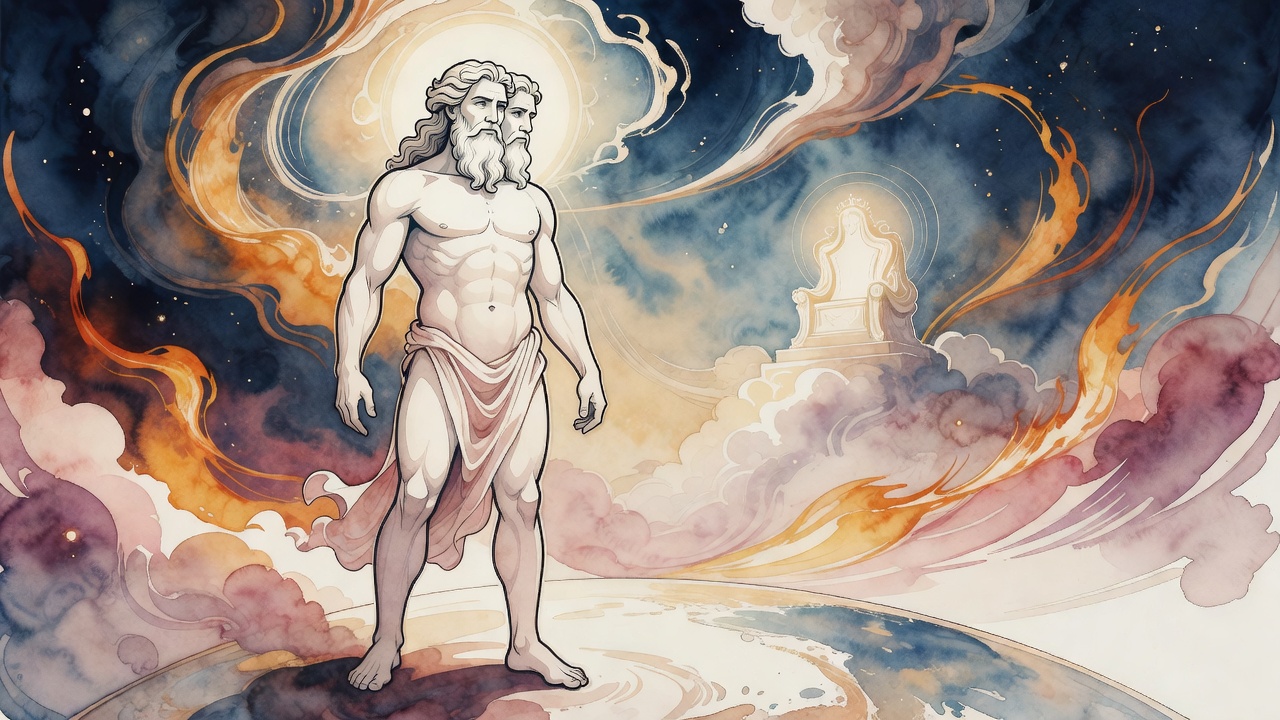
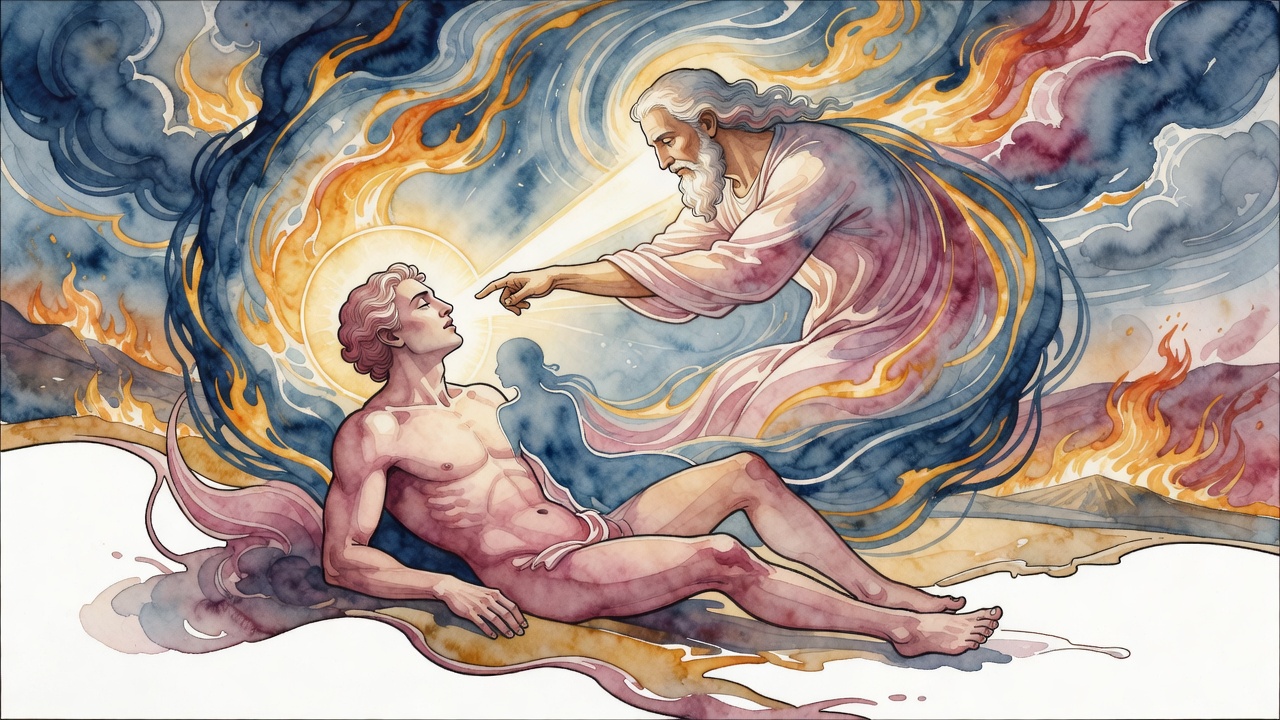
Before there was a garden, before there was a man who could stand and walk, there was a shape with no shape. It lay across the raw earth, from the place where the light first came up to the place where it drained away. God had gathered it, and it filled everything. Reach toward the east, and it was already there. Reach toward the west, and it had gone ahead. North and south it ran the same, stretched from one end of the heavens to the other. Even the empty air between the edges was pressed full of it, as though a hand had been laid flat over the whole of creation and left resting there.

This was Adam. Not the Adam of dust, not yet. A formless mass, unfinished and enormous, whose substance God's eyes had already watched while it was still unwrought. He was a single living thing the size of the world, and nothing in the world had a name for what he was.

Stamped With a Likeness No Angel Carried

Two things had gone into the making of him, and they did not sit easily together. Part of him came from the ground, the part that could dry and crumble and go back to being dirt. But something else had been pressed onto him the way a seal is pressed into soft wax. A likeness. An image. The print of the One who had spoken over him, "Let us make man in our image, after our likeness." No beast wore that mark. No serving angel wore it either.

Because he had been formed behind and before, worthiness would let him hold two worlds at once, this one and the one standing behind it. Then the word would come down to him, "You came before the ministering angels." Fall short, and the smallest crawling things would throw his lateness in his face. "A fly came before you. A gnat came before you. This worm came before you." Everything in him hung between those two sentences, and which one he would earn was not yet settled.

Two Faces, and a World That Bent to Serve Him

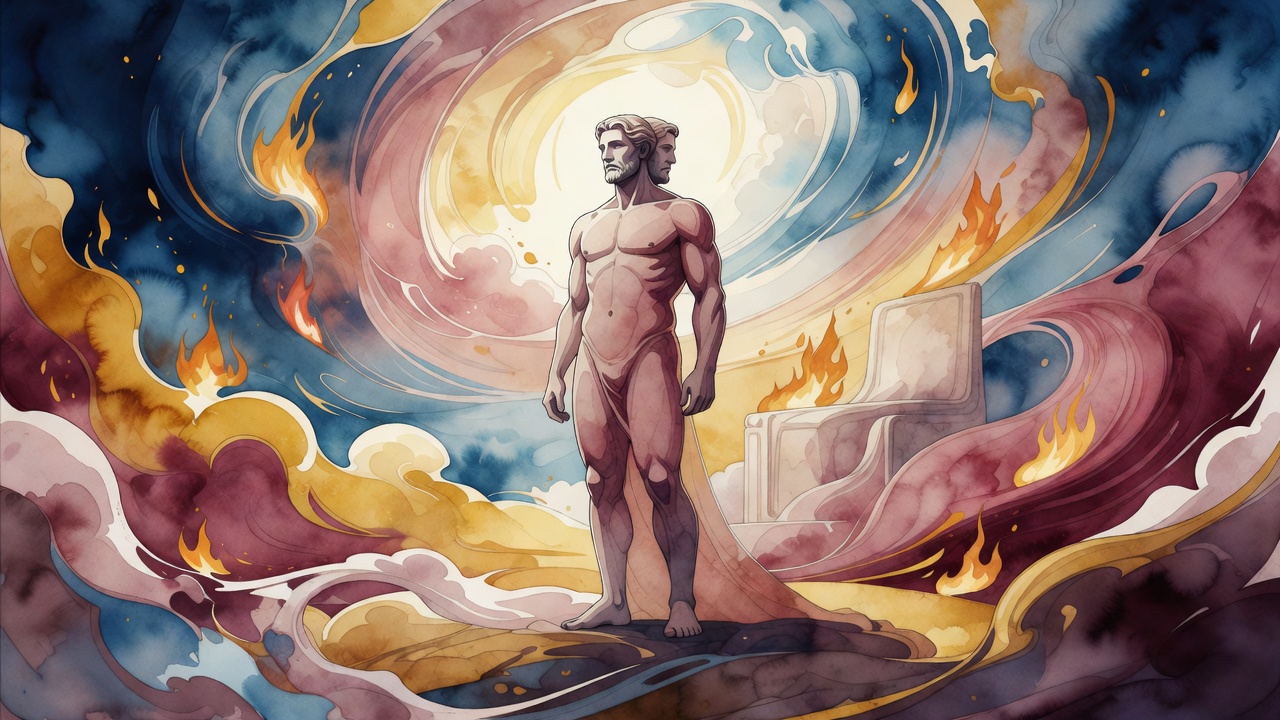
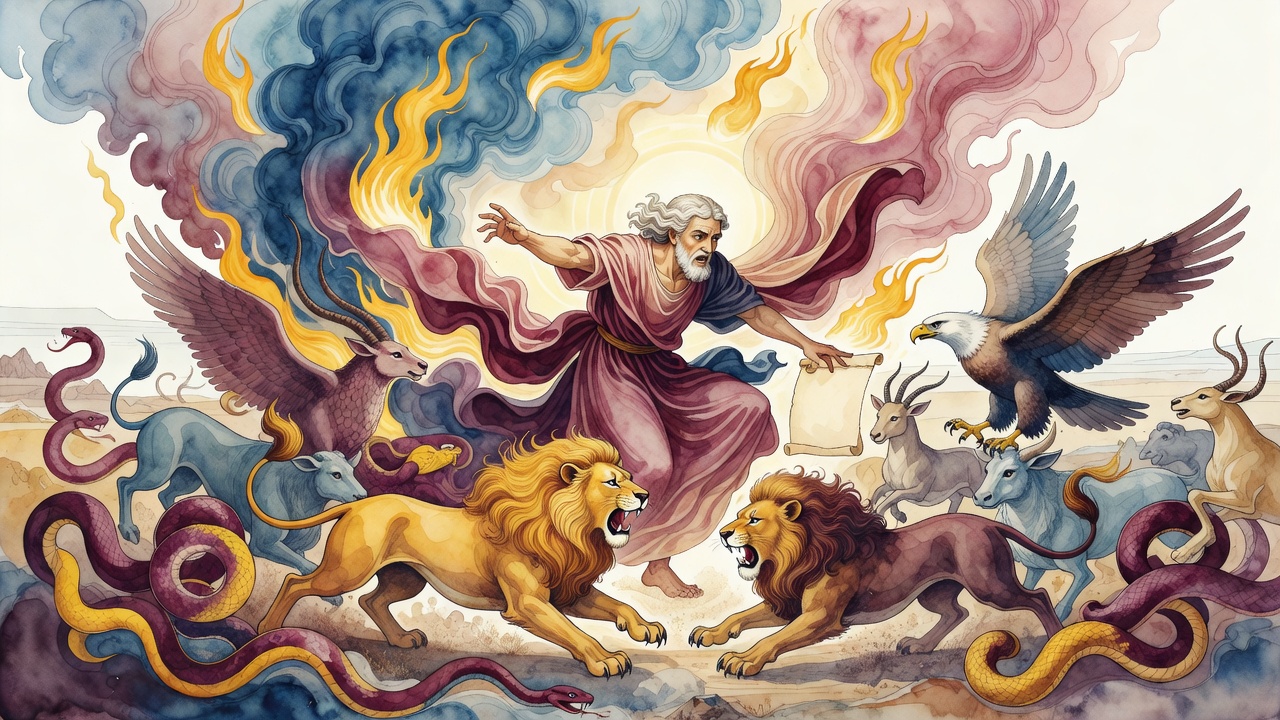
He was male and female at once, two faces set back to back on the one body, a back on this side and a back on that. And the world he woke into ran to serve him. The earth held him up. The rivers moved close by. The far ocean, the air he drew in, the light that showed him the ground, the heavens turning overhead, all of it leaned toward his good. Every fruit swelled for him. Every plant grew toward his hand. The quiet cattle and the wild beasts alike bent their strength to his keeping. He was king over the whole of it, and it served him gladly and asked nothing back.

The King of Everything Who Had No One

And still something was wrong. In all that leaning and serving, in all those hosts of creatures pressing toward him, not one was like him. The cattle came near but could not answer. The rivers ran but could not know his name. The light touched him and told him nothing back. He was master of the entire world and alone inside it, because nothing that served him wore his own face. The likeness sat on him and on no other thing that breathed.

God looked at the aloneness of the world-sized man and did not leave it standing. Here was the thing to be set into the order of creation: that a being carrying this likeness is made to help another, fitted to be another's help, because two of them would share one form in body and one form in soul. A creature could serve Adam. Only another Adam could meet him.

God Set the Blade to the One Body

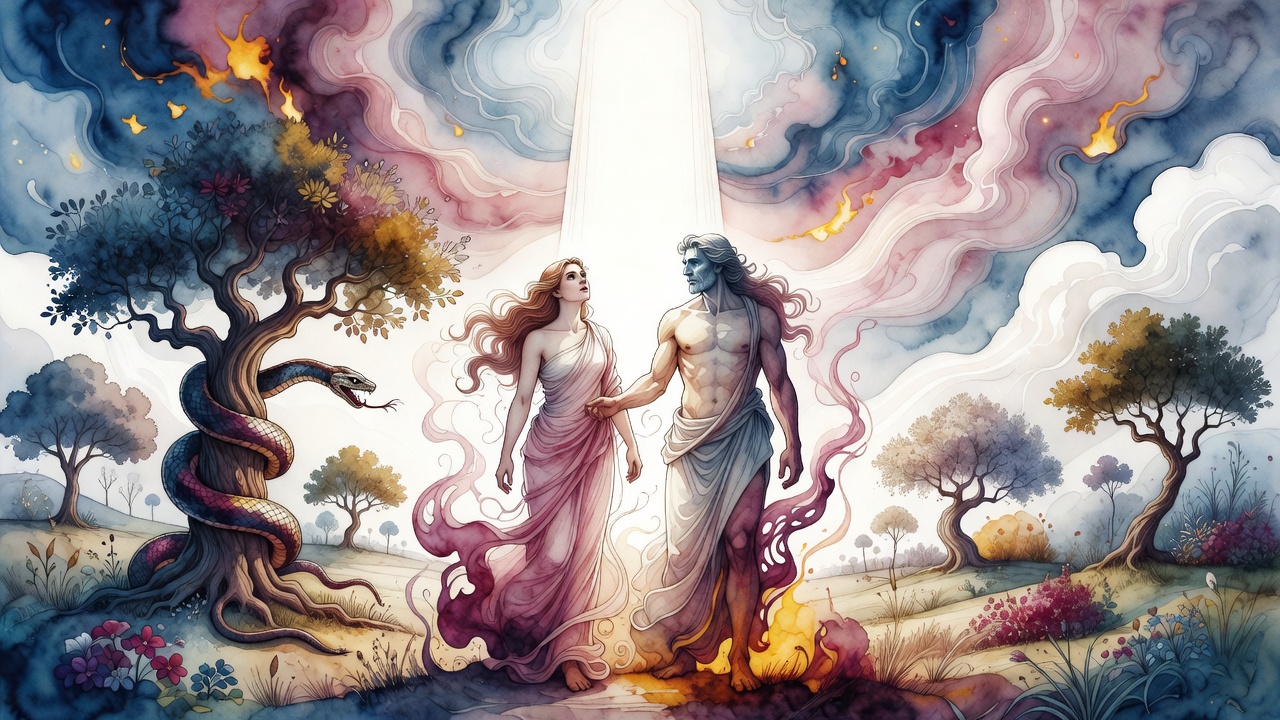
So God did not walk off and shape a second creature from a distance. He reached into the one enormous body and cut it through. The two faces came apart. The two backs divided, this one turning to become a man and that one turning to become a woman, and the single mass that had filled the earth from edge to edge was brought down to the size of a person who could be stood beside another person.

Long after, some would hear it said, "He took one of his ribs," and picture a plain white bone slipped out of a sleeping side. But the word was tzela, a side, the same word used for the side of the Tabernacle. What God had taken was a whole half of him.

The thing that had reached from one end of the heavens to the other now fit inside a single skin. The image was still on him, the mark no angel carried, but it no longer lay over the world. It stood at a human height, at the lip of a garden, small enough at last to be lonely in a smaller and more bearable way. And when this Adam turned, for the first time there was another face wearing the same likeness, turning to look back at him.


← All myths
From the tradition

Sources

3 sources

The texts behind this telling. Some cards carry a translation of the source; others are our own retelling of it, and each card says which. Every card links out to the original.

Bereshit Rabbah 8:1Bereshit Rabbah

Translation of the source text.Daat Bereshit Rabbah · Public Domain

"And God said: Let us make man in our image, after our likeness" (Genesis 1:26). Rabbi Yohanan opened: "Behind and before You have formed me" and so forth (Psalms 139:5). Rabbi Yohanan said: If a person merits, he consumes two worlds, as it is stated: "Behind and before You have formed me"; and if not, he comes to give a judgment and an accounting, as it is stated: "And You have laid Your hand upon me" (Psalms 139:5).

Rabbi Yirmeyah ben Elazar said: When the Holy One, blessed be He, created the first man, He created him as an androgyne, this is what is written: "male and female He created them" (Genesis 5:2). Rabbi Shmuel bar Nahman said: When the Holy One, blessed be He, created the first man, He created him with two faces, and He sawed him apart and made him with two backs, a back on this side and a back on that side. They objected to him: But is it not written, "And He took one of his ribs" (Genesis 2:21)? He said to them: It means one of his sides, just as you say: "And for the side of the Tabernacle" (Exodus 26:20), which we translate, And for the side of the Tabernacle, and so forth.

Rabbi Tanhuma in the name of Rabbi Banayah, and Rabbi Berekhyah in the name of Rabbi Elazar said: When the Holy One, blessed be He, created the first man, He created him as a formless mass, and he lay stretched from one end of the world to the other, this is what is written: "Your eyes saw my unformed substance" and so forth (Psalms 139:16). Rabbi Yehoshua bar Nehemyah and Rabbi Yehudah bar Simon in the name of Rabbi Elazar said: He created him filling the whole world. From the east to the west, from where? As it is stated: "Behind and before You have formed me" and so forth (Psalms 139:5). From north to south, from where? As it is stated: "and from one end of the heavens to the other end of the heavens" (Deuteronomy 4:32). And from where do we know that he filled even the empty space of the world? As it is stated: "And You have laid Your hand upon me," just as you say: "Remove Your hand far from me" (Job 13:21).

Rabbi Elazar said: "Behind" refers to the work of the first day, and "before" to the work of the last day. This accords with the opinion of Rabbi Elazar, for Rabbi Elazar said: "Let the earth bring forth a living soul after its kind" (Genesis 1:24), this is the spirit of the first man. Rabbi Shimon ben Lakish said: "Behind" refers to the work of the last day, and "before" to the work of the first day. This accords with the opinion of Rabbi Shimon ben Lakish, for Resh Lakish said: "And the spirit of God hovered upon the face of the waters" (Genesis 1:2), this is the spirit of the King Messiah, just as you say: "And the spirit of the LORD will rest upon him" (Isaiah 11:2).

If a person merits, they say to him: You preceded the ministering angels. And if not, they say to him: A fly preceded you, a gnat preceded you, this worm preceded you.

Full source
The Midrash of Philo 7:1The Midrash of Philo

Retold in our words. Read the original at the link below.The Works of Philo Judaeus, trans. C. D. Yonge, London, H. G. Bohn, 1854-1890 · Public Domain

The Midrash of Philo 7:1 poses this question and does not answer it in the passage we hold: What is the man who was created? And how is that man distinguished who was made after the image of God? (Genesis 2:7).

Full source
The Midrash of Philo 20:2The Midrash of Philo

Retold in our words. Read the original at the link below.The Works of Philo Judaeus, trans. C. D. Yonge, London, H. G. Bohn, 1854-1890 · Public Domain

The earth beneath his feet, the rivers flowing nearby, the vast ocean, the air he breathed, the very light that illuminated his path, the heavens above… all were at his service. Every fruit, every plant, every creature, from the docile cattle to the wild beasts, they all contributed to his well-being.

Pretty idyllic. But here’s the kicker. Among all those elements willingly aiding him, something crucial was missing. Something that left Adam fundamentally…alone. Because none of them were human. He was king of the world, yet utterly isolated.

So, what was the solution? What did God do to remedy this profound loneliness? The Midrash of Philo suggests that God provided a clear sign, an indication of something essential: that human beings are meant to assist and cooperate with one another. That we, with our shared humanity, are designed to be each other's helpers.

Why? Because we possess a perfect similarity, a profound connection, in both body and soul. We recognize ourselves in each other, at least potentially. We see our own struggles, our own joys, our own vulnerabilities.

It’s a powerful message about the importance of community, of empathy, of recognizing the divine spark in those around us. It's a reminder that even when the world seems to offer everything, the deepest connection, the truest assistance, comes from fellow human beings.

This ancient text, though brief, offers a timeless truth. We are all, in a sense, “princes” or “princesses” of our own lives, surrounded by resources and opportunities. But it is in our connections with one another, in our willingness to lend a hand, to offer support, to simply be present, that we truly find ourselves, and fulfill our purpose.

So, the next time you feel alone, remember Adam in his paradise. Remember that the greatest gift is not what the world can offer, but what we can offer each other. What does it mean to truly see another person, and offer them a hand? Perhaps, that's the question we should all be asking ourselves.

Full source