Parshat Bereshit5 min read

Breath Enters Adam's Face Before Eve Arrives

God breathes life into Adam's face, the seat of sense and reason, then judges aloneness not good and shapes a partner from his side.

Curated by Arthur · Told by Maggid ·
Table of Contents
  1. Dust Waiting for a Mouth of Wind
  2. The First Not-Good in a Perfect Place
  3. Sleep, Side, and a Second Face
  4. Why the Face Still Matters
  5. The Garden Holds Both Gifts
  6. Names Before Partnership
Breath Enters Adam's Face Before Eve Arrives Click for full size

Dust Waiting for a Mouth of Wind

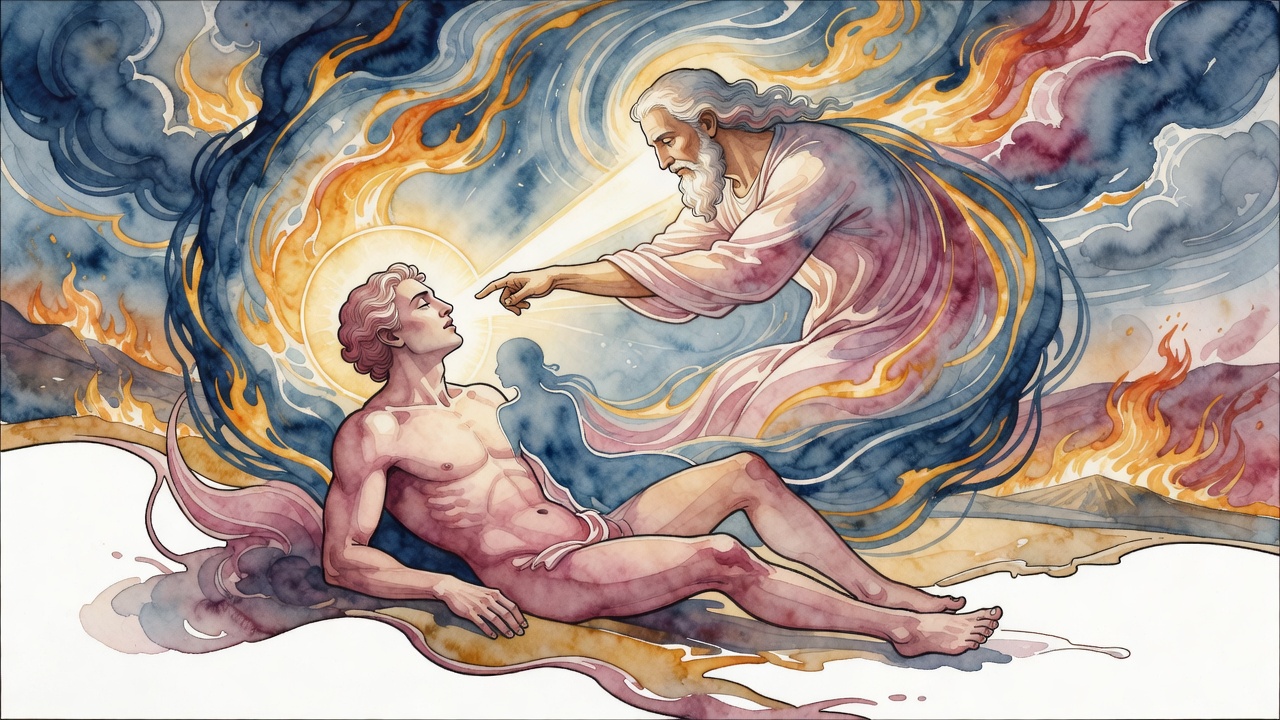
The body lay complete and empty. Bones in place. Skin sealed. Eyes shaped but not yet lit. God did not breathe into a hand or a heel. He breathed into the face of Adam, and the dust became a living being (Genesis 2:7).

Philo of Alexandria, a Jewish thinker in the first century, asked why the face. Life is the point of a body the way a statue's meaning sits in the figure, not in the pedestal. The body is scaffolding for a spark. The face is where that spark shows first: eyes, breath, speech, the whole gate of the senses. Breath into the face is breath into the place a person meets the world.

More than animal life entered there. A rational soul settled in the head, what some writers called a temple of reason. The garden gained a creature who could name beasts and hear commands, not only a body that could eat fruit.

The First Not-Good in a Perfect Place

Everything else had been called good. Then the sentence fell that still startles. It is not good for the human to be alone. I will make a help opposite him (Genesis 2:18). The garden was perfect. The man was fresh from divine breath. Still the design itself named a lack.

Aloneness here is not the modern ache of empty evenings. Philo's midrashic line presses past loneliness toward fitness. A single human cannot fully enact the image that needs relation, speech answered, work shared, a mirror that is also other. Without a partner, even a perfect garden becomes a room with one chair and no conversation.

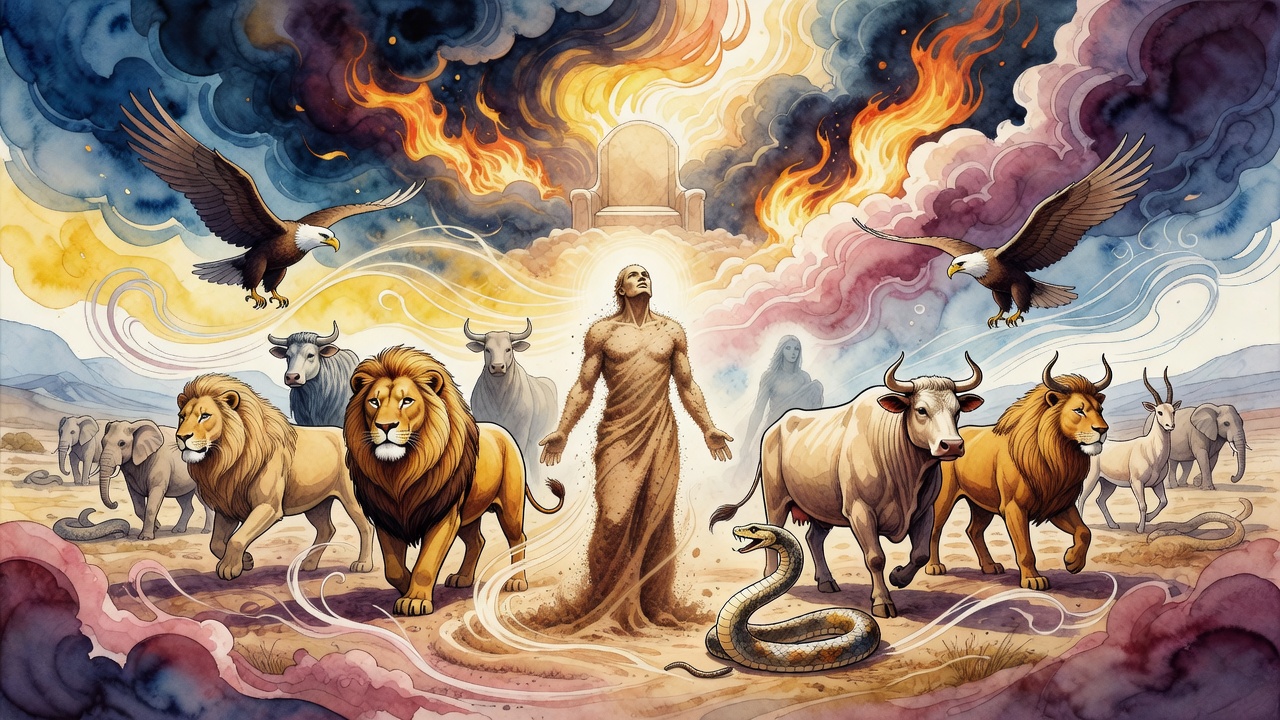
Adam named the animals. Each name found its creature. No name found his match. The parade ended and the lack stood clearer than before, as if the beasts had been a lesson in contrast.

Sleep, Side, and a Second Face

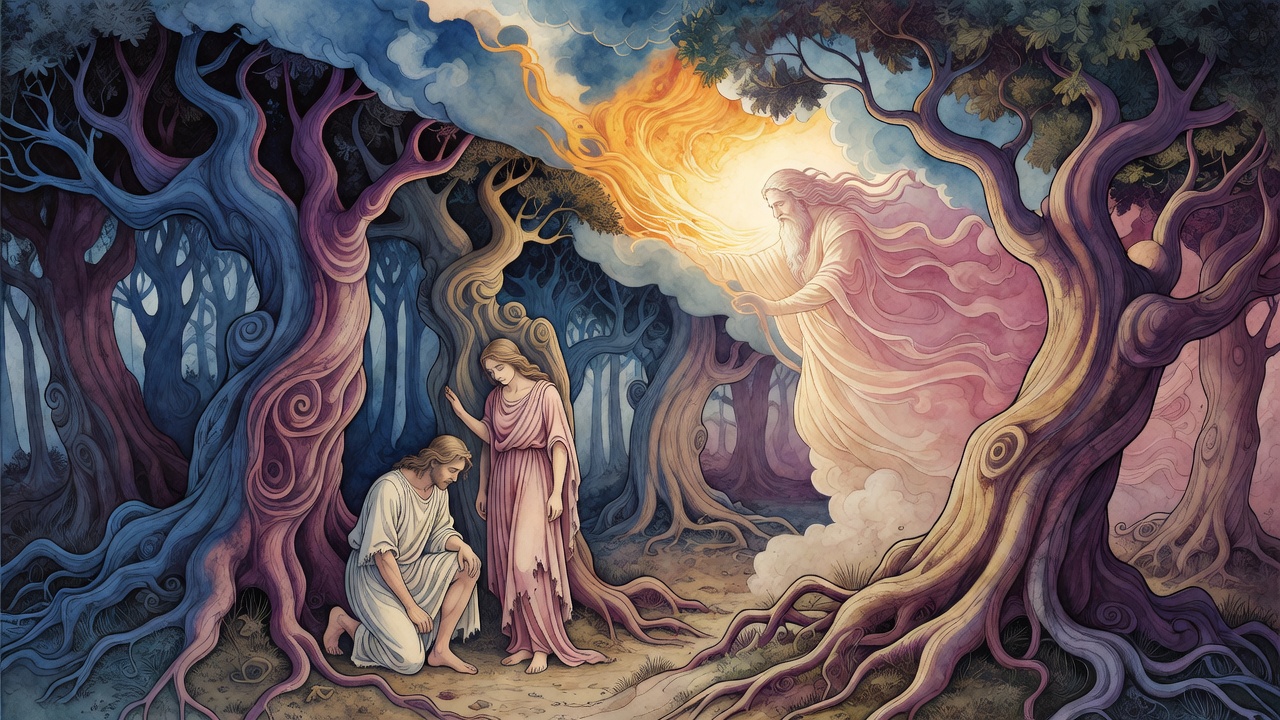
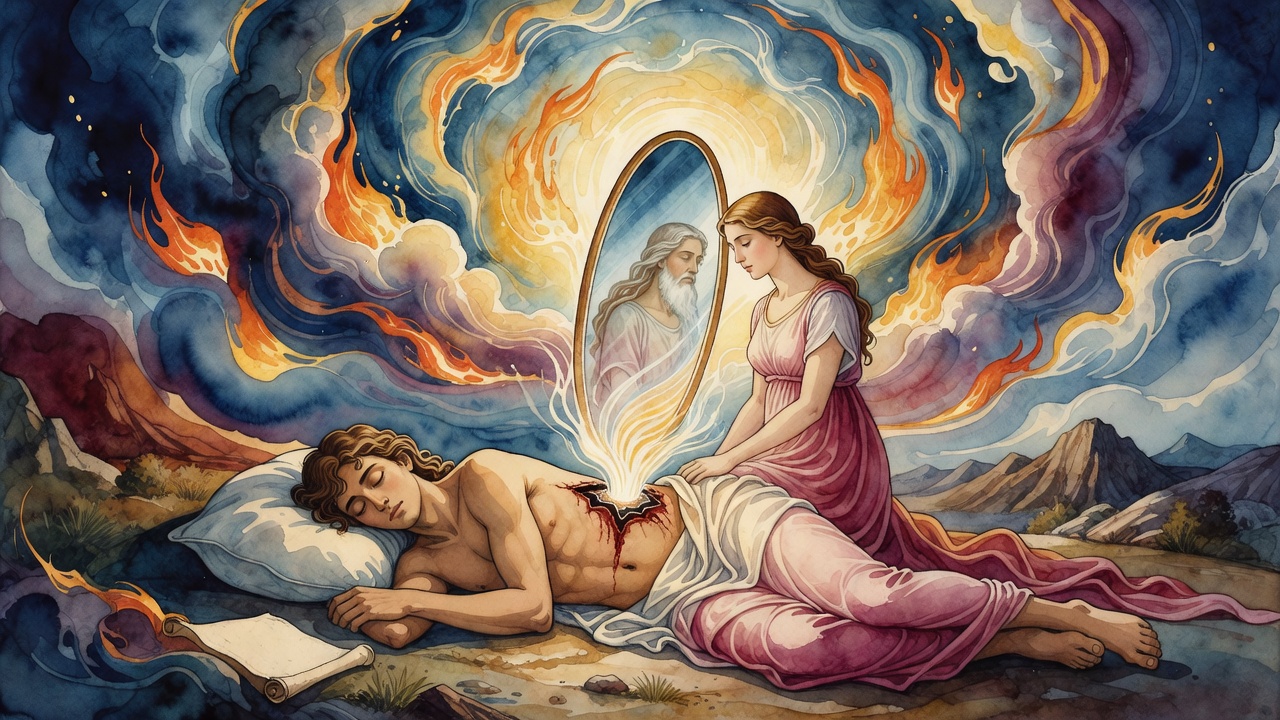
God cast a deep sleep. From the side came bone and flesh reshaped into Eve. When Adam woke, the breath that had entered his face now looked back at him from another face. Recognition is the first poetry: bone of my bones, flesh of my flesh. The help opposite him was not a tool and not a shadow. She was a second center of sense and reason, another temple of breath standing upright in the same light.

Now the garden could hold dialogue. Command could be heard by two. Desire and duty could be argued. The not-good had been answered without canceling the first breath. Adam did not lose the face-life he had received. He gained a partner who shared its dignity.

Why the Face Still Matters

Later generations would cover faces in shame, paint them in joy, turn them toward the Temple in prayer. The first face was a landing place for divine breath. To strike a face is to strike near that old gift. To ignore a face is to treat a temple like a wall.

Eve's arrival did not demote the breath. It completed the condition under which breath can become community. Alone, Adam was a wonder unfinished. Together, man and woman could fill the charge to be fruitful, to tend, to refuse the wrong tree or fail it together.

The Garden Holds Both Gifts

Breath in the face. A partner from the side. One gift makes a living soul. The other makes a living household. The story refuses to treat either as optional decoration. Without breath, dust stays dust. Without the opposite help, breath stays a solitary flame in a large, quiet orchard.

Evening came. Two faces turned toward the same trees. The not-good had become a shared world, and the first human words of kinship still hung in the air like a blessing neither of them had invented.

Names Before Partnership

Adam's first work after the breath was language. Creatures filed past under the trees, and each received a sound that fit its gait and hunger. The work was royal and lonely. Every correct name proved he could think. Every correct name also proved no creature answered him as equal. Reason without a peer becomes a monologue in a beautiful prison.

God watched the parade end and did not call the experiment a failure. He called the condition not good and moved to the next act of making. The sleep that followed was not punishment. It was surgery and gift. Adam lost a rib and gained a world that could argue back. When he woke, the face opposite his was not a beast he had named. It was someone who could name with him.

In later ages, when humans hide the face or strike the face, they touch the old landing strip of divine breath. Philo's insistence on the head as a temple of reason is not Greek costume on Torah. It is a Jewish philosopher refusing to let the human become only appetite. Breath, face, partner, speech. The garden's design needs all four or the image goes dim.

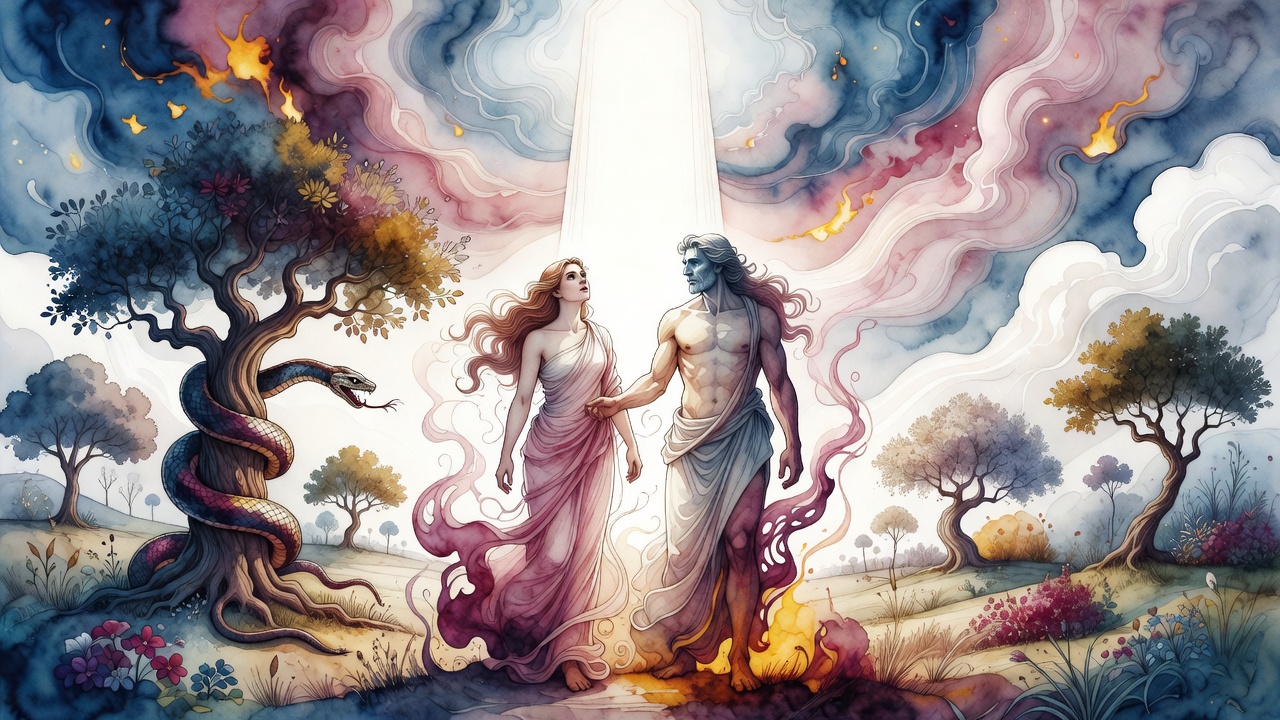
Evening light slid between the trees and found two faces instead of one. The breath that had entered dust now had a conversation partner. Commands would be heard twice. Temptation, when it came, would have two wills to persuade. The design that called aloneness not good had already named the risk and the gift of plurality inside a single garden.

Philo's double focus remains practical. Guard the face where life shows. Guard the bond that keeps the living soul from becoming a solitary king of beasts. Without both, the image frays into clever appetite or mute loneliness, and neither is what the first Friday called very good.


← All myths

From the tradition

Sources

2 sources

The texts behind this telling. Some cards carry a translation of the source; others are our own retelling of it, and each card says which. Every card links out to the original.

The Midrash of Philo 7:8The Midrash of Philo

Retold in our words. Read the original at the link below.The Works of Philo Judaeus, trans. C. D. Yonge, London, H. G. Bohn, 1854-1890 · Public Domain

(Genesis 2:7). It’s such a simple phrase, yet it's pregnant with meaning. The Midrash (rabbinic interpretive commentary), that interplay of Jewish storytelling and interpretation, wrestles with this very question.

Why the face? Why did God specifically breathe into his face?

Philo, in his own unique way, gives us a couple of answers to chew on. First, he argues that life itself is the most crucial part of the body. everything else is just scaffolding, a foundation built to support that spark of life. Like a pedestal supporting a statue, the body exists to house and express the life within. And where does this life seem to center itself? The face! It's the seat of our senses, the window to our soul.

There's more. Philo goes on to say that humanity wasn't just given a soul, but a rational soul. Our capacity for reason, for thought, sets us apart. And where does reason reside? In the head, of course! As Philo notes, some writers have even called the head the "temple of reason."

So, breathing into the face wasn’t just about animating a body. It was about bestowing upon humanity the very essence of life and the gift of reason. God wasn't just creating a being; He was creating a being capable of thought, of connection, of understanding.

What does it mean to carry that divine breath within us? Are we living up to the potential of that gift? Are we using our reason to build a better world, to connect with each other, to truly live?

Full source
The Midrash of Philo 18:1The Midrash of Philo

Retold in our words. Read the original at the link below.The Works of Philo Judaeus, trans. C. D. Yonge, London, H. G. Bohn, 1854-1890 · Public Domain

The Midrash of Philo asks: Why does God say, "It is not good for man to be alone; let us make him a help meet for him"? (Genesis 2:18).

The source holds the question. It does not invent Eve's formation in this line.

Full source