Noah Came Off the Ark Spitting Blood and Rome Could Not Erase Circumcision
Bereshit Rabbah shows Noah spitting blood in the ark's darkness while cold ate through him, then turns to the covenant Rome's edicts could never undo.
Table of Contents
 Click for full size
The Survivor Who Was Not Refreshed
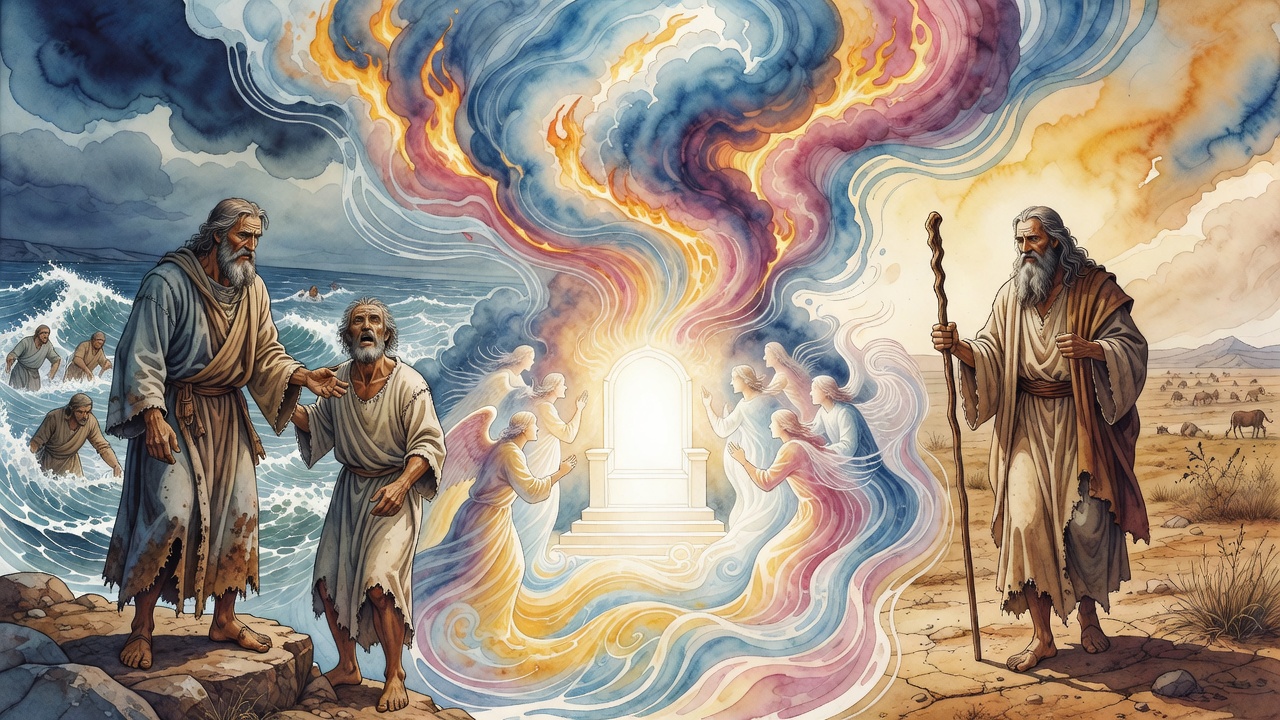
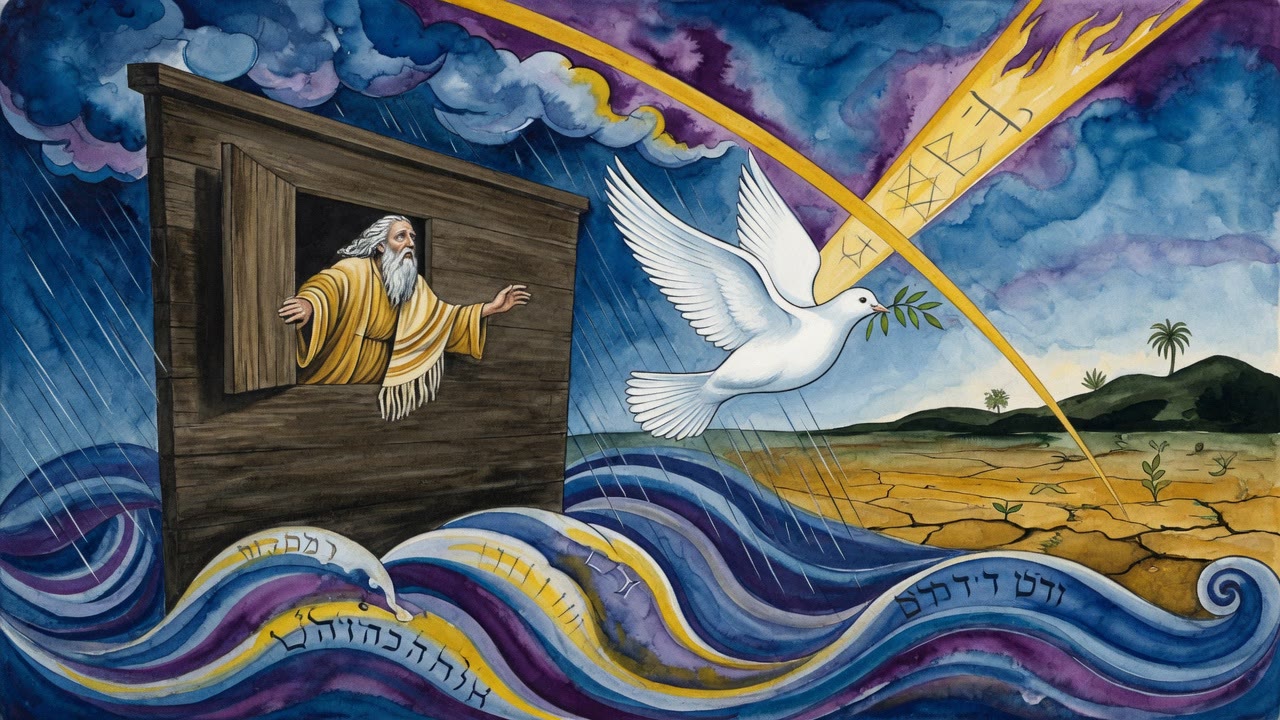
The dove had come back with an olive branch. The waters had receded. The ramp came down and Noah walked off the ark into a world that had no one else in it.
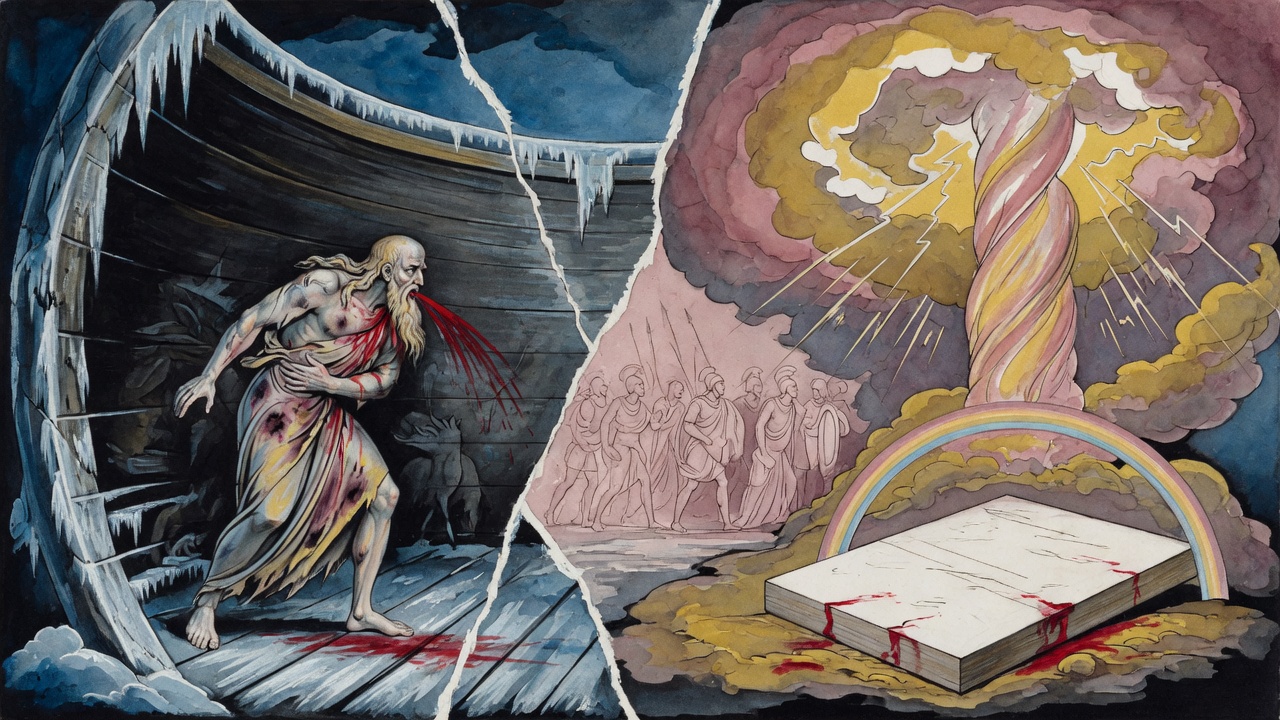
He came off groaning. He spat blood.
This is not the image most readers carry of Noah after the flood. Bereshit Rabbah built it from a single Hebrew word. Genesis 7:23 says that only Noah remained, using the exclusionary particle akh. Rabbi Huna, citing Rabbi Yosei, locked onto that word. In Hebrew grammar, akh cuts something away from what surrounds it. It says: this, but diminished. Only Noah remained, but diminished. Not Noah triumphant. Noah minus something essential.
The midrash spelled out what had been subtracted. Inside the ark, with no sun, no dry land, and no warmth, Noah had been groaning for months. The cold of a world submerged had worked through him. The animals he fed around the clock had been eating his energy along with their rations. He had coughed his lungs through a year of perpetual damp and come out the other side with the injury written in his chest. A survivor, yes. But a survivor who arrived wrecked.
The Height of the Water and the Precision of the Kill
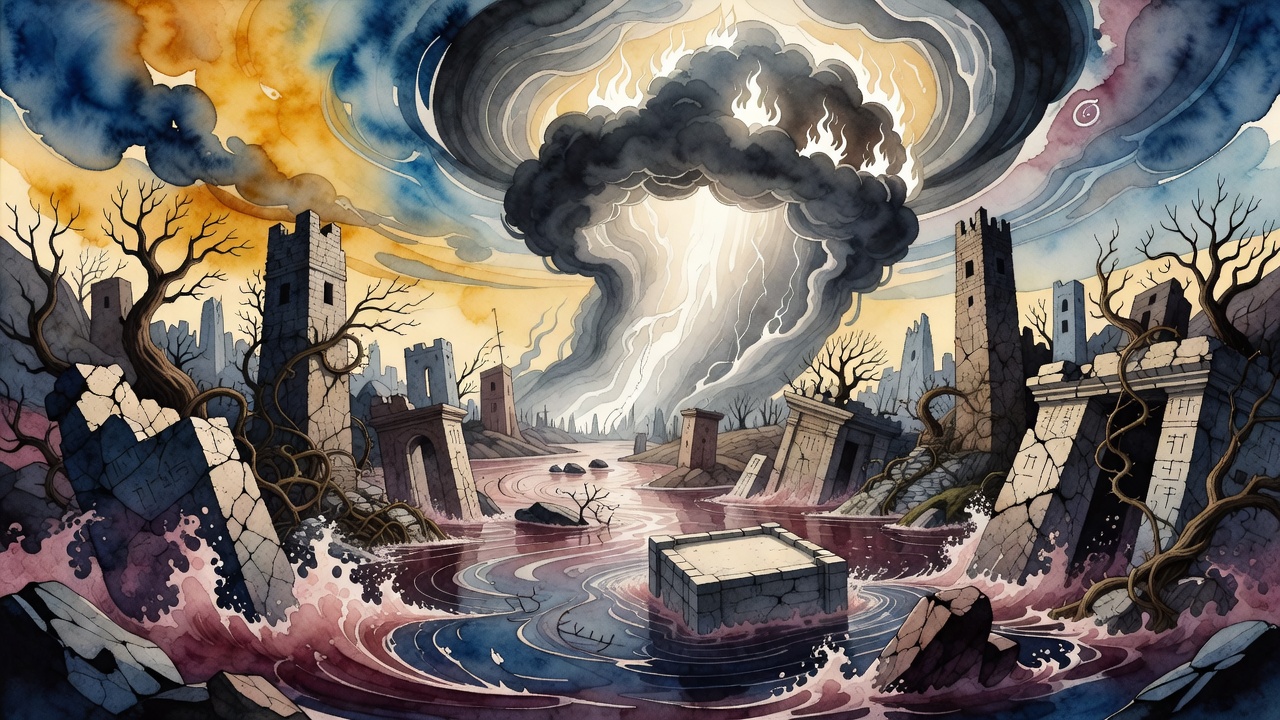
The rabbis did not agree on how high the floodwaters had risen, but they agreed that the height was not metaphor.
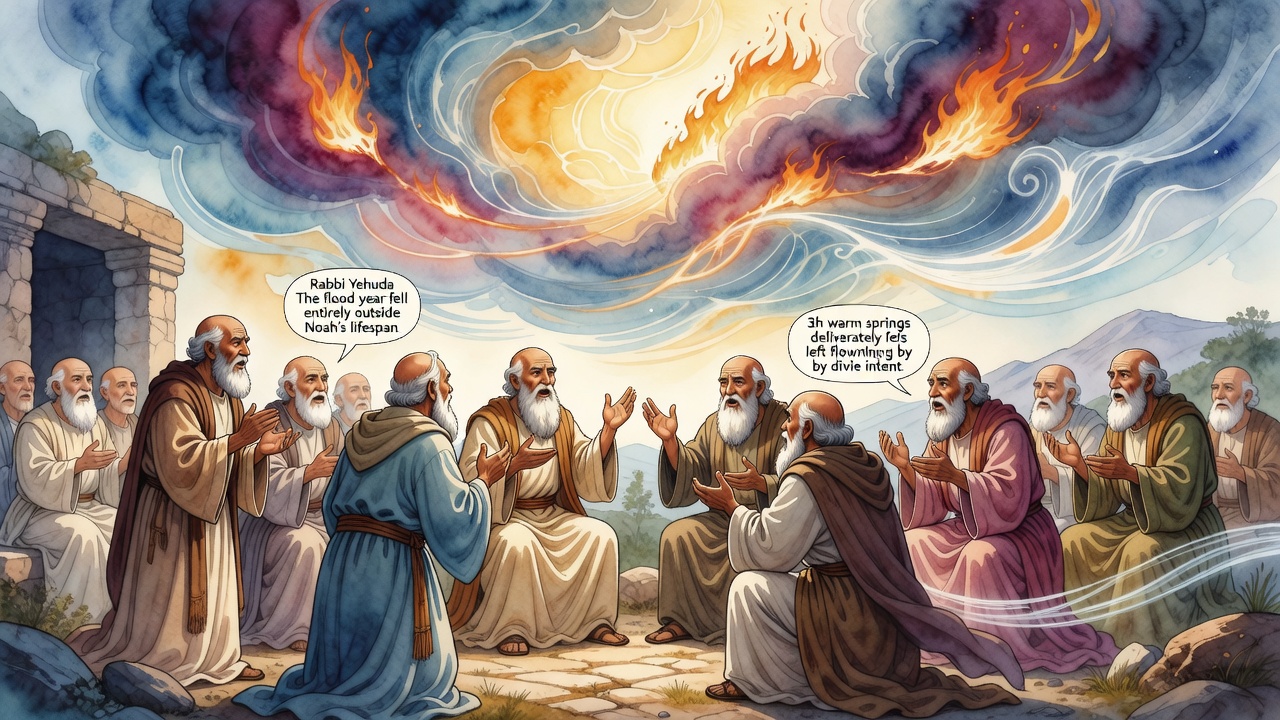
Rabbi Yehuda proposed a miraculous precision. Fifteen cubits above every mountain peak, and fifteen cubits filling every valley, the surface of the water conforming to the landscape beneath it like a hand pressed over uneven ground. The ocean did not simply rise to a flat line. It shaped itself to the earth's contours, measuring the distance above every peak with equal exactness.
Rabbi Nehemya argued for the simpler horror. The water reached fifteen cubits above the highest mountain. What that meant for the valleys was unspecified and enormous, a depth that could not be calculated from the surface down. The peaks were fifteen cubits under. Everything below the peaks was drowned to whatever distance the mathematics demanded.
Either way, nothing on the surface of the earth survived. The precision, whether elegant or brutal, was total.
The Soul With Three Names
A different section of Bereshit Rabbah, drawn from its reading of the circumcision covenant in Genesis 17, turned from the flood to the mark on the body that distinguished those inside the covenant from those outside it. The verse was Genesis 17:14, the decree that an uncircumcised male who does not circumcise shall be cut off from his people.
Rabbi Hagai arrived with a puzzle. The verse says uncircumcised male, as if there could be an uncircumcised female. Why specify male? His answer was about precision and location. The covenant mark must be placed at the part of the body where the distinction between male and female is unmistakably clear. The specification was not exclusionary. It was anatomical, establishing that the covenant was written where it could not be misread.
Rabbi Shmuel bar Nahman added a different weight to the same verse. He traced what happens to a soul that rejects the covenant. Such a soul, he said, carries three names: one it is called in this world, one it is called at death, one it is called after judgment. The progression through three names was a descent, from the name given in community, through the name received at the threshold, to the name assigned when the full accounting is complete.
What the Flood Could Not Touch and What Rome Tried To
The pairing of these two passages in Bereshit Rabbah was not incidental. The flood erased everything on the surface of the earth. Noah survived it but came off the ark diminished, his body carrying the damage of what had tried to erase him along with everyone else. The covenant of circumcision was the mark that survived everything the world could send against it.
In the centuries when Bereshit Rabbah was being compiled, Roman edicts had at various points forbidden circumcision entirely. The rabbis who assembled these passages knew what it meant to carry a mark on the body that the surrounding power wanted gone. Noah's damaged survival from the flood and the three-named soul that faced judgment for rejecting the covenant were, in the world of fifth-century Palestine, the same story from two different angles: what survives when everything else is drowned, and what is lost when the mark that survives is refused.
← All myths