Noah's Flood Year Did Not Count and Three Warm Springs Were Left Open
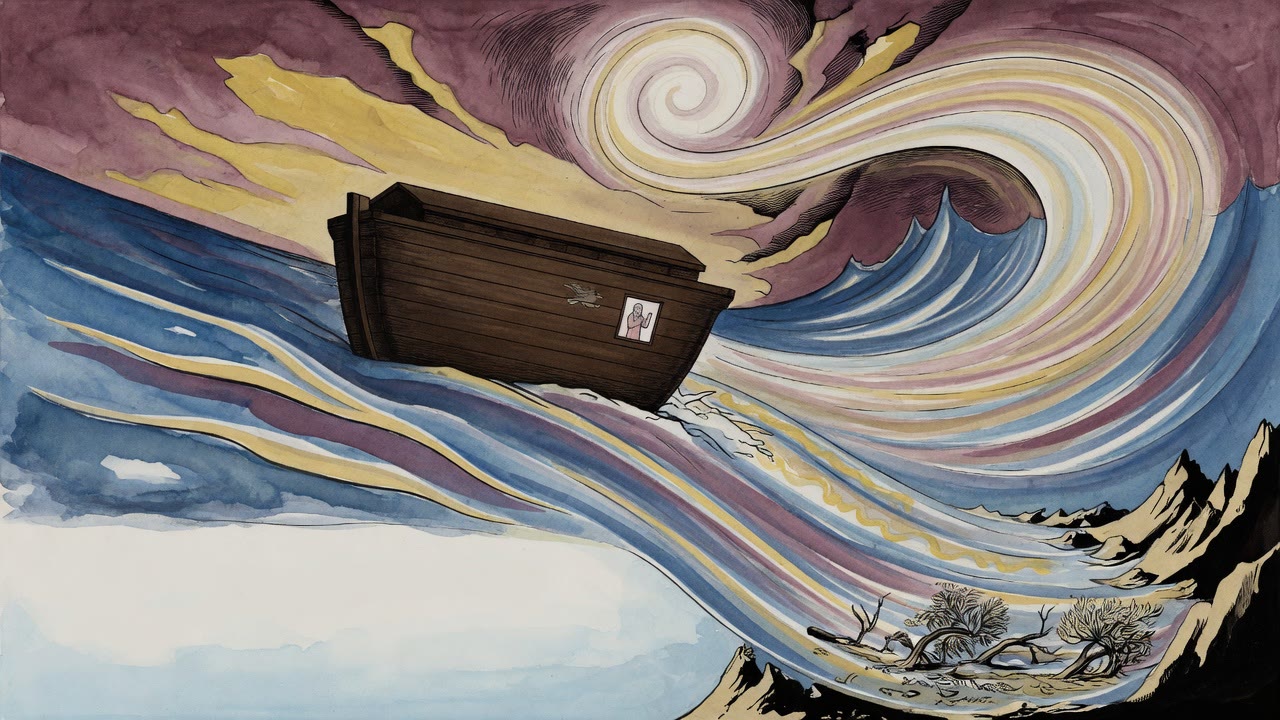
Noah stood in the doorway until the water reached his ankles. The year inside the box was taken off his life. Three hot springs never closed.
Table of Contents
 Click for full size
Water Reached His Ankles
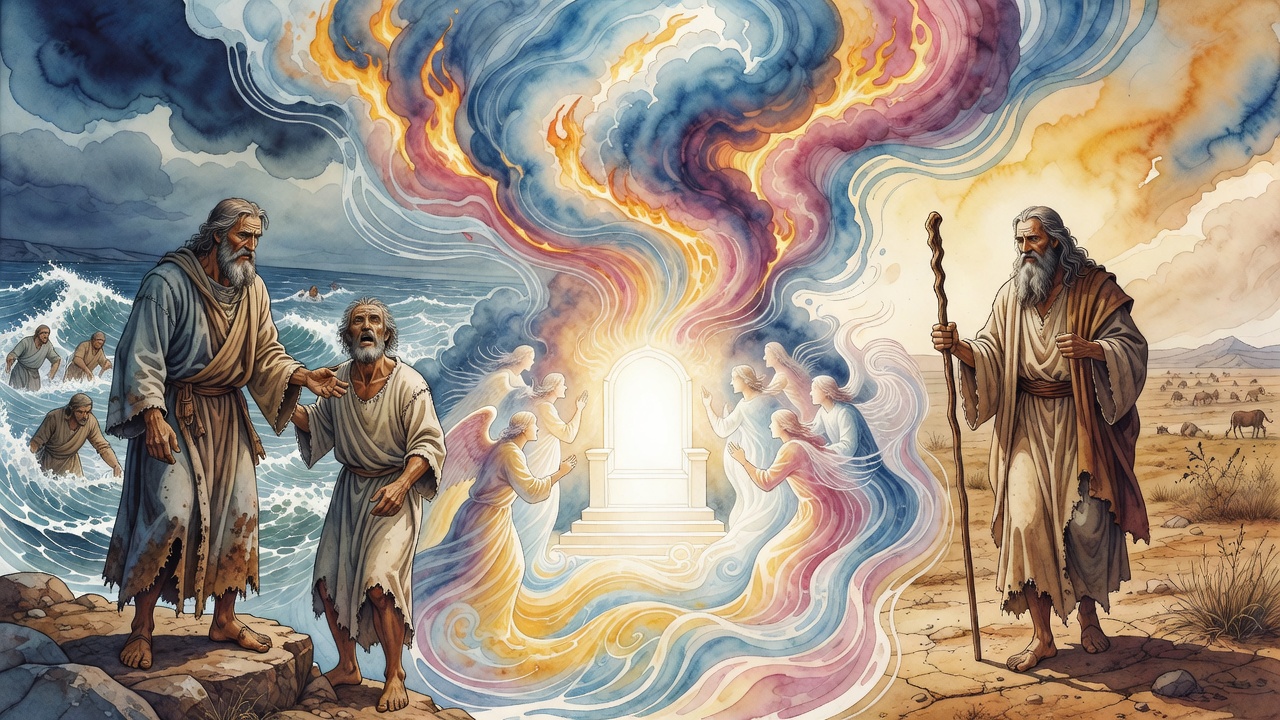
Noah stood in the doorway of the ark and did not go in.
The animals were already inside. His wife was inside. His sons and his sons' wives were inside. The door stood open on a world that had not yet drowned, and Noah kept his feet on the dry threshold as if dry ground still meant something.
The rain began. Water ran off the eaves and pooled at the sill. It climbed the first step. It climbed the second. It found his ankles, cold, and only then did he move. He stepped in. The door shut behind him. If the water had not touched him, he would have stood there longer.
He was six hundred years old. The year that started at his ankles would not be added to the rest.
The Year That Did Not Count
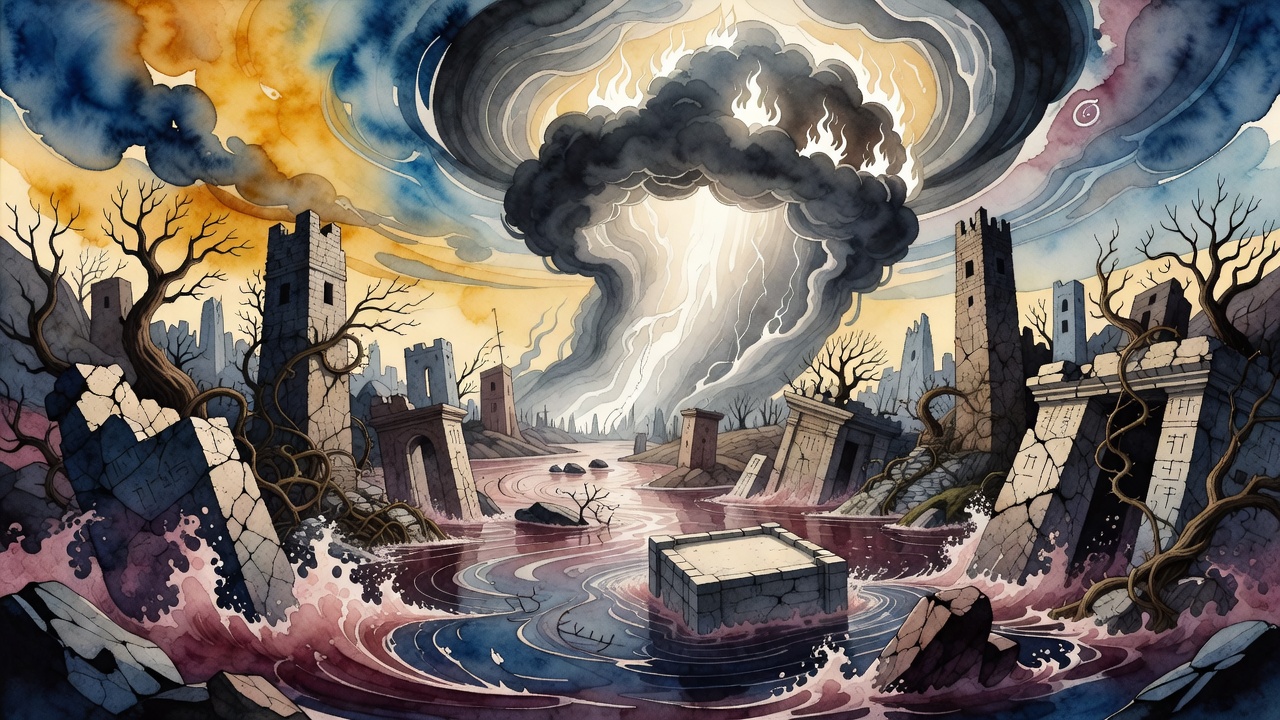
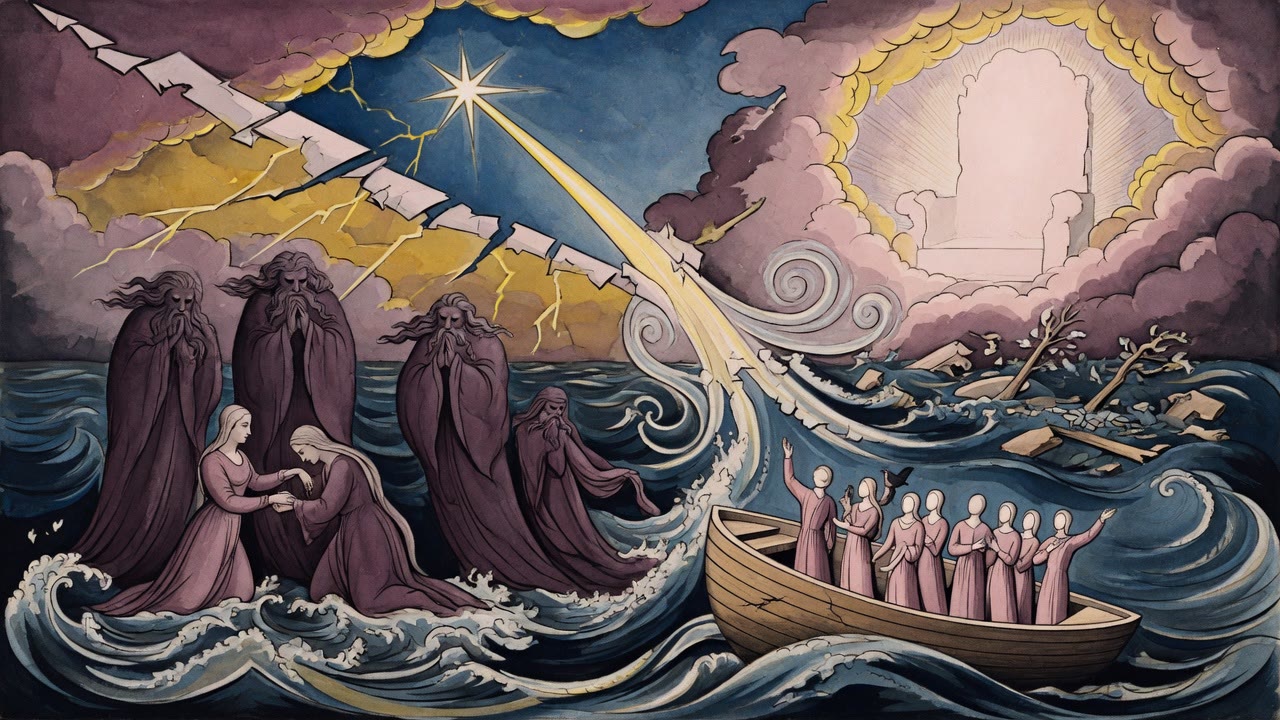
The rain did not let up. Forty days of it. The boards groaned. Noah pressed his palm flat to the wood and felt the river testing the pitch he had smeared himself. Outside, every landscape he had ever walked was going under. Inside, eight people and a floating zoo waited in the dark and the stink and the noise of water hitting the roof.
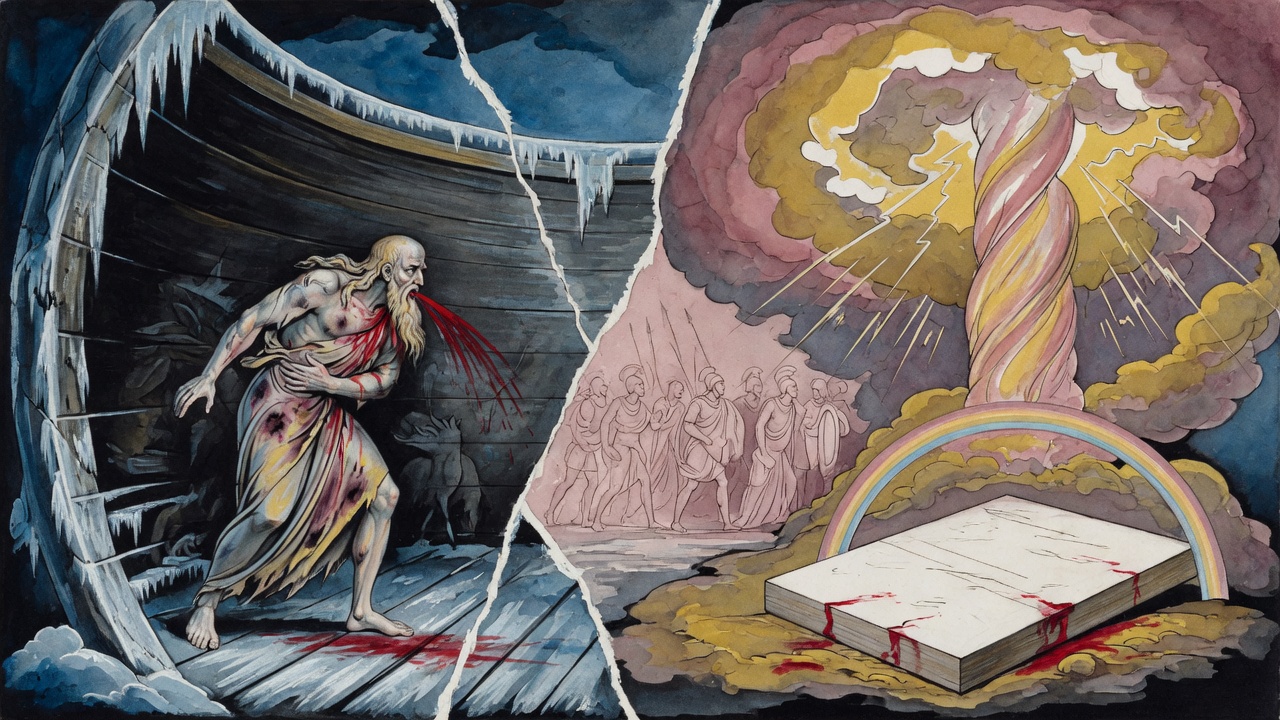
A man in a wooden box while the world dissolves is not living a year. He is holding still. Food is measured. Air is measured. Time is something that happens to other people, people who still have ground.
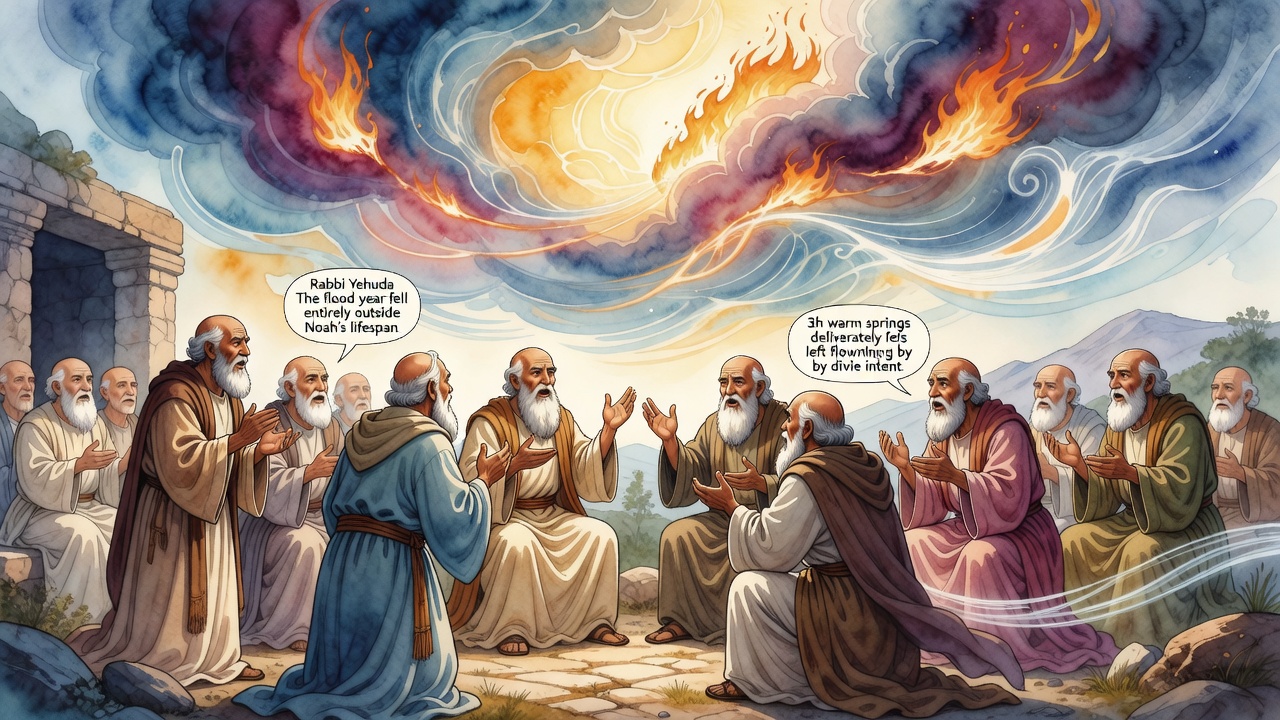
When the count of his life was later written down, the arithmetic refused to close. Six hundred when the rain started. Three hundred and fifty after the waters withdrew. Nine hundred and fifty in all. The flood year is the missing one. It passed. The sun and the moon kept their own count. Noah's years skipped it, as if a year spent sealed in a box is not a year a man gets to keep.
The Ark Sat Like a Ship in Port
For those first forty days the ark did not ride. It sat. The hull was in the water the way a ship sits in port, heavy, touching the bottom, going nowhere. Noah felt it. Every jolt was mud, not wave. The box was a building with a flood in the yard.
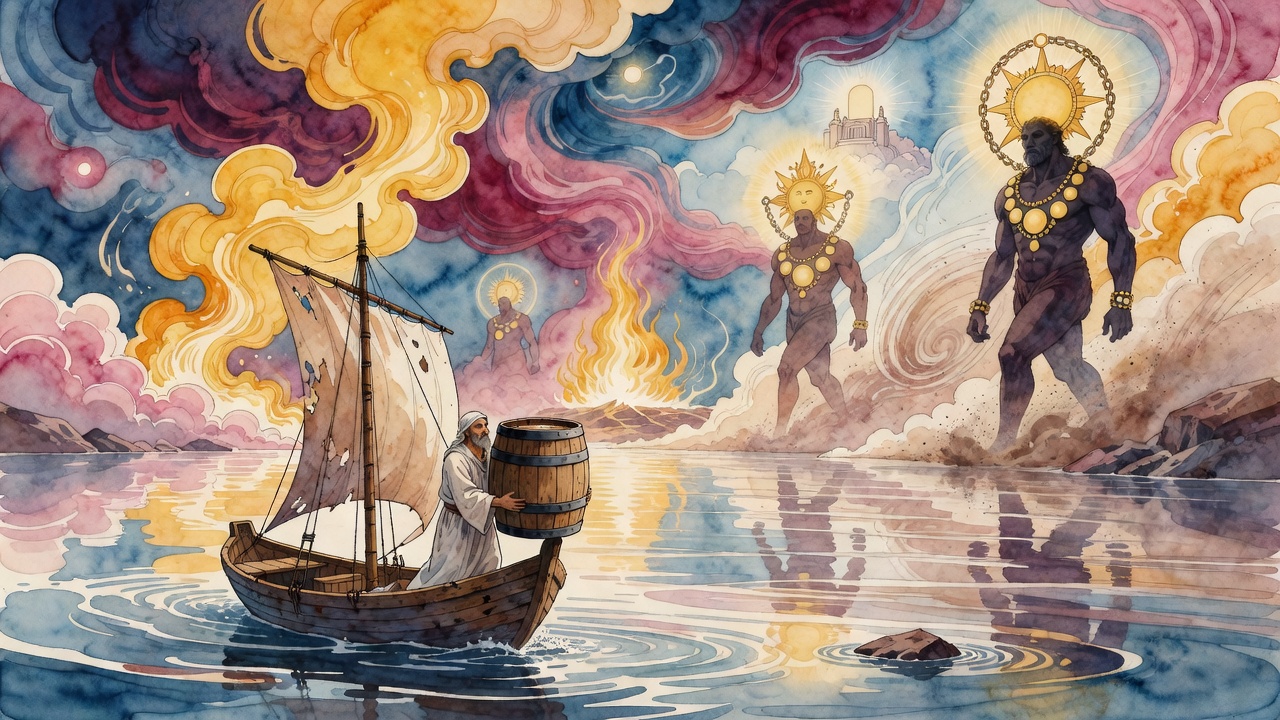
Then the water increased and lifted it. The keel came free. The ark rose until it was eleven cubits above the highest mountain, a measure taken from the verse that says the waters prevailed fifteen cubits upward and the mountains were covered (Genesis 7:20). After that it rode light, as if it had been set on two planks, the way a small boat crosses from Tiberias to Susita on the Kinneret, a short hop over water with no weight in it.
The rains stopped. The ark floated on the surface of a world with no surface visible. For another hundred and fifty days the water held. No mountains. No coastlines. Just water and sky and the box in between. Then God sent a wind, and the waters began to recede, and the hull found mud again, this time the mud of Ararat, in the seventh month, on the seventeenth day.
Three Springs Were Left Open
When God closed the floodgates, He did not close all of them.
On the day the flood began, all the wellsprings of the great deep were breached. Every one. When the damming came, the verse dropped the word "all." The wellsprings of the deep were stopped. Not all of them. Three warm springs kept running: the hot spring of Tiberias on the Sea of Galilee, Hamat Gader in the east, and the cave at Banyas in the north. Steam over mud. Heat in a cold world.
Noah came down the ramp onto ground that still remembered water. He built an altar. He lived three hundred and fifty years after that, and those years were counted. The year in the box was not. The sun and the moon had kept it for the calendar of the world. His own tally had no slot for a year he had not lived so much as survived.
The three springs were still flowing when his children's children went to bathe. They are still the hot places. God had killed almost everything, and then He had left three mouths of heat in the land, on purpose, because a world coming out of a year of water would need warm ground to recover beside.
← All myths