The Sea That Refused to Drown the Flood Generation
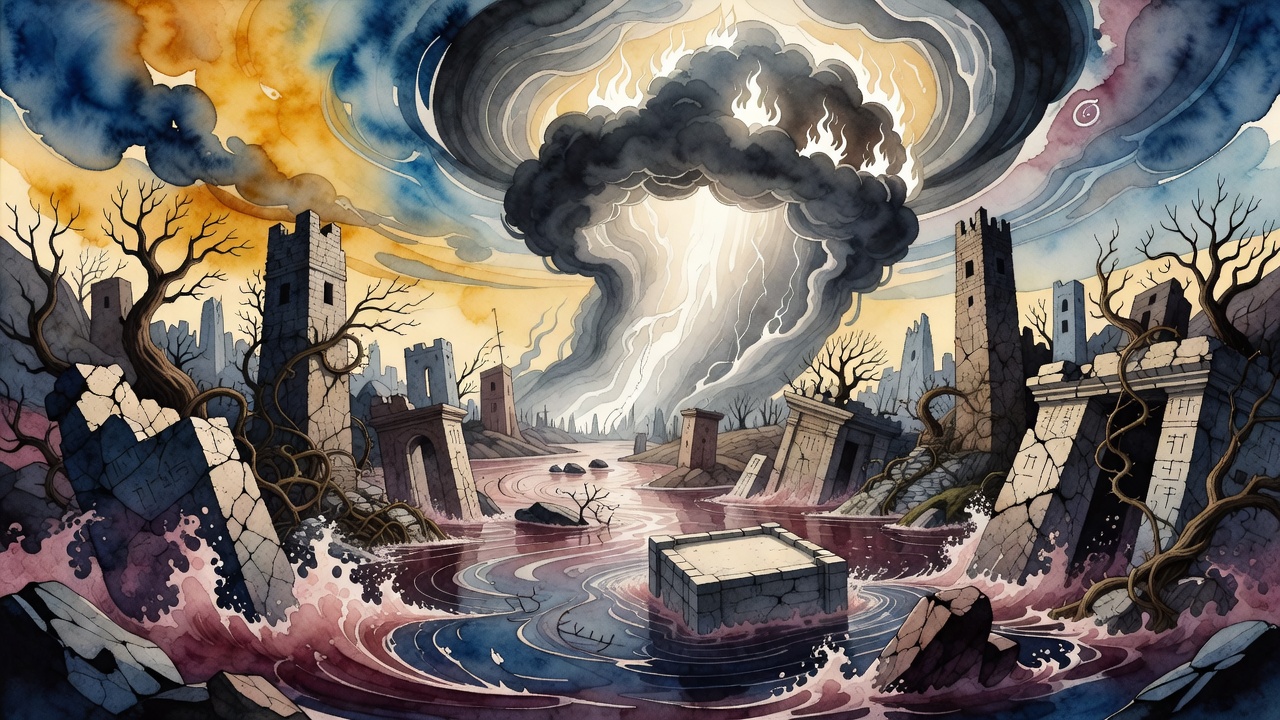
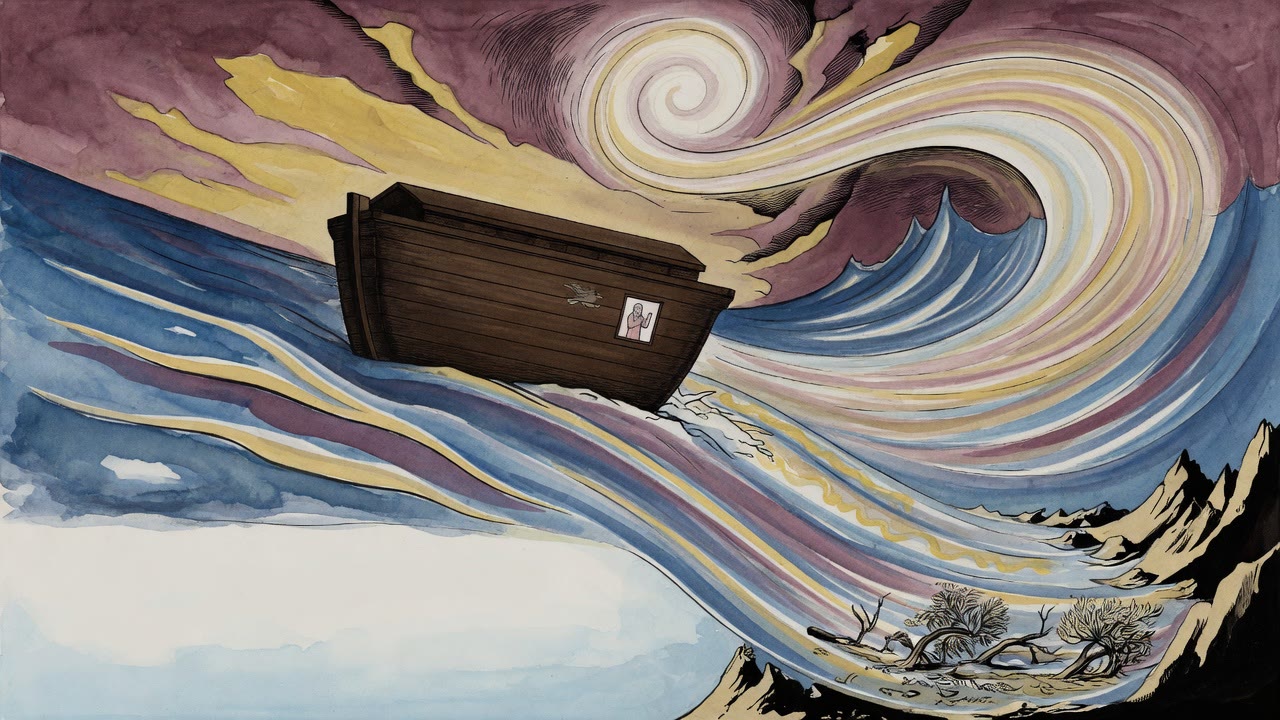
Rabbi Eliezer sails into dead water and carries a barrel of it to Hadrian. The Nefilim wore the sun like jewelry. The flood came down already boiling.
Table of Contents
 Click for full size
A Barrel of Dead Water Carried to Rome
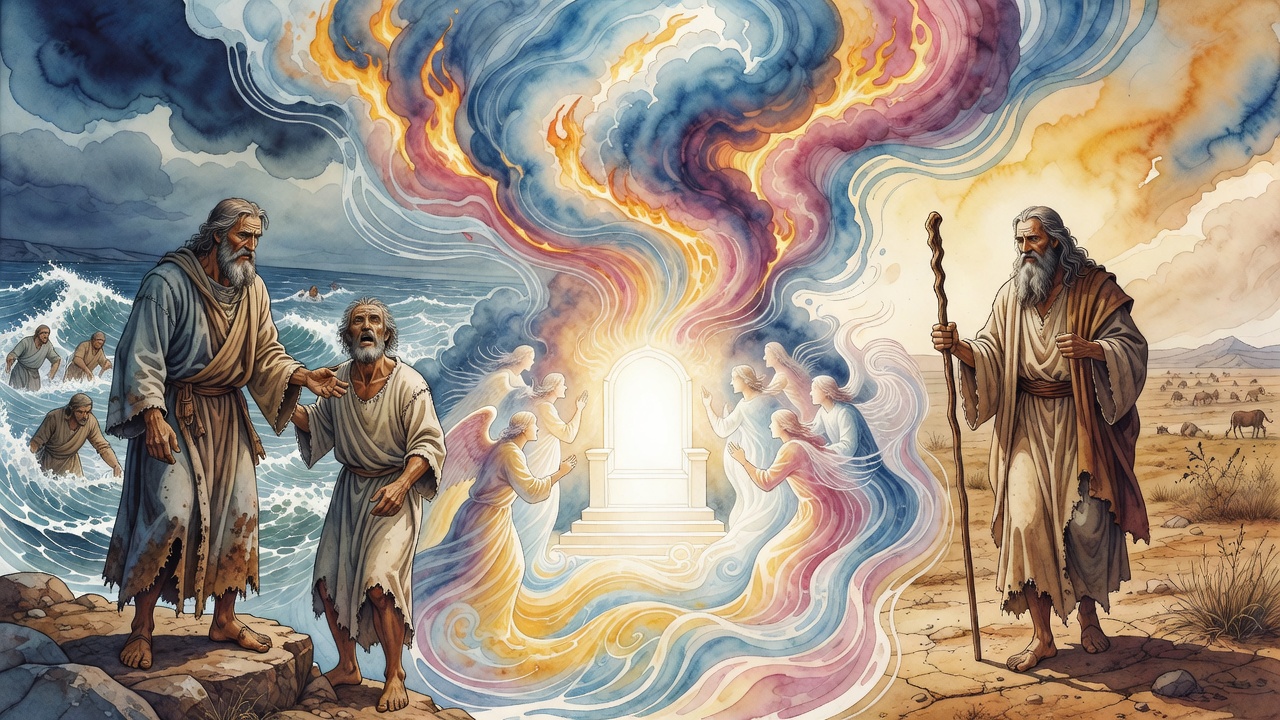
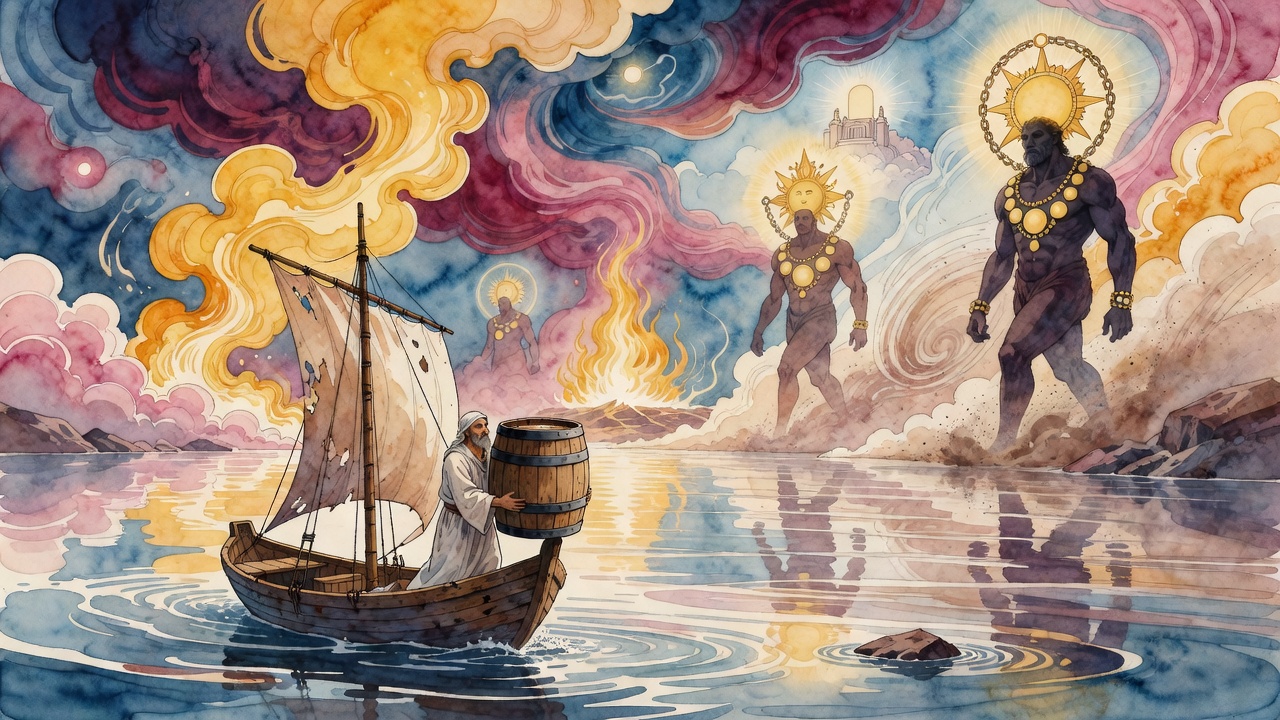
Two of the most famous sages in Jewish memory were out on the Great Sea when their ship drifted into a patch of water that had gone completely still. No current. No swell. Just glass.
Rabbi Eliezer said they had been brought there for a reason. He and Rabbi Yehoshua filled a barrel with the dead water and carried it back to land, and from there to Rome, into the presence of the emperor Hadrian. The same Hadrian who would later flatten Judea, ban Torah study, and plow salt into the ruins. The rabbis poured the strange water into a bowl. Hadrian poured ordinary water into it. The ordinary water vanished into the still water without a ripple.
Hadrian asked the real question. Rivers pour into the sea every day. The Nile, the Euphrates, the Jordan. Year after year. Why does the sea not climb the beach and swallow the cities? The rabbis answered him. Because God built a sea that drinks without filling. The world has limits because God built limits into the world's appetite. The sea was constrained not by physics but by design. And the still water in the barrel was proof. It was the part of the sea that God had designated as stopped.
Giants Who Wore the Sun
The Nefilim were not merely large. The rabbis said they were so large that they reached up and caught the sun like a piece of jewelry. They wore it the way a man wears a medallion. The sun that illuminated the whole earth hung on a giant's neck like an ornament.
These were the same generation that provoked the flood. They had taken creation and worn it like personal property. The sky was not above them, it was at their chest level. The sun was not beyond their reach. What had been set apart as ordered and distant, they had pulled close and domesticated. The flood was the end of a world that had confused scale. Men who wore the sun had forgotten where the boundary ran between themselves and everything else. The waters came to re-establish the boundary from the outside since the Nefilim had refused to maintain it from the inside.
The Twelve-Month Sentence
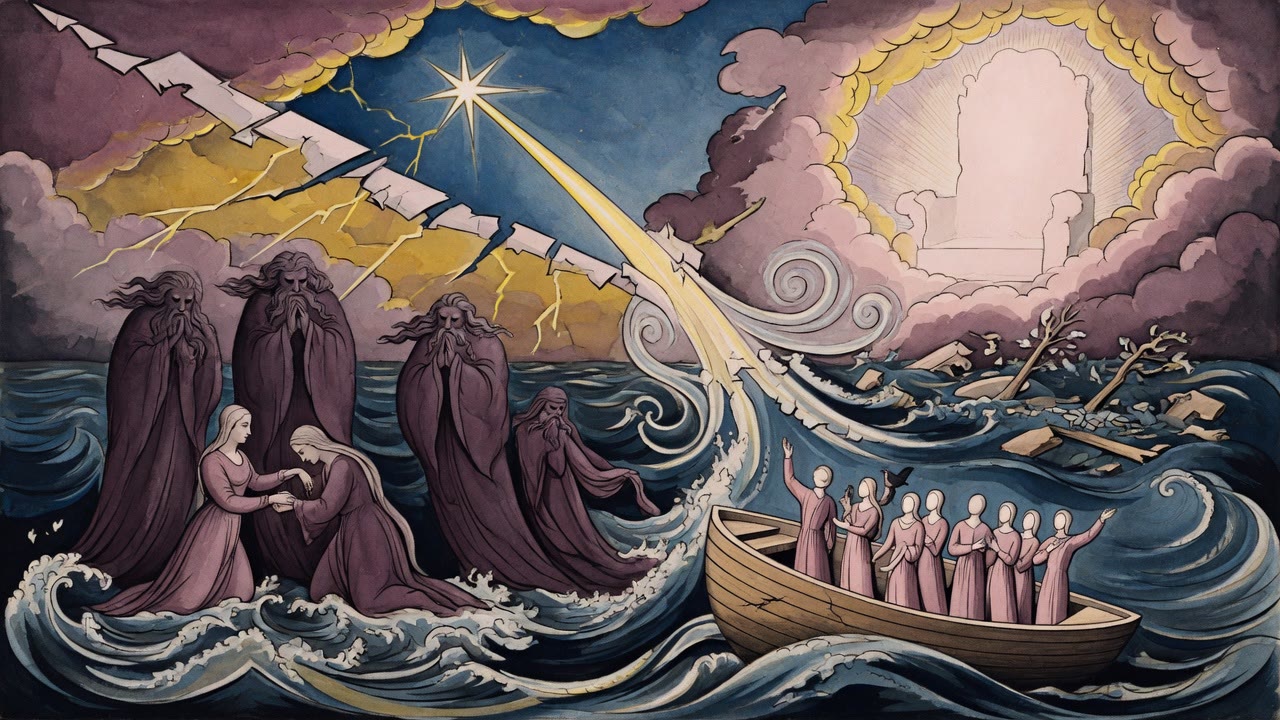
The flood lasted twelve months. Not forty days. Forty days was the duration of the rain. But the water stood on the earth for twelve full months, and the generation that drowned waited in it for all of that time.
The rabbis taught that the water was not cold. God had prepared it in the depths before releasing it. The generation that had made the world uninhabitable for everyone who had not stolen, who had not distorted, was now inhabiting a world of boiling water. The punishment carried the shape of the crime. They had made the world hot with their violence. The water arrived already hot.
Twelve months was the length of the sentence for the wicked in Gehenna (the realm of judgment after death). The rabbis connected the flood to that calendar deliberately. The generation was being judged and sentenced simultaneously. The water was the court and the punishment. Noah's year in the ark was the year the verdict was executed. When the water receded and Noah's foot touched dry ground, the sentence had been served.
Three Views of the Same World
A dead sea that proves divine order. Giants who held the sun like a pendant. A flood boiled from below before it fell from above. Each of the three passages from Bereshit Rabbah tells a different story about the same basic claim: the world before the flood had pushed past every boundary that creation had set for it, and the flood was the world being returned to its own definitions.
The rabbis were not trying to explain the flood as natural disaster or to reduce it to punishment. They were reading it as the restoration of a geometry that the Nefilim and their generation had broken. The still water in the barrel was the part of the sea that was still keeping its original promise. Everything else had been violated. That water, somehow, had held.
← All myths