The Bride Who Beat the Angel of Death at Her Own Wedding
Rabbi Reuben kept the sentence secret for twenty-nine days. On the thirtieth he threw his son a wedding feast and waited for the guest in rags.
Table of Contents
 Click for full size
Thirty Days
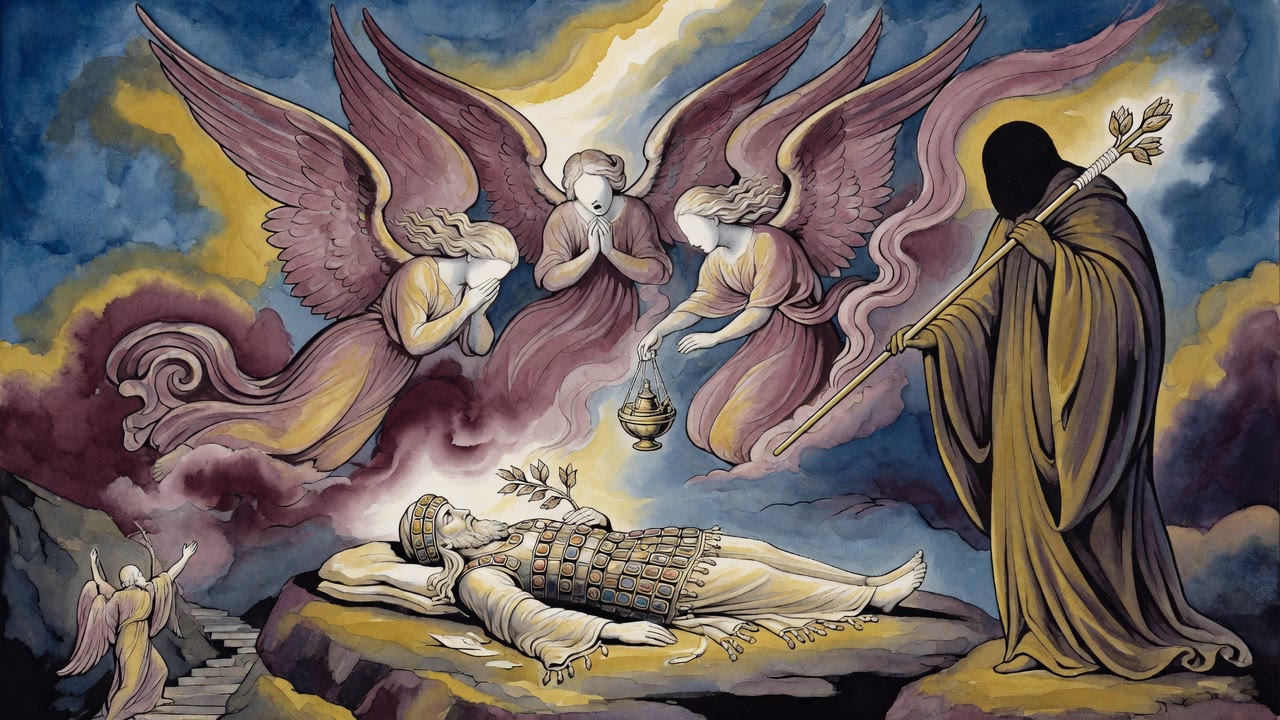
The Angel of Death came to Rabbi Reuben in his own house and told him that his only son was going to die.
Reuben did not argue about the decree. Nobody argues about the decree. What he asked for was a delay of thirty days, so that he could see the boy married first, and the Angel, for reasons the Angel did not explain, agreed to the thirty days.
Then Reuben went out and told no one. Not his wife. Not the boy. He carried the number around with him through the market and the study house while it went down by one every morning, and on the twenty-ninth day he sent word to the bride's family that the wedding would be tomorrow.
The Guest List of a Condemned Man
The house filled. Tables went up in the courtyard, the wine came out, the bride was brought, and Reuben moved among his neighbors accepting congratulations on the last day of his son's life.
Out in the courtyard the bridegroom was stopped by an old man he did not know.
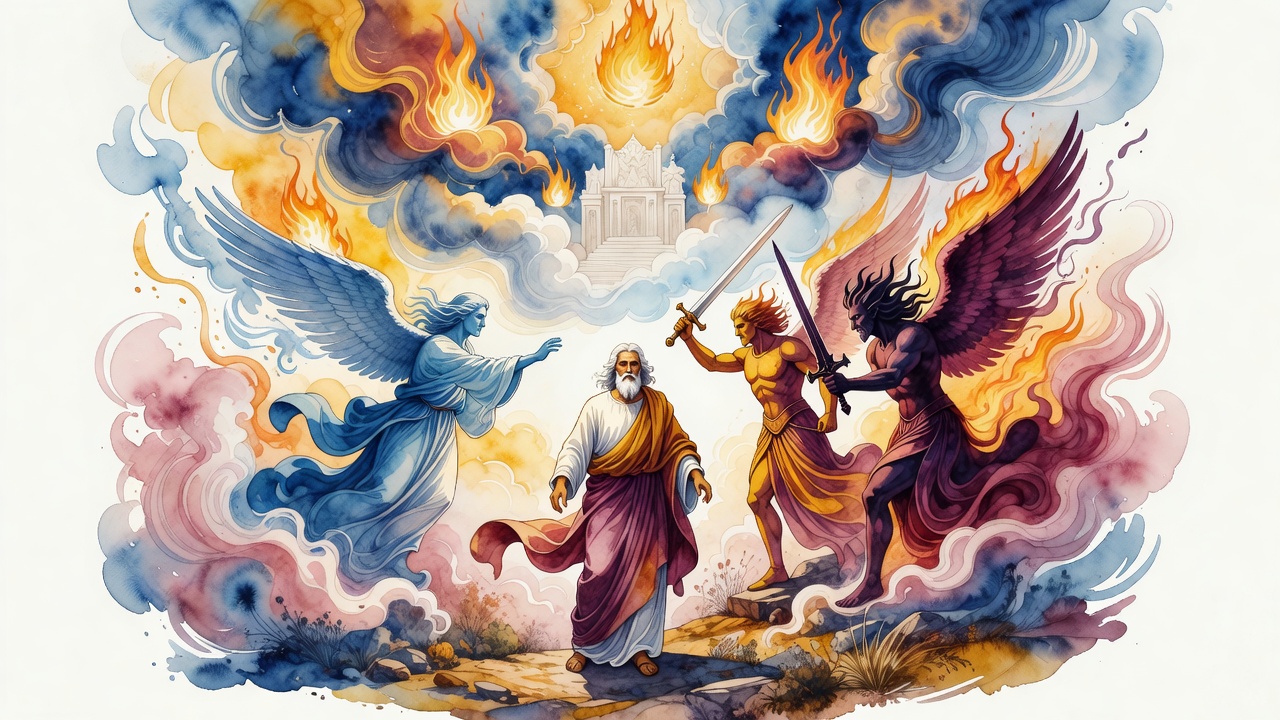
It was Elijah, who tends to arrive on days like that one. He told the young man plainly what his father had been carrying for a month. Tonight, before the feast is over, you are going to die.
The bridegroom stood there in his wedding clothes and thought about it.
"Who can stand against God?" he said. "Am I better than Abraham? Than Isaac, than Jacob? They all had to die."
Elijah liked the answer well enough to give him something for it. A beggar would come to the feast, he said. Filthy, in rags, the kind of man a doorkeeper turns around by the elbow. Let him in. Seat him. And do not simply have food carried to him. Put it in his hands yourself, and press him until he eats and drinks from you.
The Old Man Nobody Wanted at the Table
The beggar came at dusk, exactly as described, and the whole courtyard saw him at once and looked away from him.
There was a reason that shape was standing in Reuben's doorway. Years earlier another old man had come to Reuben's table, and Reuben had gotten up and moved him out of his seat and sent him down to the far end where the poor sat. Nobody in the family had thought about it since. The Angel had.
The bridegroom crossed the courtyard to him.
He walked the beggar to a good seat. He brought him bread with his own hands and stood over him until he took it, poured his wine, filled the cup again, asked him nothing, and served him through the meal in front of the whole town as though the man in rags were the reason for the party.
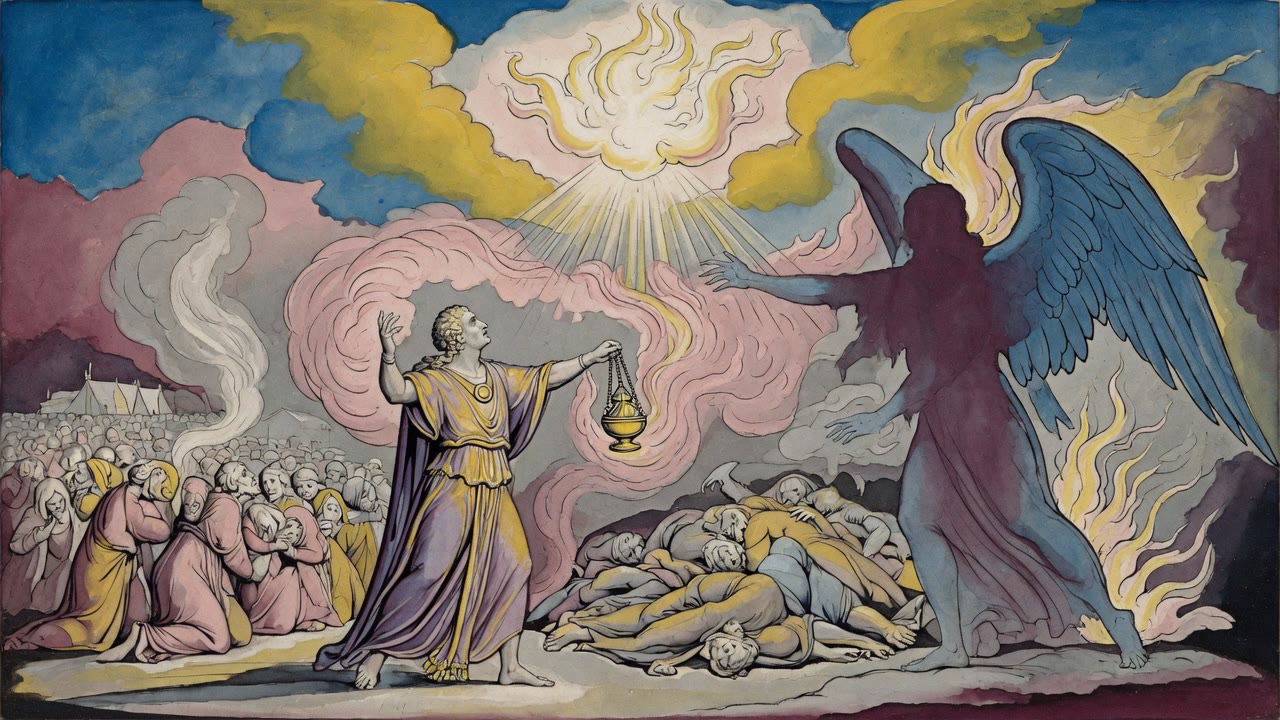
The beggar ate. The beggar drank. Then the beggar stood up, and the room understood what was standing up with him.
The Ones Who Ran
Reuben got there first. Take my years instead of his, he said. Take mine, take all of them, the boy has been married four hours.
Then the boy's mother pushed in front of her husband and offered the same thing.
And then the terrible shape turned toward them both, and whatever they saw in it broke them. The father ran. The mother ran. They went out through their own door and left the courtyard, and every guest went out behind them, and the tables stood in the lamplight with the food still on them.
The bride did not move.
What the Bride Said
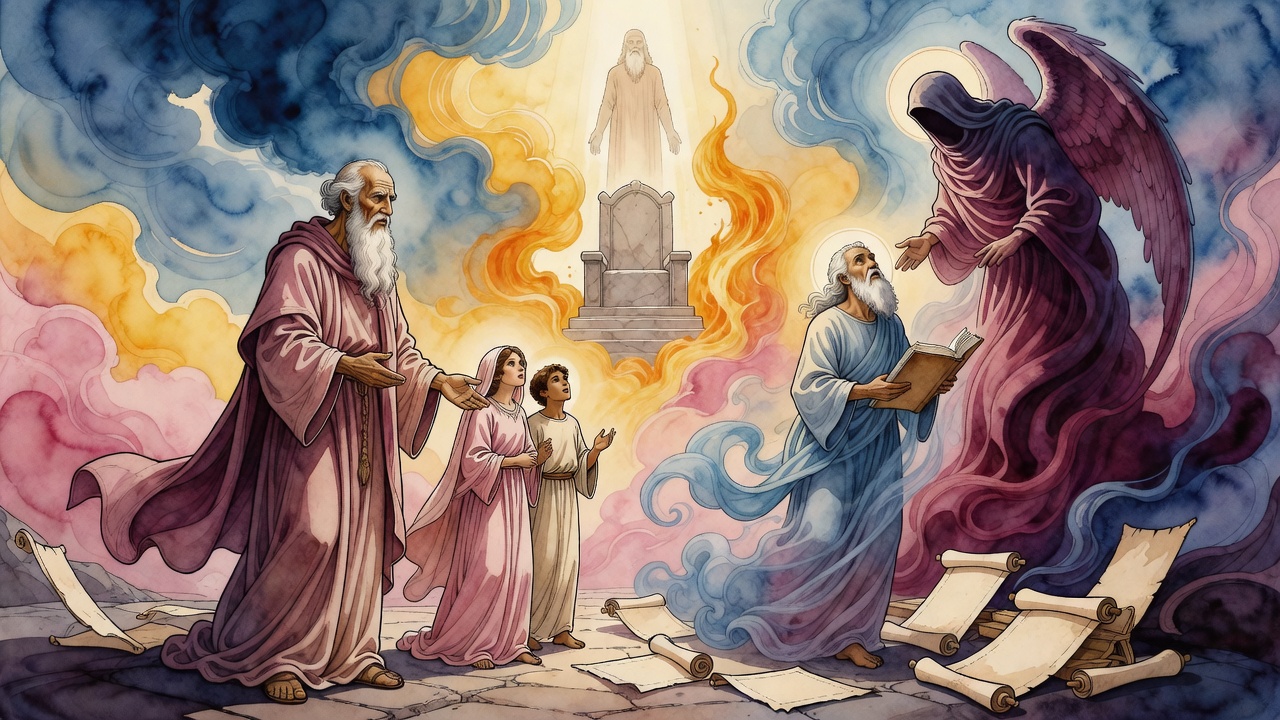
She had been married since that afternoon. She stood between the Angel and her husband and made an argument.
"A man who has just taken a wife does not go out with the army," she said. "He is not sent anywhere. He is not put on any duty. He stays at home a full year and gladdens the woman he married. The law was written for him. Tonight is the first night of that year, and you have come to conscript him out of it."
She was crying while she said it and she did not stop saying it.
The Angel of Death, who had been shown honor at that table all evening by the man he had come to take, listened to her the whole way through. He had no authority to cancel anything. He also did not leave.
The Angel Carried Her Petition Up
He went up to the throne himself and repeated her argument there, word for word, a bride's plea in the mouth of the one who had been sent to make her a widow.
Seventy years were added to the life of Rabbi Reuben's son.
The courtyard was empty by then. The parents were somewhere out in the dark street. Inside, a girl in her wedding clothes stood beside a boy who had been given a lifetime between the fish course and the fruit, and the beggar's cup sat where he had left it, drained to the bottom.
← All myths