The Magician Lifted the Baal Shem Tov's Wagon
On the mill bridge a magician hoists the Baal Shem Tov's wagon into air, while on another road he names a thief's forest nights stop by stop.
Table of Contents
 Click for full size
A Man Who Feels Opposition
The Jews of Medzhybizh wanted the cleric gone. He held power in the city, and the stories remember him as a magician who could feel when someone set will against him the way a skin feels weather before rain. At first the Baal Shem Tov held back. Open pressure would only sharpen the man's sense, like poking a wasp nest for the pleasure of noise. When the trouble became unbearable, the Baal Shem Tov began quietly, intention folded into prayer rather than into public curse. The cleric sensed it anyway. Power that lives by vigilance sleeps lightly.
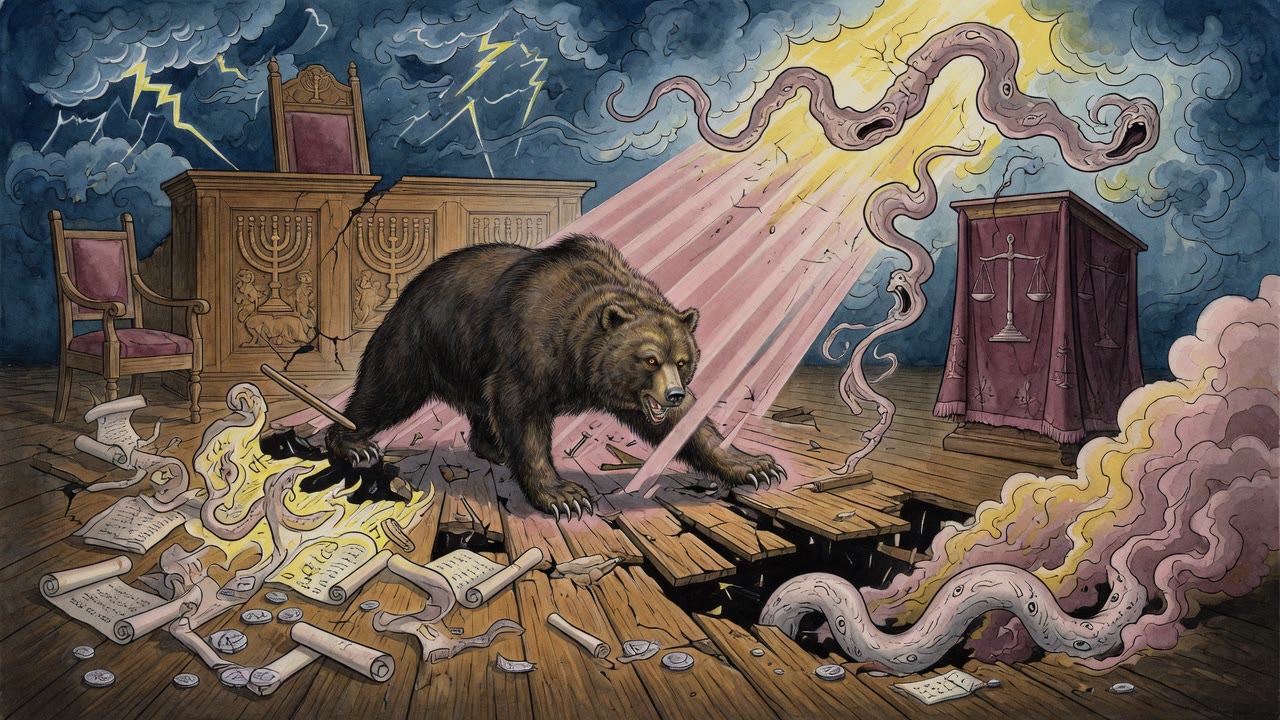
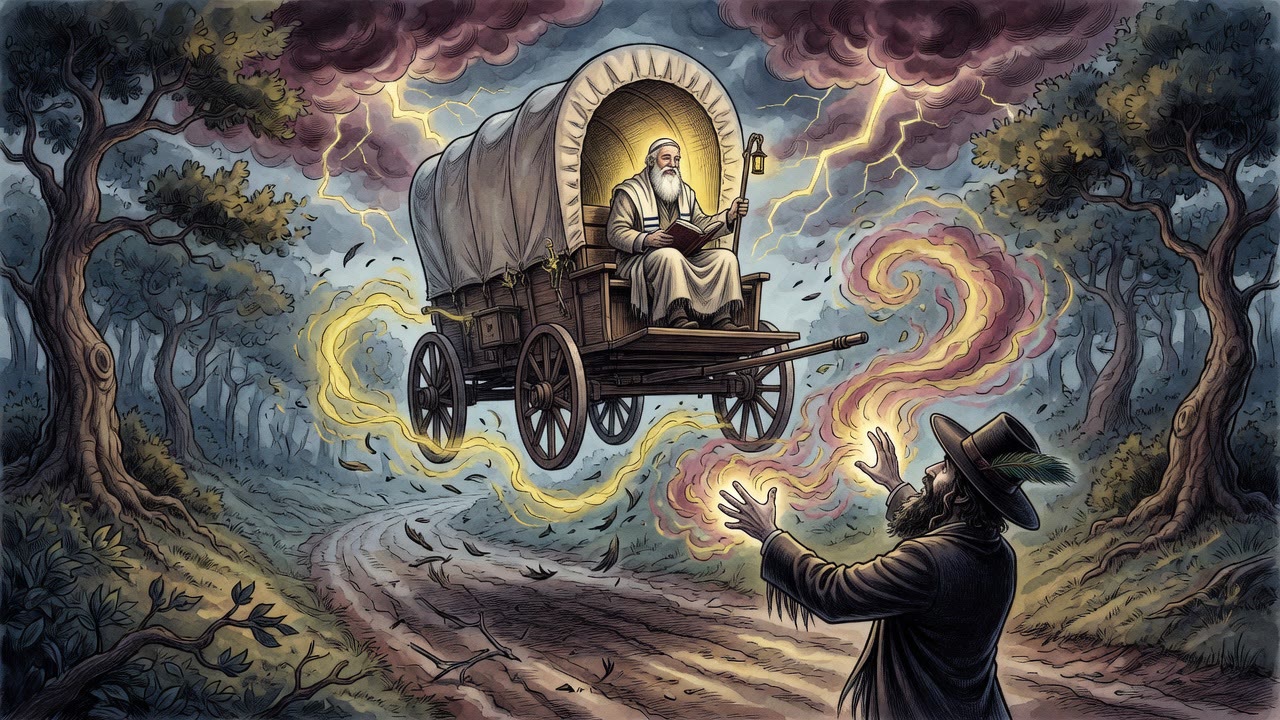
Conflict that starts in the mind does not stay there. On the bridge near the mill the Baal Shem Tov's wagon rolled with horses and the ordinary freight of travel: bundles, a driver, the creak of wood that has known mud. Water moved under the planks. The magician lifted wagon and horses into the air as if timber and muscle were paper, a public humiliation meant to prove who owned the town's fear. Hooves hung where sky should not hold them. The Baal Shem Tov held the wagon and set it back onto the planks. Boards received weight again. Hooves found timber. No long speech is recorded for that second, only force meeting force over water while mill gears kept their indifferent turning.
Ordinary Power Finishes the Work
The end came without a second aerial contest. Spectacle is expensive. Decrees are cheaper and last longer. The city lord seized the cleric's property, ordered him to repay Jews who had claims against him, and drove him out poor. The magician left in a broken wagon, after failing to keep the one that carried the Baal Shem Tov suspended like a threat. Heaven's champion did not need to chase him down the road with more miracles. Debt and decree did what floating horses could not finish. The man who had lifted a wagon left town unable to lift his own fortunes.
Neighbors watched the departure the way people watch a storm leave: relieved, still half expecting a return gust. None came. The bridge kept its planks. The mill kept grinding. Stories of the airborne wagon settled into the kind of memory that children demand on long winter nights.
A Wagon That Should Have Been Too Large to Steal
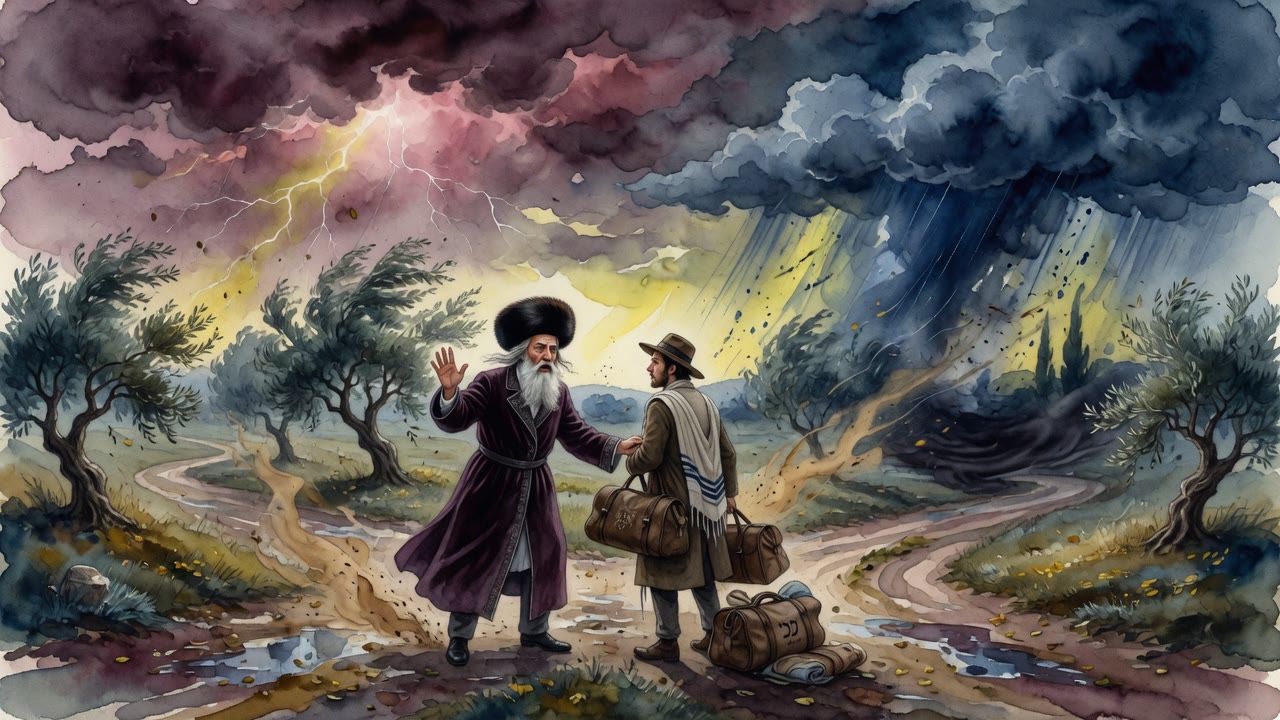
Another wagon, another road, a quieter theft. A merchant left cloth merchandise outside because the cart looked too large to steal, a calculation based on bulk rather than on human appetite. By morning it was gone. Tracks mixed with other tracks. The merchant's throat filled with the sour taste of trusting size. The Baal Shem Tov received the letter while standing by a mezuzah (a small parchment scroll in its case) on his way to a circumcision, one hand already on the doorpost of a different mitzvah (a commandment). Near the city he saw the wagon approaching from another road and sent Rabbi Tzvi the scribe to confront the man who had it.
Rabbi Tzvi hesitated. The man was praying like someone simple and upright, lips moving with the cadence of a person who has nothing to hide. Later he ate breakfast like anyone else, bread and whatever the road offered. Suspicion felt rude. Good manners almost became an accomplice. The Baal Shem Tov sent him back with a hidden map spoken into the air: three days in the forest, the places the thief slept, each stop on the road to Drozhne, the nights under trees, the hours when he thought no eye could reach him. Detail by detail the road was named until the thief's face changed color and his prayer-face fell away like a mask with weak glue.
The Thief at the Meal
The thief broke. He returned the wagon and then came to the circumcision meal as a poor man, as if poverty could rewrite the morning. His question cut clean across the celebration: if the Baal Shem Tov could see the routes of thieves, why look at low things at all? Why spend holy sight on cloth and axles when heaven has larger files? The Baal Shem Tov answered with Torah until Minchah and did not finish. The teaching outlasted the afternoon. Tables were cleared. Blessings were said. The answer was not a boast about surveillance. It was a refusal to treat stolen cloth as too small for a teacher who also sets wagons back on bridges.
Two wagons, one lifted by malice, one taken by greed. In both stories the Baal Shem Tov refuses to let motion be rewritten by force that pretends to be destiny. Air cannot keep what planks reclaim. A forest map cannot stay secret when a mouth that knows roads decides to speak. Between magician and thief stands the same refusal: the world will not be stolen in pieces while he is awake enough to name the pieces.
After both wagons were settled, one back on planks and one back with its owner, Medzhybizh told the stories as a pair. Children asked which was greater, the flying cart or the forest map. Elders refused the contest. Sight that reclaims what malice lifts and sight that reclaims what greed steals are the same sight aimed at different thieves. The Baal Shem Tov did not need the town to rank his hours. He needed the town to stop bleeding wagons.
← All myths