The Bear Opened the Judge's Floor and the Lie Fell Out
A bear snapped its rope outside a judge's house on the Shabbat before Pesach, tore up the floorboards, and lifted the body planted to blame the Jews.
Table of Contents
 Click for full size
A Debtor Left the Village He Was Forbidden to Leave
The leaseholder was forbidden to leave the village, and he left it anyway.
A stranger had offered the lord more for the lease than he could match, and the lord took the higher figure. That ended his living, and the old debt stayed on his neck. The lord and the new leaseholder gave the village one instruction about him. This one does not travel. Not to the fairs, not to his wife's people, nowhere.
He went to Medzhybizh, to the Baal Shem Tov.
The new leaseholder heard of it before the dust settled and carried it up to the manor house. "He has gone to a sorcerer," he told the lord, "to work sorcery against you." The lord did not send riders after the debtor. He sent them to the debtor's house instead, and they took the man's son, and shut the fortress gate on a boy who had done nothing at all.
He Overtook the Baal Shem Tov on the Kaminka Road
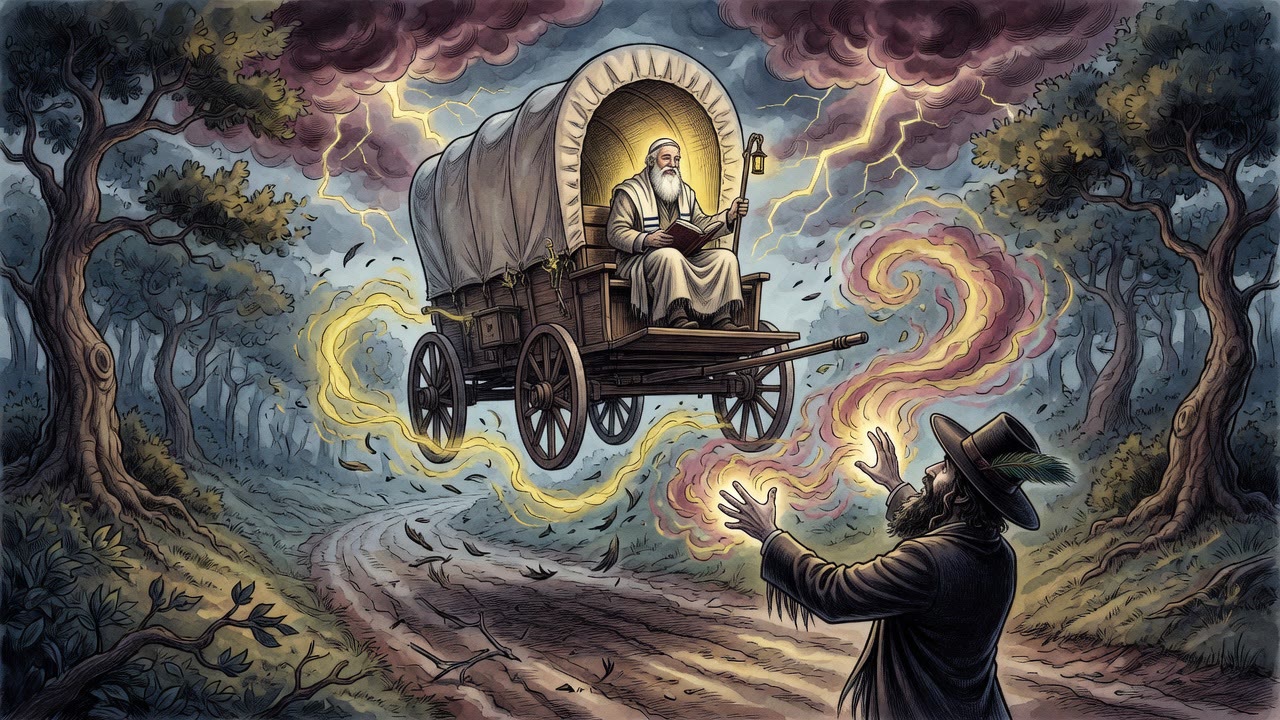
The house at Medzhybizh was shut. The Baal Shem Tov had gone to Kaminka, so the man rode to Kaminka, and while he rode the Baal Shem Tov was riding home. They passed somewhere in between without knowing it. He turned around and caught the wagon in open country.
The Baal Shem Tov looked down at him from the seat. "What can I do for you on the road?" he said. "Travel after me to my house."
Then he stopped, and what held him was not the road. It was a stone room a day's ride off with a child sitting in it. "There is no time to wait," he said.
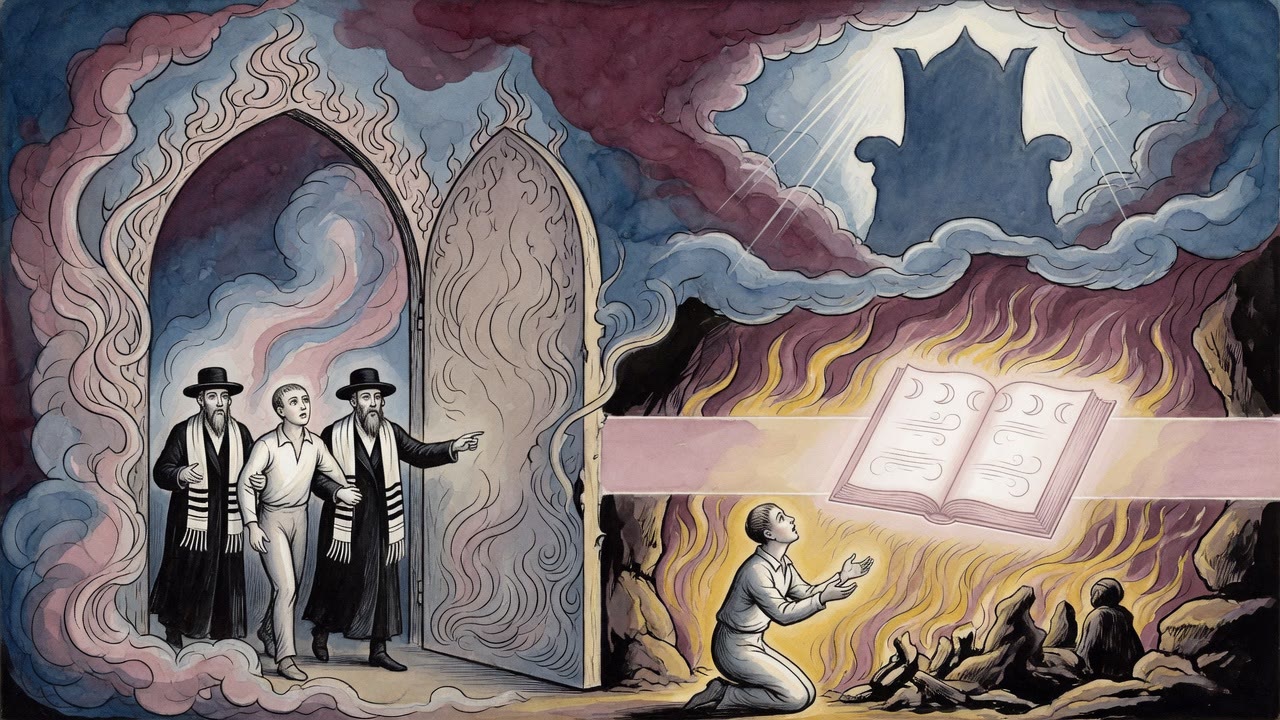
They came to a river. The Baal Shem Tov climbed down, walked into the water in his clothes, and went under. The father stood on the bank counting seconds. When the Baal Shem Tov came up, water still running out of his beard, he was already giving orders. "Go to your house," he said. "The moment you come into the village, go to the fortress."
No amulet. No name written on paper, nothing to carry and nothing to hand over. Go home, walk up to the fortress, and let them look at you.
The Lord Looked Down From the Fortress Window
He did it in daylight. A debtor under orders not to travel came back into the village he had been sealed out of, went past his own door, and climbed the road to the fortress where his son was held, in full view of everyone who had been told to watch him.
The lord was at an upper window.
He knew where the man had been. He had jailed a child on the strength of exactly that, and now the thing he had been afraid of stood on his gravel looking up at him. He gave two orders inside a minute. Put the boy out of the cells. Put the father out of the village with everything he owns.
Afterward he wrote to the commissioner at Medzhybizh, and the letter opened with the charge itself. "Inasmuch as you keep a sorcerer in your city."
The reply was not the one he wanted. "He is not a sorcerer," the commissioner wrote back. "Strive with all your strength to appease him. If you do not appease him, you will be punished from Heaven."
A wagon went out from the estate that week toward Medzhybizh, flour of every kind in it and fowl on top of the sacks. The lord sent it himself.
He Took Off His Tallit on the Shabbat Before Pesach
In another town, on the Shabbat before Pesach, the Baal Shem Tov finished the morning prayer, unpinned his tallit, folded it, laid it on the bench, and walked out of the synagogue in the middle of the service. The congregation assumed he had stepped out to relieve himself.
Out in the courtyard he stopped, because a bear was coming through it on a rope. Two keepers had it, and behind them came the children of the town at a dead run, shouting, the way children run behind a bear in any town in any year.
The Baal Shem Tov fell in behind the children.
The Bear Snapped Its Rope Outside the Judge's House
The keepers took the animal out the gate and down toward the market, and he went with them. Shutters opened. The town had come to watch a bear and stayed to watch something stranger, a grown man in his Shabbat clothes walking the market behind a chained animal, answering nobody who called out to him.
They led the bear until it stood opposite the house of the judge.
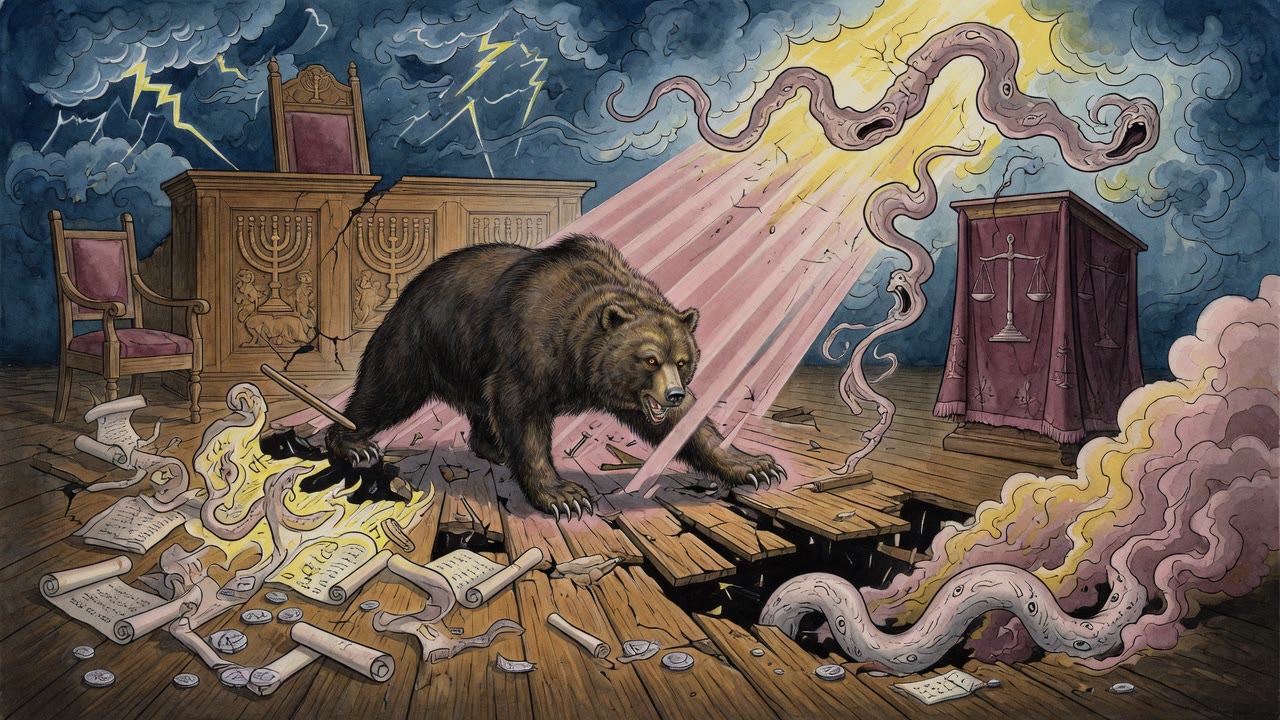
There the rope broke. The bear came apart in one motion, swinging its head, and every man following it turned and ran, because a loose bear in a market opens people up. Mothers hauled children backward by the collar.
The Baal Shem Tov stood where he was.
The Floorboards Came Up and the Body Came With Them
The bear went into the judge's courtyard, through the entry hall, and put its shoulder to the door of the house until the door gave.
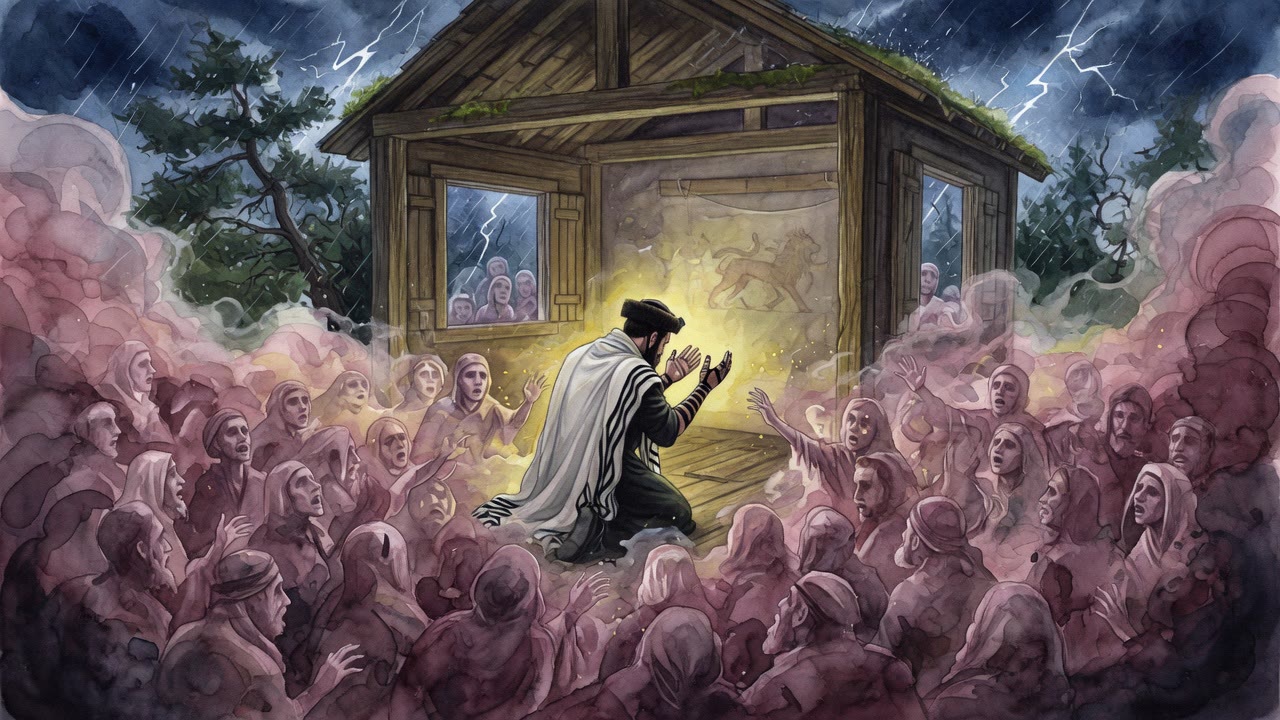
The Baal Shem Tov walked up and stood at the window.
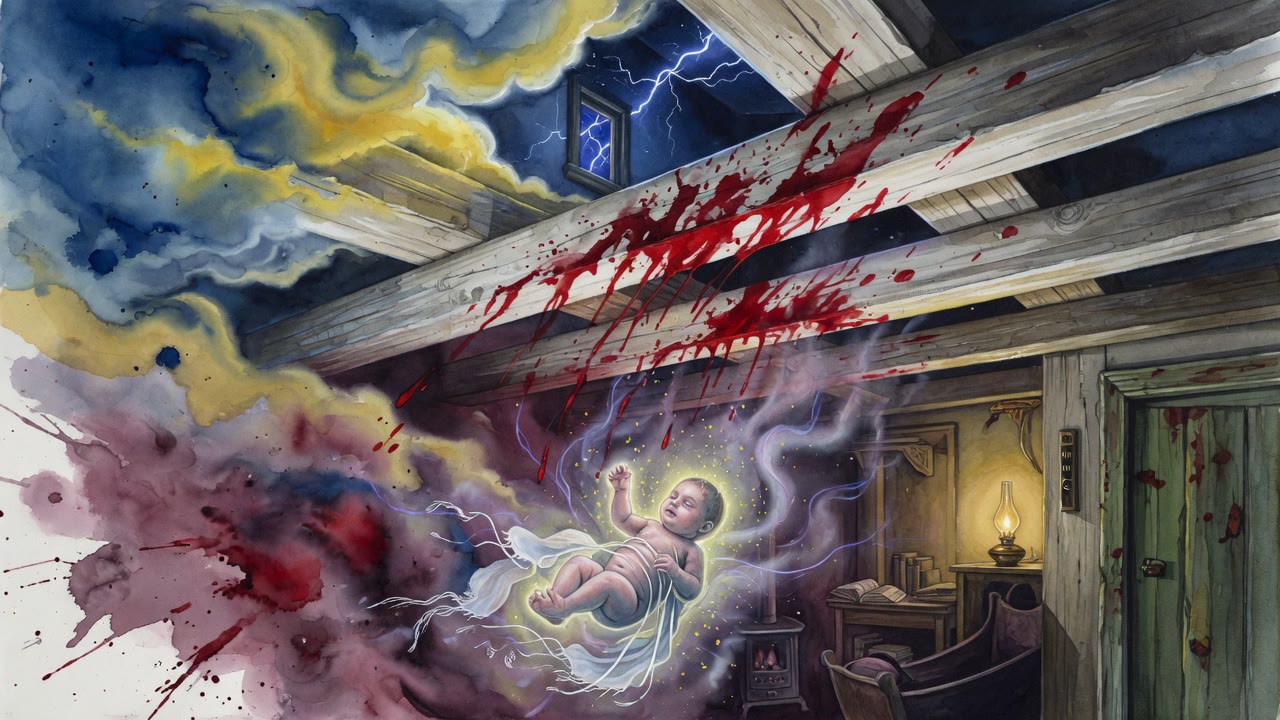
Most of the crowd came back for that, filling the windows behind him. Inside, the bear shoved the table out of its place and let it fall. It got its claws under the floor and pulled, and the boards came up with a sound like a shot, and it dug into the dirt beneath the way a bear digs, throwing earth back between its legs. Then it found what was down there. It took hold with both paws and stood, and lifted out of the ground the body of a dead child that somebody had buried under a judge's floor before Pesach.
It held the body up in front of the window.
The Baal Shem Tov shouted in Polish. Not in Yiddish, and not to the Jews at the wall. He used the word the courts used, loud enough to carry across the market, calling every face at every window to witness what was hanging in the bear's arms. "Protest," he cried. The charge went on the record before the judge could stand in his own street and say the Jews had put it there.
Then he went back to the synagogue to finish the prayer he had left in the middle. The tallit was folded on the bench where he had set it down.
← All myths