Chacham Tzvi Warned His Son Not to Travel
Rabbi Baruch named the dead man's socks. Color left the son's cheeks. The horses that had been readied for Ukraine were unsaddled.
Table of Contents
The dead man's socks were the proof.
 Click for full size
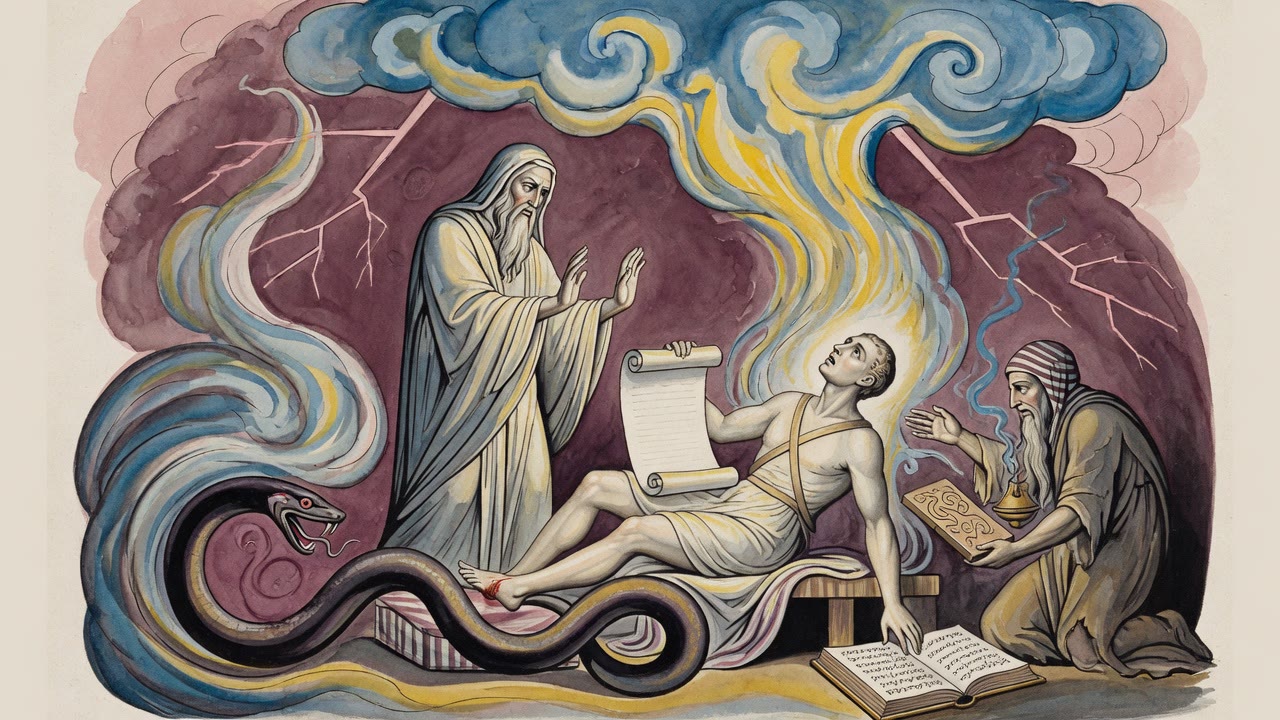
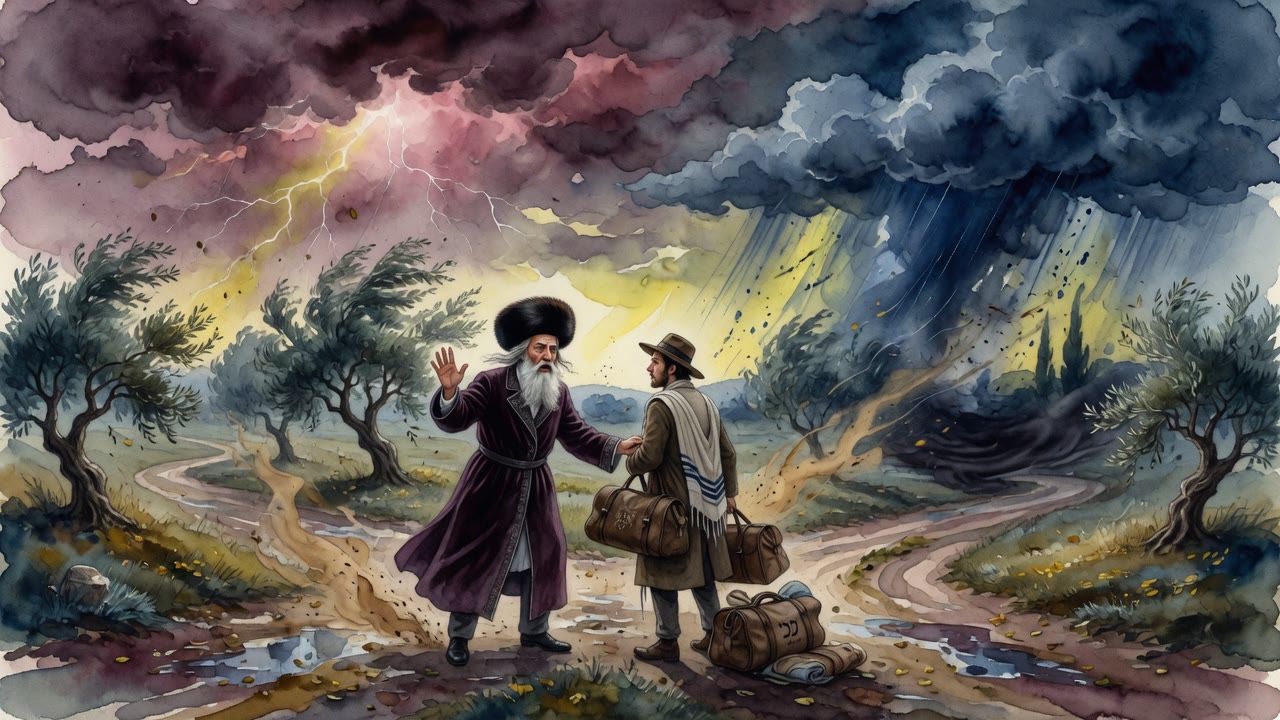
Chacham Tzvi was in the ground. The Baal Shem Tov was in Kaminka. He sent Rabbi Baruch to wait for the rabbi of Ostroh, the son, with a sentence short enough to dismiss. Do not travel to Ukraine. If the son doubted, Rabbi Baruch was to describe the dead father's face, his walk, his clothing, even the socks on his feet, the ones they called skarpetkes.
A Dead Father Named His Socks
A stranger can invent a face. A messenger who can name the weave at a dead man's ankle is harder to wave away. When the rabbi of Ostroh arrived, Rabbi Baruch spoke the Baal Shem Tov's words and then the signs. Color left the son's cheeks and came back. He believed.
He asked whether any Torah had come with the warning, because a father who only frightens is incomplete. Rabbi Yosef of Kaminka reported a teaching the Baal Shem Tov had given on "When a ruler sins" (Leviticus 4:22), the verse that opens with a nasi (נשיא) who goes wrong. The son heard it and said a reading like that was fit to be said in his name. He turned back. He did not travel.
The Horses Were Unsaddled
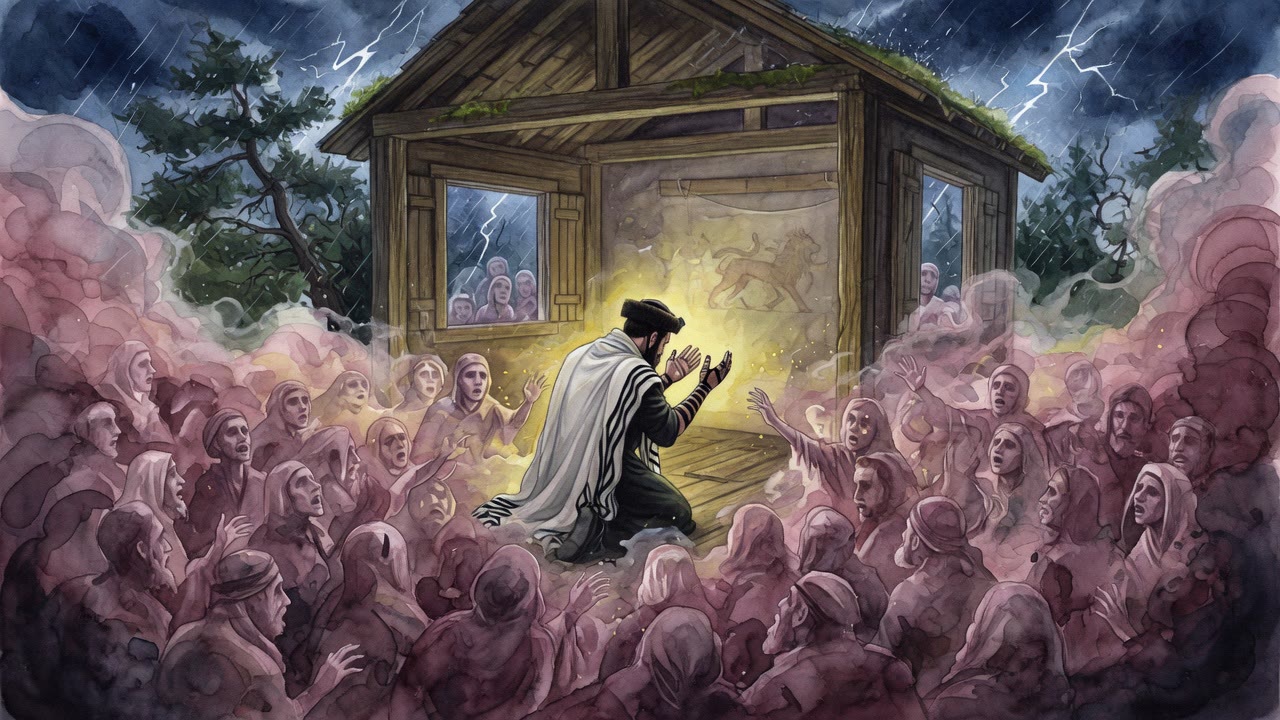
Horses that had been readied for the road were unsaddled. Maps stayed folded. Rabbi Baruch waited while the son measured the message against ordinary fears of weather and politics and bad inns. When the tack came off, the decision felt less like a dream and more like a father's law still in force.
Detail is how the dead prove they are still specific. A vague ghost is easy to dismiss. A father who still knows the color at his own ankle is hard to treat as night-talk. The son sat with the socks longer than he sat with the formal warning, and then he stayed home.
Ukraine Waited Anyway
Only in old age did he go. There, in Khvastov, he died. The warning had bought years, not eternity. A father who speaks from the grave can delay a road. He cannot abolish the map.
The same towns that might have taken him early took him late. The grave in Khvastov closed a circle the warning had only bent. People who later told the tale argued over whether the socks were the true wonder or the decades. One made belief possible. The other made belief worth the cost. The horses had been unsaddled in time. They were saddled again when the years had already been spent.
Turn Back, Yosef Is Fading
Another road. Another summons to reverse. The Baal Shem Tov was traveling when word reached him like a hand on the reins. Return home quickly. Rabbi Yosef was fading. Servants resisted because debts pressed on them, the ordinary chain that keeps holy men on schedules they did not choose. Creditors do not pause for sickbeds they cannot see.
The Baal Shem Tov turned back anyway. He arrived Friday morning with the dust of urgency on his coat, went to the mikveh before prayer, and then called the doctor into a room that already smelled of endings. Rabbi Yosef was too weak to speak. Lips moved without sound. Eyes tracked the Baal Shem Tov with the slow panic of a man who still knows faces.
The Baal Shem Tov told the doctor to let his blood. The doctor said the cut was dangerous, the kind of danger that ends careers and funerals in the same week. The Baal Shem Tov asked whether the doctor knew Rabbi Yosef would live without it. The doctor did not know. Then why be afraid of the cut that might save him when the other path had no name anyone would say out loud?
Water After the Knife
People murmured in the doorway. Fear likes an audience. The doctor obeyed. The Baal Shem Tov went home. About half an hour later Rabbi Yosef asked for water, a small request that rearranged the house. Cups appeared. Someone wept without hiding it.
The murmurers had done a different math. Risk of the blade against risk of silence. The Baal Shem Tov would not let "dangerous" mean "do nothing." He had turned from creditors for a student who could not speak, and the house had to match that urgency with a cut. When water finally touched Yosef's lips, the sound of swallowing was louder than the earlier arguments. A body that drinks has rejoined the living's simplest covenant.
In Ostroh the horses had been unsaddled. In the sickroom a cup was lifted. Both times someone on a road was told to reverse while reversing still mattered. Ukraine and a sickbed are different destinations. The grammar is the same. Turn around. Do it now.
← All myths