6 min read

Blood Hit the Beams When the Dead Infant Returned

At a circumcision the cut drew no blood until the Baal Shem Tov held the blessing open, and the child's soul forced its way back into a body already cold.

Curated by Arthur · Told by Maggid ·
Table of Contents
  1. They Brought a Corpse to the Covenant
  2. Another Night, Another Soul Forced Home
  3. Oaths and Blessings as Hooks
  4. What the Fathers Could Not Finish

The old man had begged for a child for years, and the Baal Shem Tov had promised him one. At last his wife bore a son. The house filled with the ordinary noise of a hope that had finally arrived: neighbors, small gifts, plans for the eighth day. Then the child died before the covenant could be cut into his flesh.
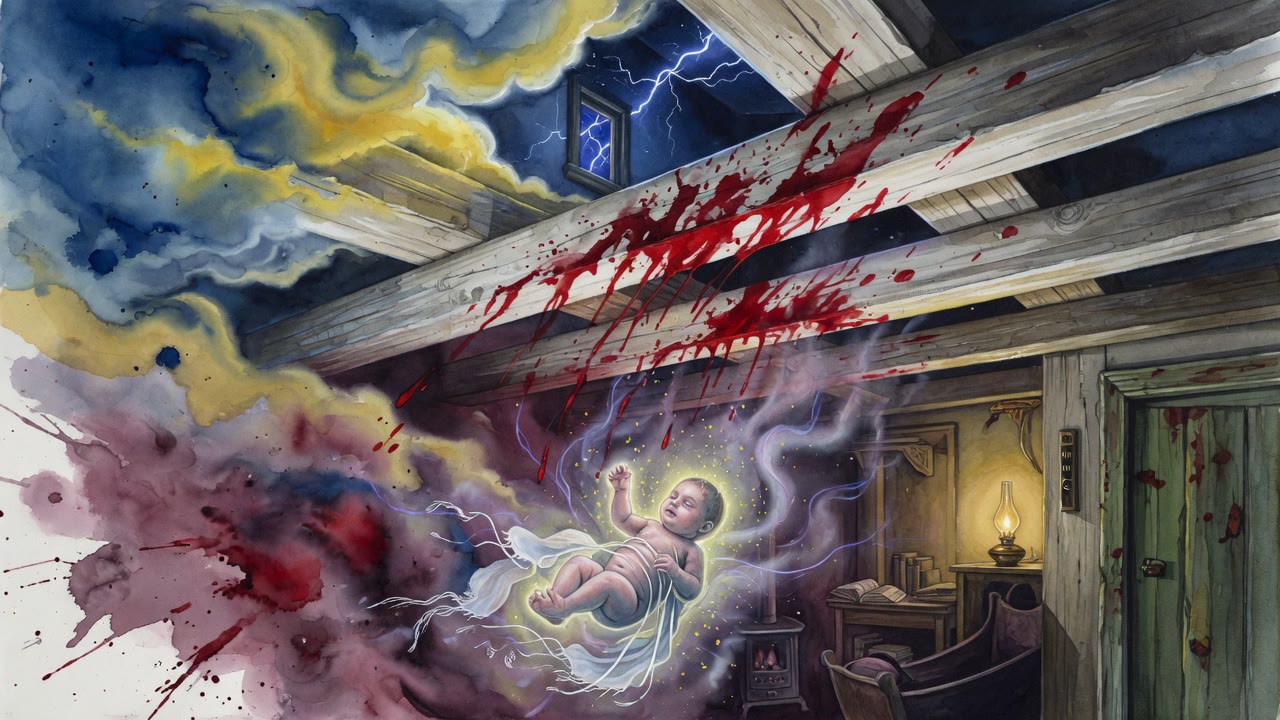
Blood Hit the Beams When the Dead Infant Returned Click for full size

The father came furious, voice cracking in the doorway, hands empty of anything useful. "Why give a promise that dies in the cradle? Better no child than this." He meant it. Grief had turned the promise into an insult.

The Baal Shem Tov answered with a calm that sounded almost cruel. The child would live.

Nothing moved in the little body. No breath entered. The father grew ashamed even to keep asking. Still the Baal Shem Tov told him to prepare the circumcision as usual: honor this man as sandak, that man for the cutting, and leave the drawing of blood to him. The instructions were practical, as if death were a delay in the schedule rather than an end.

They Brought a Corpse to the Covenant

They carried the child into the synagogue. The room smelled of wine and wax. Men took their places with faces set hard against hope. The knife found flesh that did not answer. The cut produced no blood. It was like slicing meat already gone from life. Someone made a sound and swallowed it. Women pressed fists into their mouths outside the door.

The Baal Shem Tov began the blessings after circumcision in a steady voice and reached the words, "Sustain this child for his father and mother."

There he stopped.

He held the phrase open the way a man holds a door against wind. He would not let the blessing close until the soul returned. Time stretched. A fly moved in a window. Someone coughed into a sleeve. The father could not look at the table. Then blood burst from the wound up toward the roof beams, bright and sudden, and the child lived. The promise had not been false. It had passed through death before anyone understood what kind of promise it was.

They finished what a living body requires. The beams kept a memory of red that no one cleaned in a hurry.

Another Night, Another Soul Forced Home

In a different house the Baal Shem Tov arrived under a heavenly instruction to lodge, and the family refused him. Their child was dangerously ill. The mother, crushed by fear, cursed the stranger at the door. She had no room left for guests, only for the thin thread of her child's breath.

He swore that if he lodged there, the child would live. The oath hung in the entry like a second mezuzah (the scroll case fixed to a doorpost). Then he cleared the rooms, went to the mikveh, and stayed alone beside the sick bed through the night. The house grew quiet in the forced way of people ordered out of their own grief.

The scribe quietly opened the door and heard him speaking to the child's soul. "Enter the body," he commanded, "because I will not swear falsely." The voice was not gentle. It was legal. Later the scribe found him on the floor with arms and legs outstretched, as if the argument had thrown him down and left him spent.

By morning the child had strength. Color returned in uneven patches. The mother wept for the curse she had thrown. The Baal Shem Tov told her to prepare the third Shabbat meal. The child would sit at the table. The story says he accepted fiery punishment because of his oath, and the soul was forced back into the body. The child lived more than sixty years after that night, with children and livelihood, because the prayer had argued not only for breath but for the life that comes after breath.

Oaths and Blessings as Hooks

In both scenes the Baal Shem Tov does not politely invite a soul. He uses language as a hook. A public blessing held open mid-sentence. A private oath that cannot be allowed to fail. Heaven, in these tales, answers not only piety but the legal pressure of words spoken in full seriousness.

The dead infant and the dying child are not props for wonder. They are the place where a master's mouth becomes a courtroom. The soul is treated as a party that can be commanded, delayed, or compelled when a righteous man stakes his own standing on the outcome. That is why the scribe matters in the second story. Someone has to overhear the case. Someone has to see the body on the floor after the verdict.

Ordinary healers work with herbs and rest. This healer works with speech that refuses to complete until reality rearranges itself around the unfinished line.

What the Fathers Could Not Finish

One father buried hope before the eighth day and had it handed back under blood on the beams. Another mother cursed the healer and watched her child sit at a Shabbat table, tearing bread with hands that should have been cold. Between them runs a single claim: the Baal Shem Tov would rather suffer for an oath than watch a promise collapse into empty comfort.

People who tell these stories do not soften the strangeness. A blessing paused mid-sentence. A man sprawled on a floor arguing with something no one else can see. Blood where there was none. A child who should not have lived long enough to marry. The Hasidic memory keeps the violence of the return as carefully as it keeps the mercy.

If the soul can be forced, then death is not always the last speaker in the room. If the soul can be forced, then a promise is not soft language. It is a chain the master is willing to put on his own neck until the missing party reappears.


← All myths
From the tradition

Sources

2 sources

The texts behind this telling. Some cards carry a translation of the source; others are our own retelling of it, and each card says which. Every card links out to the original.

Shivchei HaBesht 204Shivchei HaBesht

Translation of the source text.Shivchei HaBesht, Kopyst 1815 + JewishMythology.com faithful English Beta translation · Public Domain

In the holy community of Mezhibuzh there was one childless man. He always mentioned this before the Baal Shem Tov, and the Baal Shem Tov promised him that he would certainly have children. When he became old, he troubled the Baal Shem Tov several times, and with God's help his wife bore him a male child in his old age.

Not many days passed, and the child died during the days after birth. Immediately the man came to the Baal Shem Tov in noise and anger: "Why did you deceive me, to give me a false thing that would be cut off from me at once? It would have been better for me if I had never had children at all."

The Baal Shem Tov answered, "Did I not say that you would have children? Certainly the child will live." The man waited until he was ashamed, but the child did not rise and did not move, and there was no breath of life in him. The man had no face to speak further with the Baal Shem Tov, after he had promised him with a faithful promise.

He came to the rabbi and spoke with him from one side, and asked him whether he should prepare himself for the circumcision and whom he should honor. The Baal Shem Tov commanded him to prepare himself as usual. He commanded him to honor a certain man as sandak, another for the cutting, and himself for metzitzah. So they did.

They brought the child to the synagogue, and he circumcised him. No blood came out, as if cutting dead flesh. The Baal Shem Tov began to say the blessings after the circumcision, and when he said the words "Sustain this child for his father and mother," he delayed a long time, until the soul of the child returned into him. Blood spurted from the circumcision up to the roof beams, and with God's help the child lived completely.

Full source
Shivchei HaBesht 69Shivchei HaBesht

Translation of the source text.Shivchei HaBesht, Kopyst 1815 + JewishMythology.com faithful English Beta translation · Public Domain

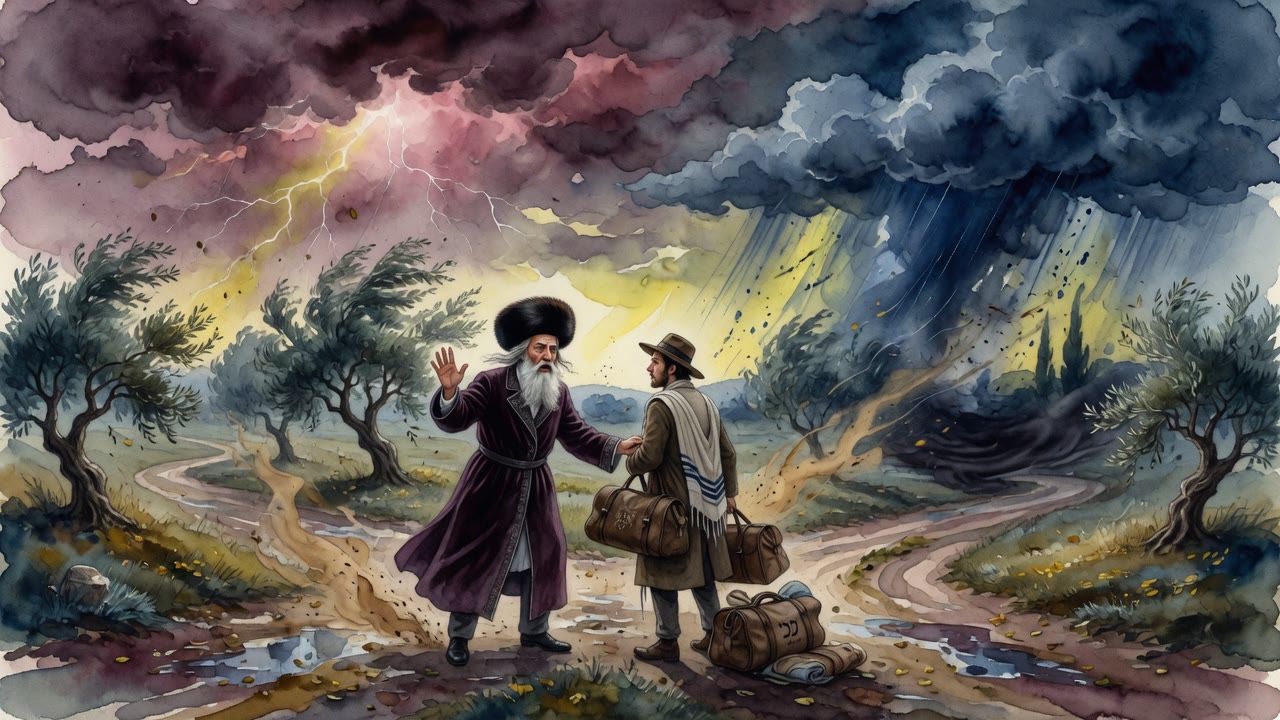
I heard from Rabbi Pesach, son of Rabbi Jacob of Kaminka, that the Baal Shem Tov was on the road and came to one city. He heard a proclamation that he should lodge in a certain house. He came to that house, but they did not want to receive him as a guest because the householder's child was very ill. He sent the scribe to the house, and the woman said, "How is it possible to lodge here? Do you not see the sick child? I am in great distress." She cursed the Baal Shem Tov.

The householder could not be bold, and he went out to the Baal Shem Tov to ask him, saying that the matter was impossible. The Baal Shem Tov swore to him that if he lodged with him, the child would live. The householder received him into his home. Immediately the Baal Shem Tov went to the mikveh and saw that things were not good with the child. He commanded that no person should be found in that house, and everyone went to another house. He also commanded the scribe not to be in that house until he called him to give him wine for kiddush, because this event took place on the eve of Shabbat.

He remained alone with the child and prayed the afternoon prayer beside the child. He stayed far into the night, until the scribe feared that, Heaven forbid, the Baal Shem Tov might endanger himself because of the great effort of his prayer over the sick child, for the matter was dangerous. The scribe went and quietly opened the door. He heard the Baal Shem Tov saying to the child's soul, "Enter the body, for you must enter, because I will not swear falsely." The scribe did not know whether the child was dead or still alive, with a little life remaining in him.

The scribe went away. A short time later he returned and entered, and found the Baal Shem Tov lying on the ground with arms and legs outstretched. He rose and said, "Did I not tell you to enter the child's body?" Then he cried, "Hirsch, give wine for kiddush!" He ate with the scribe and did not sleep the whole night.

In the morning he handed medicines and instructions to the scribe, and he went to pray in the study house. The child's mother understood that the child had returned to his strength, and she began to weep a great weeping. The scribe heard and asked her, "Why are you crying?" She said, "How can I not cry, since I cursed such a tzaddik?" He answered her, "Do not cry. My rabbi is a good man, and he will forgive you."

When the Baal Shem Tov came back from his prayer and heard that she was crying, he asked the scribe, who told him. He sent the scribe to her and said, "Tell her not to cry, and to make a good third meal. I promise her that the child will sit with us at the table at that meal." The reason the Baal Shem Tov fell on the ground with arms and legs outstretched was that he accepted upon himself to receive a fiery punishment because of the oath, and the soul was forced to enter the body. He accomplished for the child that he would live more than sixty years, have children, and have good livelihood all his days. From this it appears that the child's end time had arrived, and therefore the Baal Shem Tov had to pray for how long he would live, and for livelihood, and for children.

Full source