7 min read

Abraham Died Content After Seeing the Feast

Abraham's body failed while Heaven showed the reward ahead. The first day asked Torah what God had made, and a dying sage saw thirteen balsam rivers.

Curated by Arthur · Told by Maggid ·
Table of Contents
  1. The Illness That Cleaned the Road
  2. The King Who Shows the Feast First
  3. Before Any Day, Torah Already Stood
  4. Five Names Left the Body in Order

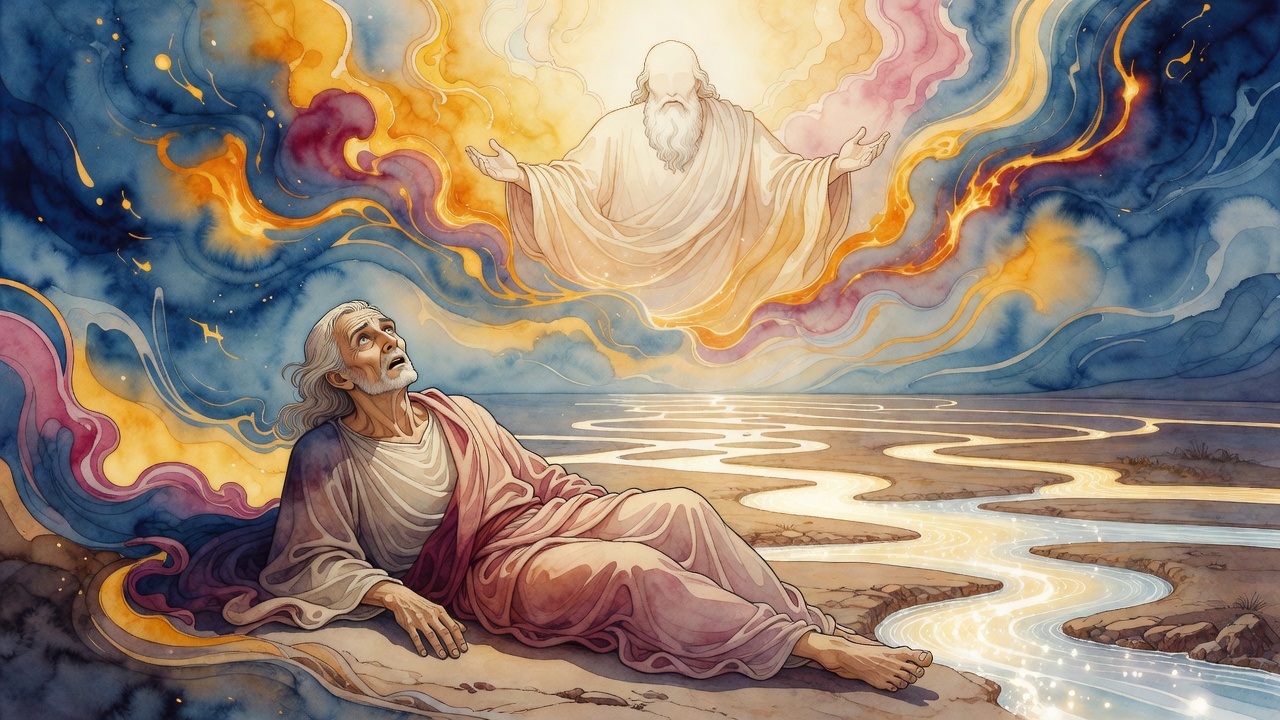
Abraham lay on the pallet with his breath short and his hands open on the blanket, and the pain in his belly did not feel like abandonment.
Abraham Died Content After Seeing the Feast Click for full size

One hundred and seventy-five years had already been counted into the scroll. "These are the days of the years of Abraham's life that he lived" (Genesis 25:7). The Lord knows the days of the faultless, and their legacy is not left to chance (Psalm 37:18). The man who had been told to walk faultless now met the last days the way a guest meets a door he has been shown in advance.

His household moved quietly. Water. Cloth. The low sound of someone praying without words. A servant's sandal scraped once and stopped, ashamed of the noise. Abraham's eyes still found the light at the tent mouth. Contentment sat in him not as denial of pain but as a fullness that pain could not empty.

The Illness That Cleaned the Road

Pious men of old often met death with days of gut illness first. The sickness stripped the body the way a fuller's work strips grit from cloth. Rabbi Yehuda bar Ilai heard "expired" in the wording of such deaths and read that cleansing in it. The soul does not always leave a clean house without a hard scrub.

Abraham's breath caught. Heat climbed his spine and fell again. Sweat cooled on his temples. He did not call it injustice. He had walked before God with a cut body and an open tent. Strangers had eaten at his table. Kings had taken and returned his wife. Stars had been counted over his head when he still had no heir. The last work was to let the body finish its accounting. Around him, the camp of his people waited to gather him the way a family gathers a traveler who has finally come home (Genesis 25:8).

A cup touched his lip. He drank a little. The water tasted of the well and of years. He closed his eyes and did not fight the dark that rose from the floor of the tent. Pain still spoke. It no longer owned the whole room.

The King Who Shows the Feast First

A king prepares a banquet long before the guests arrive. He walks them through the tables while the meat still steams and the wine still catches the lamp. Their mouths water. Their fear of the night thins. They sleep afterward like people who have already tasted tomorrow.

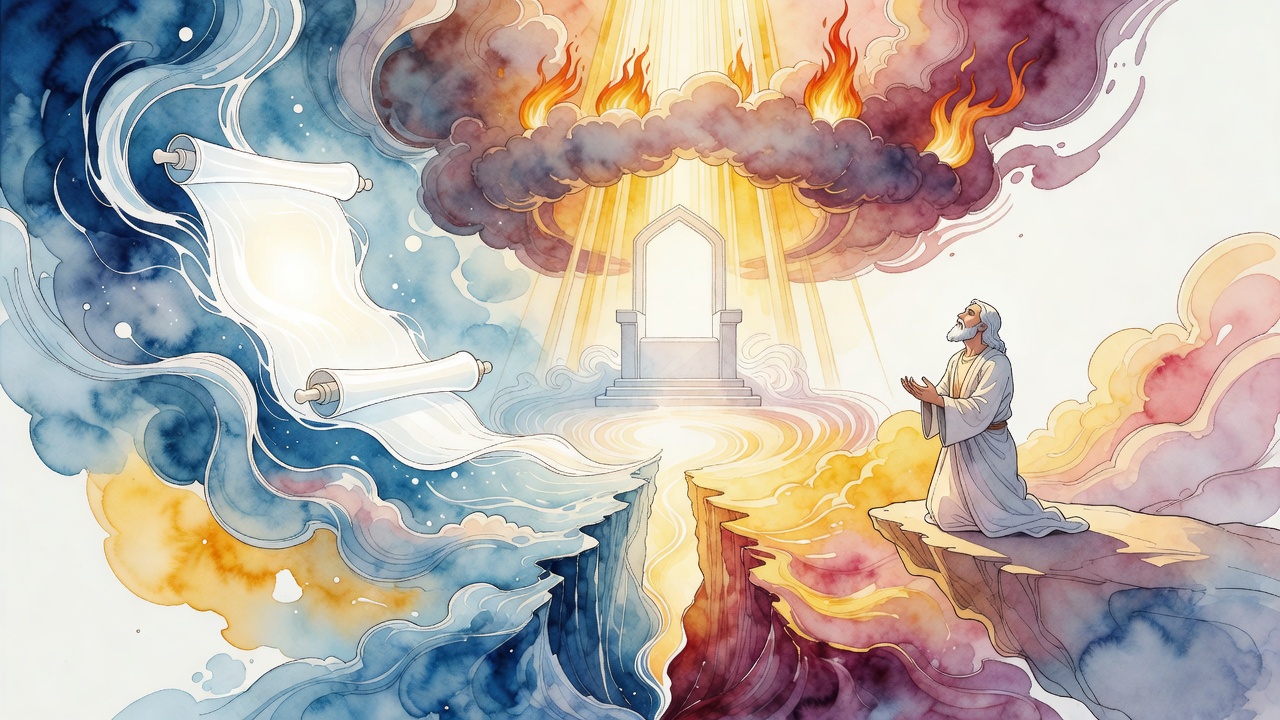
So the Holy One shows the righteous their reward while they still breathe this air. Anticipation fills the soul until the leaving is almost a settling, not a tear. "For now I would lie down and be silent. I would sleep; then there would be rest for me" (Job 3:13). Rest after a glimpse is not the same as rest after a blank.

Abraham saw what was prepared. Light that was not the tent's light. Tables that needed no servant's rush. The order held firm: show the feast, then let the guest sleep. Contentment is not ignorance. Contentment is a man who has looked ahead and found the table set.

When Rabbi Abahu later lay dying, thirteen rivers of balsam oil were shown to him, thick and shining. "Whose are these?" he asked. "Yours," came the answer. He argued his own unworthiness for a breath, then the vision held. The same grammar of gift moved from Abraham's tent to a later sage's bed: reward first, release second. Both men left with more than air in their lungs. They left with a picture that made the last step smaller.

Before Any Day, Torah Already Stood

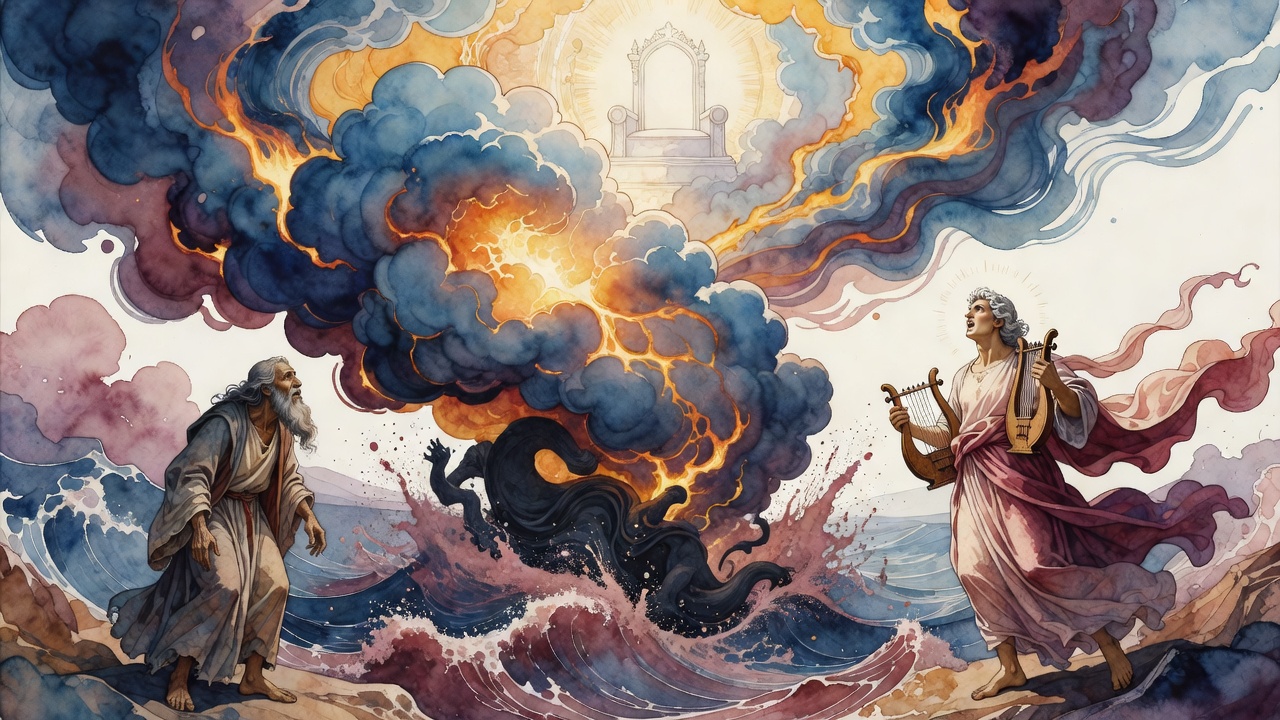
Long before Abraham's last breath, before any breath at all, the days of making still had to learn their own history.

In a city that lives by caravans, donkey drivers entering the gate ask those leaving the price of grain. Friday asks Thursday. Thursday asks Wednesday. The chain runs back to Sunday. Dust on the animals. Coin in the pouch. The first driver does not invent the market. He asks the men who already trade inside the walls.

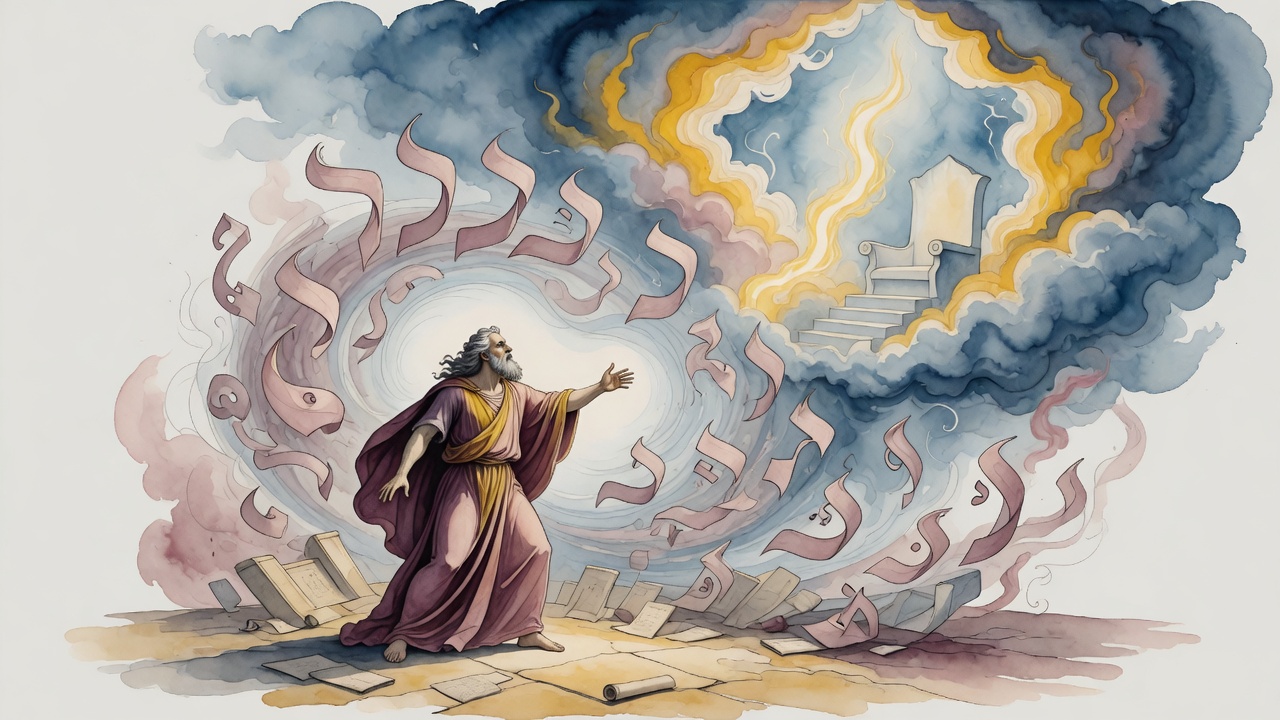
So each created day asked the day before what the Holy One had made. The sixth pressed the fifth. The fifth pressed the fourth. The pressure ran to the first dawn. Light asked nothing of a prior morning, because no prior morning existed. The first day turned to the Torah.

Torah had stood with God two thousand years before the world, a delight day after day, and a day of the Holy One is a thousand years in the psalm's measure (Proverbs 8:30; Psalm 90:4). Wisdom was already a companion when clay was not yet wet. "Have you known this from oldest times?" (Job 20:4). The book that would one day hold Abraham's counted years already knew the price of grain before grain existed.

Abraham dying content was not a private accident of temperament. He was a man whose days had been written into a scroll older than the light that first split dark. The feast he saw at the end answered a blueprint that had waited while no world yet needed a blueprint. His one hundred and seventy-five years were not a stray number. They were ink that Torah had room for from before the first sunrise.

Five Names Left the Body in Order

When the soul leaves, it does not leave as one thin word.

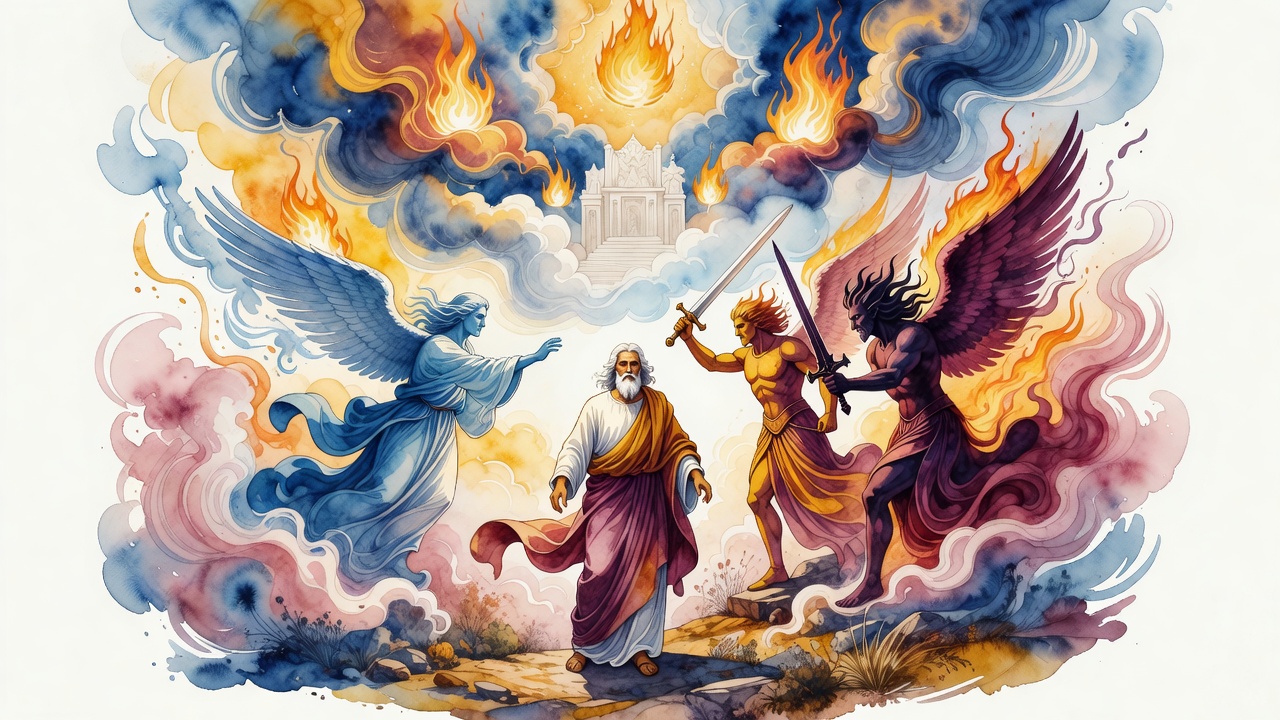
The nefesh (נפש) clings to blood and heat, the life that a knife can spill (Deuteronomy 12:23). Under Abraham's ribs that heat thinned, then flared, then thinned again. The ruach (רוח) rises and falls like breath that will not stay still (Ecclesiastes 3:21). His chest lifted wrong and still lifted. The neshama (נשמה) holds the mind that can still name God while the tongue thickens. He shaped no long speech, only the quiet of a man who has already seen enough. The chaya (חיה) keeps a spark even when limbs go numb and refuse the will. His fingers would not close on the blanket, yet the spark held. The yechida (יחידה) stands alone at the last, the singular point no other creature can claim for him.

Abraham's body failed in pieces, the way bodies do. Pain took the gut. Strength left the legs. Still something in him stayed awake long enough to receive the feast and the contentment. A man under pressure whose life force, spirit, mind, living spark, and unique core did not abandon him in the same instant. He expired cleaned and shown and gathered.

Outside, the years of his life already stood permanent in Torah's ink. Inside, the last breath went out on a full stomach of vision. He did not claw at the blanket for more days. He had been one man under stars, then a father, then a grandfather of a people still small enough to fit in a camp. The baskets of figs were for later generations. His work was the first ripe fruit, twisted free of its stem, set down complete.

Dust settled on the threshold. Someone began the low sound of mourning that is also a kind of praise. Abraham was gathered to his people with the taste of the coming table still on the soul that had just left the cleaned house of flesh.


← All myths
From the tradition

Sources

3 sources

The texts behind this telling. Some cards carry a translation of the source; others are our own retelling of it, and each card says which. Every card links out to the original.

Bereshit Rabbah 62:1Bereshit Rabbah

Retold in our words. Read the original at the link below.The Sefaria Midrash Rabbah, 2022 · CC-BY

The Torah, and later rabbinic texts, offer some fascinating, and comforting, glimpses.

(Genesis 25:7) tells us, "These are the days of the years of Abraham’s life that he lived, one hundred and seventy-five years.” And the very next verse adds, "Abraham expired and died at a good old age, aged and content, and he was gathered to his people.” But the Rabbis, diving deep into these words, saw so much more.

Bereshit Rabbah, a classic Midrashic (rabbinic interpretive commentary) text, asks, why repeat "These are the days of the years of Abraham's life"? It connects this to (Psalm 37:18), "The Lord knows the days of the faultless; their legacy will last forever." Abraham, who was told by God to "Be faultless" (Genesis 17:1), embodies this. God cherished the years of the righteous so much that He recorded them in the Torah, ensuring their legacy endures. Abraham died "at a good old age, aged and content," evidence of a life well-lived.

What about the actual moment of death? Bereshit Rabbah quotes Rabbi Yehuda bar Ilai, who points out that pious men of old often suffered intestinal illness for days or weeks before passing. He suggests this sickness cleansed their soul. Rabbi Yehuda even says that anyone whose death is described as "expiring" likely died of such an illness. It's a sobering thought.

Then comes a beautiful and comforting idea. Rabbi Elazar compares it to a king preparing a feast. He invites the guests beforehand, showing them the incredible food and drink they'll enjoy. Their souls are filled with anticipation and satisfaction, and they drift off to sleep peacefully. Similarly, the Holy One, Blessed be He, shows the righteous the reward awaiting them in the future while they're still in this world. (Job 3:13) hints at this, saying, “For now, I would lie down and be silent. I would sleep; then there would be rest for me.”

There are stories that illustrate this beautifully. When Rabbi Abahu was dying, he was shown thirteen rivers of precious balsam oil. He asked, "Whose are these?" They replied, "Yours." Initially, he questioned whether he deserved such reward, remembering (Isaiah 49:4) where the prophet laments laboring for nothing. But the vision affirmed his worthiness. Similarly, Zavdi ben Levi, Rabbi Yehoshua ben Levi, and Rabbi Yosei ben Parta each recited verses expressing joy and anticipation as they passed, including "For this, everyone who is devoted to You should pray at the time of finding" (Psalms 32:6) and "How great is the goodness You have in store for those who fear You" (Psalms 31:20).

Ben Azai adds poignantly, "Precious in the eyes of the Lord is the death of His devoted ones" (Psalms 116:15). The text asks, when does God show them how precious they are? Right before their death. That’s why (Proverbs 31:25) says "[the righteous woman] rejoices at the final day.”

But what about the difference between the death of the young and the old? Rabbi Yehuda offers an analogy: a lamp that extinguishes on its own, when the oil has run out, is good for both the lamp and the wick. But a lamp that’s put out prematurely, while oil remains, is bad for both. Rabbi Abahu uses a similar image: a fig picked at its proper time is good for both the fig and the tree. But one picked too early is bad for both. Dying at a ripe old age is natural, but dying young, before one's potential is realized, is tragic.

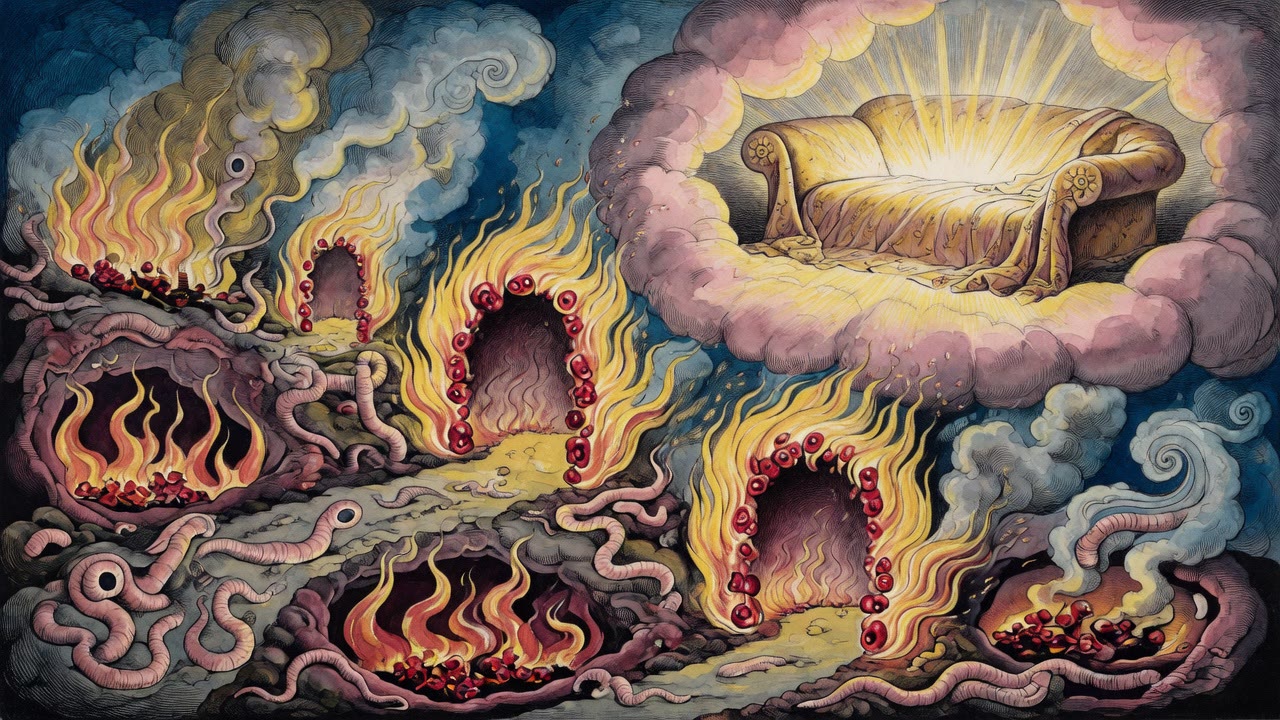
There's a story about Rabbi Ḥiyya the Great (or Rabbi Akiva, or Rabbi Yosei ben Ḥalafta – the tradition varies) and his students who would study under a fig tree. The owner, concerned they suspected him of distrust, stopped picking the figs while they were there. But this caused the figs to become infested with worms. The rabbis realized: the owner knows the perfect time to harvest the figs. Similarly, God knows the perfect time for the righteous to depart. As (Song of Songs 6:2) says, "My beloved descended to his garden, to the beds of fragrant plants, to eat in the gardens, to pluck lilies." The "plucking of lilies" is a metaphor for God taking the righteous from this world.

Finally, Reish Lakish points out that the term seiva (good old age) is used for Abraham, David, and Gideon. For Abraham and David, it was beneficial. But for Gideon, it wasn’t, because he used his later years to create an idol.

So, what does all this tell us? It suggests that the death of the righteous is not just an end, but a culmination. A moment of divine recognition, a glimpse of the reward to come, and a peaceful transition.

Full source
Bereshit Rabbah 8:2Bereshit Rabbah

Retold in our words. Read the original at the link below.The Sefaria Midrash Rabbah, 2022 · CC-BY

Our tradition acknowledges that feeling, especially when we consider the mysteries of creation. What was it like before the Big Bang of Genesis? What was God "doing"?

The Rabbis of old grappled with this, and a fascinating passage in Bereshit Rabbah, a collection of rabbinic interpretations of the Book of Genesis, offers a glimpse into their thinking. Specifically,

Rav Ḥama bar Ḥanina kicks things off with a verse from Job (20:4): “Have you known this from oldest times?” He uses a brilliant analogy to explain how creation learned about itself. The drivers entering the city naturally ask those leaving: "Hey, what’s the price of grain today?" The Friday drivers ask the Thursday drivers, who ask the Wednesday drivers, and so on, all the way back to Sunday.

Who does the Sunday driver ask? The businessmen of the city, of course! They are the source.

Rav Ḥama applies this to creation itself. Everything created on each day asked the day before: “What did the Holy One, blessed be He, create on your day?" The sixth day asked the fifth, and so on, all the way back to the first day. But whom did the first day ask?

Here’s where it gets really interesting. The first day, according to Rav Ḥama, would ask the Torah itself! Why? Because, as Rabbi Shimon ben Lakish says, the Torah preceded the creation of the world by two thousand years! The Torah, in this understanding, isn't just a book; it's a blueprint, a divine plan that existed before reality as we know it came into being. (Proverbs 8:30) says, "I was with Him, as a protégé; [I was a delight day after day]". The Rabbis interpret this "I" as wisdom personified – the Torah. And because a day of the Holy One, blessed be He, is like a thousand years, as (Psalm 90:4) tells us ("As one thousand years in Your eyes are like yesterday"), "day after day" equals two thousand years.

So, going back to Job, "Have you known this from oldest times?" The Torah knows what preceded creation, but we humans are only licensed to explore from "when man was placed upon the earth." We can only start our investigation once humanity arrived on the scene.

Rabbi Elazar then brings in a wise saying from ben Sira: “Do not seek what is too great for you, do not interrogate what is stronger than you, do not seek knowledge of what is hidden from you, and do not ask regarding what is concealed from you. Observe what is permitted for you, and you have no business with the esoteric.”

In other words, there are limits to our understanding. It's okay to be curious, to explore the mysteries of the universe, but we also need to recognize that some things are simply beyond our grasp. There’s a humility in acknowledging the vastness of creation and the limits of human comprehension.

So, where does that leave us? Perhaps with a sense of wonder, a recognition of the profound depth of our tradition, and a gentle reminder that while exploration is encouraged, so is knowing when to say, "Wow, that's amazing, and maybe a little beyond me." Maybe, just maybe, that's where true wisdom begins.

Full source
Bereshit Rabbah 14:9Bereshit Rabbah

Retold in our words. Read the original at the link below.The Sefaria Midrash Rabbah, 2022 · CC-BY

Jewish tradition delves deep into this question, offering a layered and fascinating perspective on the human soul. It's not just one thing, you see. According to Bereshit Rabbah, an ancient collection of Rabbinic interpretations on the Book of Genesis, the soul actually has five different names, each representing a different aspect of our being.

These five names, as outlined in Bereshit Rabbah 14, are: Nefesh (the vital soul), Ruach (spirit), Neshama, Yechida, and Chaya.

First, we have Nefesh (נפש). This is often translated as "soul," but in this context, it's closely tied to the physical, the vital life force within us. The text connects Nefesh directly to blood, referencing (Deuteronomy 12:23): "For blood is the soul [Nefesh]." It's that raw, immediate spark that keeps us alive.

Next comes Ruach (רוח), which means "spirit" or "wind." Bereshit Rabbah explains that Ruach ascends and descends, referencing (Ecclesiastes 3:21): "Who knows the spirit of the sons of man? Does it ascend upward?" Think of it as the breath of life, constantly in motion, connecting us to something larger than ourselves. It’s also about our emotional and moral compass, the part of us that yearns and strives.

Then there's Neshama (נשמה). This is often understood as the "intellect" or "higher soul." It's our capacity for reason, understanding, and connection to the divine. Bereshit Rabbah simply states, "Neshama – this refers to man’s intellect, as people say: Intellect is good." It’s the seat of our consciousness, the part of us that can contemplate and create.

And what about Chaya (חיה)? This translates to "living one." The text explains that even if our limbs fail, the Chaya remains, keeping us alive. "All of one’s limbs may die, but it [the soul] remains alive [Chaya] in the body." It's that resilient spark of life that persists even in the face of physical decline.

Finally, we arrive at Yechida (יחידה), meaning "solitary" or "unique." Bereshit Rabbah emphasizes its singular nature: "all of one’s limbs are in pairs, but it [the soul] is solitary [Yechida] in the body." This represents our individuality, that singular essence that makes each of us irreplaceable.

But what happens when we sleep? It's an interesting question, and Rabbi Yehoshua bar Nehemya and other Rabbis debated this very point. They cite (Job 34:14), "If He directs His attention to him, his spirit [rucho] and his soul [nishmato] He will gather to him." One interpretation suggests that if God were to fully withdraw the spirit, a person would die instantly. Instead, the soul warms the body during sleep, preventing it from succumbing to the cold. The other interpretation, as brought by the Rabbis, says that God would gather the soul to Him on High!

Rabbi Bisni, Rabbi Aḥa, and Rabbi Yoḥanan, citing Rabbi Meir, add another layer: the Neshama fills the entire body, and when we sleep, it ascends, drawing life from above. What a beautiful image!

And Rabbi Levi, in the name of Rabbi Ḥanina, reminds us that with every breath, we should praise the Creator. How does he come to this conclusion? By cleverly re-reading (Psalm 150:6), "Let every soul [neshama] praise God," as "Let every breath [neshima] praise God." Each inhale, each exhale, a moment of gratitude.

So, what does this all mean? Is it just an abstract theological exercise? Not at all! It's a reminder that we are complex beings, a weaving from the physical, the emotional, the intellectual, and the spiritual. Each aspect of the soul, from the raw life force of the Nefesh to the unique individuality of the Yechida, contributes to the richness of our human experience. And it invites us to consider the profound mystery of what animates us, what makes us alive, and what connects us to the Divine. It’s a powerful reminder to cherish each breath, each thought, each moment of being.

Full source