5 min read

Adam Heard Dust Claim Him While Breath Still Lived

Dust to dust sounds like a fact about bodies. Adam had been made of earth and of heaven both, and the sentence named only the half he ran toward.

Curated by Arthur · Told by Maggid ·
Table of Contents
  1. Made of Earth and of Heaven
  2. He Went Down to the Heavier Half
  3. The Spirit Would Not Keep Striving
  4. What Filled Bezalel
  5. Because They Are Flesh

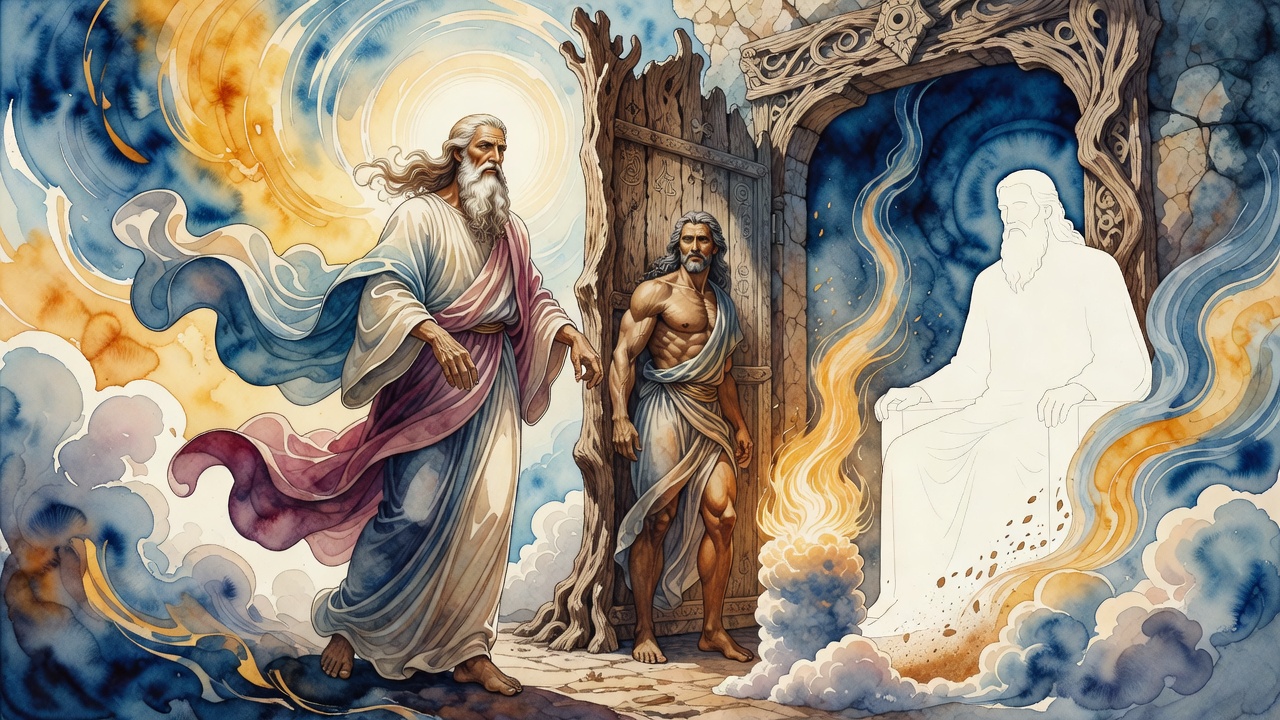
Adam pushed both hands into the dirt after the sentence landed, and the dirt was warm and gritty and exactly what he had just been told he was.
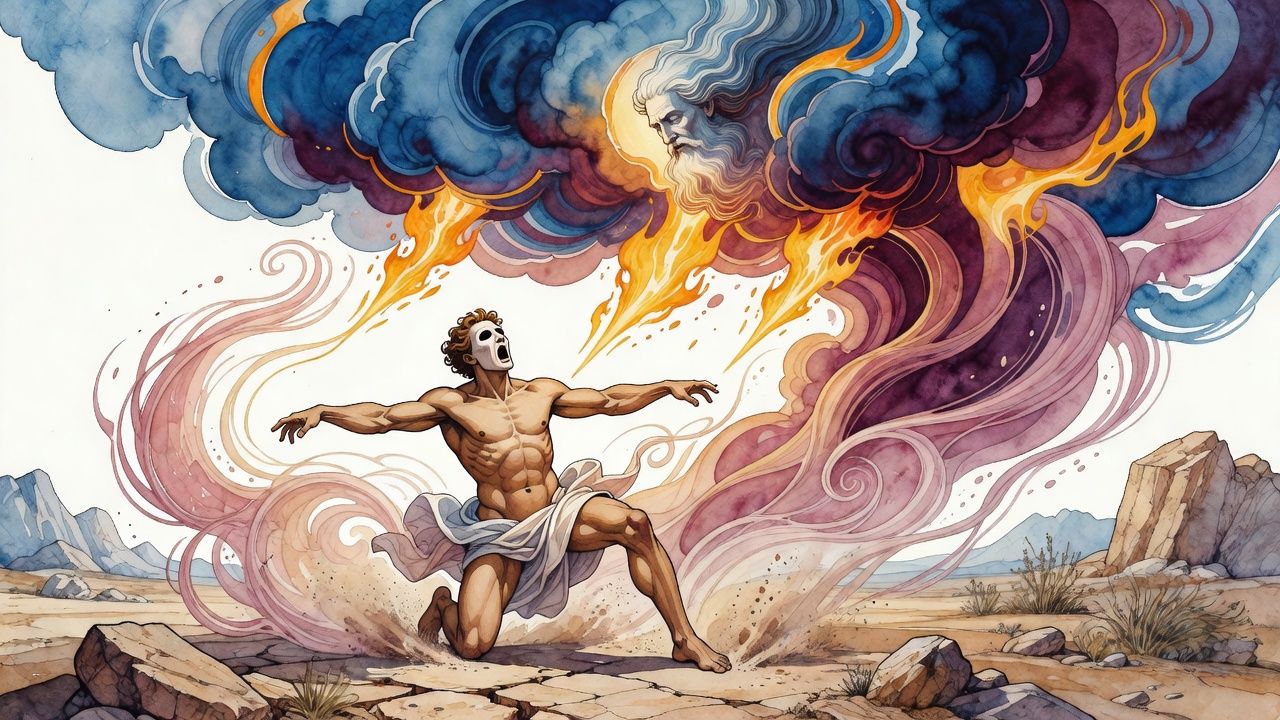
Adam Heard Dust Claim Him While Breath Still Lived Click for full size

Dust thou art, and unto dust shalt thou return (Genesis 3:19). He heard the dust claim him while he was still plainly alive, and he breathed in, and the breath did not feel like dust. It never had.

Made of Earth and of Heaven

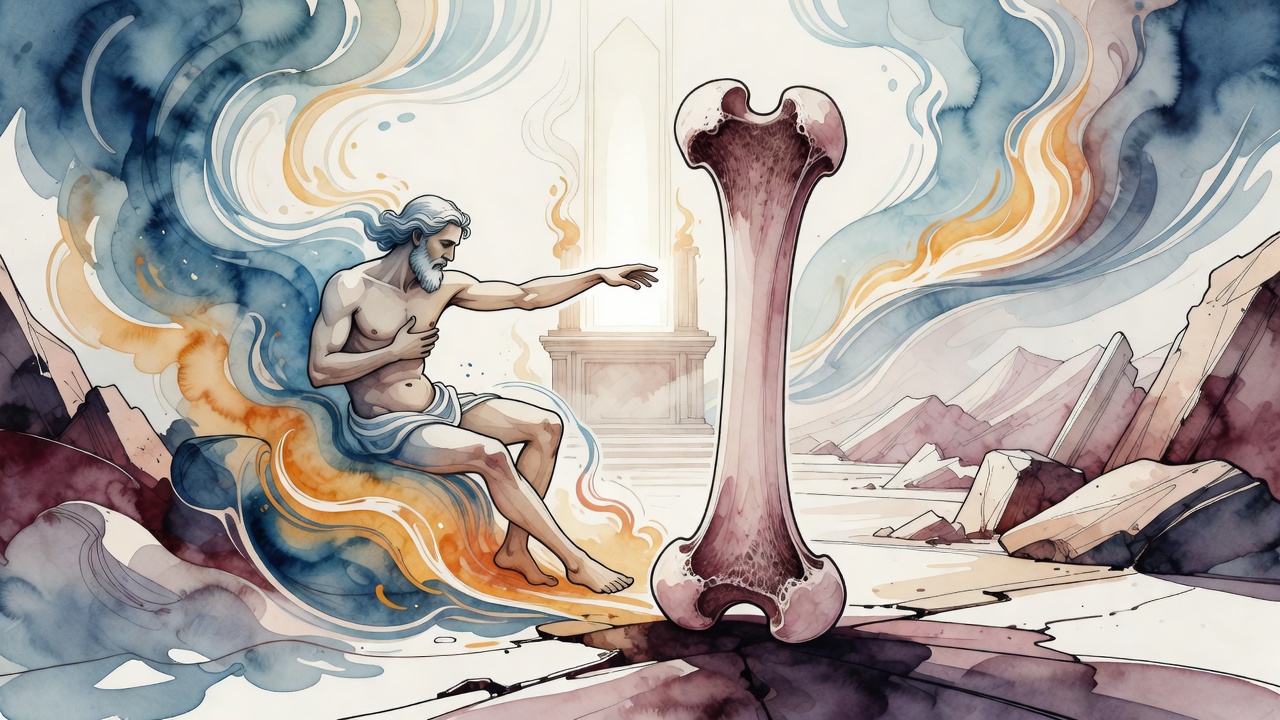
He had not been scraped out of the ground and left at that. Anyone who had watched the making would say so. Clay was one half of it. The other half had come down from somewhere with no clay in it anywhere, and the two had been fitted together into a single man who could stand up and walk about and know what he was doing.

So the sentence was strange on its face. If he was earth and heaven both, why did only the earth get named when the end of him was read out? Half of him had never been in the ground and could not be put back into it.

He turned his palms over and looked at the dirt packed into the creases.

He Went Down to the Heavier Half

The answer sat in what he had already done.

He had not stayed uncorrupted. He had been handed one command and had held it cheap, and in the hour he held it cheap he ran from the better part of himself, the part that came from above, and threw his whole weight in with the other. Earth is the denser element. It is the heavier one. It is what goes down when a hand lets go. Adam had let go.

A man does that twice, as it turns out. Once when he first prefers pleasure to the thing that would have kept his soul alive, and again every time afterward. Anyone burning for what is good is travelling the opposite way and will finish where he began, above. Anyone greedy for the other thing finishes where he began as well. He came out of the ground and he is going back into it, and the ground is his door and his floor both.

Adam had picked his element. The sentence only read it back to him.

The Spirit Would Not Keep Striving

Generations later the earth filled up with people who made the same choice faster.

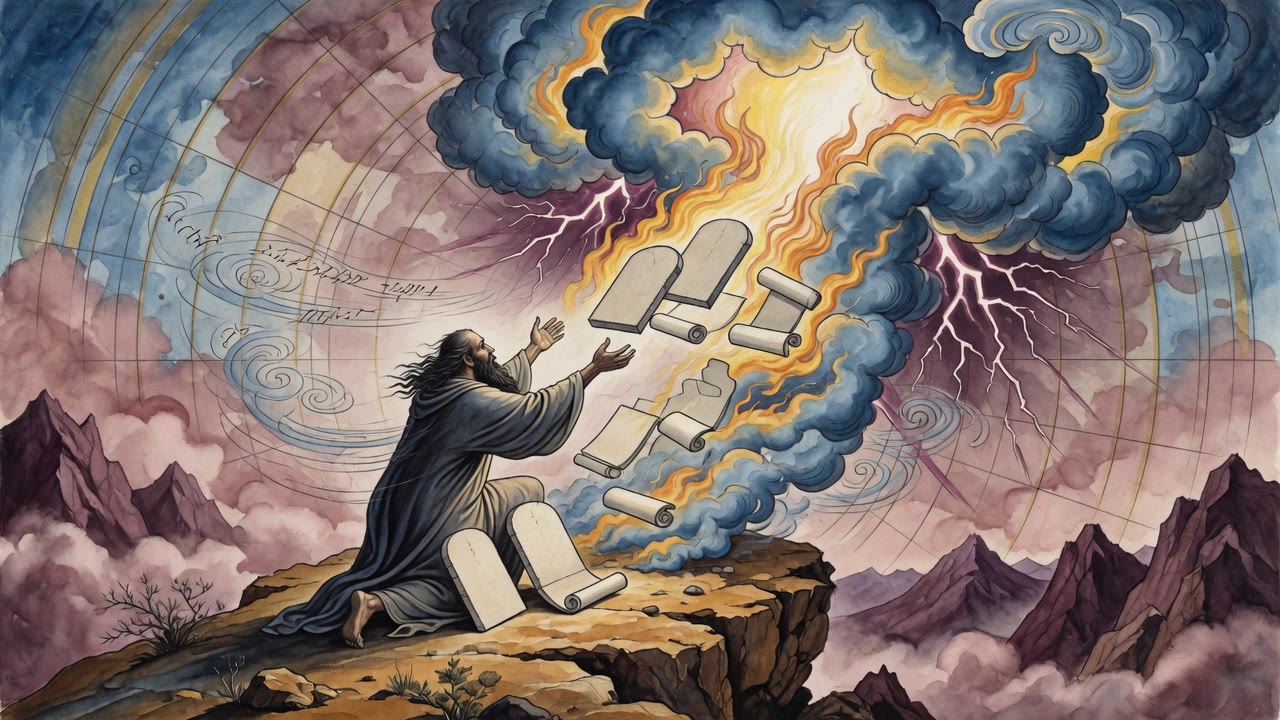
Then a word came down over the whole race. My spirit shall not always strive with man, because he is but flesh (Genesis 6:3). It came out sounding like a statute, and a statute is what it was.

Nobody in those cities felt a wind change. There was no sound to hear. What there was, for anyone who would have recognised it, was an absence. Something that used to arrive and stand inside a person and make him able to see straight had stopped arriving.

What Filled Bezalel

Because that spirit was never a movement of air.

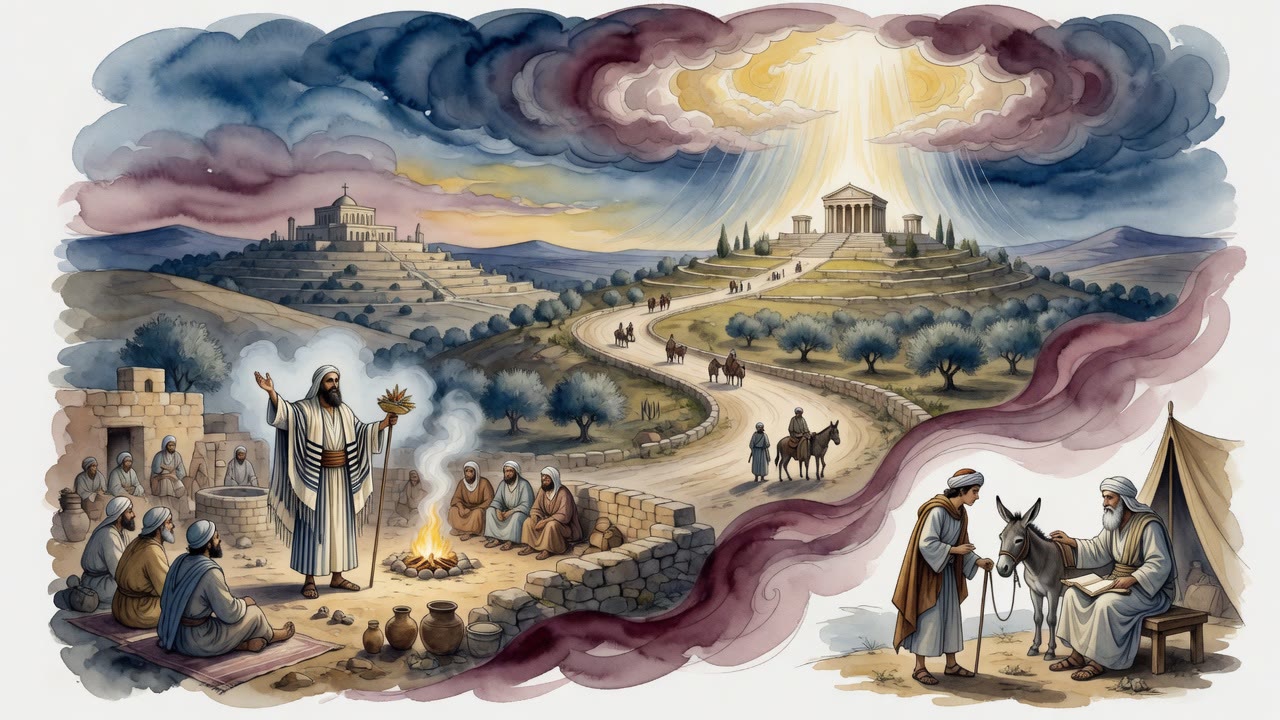
Long after the water went down, a man named Bezalel sat in a camp in the wilderness with gold and acacia wood in front of him and no training behind him, and God filled him with the divine spirit of wisdom and understanding, and he built the tabernacle. He cut the stones and set them. He worked the gold and the silver and the brass and carved the timber, and every join in the thing came out right the first time.

Intelligence, then. Not breath. Wisdom, arriving whole in a man who did not have it an hour earlier.

And it comes, and then it does not stay. It visits. It does not settle in and take up residence, and God said plainly why. Because they are flesh.

Because They Are Flesh

Flesh will not hold wisdom, because flesh has already sworn itself to something else. It is bound to wanting. The two cannot both live at full strength in one house, and the one that collects rent daily wins.

A light soul with nothing dragging behind it has no trouble whatever. It looks at the world and understands what it is looking at, because a clean disposition arrives together with steadiness, and the two of them come as one gift.

The generation before the flood had neither. When the rain started they walked out into it with their mouths open, and the water took what the ground had been promised, and Adam's old sentence came due on every one of them in the same week.


← All myths
From the tradition

Sources

4 sources

The texts behind this telling. Some cards carry a translation of the source; others are our own retelling of it, and each card says which. Every card links out to the original.

The Midrash of Philo 19:1The Midrash of Philo

Retold in our words. Read the original at the link below.The Works of Philo Judaeus, trans. C. D. Yonge, London, H. G. Bohn, 1854-1890 · Public Domain

The verse that phrase alludes to, of course, comes from (Genesis 3:19), part of the consequences faced by Adam after eating from the Tree of Knowledge. God tells him, "Till you return to the ground, since from it you were taken; for dust you are and to dust you will return."

Is that all there is to it? Just dust?

Some ancient Jewish texts suggest a far more nuanced view. Take, for instance, the fascinating question posed in The Midrash of Philo. It asks, regarding (Genesis 3:19): "What is the meaning of the expression, 'Until thou returnest to the earth from which thou wast taken;' for man was not created out of the earth alone, but also of the divine Spirit?" The Midrash (rabbinic interpretive commentary) isn't denying the earthly origins of humanity. We are, after all, formed from the adamah, the earth – the very wordplay in Hebrew connects us to the ground beneath our feet. But the Midrash subtly reminds us that there's something more to the story. We weren't just sculpted from clay.

What’s that "something more?" The Midrash of Philo suggests it's the "divine Spirit." The neshamah, the soul, the breath of God breathed into Adam, as described earlier in Genesis.

This idea complicates the simple "dust to dust" equation. If we're made of both earth and divine spirit, what happens to that spirit when we "return to the earth"?

Well, that's where Jewish tradition offers a wealth of perspectives. Some believe the soul returns to its source, reuniting with the Divine. Others envision a period of purification, a Gehenna (often misunderstood as "hell," but more accurately a spiritual cleansing). Still others focus on the enduring legacy we leave behind, the impact we have on the world that continues even after our physical bodies are gone.

The beauty of this Midrash, and of much Jewish thought, is that it doesn't offer easy answers. It invites us to confront profound questions about our existence. It challenges us to consider not just our physical nature, but also the spiritual spark within us.

It's also a reminder of the divine within us, a spark that, according to some interpretations, transcends the earthly realm. It’s about the enduring mystery of what it truly means to be human. And perhaps, just perhaps, it's a little bit about hope.

Full source
The Midrash of Philo 19:2The Midrash of Philo

Retold in our words. Read the original at the link below.The Works of Philo Judaeus, trans. C. D. Yonge, London, H. G. Bohn, 1854-1890 · Public Domain

Ancient Jewish wisdom has something profound to say about that very human struggle.

Philo of Alexandria, a Jewish philosopher living in Egypt in the first century CE, offered a unique interpretation of the creation story. He wasn't just reading it literally; he was diving deep for hidden meanings. And in his writings, particularly in what's known as The Midrash of Philo, he unpacks the story of Adam in a truly fascinating way.

Philo suggests that the first human, Adam, wasn't just a being of earth. He was a blend of earth and heaven. We have a spiritual, a heavenly, dimension too. But here's the kicker: Adam didn't hold onto that heavenly aspect. He succumbed to temptation, he disobeyed God, and in doing so, he prioritized the earthly, the material, over the spiritual. He became a slave to the "denser and heavier element," as Philo puts it.

That pull of the material world, drawing you away from what you know is truly important?

Philo goes on to draw a powerful parallel. If we yearn for virtue, for the kind of goodness that makes the soul immortal, we can attain a heavenly inheritance. But if we chase after pleasure alone, if we give ourselves over to the things that ultimately lead to spiritual death, we, too, are giving ourselves back to the earth. This is why, Philo says, God declared, "Dust thou art, and unto dust shalt thou return." (Genesis 3:19).

For the wicked, the depraved, the earth is both their beginning and their end. They are consumed by the material. But for those who strive for virtue, for those who cultivate their spiritual selves, heaven is both their beginning and their end.

Perhaps it's an invitation to examine our own lives. Are we prioritizing the earthly over the heavenly? Are we letting the "denser and heavier element" weigh us down, or are we striving for virtue, for that spark of the divine within us? It's a question worth pondering, a question that echoes through the ages from the very beginning of our story.

Full source
The Midrash of Philo 3:1The Midrash of Philo

Retold in our words. Read the original at the link below.The Works of Philo Judaeus, trans. C. D. Yonge, London, H. G. Bohn, 1854-1890 · Public Domain

The Midrash of Philo asks: What is the meaning of "My spirit shall not always strive with man, because he is but flesh"? (Genesis 6:3).

The source holds the question on the verse. It does not invent a decree scene beyond that wording.

Full source
The Midrash of Philo 3:2The Midrash of Philo

Retold in our words. Read the original at the link below.The Works of Philo Judaeus, trans. C. D. Yonge, London, H. G. Bohn, 1854-1890 · Public Domain

When we say "The Midrash of Philo," it's important to clarify we aren't talking about a midrash (rabbinic interpretive commentary) in the classic rabbinic sense. Instead, it refers to interpretations and elaborations on biblical text found within Philo’s philosophical works. Philo's writings, though influenced by Greek thought, offer a unique lens through which to view Jewish tradition.

Here, Philo grapples with the idea of the ruach (spirit) hakodesh, the divine spirit, and how it interacts with humanity. Is it something constant? Something fleeting? Like an oracle, he suggests that the divine spirit operates almost like a law, not merely a gust of wind.

The divine spirit, he emphasizes, isn't just some airy-fairy notion, but rather, intellect and wisdom itself. Think about Bezalel, the incredibly skilled artisan who built the mishkan, the Tabernacle. As the scripture says, God “filled him with the divine spirit of wisdom and understanding.” (Exodus 31:3). So, the spirit definitely descends upon people.

Here's the kicker: Philo suggests that this spirit doesn’t necessarily stick around. It comes, but it doesn't necessarily abide or persevere within individuals. Why not?

The reason, according to Philo, echoing a verse from Genesis (6:3), is “because they are flesh.” In other words, our physical, earthly nature can be a barrier to maintaining that connection with the divine. The desires and inconsistencies of the flesh can cloud our judgment and hinder our access to true wisdom.

The disposition of the flesh, Philo argues, is inconsistent with wisdom because it aligns itself with desire. That our very physicality, our human desires and impulses, can actually get in the way of spiritual insight.

So, what's the solution? Philo suggests that "incorporeal and light souls" – those unburdened by the constraints of the flesh – are better equipped to understand the nature of things. They aren’t hindered by earthly desires. A pure disposition, acquired together with constancy, allows for a clearer discernment and comprehension.

Philo's thought is a call for self-reflection. Are we allowing our "fleshly" desires to cloud our judgment and prevent us from accessing deeper wisdom? It's a question worth pondering, even today.

Full source