Adam Dies Seventy Years Short of One Full Day
Adam had already eaten. He lived nine hundred thirty years and died inside a day that lasts a thousand. That same year Cain's house fell.
Table of Contents
 Click for full size
Nine Hundred Thirty
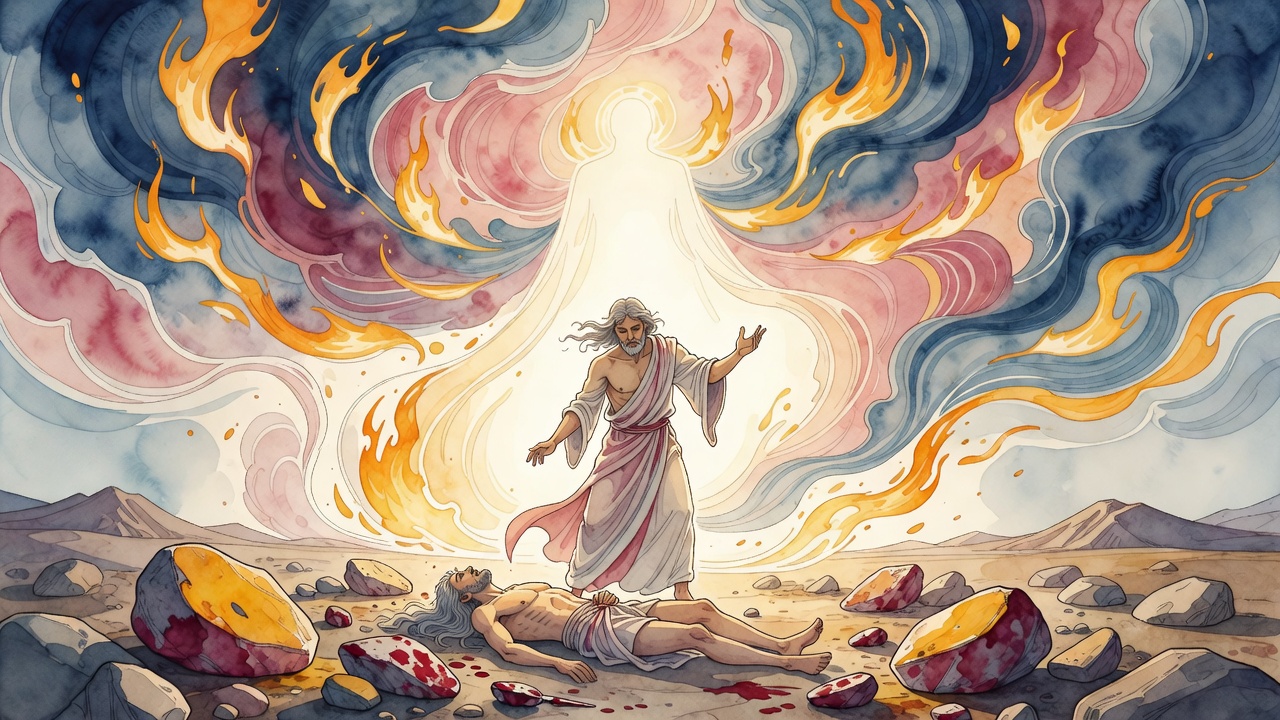
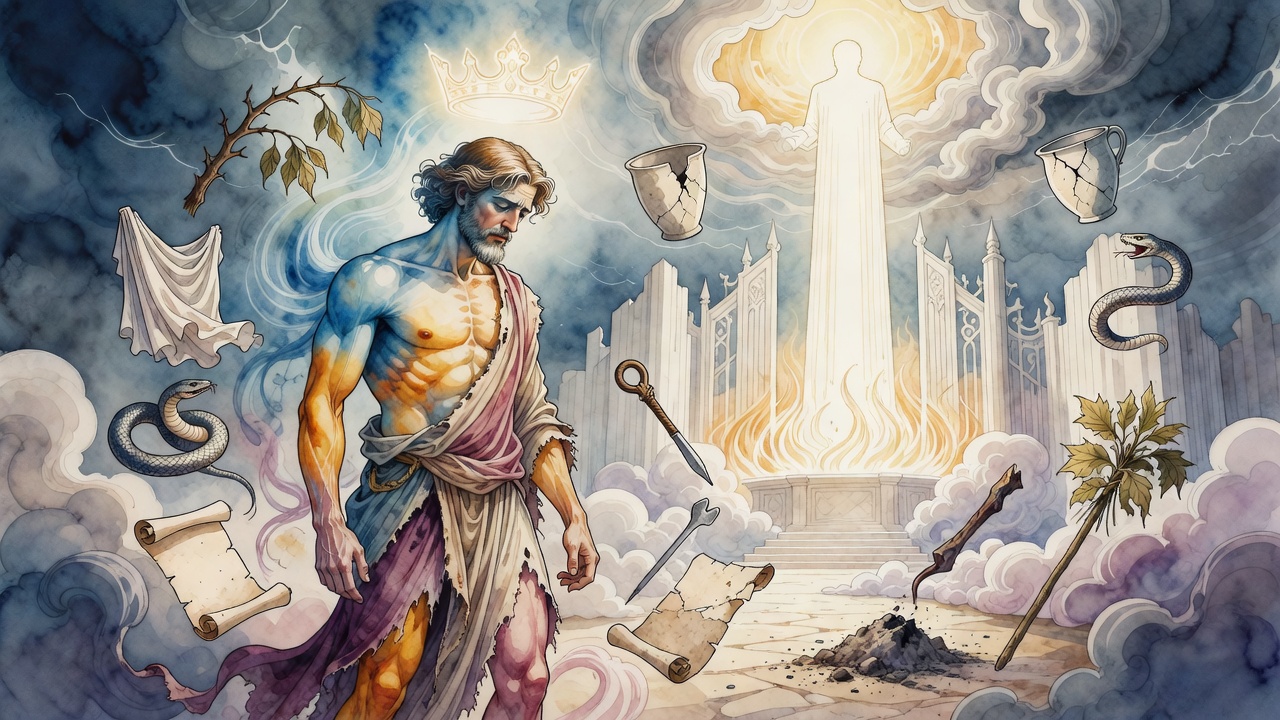
Adam lay down knowing the number. Nine hundred thirty. Not a thousand. He had eaten from the tree, and the warning had been plain. "On the day that you eat thereof, you will die" (Genesis 2:17).
He had not dropped in the hour of the bite. He had walked out under flame. He had named animals he would never see again in the same light. He had buried a son. He had watched the other son tear the world he had been given whole. The sentence still held, if a day is not measured by a clock that resets with every sunrise.
His bones kept the winters. Rings in a tree. Breath after breath after the garden door closed. Longevity was not a gift without weight. It was time enough to see the cost of one meal under a forbidden tree, paid in installments across nearly a millennium.
The Day That Lasts a Thousand
He had heard it in the testimony of the heavens: one thousand years are as one day. He counted his own years and came up seventy short. The warning had not been empty. It had been spoken in a larger grammar.
Mercy had given him centuries of breath, marriage, labor, and regret. Judgment still closed the book before the thousandth year could make the word look false. He died inside the day he had been promised.
Human mouths say "day" and mean sunrise to dark, a span short enough to hold a meal and a sleep. Heaven can mean a thousand years folded into one unit of testimony, a day large enough to hold a whole life and still call it a single sentence. Adam's long life does not disprove the word. It shows how large the word was, and how patient the Judge who still finished on time.
Four Weeks of Years for Abel
Eve and Adam mourned Abel for four weeks of years. Twenty-eight years of a house without that son's voice. No one rushed them. Grief had a count, and they paid it in full.
In the fourth year of the fifth week they became joyful, and Eve bore Seth. Adam named him with the wound still in the name. "God hath raised up a second seed unto us on the earth instead of Abel, for Cain slew him."
Outside Eden the ground took work like a creditor. Thorns answered sweat. Cain walked marked and restless, building as if walls could outrun a cry. Abel's blood had already cried from the soil in a voice no shovel could quiet. Adam watched the first family learn every grief that would later fill the earth: envy, murder, wandering, the long silence after a funeral.
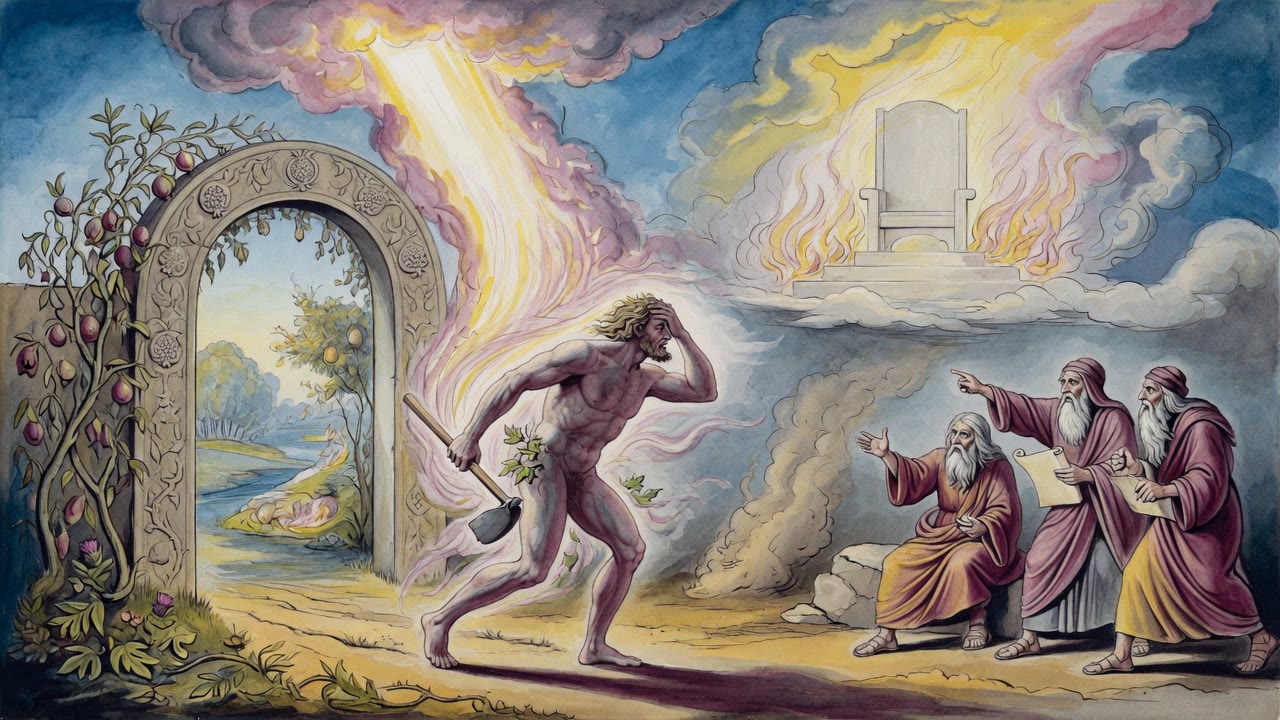
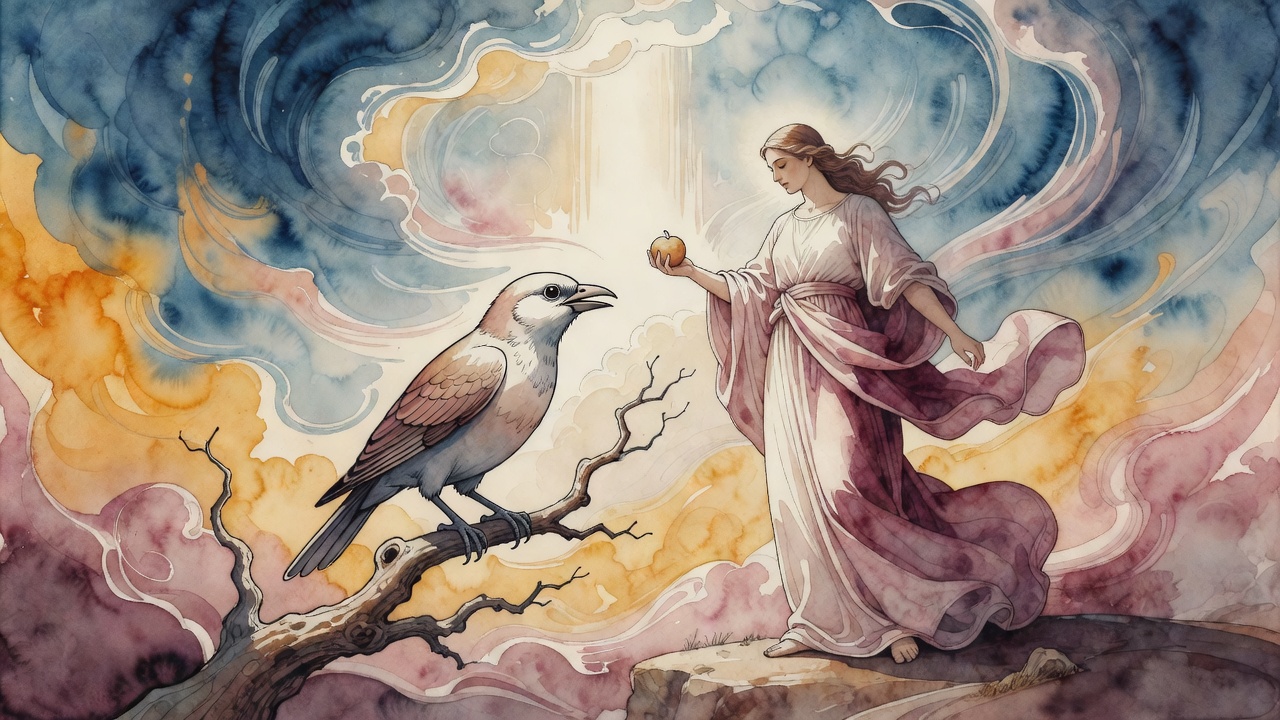
He remembered the voice in the garden in the cool of the day. He remembered the skins that covered shame when leaves failed. He remembered the way back barred by flame that did not flicker like ordinary fire. Every sunrise of those nine hundred thirty years rose on the far side of a door he could not reopen.
Cain's House Fell on Him
At the close of the same jubilee in which Adam died, Cain also fell.
He was inside when the first stone shifted. Dust. A crack along the wall he had raised with his own hands. Then the roof came down. He had time to lift an arm. He did not have time to leave. The house that was supposed to prove he could build a life after murder became the judgment.
With a stone he had killed Abel. By a stone he was killed. The ground that drank the brother's blood found a way to answer in kind through Cain's own building.
Cain had married. He had built. He had fled the sound of blood that would not stop crying. Silence never came, not in fields, not in cities, not in the long evenings when work ended and memory began. When the stones finally answered, they answered without speech. The man who would not be his brother's keeper found no keeper in his own walls.
The Missing Seventy
When Adam was gathered to the earth, the first human corpse of natural age closed a chapter the world is still reading. Death had entered through a choice under leaves. It left Adam through a number heaven had announced in advance, without needing a second drama of fruit.
Cain's fall in the same jubilee made the generation's ledgers bleed into each other. Father and first killer. Garden and city. Tree and stone. Warning and house-collapse.
Seventy years short of a thousand is not a near miss celebrated with relief. It is the visible remainder of a debt. Every birthday after the garden was borrowed time inside a verdict already spoken. The missing seventy hangs like an unpaid hour no calendar can rename as mercy alone.
No angel needed to explain the number to the dust. Nine hundred thirty is enough. The first man dies short of a thousand. The first murderer dies under stone. The earth keeps both, and the testimony of the heavens keeps the math.
← All myths