A Young Man Dreamed His Way Out of Gehinnom
Two companions vanished at the gates. He hid under a tallit to slip out. He woke coughing, and the cough never left him.
Table of Contents
 Click for full size
The Field Tilted
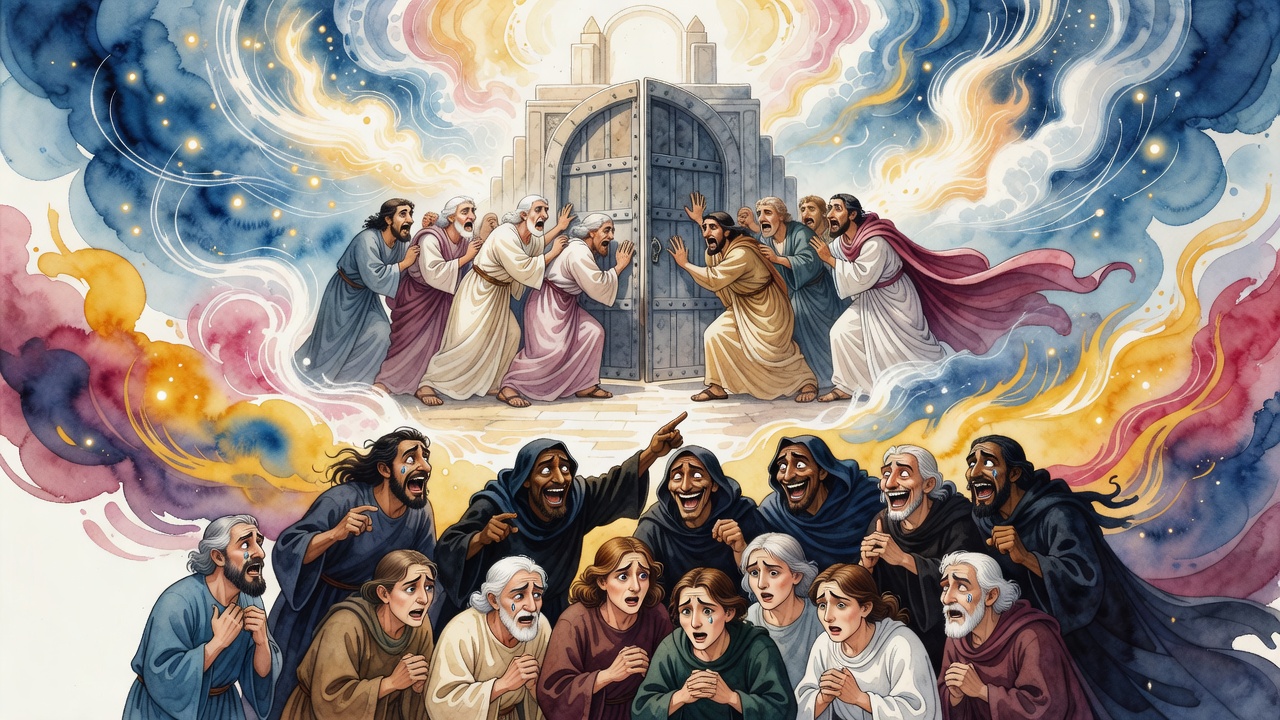
The young man did not mean to die from a dream. He only followed two Hasidim through a field, talking as young men talk when the air is cool and the world feels too thin to hold them. Together they decided to visit Gehinnom (גיהנם), the fiery place of punishment after death. The decision sounded like a dare until the field tilted and the first gate rose in front of them.
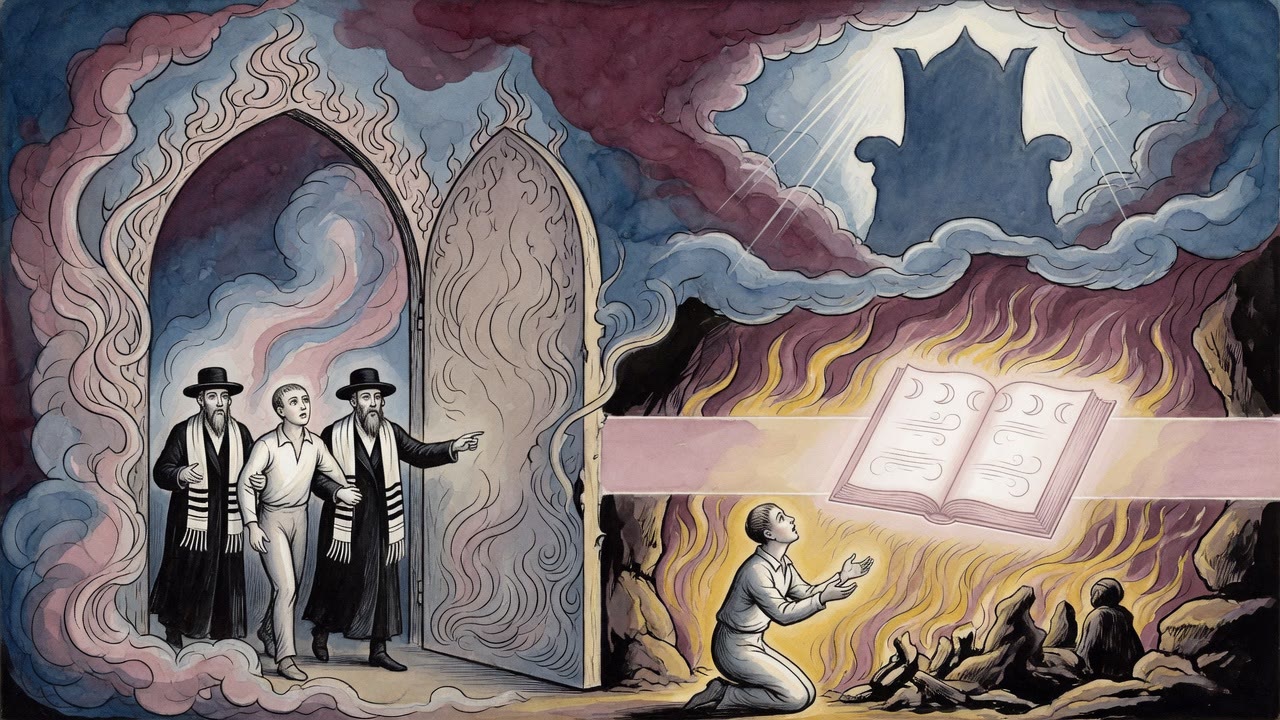
The first gate was only a corridor. They opened it. One companion was gone. The second gate was another corridor. They opened it. The second companion vanished. Names that had walked beside him became empty air.
He stood alone with the choice. Leave, if he could. Enter, if he dared. His feet chose before his mouth did. Since he was already there, he went in.
Bodies Like Sheaves
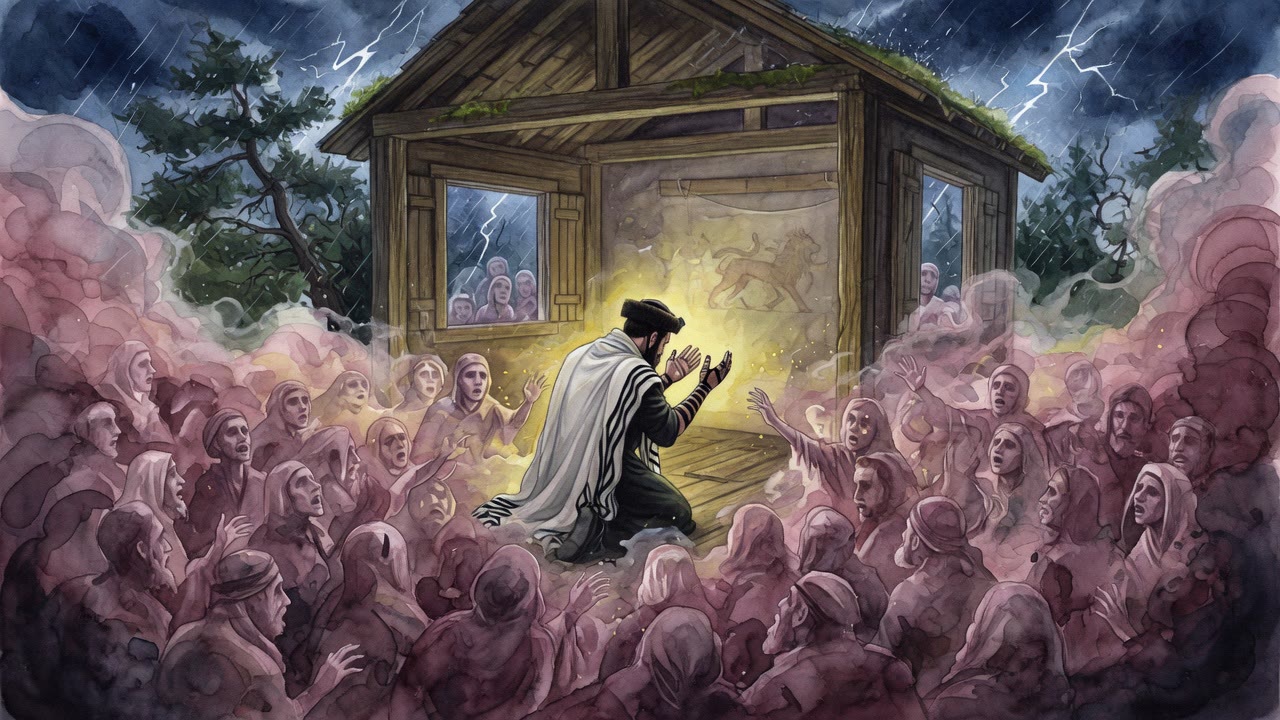
Inside, a man stood at the gate in tallit and tefillin, dressed for prayer in a place built for fire. Beyond him lay bodies consumed by flame, piled like sheaves on a threshing floor. One body belonged to a young man from Baar whom everyone had thought honorable. The dream tore away that public name and showed where he was lying. Honor in the marketplace had not followed him through the gate.
The gatekeeper asked where he was from. Mezhibuzh, the young man said, then corrected himself the way people from that town always corrected themselves. From Baar. The gatekeeper told him to walk around the pile and look. He looked. He recognized the face. Shame hit him harder than heat.
The strangest detail was the quiet. No one was being judged that day. The fire waited. The piles waited. The bodies lay still as grain.
The Prayer That Stopped the Fire
He asked why the wicked were not being judged. The gatekeeper already knew. "You forgot Ya'aleh Veyavo. It is Rosh Chodesh." The new-moon insert. Even Gehinnom had paused for a line of liturgy the dreamer had left out of the evening prayer. A missing sentence had stopped a world of punishment.
He begged to leave. He named living people. He said he was an honorable man. The gatekeeper did not need a long speech. He named the thoughts the young man had carried while collecting charity. He named a tuition debt still unpaid. Honor, spoken at the gate, sounded thin.
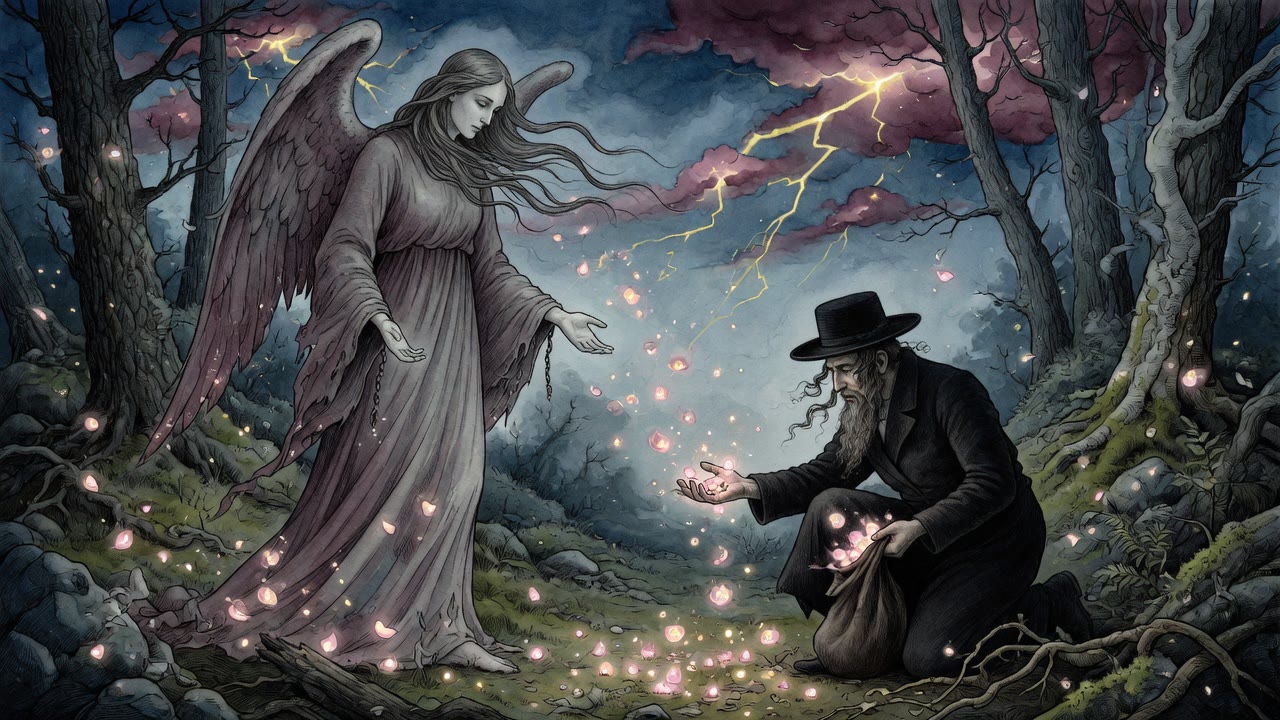
"I will not let you out," the gatekeeper said. Then he offered the only door he had. Hide under my tallit. The prince of Gehinnom will come in a great storm. When the gate opens, slip out.
A roar rose far off. The bodies began to tremble. The young man crawled under the fringes and held his breath. The prince arrived. The gate opened. He dropped, rolled, and ran.
He Woke Coughing
A little of the storm entered him as he fled. He woke in his bed coughing, a cough they called hosht, as if a wind had taken a room in his chest. From that day the cough stayed. It stayed a year. Then it killed him. The dream had let him escape. It had not let him return untouched.
In the morning, before the cough had finished its work, the world looked ordinary. Bread on the table. Work waiting. The name of the man from Baar still clean in public mouths. Only the dreamer knew where that name had been stacked among the sheaves.
He had walked the gates for a night and returned with a hard instruction. Do not treat a small prayer as decoration. Gehinnom had paused for Ya'aleh Veyavo. Heaven had used a dream as bread, and the bread had scraped going down.
Another Sleeper, Another Palace
Elsewhere a stubborn teacher named Moshe could not crack a Tosafot in tractate Shevuot. Two weeks of daylight failed him. Then he entered a palace in sleep and found the Baal Shem Tov waiting. The Besht asked why he did not know the plain sense, and told it to him.
Moshe woke, took the Talmud to moonlight, and saw that the reading held. He still told himself it was only a dream. At the third Shabbat meal the Baal Shem Tov spoke the same reading aloud. Then Moshe knew who had taught him in the night, and he drew close.
The same road. Two destinations. One sleeper got a Tosafot and a master. The other got a tallit to hide under, a cough, and a year. Sleep is not empty. What a person has been building while awake is what the night feeds, or burns.
The young man is not a righteous person in the tale. He is a witness who almost stayed, and who did not come back whole.
← All myths