5 min read

Elijah Found the Baal Shem Tov on a Mountain

With wet flour stranded on a mountain road before Passover, the Baal Shem Tov weeps until Elijah answers, and fire later crowns his dancers.

Curated by Arthur · Told by Maggid ·
Table of Contents
  1. Help That Did Not Stop at the Road
  2. Fire Around the Dancers
  3. Grain Barrels That Trembled Like Sinai
  4. From a Tear to a Canopy of Flame

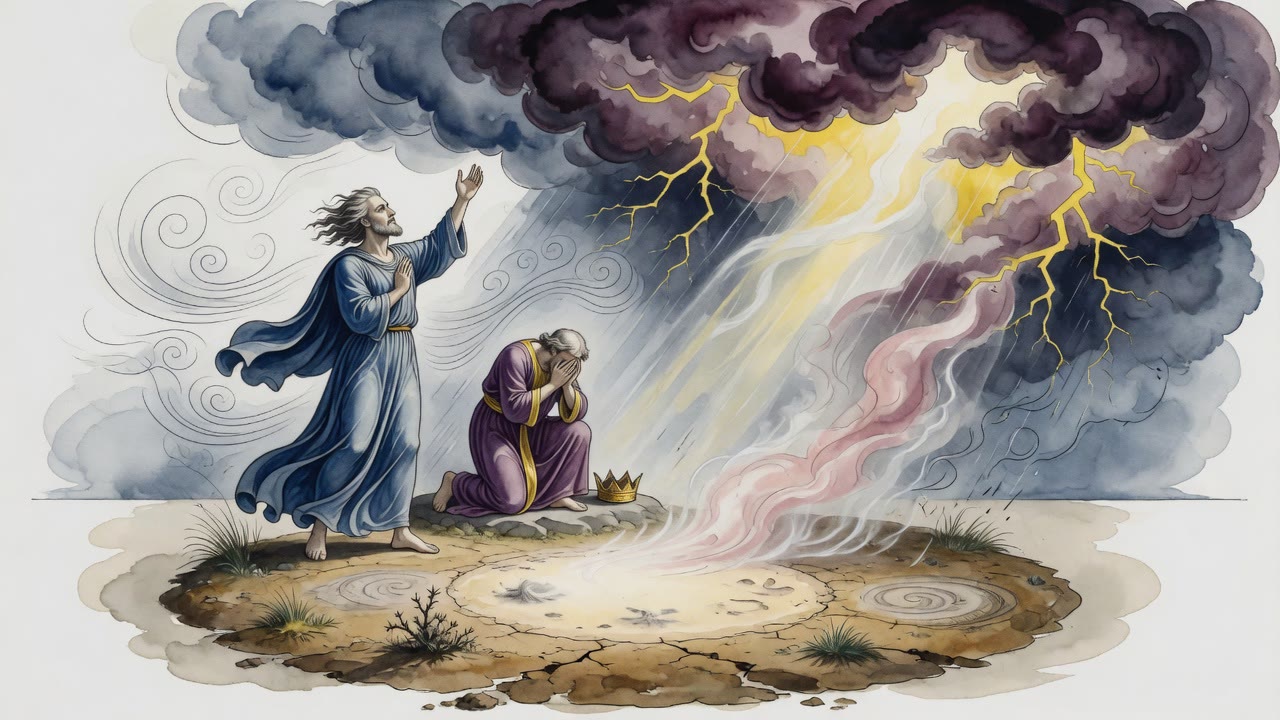
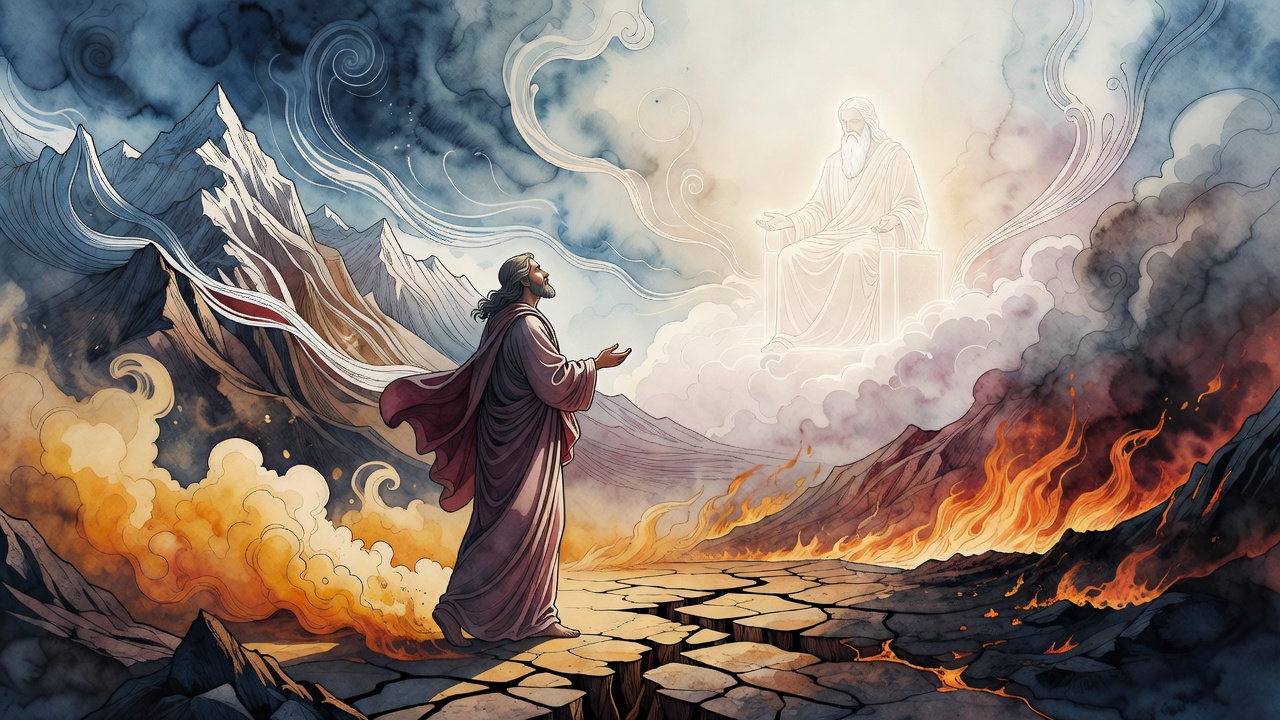
The Baal Shem Tov had no matzot and no meat for Passover. He went from village to village until flour and meat rode home with him, dust on his boots and hope thin as the sacks. Then rain fell on the flour before it could be unloaded. The load that was meant to become bread for free people turned wet on the road. He went out again. Near home the wagon stalled on a mountain. The horse died halfway up. He pulled the wagon himself until his strength gave out and the wheels would not answer any more muscle.
Elijah Found the Baal Shem Tov on a Mountain Click for full size

He stood beside the wet flour and wept before God. That was the first time Elijah came to him. In a dream the prophet said the tear had been accepted and the prayer received. When he woke, a wagon arrived and carried him home. The mountain had not given him a speech. It had given him a tear that heaven could count.

Help That Did Not Stop at the Road

The dead horse became money for festival clothes. The hides his wife bought became garments. When a tax collector suspected him and threatened to inform against him, the Baal Shem Tov said he was not afraid. The man who meant to harm him died before the accusation could land. The mountain had not only answered hunger. It had answered the season and the danger that follows a man who has just been noticed by heaven.

Years later people would still speak of that road as the place where a hidden master learned that heaven listens to a body that has already spent its last strength on a load of flour. Elijah did not arrive for a man sitting at ease. He arrived for a man who had pulled a dead horse's wagon until his arms failed.

Fire Around the Dancers

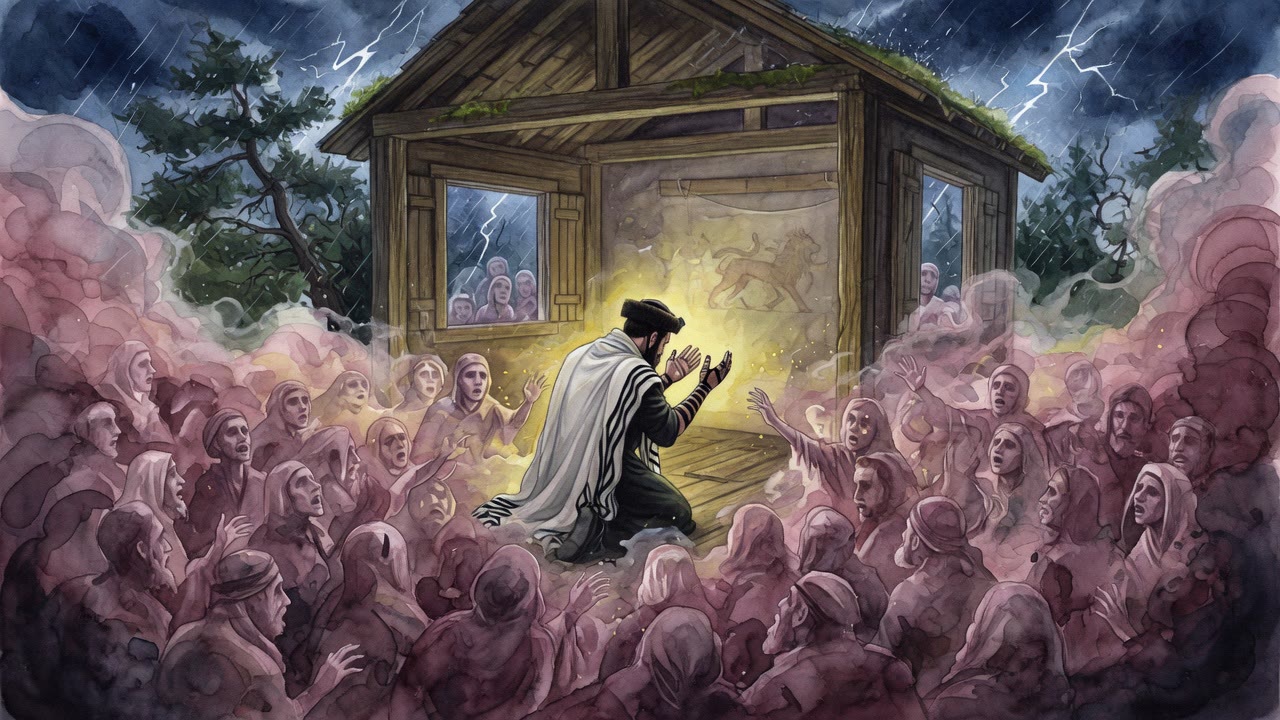
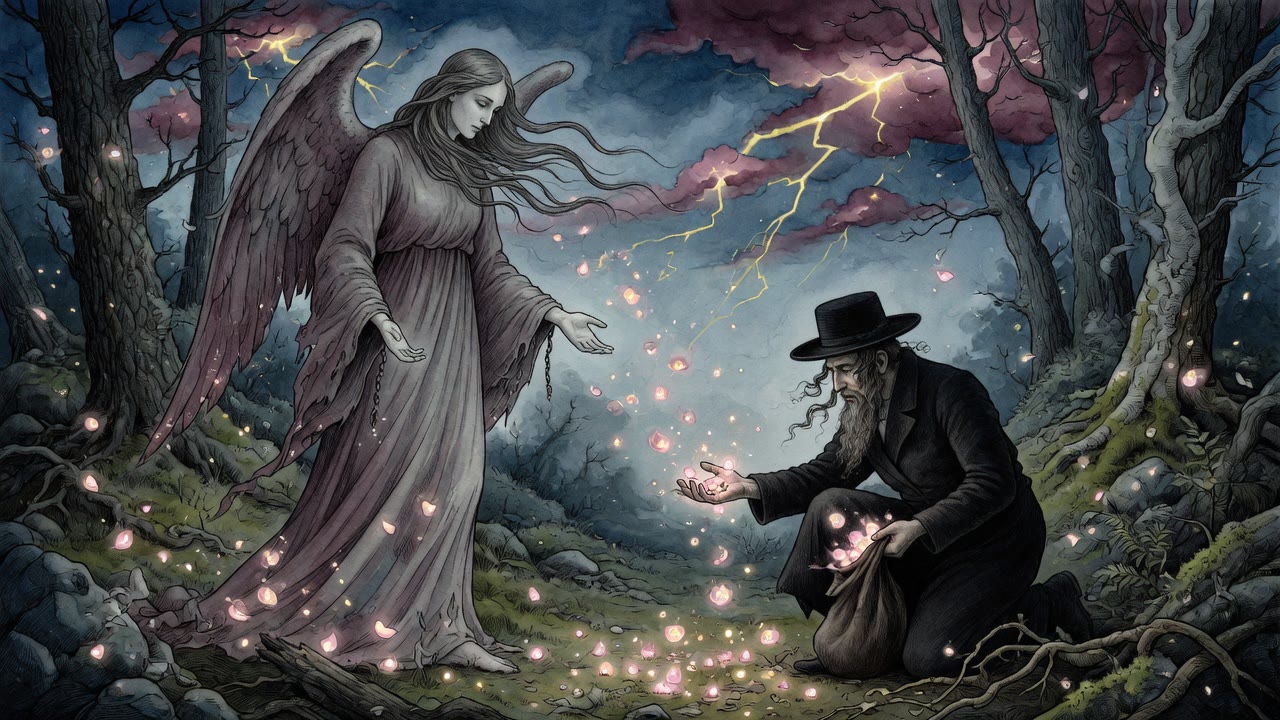
On Simchat Torah his chosen companions danced and drank from his cellar until his wife feared there would be no wine left for kiddush or havdalah (the rite that closes the Sabbath). Ordinary supply is a holy worry too. She went to him and asked him to stop them. He laughed and told her she was right. She should tell them to go home, as if the night could still be managed with a household word.

She opened the door. The dancers moved in a circle, and fire burned around them like a canopy. Ordinary worry met a scene that was no longer ordinary. She did not stop them. She took the vessels, went down to the cellar herself, and brought them as much wine as they wanted. When he later asked whether she had sent them away, she gave the only answer left: he should have told them himself. A wife can count barrels. She cannot order a circle that fire has already crowned.

Grain Barrels That Trembled Like Sinai

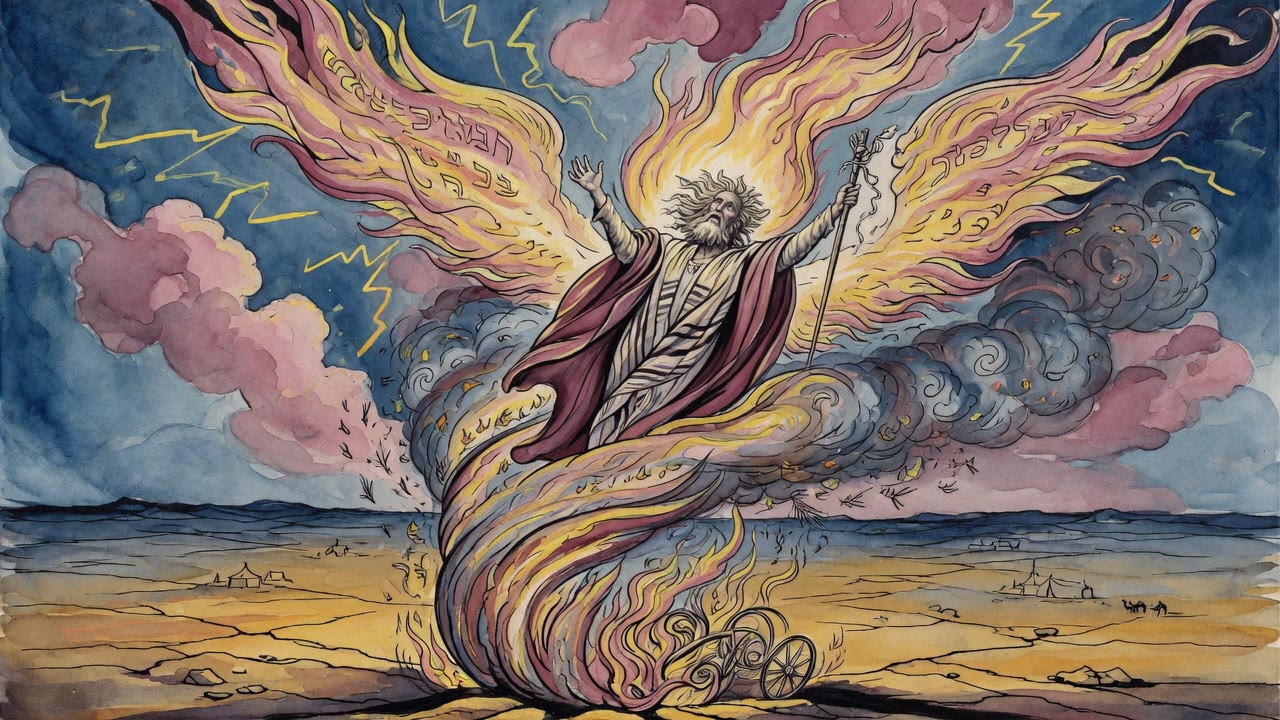
Once he prayed Minchah in a village storehouse among barrels full of grain. During the prayer the barrels began to tremble and dance. Dust lifted. Wood knocked wood. A witness reached for Sinai to name it: the mountain had trembled when God descended in fire. The same hour opened into the world of souls, as if the storehouse floor had become a thin place between work and ascent.

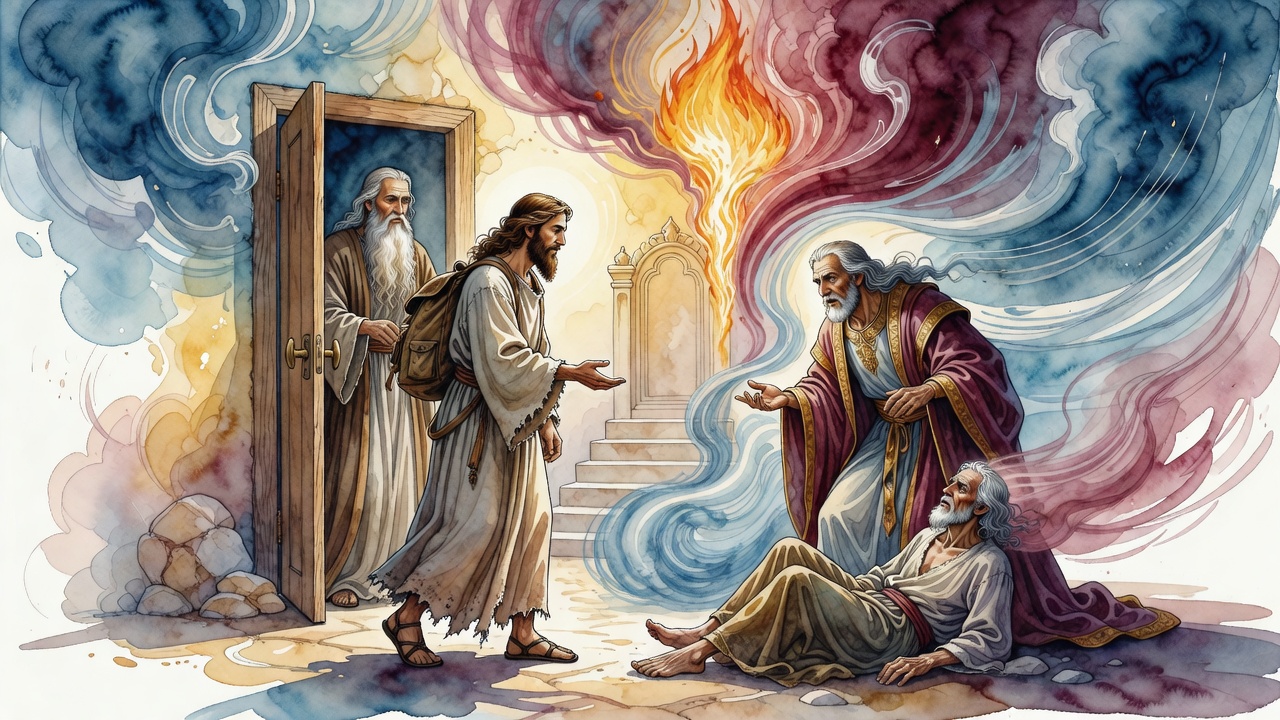
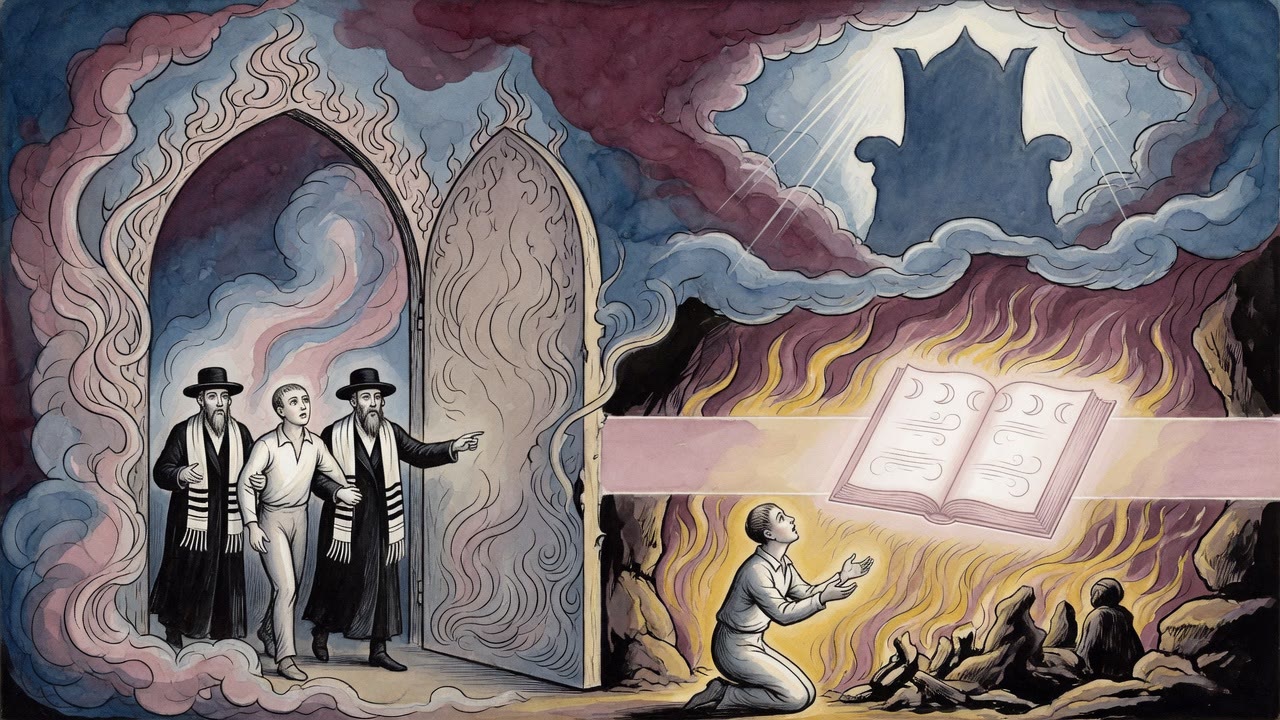
Rabbi Yosef, his prayer leader, dreamed a dead pious man who begged him to stop an unworthy match arranged for a young wise son. The living still make bargains that the dead can see more clearly. Then the dream climbed. Rabbi Yosef saw the form of an altar. The dead man climbed onto it, placed his head between his knees, and cried the litany of Aneinu, name after name, until he reached the God of the Merkavah (the divine chariot-throne). Then he flew to the firmament.

In the morning the Baal Shem Tov told Rabbi Yosef it had not been an ordinary dream. He had seen it too. The altar was the altar where Michael offers souls before God. Angels and souls, he said, do not rise from world to world without words strong enough to carry them. The storehouse prayer and the dream-altar were one teaching with two rooms: trembling grain below, offered souls above.

From a Tear to a Canopy of Flame

On the mountain the first gift was a tear accepted. In the storehouse the gift was trembling grain and a vision of souls rising on prayer. On Simchat Torah the gift was fire that made a worried wife become a servant of the dance. The Baal Shem Tov did not collect these hours as proofs for strangers. He lived inside them until the people nearest him could no longer treat holiness as a rumor told about someone else.

Passover flour, festival wine, and Minchah among barrels: three ordinary needs, three openings where heaven refused to stay theoretical. Elijah came for a man stranded with wet flour. Fire came for dancers who refused to stop. Michael's altar came for a prayer leader who needed to know that the dead still climb on words. The road, the cellar, and the storehouse kept one secret between them: the Baal Shem Tov's life was a sequence of places where heaven answered bodies that had already spent themselves.


← All myths
From the tradition

Sources

3 sources

The texts behind this telling. Some cards carry a translation of the source; others are our own retelling of it, and each card says which. Every card links out to the original.

Shivchei HaBesht 10Shivchei HaBesht

Translation of the source text.Shivchei HaBesht, Kopyst 1815 + JewishMythology.com faithful English Beta translation · Public Domain

I heard from Rabbi Gedaliah: once he had no matzot and no meat for Passover. He hitched his donkey to the wagon and set out on his way to the villages. He slaughtered in the villages and brought flour and meat for Passover. When he came, he told his wife to see to it that the flour was removed from the wagon. Rain fell and the flour became leavened, and she told her husband.

He checked the knife and traveled to the villages on the other side and brought flour for the festival. As he came near his house, there was a large mountain there, and the horse could not pull the wagon. He himself pulled the wagon to help the horse. Halfway up the mountain the horse died, and he had to pull the wagon himself, for he was afraid to leave the flour without guarding. His strength gave out, and he stood beside the wagon and wept a great weeping before the Lord, may He be blessed.

In the middle of his weeping, sleep fell on him and he dozed. Elijah, of blessed memory, came to him in a dream, and this was the first revelation to him. Elijah said to him, "Your tear has been accepted, and your prayer has been received. See, I will send you one gentile who will take your wagon with the flour to your house."

Immediately when he woke from his sleep, a gentile came with a wagon and horses and said, "Jew, tie your wagon to my wagon, and I will bring you to your house." When he came home, the gentile said, "What will you give me to skin your horse?" He gave him a sixer. Afterward a gentile came and bought the hide for four gold pieces, and the buyer said to him, "See that you clothe yourself and your wife for the coming festival with this money."

Some time later, caravan travelers brought marten hides. His wife went to her husband and asked him whether to buy or not, for in the winter he had his house of seclusion in a village, in a house he rented from a gentile. He told her, "You may buy them, for they are ownerless, because robbers will kill them all." She bought them with those four gold pieces. He made himself a fur coat and made his wife a fur garment for the festival.

When the tax collector who controlled the tavern saw that he and his wife had dressed themselves, he suspected that he was buying liquor from somewhere else besides him. He complained about him to Rabbi Gershon and said, "I honor you, but if he does not admit it and pay me my loss, I will have him beaten in the fortress." Rabbi Gershon said, "I will rebuke him."

When the Baal Shem Tov came to the city, Rabbi Gershon rebuked him. He answered, "These things never happened, Heaven forbid." Rabbi Gershon said, "From where did you get money to clothe yourself and your wife?" He answered, "The Lord gave it to me." He said, "Why does the Lord not give to me?" He answered him, "To you He does not give; to me He gives." Rabbi Gershon said, "See, the tax collector will inform against you in the fortress and you will be beaten." He said, "I am not afraid of him." In the end, when the tax collector wanted to inform against him, that tax collector died.

Full source
Shivchei HaBesht 33Shivchei HaBesht

Translation of the source text.Shivchei HaBesht, Kopyst 1815 + JewishMythology.com faithful English Beta translation · Public Domain

I heard this at the coming of the rabbi of Nemirov. Once, on Simchat Torah, the chosen companions of the Baal Shem Tov were rejoicing, dancing, and drinking a great deal of wine from the Baal Shem Tov's cellar.

The righteous wife of the Baal Shem Tov said, "They will leave no wine for kiddush and havdalah." She entered to the Baal Shem Tov and said to him, "Tell them to stop drinking and dancing, because no wine will remain for kiddush and havdalah."

The Baal Shem Tov said to her with a good laugh, "You have said well. Go tell them to stop and go home."

When she opened the door, they were dancing in a circle, and she saw that fire was blazing around them like a canopy. She took the vessels, went herself to the cellar, and brought them wine according to their desire.

Afterward the Baal Shem Tov asked her, "Did you tell them to go?" She said to him, "You should have told them yourself."

Full source
Shivchei HaBesht 16Shivchei HaBesht

Translation of the source text.Shivchei HaBesht, Kopyst 1815 + JewishMythology.com faithful English Beta translation · Public Domain

I also heard from the pious Rabbi Gedaliah, of blessed memory: once the Baal Shem Tov prayed the afternoon prayer in a village, in a room called a storehouse, and there were many barrels full of grain there. During the prayer there was a great dancing among the barrels because of the trembling, as it is written, "because the Lord descended upon it in fire, and the whole mountain trembled greatly" (Exodus 19:18). Thank God, I saw an aspect of the soul of Moses, of blessed memory.

I also heard from Rabbi Falk, who was exiled to Crimea with Rabbi Yosef Ashkenazi, the prayer leader of the Baal Shem Tov, at the time of the flight, and heard it from his mouth, and I heard it from him. Once Rabbi Yosef dreamed that he saw a pious man who had died and left a small son, a wise boy. An inferior marriage match had come upon him. The pious man came to Rabbi Yosef in the dream and asked him to go to his wife and tell her in his name not to make that match. Rather, whichever man came first to her house that day, with that man she should make the match.

Afterward he saw in the dream the form of an altar. The dead man ascended onto the altar, placed his head between his knees, and began to cry out the selichah, "Answer us, Lord, answer us; answer us, our Father, answer us," and the whole alphabet until the end. Afterward he said, "Answer us, God of our fathers, answer us; answer us, God of Abraham, answer us; answer us, Fear of Isaac, answer us; answer us, Mighty One of Jacob, answer us; answer us, Understander of tears, answer us; answer us, God of the Merkavah, answer us," and he flew to the firmament.

In the morning he went to the Baal Shem Tov and told the dream before him. The Baal Shem Tov said to him, "You think you dreamed a dream. It is not so. You saw a vision. I also saw it, and before my eyes it took embodied form. The altar is the altar on which Michael offers souls before the blessed Name."

Rabbi Yosef asked him, "Why did he say those words of 'Answer us'?" He answered that no angel and no soul can ascend from one world to another except through the prayers of "Answer us." He asked him, "Why did he say this wording?" He answered, "Because above, this is the wording." The Baal Shem Tov sent for the dead man's wife and told her the matters concerning the match.

Full source