5 min read

Elijah Fed a Beggar Who Broke the Sabbath

Heaven sent Elijah in rags with a pack on the holy day. Rabbi Eliezer opened the door. Another rich man scolded a poor man's body and lost everything.

Curated by Arthur · Told by Maggid ·
Table of Contents
  1. Guards at Every Gate
  2. The Pack on the Holy Day
  3. The Rich Man Who Measured Legs
  4. Two Doors, One Judgment
  5. What the House Remembers
Elijah Fed a Beggar Who Broke the Sabbath Click for full size

Guards at Every Gate

Rabbi Eliezer, father of Rabbi Israel Baal Shem Tov, did not wait for strangers to knock. He set guards at the entrances of his village and ordered them to bring every traveler straight to his table. Hospitality was not a mood in his house. It was a standing order. Food, water, a bed, and money for the road were prepared before the guest finished his first breath indoors.

Heaven decided to measure that kindness. The test would not be soft. The examiner would be Elijah the prophet, and the costume would be poverty that looked like sin.

The Pack on the Holy Day

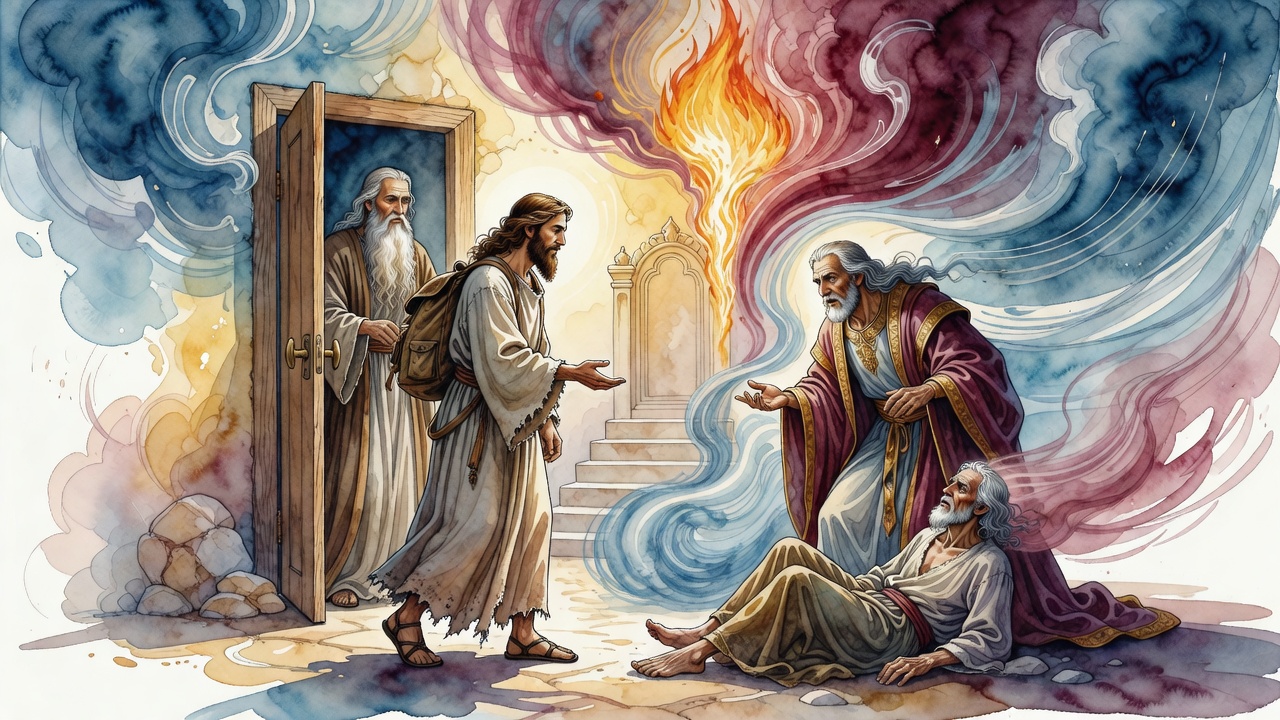
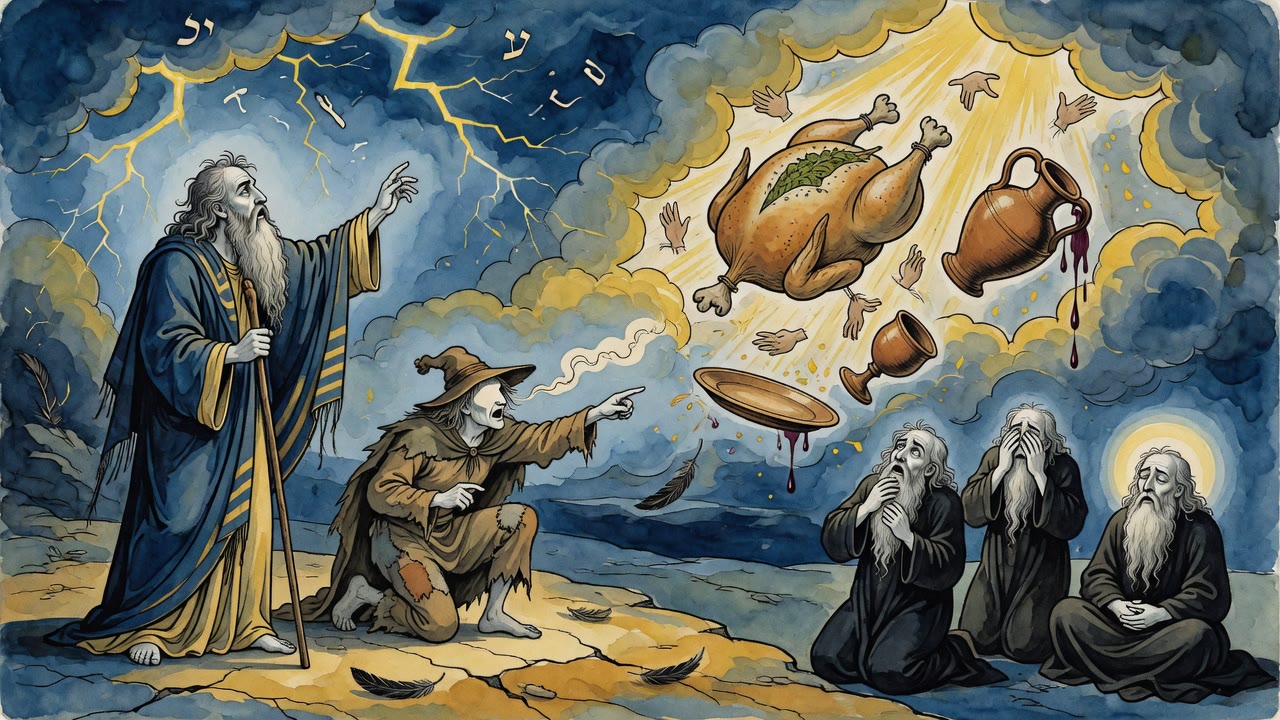
One Sabbath afternoon a beggar entered the village in torn clothes, knapsack on his back, staff in his hand. On the Sabbath, carrying such loads is a desecration of the day. The whole street could see the violation. Rabbi Eliezer did not flinch. He did not lecture. He did not ask the man to drop the pack at the gate and prove his piety first. He welcomed him, fed him, sheltered him, and in the morning pressed coins into his palm for the road ahead.

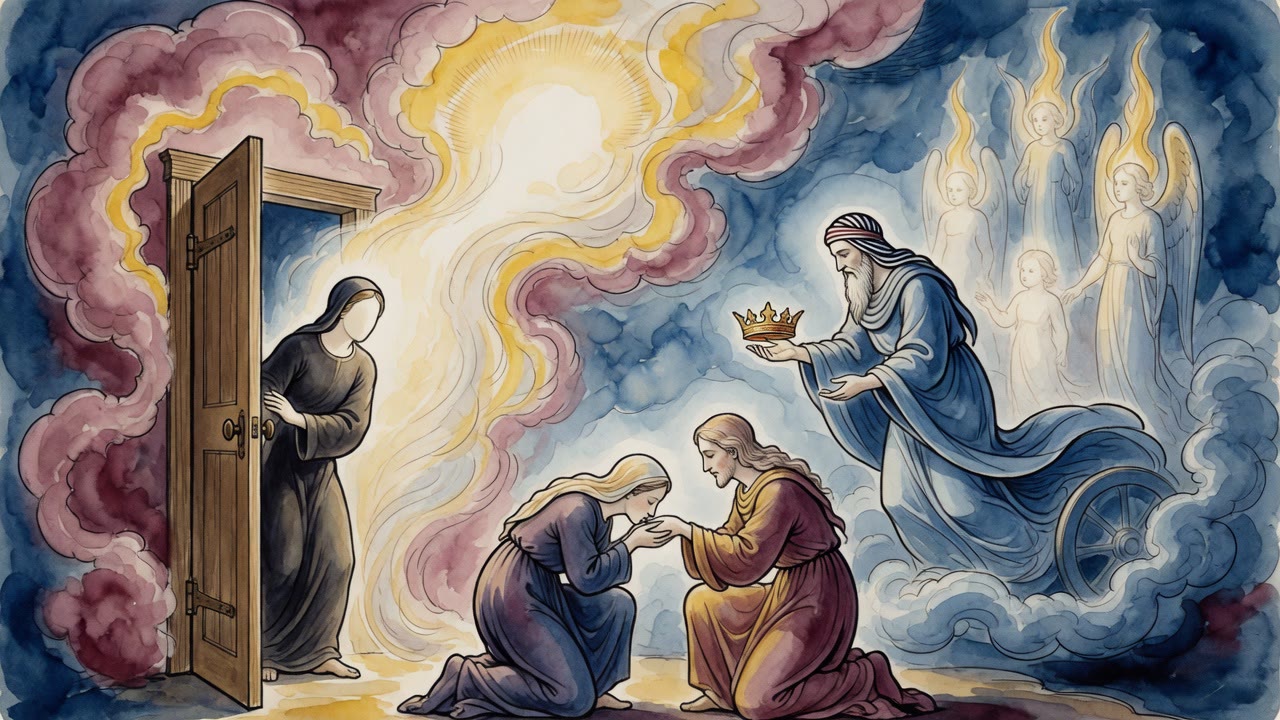
Only then did the beggar open his true face. Elijah had come to test virtue under pressure. Because Rabbi Eliezer chose mercy over suspicion, Elijah promised a son who would enlighten the eyes of Israel. From that table, the legend says, the light of the Baal Shem Tov entered the world.

The Rich Man Who Measured Legs

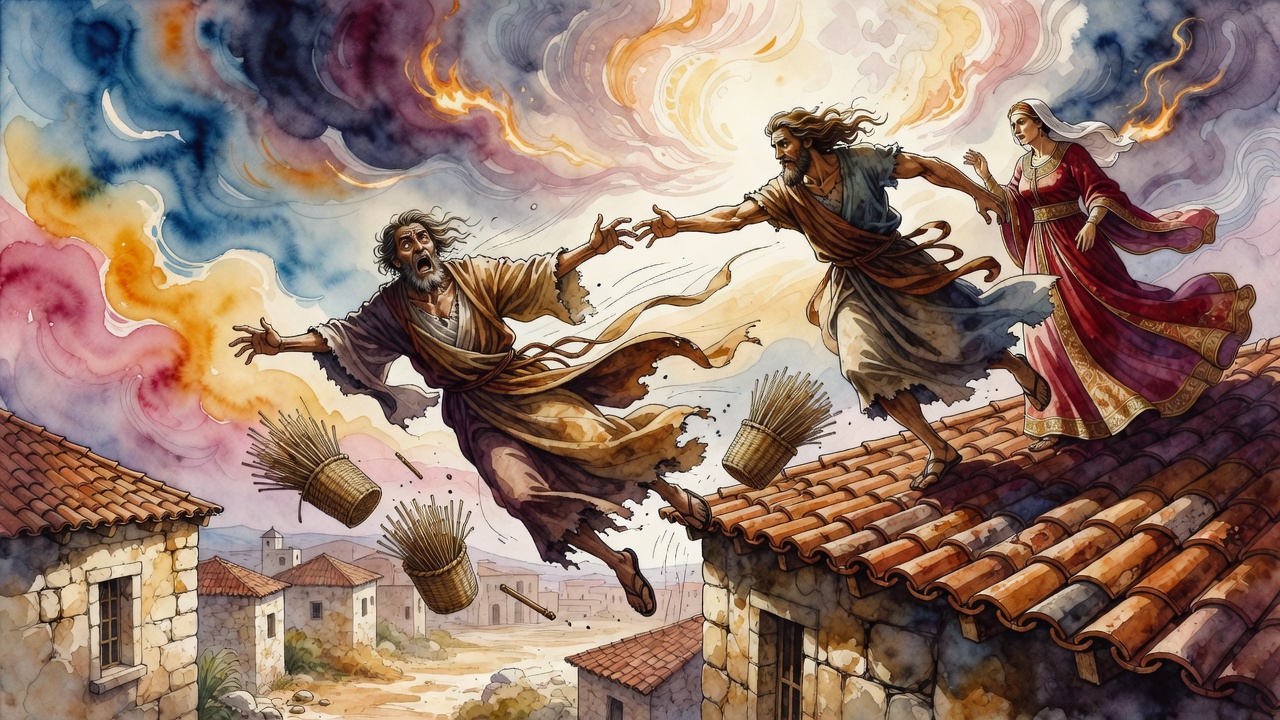
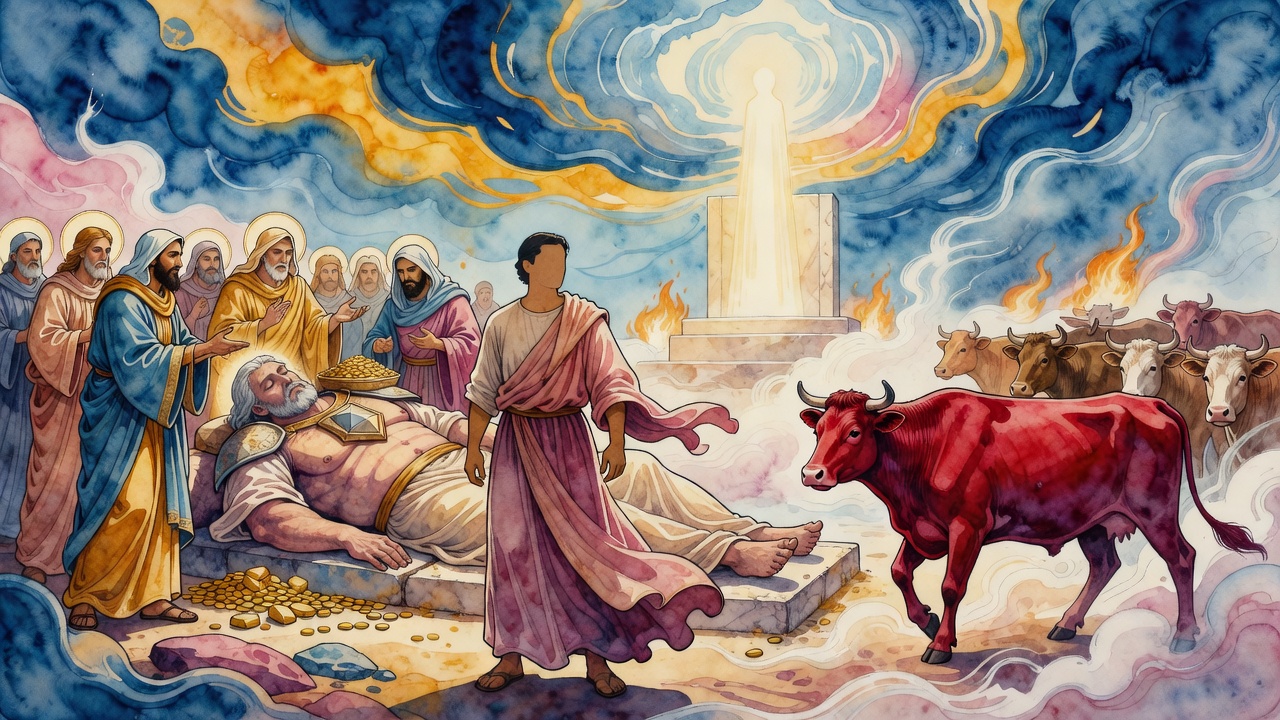
Kohelet Rabbah sets another rich man in another doorway. A poor person stands before him asking for help. The wealthy man does not open his hand. He opens his mouth. He scolds the poor soul for laziness. He mocks thighs, feet, and girth. "Would it not be better for you to toil and eat?" he sneers, as if hunger were a fashion choice and a broken body a confession of guilt.

God hears more than a refusal of coins. The insult falls on the poor man's frame itself, on limbs and strength that Heaven gave. The midrash reads Ecclesiastes on wealth lost in a grievous manner through this scene. The man who shames the poor does not only keep his silver. He turns gift into mockery. The inheritance that should have reached a son empties. Wealth that refuses compassion does not stay.

Two Doors, One Judgment

Hold the two doors side by side. At one, a Sabbath-breaker in rags is fed before he is questioned. At the other, a hungry man is graded like livestock. Both scenes are about strangers who arrive with nothing to offer but need. Both test whether a household treats the body as holy ground or as evidence against the poor.

Rabbi Eliezer risked looking soft in front of his neighbors. The scolding rich man risked nothing and lost everything that mattered. Elijah's blessing and Ecclesiastes' curse answer the same question from opposite ends of the table.

What the House Remembers

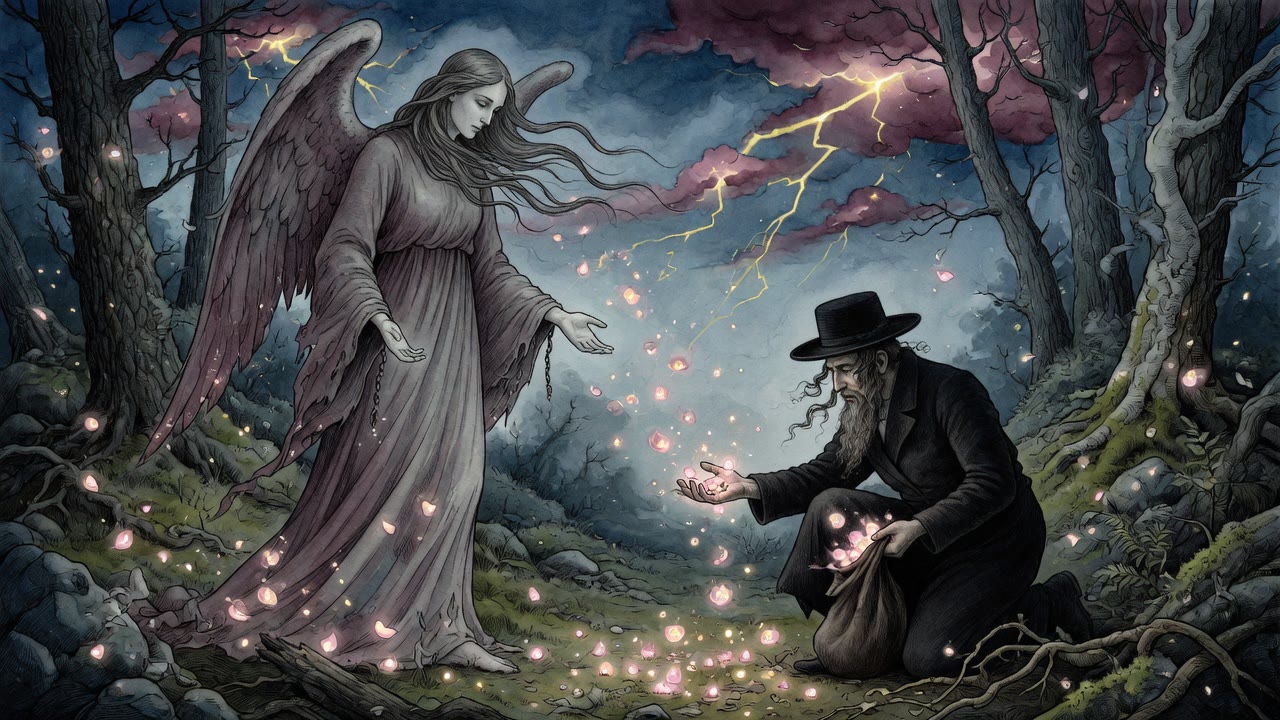
A house that trains its gates to bring strangers in will one day host a prophet without knowing it. A house that trains its tongue to measure the poor will one day count an empty ledger and call it bad luck. The Maggid will not soften either story. Kindness under suspicion is still kindness. Cruelty dressed as advice is still cruelty.

Later ages will invent new costumes for Elijah and new excuses for the sneer. The law of the open door does not change. Welcome first. Feed first. Leave the audit of packs and legs to courts that deal in law, not to hunger standing in your courtyard.

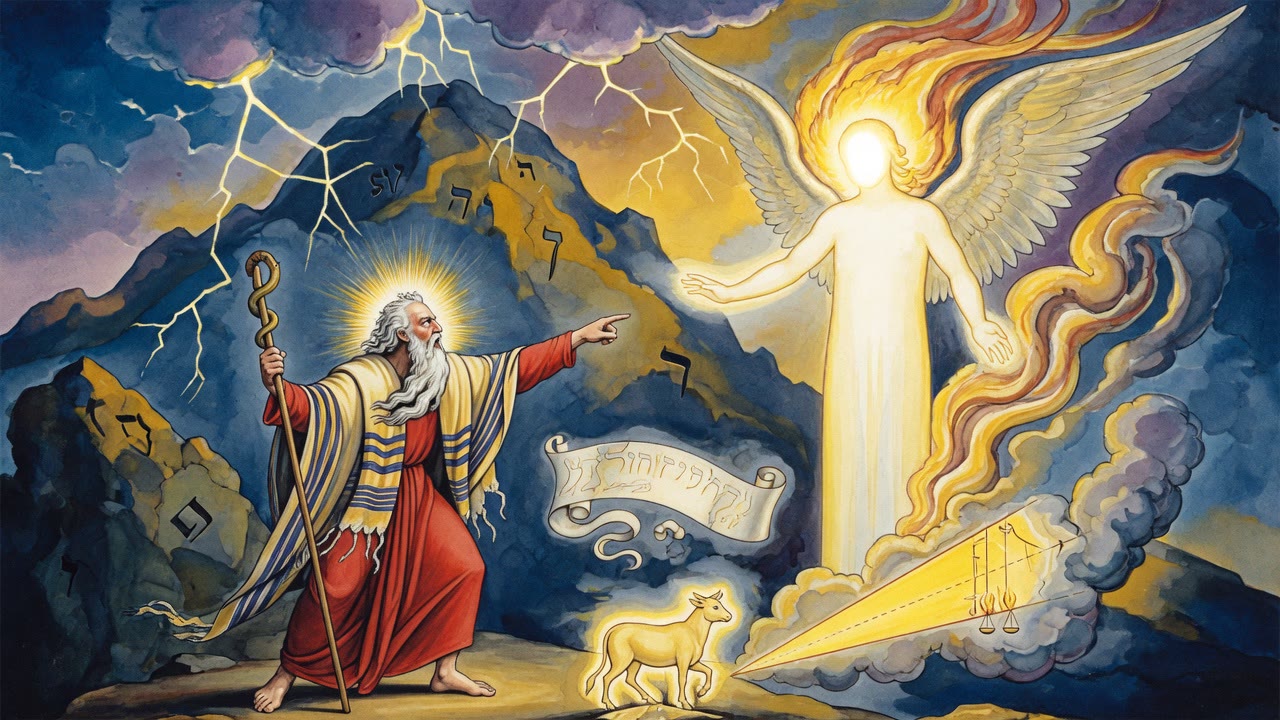
The Sabbath beggar carried more than a knapsack. He carried the question of whether holiness is a fence against people or a fire that warms them. Rabbi Eliezer chose fire. The Baal Shem Tov's birth is told as the aftershock of that choice, not as a prize for clever piety. Light entered Israel because a man refused to humiliate a traveler who looked wrong on a holy day.

The rich man's tongue in Kohelet Rabbah is the reverse miracle. He could have given bread and kept his honor. He gave shame and kept his coins for a season. God does not forget which gift was heavier. Ecclesiastes' line about wealth lost in a grievous manner becomes a biography: a son with nothing in his hand, a fortune that could not survive the mockery that earned it.

Between Ginzberg's Hasidic doorway and the midrash of Ecclesiastes stands one pressure. Treat the body of the poor as sacred. Treat the stranger's need as an order from Heaven. If the pack on the Sabbath confuses you, feed first and learn later. If the poor man's legs offend your sense of order, remember who shaped those legs and who will empty your coffers when you insult His work.

Walk past a beggar on a holy day and you still choose. Open the door the way Rabbi Eliezer did, or measure flesh the way the midrash's rich man did. One path breeds a light for Israel. The other breeds a grief with no inheritance left to soften it.


← All myths
From the tradition

Sources

2 sources

The texts behind this telling. Some cards carry a translation of the source; others are our own retelling of it, and each card says which. Every card links out to the original.

Legends of the Jews 7:82Legends of the Jews

Retold in our words. Read the original at the link below.The Legends of the Jews by Louis Ginzberg (1909) · Public Domain

Sometimes, the most extraordinary lives begin with the most ordinary acts of kindness. Take the story of Rabbi Eliezer, father of Rabbi Israel Baal Shem Tov – a name that echoes through the halls of Hasidic Kabbalah (Jewish mysticism).

Rabbi Eliezer wasn't just any ordinary man. He was known far and wide for his incredible hospitality. Imagine this: he actually stationed guards at the entrances to his village, instructing them to bring any and all strangers directly to his home!

Could such extraordinary kindness be tested? Well, according to legend, Heaven decided to find out. And who was chosen to administer the test? None other than Elijah the Prophet himself!

One Sabbath afternoon – a day of rest and spiritual reflection – Elijah, disguised as a humble beggar, entered Rabbi Eliezer’s village. He was dressed in tattered clothes, carrying a knapsack and staff. Now, remember, this was the Sabbath. Carrying things like that would be considered a desecration of the holy day.

But Rabbi Eliezer? He didn't even flinch. Ignoring the apparent transgression, he welcomed the beggar warmly. He tended to his needs – food, water, shelter – making sure he was comfortable. And the next morning, as the beggar prepared to leave, Rabbi Eliezer even gave him some money.

Touched by this incredible display of chesed (loving-kindness), Elijah revealed his true identity. He explained that he had come in disguise to test Rabbi Eliezer's virtue. Because Rabbi Eliezer had passed the test with flying colors, Elijah delivered incredible news: he would be blessed with a son who would "enlighten the eyes of Israel."

And so, the legend goes, Rabbi Israel Baal Shem Tov, a luminary of Hasidic thought, was born from an act of pure, selfless hospitality. That even the smallest acts of kindness can have ripple effects, shaping not only individual lives, but the spiritual landscape for generations to come. What kind of legacy will we build, one act of chesed at a time?

Full source
Kohelet Rabbah 5:13Kohelet Rabbah

Retold in our words. Read the original at the link below.The Sefaria Midrash Rabbah, 2022 · CC-BY

Could I do more?" The sages certainly wrestled with that feeling, and they had some pretty strong opinions about what happens when we ignore it.

The Book of Ecclesiastes, or Kohelet as it's known in Hebrew, is full of these kinds of ponderings. One verse in particular, (Ecclesiastes 5:13), really grabbed the Rabbis' attention: “That wealth is lost in a grievous manner; he begets a son, and he has nothing in his hand.”

What does it mean? What kind of "grievous manner" could cause such a devastating loss?

Kohelet Rabbah, a collection of rabbinic interpretations on Ecclesiastes, dives deep into this verse. And the interpretation they offer is… well, it's a cautionary tale, to say the least.

Rabbi Ḥaggai, quoting Rabbi Yitzḥak, offers a very specific scenario. Instead of offering help, he scolds the poor soul. He questions their work ethic, mocks their appearance. “Wouldn’t it be better for you to toil and eat?” he sneers. "Look at your thighs, look at your feet, look at your girth; would it not be better for you to toil and eat?"

Ouch.

It's not just about the money, is it? It's about the attitude. It's about the lack of compassion, the harsh judgment. As the story unfolds in Kohelet Rabbah, God sees this interaction. And God is not pleased. from God's perspective, if you will. The wealthy man isn't just refusing to share his own possessions; he's casting a negative light on the very gifts God has bestowed upon this poor person. He’s adding insult to injury.

The text continues, "The Holy One blessed be He said: Is it not enough that you did not give him anything of what is yours, that you cast an evil eye on what I gave him?"

The consequence? “Therefore, he begets a son, and he has nothing in his hand” – he will not leave, from the money in his possession, for his son." The wealth, earned (or perhaps inherited) and hoarded, will be lost. The man's own children will suffer the consequences of his stinginess and his cruel words.

It’s not just about giving charity. It’s about how we see and treat those less fortunate than ourselves. It’s about the attitude we carry in our hearts. The story suggests that our actions, and even our thoughts, have consequences that ripple outward, affecting not only ourselves but also future generations. The Zohar, the central text of Kabbalah, echoes this sentiment in countless passages, emphasizing the interconnectedness of all things.

Remember the words of Rabbi Ḥaggai and Rabbi Yitzḥak. Remember the verse from Ecclesiastes.

Perhaps, just perhaps, a little kindness can change everything.

Full source