A Host Opened His Door and the Shekhinah Came In
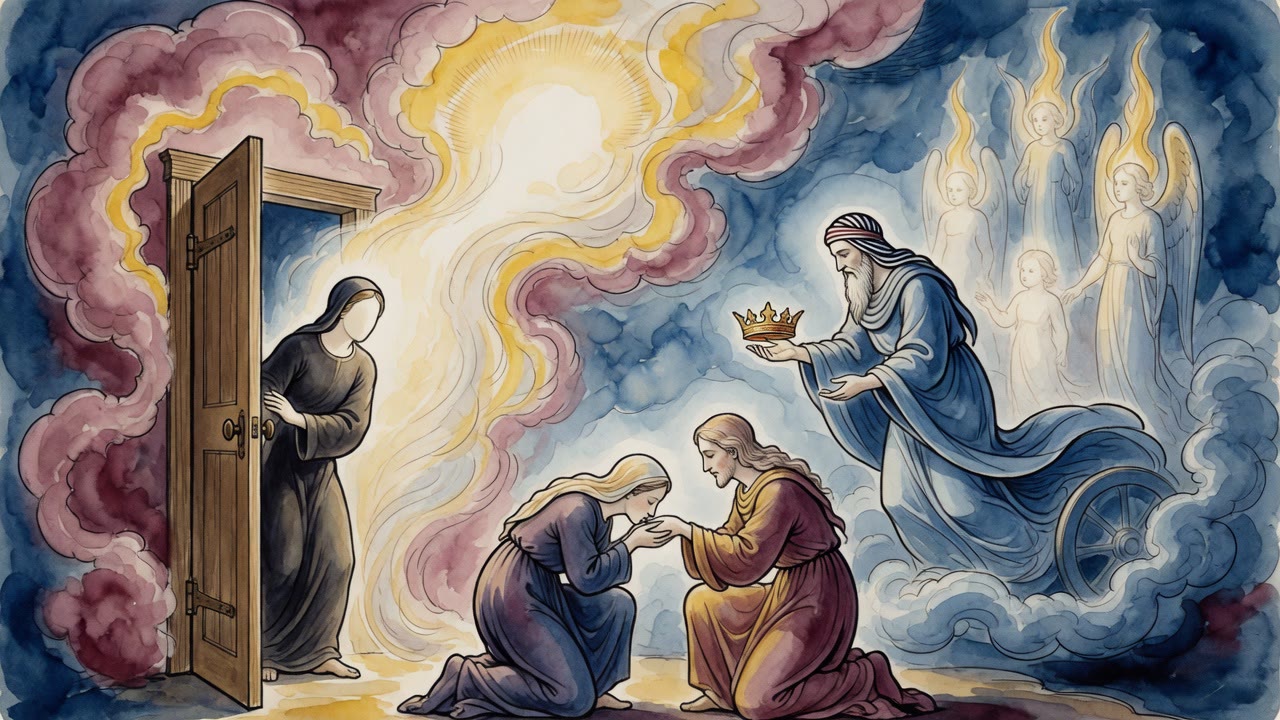
A host opens the door with perfect will and finds more than a traveler. Companions kiss hands. Elijah descends with souls, angels, and a crown.
Table of Contents
The door was ordinary wood, swollen a little from winter. The host set his hand on the latch as if he were opening for the face of the Shekhinah (שכינה), the divine Presence that dwells with Israel in rooms too small for glory. Perfect will, the companions would later say. Not politeness practiced for reputation. Not calculation about favors returned next season. Will.
 Click for full size
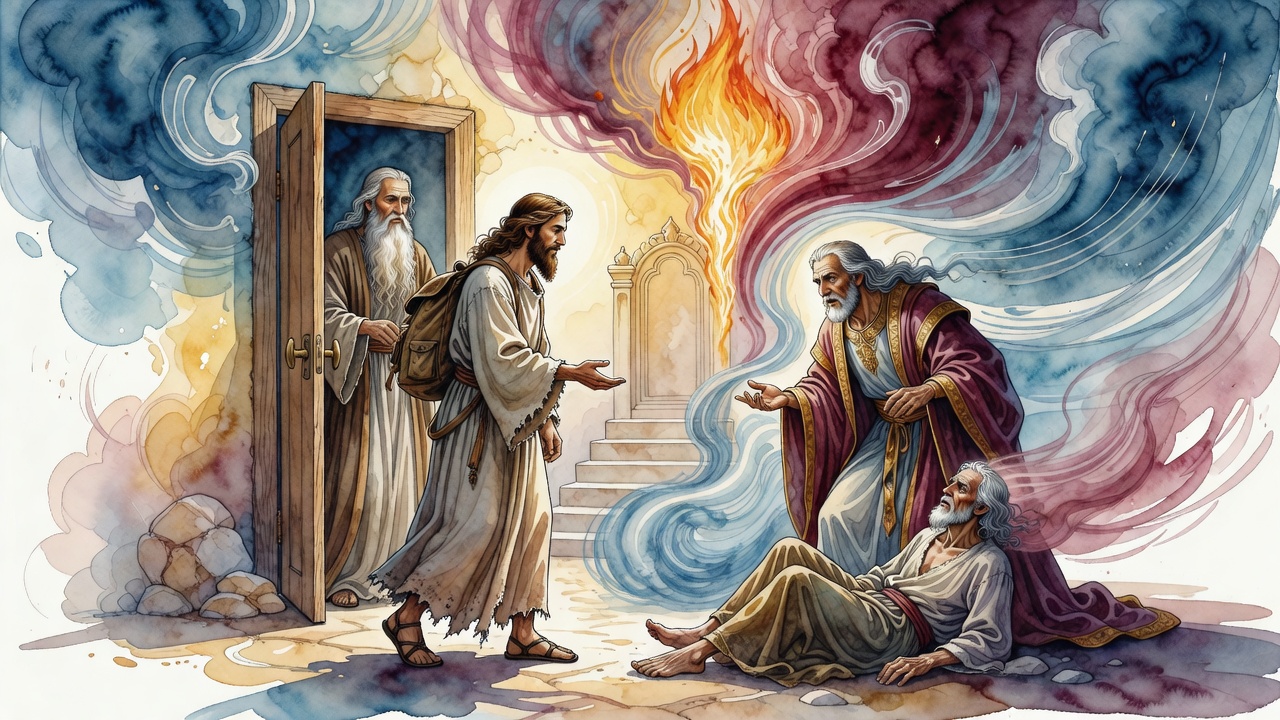
The guest stepped across the threshold with dust on his hem. Behind him the air changed pressure, the way a room changes when more people enter than the eye can count, and the host felt the change before he understood it.
Measure for Measure at the Threshold
"Worthy is he who welcomes visitors with perfect will, as though he is receiving the face of the Shekhinah (the Divine Presence)." The teaching does not say the guest is God. It says the host must treat the guest as if the Presence were arriving, because the measure a person uses is the measure returned to him, weight for weight.
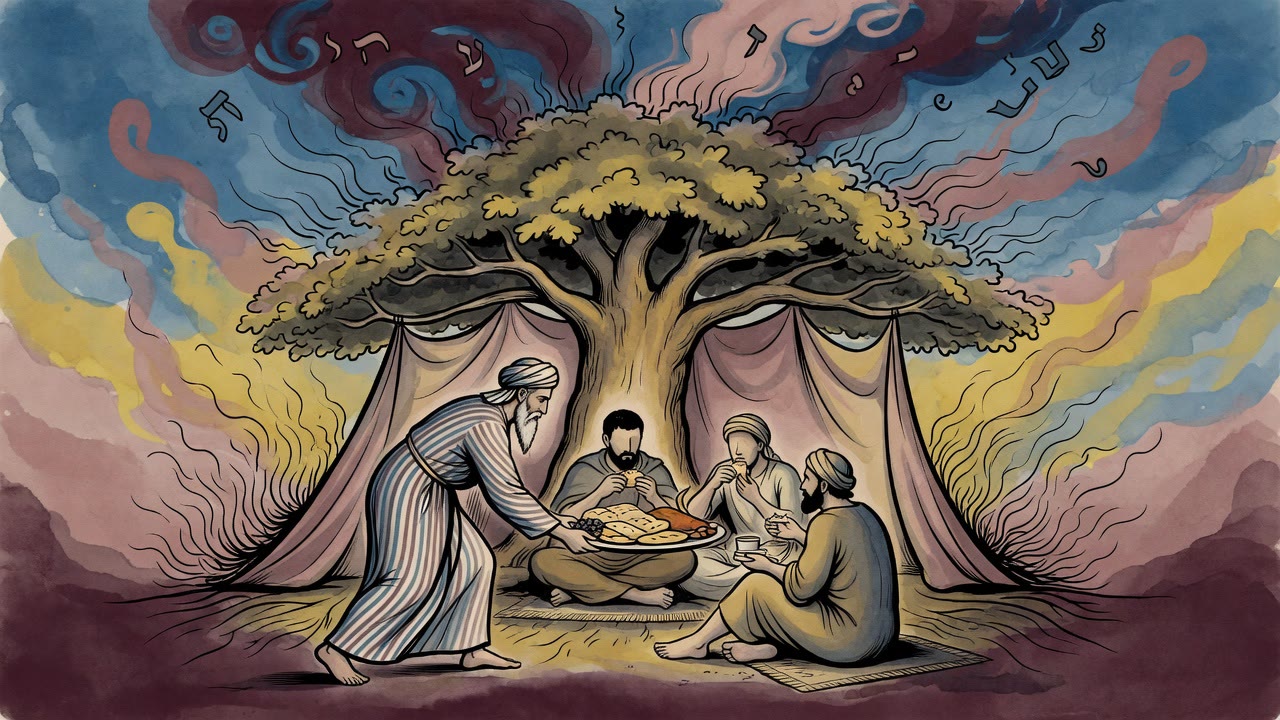
Bread was set down while it was still warm enough to steam. Water was poured without asking first whether the visitor looked important enough for the good cup. The host did not glance at the window to see who from the street was watching his generosity and scoring it. The visitor's dust stayed on the floorboards. No one swept it away as if dust were shame that might stick to the house's name.
Rabbi Elazar came and kissed the teacher's hands. The companions prostrated and spoke a line that empties lesser days of their noise. "If we had not come into the world except to hear these words, it would have been enough." They had come for teaching. The teaching had turned into a test of how a door is opened when no one important is scheduled to arrive.
Elijah and the Crown
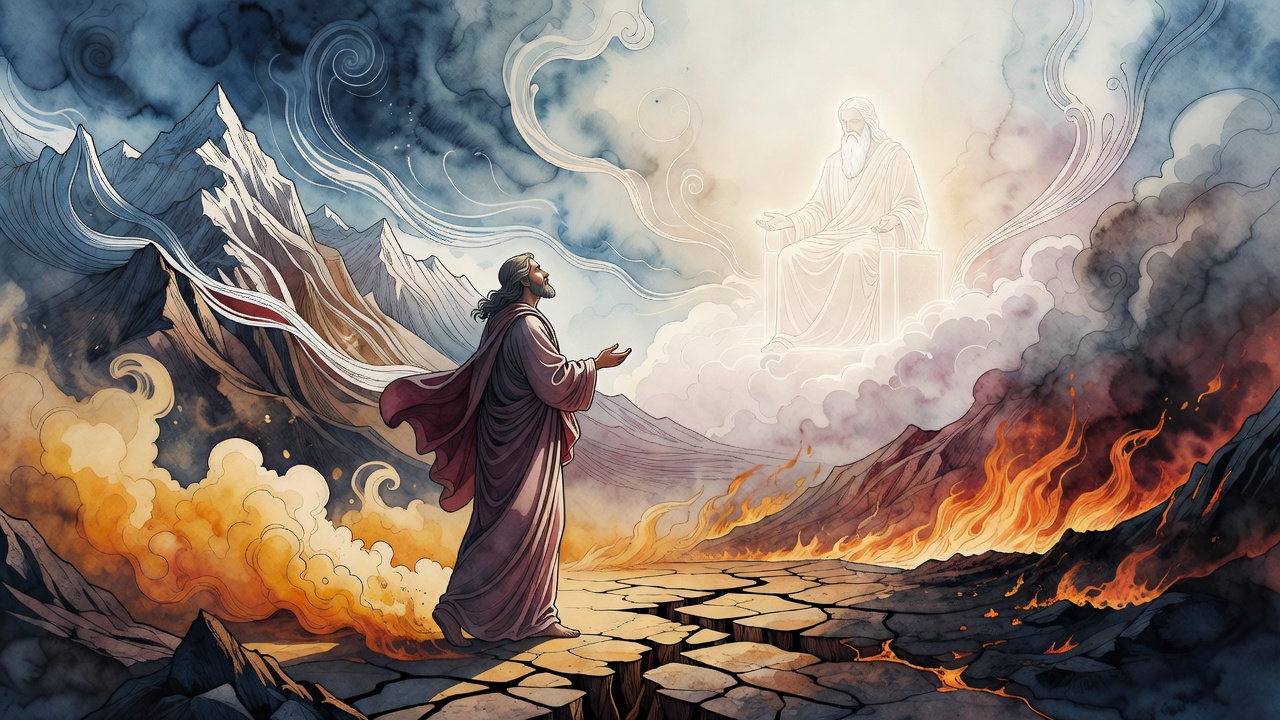
Meanwhile, the text says, behold Elijah the prophet descended from above with many hosts of souls and many angels around him, and with the Higher Shekhinah as a diadem upon all of them. The house that began with one latch now held a procession no carpenter had planned for when he set the beams and measured the room for ordinary sleepers.
The Shekhinah is called a crown upon the head of every righteous one. Here the crown rides the whole company at once, a diadem large enough for a parade of the dead and the unbodied. Hospitality has pulled heaven's hallway into a human room with a low ceiling. The companions who thought they had come for a night of words discover they have come for a visitation that does not ask permission of the furniture or the neighbors.
No one announces a miracle with a trumpet. The scene simply fills until the ordinary stools look too small for what is standing near them. Angels do not apologize for the crowding. Souls do not wipe their feet twice. The diadem rests as if this house had always been sized for it and the host had only now learned the true dimensions of his own doorway.
If Not for the Merit
Elsewhere the midrash on Psalms hears the phrase "if not" and ties safe passage to stores of merit that travelers cannot see on their own backs. Zevadi son of Levi reads Genesis 43:10 and says Israel would not have left a hard place in peace except for the merit of the forefathers. Rabbi Yochanan hears every "if not" as the Almighty's own merit carried for a people who sometimes travel light and arrive with empty hands and thinner courage.
The host at the door does not recite genealogies. He opens. The merit that walks in may be Abraham's old open tent on the heat of the day, or the guest's hidden righteousness, or the simple refusal to measure a stranger by the quality of his cloak. The teaching only insists that the will be perfect. Half-welcome is a closed door wearing a smile. Perfect will is a latch that moves all the way and a table that does not renegotiate while the guest is still hungry.
Merit is not a ticket stamped at the gate by a clerk. It is the reason a dangerous road sometimes ends in a room instead of a ditch, and the midrash will not let the host pretend he invented safety alone.
What the House Becomes
When the Presence crowns the company, the house is no longer only a house. It is a small court where souls and angels stand without apologizing for the cracked plaster. The host who began by receiving a traveler ends by standing inside a diadem he did not weave and cannot keep as private property for market days.
Outside, the street continues with its dogs and its arguments about prices. Inside, the latch cools under a hand that has already done its work. Perfect will does not need a sermon after the fact. It needs a door that opens fully, bread that is not counted aloud, and the refusal to treat hospitality as theater for the neighbors.
The guest may leave by morning. Elijah may ascend again with his hosts and the diadem. The measure remains in the walls. Whoever opens that way has already been measured in return, not by human applause, but by the Presence that knows the difference between a performance and a will that does not flinch at dust.
← All myths