5 min read

Abraham's Guests Looked Like Ordinary Men

Three travelers sat under Abraham's tree and ate like men. Heaven withheld the word angel so his hospitality would stay honest.

Curated by Arthur · Told by Maggid ·
Table of Contents
  1. Three Men Under the Tree
  2. God Who Stands Before the Elder
  3. A Tent That Does Not Sag
  4. When Looking Down Means Ruin
  5. What the Host Never Needed to Know
Abraham's Guests Looked Like Ordinary Men Click for full size

Three Men Under the Tree

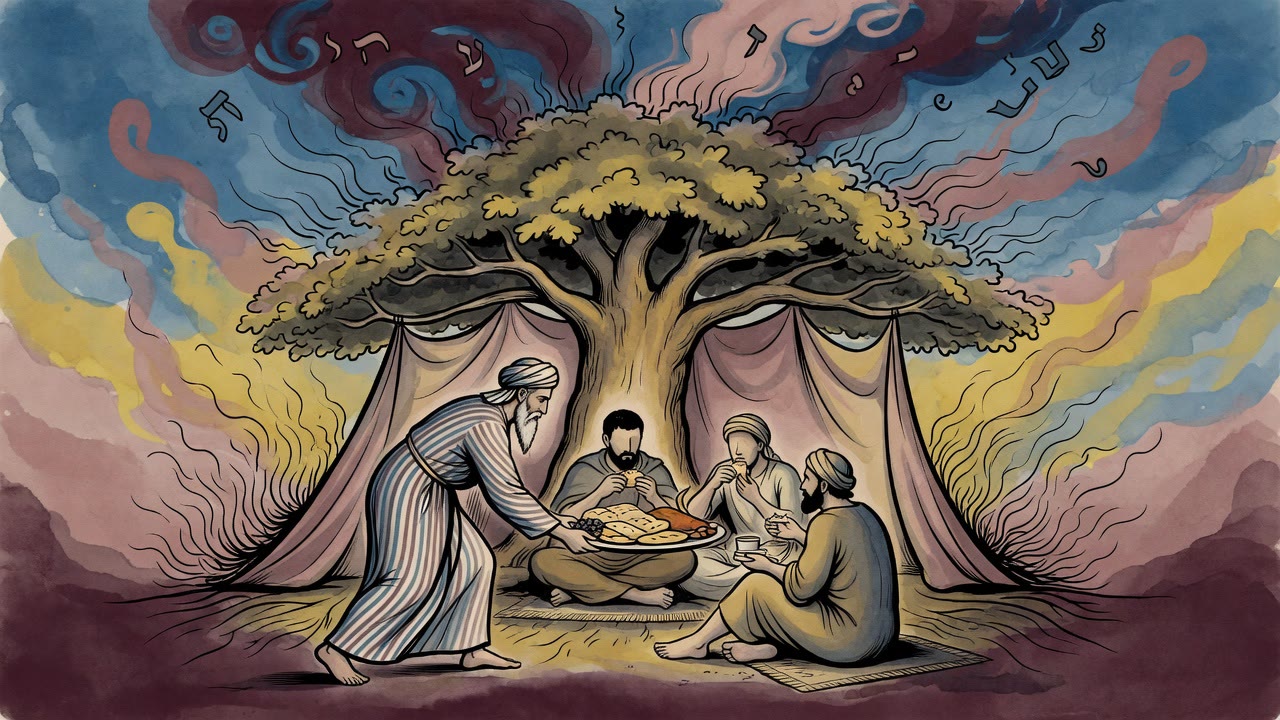
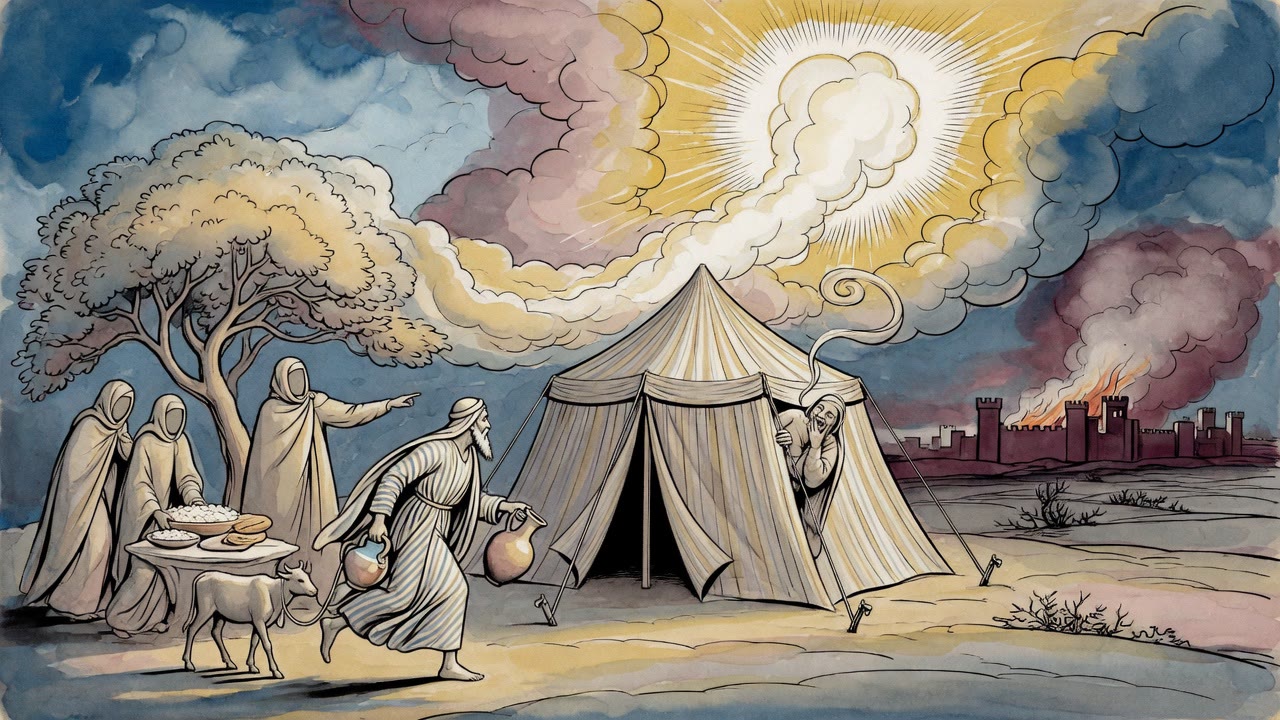
Abraham saw three figures in the heat and ran as if the world depended on water and bread. He did not bow to wings. He did not ask for secret names. He saw travelers with dust on them and treated them as men, because that is what stood in front of him. Scripture later says, "And the men rose up from there" (Genesis 18:16). It does not say angels. The silence is praise. Because Abraham was righteous, Heaven let the messengers look ordinary so his kindness would be ordinary too, not a performance for revealed glory.

They sat under his tree. They ate at his table. He never once suspected he was hosting the court of the Holy One. When they left, he walked with them to send them on their way, the escort a host gives a stranger who might still need the road explained. Holiness, that day, wore sandals.

God Who Stands Before the Elder

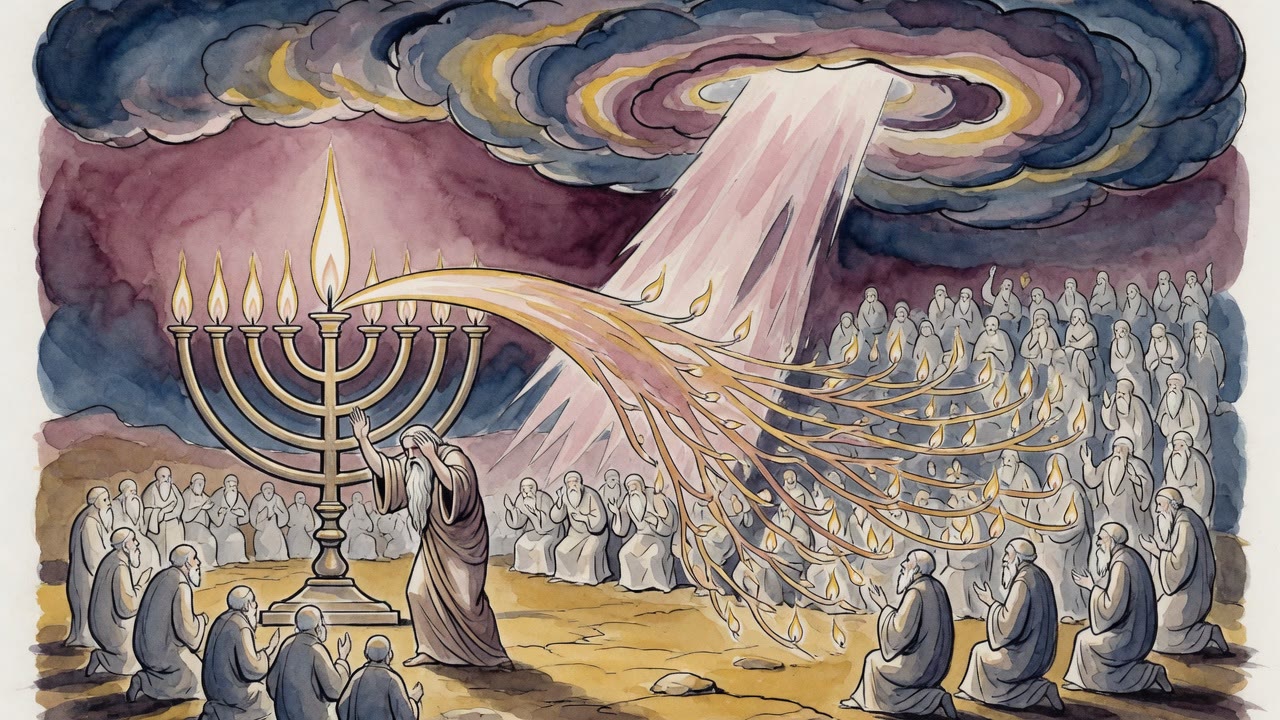
Rabbi Elazar taught that a human king issues a decree and, if he wishes, lets others keep it. The Holy One is not so. He issues a decree and fulfills it first. "You shall rise before the aged" (Leviticus 19:32) is not only a command for Israel. The midrash sees God already practicing it when He comes to visit Abraham after the circumcision. Abraham sits. The Presence stands. The Creator of heaven and earth shows deference to an old righteous man before He asks any student to rise for a gray head.

So the same chapter holds two inversions. Angels look like men so Abraham can serve without theater. God stands like a respectful guest so the law of honor will not be empty speech from a throne that never bends. Leadership, in this telling, is embodiment, not announcement.

A Tent That Does Not Sag

While Abraham's oak still held shade, the sages of Bereshit Rabbah measured another tent. Rabbi Yitzhak said a mortal king stretches a pavilion that is taut on the first day and sags by the season's end. Can you stretch out the heavens with Him (Job 37:18)? They remain strong as a cast mirror. Rabbi Shimon ben Lakish said a smith may cast a vessel that later rusts, but the work of the Six Days keeps the look of first making. Rabbi Azarya added that day follows day, week week, month month, year year, and the world does not wind down after the Sabbath of creation. It continues in the state of a finished work that still runs.

Abraham's hospitality sits inside that stable sky. He is not inventing kindness against a collapsing cosmos. He is acting under heavens that do not sag, before a God who keeps His own laws of honor, among messengers who refuse to flash credentials.

When Looking Down Means Ruin

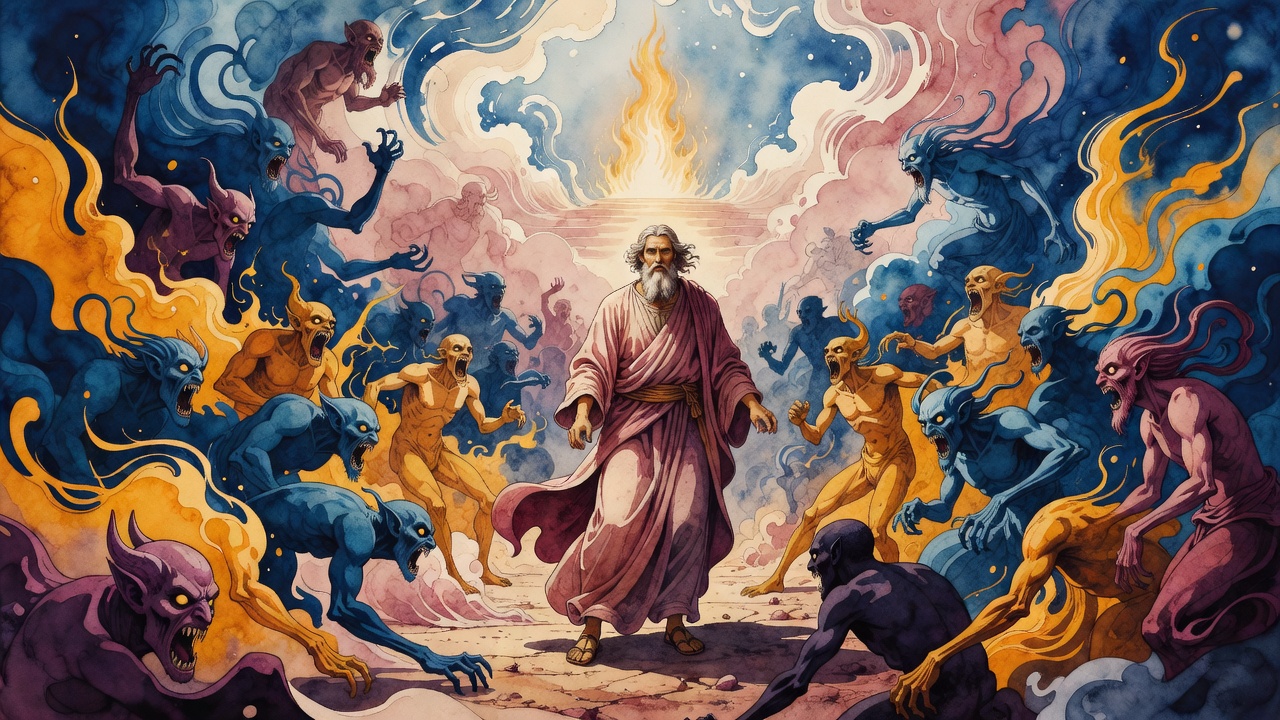
Then the men looked toward Sodom. The sages noticed that hashkafah, "looking down," almost always heralds disaster. The gaze that falls on Sodom is a sentence. There is one exception. "Look down from Your holy habitation and bless Your people Israel" (Deuteronomy 26:15) comes after a person has given terumot and ma'asrot, the portions owed to priest and poor. Generosity can reverse the direction of judgment. Where every other looking-down ruins, the gaze that follows rightful giving bends punishment toward blessing.

Abraham had already been giving before the angels arrived. Bread, water, shade, escort. When judgment turned toward the plain, he stood in the place of a man whose table had trained him to argue for lives. The guests who looked like men were walking from a meal of mercy toward a city that had refused mercy.

What the Host Never Needed to Know

If the verse had called them angels from the first line, Abraham's service might have become flattery. Heaven withheld the title so the mitzvah (a commandment) would stay clean. He served dust-covered travelers. That was enough. The Holy One, who stands before elders and holds up heavens that do not sag, does not require a host to pass a theology exam before the water is poured.

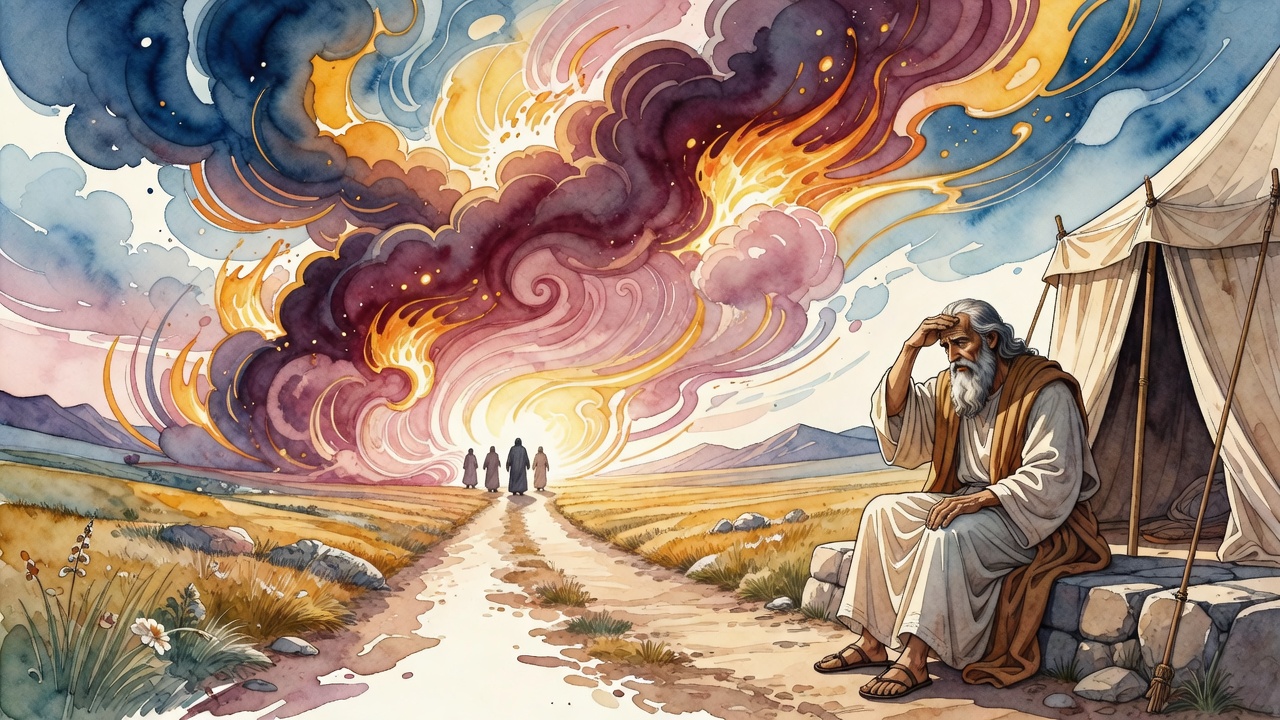
Only later, when the men rose and looked toward Sodom, does the story open its other face. Hospitality and judgment leave the same tent. One man walks guests down the path. Three figures turn their eyes to a city that will not open its door. Between them the Torah leaves a rule for anyone who still sets a table. Treat the stranger as a man. Let Heaven decide when to show the rest.

Under a sky that does not sag, a man runs for water while three strangers accept salt and shade. That is the whole engine of the chapter before Sodom's smoke. No one needs to know the guests' rank for the bread to count. Rank is Heaven's business. Bread is Abraham's. The midrash keeps that division of labor so every later host has a chance to copy the scene without waiting for wings to prove the mitzvah worthwhile.


← All myths
From the tradition

Sources

3 sources

The texts behind this telling. Some cards carry a translation of the source; others are our own retelling of it, and each card says which. Every card links out to the original.

Midrash Aggadah, Genesis 18:16Midrash Aggadah

Translation of the source text.Midrash Aggadah (Buber), Public Domain, on Sefaria · CC-BY-SA

"And the men rose up from there" (Genesis 18:16). Because Abraham was righteous, they were not called angels; and the entire time that they were with him, Abraham did not suppose that they were angels, and therefore Abraham went with them to send them off.

"And they looked down upon the face of Sodom" (Genesis 18:16). Every place where "looking down" (hashkafah) is stated is for evil, except for "Look down from Your holy habitation" (Deuteronomy 26:15); for because they give terumot and ma'asrot to their owners, the attribute of punishment turns into blessing.

Full source
Vayikra Rabbah 35:3Vayikra Rabbah

Retold in our words. Read the original at the link below.The Sefaria Midrash Rabbah, 2022 · CC-BY

Rabbi Elazar, in Vayikra Rabbah 35, offers a powerful comparison. He says, "The way of the world is that a king issues a decree; if he wishes to fulfill it, he fulfills it, and if not, ultimately he has others fulfill it." – how often do we see leaders making pronouncements and then conveniently delegating the actual work, or worse, not even adhering to their own laws?

Rabbi Elazar continues, "The Holy One blessed be He is not so, but rather, He issues a decree and He fulfills it first." This isn't just some abstract theological point. It's a radical statement about the nature of God and divine leadership. The idea is that God doesn't just command; God embodies the command.

Where do we see this? Rabbi Elazar brings a verse from (Leviticus 19:32): “You shall rise before the aged, show deference to the elderly, and you shall fear your God, I am the Lord.” This verse seems straightforward enough – respect your elders. But Rabbi Elazar sees something deeper.

He connects it to the idea that God first fulfilled this mitzvah of standing before the elderly.

Now, where does that idea come from? It's based on the story of God visiting Abraham in (Genesis 18:1). The Midrash (rabbinic interpretive commentary), specifically Bereshit Rabbah 48:7, points out that Abraham was sitting, while God, in a sense, was standing. The implication is that God showed deference to Abraham, an older and righteous man. The Creator of the Universe, the ultimate power, demonstrating respect for a human being. It’s a concept. It completely flips the power dynamic on its head.

So what does this all mean for us? Well, it's more than just a nice story. It's a challenge. It's an invitation to reflect on our own actions. Do we simply issue decrees, or do we embody the values we preach? Do we ask others to do things we wouldn’t do ourselves?

The idea that God "walks the walk," so to speak, sets an incredibly high standard. It begins with embodying the values we hold dear.

And maybe, just maybe, by striving to live up to that example, we can catch a glimpse of the divine in our own actions.

Full source
Bereshit Rabbah 12:13Bereshit Rabbah

Retold in our words. Read the original at the link below.The Sefaria Midrash Rabbah, 2022 · CC-BY

This particular section, Bereshit Rabbah 12, explores the lasting impact of creation.

Rabbi Yitzḥak and Rabbi Shimon ben Lakish, two prominent voices of their time, offer us contrasting, yet equally beautiful, images. Rabbi Yitzḥak starts with an analogy we can all understand: A king builds a tent. At first, it’s taut and magnificent. But give it time, and the fabric inevitably sags. It’s just the nature of things. But, Rabbi Yitzḥak asks, what about God’s “tent”? The heavens themselves! Can you stretch out the heavens with Him? (Job 37:18). And more importantly, do they sag? Thankfully, the verse reassures us: "Strong as a cast mirror" (Job 37:18).

Rabbi Shimon ben Lakish takes a slightly different tack. He says, when a mortal man powerfully casts a vessel, think of a blacksmith forging something strong, it will still rust with time. But here, with God's creation, it remains "strong as a cast mirror", always appearing pristine, as if just made. Like a mirror reflecting the perfection of creation itself.

Then, Rabbi Azarya steps in, commenting on Rabbi Shimon ben Lakish's words and linking them to another seemingly unrelated set of verses: "Because on it He rested from all His labor [that God created to make]. These are the outgrowths of the heavens and the earth when they were created" (Genesis 2:3–4). Why juxtapose these verses?

Rabbi Azarya explains it beautifully: it's about the constant cycle of time. One day ends, and another begins. A week ends, and another begins. A month, a year… they all flow into one another. This juxtaposition reminds us that after God completed Creation, the world didn't just wind down. It continued to function with regularity, retaining the state of creation as it was when it was completed.

In other words, creation wasn't a one-time event that faded away. It's an ongoing process, a continuous renewal. The world is constantly being re-created, moment by moment.

Perhaps it means that we, too, can participate in this ongoing act of creation. That each day is a new opportunity to shape the world around us, to reflect the divine image, and to contribute to the enduring beauty and strength of creation. The Zohar, the foundational book of Jewish mysticism, touches upon this idea of constant renewal, too, reminding us that the divine spark is present in every moment.

So, the next time you look up at the sky, remember Rabbi Yitzḥak's shimmering mirror and Rabbi Shimon ben Lakish's strong, untarnished vessel. Remember that you are witnessing not just the result of creation, but its continuous, ongoing miracle.

Full source