Abraham Ran an Inn and a Court Under One Tree
Guests ate meat and eggs for nothing. When the plates were empty their host asked for the only payment he took, a sentence naming a God they did not know.
Table of Contents
 Click for full size
The Tree He Drove Into Philistine Ground
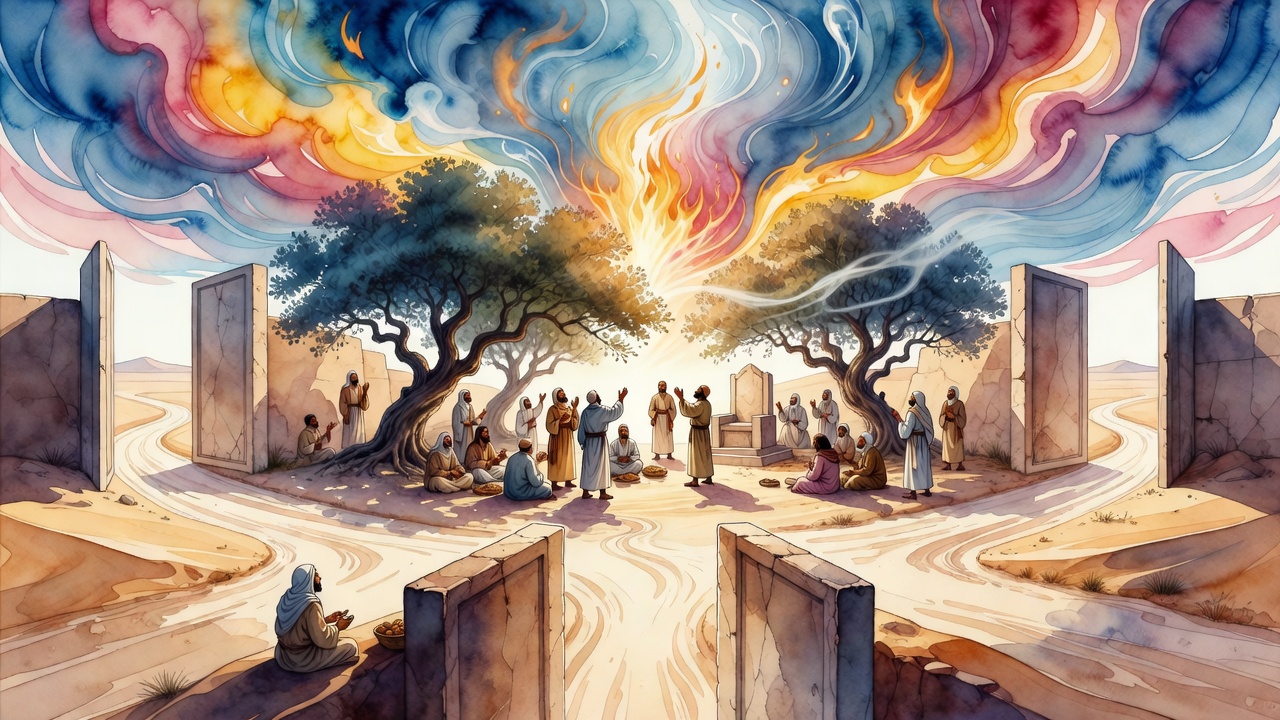
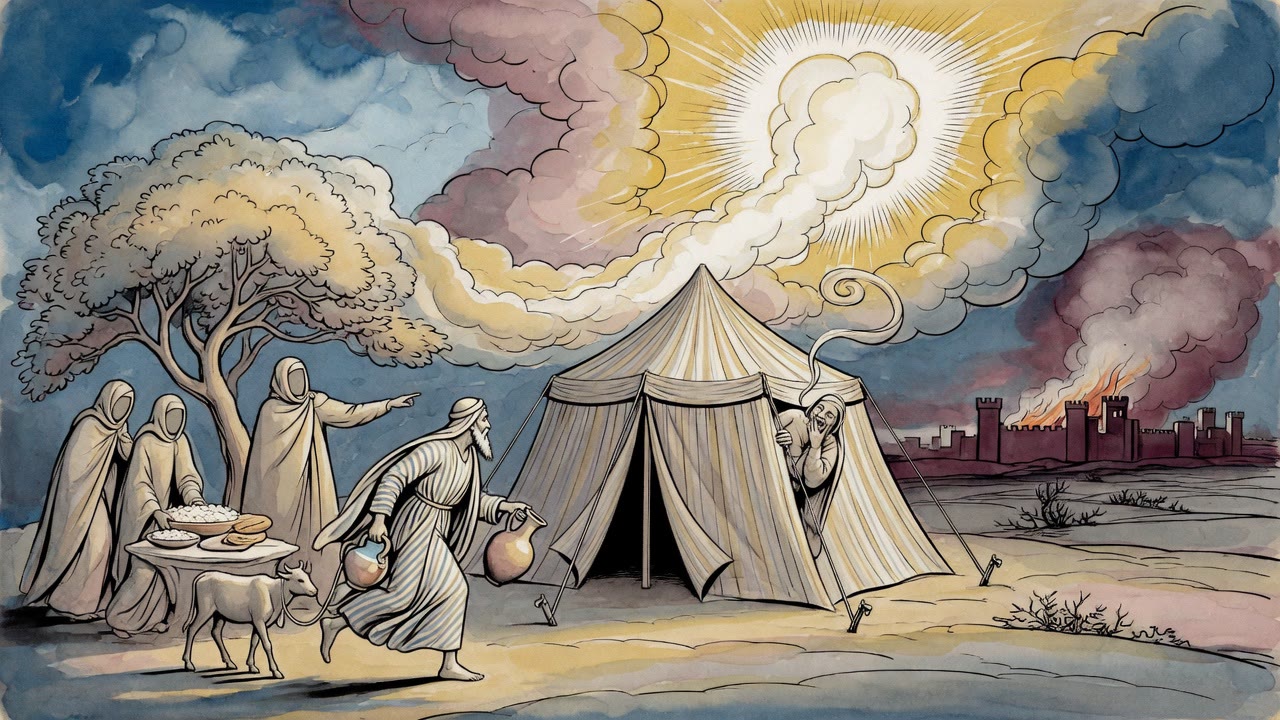
Abraham pushed a stake into the dirt beside a Philistine road and planted an eshel, a tamarisk, the kind of tree that takes salt ground and holds it. He was a foreigner in Gerar with no claim on the land and no reason anyone there should trust him. He planted where the traffic was.
The first ones came because they were hungry and the shade was free. Word about free shade travels faster than word about anything else.
Fruit, a Bed, and a Verdict
A man on foot at midday would call out what he wanted and get it. Grapes. Figs. Pomegranates. He did not have to explain himself or offer anything, and the stand beside the orchard was arranged so that asking was the whole transaction.
A man who arrived at dusk got more than fruit. There was meat, and wine, and eggs, and a place to lie down, and Abraham behind the counter of his own inn pushing the tired traveler to ask for more than he had been going to ask for. Nobody in Gerar had seen an innkeeper work that way. Innkeepers count.
And when two men came up the road already shouting at each other, the branches did a third job. Abraham sat them down and heard the thing out. A quarrel settled under a tree at noon does not become a feud that follows both families down the road for thirty years. Orchard, inn, and courtroom, and one man running all three out of one patch of shade.
The Bill He Handed Them
The catch came at the end of the meal, and it was the only catch there was.
When the plates were empty Abraham would ask his guest to bless. Most of them had no idea what he meant. They knew the gods of Gerar, who wanted animals and silver, and they did not know any god who wanted words after dinner from a man who had eaten for free.
So he taught them the sentence. Bless the eternal God whose food you have eaten. They said it back with meat still on their fingers, and a name that had not existed in their mouths an hour earlier was in there now, and they carried it out onto the road with them.
That was the whole method. Feed first. Never argue a hungry man into anything. Let him get up full, and then hand him the sentence.
Partner in Creating the World
Heaven answered with a line almost too large to say out loud. My name was unknown among My creatures, and you made Me known. I credit it to you as though you had been My partner in creating the world.
Not for splitting a sea. Not for stacking stars. For eggs and wine and a sentence taught to strangers who would otherwise have gone home the same as they came.
He stayed in Philistine country twenty-six years, longer than the twenty-five he had lived at Hebron, and the sages counted those years out one by one the way a steward counts sacks. A righteous man's wandering is not dead time between the important parts. The tree was standing for every one of those twenty-six years, and the road kept sending people to it.
Give Me the Souls and Take the Goods
The blessing that named God possessor of heaven and earth also let something else out. The war of the kings had not been an accident of politics. Allies who had traded letters and gifts were turned against each other so that they would fall into Abraham's hand, and the man who won that war handed over a tenth of everything he took. For the merit of that tithe, the sages say, all three of the fathers were blessed with "all."
Then the king of Sodom stood in front of him with an offer, and Abraham said the wrong thing.
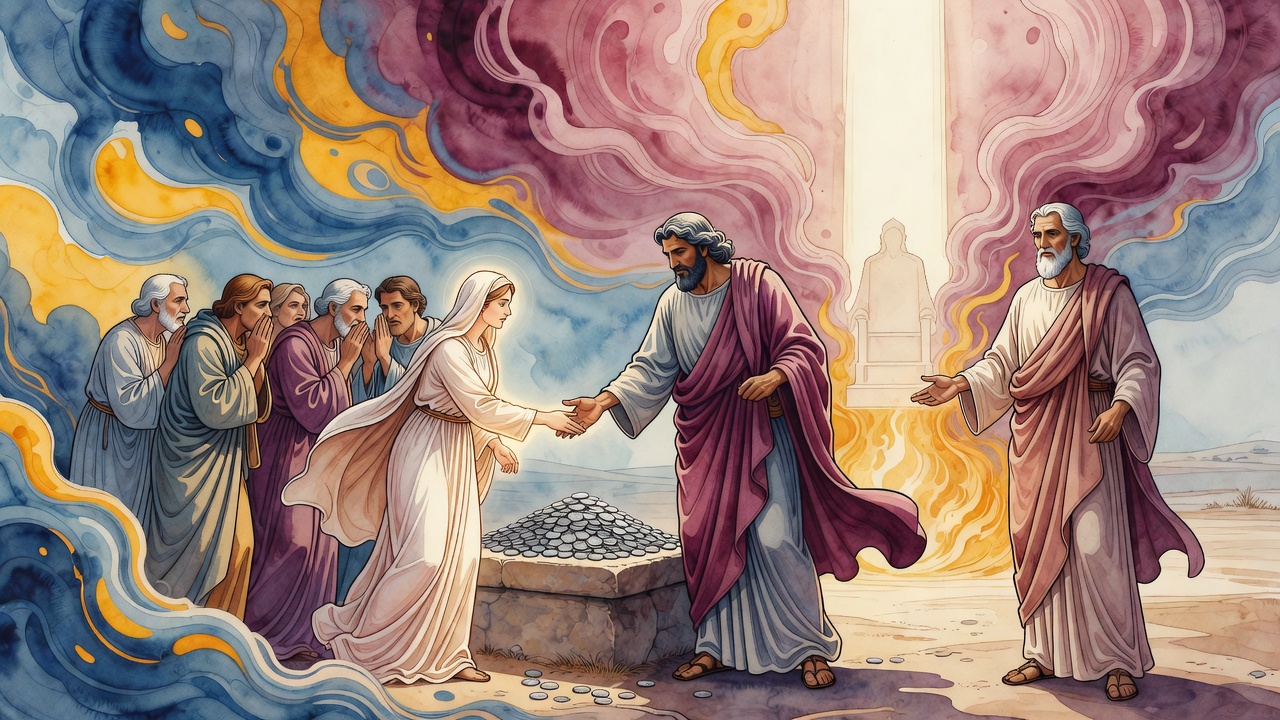
"Give me the souls, and take the goods."
It sounds generous. He kept nothing and returned the people. But the people he returned were captives who had been standing at the edge of the Divine Presence, and he handed them back to the city that had produced Sodom, and they went, and they were lost there. Some teach that his children paid the bill for that sentence, four hundred years of it, in Egypt.
The innkeeper who put God's name into strangers' mouths let a crowd of souls walk back down the road unblessed because a king asked politely for the goods and Abraham was thinking about the goods. Both things happened to the same man in the same lifetime, and the tradition will not sand either one down.
The tamarisk kept standing. Travelers kept eating. The road through Gerar kept teaching people a sentence they had not known at breakfast, and somewhere south of it a city kept the ones Abraham gave back.
← All myths