Abraham Opened Four Desert Gates at Beer-sheba
A traveler rose to thank Abraham for the bread. Abraham stopped him. The blessing belonged to the Host who feeds all flesh.
Table of Contents
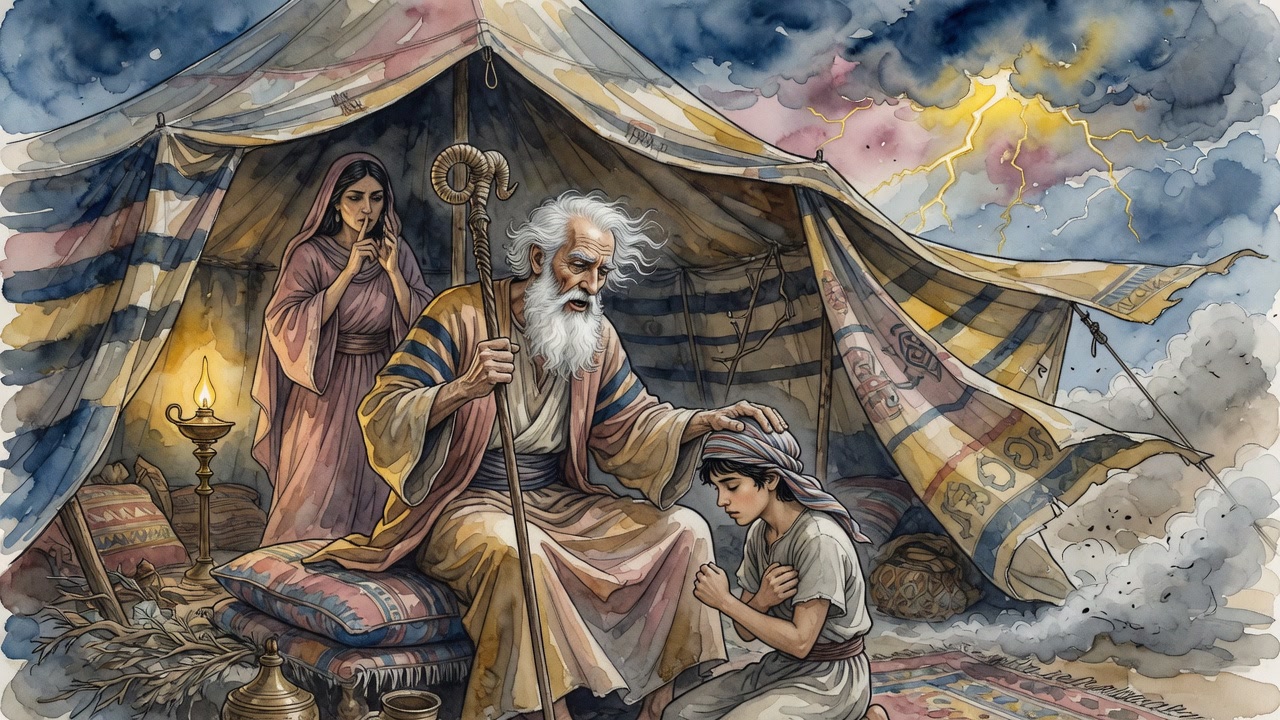
Dust coated the eastern threshold. A man came in off the road with cracked lips, and the first thing he met was shade.
 Click for full size
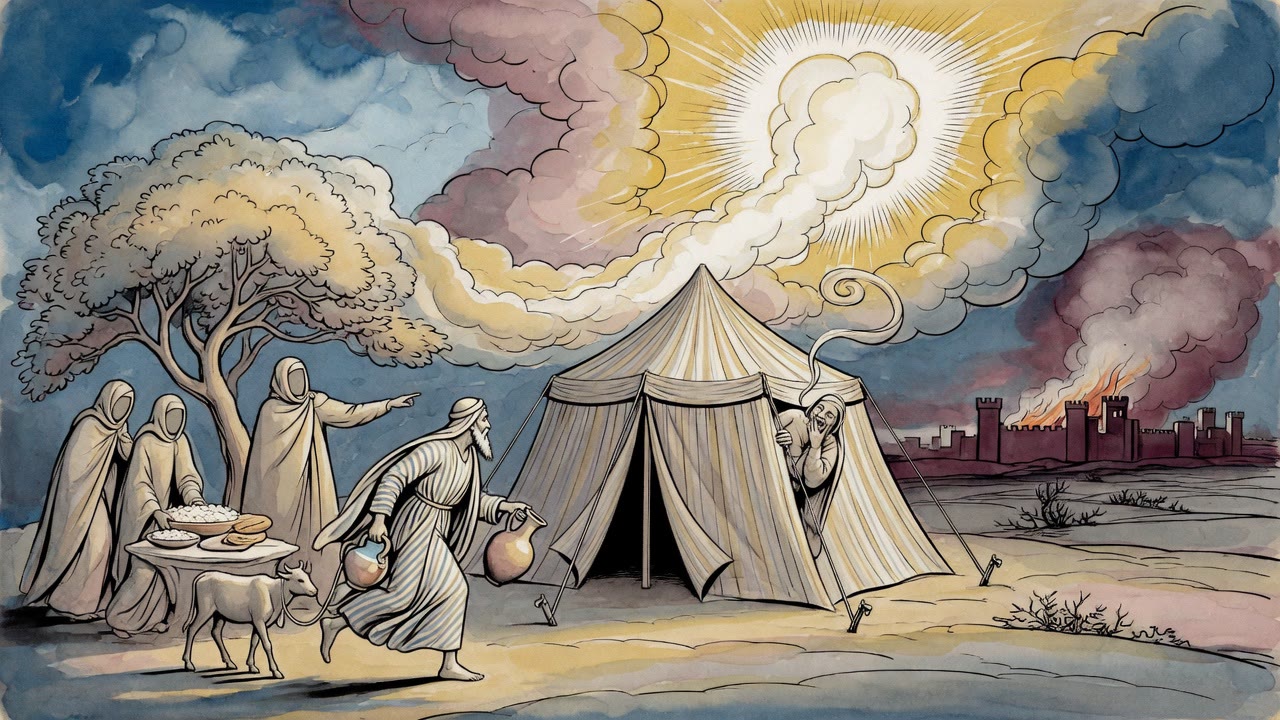
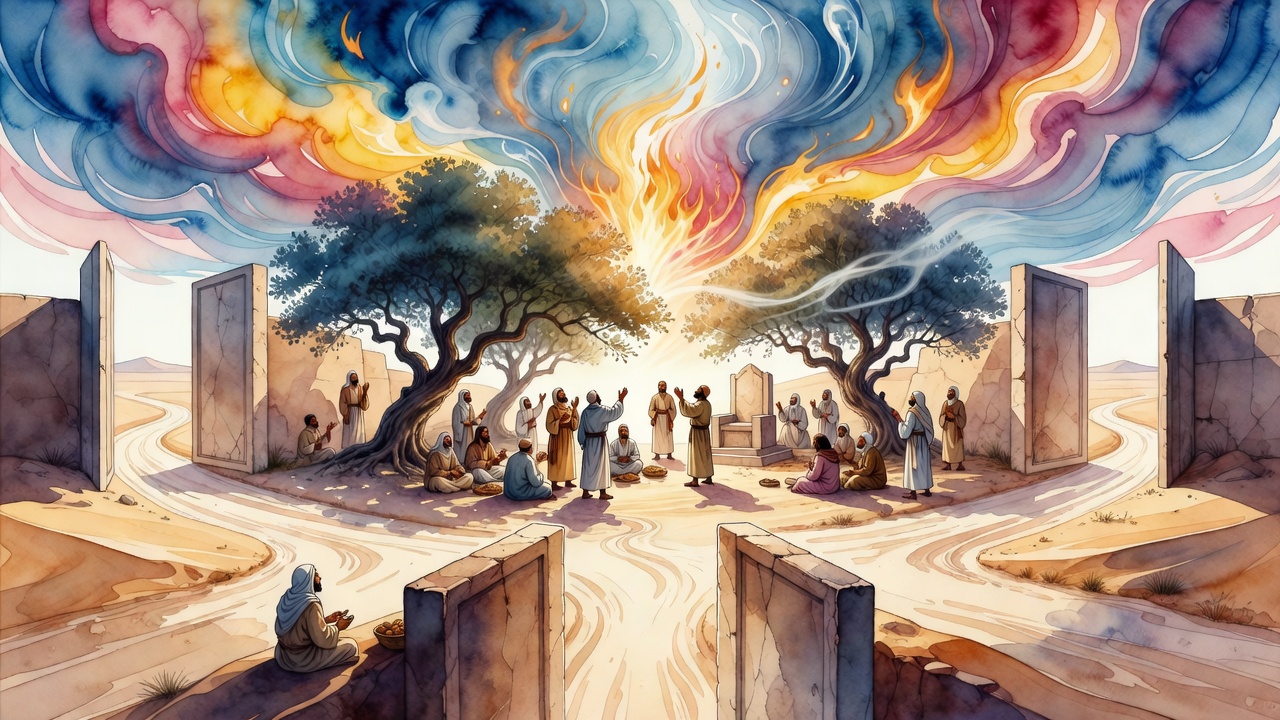
Abraham had planted a grove at Beer-sheba large enough to hold dust and thirst. He cut four gates, one for each wind. East and west, north and south. A traveler entered by the opening that faced him.
Four Gates in the Sand
Vineyard leaves threw shade on weary animals. Tables filled without price. Hungry men ate. Naked men found cloth of their own choosing. Silver and gold left Abraham's hand as freely as water from a skin.
The house stayed open when other tents closed. Children of the household set bowls before they asked a guest's clan. That order was policy. Body first. Teaching after.
Dogs slept near the thresholds. Camels chewed and watched the light. Road heat broke on green. The first gift was always body-deep. The second gift waited until mouths were full.
They Tried to Bless Abraham
Travelers rose to bless Abraham. He stopped them.
"What? You give thanks unto me? Rather return thanks to your host, He who alone provides food and drink for all creatures."
"Where is He?" they asked.
Abraham answered with a map of power. Ruler of heaven and earth. He wounds and heals. He forms the embryo and brings it forth. He grows plant and tree. He kills and makes alive. He brings down to Sheol (שאול), the underworld of the dead, and brings up.
They asked how to show gratitude. "Say, Blessed be the Lord who is blessed! Blessed be He that giveth bread and food unto all flesh!" Praise left their mouths before they left his gates. Some guests laughed at first, shy or scoffing. Abraham repeated the line until the laugh turned into practice. He refused payment in flattery.
Get Thee Out Did Not End at the Border
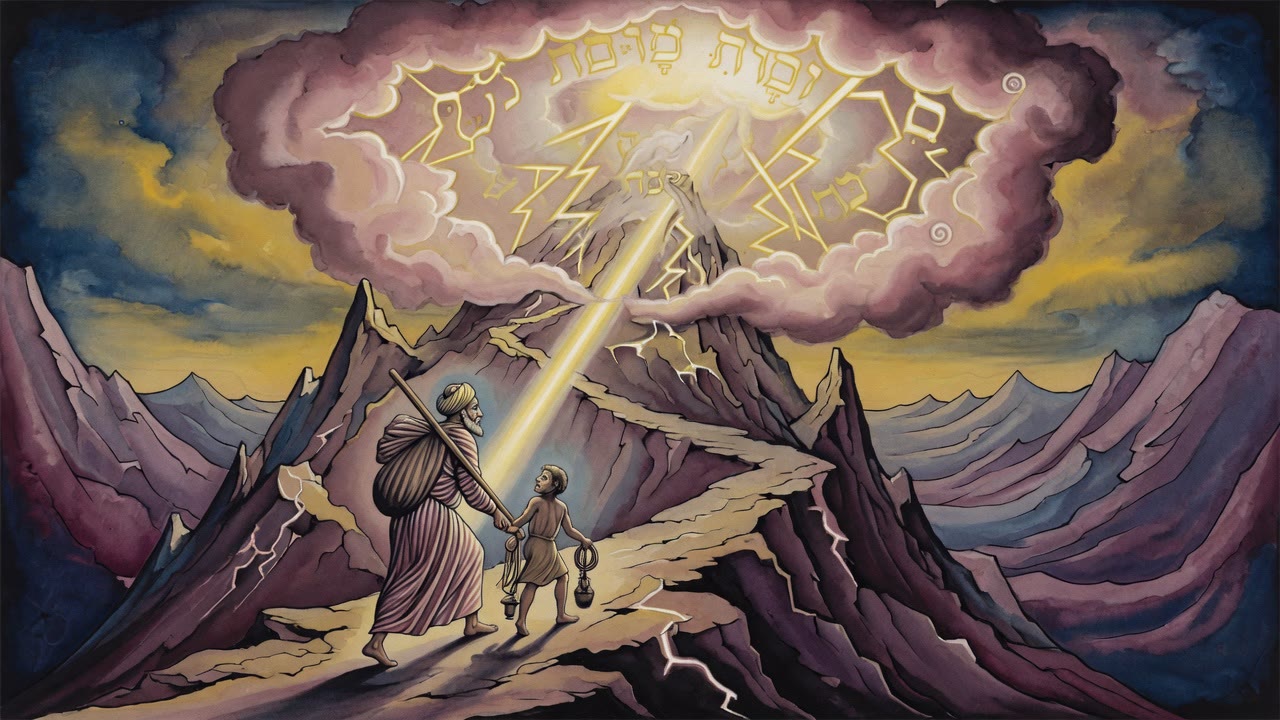
The call that once said "Get thee out of thy country, and from thy kindred" (Genesis 12:1) had not ended at the first border. Beer-sheba was another leaving. Abraham would not keep the Name inside his own tent. He made a public table into a road toward the unseen Host.
He had already stood in Nimrod's fire and not wavered. A closed gate would have been a smaller refusal. Strangers arrived with other names in their pockets and left with a blessing formula on their tongues. No sword enforced the change. Bread did the work. Shade did the work. A refused thank-you forced the eye upward.
When a guest tried to press coins into his palm for the night, he pressed the coins back and repeated the blessing until the guest could say it without stumbling.
The Road Carried the Words Out
Men and women walked away toward markets and far tents still tasting the meal. Some forgot within a week. Some taught their children the words. The four gates kept receiving new dust and new hunger.
Abraham did not count converts the way a king counts soldiers. He counted full stomachs and correctly aimed thanks. Night winds moved through the grove. Lamps burned late. The desert remained hard. Inside the gates, hardness met a hospitality that would not keep credit for itself.
Flocks still needed water. Children still cried. Between chores, Abraham turned every guest toward one Name. The departure from Ur and Haran continued each time a traveler's praise was redirected.
The Gate That Stuck in the Sand
Abraham walked the fence line at dusk and checked the gates. One stuck in the sand. He freed it so a late traveler would not find a closed face. The Host he served does not sleep. The servant of that Host kept a hinge working after dark.
A woman from the east asked why the gates faced every direction if one God ruled all. Abraham filled her cup again. "Because hunger arrives from every direction," he said, "and so must the answer." She learned the blessing before she learned his name.
In the quiet after midnight, Sarah's household sounds mixed with stranger snores. Covenant lived in that mix. Not only in altars and visions. In a door that would not stay barred against the road.
Dust coated the four thresholds each evening and was swept each morning. Silver given away did not return as interest. It returned as voices in distant camps saying a short blessing over bread.
← All myths