Abraham Climbed Moriah With No Priest Beside Him
God says please and names Moriah. Abraham asks who will officiate, walks ahead as El Shaddai's partner, and nearly offers the son he was only asked to lift.
Table of Contents
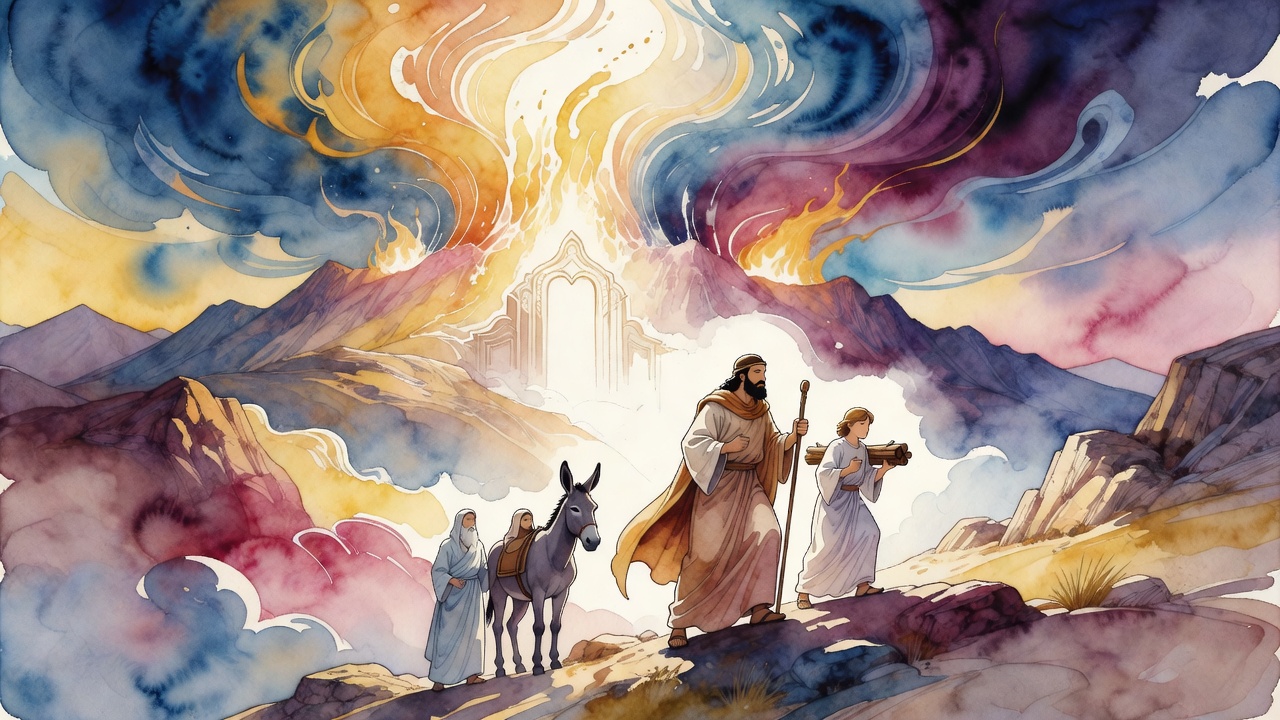
Abraham heard the word "please" before he heard the mountain. The Holy One did not bark an order. He asked, and the courtesy made the test heavier, not lighter. Then came the name of the place: the land of Moriah.
 Click for full size
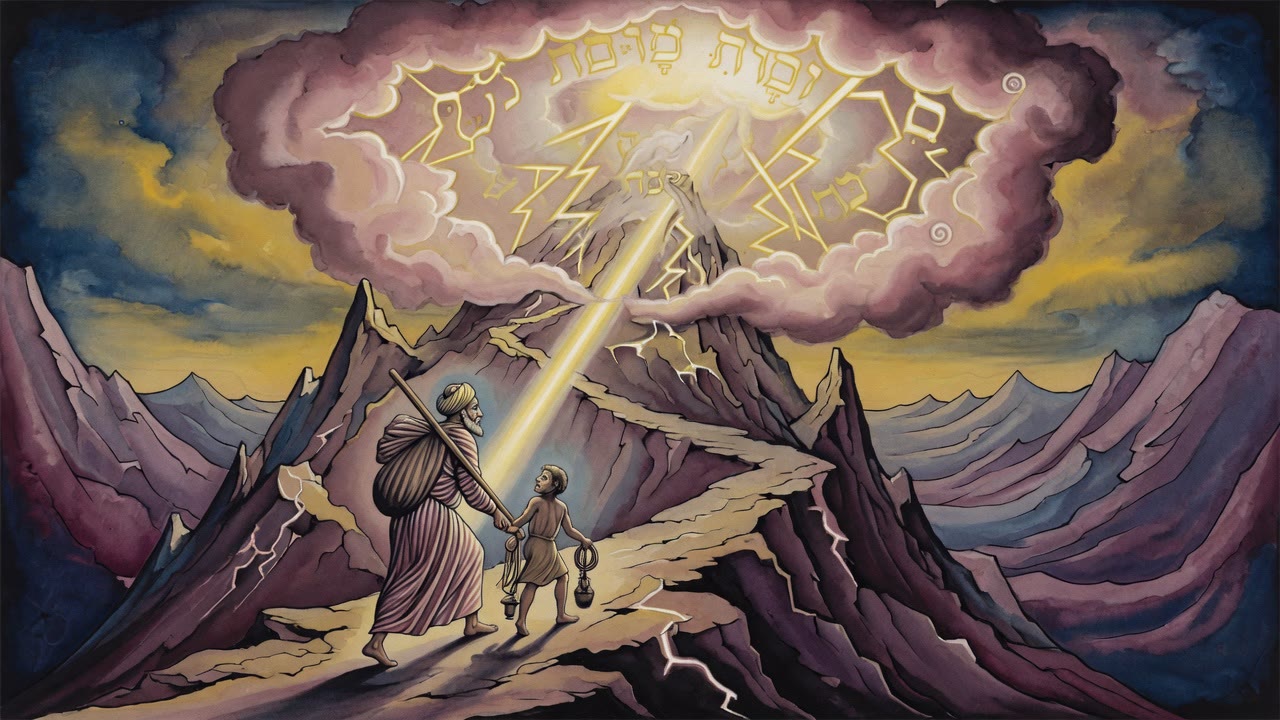
Instruction goes forth from there, one sage said. Awe radiates from there, said another. Ark and Holy of Holies and the stones of the sanctuary all pointed, in their reading, to one summit that mirrors a Temple above. Abraham still had a practical problem. How do you offer a sacrifice with no priest?
You Are a Priest Forever
God answered that the office was already his, sworn and sealed: you are a priest forever (Psalms 110:4). The man who smashed idols in his father's shop would stand at the altar of the hardest day without a Levite to steady his hand.
He had already been told to walk before God, not only with God. Noah leaned close. Abraham was trusted to keep his own feet. El Shaddai, the name of enough, had said that for the whole world I and you are enough, and had commanded circumcision so the body would match the call. A king who loves a maiden asks only that one overgrown nail be trimmed. The rest is already lovely. Wholeness, for Abraham, meant that cut, then the road. He rose early, split wood, and did not wake the household with explanations he did not have.
Bread That Sustains the Heart
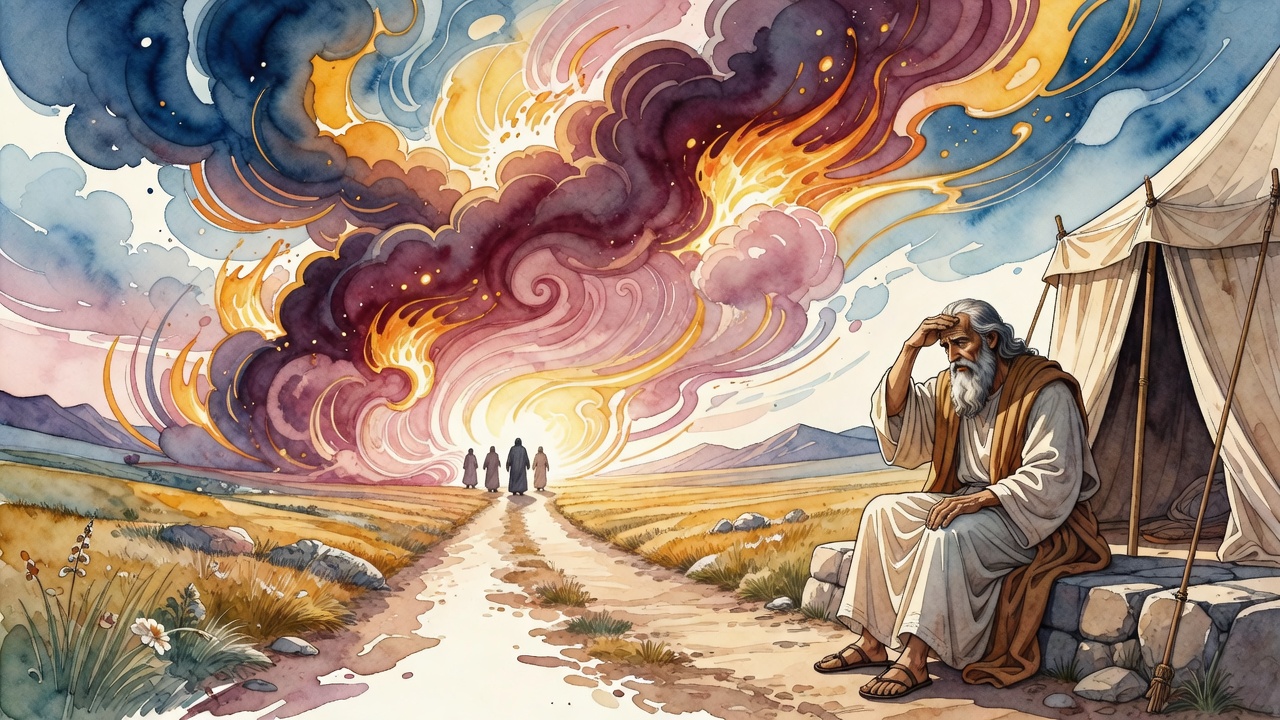
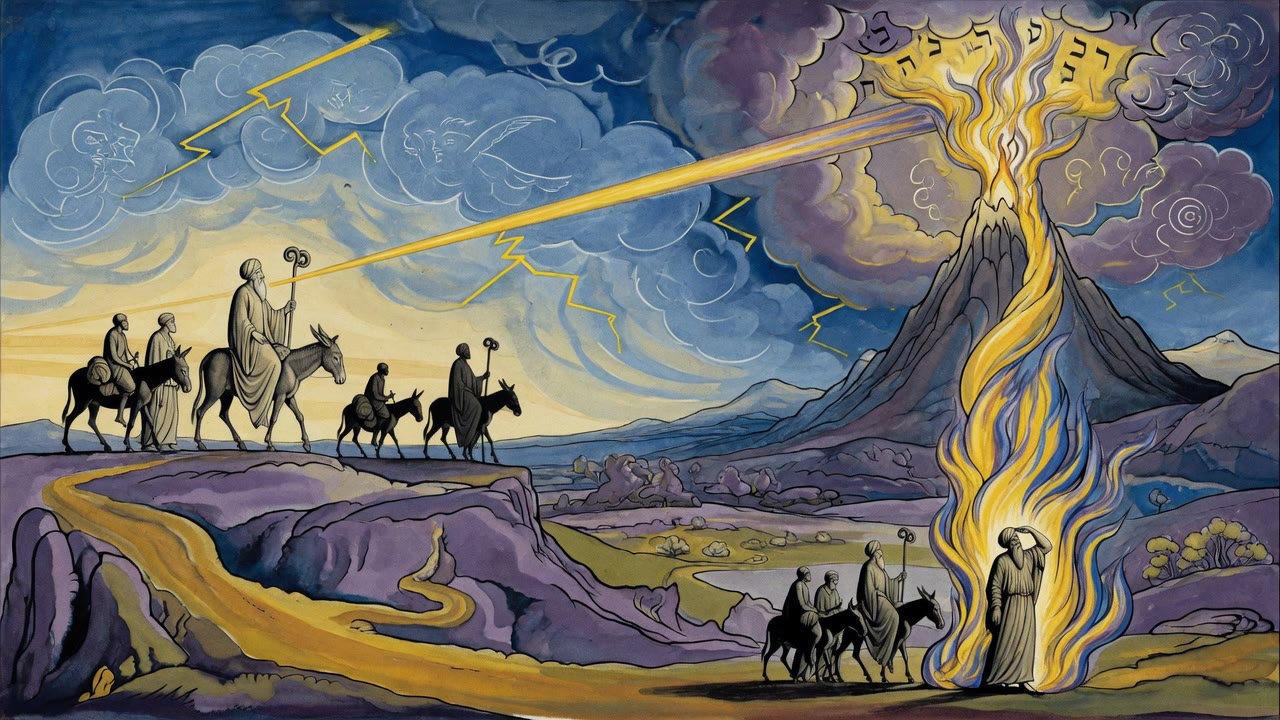
Before Moriah there was a heat-soaked afternoon and three wayfarers. Abraham set bread before them and said, sustain your hearts. The sages stopped on the word. Bread sustains not only the body but the heart, as the Psalmist sang. Then he said they would pass on, and the masters let the verse lean two ways at once, uncertain whether the leaving was part of the invitation or a separate clause. The visitors answered simply, so shall you do. Great ones may be refused nothing when they come as guests. Hospitality was already Abraham's priesthood of the open tent.
That same hand that tore bread would later lift a knife. The tradition does not smooth the distance between the two gestures. It only shows that the man who feeds strangers is the man God asks to climb. Isaac walked beside him with the wood on his shoulders and a question about the lamb that Abraham answered with faith that tasted like ash.
The King Who Wanted to See the Child
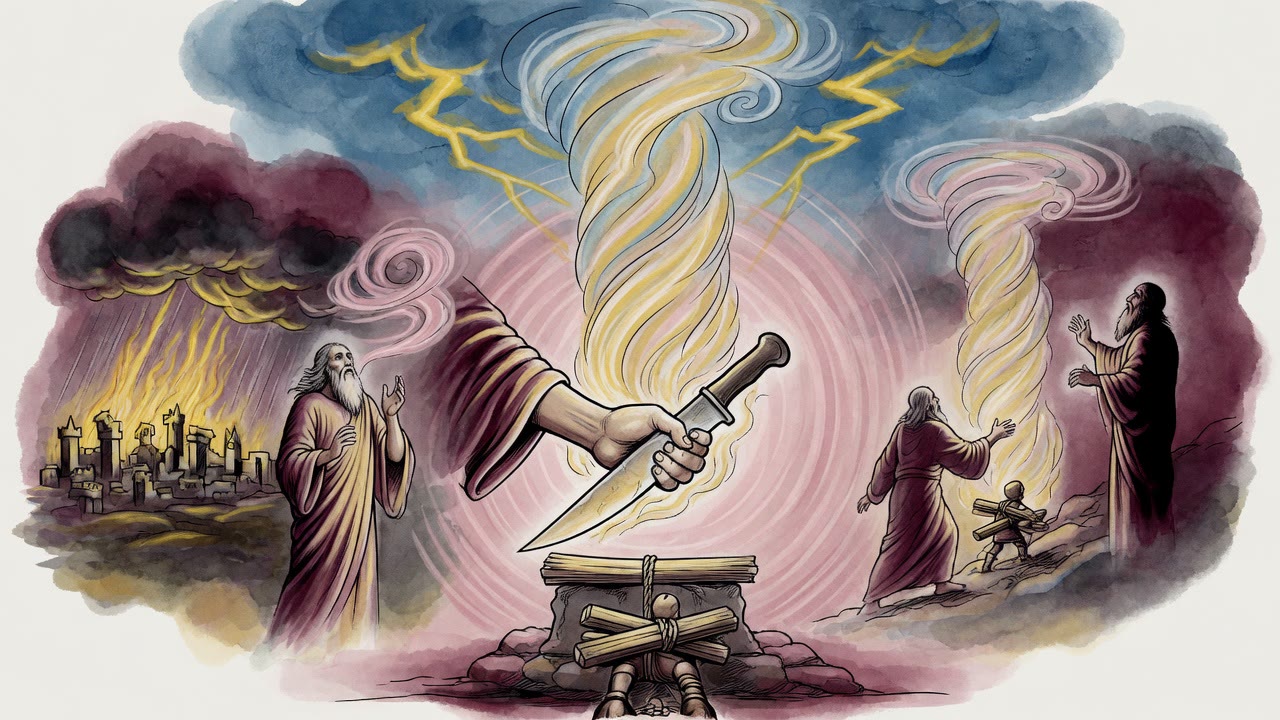
A parable sits under the climb. A king told his beloved friend he longed to see a small child at his table. The friend brought his own son and raised a sword to slaughter him. The king cried out in horror. He had asked to see the child, not to watch him die.
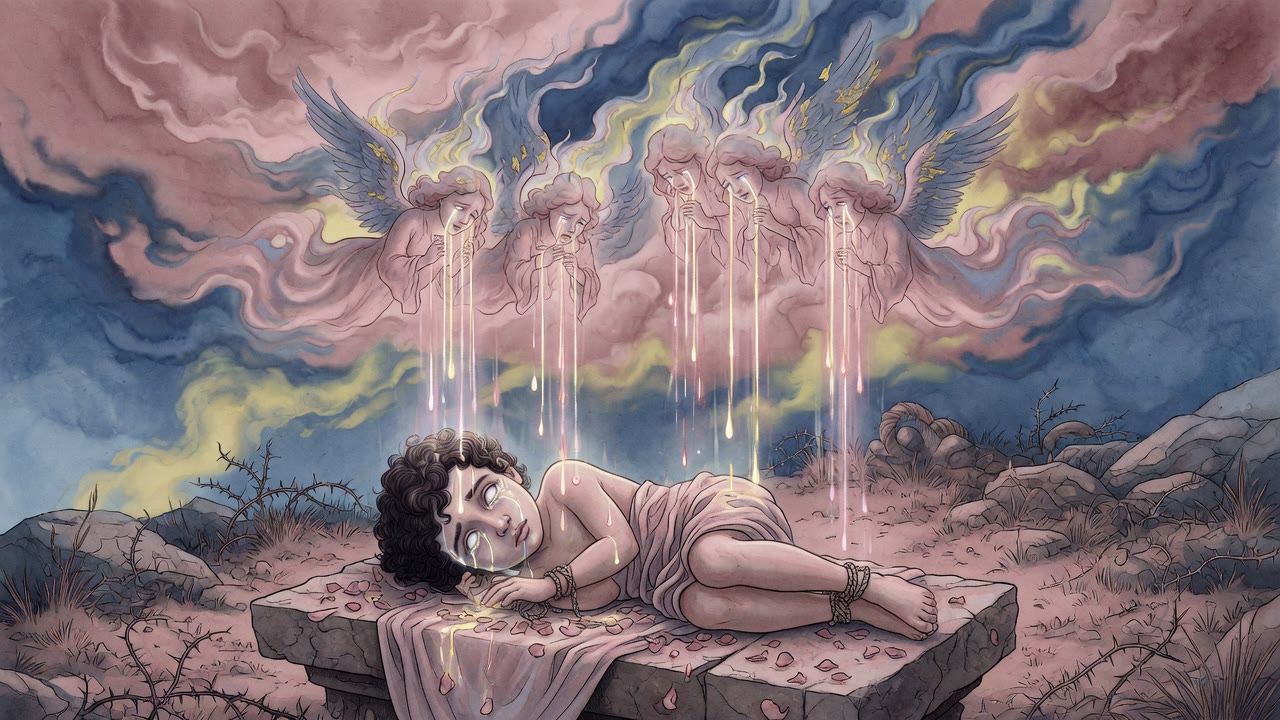
So with Abraham. God said, take your son. Abraham filled in the rest with the logic of sacrifice he knew. When the angel stayed the hand, the revelation landed hard: the request had been for the offering of the heart, not the spilling of the boy's blood. The knife rose. The knife stopped. Between those two motions lives the whole terror of hearing a short command and building a death on it.
Isaac saw the binding from below. Abraham saw the command from above. Neither of them, in that five-second hinge, could see the king in the parable shouting stop. Only the angel's voice broke the scene open.
The Ram That Keeps Getting Caught
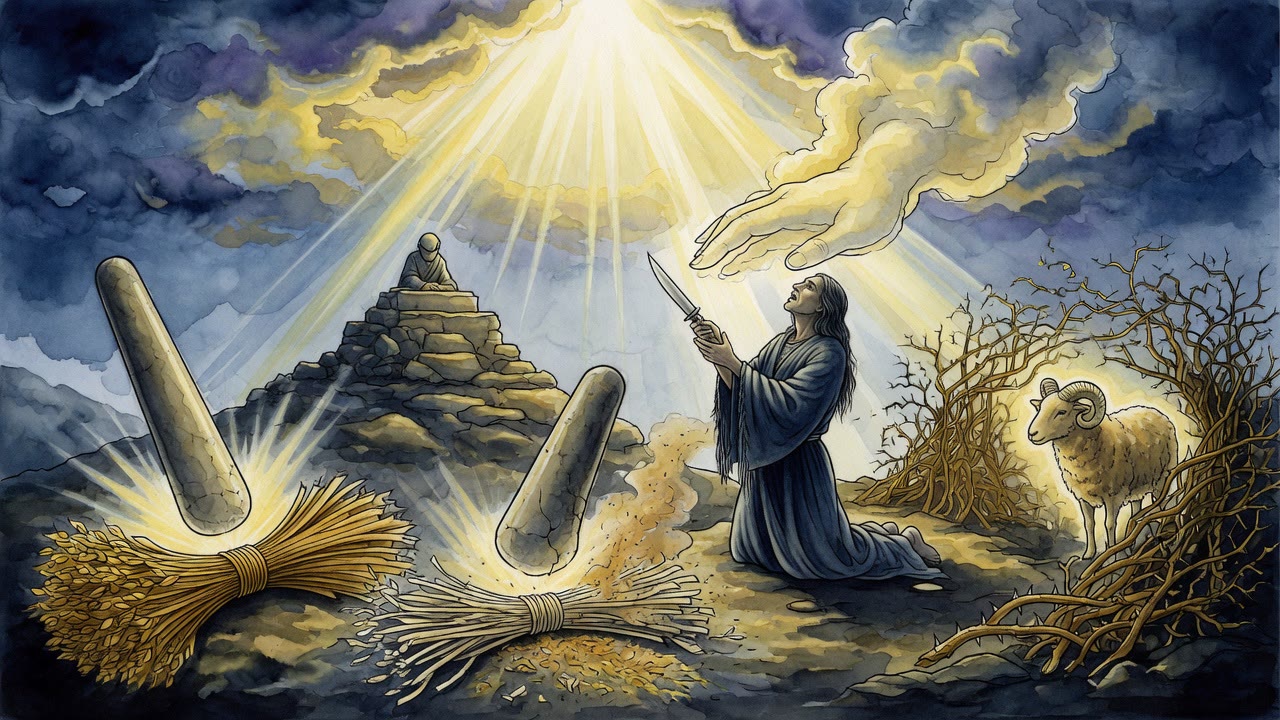
Then Abraham lifted his eyes and saw a ram caught in the thicket by its horns (Genesis 22:13). The midrash will not leave the animal as a single substitute. God showed Abraham a vision of the ram freeing itself from one thicket only to tangle in another. So your children will be caught in troubles, generation after generation, and in the end be redeemed with the horns of a ram.
Moriah becomes more than one morning. It becomes a map of entanglement and release. The priest without a priest, the guest-master with a knife, the boy unbound, the ram that keeps teaching history how to snag and how to sound a horn at the end.
Abraham walked down the mountain with a son still breathing and a future still knotted. The please that opened the test did not apologize. It only proved that God could ask softly and still take everything a father is willing to give, then give the father back the one thing he thought he had already lost. The wood was never burned. The heart was. That was enough for the summit that would later hold a Temple and still earlier held a table for strangers.
← All myths