Parshat Vayera5 min read

God Tested Abraham Like Flax Under a Pestle

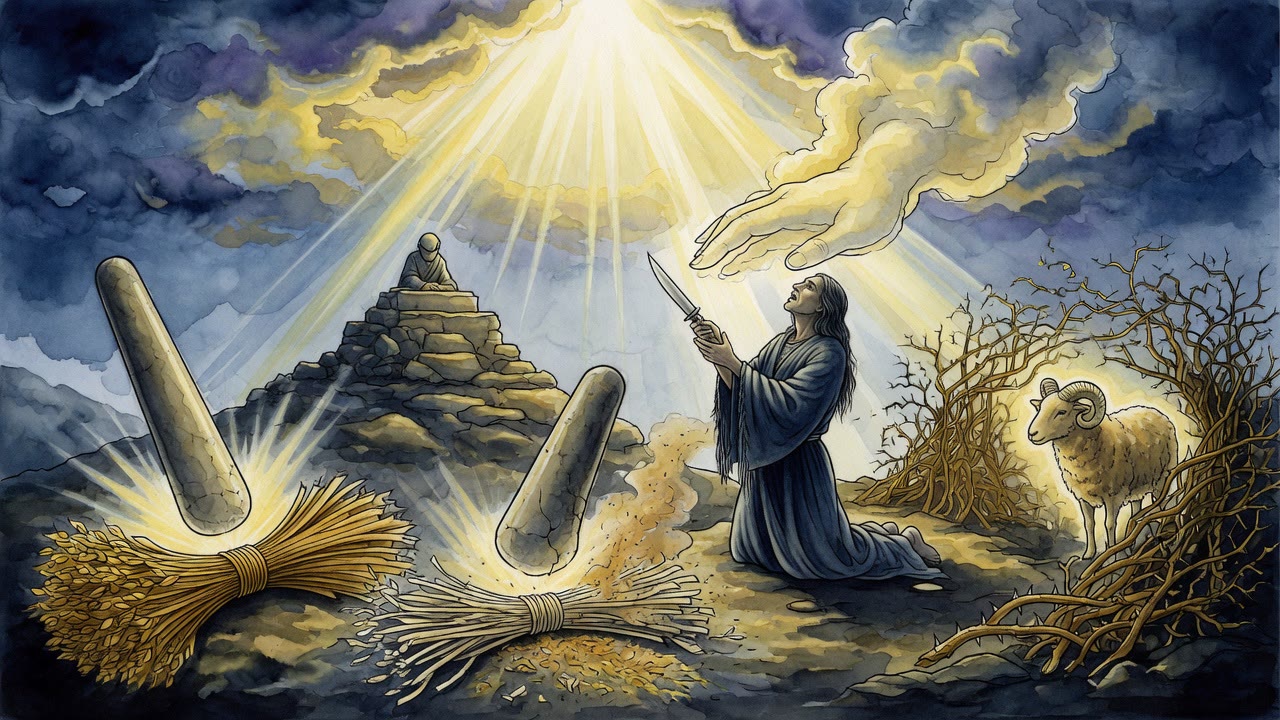
Good flax hardens under the pestle. Poor flax crumbles. On Moriah God pressed Abraham until the blade hovered, then opened a thicket with a ram.

Curated by Arthur · Told by Maggid ·
Table of Contents
  1. Only the Righteous Are Pounded
  2. Three Days of Silence
  3. The Ram in the Thicket
  4. Sarah Remembered While Wombs Closed
  5. Flax That Became a People
God Tested Abraham Like Flax Under a Pestle Click for full size

Only the Righteous Are Pounded

Rabbi Jonah taught with a craftsman's image that needs no soft light. Pound good flax and it improves, fibers aligning for cloth. Pound poor flax and it crumbles to dust useless for any loom. So the Holy One tests only the righteous, as the psalm says, "The Lord trieth the righteous." Abraham was good flax. The pestle was Moriah. The work was not cruelty for its own sake. It was the pressure that reveals what a soul can bear without breaking into powder.

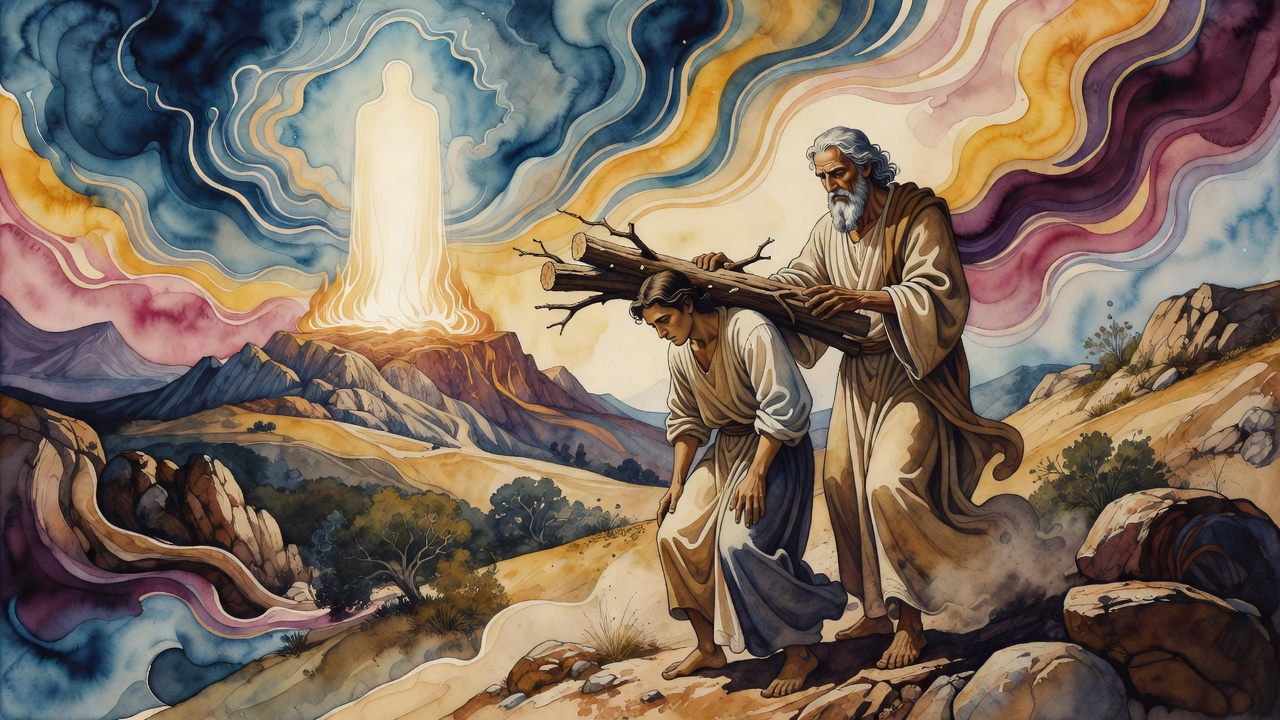
The command came without soft edges. "Take your son, your only son, whom you love, Isaac, and offer him there as a burnt offering." Happiness that had finally arrived in a hundred-year-old house turned to a three-day walk with wood on one back, fire and knife in older hands, and silence walking between them like a third traveler.

Three Days of Silence

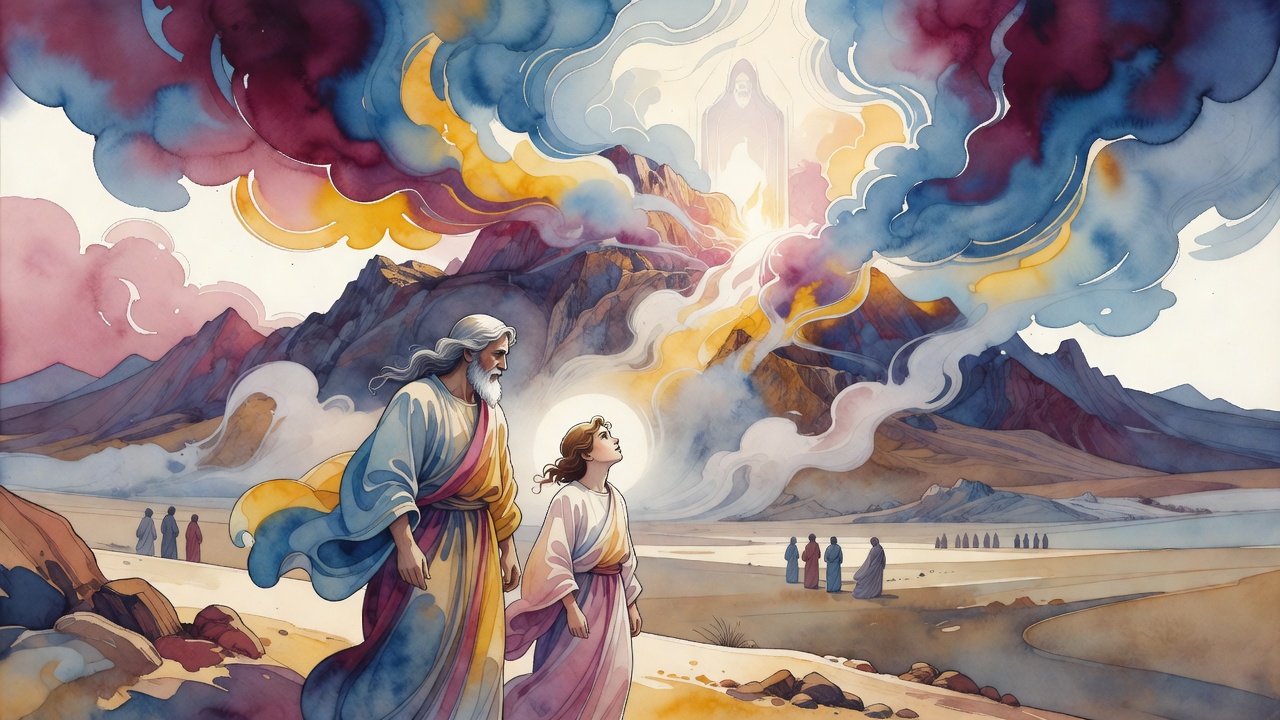
They climbed. Isaac carried wood. Abraham carried fire and the blade. Servants were left behind at a distance with a promise of return that only one of them fully understood. On the third day the place rose into view, the mountain choosing them as much as they chose it. Isaac asked where the lamb was. Abraham answered that God would see to the lamb for the burnt offering. The sentence held two meanings and only one of them was mercy. Both meanings walked the rest of the way together.

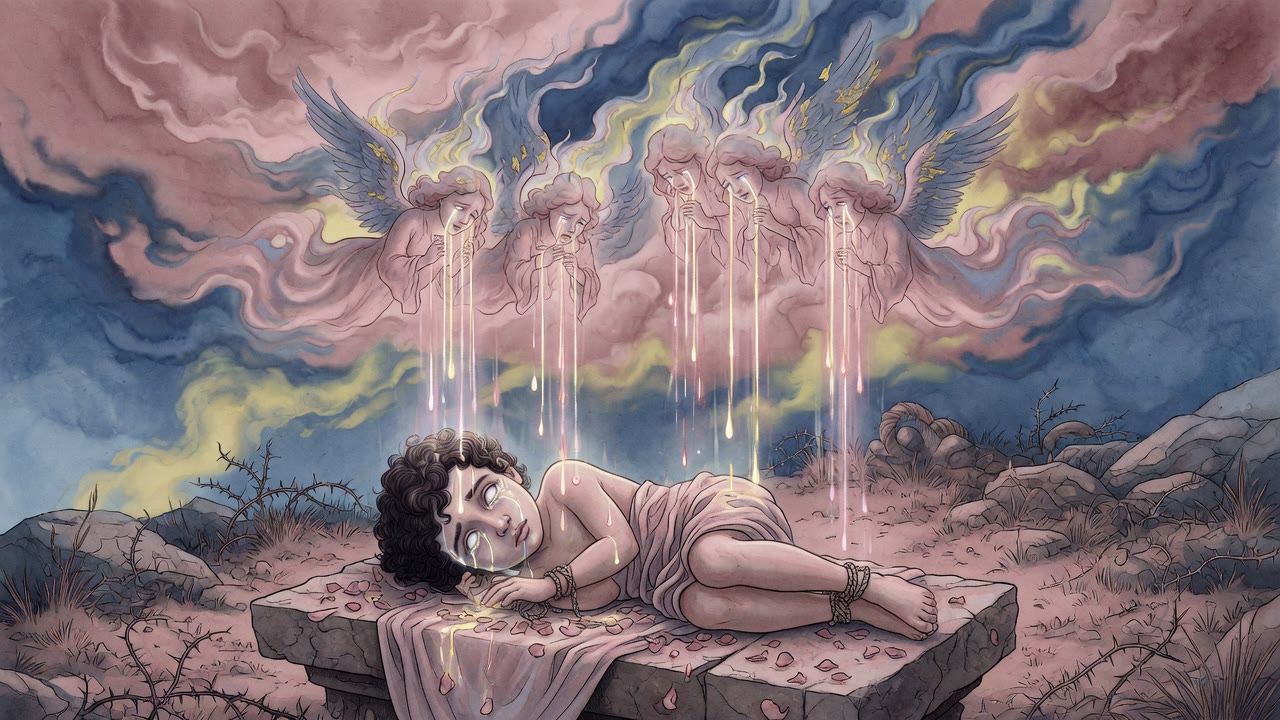
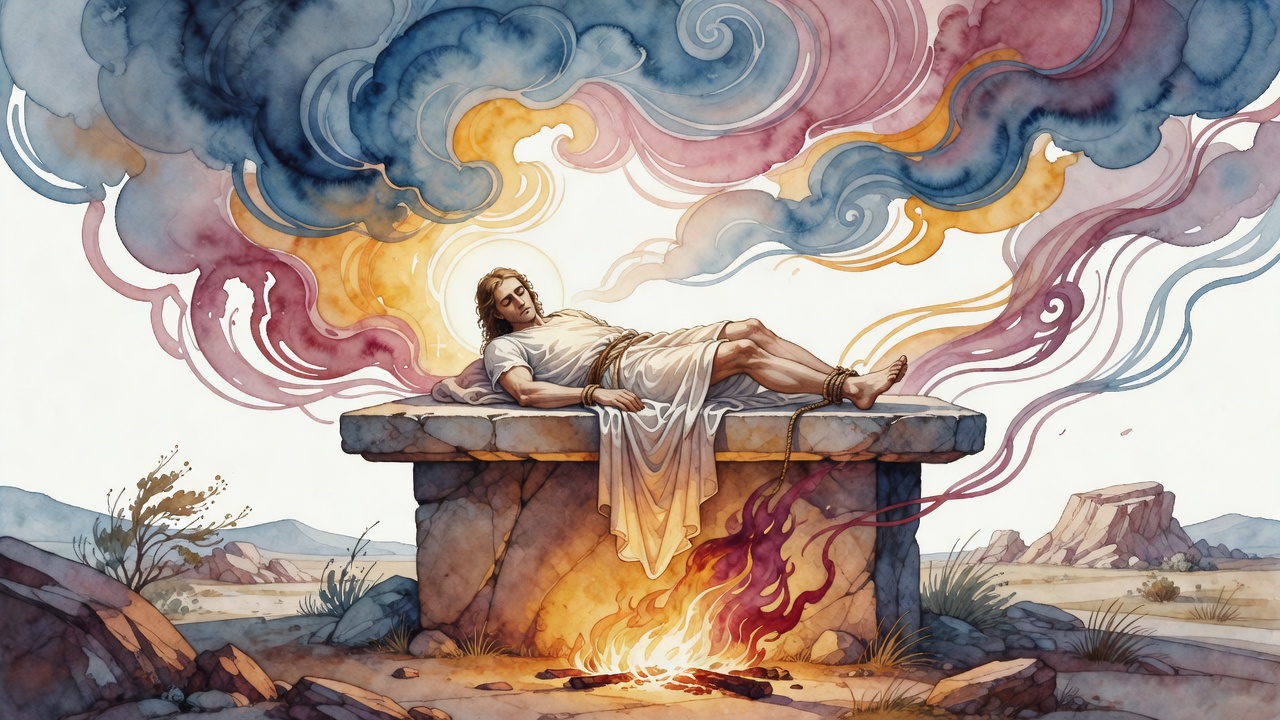
On the height Abraham built the altar stone by stone, laid the wood in order, bound his son with ropes that had known ordinary burdens. The midrash will not decorate the binding with music. The rope, the arrangement of limbs, the raised hand, these are enough. Good flax does not ask the pestle to be gentle. It only endures until the fiber is ready for a use larger than comfort.

Isaac looked up. Abraham looked down. Heaven watched the angle of the knife.

The Ram in the Thicket

The angel's voice stopped the blade before it could become a history Israel could not bear. A ram waited, caught by its horns in a thicket that had not been there for accident. Abraham offered the animal in place of the boy and named the place for seeing, for the Lord who is seen, for the seeing that cuts both ways. Isaac rose from the wood with rope marks and a life returned. The test had extracted a willingness that no speech in the tents of Mamre could fake.

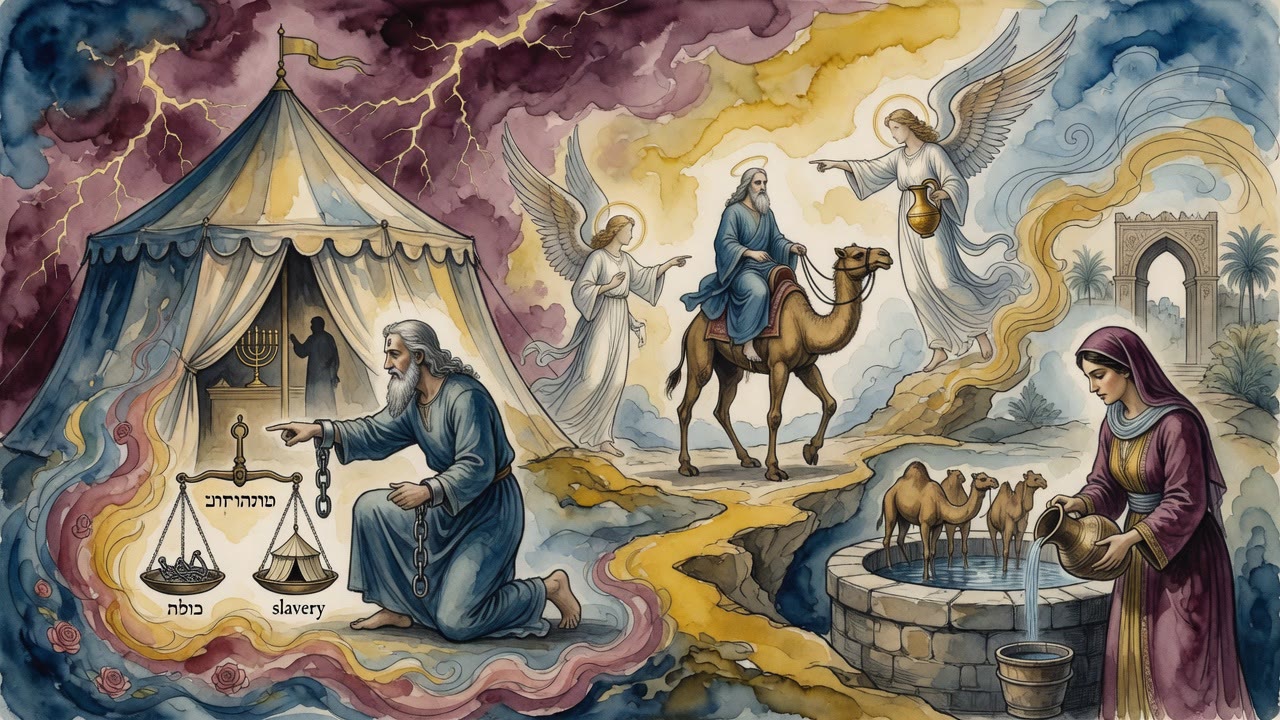
The Holy One had not desired the son's blood. He had desired the father's truth under pressure. Even so, joy did not stay like a guest who settles in for a season. Abraham came down the mountain into the news of Sarah's death and the hard bargain for a burial cave at four hundred silver shekels. The midrash on the eighth day of the Tabernacle later lists him among those whose happiness did not endure. He slew kings, received a son at a hundred, circumcised and raised him, then walked Moriah and buried Sarah. Righteousness is not a shield against the next grief. It is the reason the pestle is trusted not to be wasted on dust.

Sarah Remembered While Wombs Closed

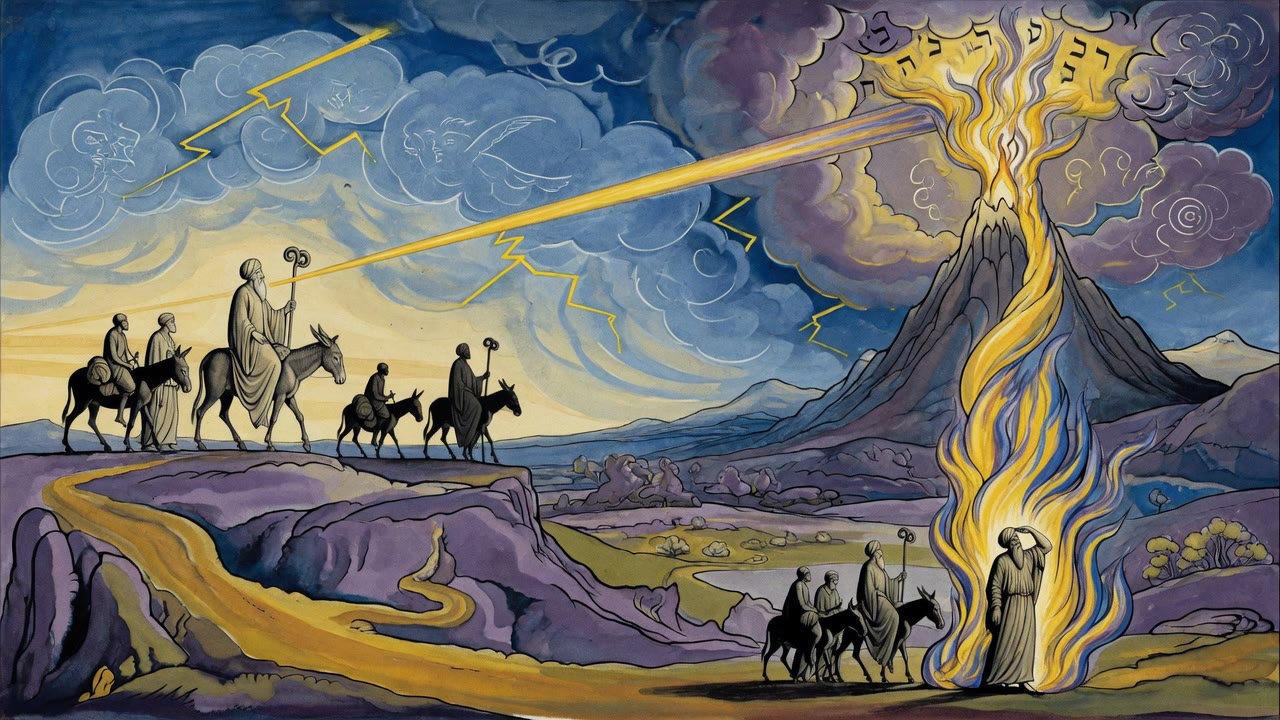
Earlier, when the Lord remembered Sarah, the midrash heard Ezekiel's trees speaking in seasons. The high tree brought low, the low tree raised, the green tree dried, the dry tree made to flourish. Abimelech's house had its wombs closed like grass withering in Tammuz heat. Sarah's body blossomed like a tree against the season's logic. "I, the Lord, have spoken and I will do it" stood beside "the Lord did unto Sarah as He had spoken," word and deed locked together.

The son born from that remembering was the same son laid on the wood. Promise and test shared one name, one laugh of a mother, one knife's shadow. Isaac's life was gift before it was ordeal, and ordeal before it was gift again.

Flax That Became a People

Isaac lived. The covenant ran forward through a boy who had looked up at a knife and seen his father's face refuse to turn away. Abraham's faith was no longer a rumor told about Ur, smashed idols, and desert altars. It was a mountain story with rope and fire and a ram's cry. Nations would swear by the God of Abraham because a pestle had come down and the fiber had held, becoming thread, becoming cloth, becoming a people that still tells the climb without softening the edge of the command.

On ordinary days Abraham would remember the thicket more than the knife. On hard days he would remember both, and walk anyway.


← All myths

From the tradition

Sources

3 sources

The texts behind this telling. Some cards carry a translation of the source; others are our own retelling of it, and each card says which. Every card links out to the original.

Midrash Tanchuma, Vayera 20Midrash Tanchuma

Retold in our words. Read the original at the link below.Townsend 1989 translation of Midrash Tanhuma, S. Buber Recension · CC-BY

And God did prove Abraham (Gen. 22:1). Scripture states elsewhere in allusion to this verse: The Lord trieth the righteous (Ps. 11:5). R. Jonah maintained: If you pound a good-quality flax, its quality will improve, but if you pound a poor-quality flax, it will crumble. So the Holy One, blessed be He, tests only the righteous.

R. Judah the son of Shalum said: A potter never tests a defective vessel for fear that it might break while being tested, but he always tests a perfect one. Likewise, the Holy One, blessed be He, tests the righteous but not the wicked, as it is said: The Lord trieth the righteous.

R. Eleazar declared: If a householder has two cows, one of which is strong while the other is weak, he places the yoke on the stronger cow and not on the weaker one. Hence, Scripture says: The Lord trieth the righteous and God did prove Abraham.

Full source
Midrash Tanchuma, Shmini 2Midrash Tanchuma

Retold in our words. Read the original at the link below.Townsend 1989 translation of Midrash Tanhuma, S. Buber Recension · CC-BY

(Lev. 9:1) “And it came to pass on the eighth day….” This text is related (to Ps. 75:5), “I say to the merrymakers, ‘Do not make merry….’” What is the meaning of [the words], “I say to the merrymakers (rt. hll), ‘do not make merry (rt. hll)?’” [The verse refers] to whoever sings in a mahanaim dance (mahol), and so it says (in Jud. 21:21), “to dance (lehol) in the dances.” [Because no happiness endures for a mortal] (Ps. 75:5), “I say to the merrymakers, ‘Do not make merry (rt. hll).’” Why? The one who is happy today shall not be happy tomorrow; and the one who is depressed today shall not be depressed tomorrow. And so it says (in Eccl. 2:2), “Of laughter I said, ‘It is mad (rt. hll)….’” Are you willing to understand? As behold, even the happiness of the Holy One, blessed be He, did not endure. When? When the Holy One, blessed be He, created His world. He was very happy, as stated (in Ps. 104:31), “the Lord shall be happy in His works.” It also says (in Gen. 1:31), “Then God saw everything which He had made; and behold, it was very good.” [These verses are] to teach you that the Holy One, blessed be He, found pleasure in and took pride in His works. Then He gave the first Adam an easy commandment, but he did not fulfill it. Immediately He rendered him a verdict [of death], as stated (in Gen. 3:19), “for dust you are, and unto dust you shall return.” So He, as it were, did not remain in His happiness but said, “I created everything only for the human, and now he dies. What pleasure is there for Me? [Now surely if the Holy One, blessed be He,] did not remain [happy], how much the less shall people [remain happy! It is therefore stated (in Ps. 75:5), “I say to the merrymakers, ‘do not make merry.’”] How happy Abraham was! He was blessed in the world, magnified, slew some kings and handed over heaven and earth to the Holy One, blessed be He. Also when the Holy One, blessed be He, gave him a son at age one hundred, he circumcised him and reared him. Then finally he was told (in Gen. 22:2), “Please take your son, your only son…, [and go unto the land of Moriah,] and offer him there as a burnt offering.” So he made a three-day journey, as stated (in Gen. 22:4), “On the third day….” When he returned from Mount Moriah, he buried Sarah. He did not find a place to bury her until he bought one for four hundred silver shekels. Then after that, old age came upon him. Now surely if such was the case with Abraham the righteous, how much the more is it the case with the wicked! Isaac did not remain in his happiness: He escaped from the sword and from the men of Gerar. And [God] informed them about who he was, so that they came to him. Thus it is stated (in Gen. 26:26, 28), “Then Abimelech came unto him from Gerar […. And they said, ‘We have clearly seen that the Lord is with you.’]” But he did not remain in his happiness. Rather (according to Gen. 27:1), “Now it came to pass, that when Isaac was old and his eyes were too weak to see.” So just as [this loss of happiness] happened in the case of Isaac the burnt offering of the Holy One, blessed be He, (according to Gen. 22:2), how much the more does it happen in the case of the wicked! Jacob was the first-born of the Holy One, blessed be He, as stated (in Exod. 4:22), “Israel is My first-born son.” How happy he was! He saw a ladder, and (according to Gen. 28:12-13) “the angels of god were ascending and descending [….] And behold, the Lord stood upon it and said, I am the Lord….” Then he went to Laban, fled from Esau, became Laban's servant for twenty years and in the end became wealthy, sired children and returned in peace. He also met Esau and was saved from him, and paid his vow. But in the end he did not remain in his happiness. Instead (according to Gen. 34:1), “Now Dinah [the daughter whom Leah had borne to Jacob] went out…,” and was raped]. There also came upon him the trouble over Joseph. Now surely if Jacob the righteous – one to whom the Holy One, blessed be He, had said, “In whom I will be glorified,” as stated (in Is. 49:3), “Israel, in whom I will be glorified” – did not remain in his happiness, how much the less will the wicked [so remain! It is therefore stated (in Ps. 75:5), “I say to the merrymakers, ‘Do not make merry.’”] How happy Joshua was! He slew thirty-one kings, gave Israel the land to possess, and distributed it. In addition all Israel gave him a [helping] hand and said (in Josh. 1:18), “Anyone who disobeys your command… [shall be put to death.” Such an honor was] something of which [even] Moses our master did not merit. Still he (i.e. Joshua) did not remain in his happiness, but rather died childless. It is therefore stated (in Ps. 75:5), “I say to the merrymakers, ‘Do not make merry.’” How happy Eli was, when he was king, chief justice, and high priest! It is so stated (in I Sam. 1:9), “now Eli [the priest] was sitting on the throne by the doorpost of the Temple of the Lord.” “Now Eli the priest was sitting on the throne,” because he was king. [He was] “by the doorpost of the Temple of the Lord,” because he was chief justice. Still he did not remain in his happiness. Instead (according to I Sam. 4:18), “And it came to pass that when he (i.e. a messenger) mentioned the ark of God, he (i.e. Eli) fell backward from off the throne….” Moreover, his two sons, Hophni and Phinehas died. So just as this [shift in fortune] happened with Eli the righteous, how much the more [does it happen with] the wicked! You find neither man nor woman who saw joys like Elisheba bat Amminadab, [the wife of Aaron, as stated (in Exod. 6:23), “And Aaron took for a wife Elisheba bat Amminadab”]. She saw her husband become high priest serving in the high priesthood and [as a] prophet. In addition, Moses, her husband's brother, was king and prophet. Her sons were deputies [to the high priest] in the priesthood, and her brother Nahshon was head of all of the princes of Israel. Still she did not remain in her happiness. Rather, when two of her sons went in to offer a sacrifice, (according to Lev. 10:2,) “Fire came forth from before the Lord and consumed them, so that they died before the Lord.” It is therefore stated (in Ps. 75:5), “I say to the merrymakers, ‘Do not make merry.’” And so Solomon said (in Eccl. 2:2), “Of laughter I said, ‘It is mad.’” There is a story about one of the great Babylonian [scholars], who married off his son, and made a great banquet for the sages. He said to his son, “Go up and bring us a jar of such and such a wine from the attic.” He went up to the attic. [There] a snake [from] among the jars bit him, and he died. His father remained with those who were reclining [at his table]. So he delayed and did not come. [Finally,] his father said, “Let me go up and see what my son is doing.” His father went up [and] found him cast down dead among the jars. What did that righteous one do? He waited by himself until the guests had eaten and drunk sufficiently. When they had finished, he said, “You came to say a bridegrooms' blessing over my son. [But instead] say a mourners' blessing over him. You came to bring my son to the wedding canopy. [Instead] bring him to [his] grave.” They said about R. Zakkay of Kabul and they opened about him (in the words of Eccl. 2:2), “Of laughter I said, ‘It is mad; and what does joy do?’”

Full source
Midrash Tanchuma, Vayera 15Midrash Tanchuma

Retold in our words. Read the original at the link below.Townsend 1989 translation of Midrash Tanhuma, S. Buber Recension · CC-BY

And the Lord remembered Sarah, as he had said (Gen. 21:1). Scripture states elsewhere in allusion to this verse: And all the trees of the field shall know that I, the Lord, have brought down the high tree, have exalted the low tree, and have dried up the green tree, and have made the dry tree to flourish. I, the Lord, have spoken and I will do it (Ezek. 17:24). I have brought down the high tree alludes to Assyria, as it is said: Behold, the Assyrian was a cedar in Lebanon with fair branches, and with a shadowing thicket. And of a high stature (ibid. 31:3). Have exalted the low tree refers to Israel, as it is said: Therefore, I have made you contemptible and base before all the people (Mal. 2:9). Have dried up the green tree refers to Abimelech’s wife (because she could not bear children), and I have made the dry tree to flourish alludes to Sarah, as is said: And Sarah conceived and bore a son to Abraham (Gen. 21:2). I, the Lord, have spoken and I will do it parallels And the Lord did unto Sarah as He had spoken (ibid., v. 1). R. Levi said: During the month of Tammuz, grass withers and trees blossom. Similarly, the grass withered when the Lord closed all the wombs of the house of Abimelech, and the trees blossomed when the Lord remembered Sarah.

Full source