The Angel Stopped Abraham's Knife Over Isaac
Isaac was bound on the wood, breath shallow enough to count. A doubled name hit the ridge, and a ram fought the thorns in his place.
Table of Contents
 Click for full size
Wood, Fire, and the Question
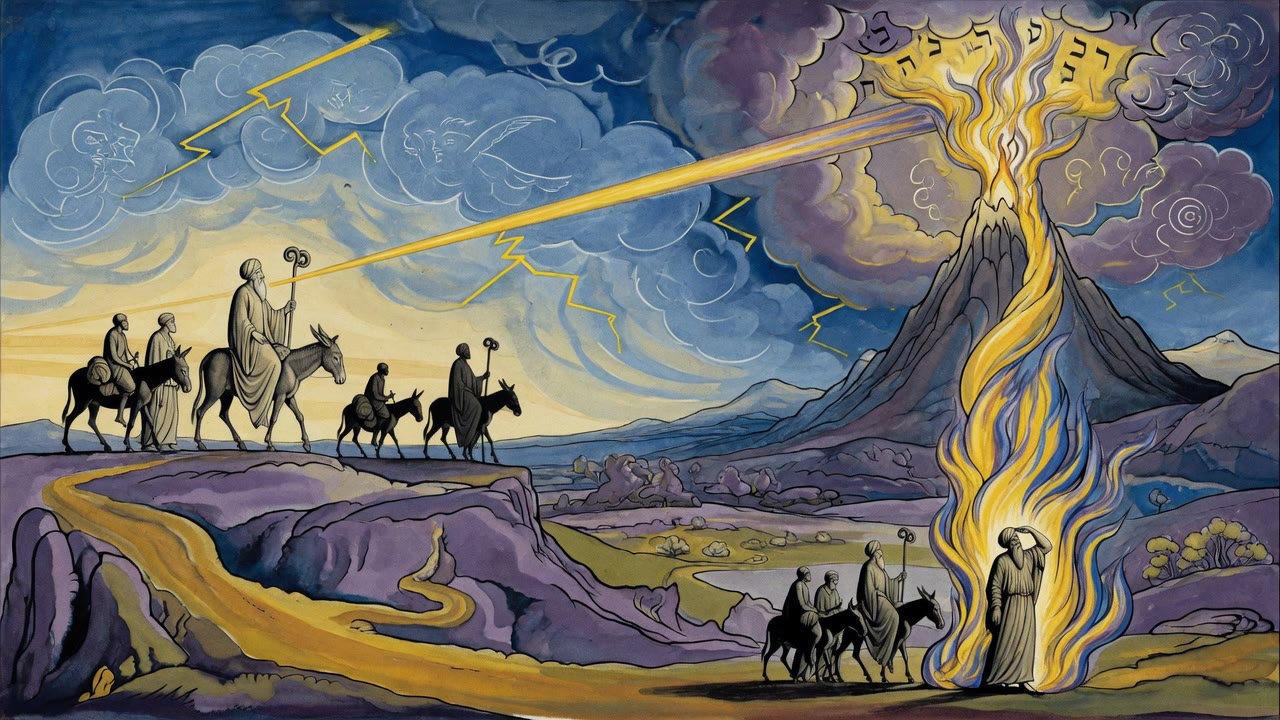
They left the servants with the donkey. Isaac carried wood. Abraham carried fire and the knife. The boy asked about the lamb. The father answered with a sentence that held more weight than the blade. God will see to the lamb. Every step after that was a step inside that sentence.
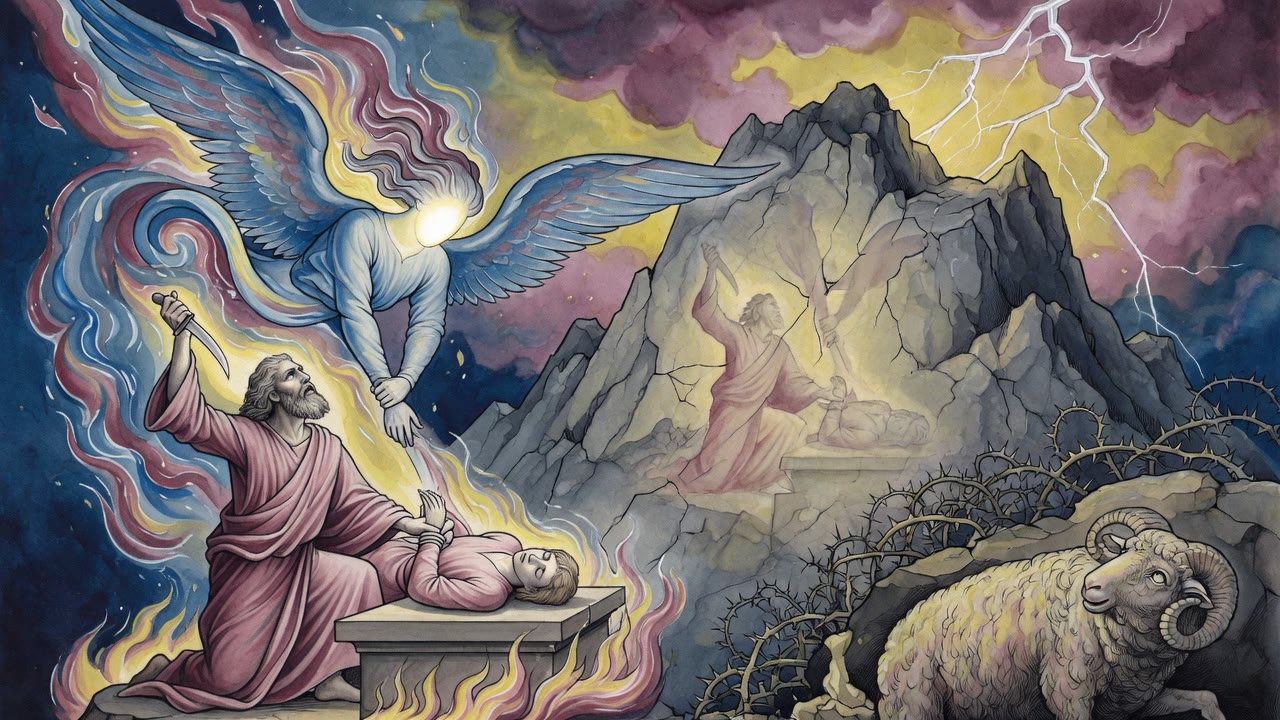
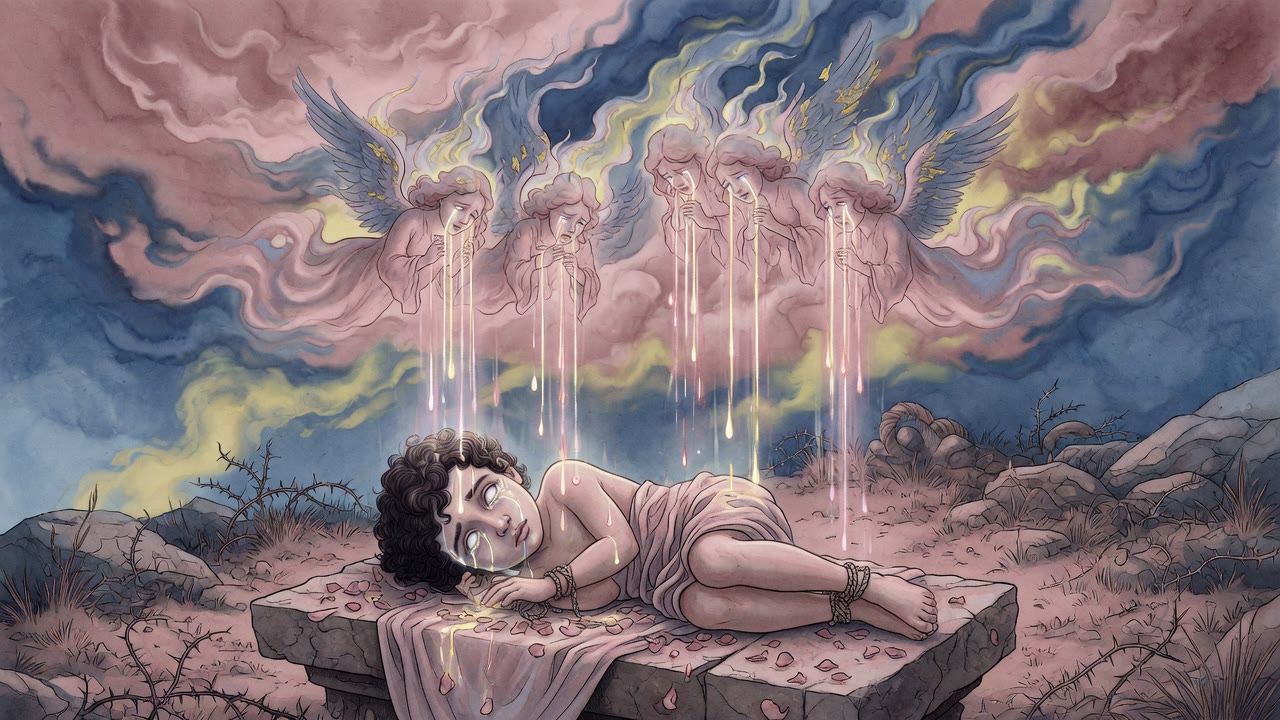
On the ridge Abraham built the altar and laid the wood. He lifted Isaac and set him on the pile. Then he reached for the knife to slaughter his son. Isaac was bound wood-steady, breath shallow enough to count. Abraham's arm was already up. The blade caught Moriah light. The test had run out of delay.
The Knife and the Accuser
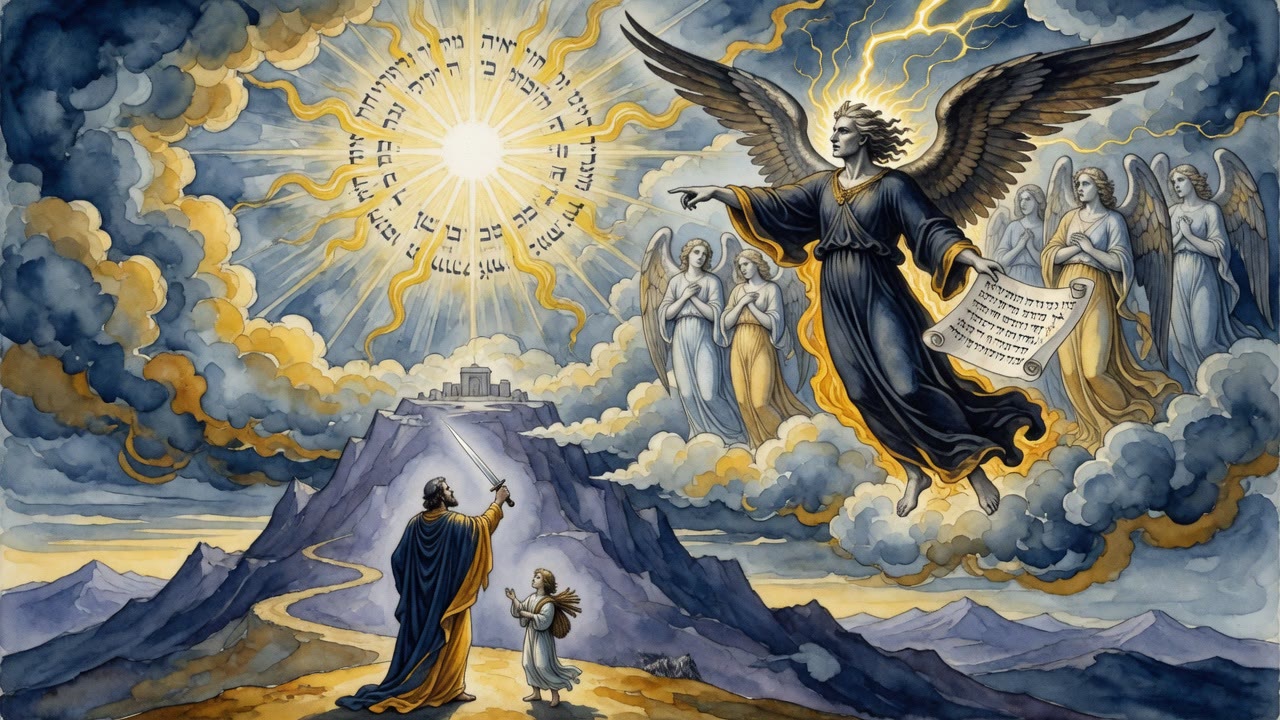
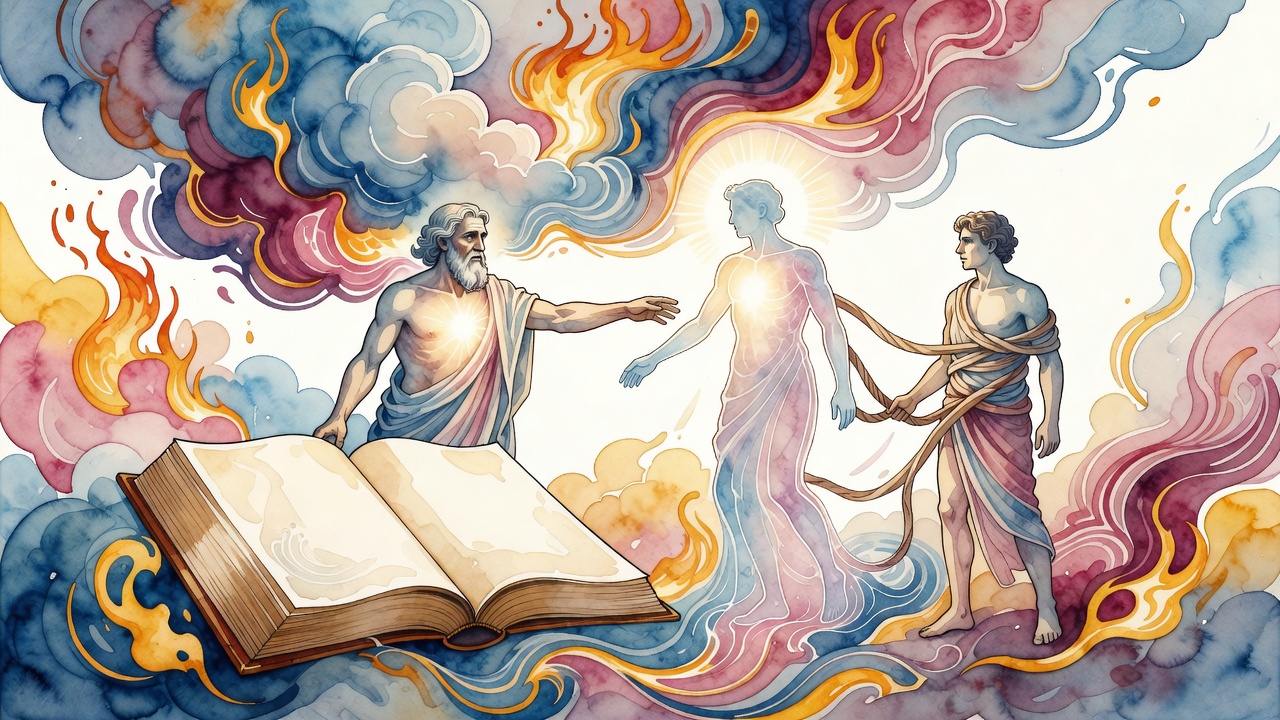
Above the mountain an angel stood between the throne and the Prince of Mastema, the Accuser who had wanted this hour. The command moved first to the messenger. "Tell him not to lay his hand on the lad," God said, "nor to do anything to him. I know now that he fears God."
The angel called from heaven.
"Abraham, Abraham!"
The name hit like a hand on a falling wrist. Abraham trembled. "Here I am."
"Lay not your hand upon the lad, nor do anything to him. Now I know that you fear God, and you have not withheld your son, your firstborn, from Me."
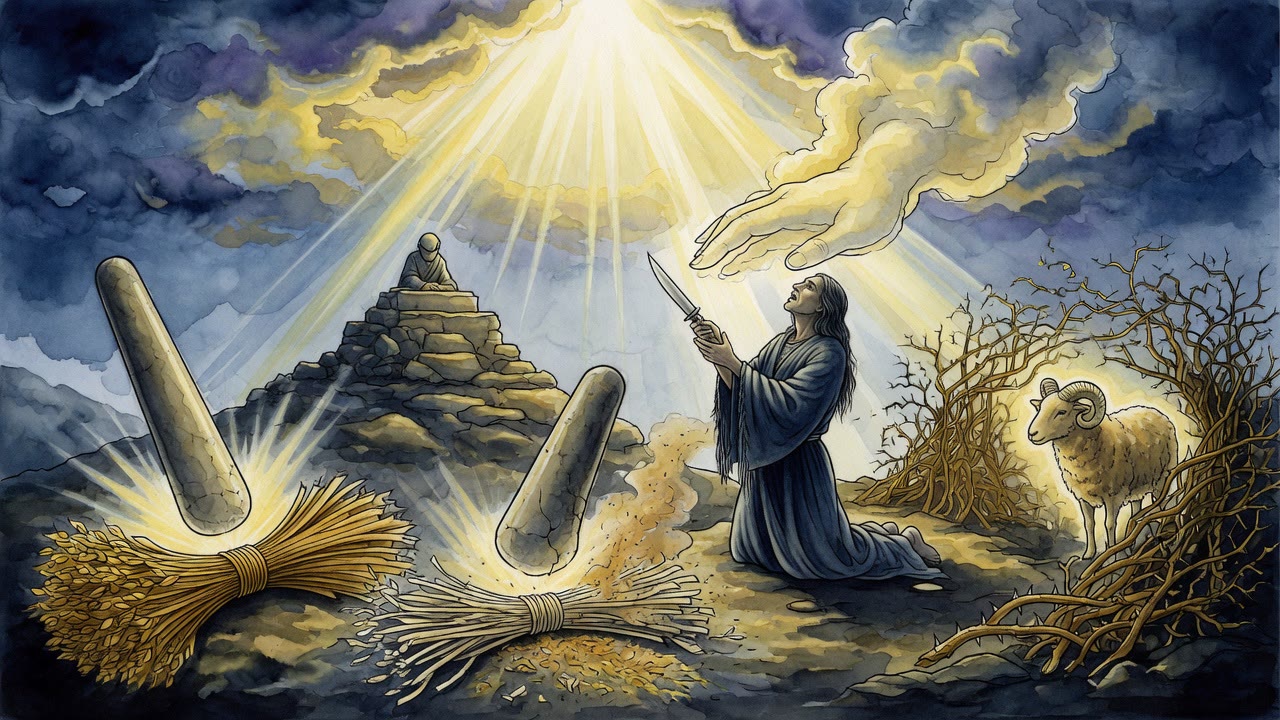
Abraham lowered the knife. A ram waited in the thicket, horns already arguing with thorns. The boy lived. The altar smoked with a different offering (Genesis 22:10-12).
The Walk Down
Isaac heard the second name of his father before he felt the ropes loosen. Abraham heard terror in a voice that meant life. The ram's struggle in the bush became the only blood the mountain required that morning.
On the way down the servants saw fire and wood and no explanation that would fit a short journey. Isaac walked with a knowledge no servant shared. He had been the lamb until a voice doubled his father's name. Abraham walked with the knife still in his belt and a different kind of cut inside his chest, the cut of a test completed without the ending he had steeled himself to deliver.
The Accuser had wanted a corpse on the wood. The messenger's urgency was the form divine refusal took when the test had already been measured as complete. Heaven did not shrug. It dispatched. Abraham's shaking at the doubled name was part of the mercy. A calm man lowering a knife would have been a different morning.
Beware Their Paths
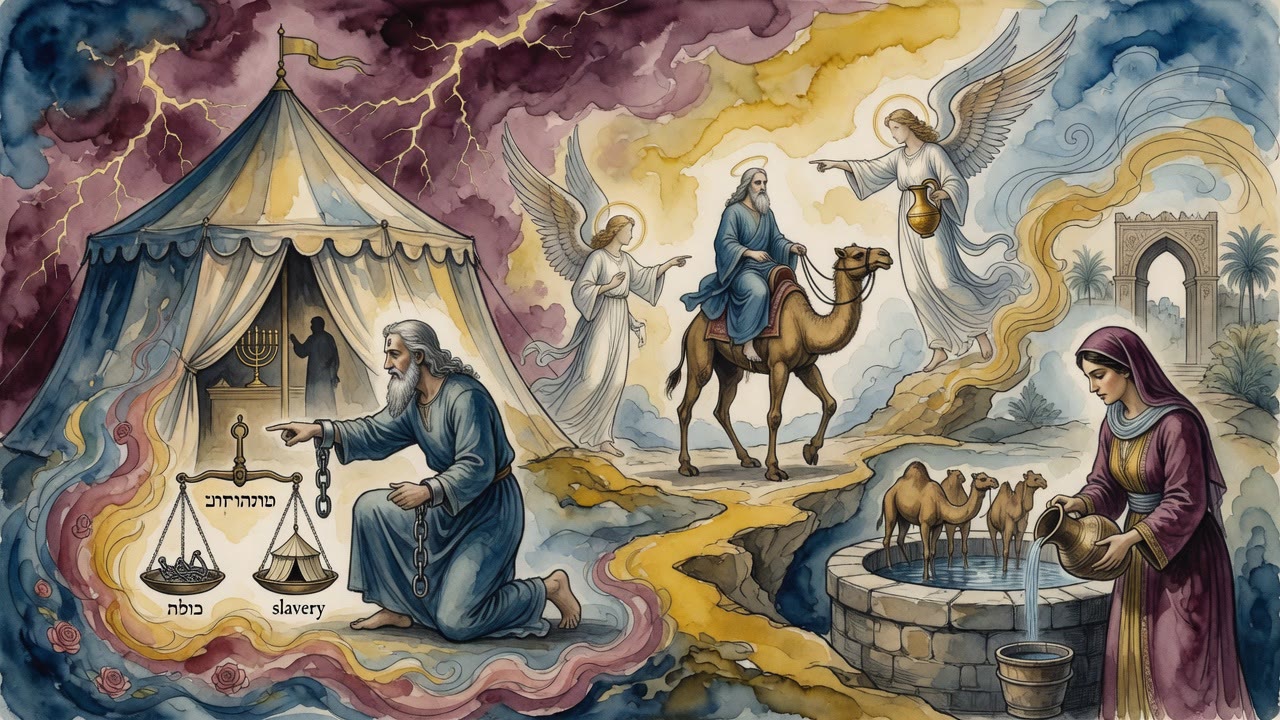
Abraham did not spend the rest of his life soft. Years later he turned to Isaac with a warning that sounded like a man who had seen uncleanness stick to human hands.
"I see, my son, that all the works of the children of men are sin and wickedness, and all their deeds are uncleanness and an abomination and a pollution, and there is no righteousness with them."
Beware their paths, he said. Do not walk in their ways. Do not tread in their paths. A sin unto death before the Most High will hide the Face, hand a man back to his own transgression, and root out seed from under heaven. Name and seed would perish from the whole earth.
The near-loss of Isaac had not made Abraham casual about the next generation. It made him stricter about the roads that generation might walk. The angel who stopped the knife did not stop the father from fearing what men do when no angel shouts their names.
Isaac carried both memories: the cord marks of obedience, and the speech that treated the nations' ways like open graves. Heaven had refused the son's blood on the altar. Abraham refused to spend the son cheaply on the world's pollution afterward. The ram in the thicket and the hard speech were two forms of the same guardianship.
Isaac grew up between a thicket-ram and a charge that treated the nations like open pits. He had not been spared in order to wander.
← All myths