Parshat Vayera5 min read

Isaac Bore the Wood Like a Condemned Man

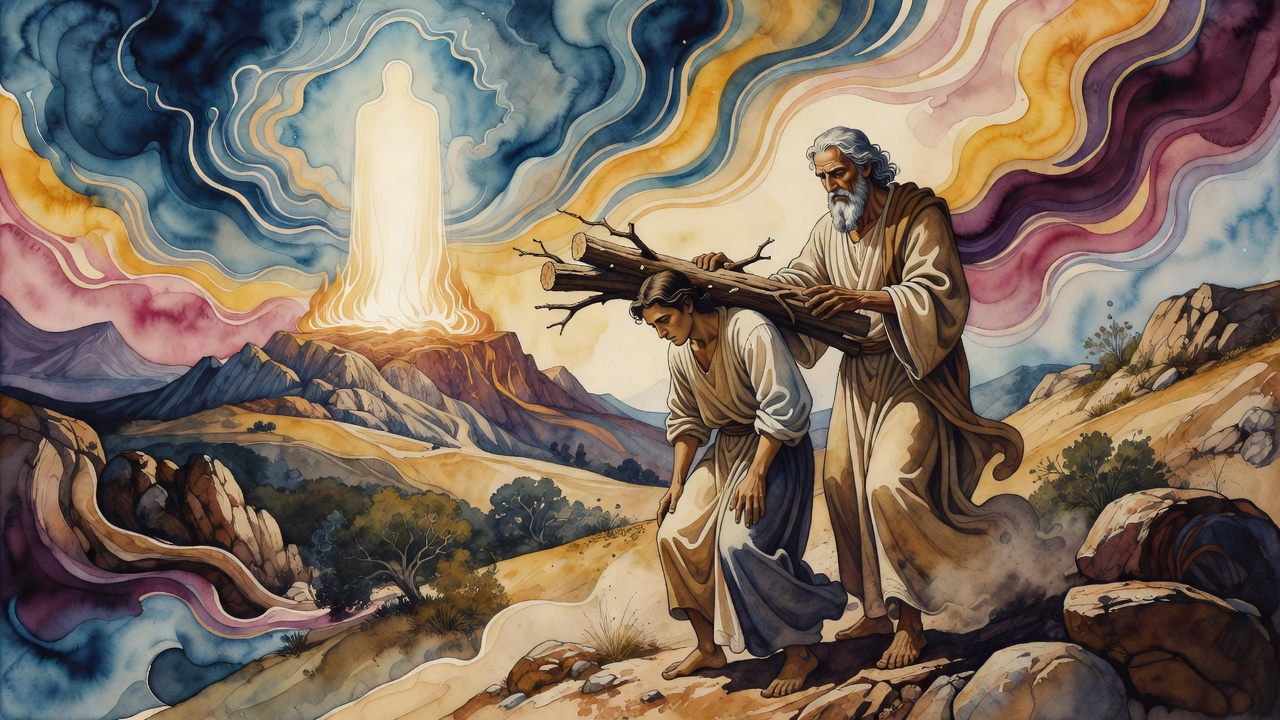
Abraham laid the altar wood on Isaac's back. Father and son climbed Moriah together, one to bind, one to be bound.

Curated by Arthur · Told by Maggid ·
Table of Contents
  1. Wood Across a Living Back
  2. The Knife Named for Eating
  3. What Isaac Saw on the Altar
  4. Together Until the Angel
  5. Merit That Feeds
Isaac Bore the Wood Like a Condemned Man Click for full size

Wood Across a Living Back

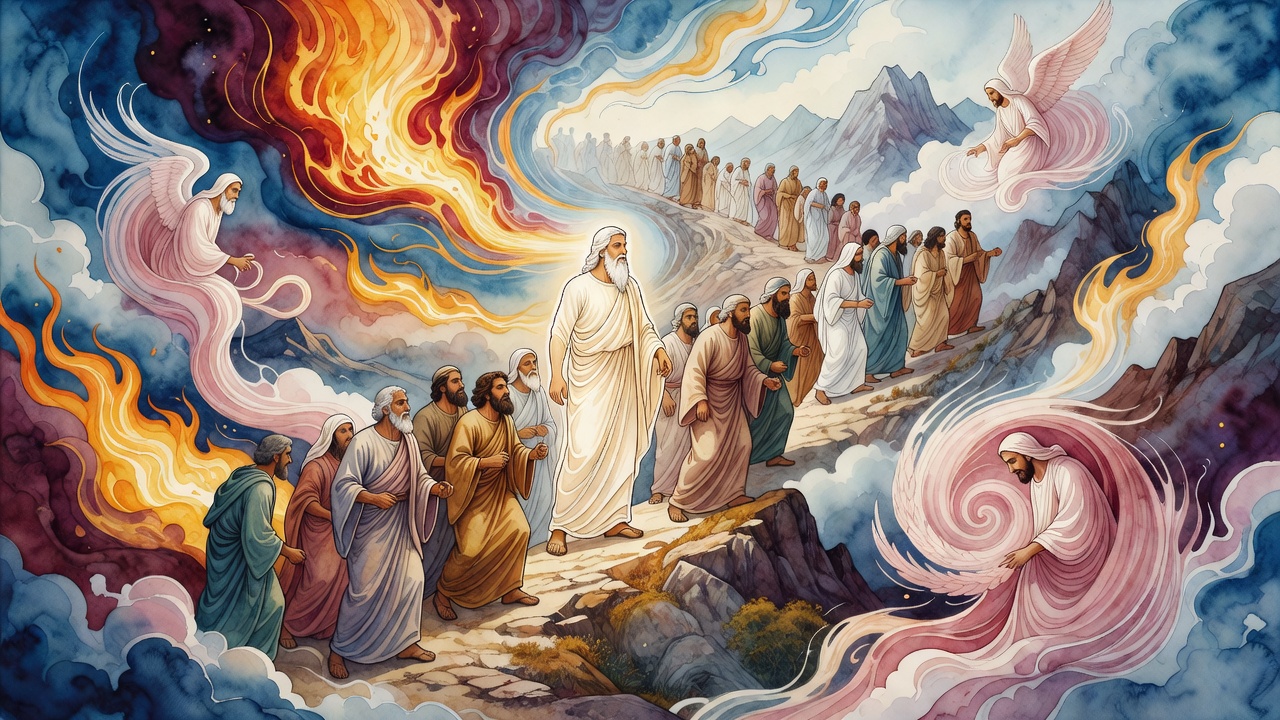
Abraham lifted the wood of the burnt offering and set it on Isaac as if the boy were already a beam for his own death (Genesis 22:6). Fire rode in the father's left hand. The knife rode in the right. The mountain path took them both, and the midrash refuses soft language for the load. Isaac walked like a condemned man forced to carry the gibbet on which he is to hang.

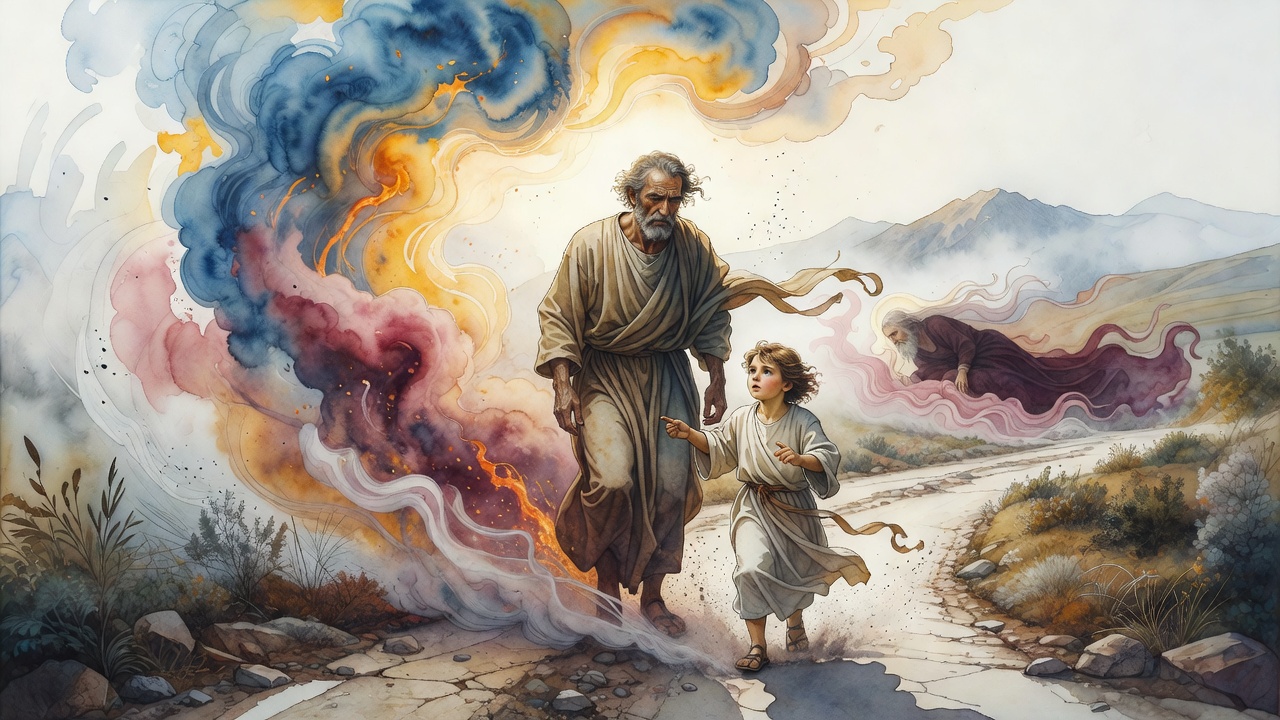
Dust rose under sandals that had followed this father from Ur to altars already cold. Neither spoke the full truth for as long as speech could be avoided. Isaac felt the weight of branches that would hold his body if Heaven did not interrupt. Abraham felt the same branches and still did not set them down. Servants had been left behind with the donkey. The two of them went together, one to bind and the other to be bound, one to slaughter and the other to be slaughtered.

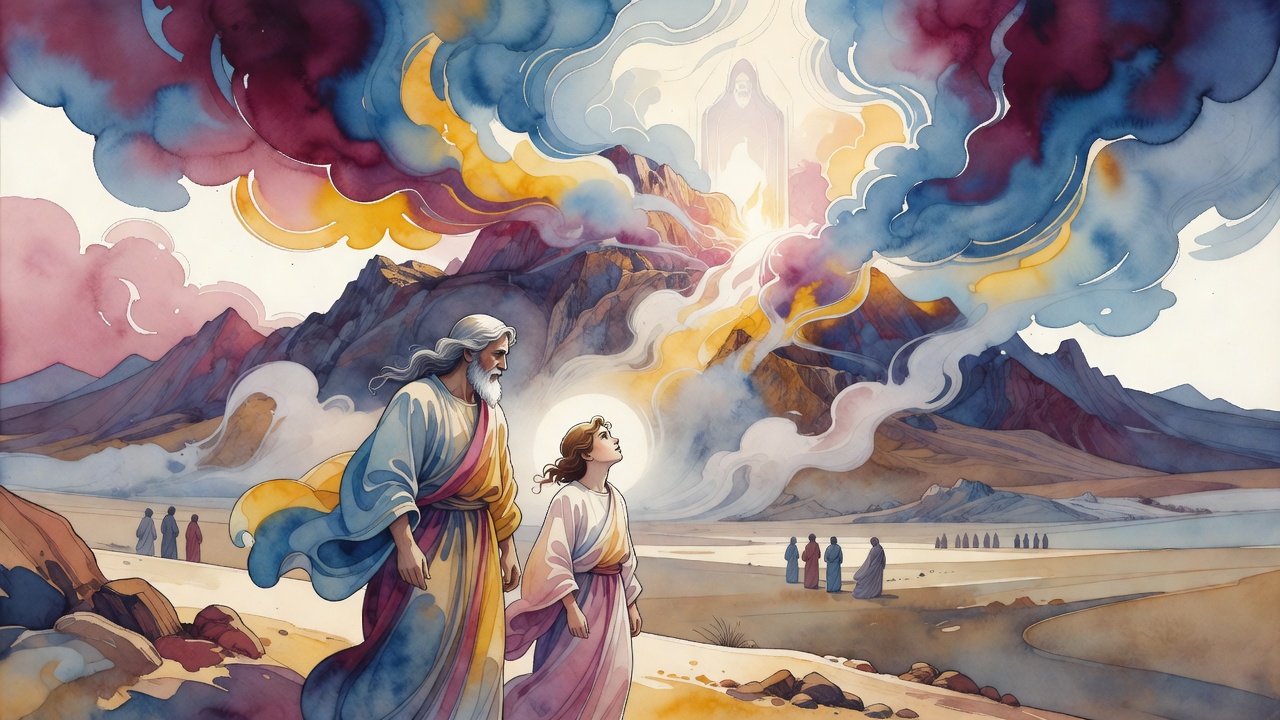
Moriah waited with no altar yet built. Wind moved through scrub. A bird called once and went silent, as if the hill itself knew what kind of morning this was.

The Knife Named for Eating

The knife in Abraham's grip is called maakhelet. Rabbi Hanina hears food inside the word, a blade that makes flesh fit to eat. Meat does not reach a table until a knife has done its work. On this road the same tool that feeds the living is carried toward a son.

The sages push the image further. All the eating Israel will ever do in this world, they say, rests on the merit of that knife, on the willingness sealed when steel and wood climbed together. Every later meal borrows courage from a morning when a father did not drop the blade and a son did not drop the wood. Bread in a child's hand in a later century still leans, invisibly, on this ascent.

Isaac's shoulders burned where bark bit through cloth. Abraham's fingers did not loosen on the firepot. When Isaac finally asked where the lamb was, the answer was a holding pattern. God would see to the lamb. The wood kept its weight. The question kept its edge.

What Isaac Saw on the Altar

Later tradition lets Isaac claim his hour. When the fathers measure greatness against Moses, Isaac stands up with the altar still in his eyes. He saw the Shechinah (שכינה), the Divine Presence, while he lay bound. Few mortals can say that and mean a moment of almost-death rather than a dream.

Moses does not deny the vision. He answers with a cost Isaac paid afterward. The eyes that beheld too much dimmed in old age, "from seeing." The midrash hears the dimming as aftermath of glory, not mere age. Moses spoke with God's face to face and left the mountain with skin still radiant, eyes undimmed to the last day (Deuteronomy 34:7). The argument is not mockery. It is two men comparing what nearness to God does to a body that survives.

On Moriah, that argument has not yet begun. There is only wood, rope-ready limbs, and a father stacking stones with the care of a man who has built altars before and never for this.

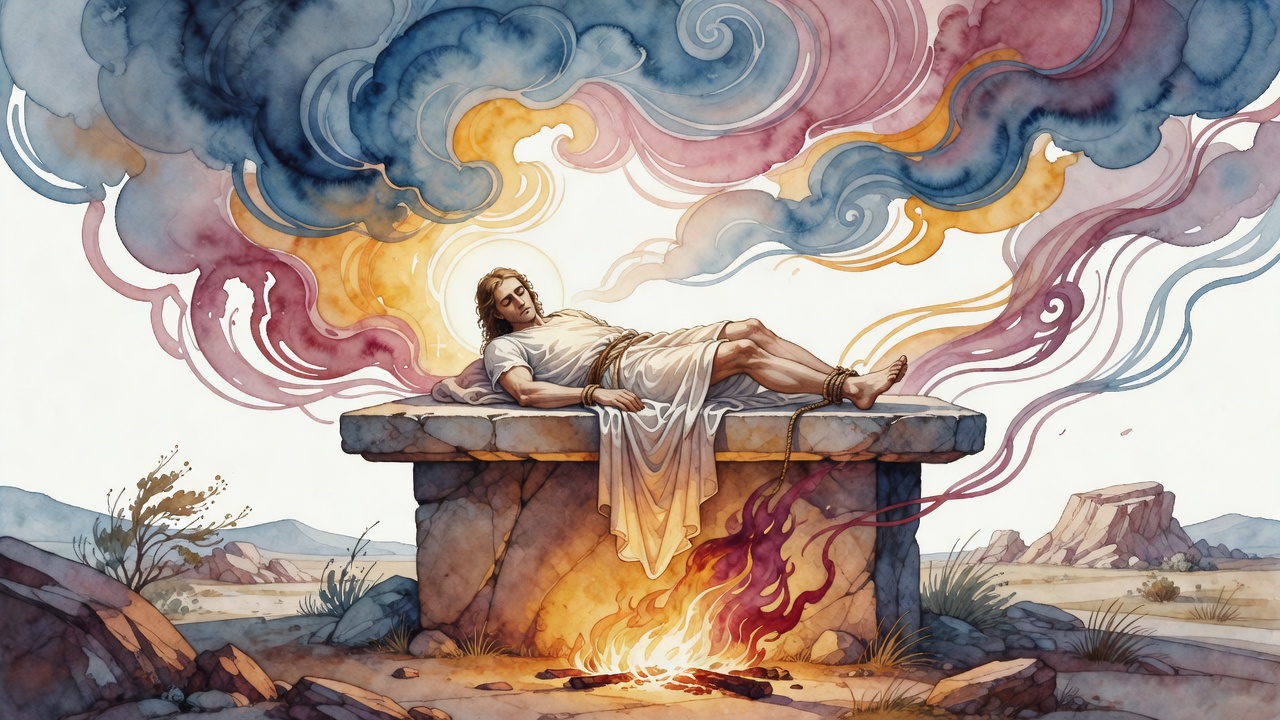
Isaac watched the arrangement of fuel and knew he was looking at his own bed. He did not run. Consent is a kind of second knife, quieter than metal, just as sharp.

Together Until the Angel

"The two of them went together" is not scenery. It is consent walking beside command. Isaac could have bolted when the knife appeared. Abraham could have claimed a mistake when the boy asked about the lamb. Instead they climbed in a shared silence thick enough to taste.

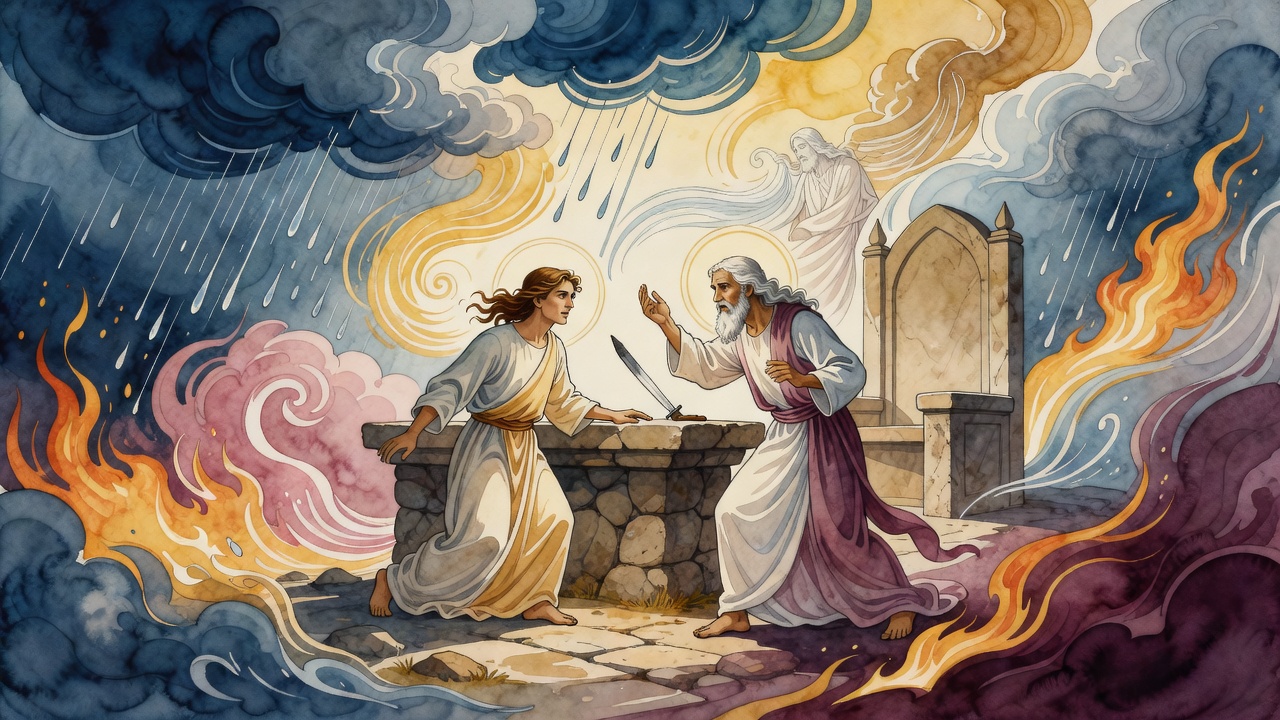
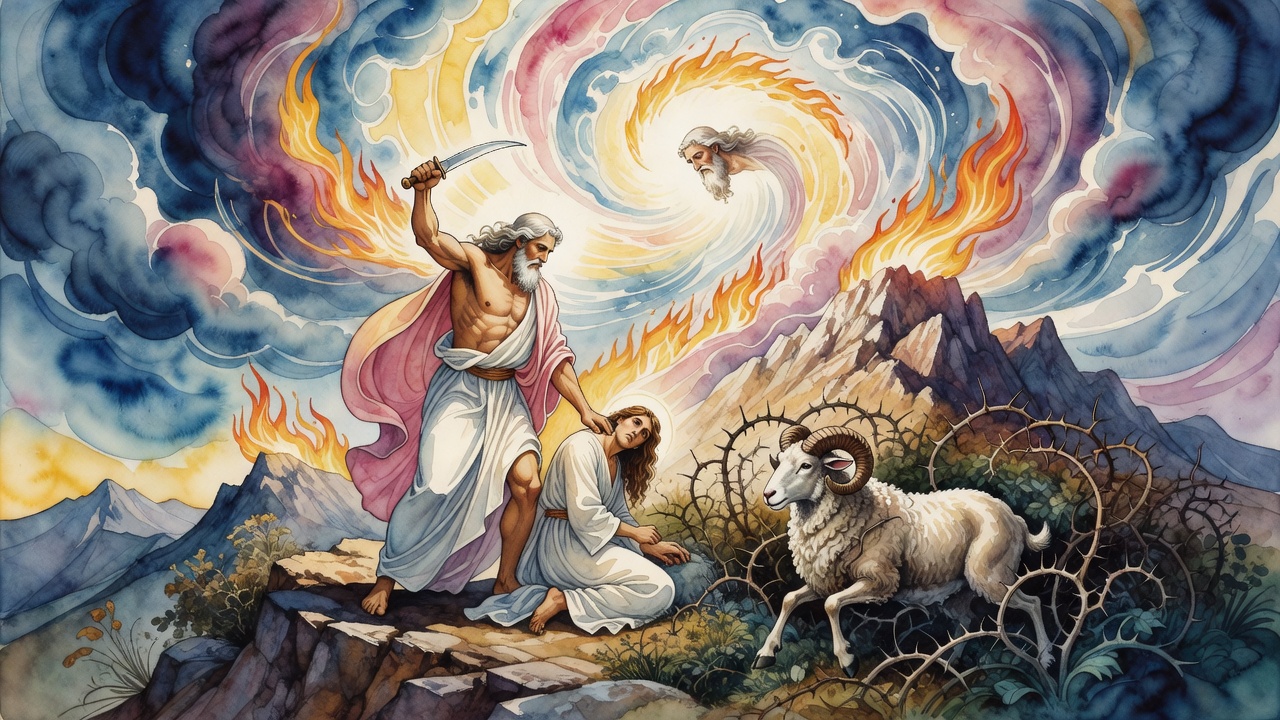
At the top, binding is careful, almost tender. Wood that rode a living back becomes the bed of offering. Fire waits in its pot. The knife rises. Heaven's messenger arrives only after the willingness is complete, after both men have already finished the act in their bones. The ram caught by its horns is late mercy, not early cancellation. Isaac stands with rope marks on his skin. Abraham's hand remembers the angle of the stroke that did not land.

A father unties a son. The wood is no longer a gibbet. It is ash and memory. The mountain keeps both names for every later pilgrimage of the mind.

Merit That Feeds

The path down is lighter by one almost-death and heavier by a covenant no later famine can cancel. When Israel eats, the old midrash still hears Abraham's knife and Isaac's climb inside the ordinary act of cutting bread. Leadership that later outranks the patriarchs still bows to this morning. Moses may surpass Isaac in lasting radiance and in eyes that never dim, but he stands on a people fed by the merit of a son who carried his own wood.

Adam will claim image. Noah will claim the ark. Abraham will claim open tents. Jacob will claim a wrestling win on earthly ground. Isaac's claim remains the strangest. He lay under a blade and saw. He walked like a condemned man and lived. Moriah keeps both truths without needing a softer metaphor.

A boy walked with death on his back. A nation still eats because he did not refuse the walk.


← All myths
From the tradition

Sources

2 sources

The texts behind this telling. Some cards carry a translation of the source; others are our own retelling of it, and each card says which. Every card links out to the original.

Bereshit Rabbah 56:3Bereshit Rabbah

Retold in our words. Read the original at the link below.The Sefaria Midrash Rabbah, 2022 · CC-BY

Bereshit Rabbah turns to Isaac Carries the Wood Like His Own Cross.

"Abraham took the wood of the burnt offering and placed it upon Isaac his son; he took in his hand the fire and the knife, and the two of them went together."

Simple words. But Bereshit Rabbah unpacks them with layers of meaning. That phrase "Abraham took the wood of the burnt offering" isn't just a detail. The Rabbis see in it something far more profound: "like someone bearing his own gibbet on his shoulder." Abraham, walking towards Mount Moriah, carrying the very wood that will be used – or so he believes – to sacrifice his beloved son.

It's a harrowing image. The commentary equates it to "a condemned man who is forced to carry the gibbet on which he is to be hanged." The weight of the wood becomes the weight of destiny, of unimaginable obedience, and of a father's love stretched to its breaking point.

And then there's the knife. The text says, "He took in his hand the fire and the knife [maakhelet]." Rabbi Ḥanina offers a fascinating insight: "Why is a knife called maakhelet? It is because it renders food [okhalin] fit to be eaten." The knife, in its most basic function, is about sustenance. It's about preparing food, about life. "Meat cannot be eaten unless the animal is first slaughtered with a knife." A stark reminder of the taking of life in order to sustain life.

But the Rabbis don't stop there. They elevate the significance of this particular knife, the one Abraham carries. "All the eating that the people of Israel eat [okhelim] in this world," they declare, "they eat due only to the merit of that knife [of Abraham’s]." As we find in Midrash Rabbah, the merit of Abraham's willingness to sacrifice is something the Jewish people continue to draw upon. So, every meal, every instance of nourishment, becomes evidence of Abraham's unwavering faith. What a powerful thought!

Finally, the verse concludes, "The two of them went together." Again, seemingly simple. But Bereshit Rabbah sees a complex dynamic at play: "this one to bind and the other one to be bound; this one to slaughter and that one to be slaughtered." The roles are clearly defined, yet there's an undeniable intimacy in their shared journey. They are walking together, father and son, towards an unknown and terrifying fate. The Midrash (rabbinic interpretive commentary) emphasizes the reciprocal nature of the Akeidah. Each man had his role to play, in a dance of faith and obedience.

What are we to take away from this reading? It is a reminder that even in the most agonizing moments, there can be profound meaning and enduring merit. Abraham's burden, his willingness, his very knife, continue to resonate, shaping the lives of generations. What sacrifices are we being asked to make, and what blessings might they ultimately unlock?

Full source
Devarim Rabbah 11:3Devarim Rabbah

Retold in our words. Read the original at the link below.The Sefaria Midrash Rabbah, 2022 · CC-BY

The verse in question comes from (Proverbs 31:29): "Many women have performed valiantly, but you have surpassed them all." But who is the "you" being referred to here? According to this midrash (rabbinic interpretive commentary) – this interpretive story – it's none other than Moses. But why Moses? What made him greater than all those who came before? The text unfolds a series of imagined dialogues between Moses and some of the most significant figures in Jewish history: Adam, Noah, Abraham, Isaac, and Jacob. Each encounter highlights a unique aspect of Moses's unparalleled greatness.

First, Adam, the first man, boasts of being created in God's image, as stated in (Genesis 1:27): "God created man in His own image." Moses counters that while Adam was indeed created in God's image, he lost that glory. As (Psalm 49:13) says, "Man [Adam] does not abide in honor." Moses, on the other hand, retained the radiance of his face, a gift from God, until his very last day. (Deuteronomy 34:7) confirms this: "His eye had not dimmed, and his vitality had not departed."

Next, Noah, the survivor of the Flood, claims superiority for being saved from utter destruction. But Moses retorts that Noah only saved himself, while he, Moses, saved his entire generation from annihilation after the sin of the Golden Calf. (Exodus 32:14) tells us, "The Lord reconsidered the evil that He had spoken of doing to His people." The midrash illustrates this with a parable of two ships, each with a captain. One captain saves himself but loses his ship, while the other saves both himself and his ship. Which captain is more praiseworthy? Clearly, the one who saves both.

Then comes Abraham, renowned for his hospitality. He says to Moses: ‘I am greater than you, as I would provide sustenance to the passersby.’ Moses responds that while Abraham provided for all, circumcised or uncircumcised, he, Moses, provided sustenance for the circumcised in the wilderness.

Isaac, who willingly offered himself as a sacrifice, claims he saw the Shekhinah – the Divine Presence – on the altar. Moses acknowledges this but points out that Isaac's vision dimmed afterward, as (Genesis 27:1) states, "It was when Isaac was old, his eyes dimmed from seeing." The midrash interprets "from seeing" as referring to seeing the Divine Presence. Moses, however, spoke with God face to face, and his eyes did not dim. (Exodus 34:29) tells us that Moses himself "did not know that the skin of his face was radiant" after these encounters.

Finally, Jacob, who wrestled with an angel and prevailed, asserts his greatness. Moses responds that Jacob wrestled with an angel in his own territory, whereas Moses ascended to the angels’ realm, and even they feared him! As (Psalm 68:13) says, "The kings of armies [malkhei tzevaot]" – interpreted here as angels – "flee again and again…"

The midrash concludes that because Moses was exalted above all others, he was worthy to bless Israel. Hence, "This is the blessing," the opening words of (Deuteronomy 33:1), which introduces Moses's final blessing upon the tribes of Israel.

So, what does this all mean? Is it simply a hierarchical ranking of biblical figures? Perhaps. But it's also a powerful exploration of leadership, sacrifice, and the unique relationship Moses had with the Divine. It suggests that true greatness isn't just about inherent qualities or individual achievements, but about using one's gifts to uplift and save others. It's about embodying both strength and compassion, and reflecting the Divine light in a way that illuminates the world. What qualities truly define a great leader?

Full source