Parshat Vezot Haberakhah5 min read

Moses Answered Adam, Noah, and the Fathers

On his last day Moses did the arithmetic and it frightened him. Bilam was called a prophet too. Both of them were going to die.

Curated by Arthur · Told by Maggid ·
Table of Contents
  1. The Question He Asked on His Last Day
  2. Adam Went First
  3. Noah and the Two Captains
  4. Abraham Came With Bread
  5. Then Bless Them
Moses Answered Adam, Noah, and the Fathers Click for full size

The Question He Asked on His Last Day

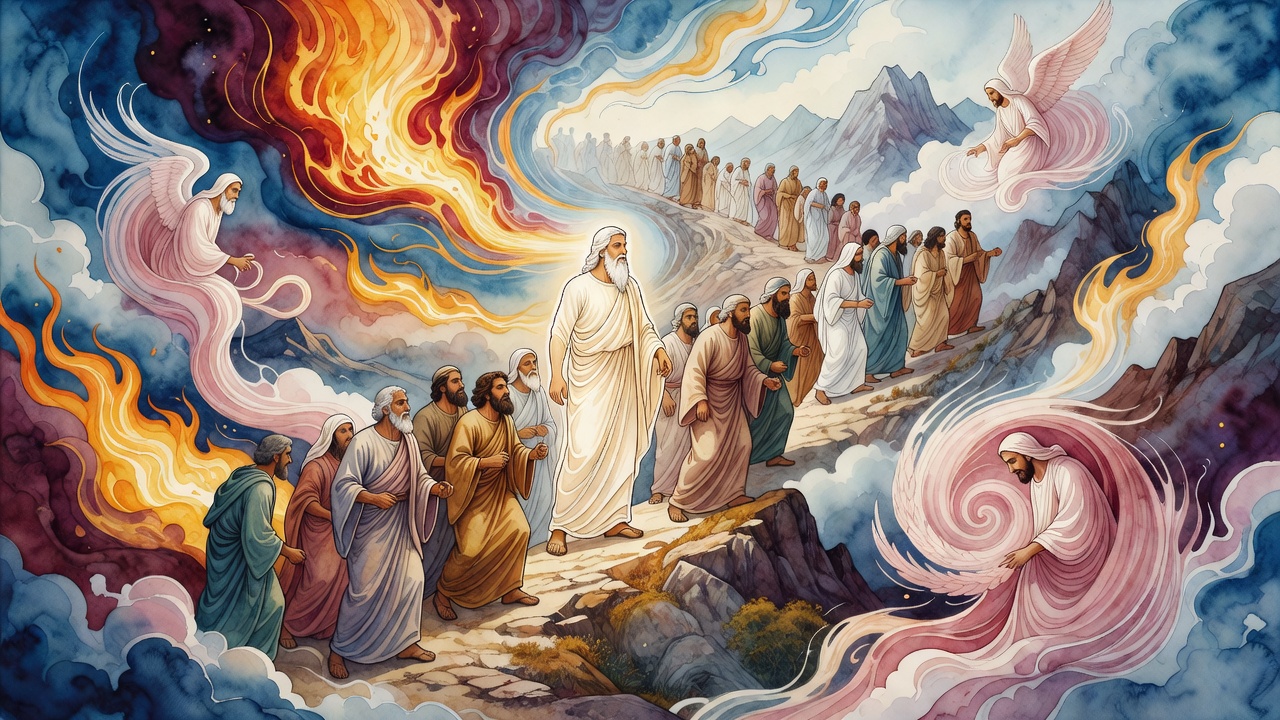
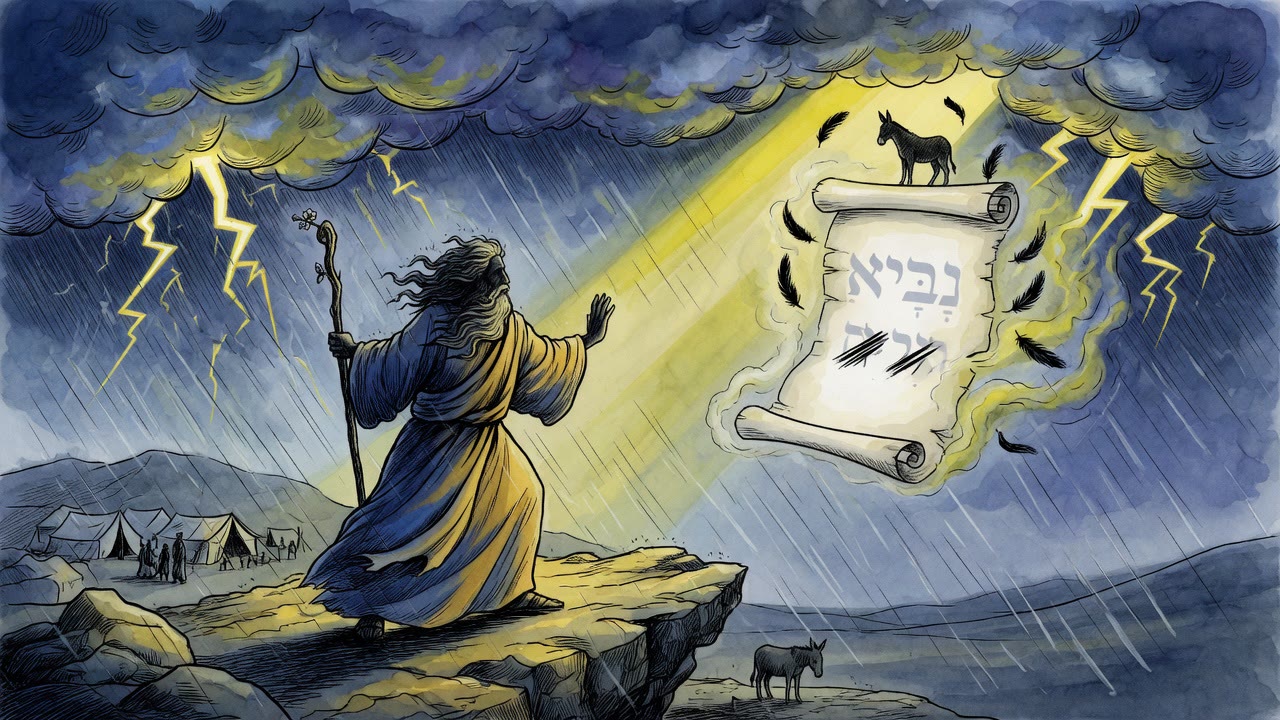
Moses had the mountain to climb and a poem to say over the tribes first, and before either of those he had a piece of arithmetic that would not come out right. Bilam son of Beor was called a prophet. He was called a prophet. The same word in the same language for a man who took money to aim words at a camp and for a man who had argued heaven out of killing his own people.

One end waits for the wise man and the fool, and both of them get it. So why bother being the wise one? Why hand a whole life to the Torah and get the identical hole in the ground?

Then the claimants came, and every one of them was a giant, and every one of them wanted to go first.

Adam Went First

Adam stepped up with the oldest claim there is. "I am greater than you. I was made in the image of God, by His own hands, before there was anyone to compare me to."

"And it came off you," Moses said. "You did not stay a night in that honor. What was put on me is still on me. I am a hundred and twenty years old today and my eye has not dimmed and my strength has not gone out of me."

Adam had no answer. He had lost his glory in a garden in the space of an afternoon.

Noah and the Two Captains

Noah came next, salt still on him. "I am greater than you. I came through the flood. Everything that breathed outside my door was scraped off the earth and I walked out onto dry land."

"You saved yourself," Moses said. "You could not save one man of your generation. They drowned against the sides of your box. When my people danced around the calf and the sentence had already been passed on them, I stood in the gap and would not move, and the Lord turned back from the evil He had said He would do."

Two ships go out and two captains bring them into weather. One swims clear and stands on the beach watching his ship break up. The other comes in with the hull scarred and every hand alive on deck. The town runs down to the water for the second man. Nobody argues about which one they are cheering.

Abraham Came With Bread

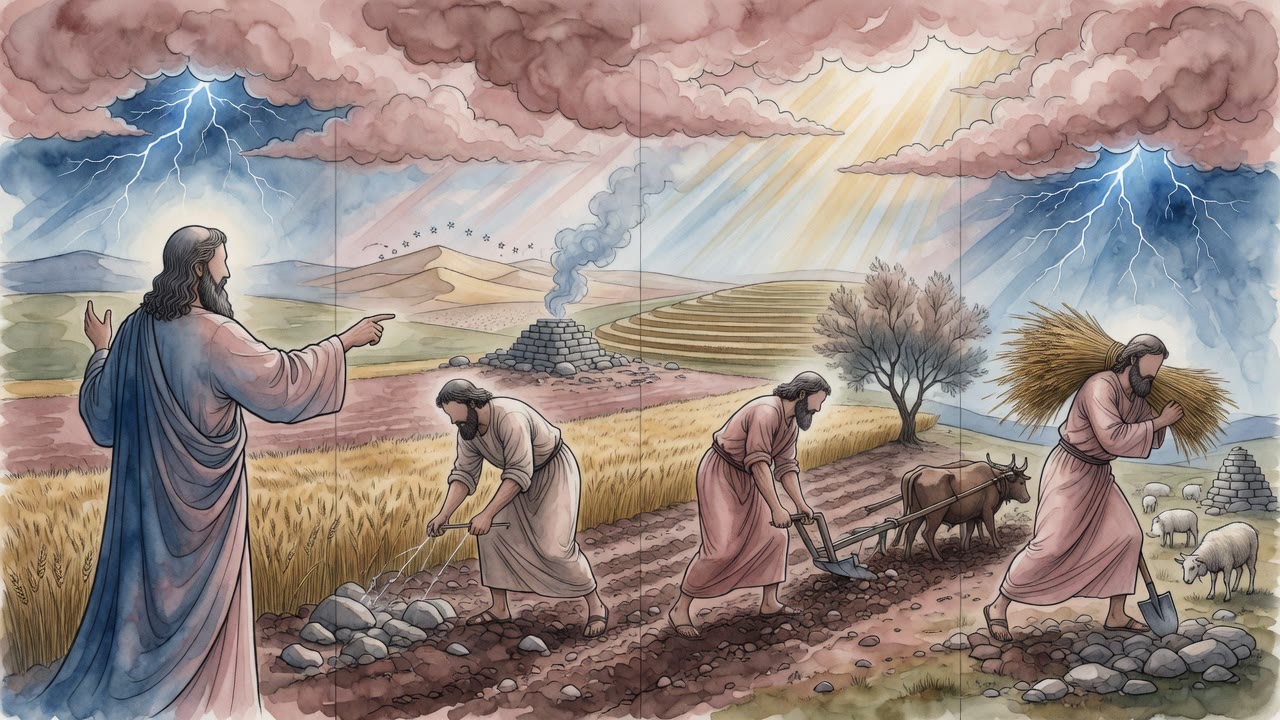
Abraham had fed strangers at a tent door in the heat of the day, and he said so. "I fed whoever walked past me. I kept the road fed."

"You fed men in a settled country," Moses said, "where there was a road and a market and a well. I fed a nation in a wilderness with nothing growing in it for forty years, and they were mine, marked in the flesh, and they complained about the food."

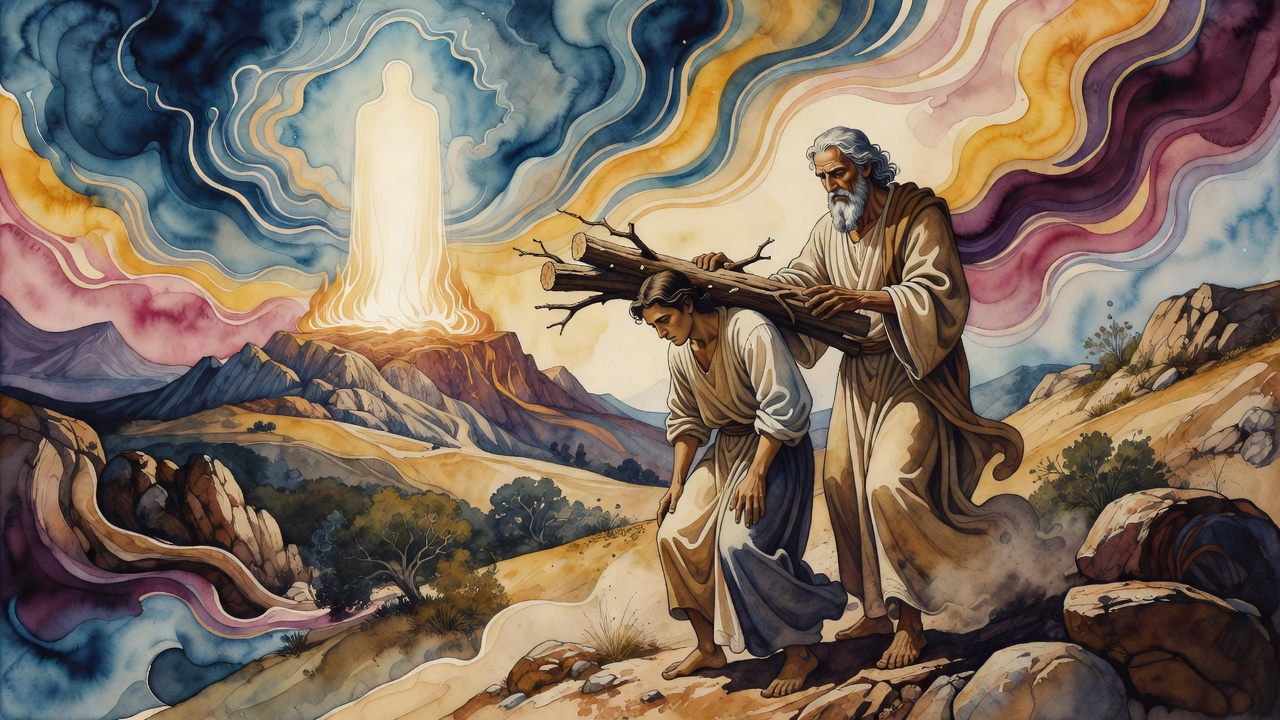
Isaac spoke with his throat. "I stretched my neck out on the wood and I saw the Divine Presence standing over the altar."

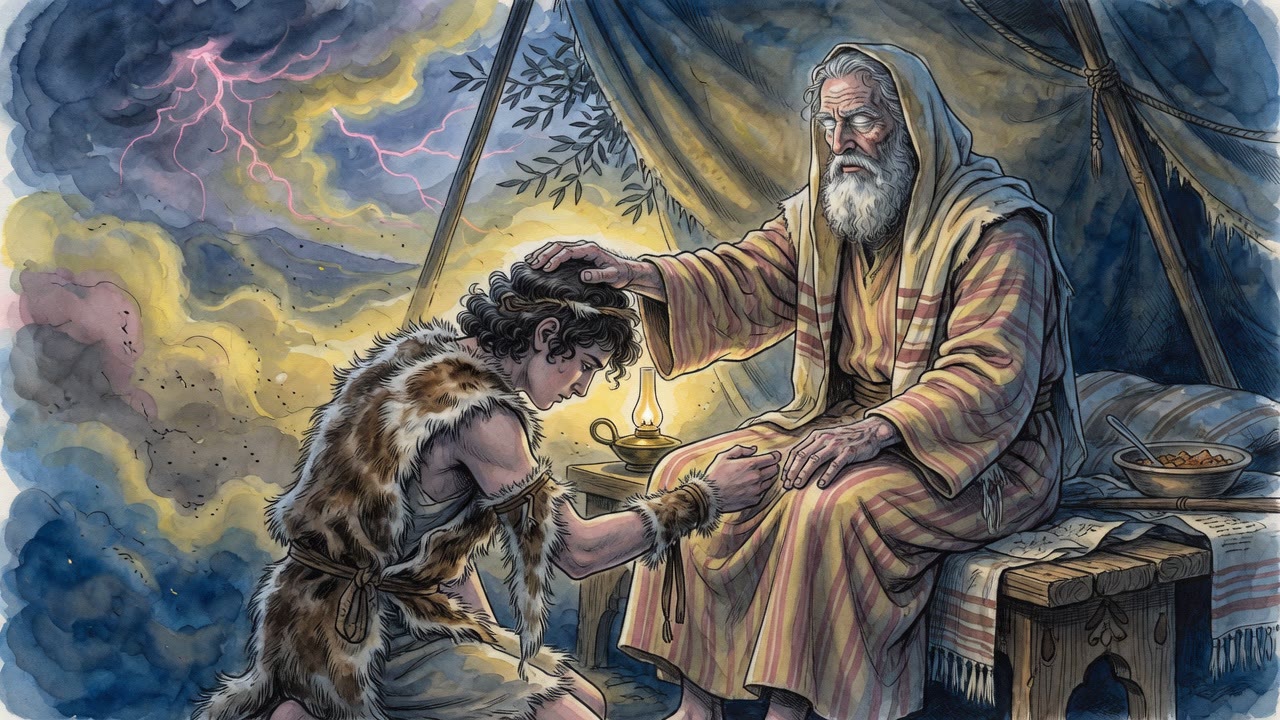
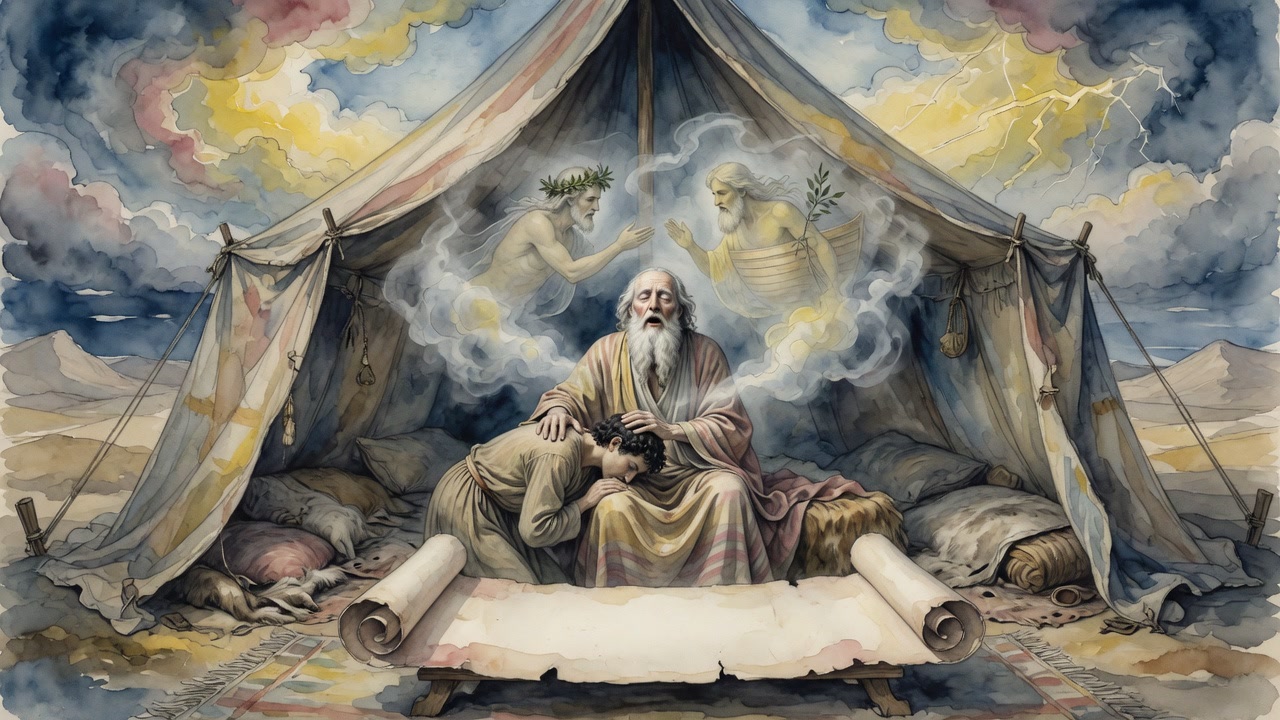
"You saw it once," Moses said, "and your eyes went out. You spent your old age blind in a dark tent, groping for the son in front of you. I spoke with Him face to face for forty years, and I came down the mountain shining so hard the camp could not look at me, and I did not even know my own face was lit."

Jacob came last of the fathers, limping. "I took hold of an angel in the dark and I did not let go until he blessed me."

"On your own riverbank," Moses said. "He came down to your ford, on your dirt, and you wrestled him there. I went up into the place where they live. I walked through them to the throne and it was the angels who gave ground."

Then Bless Them

The Holy One ended the contest with one line. Since he is exalted over all of them, let him be the one to bless Israel.

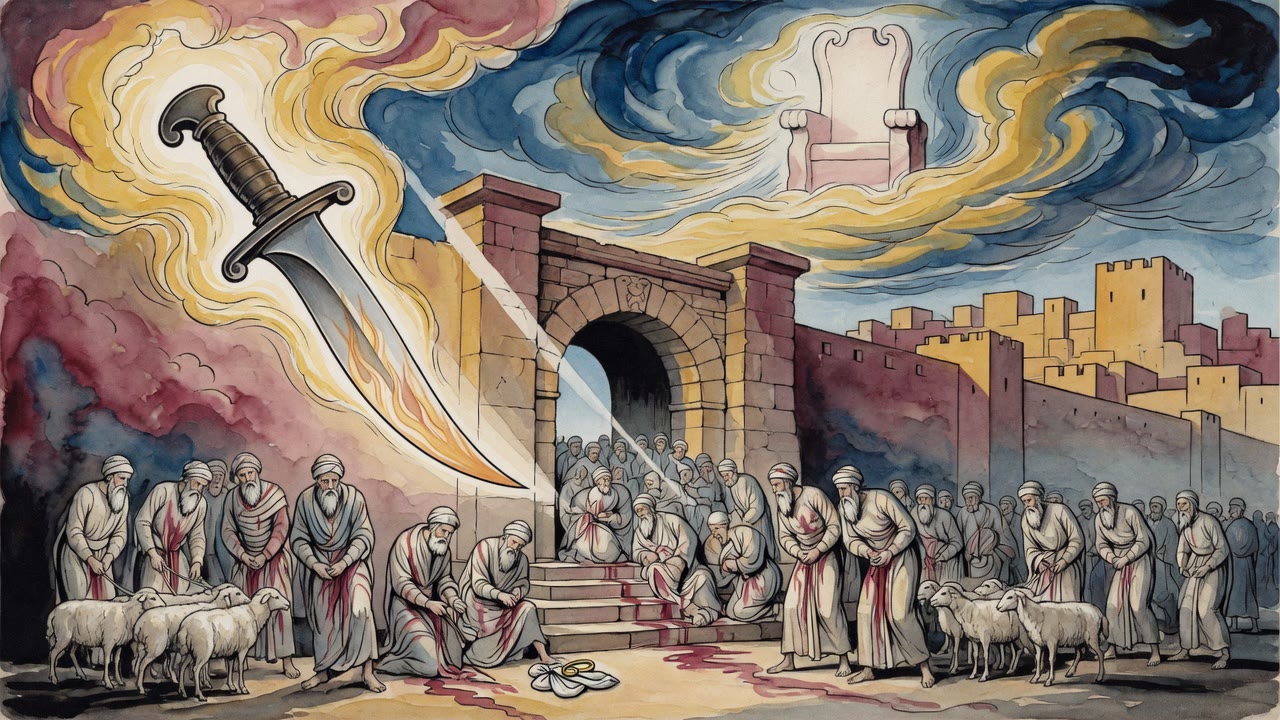
And the arithmetic came out at last. A day would come when Israel was in trouble to the neck, and they would reach back and say, He remembered the days of old, Moses, His people. No nation has ever said that about Bilam. Nobody has ever gone into a bad year calling on the man who fell on his face for a fee. The wise man dies and the fool dies and only one of them keeps getting called.

So the old man with the undimmed eyes turned to face the tribes, and put his hand out over them, and started: this is the blessing.


← All myths
From the tradition

Sources

2 sources

The texts behind this telling. Some cards carry a translation of the source; others are our own retelling of it, and each card says which. Every card links out to the original.

Devarim Rabbah 11:3Devarim Rabbah

Retold in our words. Read the original at the link below.The Sefaria Midrash Rabbah, 2022 · CC-BY

The verse in question comes from (Proverbs 31:29): "Many women have performed valiantly, but you have surpassed them all." But who is the "you" being referred to here? According to this midrash (rabbinic interpretive commentary) – this interpretive story – it's none other than Moses. But why Moses? What made him greater than all those who came before? The text unfolds a series of imagined dialogues between Moses and some of the most significant figures in Jewish history: Adam, Noah, Abraham, Isaac, and Jacob. Each encounter highlights a unique aspect of Moses's unparalleled greatness.

First, Adam, the first man, boasts of being created in God's image, as stated in (Genesis 1:27): "God created man in His own image." Moses counters that while Adam was indeed created in God's image, he lost that glory. As (Psalm 49:13) says, "Man [Adam] does not abide in honor." Moses, on the other hand, retained the radiance of his face, a gift from God, until his very last day. (Deuteronomy 34:7) confirms this: "His eye had not dimmed, and his vitality had not departed."

Next, Noah, the survivor of the Flood, claims superiority for being saved from utter destruction. But Moses retorts that Noah only saved himself, while he, Moses, saved his entire generation from annihilation after the sin of the Golden Calf. (Exodus 32:14) tells us, "The Lord reconsidered the evil that He had spoken of doing to His people." The midrash illustrates this with a parable of two ships, each with a captain. One captain saves himself but loses his ship, while the other saves both himself and his ship. Which captain is more praiseworthy? Clearly, the one who saves both.

Then comes Abraham, renowned for his hospitality. He says to Moses: ‘I am greater than you, as I would provide sustenance to the passersby.’ Moses responds that while Abraham provided for all, circumcised or uncircumcised, he, Moses, provided sustenance for the circumcised in the wilderness.

Isaac, who willingly offered himself as a sacrifice, claims he saw the Shekhinah – the Divine Presence – on the altar. Moses acknowledges this but points out that Isaac's vision dimmed afterward, as (Genesis 27:1) states, "It was when Isaac was old, his eyes dimmed from seeing." The midrash interprets "from seeing" as referring to seeing the Divine Presence. Moses, however, spoke with God face to face, and his eyes did not dim. (Exodus 34:29) tells us that Moses himself "did not know that the skin of his face was radiant" after these encounters.

Finally, Jacob, who wrestled with an angel and prevailed, asserts his greatness. Moses responds that Jacob wrestled with an angel in his own territory, whereas Moses ascended to the angels’ realm, and even they feared him! As (Psalm 68:13) says, "The kings of armies [malkhei tzevaot]" – interpreted here as angels – "flee again and again…"

The midrash concludes that because Moses was exalted above all others, he was worthy to bless Israel. Hence, "This is the blessing," the opening words of (Deuteronomy 33:1), which introduces Moses's final blessing upon the tribes of Israel.

So, what does this all mean? Is it simply a hierarchical ranking of biblical figures? Perhaps. But it's also a powerful exploration of leadership, sacrifice, and the unique relationship Moses had with the Divine. It suggests that true greatness isn't just about inherent qualities or individual achievements, but about using one's gifts to uplift and save others. It's about embodying both strength and compassion, and reflecting the Divine light in a way that illuminates the world. What qualities truly define a great leader?

Full source
Kohelet Rabbah 2:15Kohelet Rabbah

Retold in our words. Read the original at the link below.The Sefaria Midrash Rabbah, 2022 · CC-BY

That feeling of existential dread isn't new. In fact, it’s wrestled with in some of our most ancient texts. to a passage from Kohelet Rabbah, a collection of rabbinic interpretations on the Book of Ecclesiastes. It grapples with this very question, using the contrasting figures of Moses and Bilam to explore the value of wisdom and righteousness.

The verse in question is from (Ecclesiastes 2:14): “The wise man, his eyes are in his head, but the fool walks in darkness.” Kohelet Rabbah interprets this quite powerfully. It says, "The wise man, his eyes are in his head – this is Moses; but the fool walks in darkness – this is the wicked Bilam.” Moses, the ultimate leader, lawgiver, and prophet of the Jewish people, is contrasted with Bilam, a non-Jewish prophet known for his attempted curse on the Israelites. Quite the pairing. The text continues: “I also know that one event will happen to them all, I said in my heart [like the fate of the fool, so will befall me]” (Ecclesiastes 2:14–15). Here, the Rabbah attributes these words to Moses himself. He's reflecting on the apparent similarities between himself and Bilam. Both are called prophets! So, Moses wonders, “Why did I become wiser? Why did I give my life for the sake of the Torah (the teachings)?”

It's a raw, vulnerable moment. Moses, the hero, is questioning his life's purpose. He sees that both he and Bilam share the title of "prophet," and he fears that their ultimate fates might be similar – forgotten with time. What was the point of all his effort, all his struggles, if he'll be remembered no differently than the wicked Bilam?

He laments, "For there is no remembrance of the wise man with the fool forever…everything is forgotten.” He anticipates a future where the Israelites, facing hardship, will cry out, “He remembered the days of old, Moses, his people…” (Isaiah 63:11). But will the nations of the world similarly invoke Bilam? Will they say, "He remembered the days of old, Bilam, his people?" The answer, of course, is a resounding no.

And that, ultimately, is the point. Kohelet Rabbah is suggesting that true wisdom and righteousness create a lasting legacy. While both the wise and the foolish may eventually die, their impact on the world is vastly different. Moses's actions, driven by his commitment to the Torah and his people, will resonate for generations. Bilam's wickedness, on the other hand, will be remembered with scorn. That's why the text concludes: “How can the wise man die like the fool?”

Maybe it's a reminder that our choices matter. That even when we feel like our efforts are insignificant, they contribute to a larger narrative. That striving for wisdom and righteousness, even when it's difficult, leaves a lasting impact on the world, one that transcends our individual lives. Perhaps the question isn't whether we will be remembered, but how we will be remembered.

Full source