6 min read

Moses Feared Sharing Bilam's Empty Title

Both men were called prophets. Moses looked at that shared name and wondered whether Torah had bought him anything death would not erase.

Curated by Arthur · Told by Maggid ·
Table of Contents
  1. The Eyes in the Head
  2. Solomon Counts Wives
  3. Tzitzit on the Coffin
  4. What the Title Could Not Hold

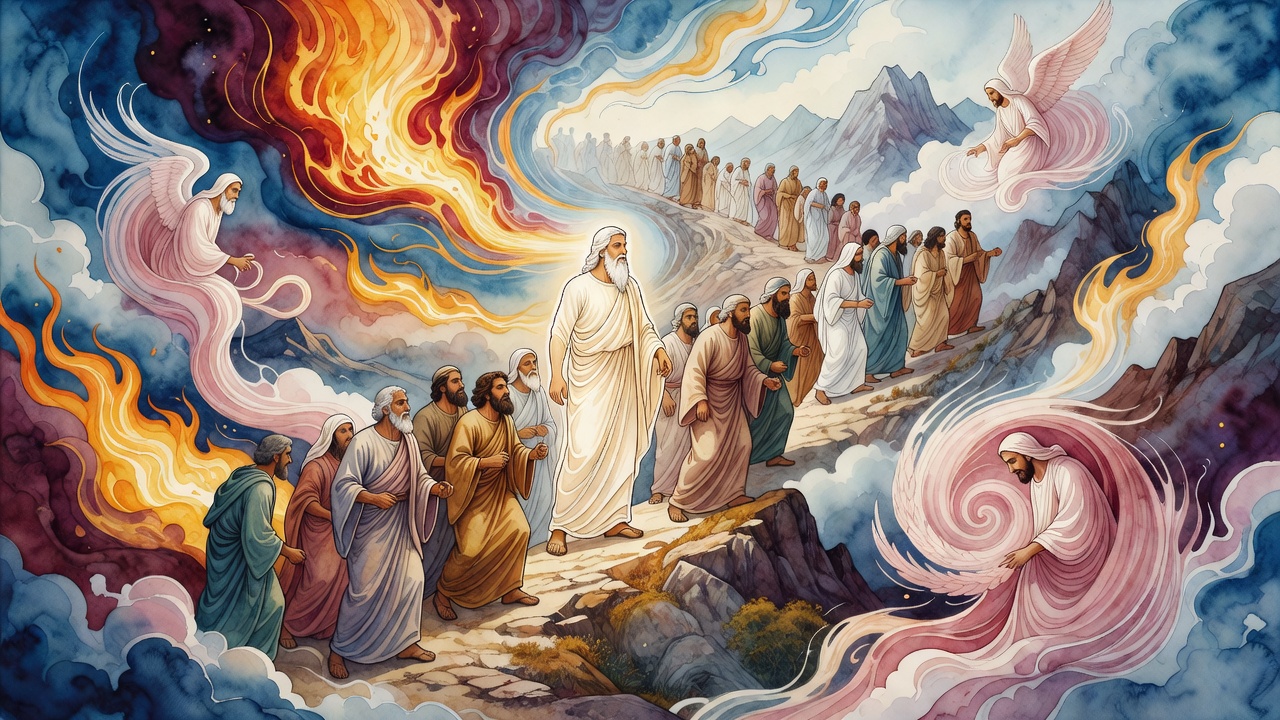
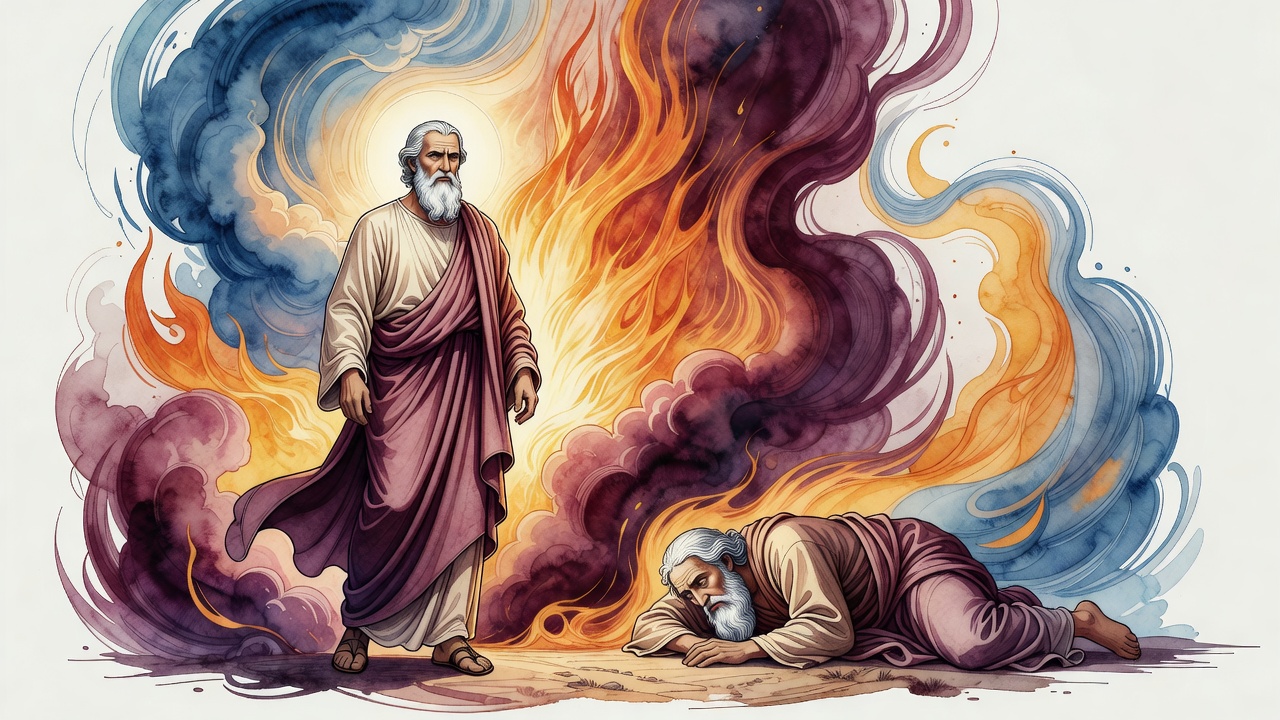
Moses stood under a sentence that would not let him rest. "The wise man, his eyes are in his head, but the fool walks in darkness" (Ecclesiastes 2:14). The wise man is Moses. The fool is wicked Bilam. Then the next breath of the verse put dread in Moses's mouth. One event happens to them all. Prophets die. Memory thins. Dust takes the wise and the hired mouth together. Why give a life to Torah if the title on the grave can look the same?
Moses Feared Sharing Bilam's Empty Title Click for full size

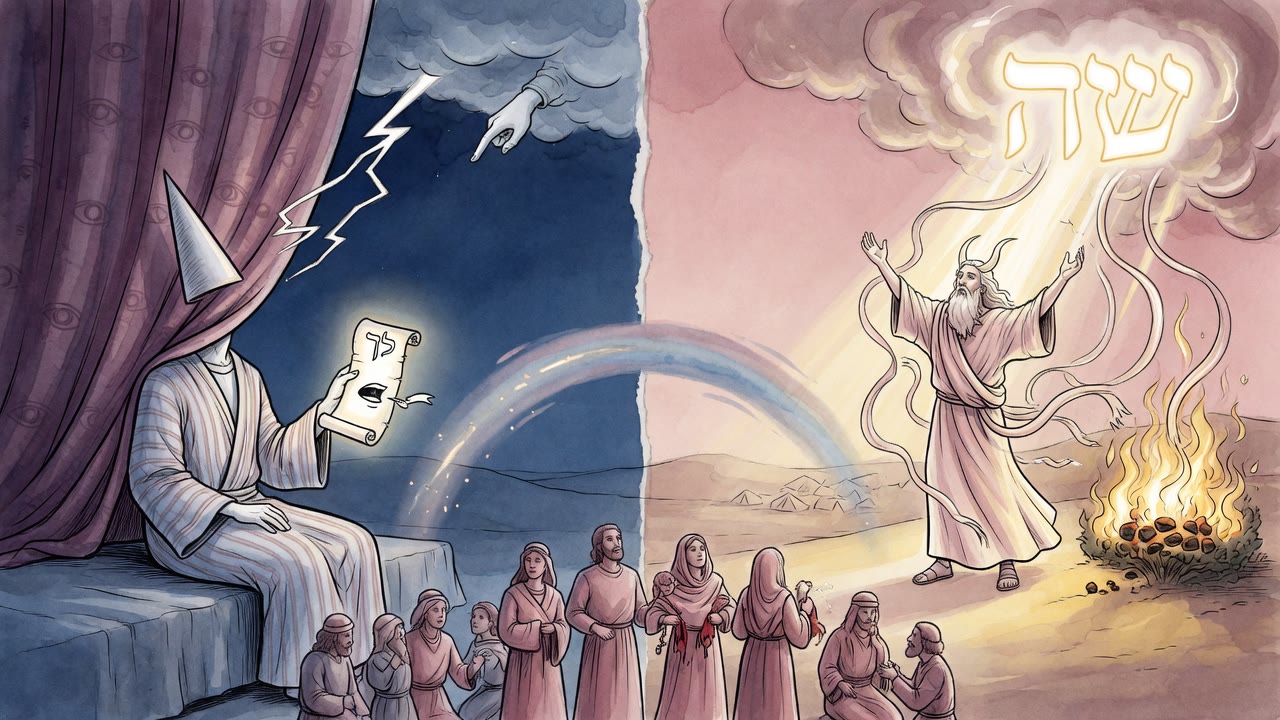
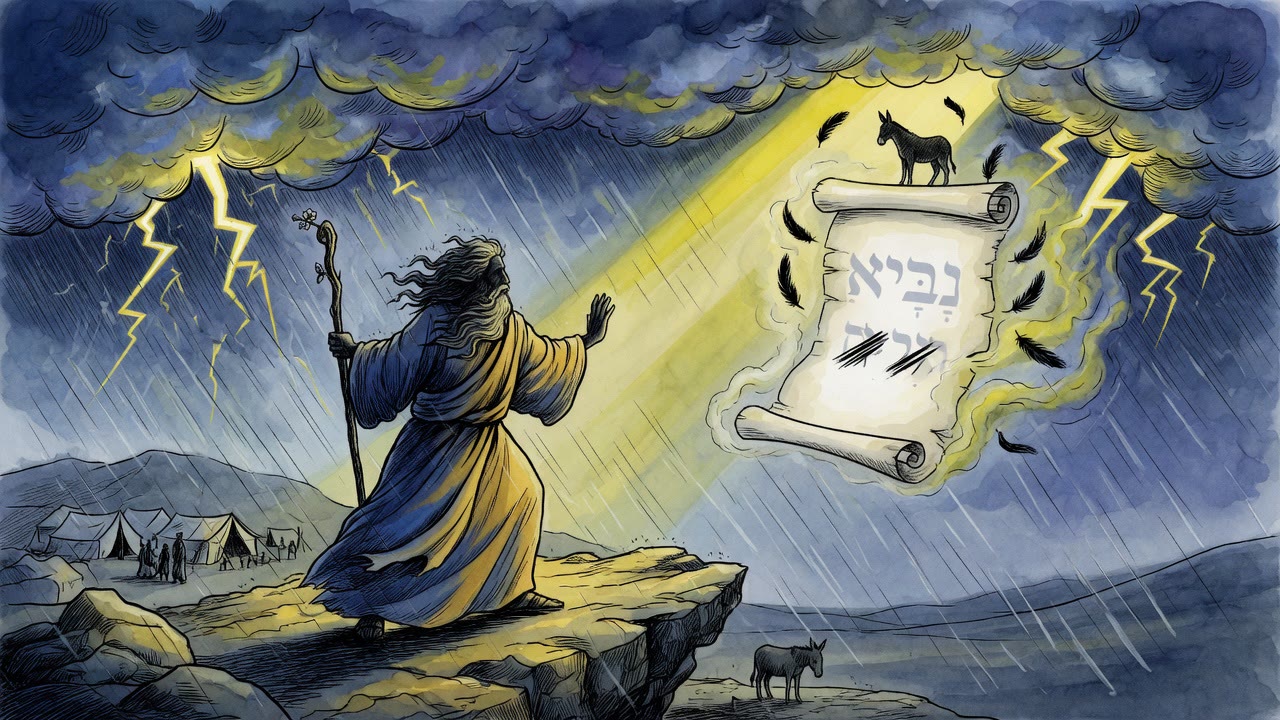
Bilam had heard God too. Bilam had opened his mouth over Israel and found blessing where he meant curse. The nations would remember a prophet for hire who could not deliver the ruin he was paid for. Israel would cry out for Moses in hard days. Moses still felt the cold of the comparison in his ribs. Same word. Same mortality. The difference he had spent himself to earn seemed, for a moment, thinner than a name stamped on two different men.

The Eyes in the Head

"His eyes are in his head" is not a compliment about eyesight. It is a man who sees where his steps are taking a people. Moses climbed, argued, delayed, struck, and pleaded. He carried tablets and broke them and carried them again with cut hands and a stiff neck. Bilam rode toward a camp he wanted ruined and kept slamming into a will larger than his fee. His donkey saw the angel first. His pride took longer. One walked with open eyes into a burden. One walked in the dark of his own hire and called the dark wisdom.

Still the shared title bit. Moses asked the question people ask when the ledger looks unfair. Why did I become wiser? Why did I pour my years into this teaching if forgetting waits for the wise and the fool alike? "For there is no remembrance of the wise man with the fool forever" (Ecclesiastes 2:16). He could already hear a future generation naming him in trouble, and he could already fear a world that would not bother to sort the two prophets into different rooms of memory. The fear was not pretty. It was honest. It kept him awake in the telling.

Solomon Counts Wives

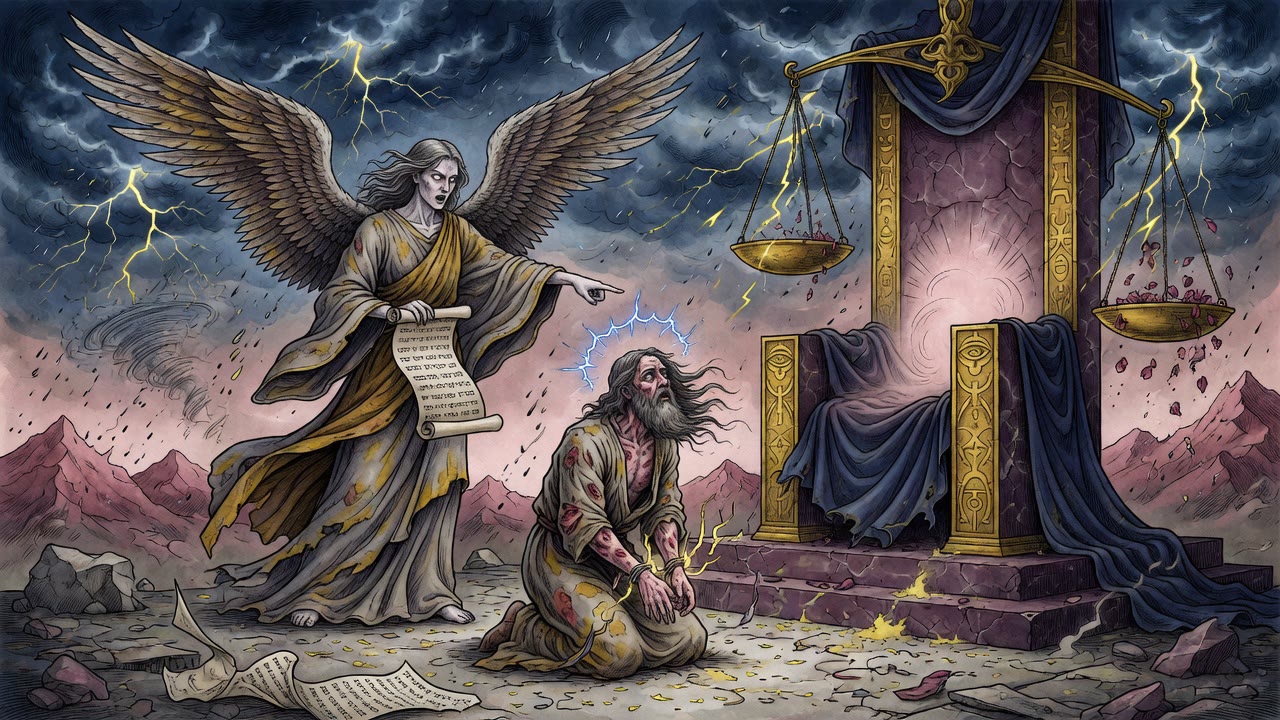
Solomon hit a different wall with the same pride of reach. Deuteronomy had drawn a hard line. A king shall not amass wives, lest his heart stray (Deuteronomy 17:17). Solomon, wisest of men, told himself he could hold the number and keep the heart. He counted rooms. He counted alliances. He counted his own discipline as if discipline were a wall no desire could climb. On the day he trusted that calculation, he fell into the trap Kohelet names. A person toils to grasp the whole work of God under the sun and cannot find it (Ecclesiastes 8:17). Commandments run deeper than the smartest plan for managing them.

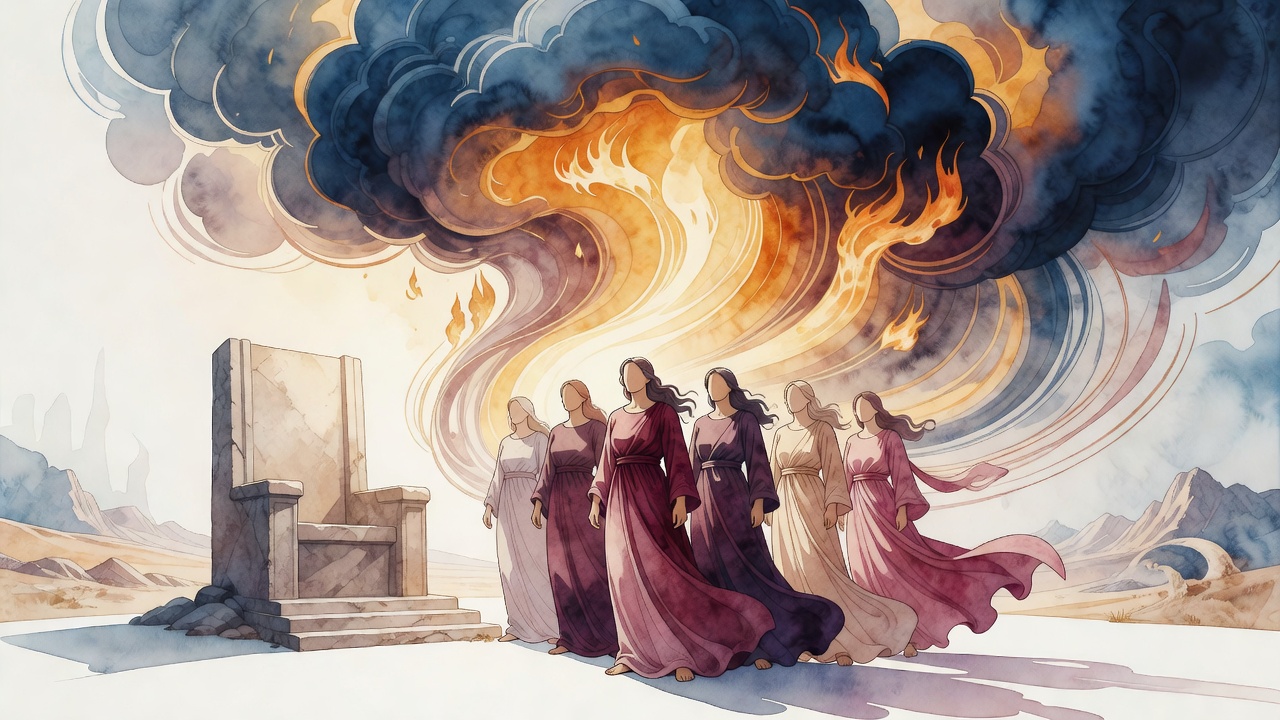
Moses had his own overreach. "The matter that is too difficult for you, bring to me and I will hear it" (Deuteronomy 1:17). The Holy One answered that confidence with a case that would not sit still in Moses's hands, the daughters of Zelophehad pressing for their father's portion, standing in the doorway of judgment until even the man who spoke with God's mouth to mouth had to bring the question upstairs. Wisdom that announces its own ceiling finds the ceiling lowered for a lesson. The daughters left with an answer. Moses left with a reminder that his chair was not the top of the house.

Two giants, two slips. Solomon thought desire would obey his intellect. Moses thought difficulty would obey his chair. Both learned that the work of God is not a room a human being finishes mapping on a good afternoon.

Tzitzit on the Coffin

Rabbi Ḥiyya the Great walked behind a bier with Rabbi Yonatan. Dust rose from the road. Yonatan's fringes, his tzitzit, dragged across the wood and caught on a nail of the coffin. Ḥiyya stopped him with a hand and a quiet order. Lift your garment. Do not let them say that tomorrow you come to us while you mock us today. The dead no longer wrap themselves in commandments. A living fringe scraping a coffin can look like a taunt from someone who still can bind knots and still can walk away.

Yonatan answered with Kohelet's blunt edge. "The dead do not know anything" (Ecclesiastes 9:5). If they know nothing, why spare their pride? Why pull cloth from wood for ears that have closed?

Ḥiyya told him he knew Bible and not midrash. "The living know that they will die" are the righteous, who even in death are called alive. "The dead do not know anything" are the wicked, who even in life are called dead. The coffin under their hands suddenly held more than one body. It held a sorting Moses had feared from the other side. Titles do not decide who is living. Conduct does. Bilam could wear the word prophet and still walk as a dead man through markets and courts. Moses could fear erasure and still be counted among the living whose memory keeps working after breath stops. Ḥiyya lifted the fringe clear. The bier moved on. The road took the argument into dust.

What the Title Could Not Hold

Moses's fear was real enough to enter the telling. No scolding softens it. He stands in the cold of Ecclesiastes until the other scenes arrive and press against it. Solomon's wives and the heart that would not stay counted. The hard case that left the judge waiting at his own door. The fringes lifted off a coffin so the dead would not be mocked by a living commandment. Piece by piece the shared title loses its threat. Eyes in the head are not the same as eyes hired for a curse. A man who hides his face at a bush is not the same as a man who saddles a donkey for pay. A righteous death is not the same as a life already called dead while it still buys and sells oracles.

When the bier moved on and the fringes were clear of the wood, the sorting was quiet and final. Some names keep breathing after the body stops. Some names were already finished while the mouth still spoke oracles for a fee, and the road did not stop to argue the difference.


← All myths
From the tradition

Sources

3 sources

The texts behind this telling. Some cards carry a translation of the source; others are our own retelling of it, and each card says which. Every card links out to the original.

Kohelet Rabbah 2:15Kohelet Rabbah

Retold in our words. Read the original at the link below.The Sefaria Midrash Rabbah, 2022 · CC-BY

That feeling of existential dread isn't new. In fact, it’s wrestled with in some of our most ancient texts. to a passage from Kohelet Rabbah, a collection of rabbinic interpretations on the Book of Ecclesiastes. It grapples with this very question, using the contrasting figures of Moses and Bilam to explore the value of wisdom and righteousness.

The verse in question is from (Ecclesiastes 2:14): “The wise man, his eyes are in his head, but the fool walks in darkness.” Kohelet Rabbah interprets this quite powerfully. It says, "The wise man, his eyes are in his head – this is Moses; but the fool walks in darkness – this is the wicked Bilam.” Moses, the ultimate leader, lawgiver, and prophet of the Jewish people, is contrasted with Bilam, a non-Jewish prophet known for his attempted curse on the Israelites. Quite the pairing. The text continues: “I also know that one event will happen to them all, I said in my heart [like the fate of the fool, so will befall me]” (Ecclesiastes 2:14–15). Here, the Rabbah attributes these words to Moses himself. He's reflecting on the apparent similarities between himself and Bilam. Both are called prophets! So, Moses wonders, “Why did I become wiser? Why did I give my life for the sake of the Torah (the teachings)?”

It's a raw, vulnerable moment. Moses, the hero, is questioning his life's purpose. He sees that both he and Bilam share the title of "prophet," and he fears that their ultimate fates might be similar – forgotten with time. What was the point of all his effort, all his struggles, if he'll be remembered no differently than the wicked Bilam?

He laments, "For there is no remembrance of the wise man with the fool forever…everything is forgotten.” He anticipates a future where the Israelites, facing hardship, will cry out, “He remembered the days of old, Moses, his people…” (Isaiah 63:11). But will the nations of the world similarly invoke Bilam? Will they say, "He remembered the days of old, Bilam, his people?" The answer, of course, is a resounding no.

And that, ultimately, is the point. Kohelet Rabbah is suggesting that true wisdom and righteousness create a lasting legacy. While both the wise and the foolish may eventually die, their impact on the world is vastly different. Moses's actions, driven by his commitment to the Torah and his people, will resonate for generations. Bilam's wickedness, on the other hand, will be remembered with scorn. That's why the text concludes: “How can the wise man die like the fool?”

Maybe it's a reminder that our choices matter. That even when we feel like our efforts are insignificant, they contribute to a larger narrative. That striving for wisdom and righteousness, even when it's difficult, leaves a lasting impact on the world, one that transcends our individual lives. Perhaps the question isn't whether we will be remembered, but how we will be remembered.

Full source
Kohelet Rabbah 8:17Kohelet Rabbah

Retold in our words. Read the original at the link below.The Sefaria Midrash Rabbah, 2022 · CC-BY

The book of Ecclesiastes, or Kohelet, as it's known in Hebrew, grapples with this very feeling. "I saw all the work of God, as man is unable to discover the work that is performed under the sun," it says. "Although man toils to seek, he will not find; even if a wise man will wish to know, he will not be able to find" (Ecclesiastes 8:17). But what does it mean?

Kohelet Rabbah, a rabbinic commentary on Ecclesiastes, dives deeper. It interprets "all the work of God" as a reference to mitzvot – the commandments. The verse, according to this interpretation, suggests that we can never fully grasp the entirety of Torah and mitzvot. There's always more to learn, more to understand. It's a humbling thought.

Rabbi Pinchas and Rabbi Yirmeya, citing Rabbi Ḥiyya bar Abba, highlight the struggle: Many have sought to fully perform and fathom the Torah, but couldn't. Why? Because, as the verse says, "Although man toils to seek, he will not find.” It’s not for lack of trying, but inherent to the infinite nature of God’s wisdom. We're finite beings trying to grasp the infinite.

The commentary then brings in two fascinating examples of even the wisest figures stumbling when they overestimate their own understanding.

First, Solomon. Remember him? The wisest of all men? Well, even he wasn't immune to this limitation. Kohelet Rabbah suggests that Solomon, on the day he declared himself capable of amassing many wives without straying from God’s path, fell into this trap. He thought he could handle it, despite the explicit warning in Deuteronomy (17:17): “He shall not amass wives, and his heart will not stray.” Hubris, perhaps?

Then there's Moses. Rabbi Yehoshua of Sikhnin, quoting Rabbi Levi, references (Isaiah 40:23) ("Who renders princes into nothing") and applies it to Moses. Remember when Moses said, "The matter that is too difficult for you, bring to me and I will hear it" (Deuteronomy 1:17)? The Holy One, blessed be He, essentially responded: 'Oh, really, Moses? You judge the difficult cases? I’ll give you a case even a student of your student, even a woman, could judge, but you will be unable to resolve.'

And what was that case? The story of the daughters of Tzelofḥad. These women bravely approached Moses with a legal question about their inheritance rights. Moses, for all his wisdom, couldn't immediately answer.

Now, the Rabbis quickly clarify: God forbid we should think Moses was arrogant! Rather, he meant that if he had clear knowledge of the matter, he would judge it. If not, he would refer it to God. It wasn't about ego, but about recognizing the limits of human understanding.

So, what’s the takeaway? Are we doomed to forever misunderstand? I don't think so. The message isn't about futility, but about humility. It’s about recognizing that the pursuit of understanding is a lifelong journey, one that requires constant learning, questioning, and a willingness to admit that we don't have all the answers. Maybe the point isn't to find all the answers, but to find meaning in the seeking itself. And isn't there something beautiful and comforting in that?

Full source
Kohelet Rabbah 5:1Kohelet Rabbah

Retold in our words. Read the original at the link below.The Sefaria Midrash Rabbah, 2022 · CC-BY

The book of Ecclesiastes, or Kohelet, puts it starkly: "For the living know that they will die; but the dead do not know anything, and they no longer have a reward, as their memory is forgotten" (Ecclesiastes 9:5). But what does that really mean?

Kohelet Rabbah, a classic commentary on Ecclesiastes, dives deeper. It tells a story about Rabbi Ḥiyya the Great and Rabbi Yonatan walking behind the coffin of Rabbi Shimon ben Yosei ben Lakoneya. Rabbi Yonatan’s garment, specifically its tzitzit (ritual fringes worn on garments) – those ritual fringes we wear as a reminder of God's commandments – was dragging on the coffin.

Rabbi Ḥiyya gently corrected him: "My son, lift your garment, so they will not say: Tomorrow they are coming to us, and they are mocking us." The idea here is that the dead shouldn't perceive Rabbi Yonatan as mocking them by letting his tzitzit drape on the coffin, because the dead are no longer able to perform mitzvot (commandments), commandments.

Rabbi Yonatan, ever the inquisitive student, countered with the verse from Ecclesiastes: "But the dead do not know anything!" It's a fair point. If they don't know anything, why would they care about a dragging garment?

This is where things get really interesting. Rabbi Ḥiyya responds, "My son, Bible, you know; Midrash (rabbinic interpretive commentary), you do not know." Midrash, of course, being that beautiful and expansive form of Jewish biblical interpretation. He explains that the verse has a deeper meaning than just the literal one.

“For the living know” – these are the righteous, who, even in their death, are called alive. “But the dead do not know anything” – these are the wicked, who, even in their lifetimes, are called dead.

Whoa. Let that sink in for a moment. It's not simply about biological life or death. It’s about the quality of our lives, the choices we make, and the impact we have on the world.

Rabbi Ḥiyya then backs this up with scripture. He references (Exodus 33:1), where God says, "To the land in whose regard I took an oath to Abraham, to Isaac and to Jacob, saying: [I will give it to your descendants]." Notice that God doesn't just say "to the patriarchs," but specifically names Abraham, Isaac, and Jacob. According to Kohelet Rabbah, this shows that even after their physical death, these righteous individuals are still considered "alive" in God's eyes, worthy of having the oath fulfilled to them.

And what about the wicked? Rabbi Ḥiyya points to (Ezekiel 18:32): "For I do not desire the death of the dead." The commentary asks, "Do the dead die?" Of course not, they're already dead! Rather, this verse refers to the wicked, who are considered dead even while they're living. It's a powerful statement about the kind of life we choose to lead.

Rabbi Yonatan is clearly impressed. He exclaims, "Blessed is he who taught me Midrash!" And Rabbi Ḥiyya, in a gesture of affection and respect, kisses him on the head. It's a beautiful moment of learning and transmission of wisdom.

So, what does this all mean for us? It challenges us to think about what it truly means to be alive. Is it simply drawing breath, or is it about living a life of purpose, meaning, and righteousness? Are we actively engaging with the world, striving to make it better, and leaving a positive impact on those around us? Or are we, in a sense, already "dead" even while we're still walking and talking?

Kohelet Rabbah reminds us that life is a precious gift, and it’s up to us to make the most of it. To live in such a way that even after we're gone, our memory – and our impact – will continue to bless the world. It is a powerful message that resonates through the ages.

Full source